
Print Profile(1)

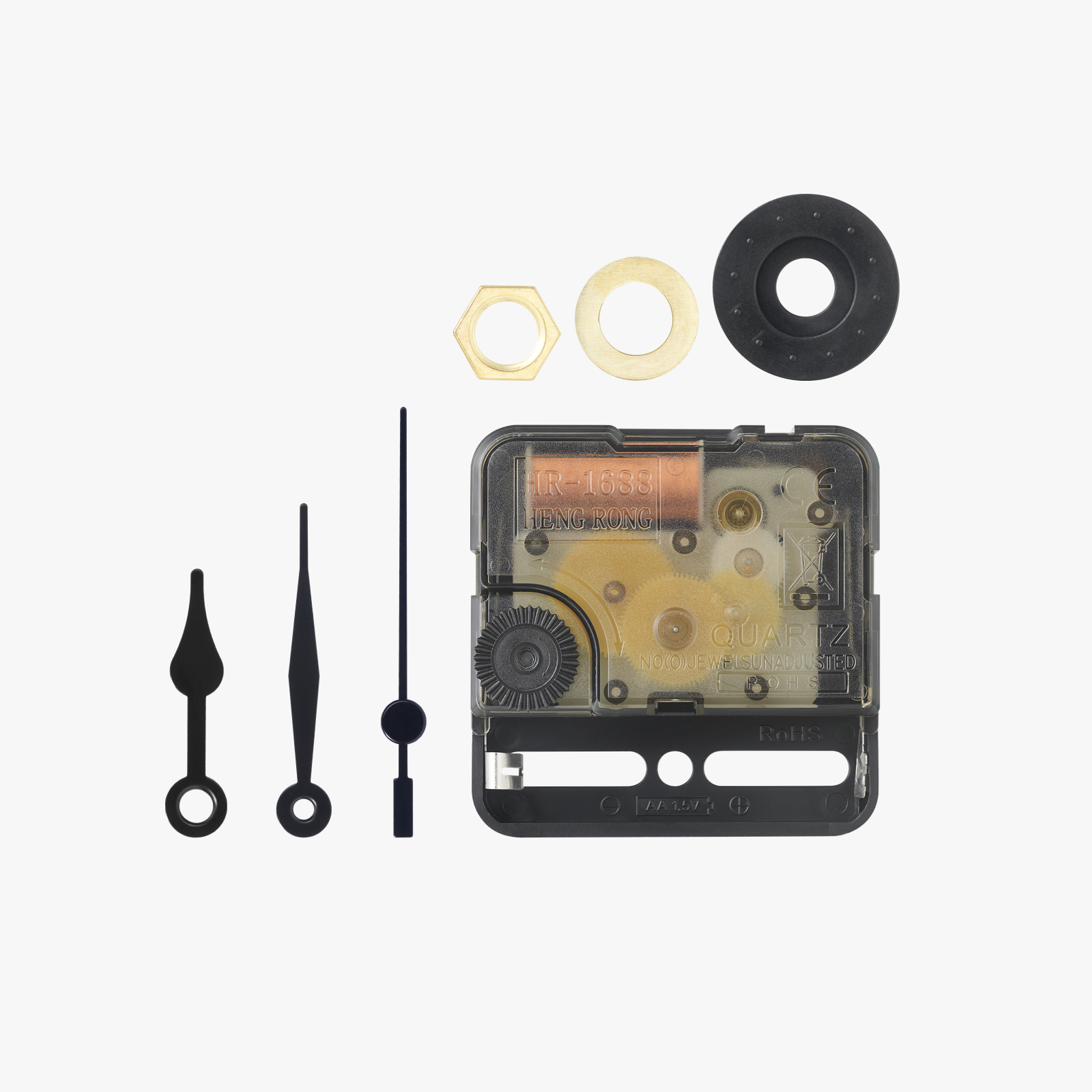
Bill of Materials



Description
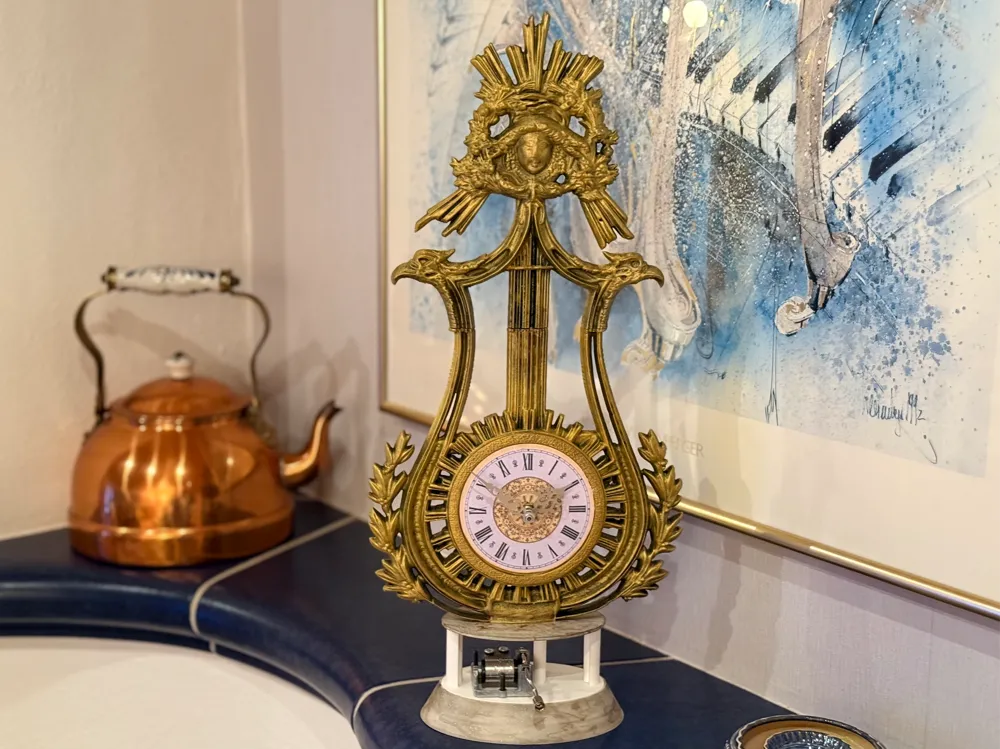
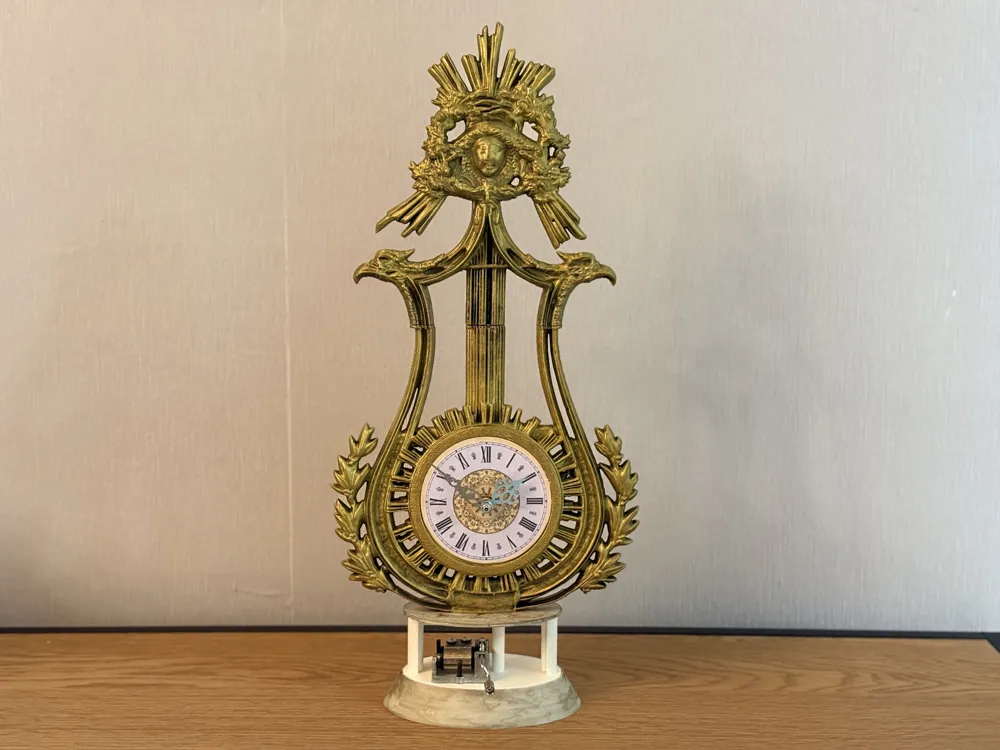
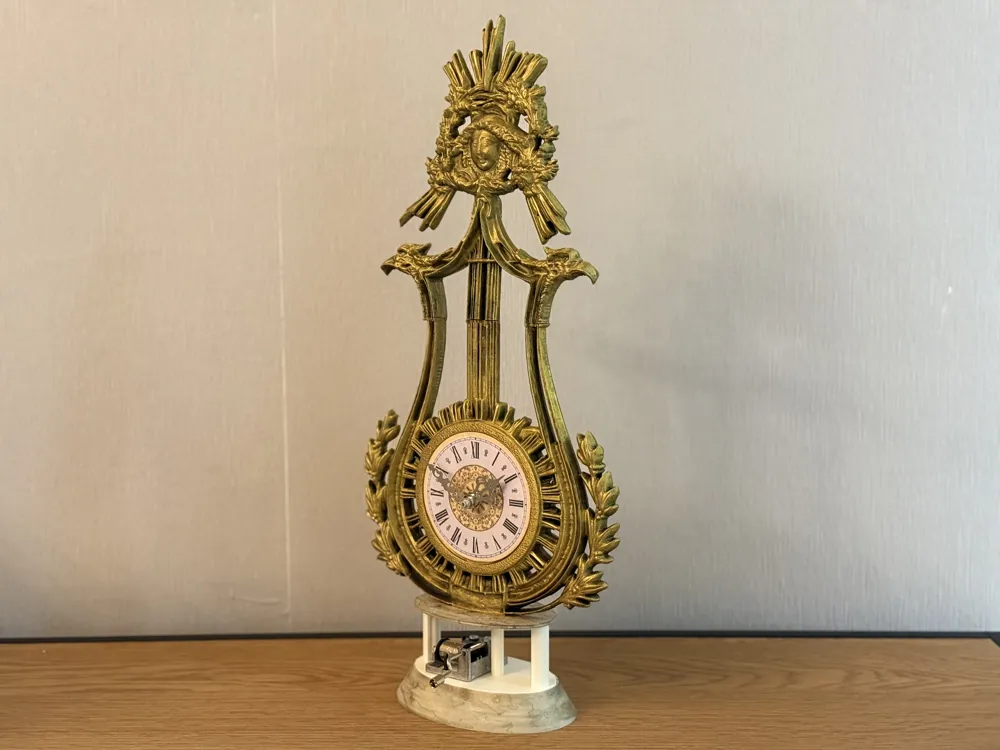
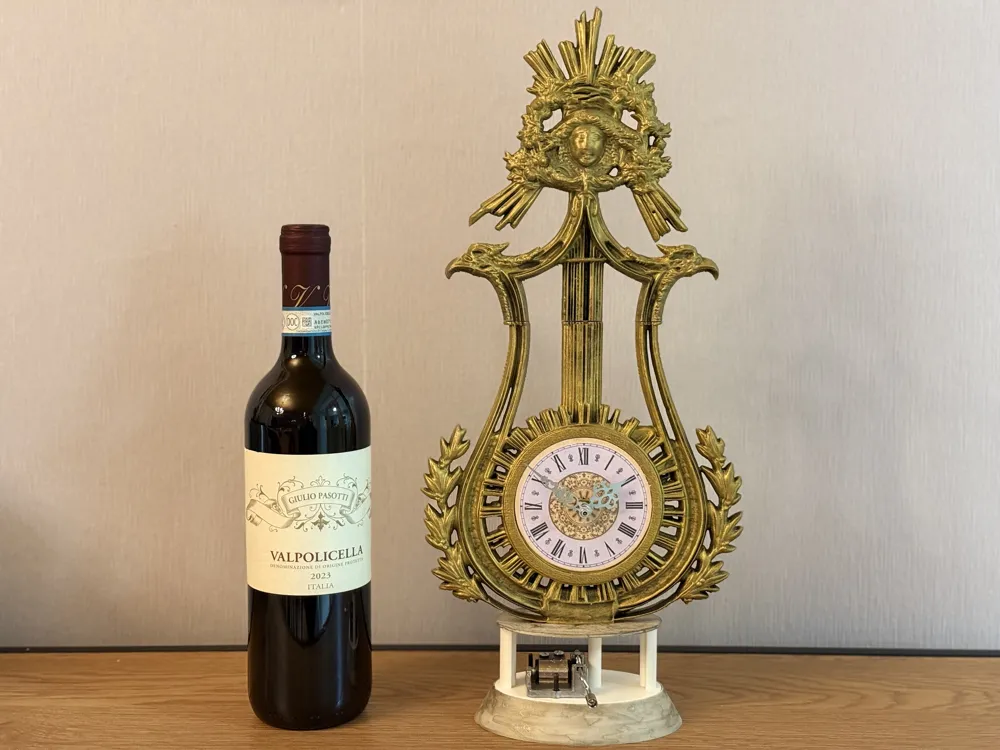
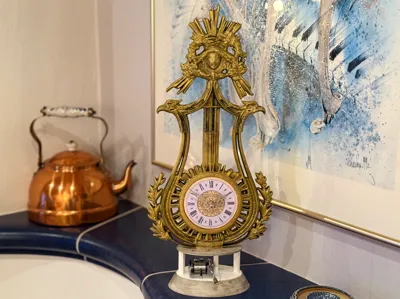
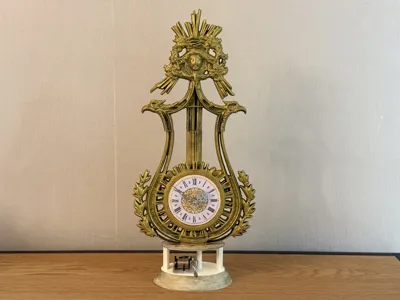
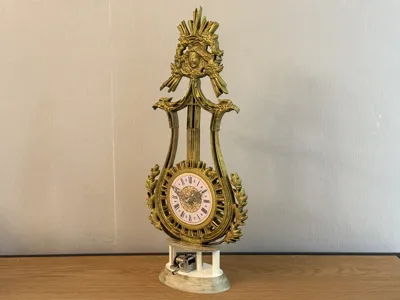
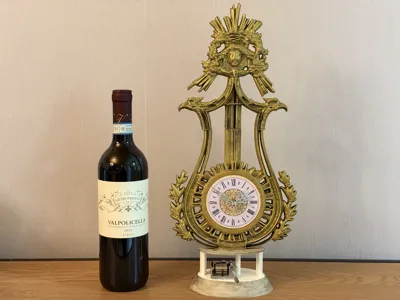
Neoclassical Style Ormolu and Marble Mantle Clock with Music Box
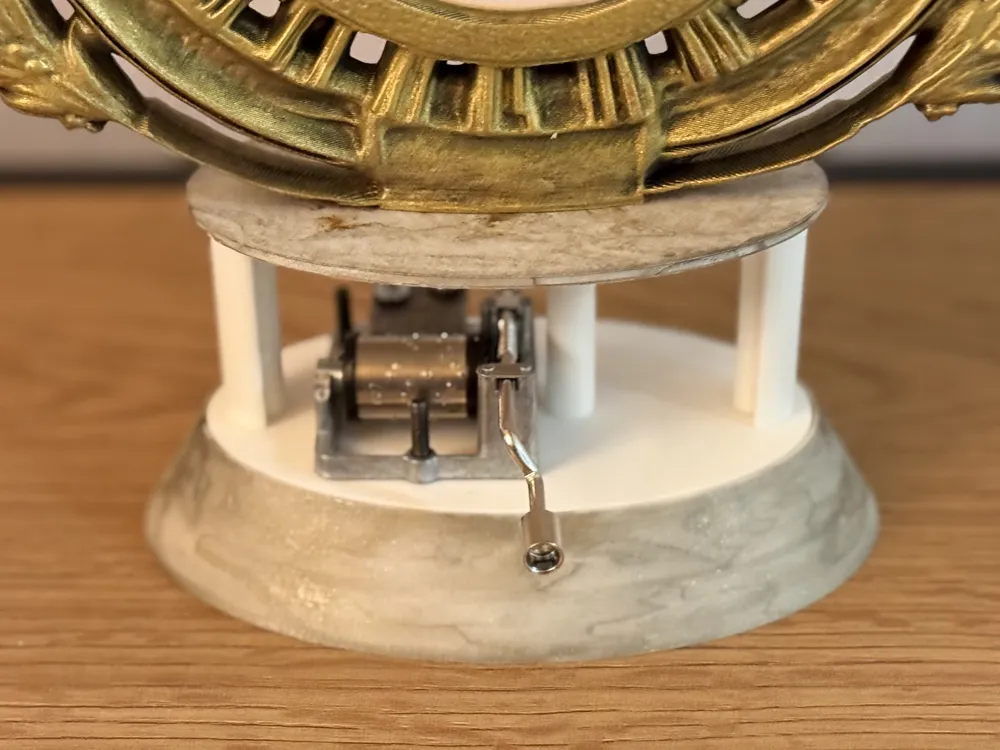
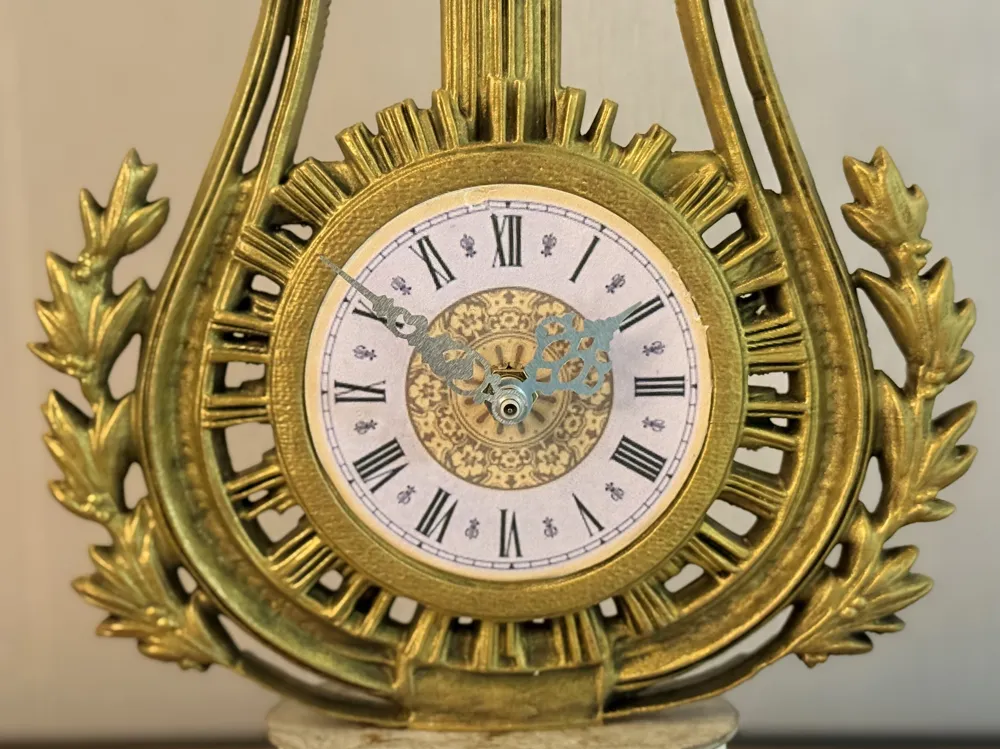
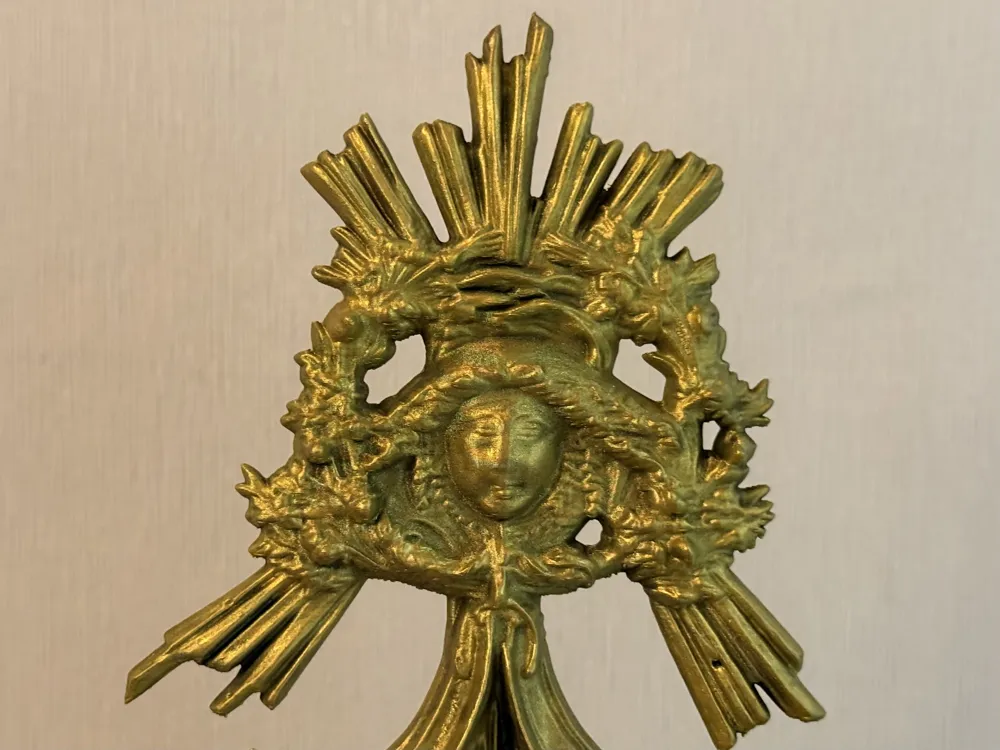
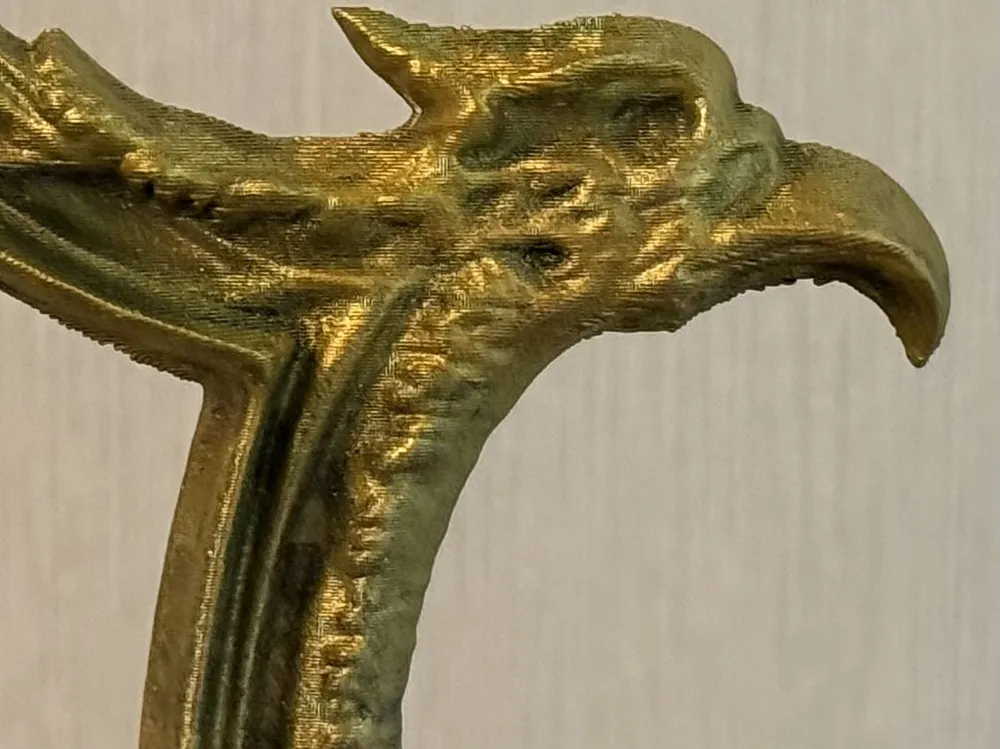
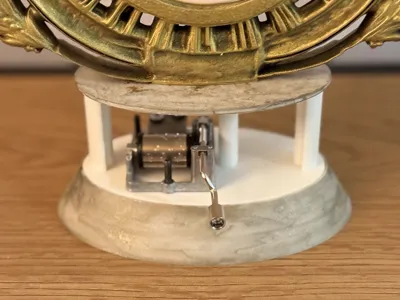
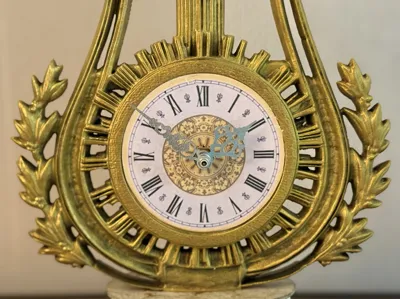
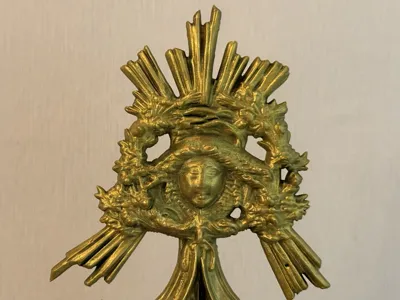
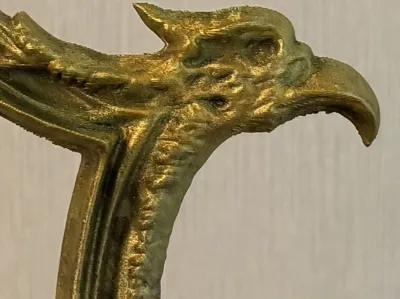
This beautiful clock, crafted in ormolu* and white, veined marble**, is made in the elegant shape of a lyre; which sits on a pointed elliptical base that houses a music box. The body of the lyre is encased to the lower section with a wreath of laurel leaves. Within the body and bordered by sunbeams is the white, circular clock face. From the top of the clock protrude the strings of the lyre, which are flanked on either side by upcurling supports that terminate in eagle heads. The clock is surmounted by a portrait of the lyre-playing god Apollo which is encircled in a floral wreath and backed with sunbeams.
*technically, gold painted PLA rather than gilded bronze
**technically, acrylic paint rather than actual marble
Boost Me (for free)
This model is part of my Antique Clock Collection which you can find here:
https://makerworld.com/en/collections/5988541-antique-clocks
Inspiration
Apollo's Lyre is a musical instrument invented by Hermes and given to Apollo as a gift. Also, the sound of a lyre is pretty close to what comes out of a music box (closer than flutes and other instruments anyway.)
In Greek Mythology, when Hermes was a baby he stole a number of Apollo's cattle and took them to a cave in the woods near Pylos. In the cave, he found a tortoise and killed it, then removed the insides. He used one of the cow's intestines and the tortoise shell and made the first lyre. Apollo eventually found Hermes, but fell in love with the sound the lyre made. Apollo gifted the cattle to Hermes in exchange for the lyre and forgave Hermes for stealing his cattle. The lyre then became one of Apollo's Symbols of Power.
Design Choices
Given Hermes' involvement in the aforementioned origin story of Apollo's Lyre made the inclusion of a clock an obvious choice. After all, Hermes' father is Zeus, thus making Kronos his grandfather; and during antiquity, Kronos was occasionally interpreted as "Chronos," the personification of time. Additionally, the first music boxes were designed by Swiss clock makers, so it's a nice way to pay homage to them at the same time.
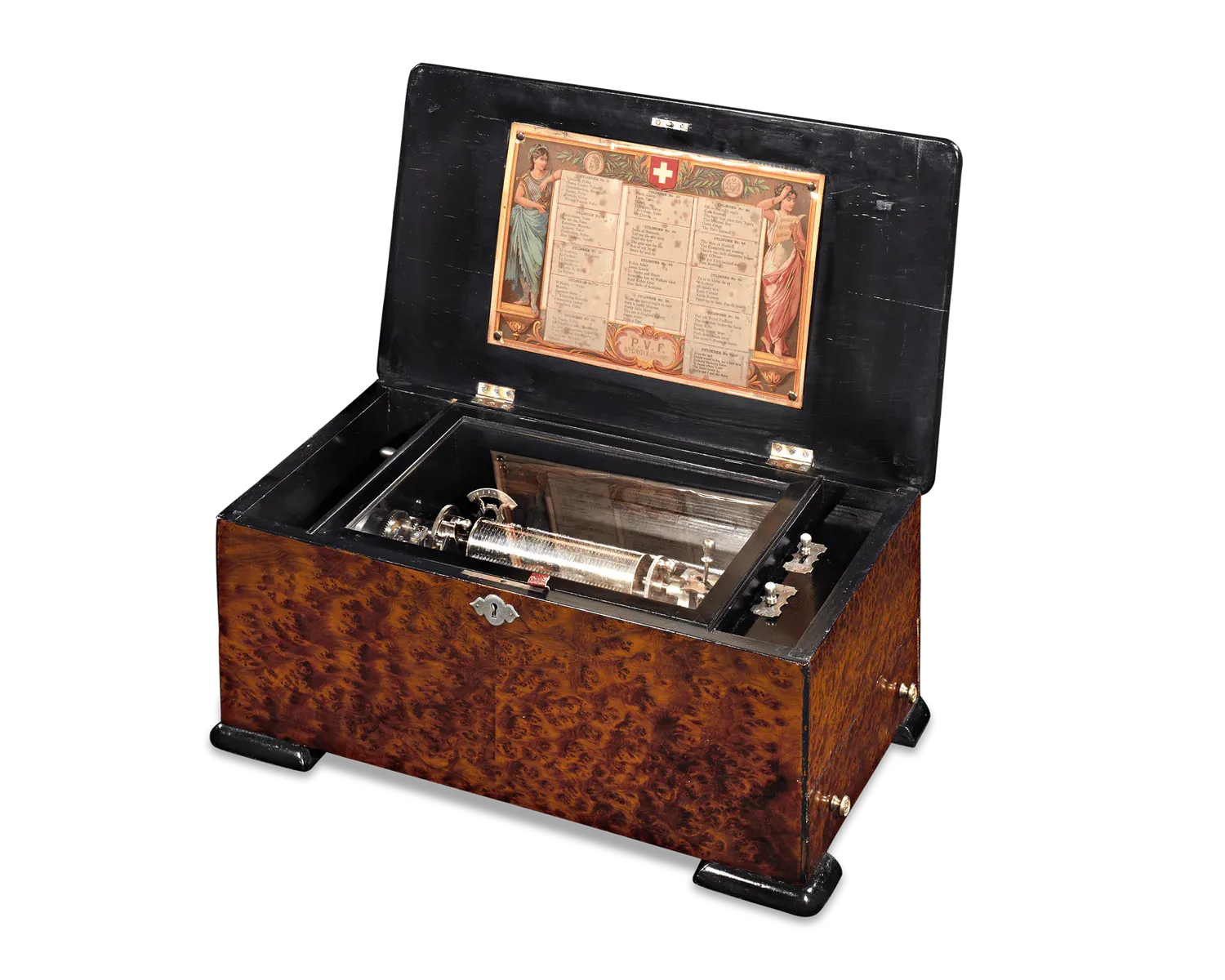
Rather than hiding the actual music box, I decided to make the mechanism a display piece. This is similar to the way cylinder music boxes that were popular in the mid to late 19th century were designed. You'd open the box and be able to watch the mechanical mechanism play the piece.
Print & Assembly Notes
Aside from the lyre itself (which you should definitely glue), you can just stand everything on top of each other; however, if you prefer to glue things you should note that you might want to still have access to the music box, in case you want to swap it out for another song.
The clock dial is white on purpose. I've tried a few times, but I couldn't really get high resolution clock faces printed (not even with a .2 nozzle). So, I decided to just use a regular printer instead and then attach the clock face afterwards. This particular one has a diameter of 80mm if you'd like to print your own, or you can use the one in the attached .pdf-file.
Post-processing
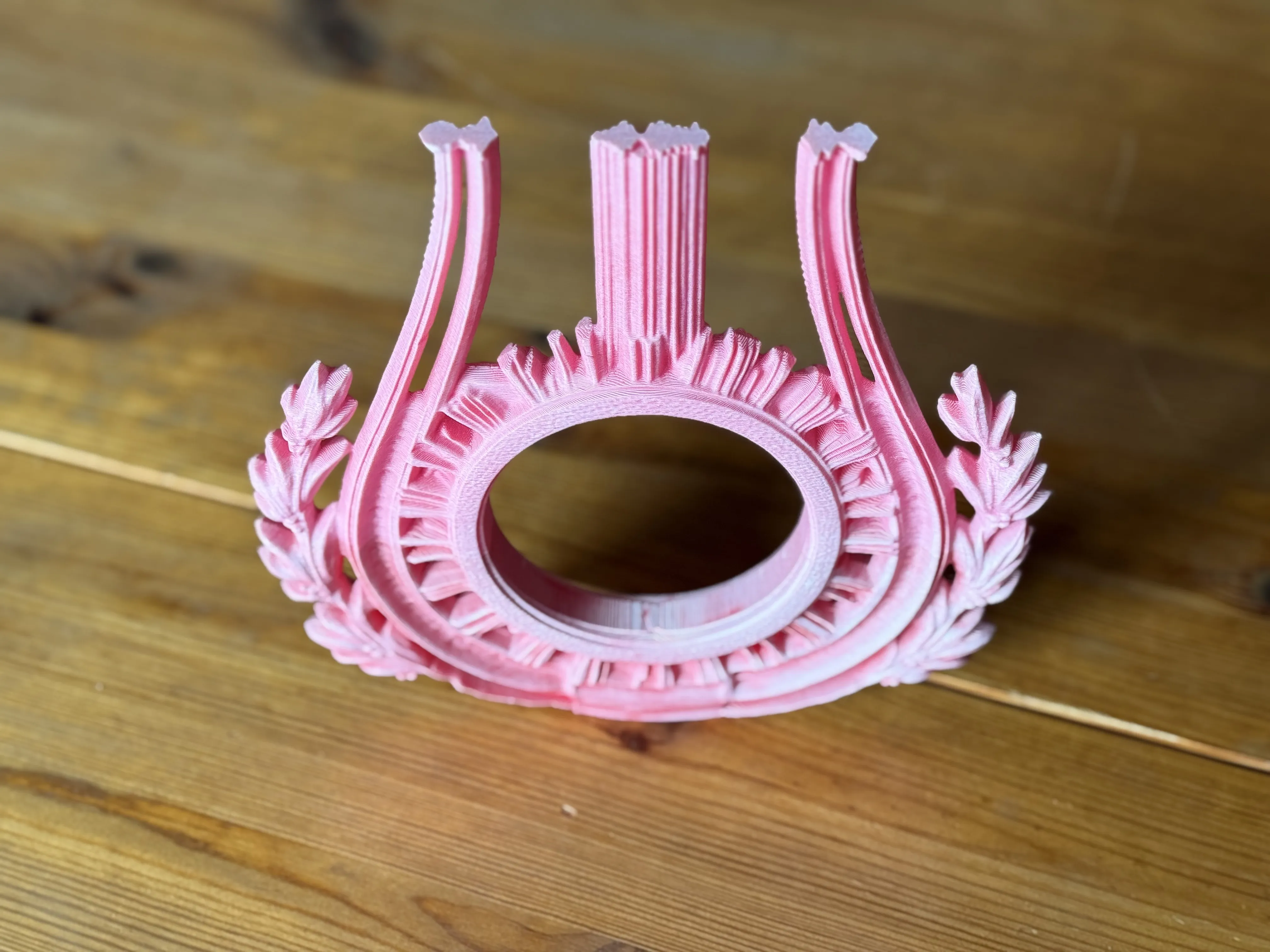
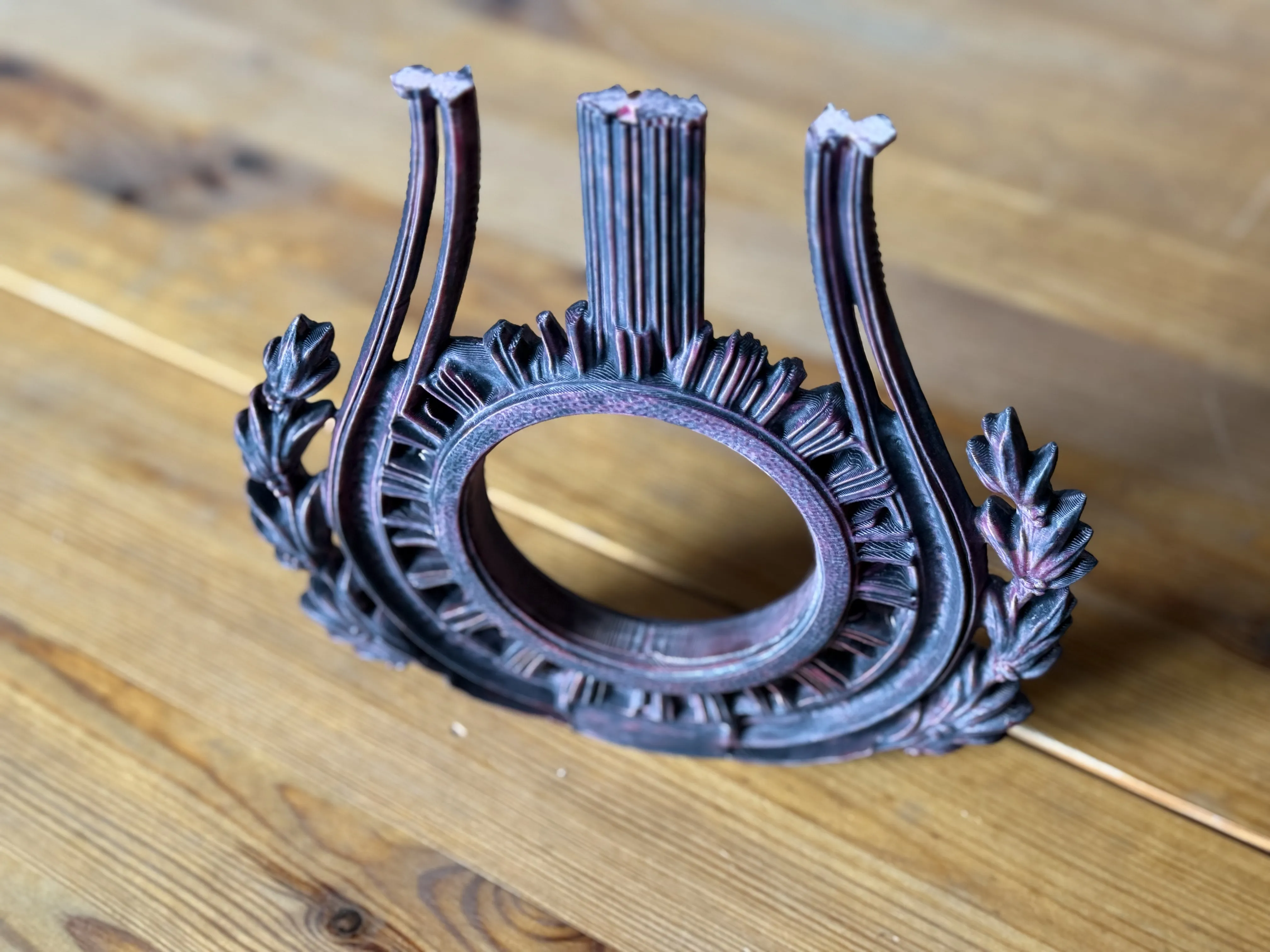
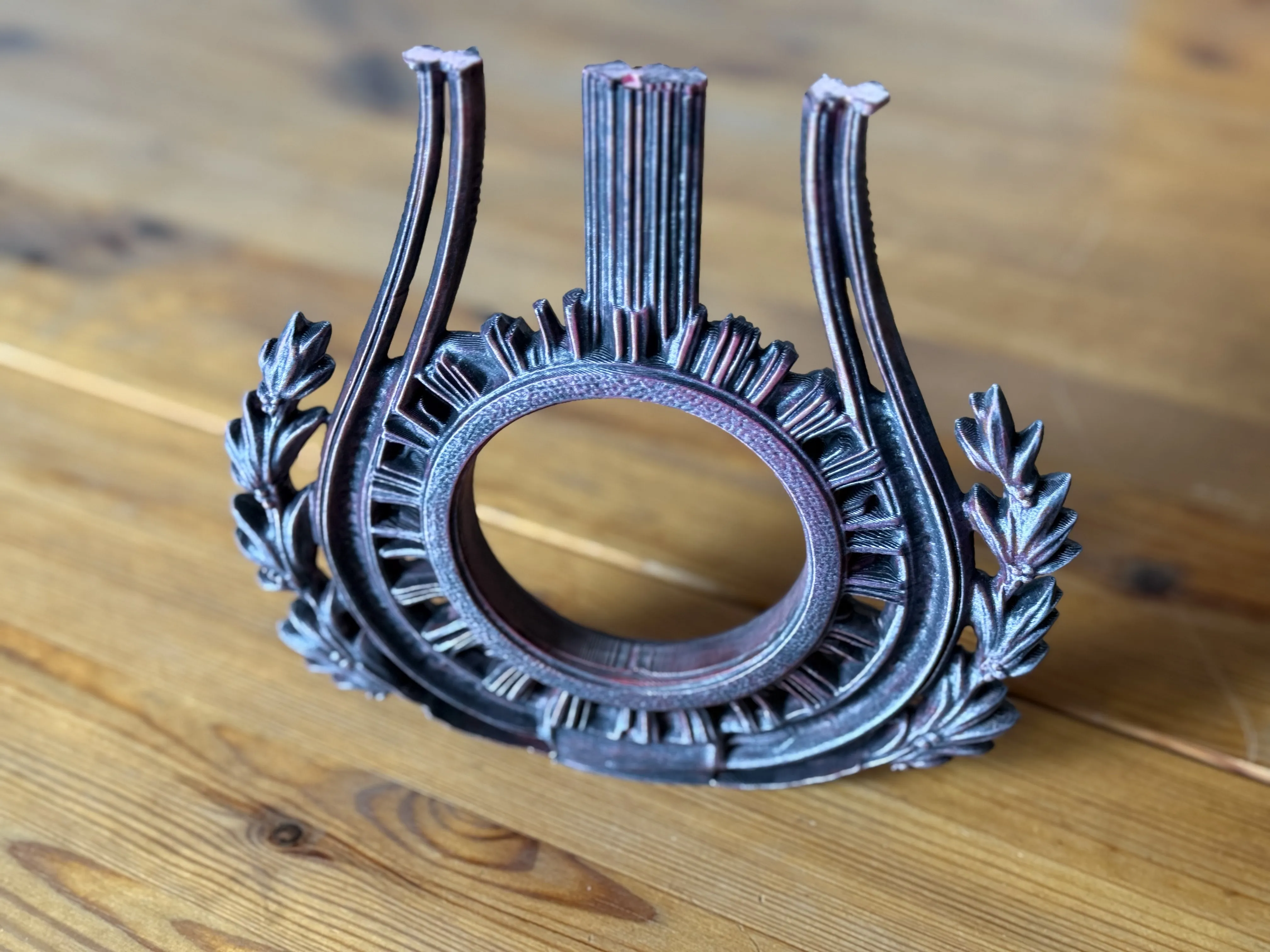
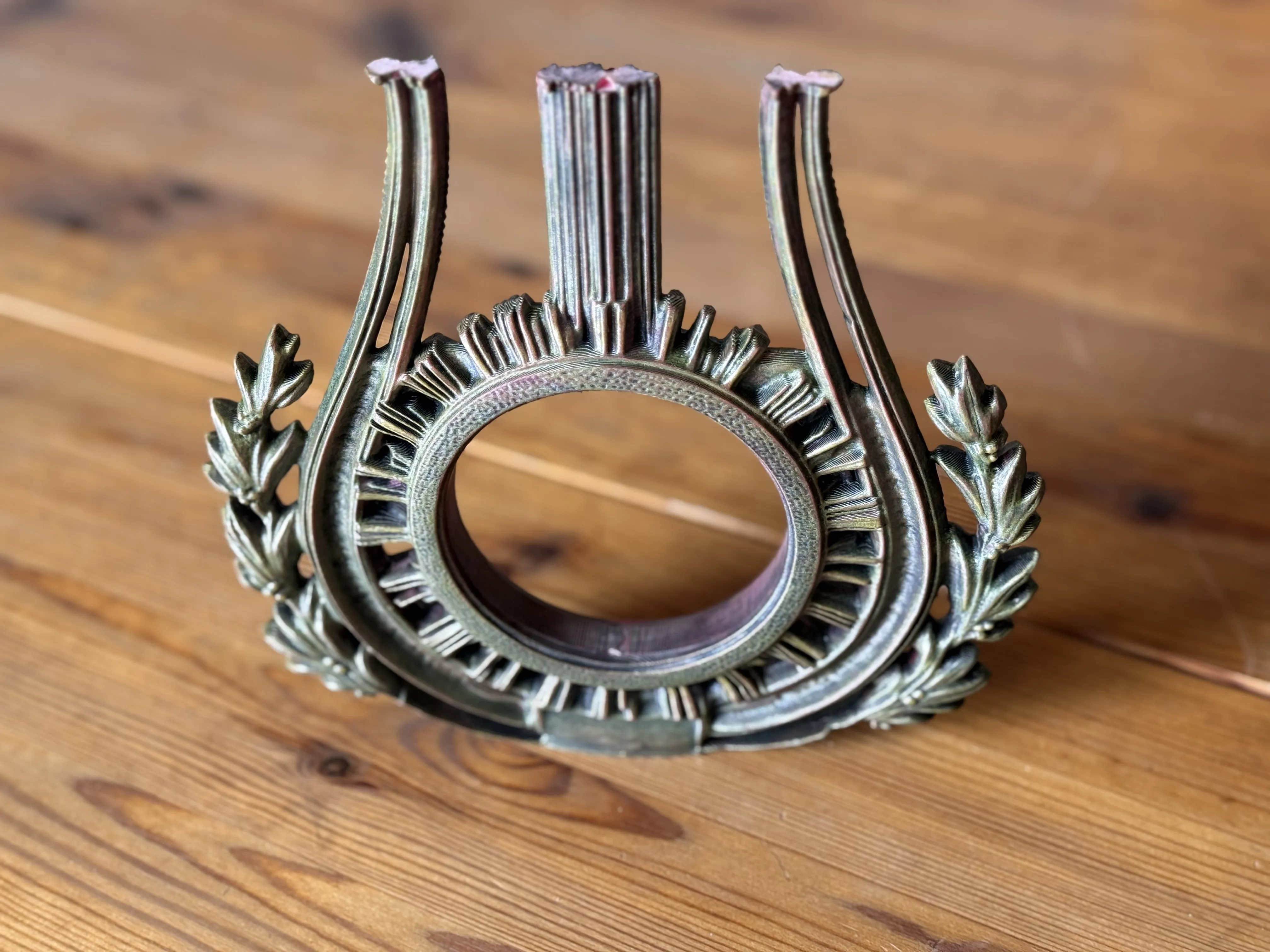
In case you're wondering why I list red instead of gold in the BOL; it provides a good base for a warmer gold finish. It is of course entirely up to you if you want to spend the extra time painting the model afterwards. Personally, I prefer the antique look for this model. Not to go into too much detail here; but it's basically [1] apply white primer, [2] wait 12 hours, [3] paint black, [4] wait 12 hours, [5] wash off the black paint in warm water, [6] dry brush highlights, [7] proceed to paint the model gold.
The whole point of the above exercise is to add depth and texture to the model. Too long to discuss here in the model description, but if I'll ever find the time to write a forum post about it, I'll put the link here. Here are four pictures of what the individual stages look like. The last stage is then repeated a few times until you get the desired finish.
Acknowledgments
Some of the ornaments were created using Relief Sculpture Maker from MakerWorld and then heavily post-processed in Fusion 360.
Powered by Relief Sculpture Maker from MakerWorld (https://makerworld.com/makerlab/reliefSculptureMakerV2)
Boost Me (for free)
Think this model deserves a boost?
Documentation (1)
License

You shall not share, sub-license, sell, rent, host, transfer, or distribute in any way the digital or 3D printed versions of this object, nor any other derivative work of this object in its digital or physical format (including - but not limited to - remixes of this object, and hosting on other digital platforms). The objects may not be used without permission in any way whatsoever in which you charge money, or collect fees.


Comment & Rating (13)