
P-51D Mustang

Print Profile(1)

Description
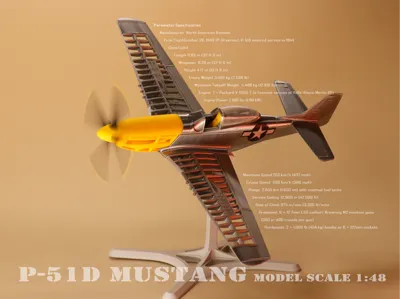
P-51D Mustang — The Pinnacle of WWII Legendary Fighter Aircraft
Overview
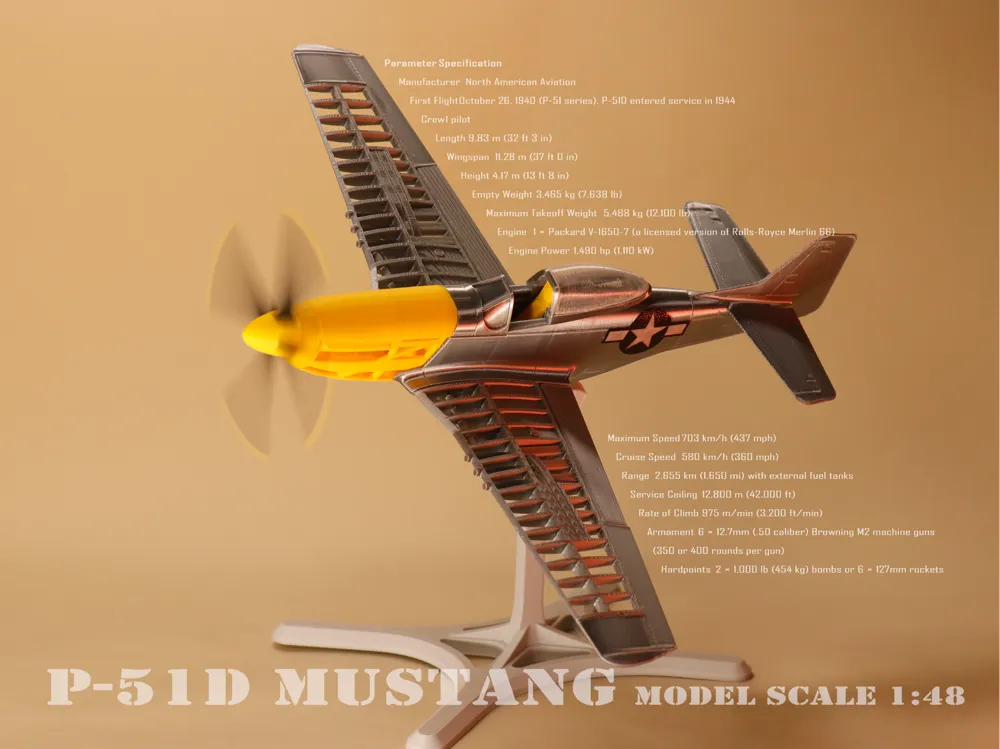
The P-51D Mustang is one of the most iconic and influential fighter aircraft of World War II, often hailed as "the pinnacle of fighter aircraft." Designed by NAA (North American Aviation), it was first introduced in 1942 and quickly became a crucial component of the U.S. military's air combat capabilities. One of its most famous features is its exceptional range, powered by the Packard V-1650 engine (the American-built version of the British Merlin engine). This engine gave it a range of over 700 kilometers, allowing it to escort bombers deep into enemy territory and safely return. The P-51D's range not only changed air combat strategies but also helped the Allies achieve air superiority over the European theater.
Compared to its contemporaries, such as the German Bf 109 and Fw 190, the P-51D had a clear advantage in speed, stability, and maneuverability. In combat against these enemy aircraft, the P-51D's superior performance often led to victory, making it a key factor in the Allies' dominance in the skies. In particular, its speed and agility gave P-51D pilots a significant edge over the Bf 109 and Fw 190 in dogfights, allowing for more flexible maneuvers in complex aerial combat.
The P-51D also made significant contributions to improving pilot survival rates due to its unique design. Its iconic bubble canopy not only provided better visibility but also allowed pilots to react more swiftly in combat. Additionally, the P-51D was equipped with six .50 caliber Browning M2 machine guns, which were highly effective at destroying enemy aircraft and ground targets, giving it a considerable advantage in combat against enemy fighters like the Bf 109 and Fw 190.
The P-51D played a decisive role in several critical missions, particularly in major battles like the D-Day invasion and the Berlin Air Raid, where it became the backbone of Allied fighter forces. Its exceptional performance made the P-51D not only the king of aerial combat but also a model for fighter aircraft design worldwide after the war. Even after World War II, the design of the P-51D influenced the development of many subsequent aircraft, with some still in service in certain regions during the Cold War.
Moreover, the P-51D's versatility allowed it to be used in various roles beyond bomber escort, including ground attack and reconnaissance missions, further showcasing its comprehensive capabilities. Pilots consistently praised the P-51D for its ease of handling, powerful combat abilities, and exceptional maneuverability, providing a high-performance flying experience and making it one of the most beloved aircraft of the war.
Design Highlights
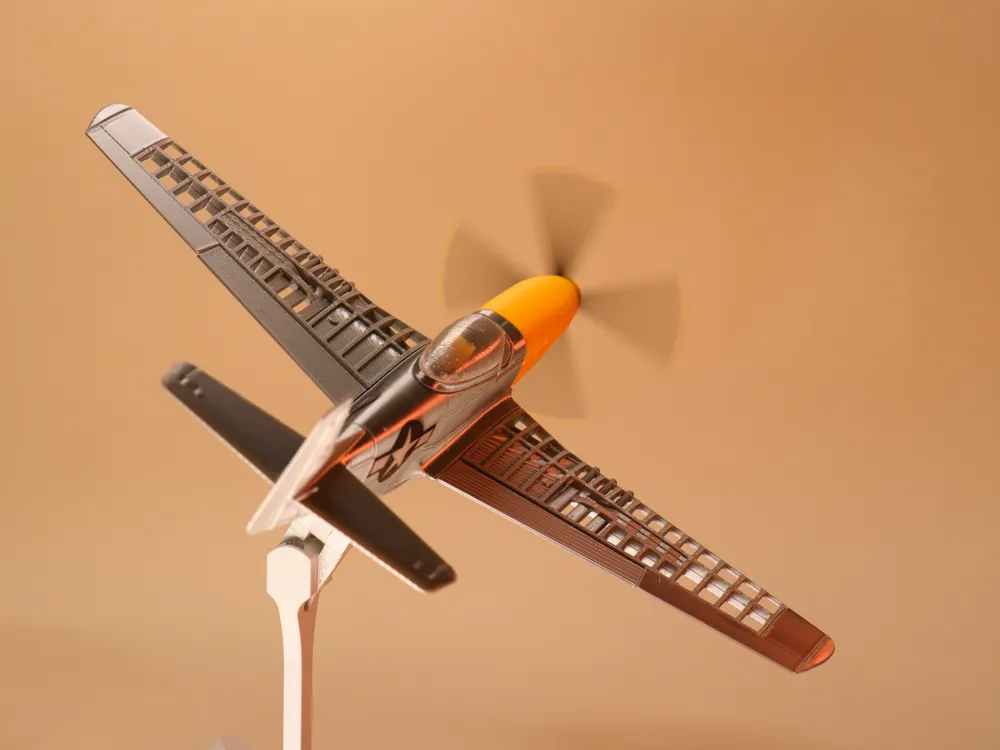
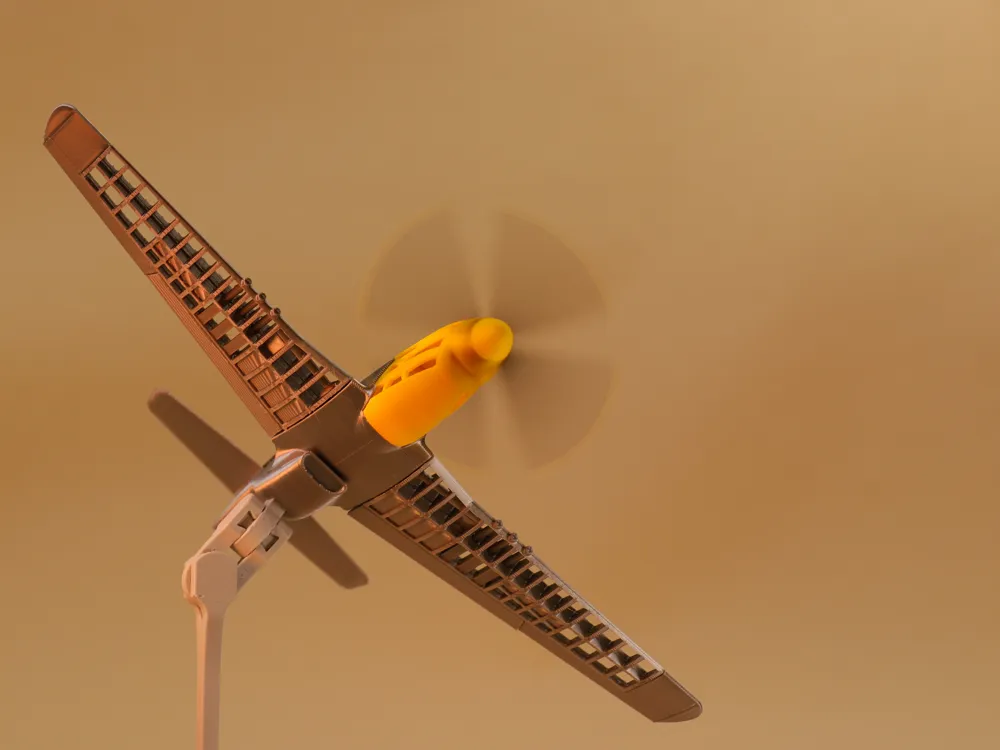
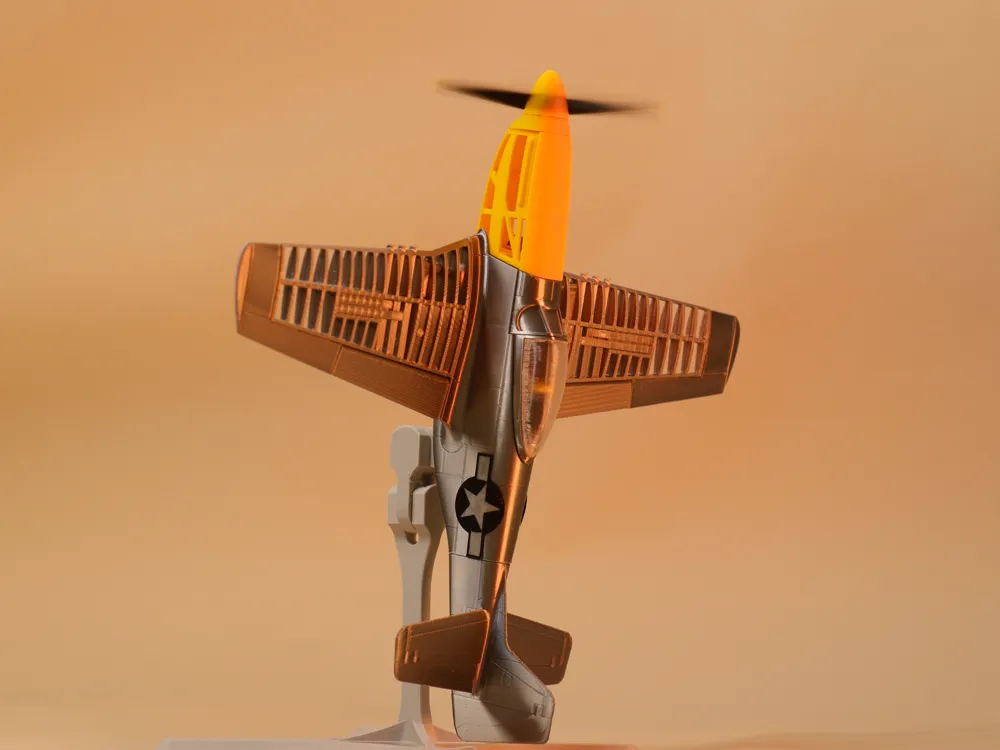
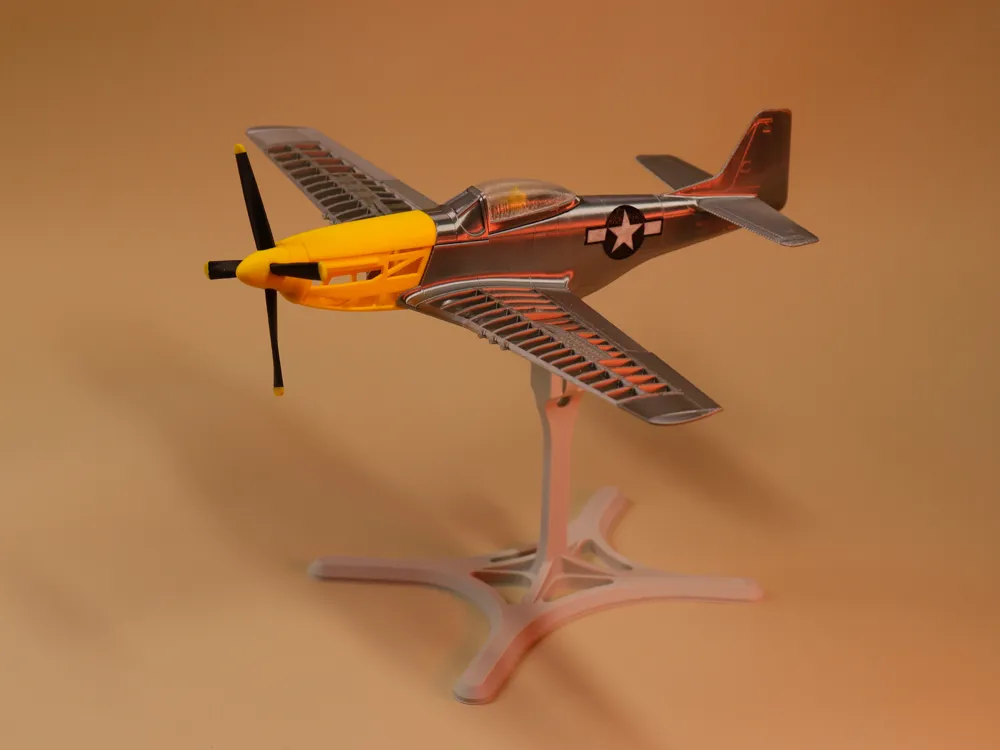
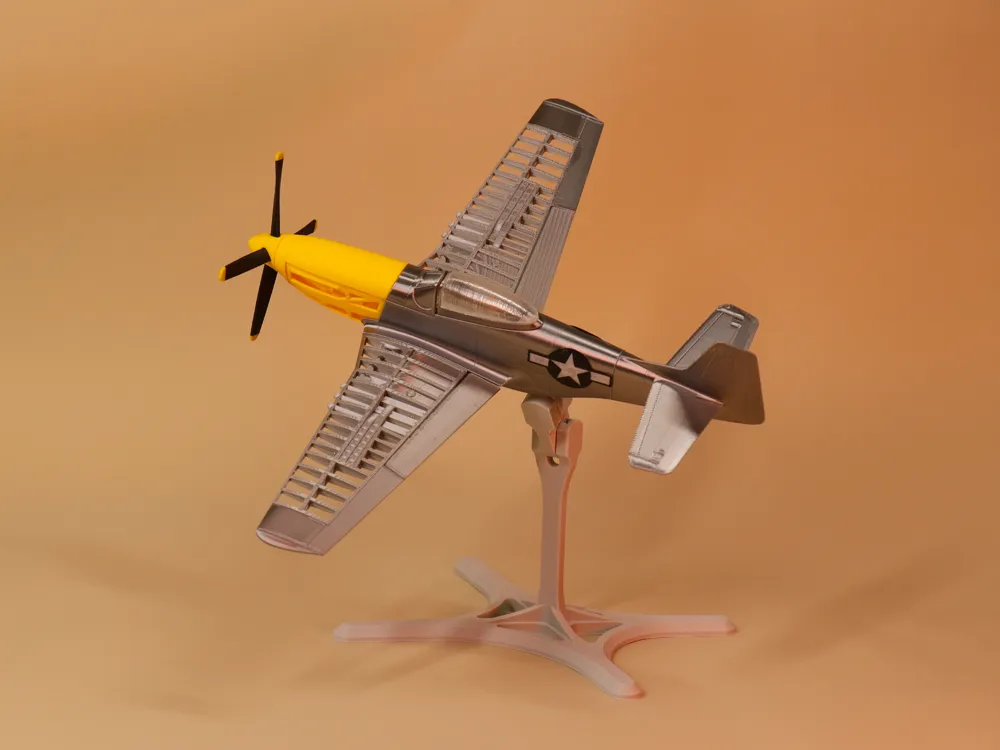
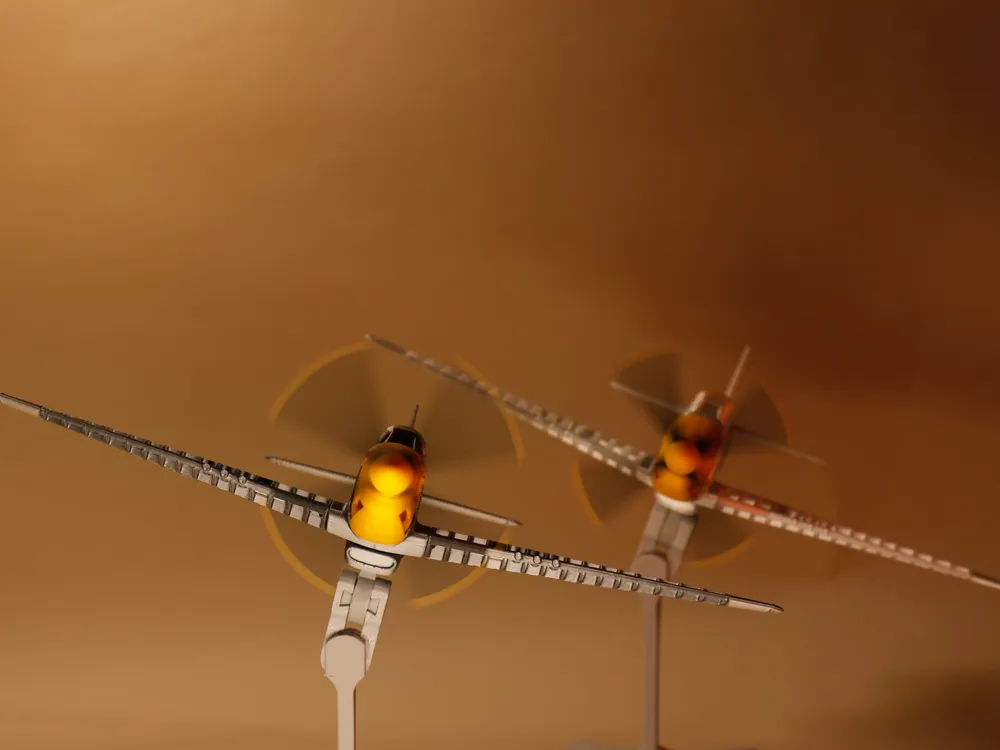
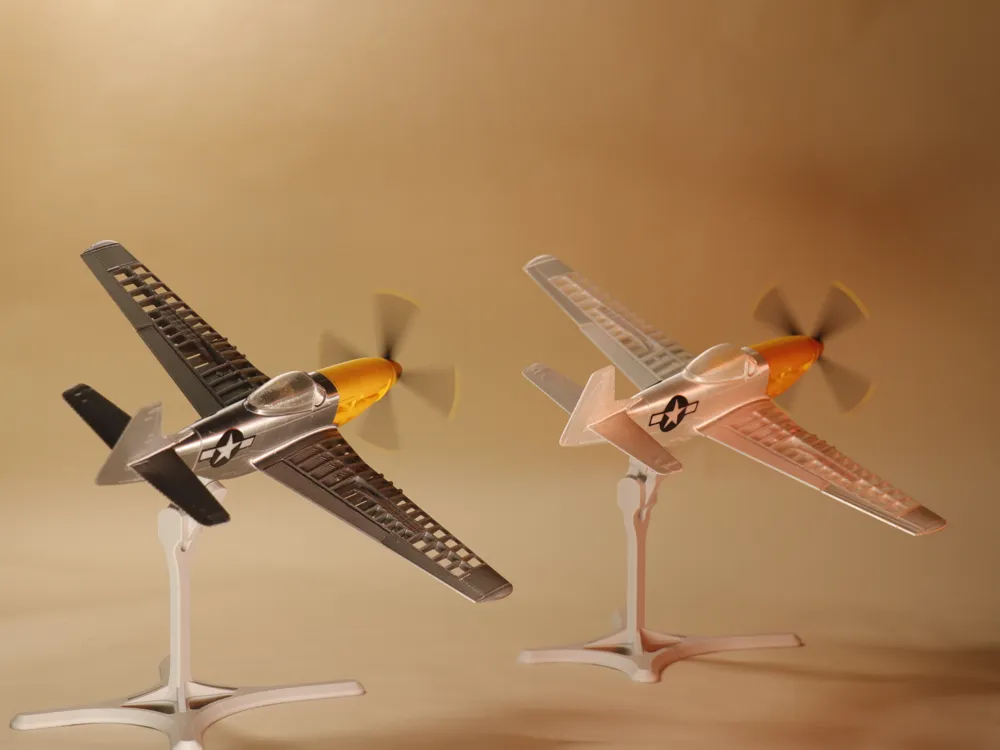
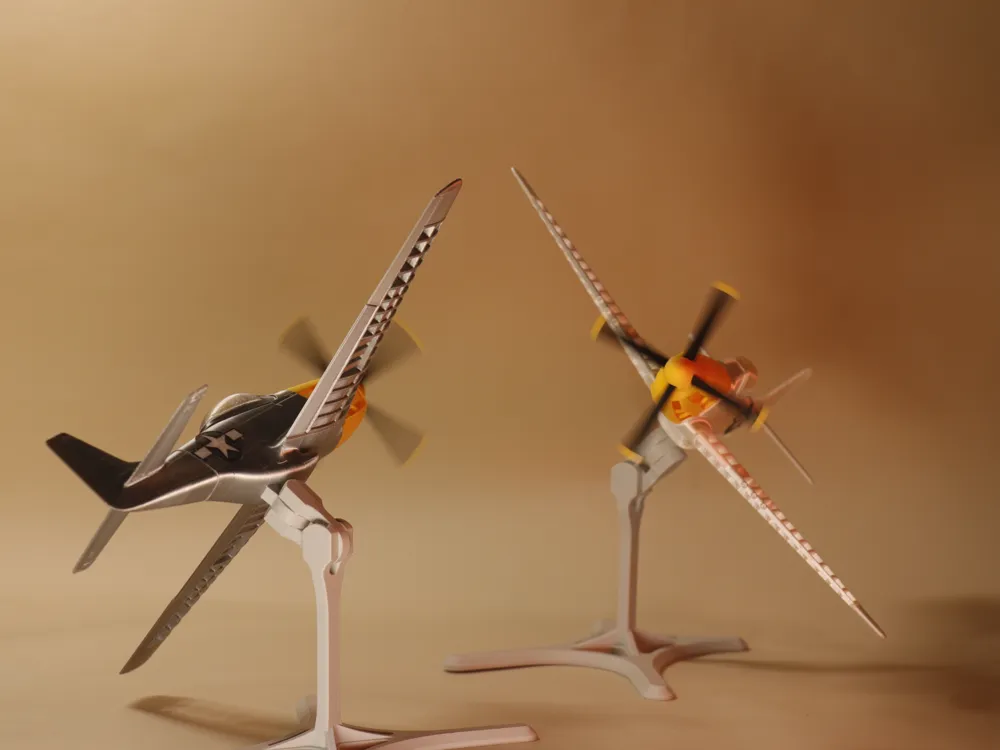
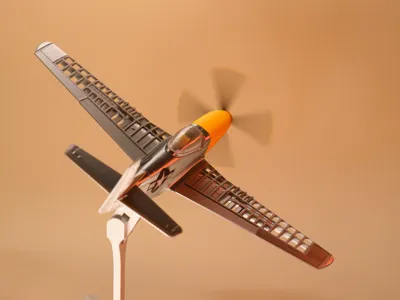
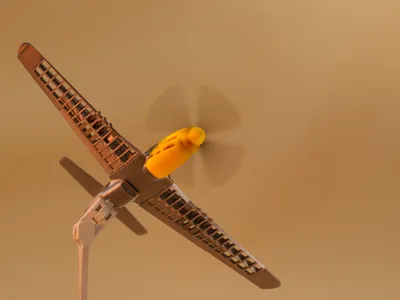
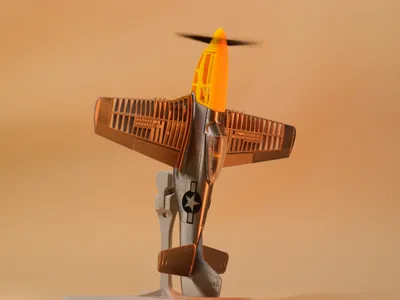
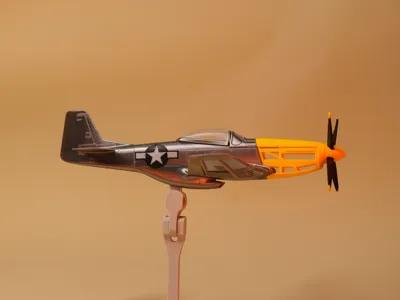
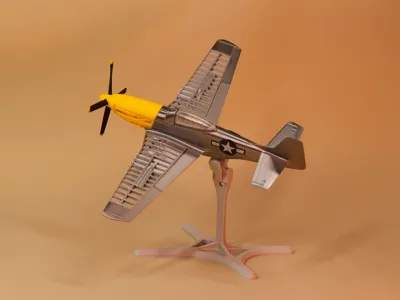
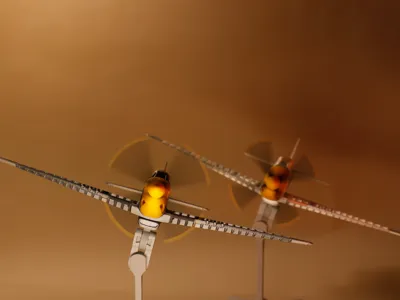
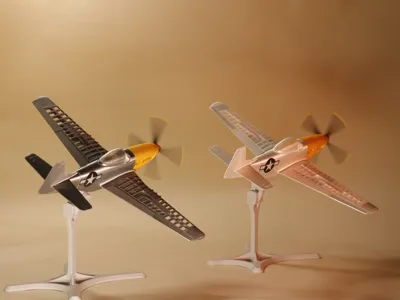
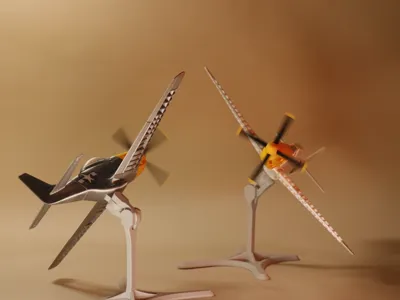
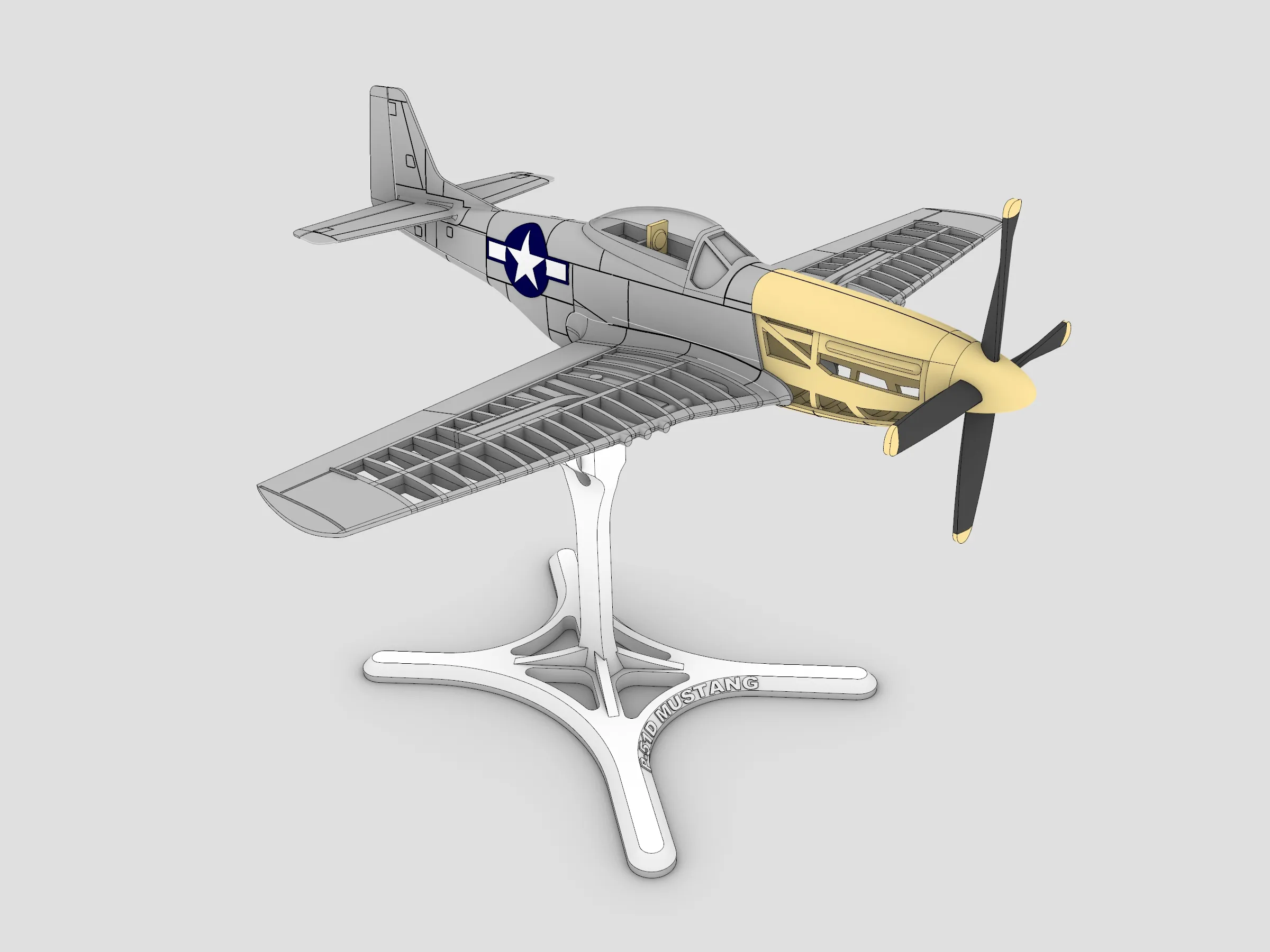
This P-51D Mustang 3D printed model meticulously showcases several interactive and realistic design details.
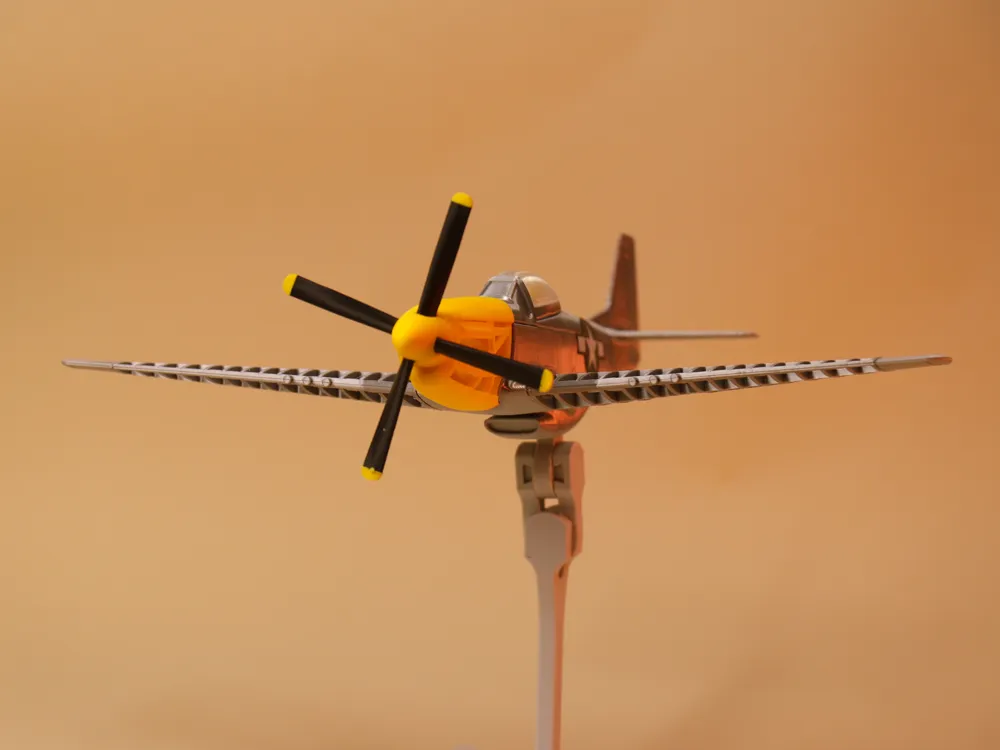
- The dual-axis base can recreate various cool flying attitudes of the aircraft.
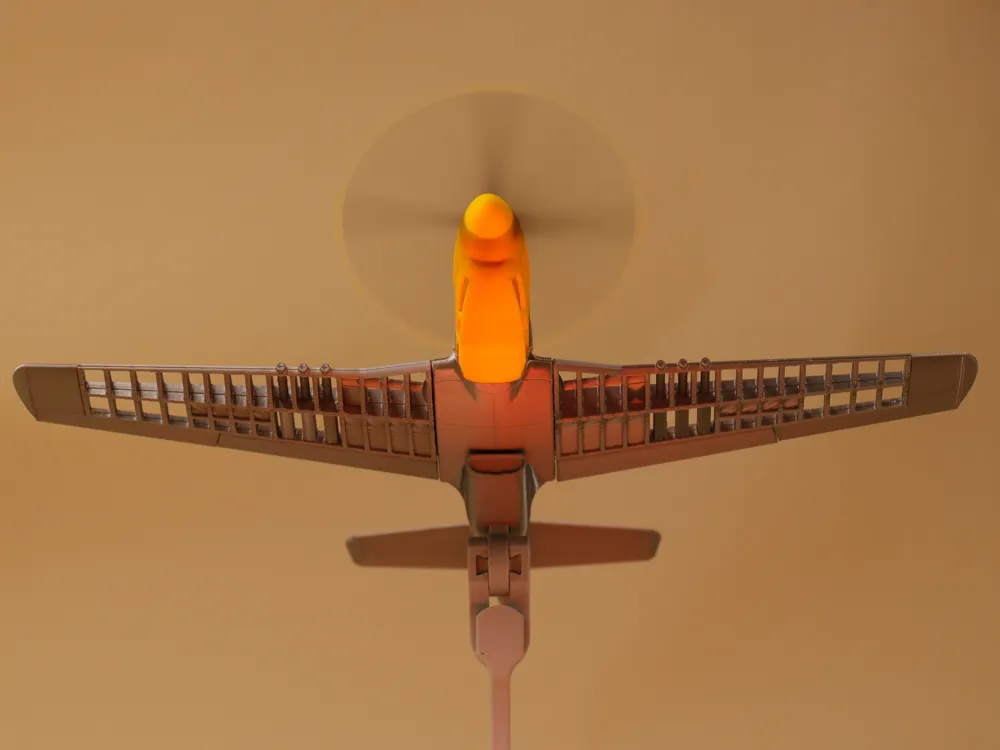
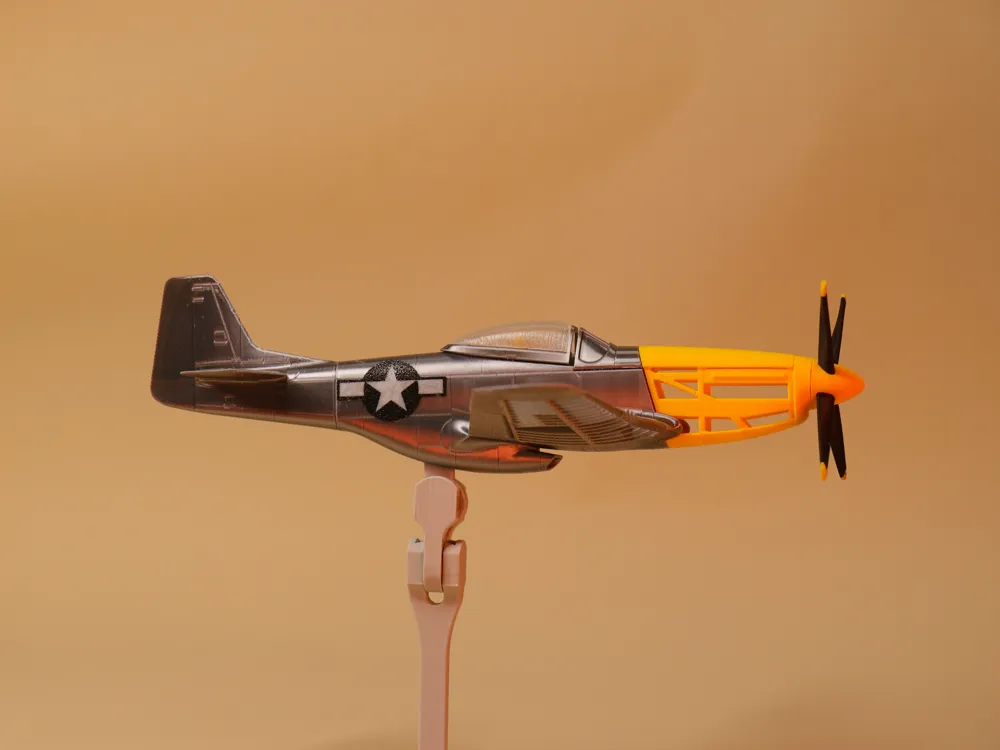
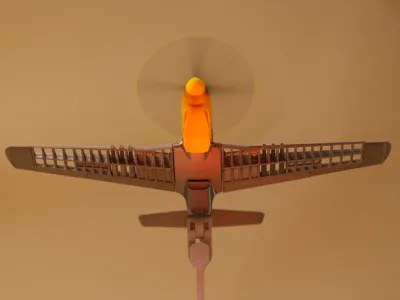
- The engine compartment features an open design, providing a clear view of the aircraft’s main structure and highlighting the precision of the fighter's construction.
- The cockpit is designed with a sliding mechanism, making it easy to display the seat and the interior space, allowing for a more intuitive understanding of the pilot’s operational environment.
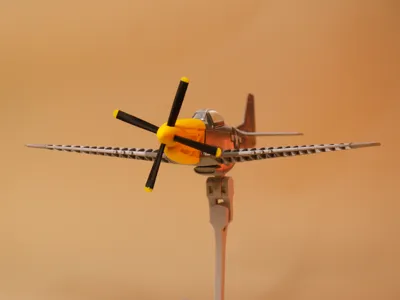
- The main wings expose structural ribs and carefully display elements like the machine guns, ammunition storage, and wing fuel tanks, greatly enhancing the model's authenticity.
- The model’s landing gear and tires are printed as one piece with the wings, precisely depicting their spatial relationship, giving the aircraft’s stance on the ground a more natural and lifelike appearance.
- The ailerons are designed as movable components, enhancing the model's interactivity and flexibility.
- The propeller design has minimal rotational resistance, allowing it to be easily turned by hand, adding to the model’s operability.
- The decals on the fuselage perfectly replicate the classic appearance of the P-51D, enhancing the overall visual impact.
Printing Guide
- Smooth PEI Sheet Printing: To ensure a flat bonding surface, please use a smooth PEI sheet for printing.
- Main Wing Sections (Plates 5 & 6):
- It is recommended to use a 0.2mm nozzle, as this can reduce material overflow at the boundaries of each layer due to gradual shrinkage and optimize the top surface pattern effect.
- If using a 0.4mm nozzle, maintain a 0.1mm layer height and reduce the flow ratio from 0.98 to 0.9 to minimize boundary overflow and improve print quality.
FILAMENT
- Fuselage and Wing Material: SUNLU Silk PLA+ Gray
- Cockpit Canopy: SUNLU PLA Transparent
- Propeller and Engine Housing: BAMBU PLA Basic (Sunflower Yellow & Black)
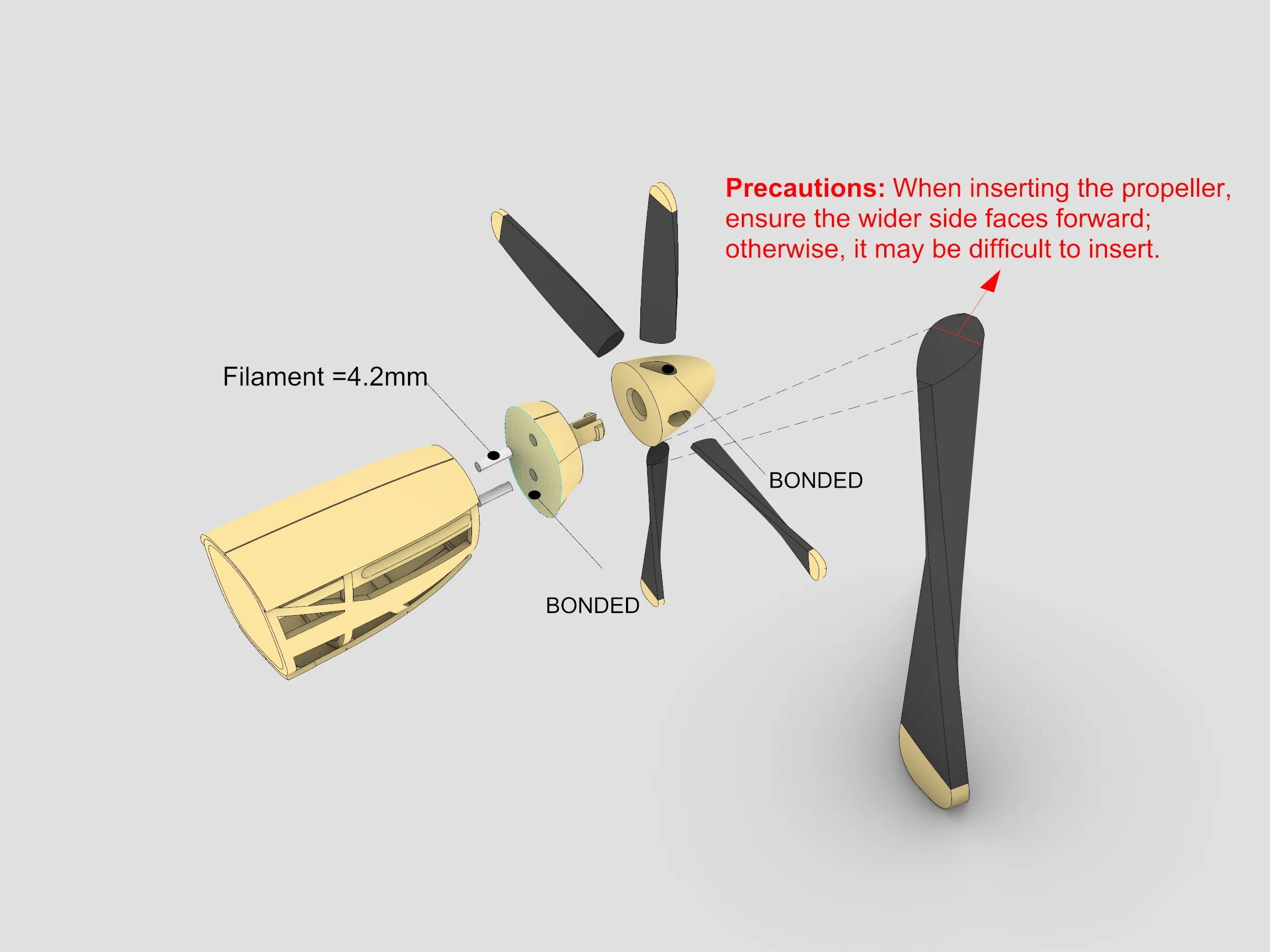
Assembly Guide
please refer to the drawings below
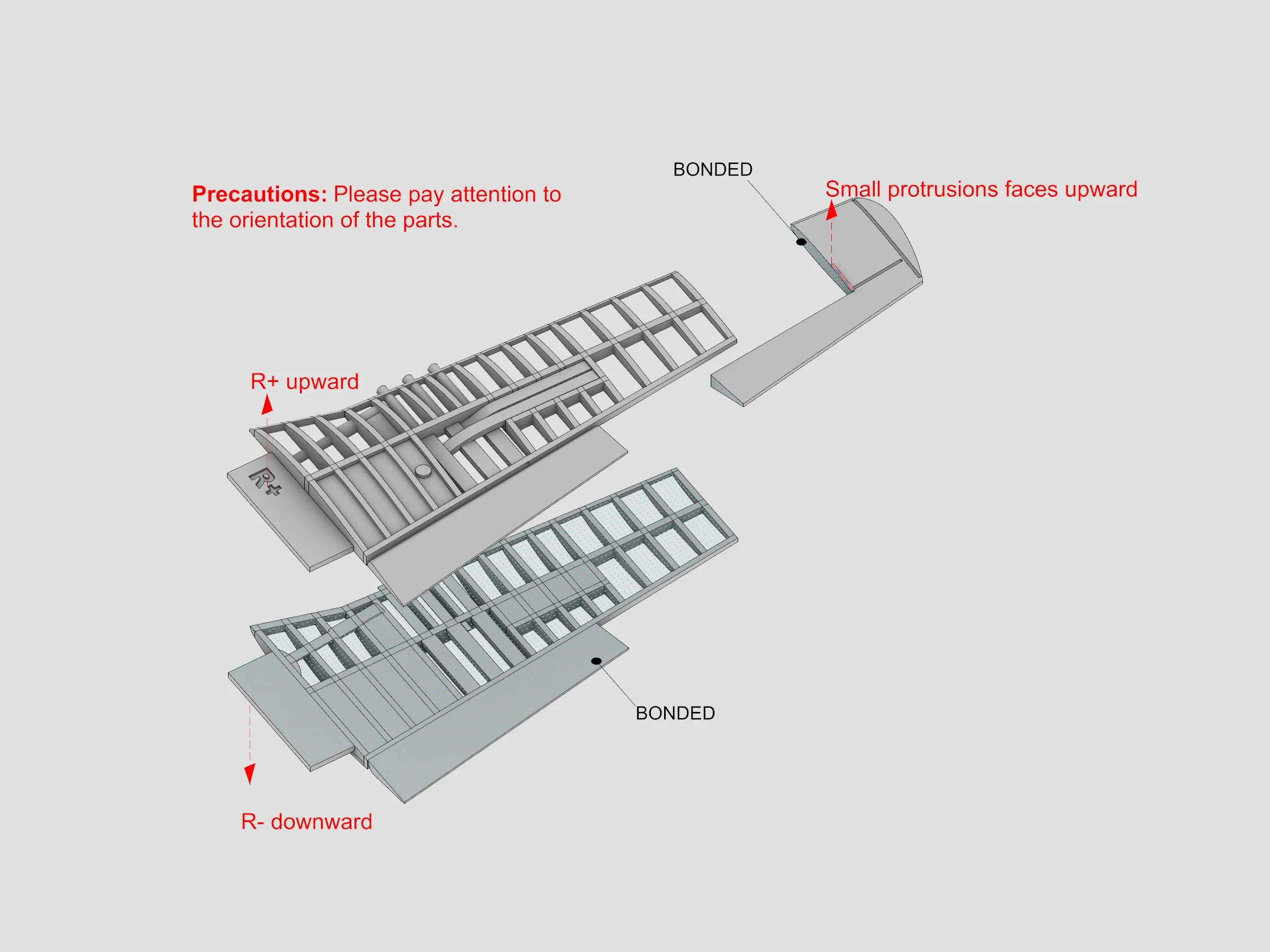
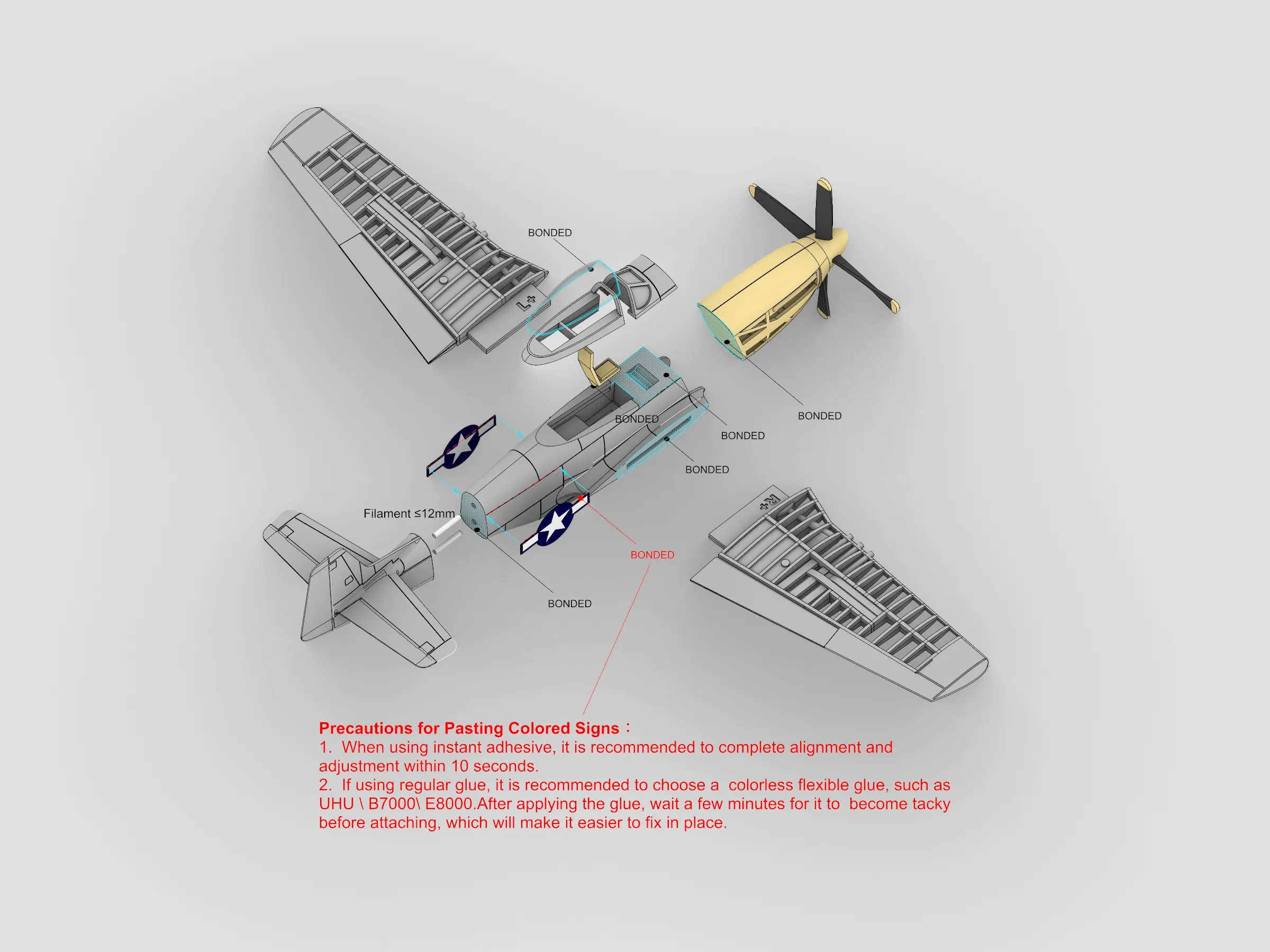
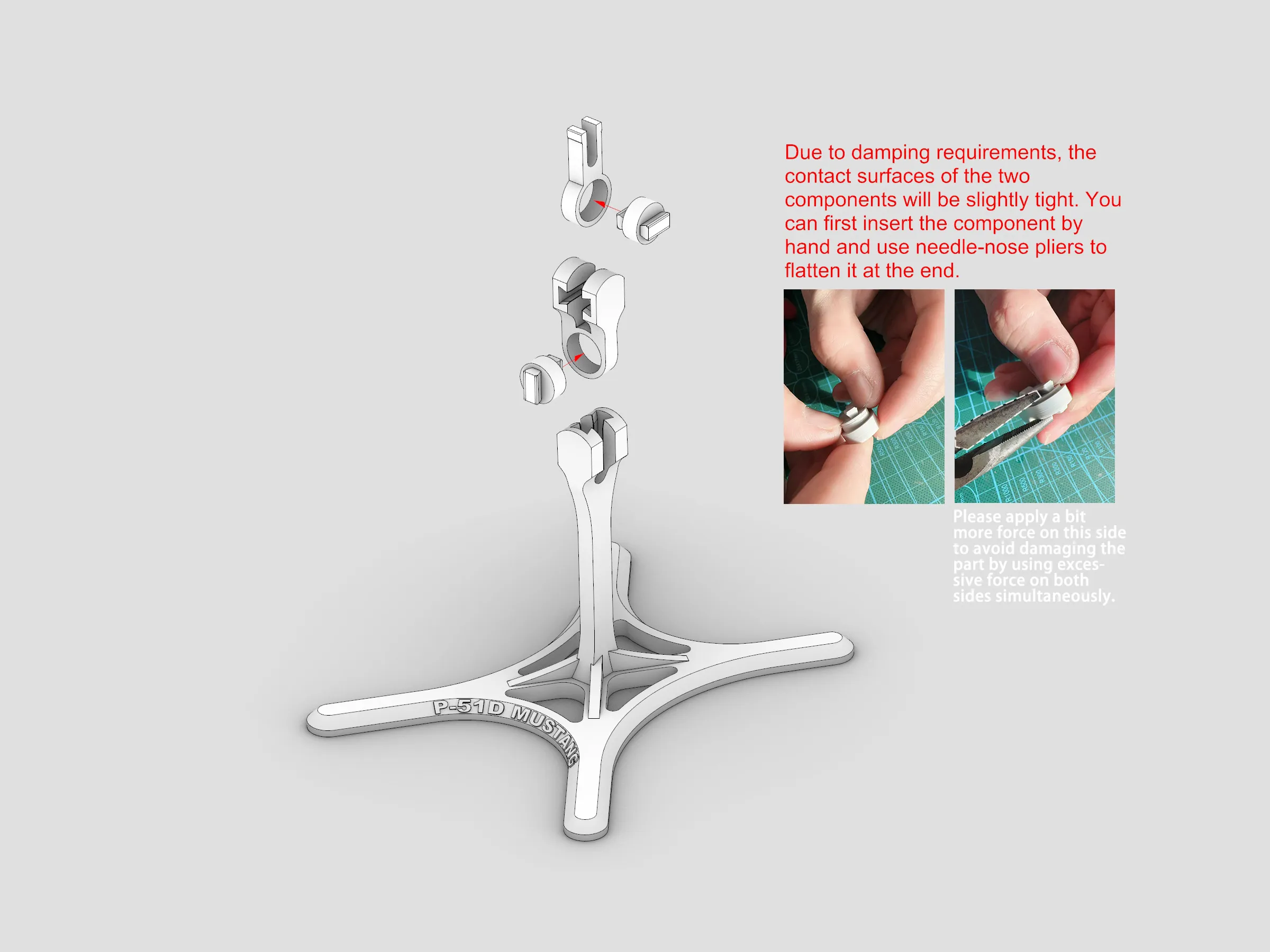
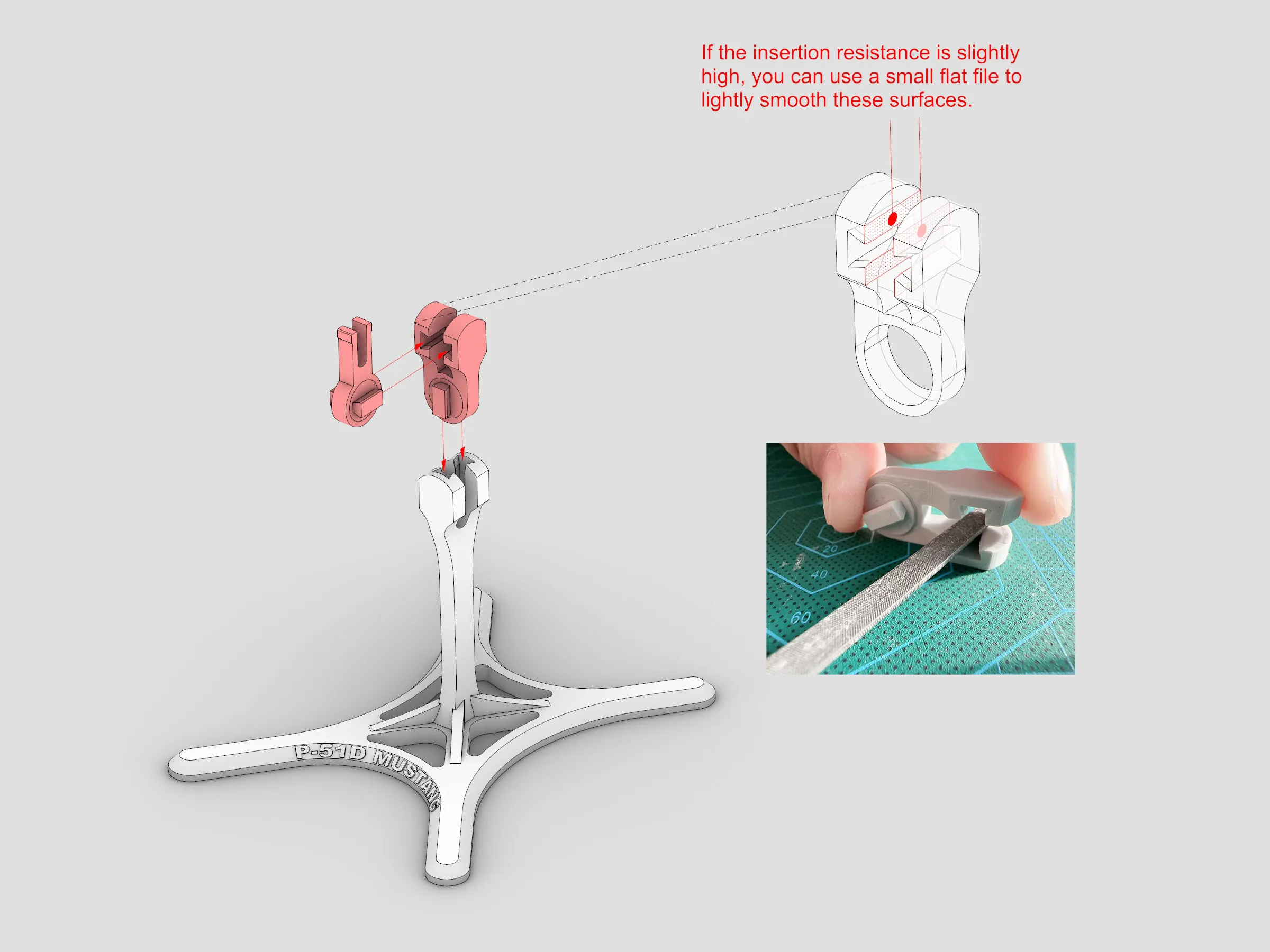
20250607 Update
This update includes a slight adjustment to the fit tolerance of the aircraft support sections on the last two plates, making them tighter to improve assembly stability and overall structural firmness.
License

You shall not share, sub-license, sell, rent, host, transfer, or distribute in any way the digital or 3D printed versions of this object, nor any other derivative work of this object in its digital or physical format (including - but not limited to - remixes of this object, and hosting on other digital platforms). The objects may not be used without permission in any way whatsoever in which you charge money, or collect fees.


Comment & Rating (40)