
Housing for automatic dust shutter
Print Profile(1)

Bill of Materials

Description
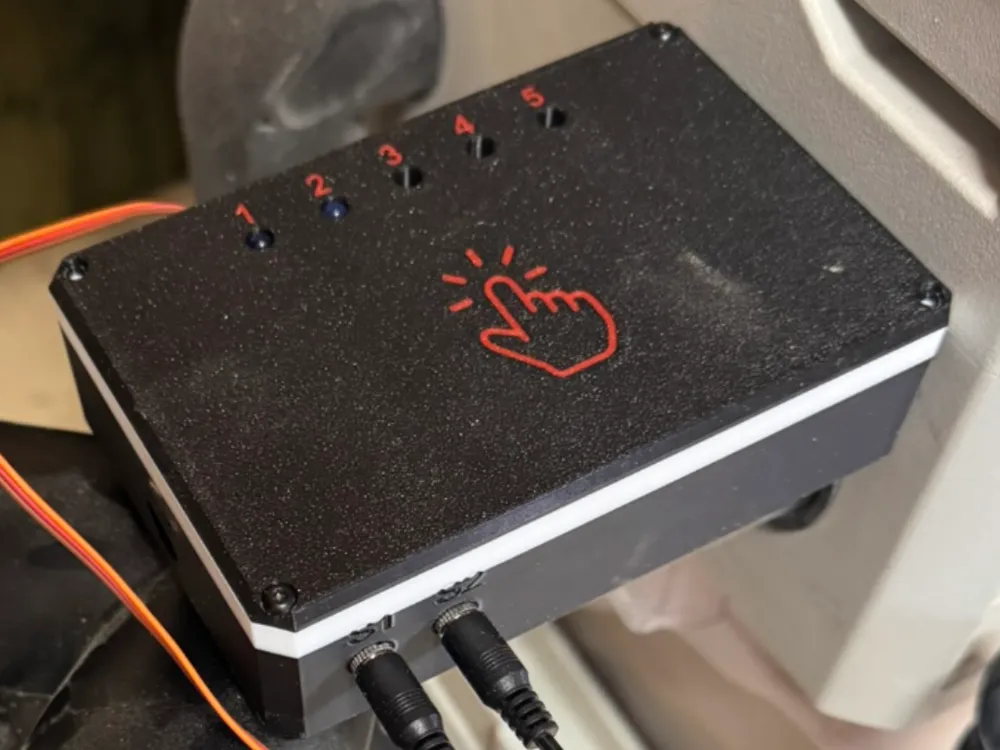
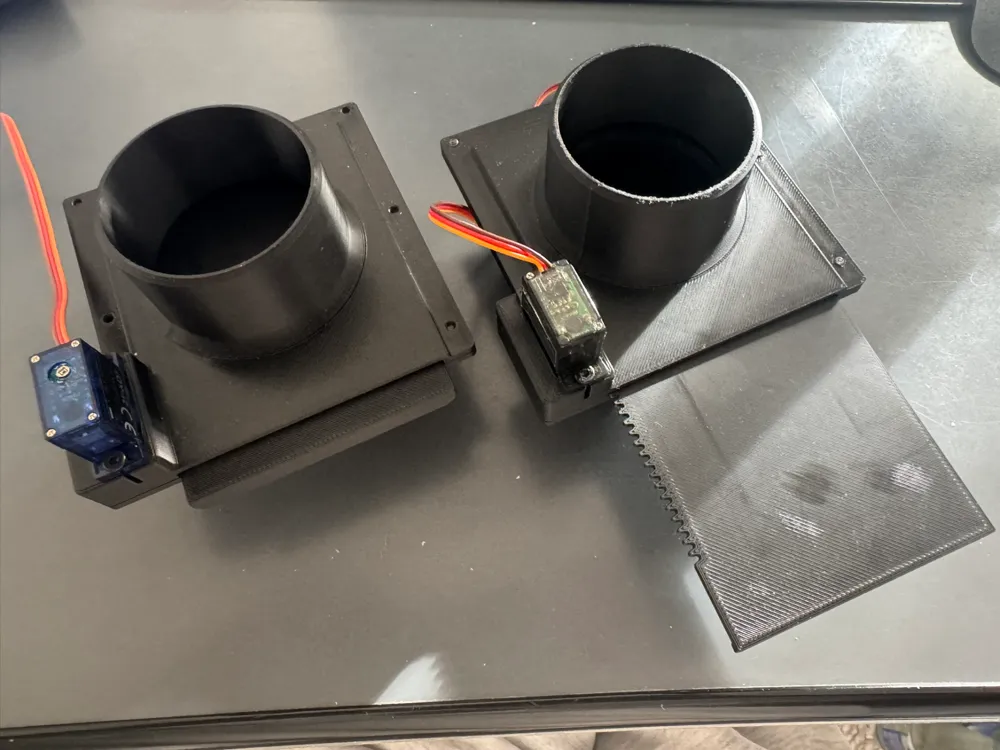

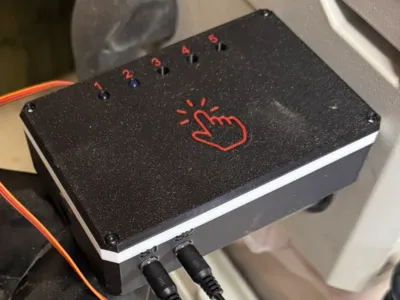
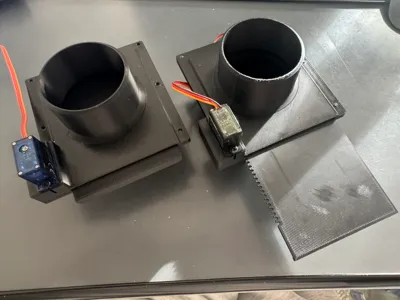
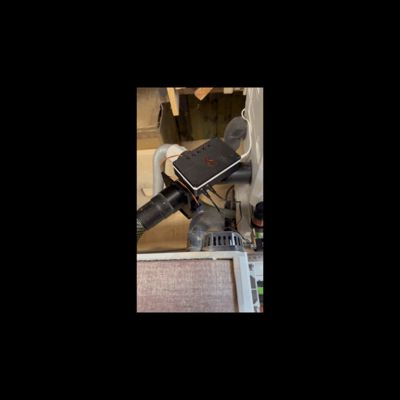
This is an enclosure for my automated locking slide control. It allows for automated opening and closing of the locking slides—also available here on Maker World—(https://makerworld.com/de/models/90649-festool-locking-slide#profileId-192963) upon device activation. Its functionality is sound, and I've detailed the necessary components for replication below.
The enclosure's design is highly specific to the components listed but can also accommodate other microprocessors or parts; these would simply be housed loosely rather than integrated into my fixtures. Functionality remains unchanged.
The following are required:
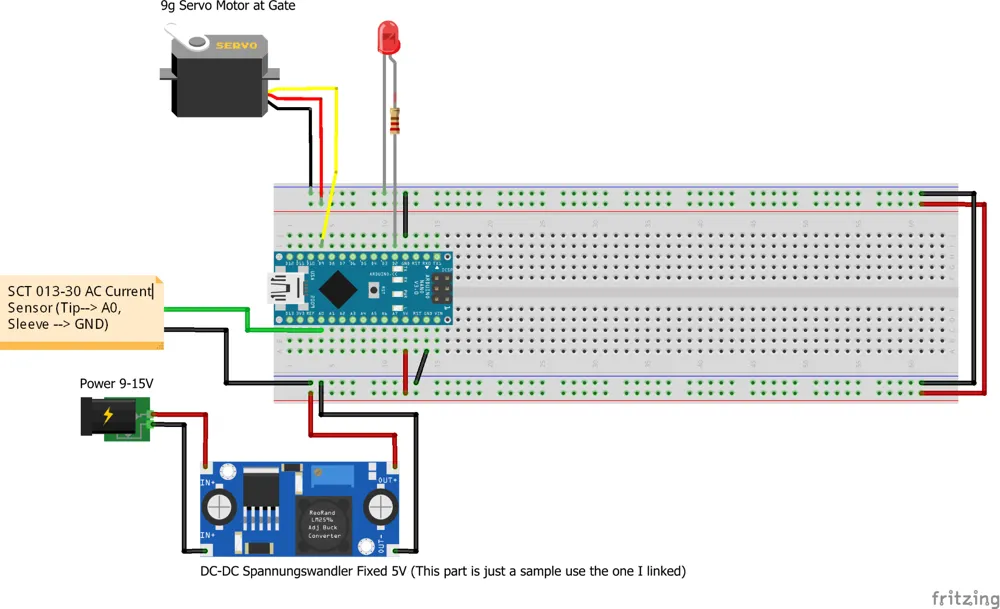
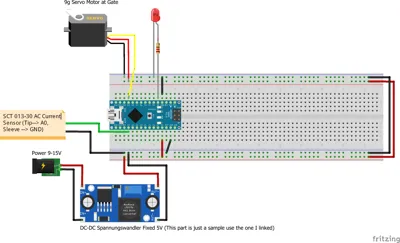
- An Arduino Uno or similar third-party alternative. Depending on the number of gates, each gate requires one digital and one analog pin. https://www.reichelt.de/de/de/shop/produkt/arduino_kompatibles_nano_board_atmega328_mini-usb-225690
- A solderless breadboard with pre-etched pathways. https://www.reichelt.de/de/de/shop/produkt/entwicklerboards_-_pcb_steckboard_protoboard-376779?nbc=1
- A DC-DC converter, such as this one, to safeguard the servos and Arduino power supply. https://www.roboter-bausatz.de/p/spannungswandler-dc-dc-2.5v-15v-auf-5v-fester-ausgang?number=RBS15398&weiche=2&bid=284037-112606-Cj0KCQjw4v6-BhDuARIsALprm327YbqfrRwylslhfkRSlBlDypkLcYiPV0ZBbBwRi5KlbY0mDAUQnDgaAjzREALw_wcB%4083&adcref=
- A power supply with approximately 9-15V output
- Sockets and plugs for servos and sensors
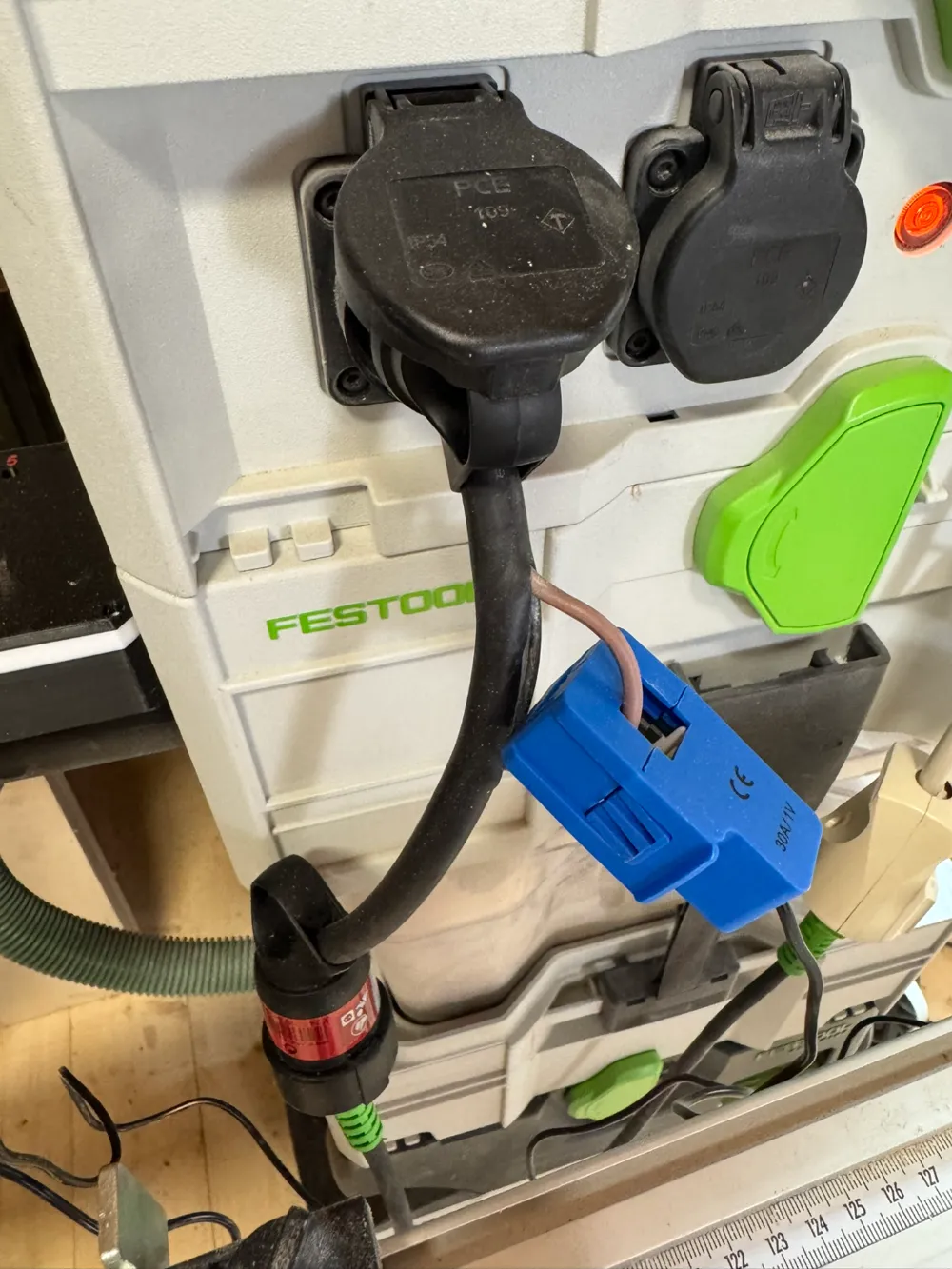
- AC current sensors, similar to these https://www.ebay.de/itm/255283289482
- 9g servos (either standard servos modified for 360-degree rotation or continuous rotation servos) https://www.reichelt.de/de/de/shop/produkt/servomotor_fs90r_mit_rad-258681
- A tactile button for manual gate control. https://www.reichelt.de/de/de/shop/produkt/entwicklerboards_-_kapazitiver_beruehrungssensor-253985
- Several LEDs (preferably with current-limiting resistors) for visual gate status indication
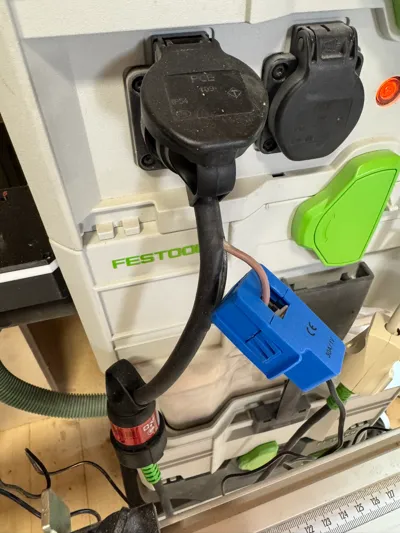
- An adapter cable (see images) with the phase exposed from the sheath to ensure accurate current sensor readings. If anyone knows of a superior current sensor that functions effectively with the entire cable passed through, please share a link in the comments, as I've searched extensively without success.
Additional Notes:
- The AC sensors utilize 3.5mm mono jacks where the tip is connected to GND and the sleeve to the signal. The ring is unused. Therefore, when soldering the 3.5mm mono jacks, ensure the tip contact connects to GND and the sleeve to, for example, A0 or the respective analog pin.
- Servos and LEDs connect to the digital pins.
- Depending on the servo source, code adjustments for servo movement might be necessary. Typically, continuous rotation servos should reverse at values 1000-1499 and move forward at 1501-2000, remaining stationary at 1500. These values are readily apparent in the code and can be adjusted as needed. Not all servos have the same speed; therefore, the timing in the "Configuration.h" file should be verified to determine how long it takes for the gate to fully open/close.
- The ZIP file contains code compatible only with the tactile sensor, continuous rotation servos, and the linked sensors.
- Those with experience are welcome to make modifications. Credit for the original code goes to Greg Pringle, who made this possible. I've only minimally adapted it for continuous rotation servos and added a few personally useful functions. I'm also including a link to his GitHub page (https://github.com/Tailslide/BlastGateServo) with further information on connection and operation. His code, designed for standard servos and a standard button, can also be used, although I found it less practical. In my opinion, a tactile button is less prone to errors, and I can precisely adjust the continuous rotation servos to the desired gate position.
- The code supports a maximum of 8 gates; my current enclosure is designed for only 2 gates. Further versions will be uploaded as opportunities arise.
This is an initial overview of my project; further questions are welcome, and the description will be expanded accordingly. Please do not hesitate to ask.
Boost Me (for free)
Give me a boost and I'll give you more models!
License

You shall not share, sub-license, sell, rent, host, transfer, or distribute in any way the digital or 3D printed versions of this object, nor any other derivative work of this object in its digital or physical format (including - but not limited to - remixes of this object, and hosting on other digital platforms). The objects may not be used without permission in any way whatsoever in which you charge money, or collect fees.


Comment & Rating (0)