




Print Profile(1)

Bill of Materials



- Corcelain - Circle x 2: https://makerworld.com/en/models/1079235-corcelain-circle
Description
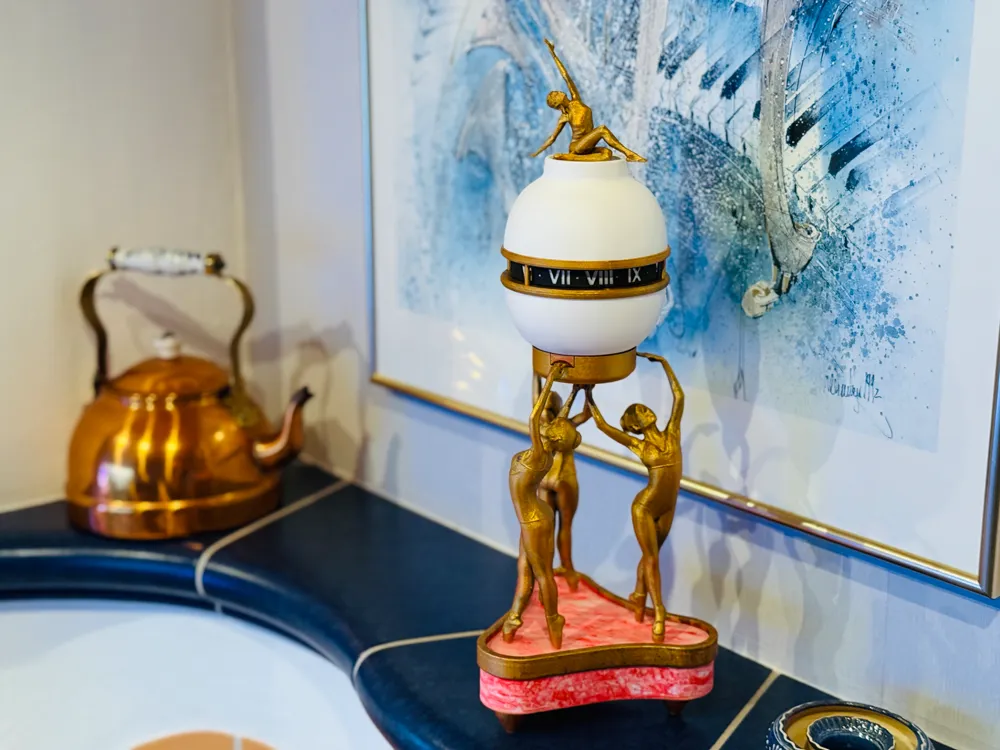
Ormolu And Marble Cercle Tournant Mantel Clock—After Vion, François (French, 1737-1790)
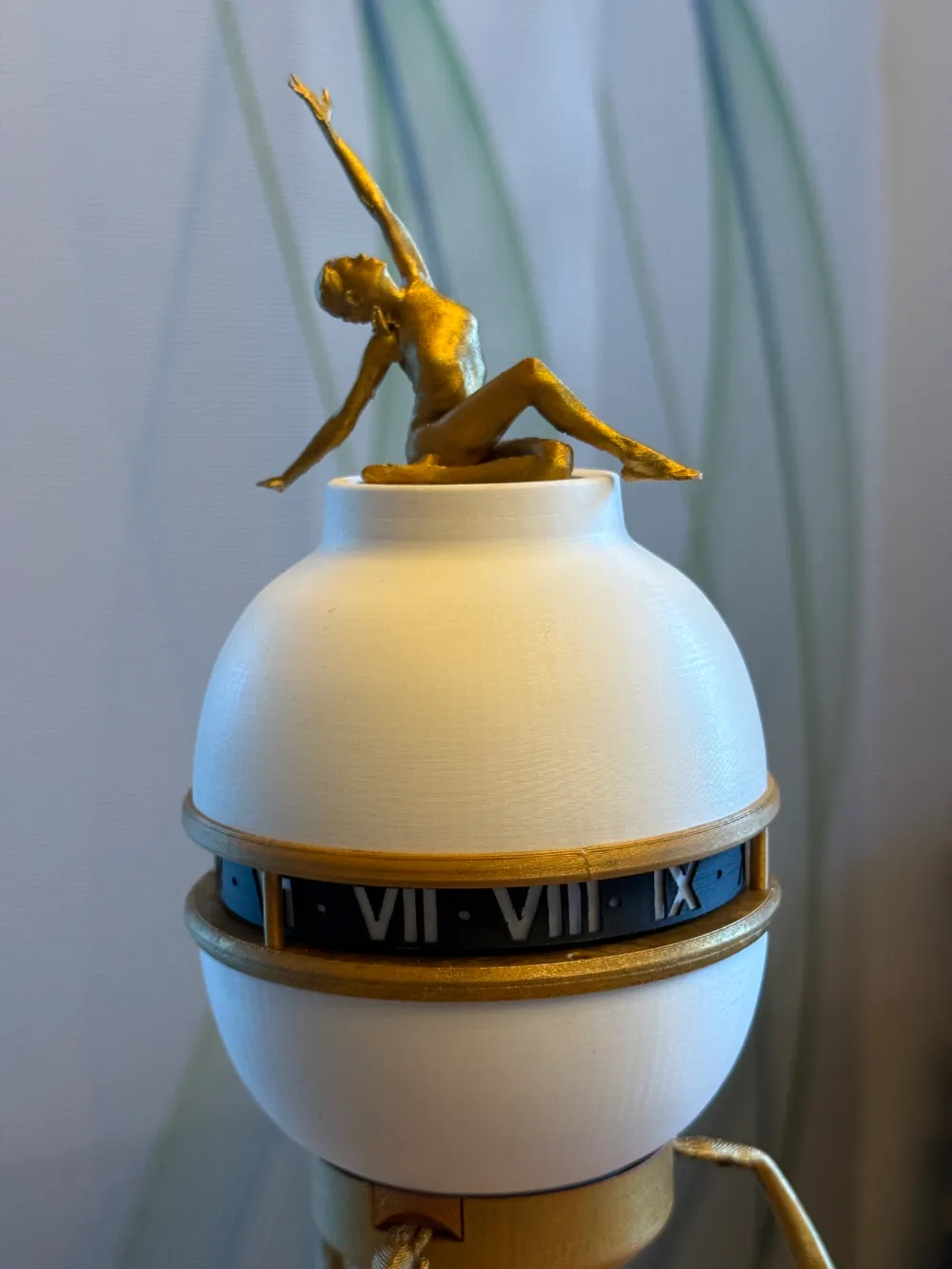
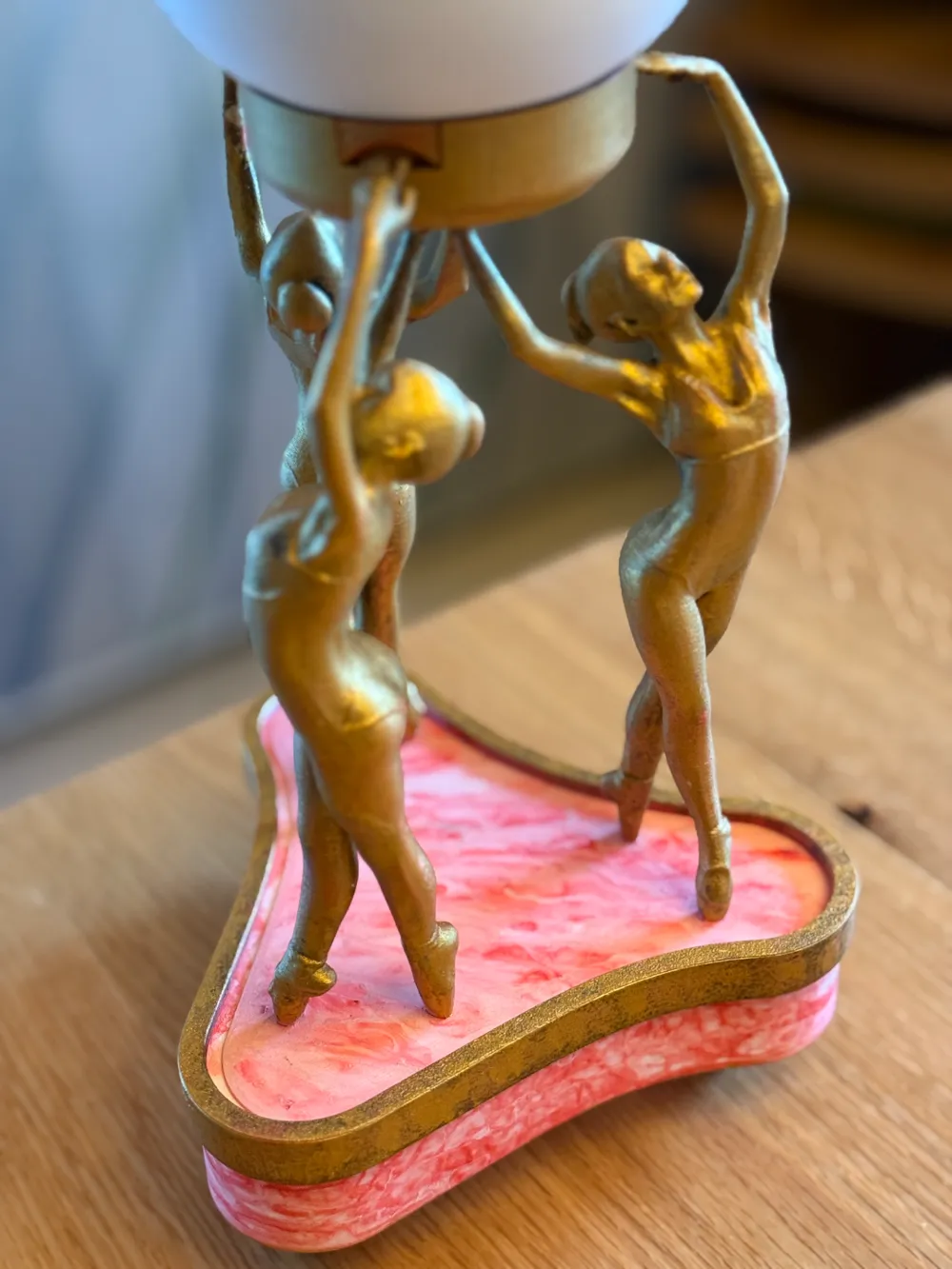
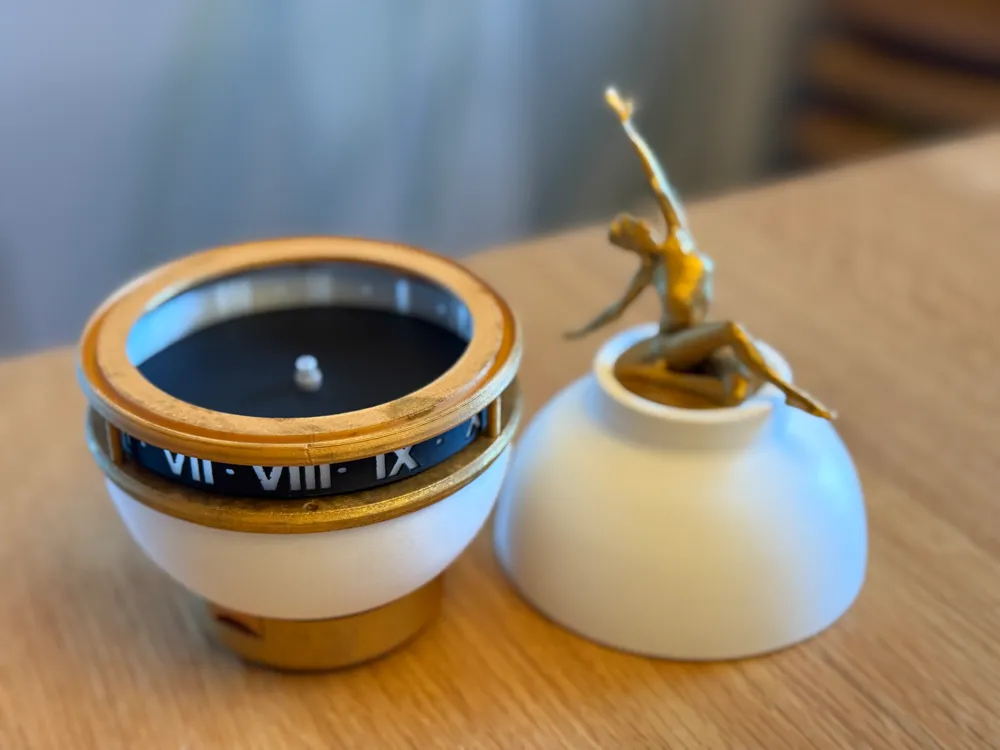
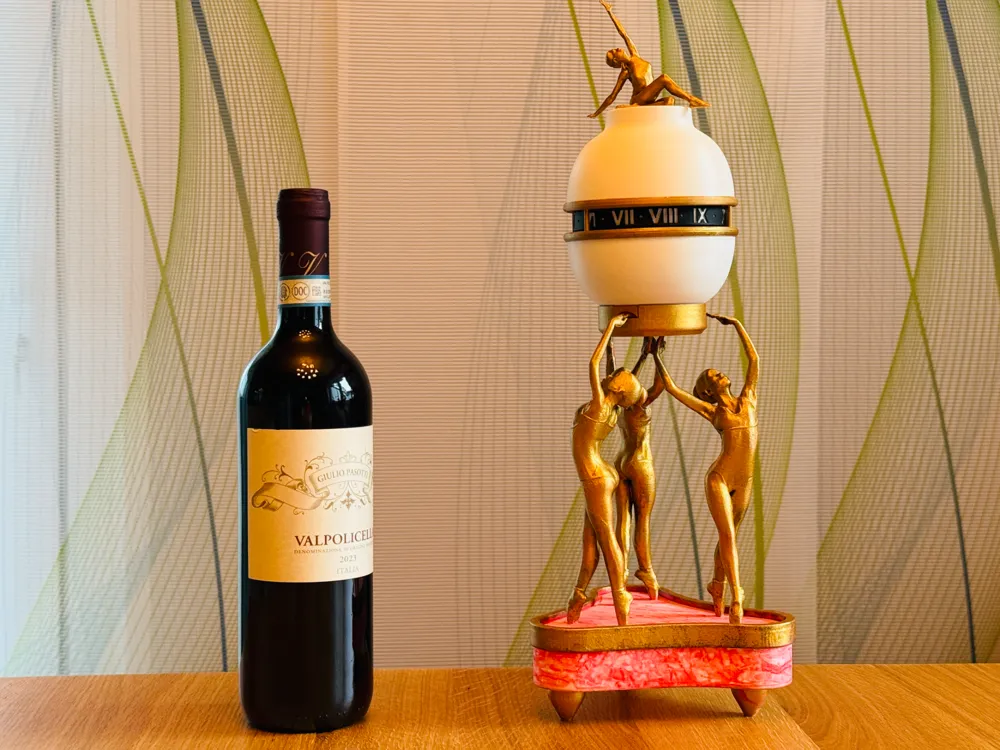
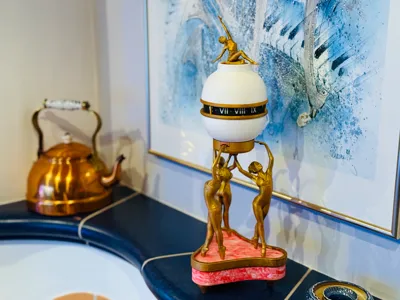
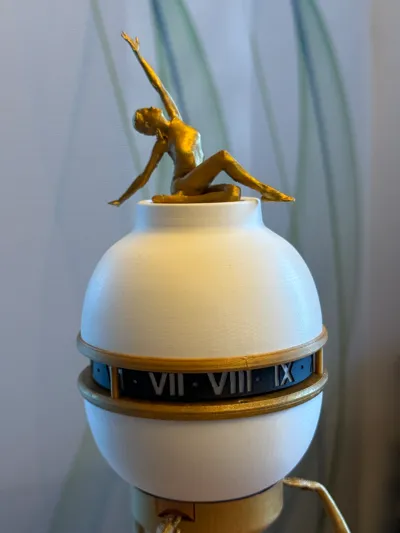
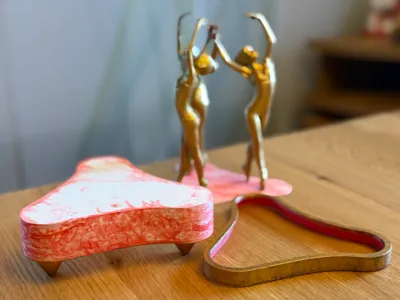
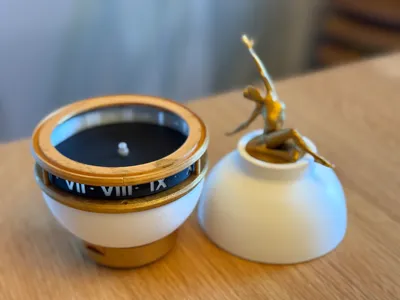
This clock consists of a red marble*, shaped, triangular base upon which three classical, ormolu** female figures stand, holding up a white Corcelain sphere with a black ‘cercle tournant’ dial, topped by an ormolu seated female figure. The Three Graces—that is, Thalia, Euphrosyne and Aglaea, the daughters of Zeus who represented youth and beauty, mirth, and elegance respectively—stand on top of this base. Together, the Three Graces hold up a light-coloured sphere featuring a black ‘cercle tournant’ dial with Roman Numerals.
*technically, acrylic paint rather than actual red marble
**technically, gold painted PLA rather than gilded bronze
Inspiration
The piece is inspired by a famous design by the French bronzier, François Vion, which similarly depicts the Three Graces linked together and supporting a sphere-shaped clock with an orbit movement. The model for this clock was invented by François Vion around 1765 (a model that belonged to Madame du Barry): Vion is said to have drawn inspiration from a clock featuring the three Graces by Falconet, held at the Louvre Museum. The model was quite popular in the 19th century.
https://chateaudechantilly.fr/en/collection/three-graces-clock/
https://collections.louvre.fr/en/ark:/53355/cl010114662
Print & Assembly Notes
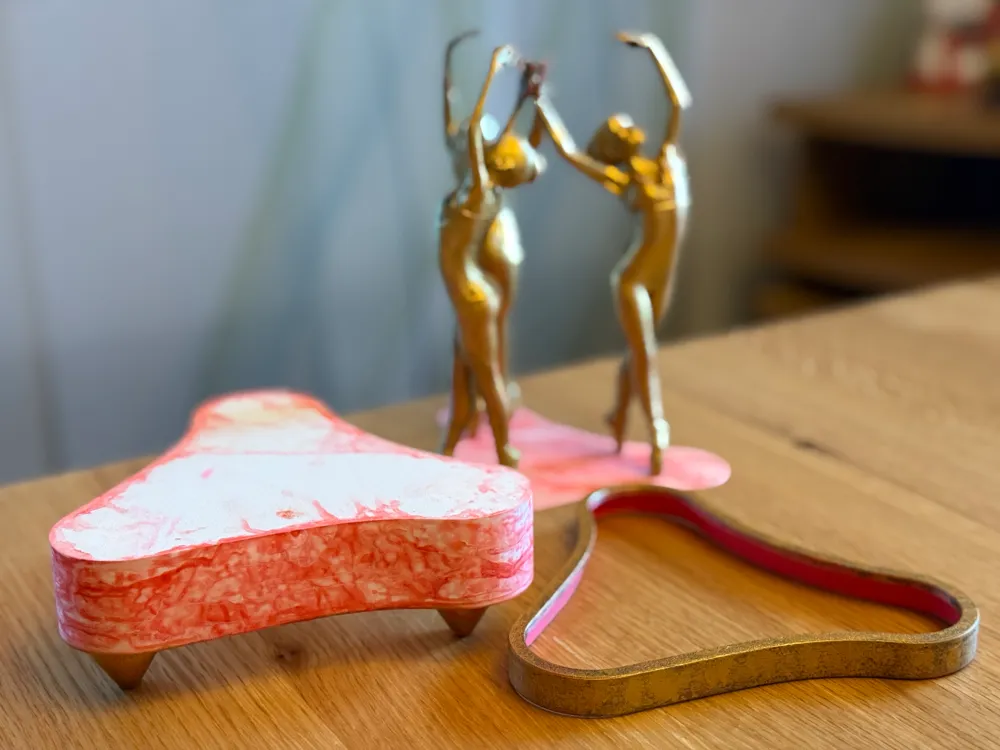
Please see the attached assembly guide for instructions. As mentioned in the print profile, the base is asymmetrical to make it easier to prove ownership in case the model gets stolen. So, if the items on plates 1-3 seem misaligned, just rotate them clockwise or counterclockwise. Things (especially the Three Graces) might feel a little “wobbly” when you take them off the plate. But once you have them attached to each other, they will stabilize a lot. There is no need to glue anything but if you prefer, you can of course do so. Just remember that you might need access to the clock dial when changing batteries or adjusting the time for daylight savings.
Post-processing
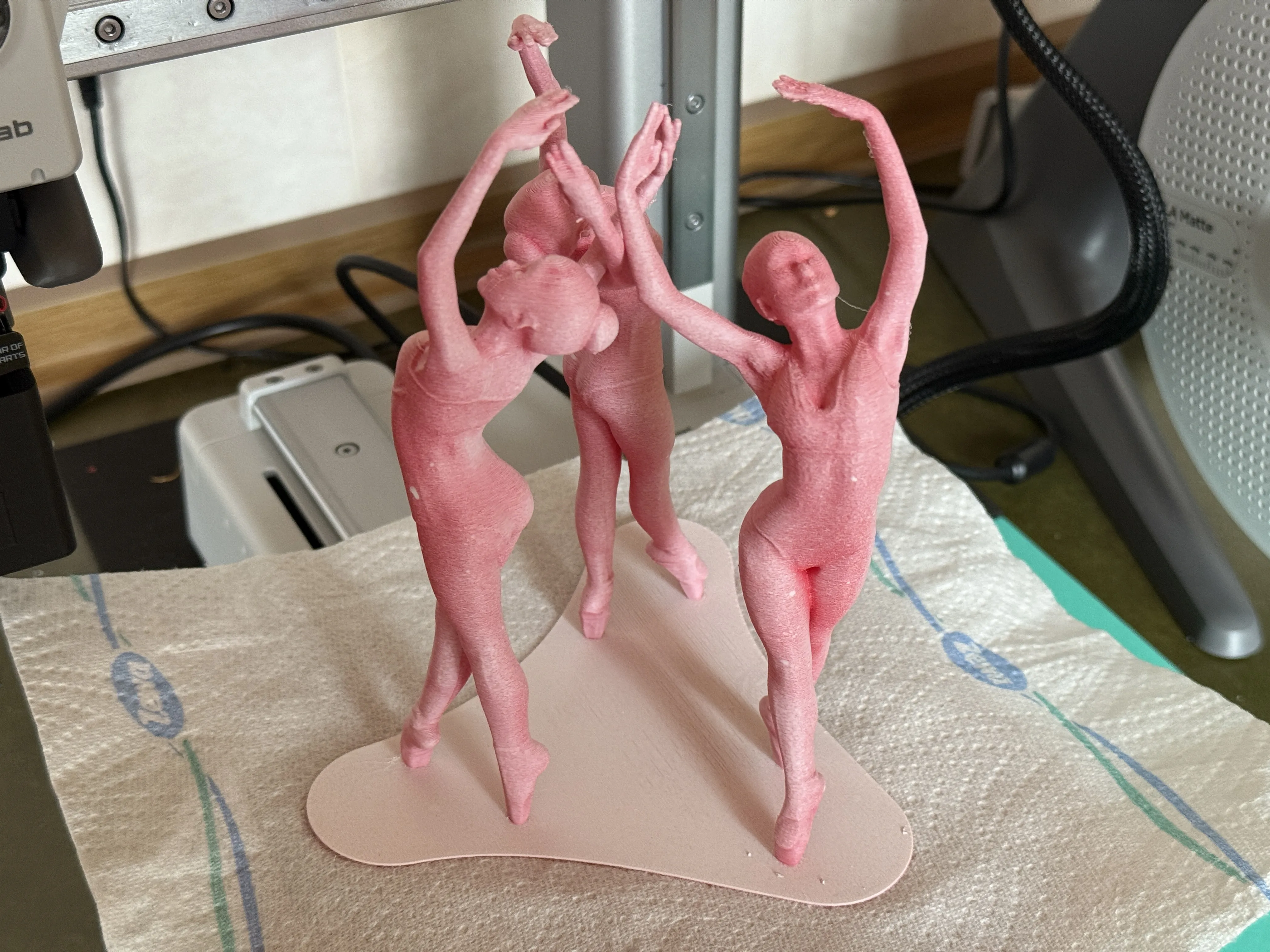
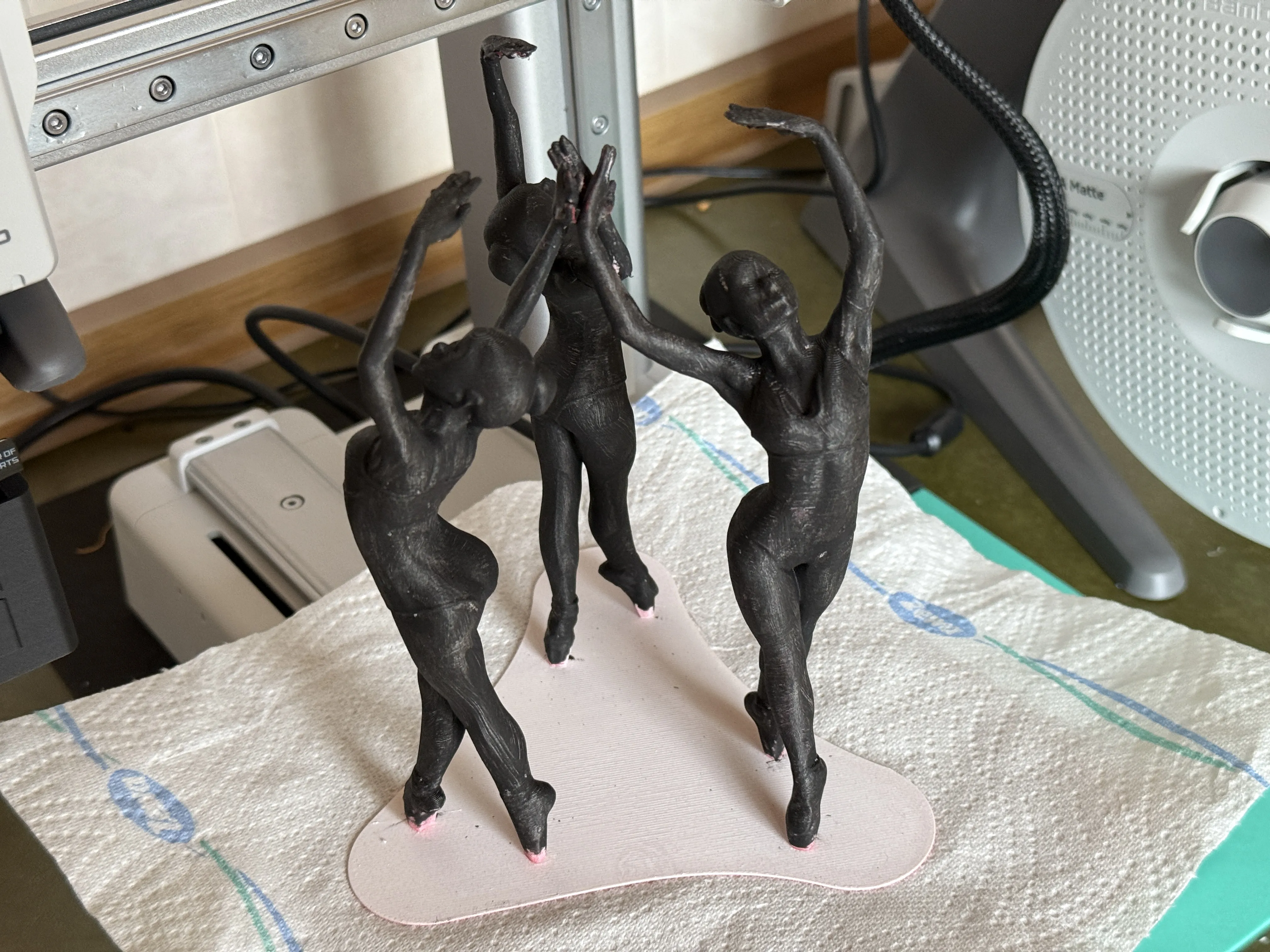
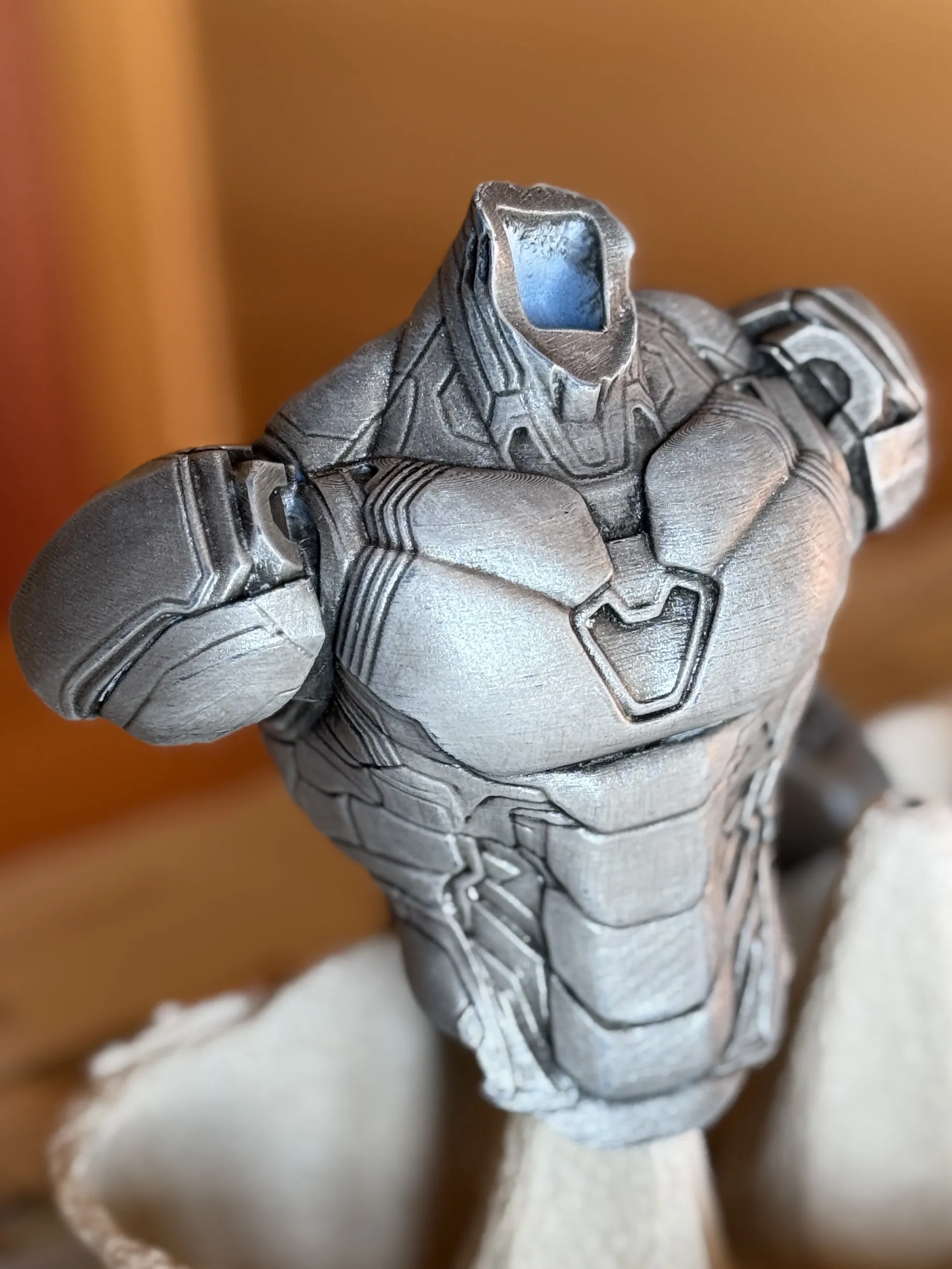
In case you're wondering why I list red instead of gold in the BOL; it provides a good base for a warmer gold finish. It is of course entirely up to you if you want to spend the extra time painting the model afterwards. Personally, I prefer the antique look for this model. Not to go into too much detail here; but it's basically [1] apply white primer, [2] wait 12 hours, [3] paint black, [4] wait 12 hours, [5] wash off the black paint in warm water, [6] proceed to paint the model gold.
The whole point of the above exercise is to add depth and texture to the model. Too long to discuss here in the model description, but if I'll ever find the time to write a forum post about it, I'll put the link here. Here are three picture of what the individual stages look like. (I forgot to take a picture after washing the black paint off, so I'll substitute it with an Iron Man chest that underwent the same procedure).
Boost Me (for free)
Think this model deserves a boost?
Acknowledgments
The “Three Graces” model was created using Image-to-3D from MakerWorld, and then post-processed in Fusion 360 to make sure the arms lock into the Corcelain base at the correct angles to support and stabilize the two Corcelain pieces holding the clock mechanism.
Powered by Image-to-3D from MakerWorld (https://makerworld.com/makerlab/imageTo3d)
Documentation (1)
License

You shall not share, sub-license, sell, rent, host, transfer, or distribute in any way the digital or 3D printed versions of this object, nor any other derivative work of this object in its digital or physical format (including - but not limited to - remixes of this object, and hosting on other digital platforms). The objects may not be used without permission in any way whatsoever in which you charge money, or collect fees.


Comment & Rating (16)