
(Obsolete) Bad 32-note pipe organ
Print Profile(1)

Description
Update 2025-12-24:
This design, which I rushed to release for the Spring 2025 musical instruments contest, is obsolete. Please check out my newer design here: https://makerworld.com/en/models/2151850-32-note-pipe-organ#profileId-2332053
The new design addresses many weaknesses of the original, including:
- Air leakage is orders of magnitude lower, and in the same realm as a traditionally built instrument.
- Most epoxy joints are replaced by printable fasteners.
- Metal parts reduced from 164 to 36
I've also released a printed-and-welded foot pump wind system: https://makerworld.com/en/models/1531756-ribbed-bellows-for-a-small-pump-organ#profileId-1606408
Here is the promised sound demo. Try not to laugh too hard :)
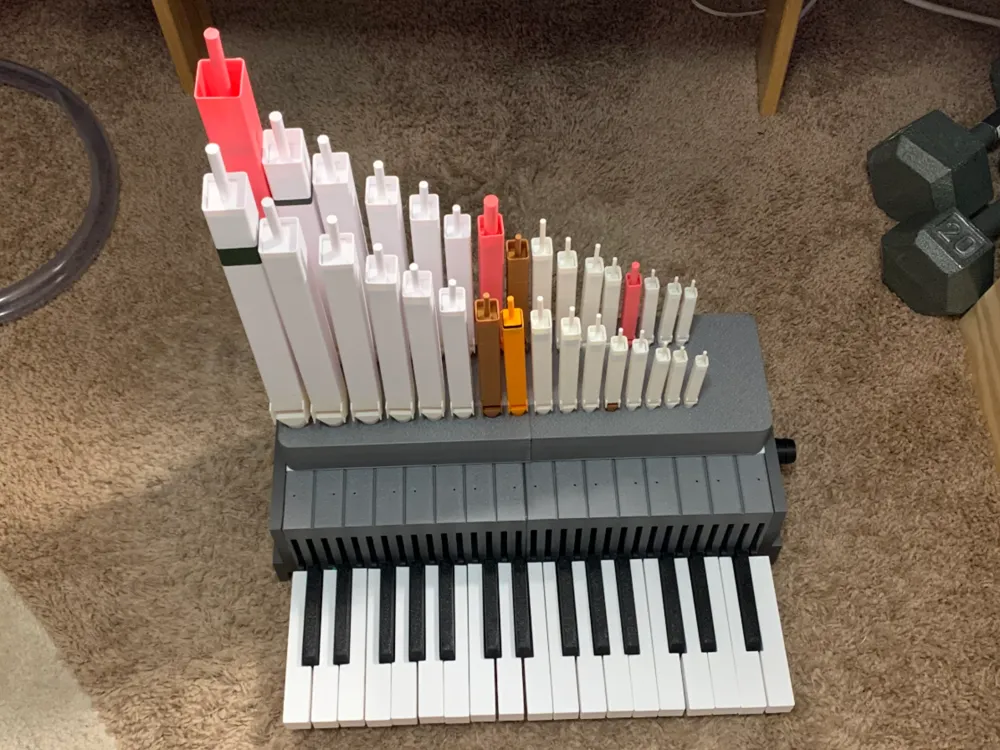
This is my first, barely-working pipe organ design. This pursuit is why I got into 3D printing.
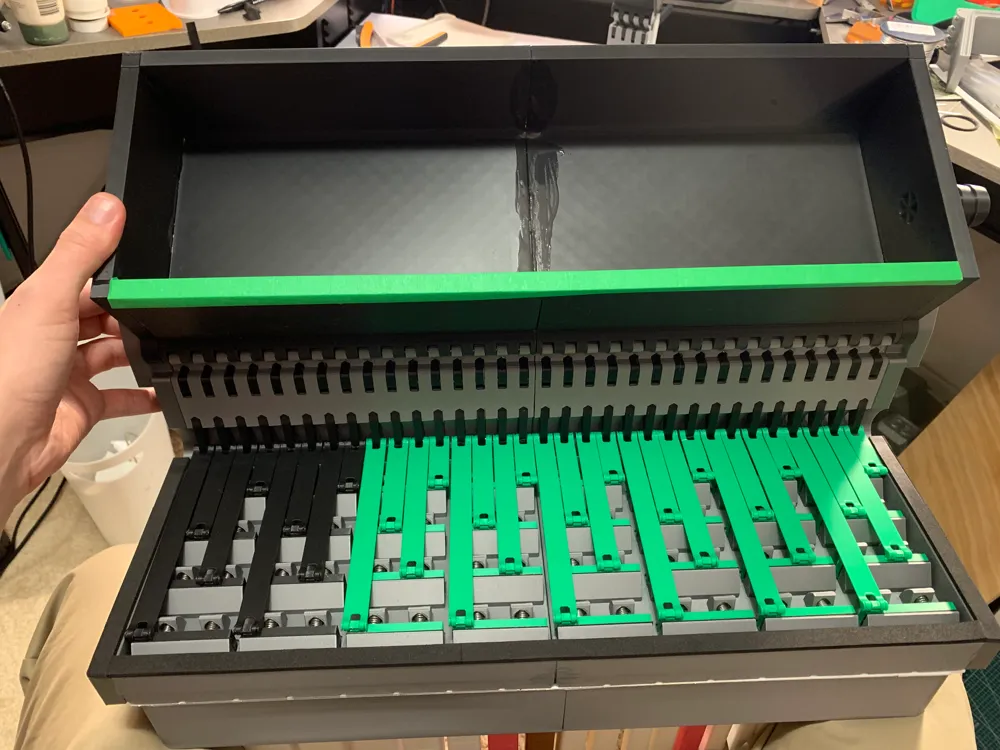
To build the keyboard, follow the instructions for my Modular Tracker Action, which this instrument uses.
https://makerworld.com/en/models/1238953-modular-tracker-action-for-small-pipe-organs#profileId-1259140
To attach the windchest to the pallet board, cover the area with double-sided adhesive foam and cut through it to re-open the rectangular holes.
Here are some brief instructions for assembling the pipes:
- Glue all the pipe segments together with medium-viscosity CA glue, but leave the foot loose.
- Wrap the tuner with 1/16"×3/8" foam weather stripping tape. Start and end in the centre of a side, and leave it slightly loose around the corners so it will seal better. Then apply cork grease to the foam, and slide the tuner down the end of the pipe. (Even the slightest leak, especially near/at the tuner, will drastically weaken the sound.)
- Sharpen the upper lip by trimming away material from the inside. Keep it as straight and uniform as possible across the whole width.
- When the sound is strong and quick, the pipe is done, and you can glue the foot on.
- Friction-fit the pipe into the windchest by just pushing it in.
License



Comment & Rating (17)