
4/4 Violin

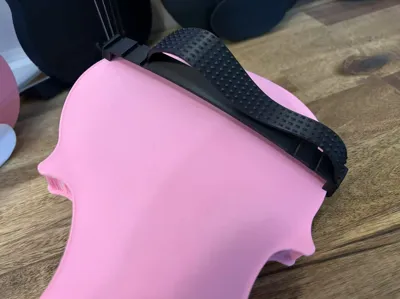
Print Profile(6)


![[Stronger Gears] 0.12mm layer, 3 walls, 50% infill](https://makerworld.bblmw.com/makerworld/model/US52a37d0dbd93e6/313091246/instance/2025-05-28_b4d5d1f5edf0b8.jpg?x-oss-process=image%2Fresize%2Cw_100%2Fformat%2Cwebp)


Bill of Materials
- 4/4小提琴琴弦一套 x 1: 弦长不少于530mm/545mm,请参见模型描述。
- 8mmx154mm碳钎维杆 x 1: 150mm~154mm
- 5.5mmx120mm碳钎维杆 x 1: 可选
Description
Note:
This violin model necessitates a minimum string length of 545 mm for the A and D strings, and 530 mm for the E and G strings. Standard 4/4 violin string lengths typically range from 530 mm to 600 mm. Please ensure you select appropriately sized strings prior to purchase.
Only the initial two plates require printing; the third is optional. Refer to the subsequent description for details. Older configuration files necessitate longer string lengths: a minimum of 550 mm for the A and D strings, and 565 mm for the E and G strings. Pre-print flow rate calibration is advisable, given the violin’s tightly fitted components—most clearances measure a mere 0.2 mm.
Notice:
This violin model requires a minimum string length of 545 mm for the A and D strings, and 530 mm for the E and G strings. Standard 4/4 violin string lengths typically range from 530 mm to 600 mm. Please make sure to select strings of appropriate length before purchasing.
Only the first two plates needs to be printed. The third plate is optional. For details, please refer to the description below. Older configuration file models require longer string lengths: minimum 550mm for A and D strings, and 565mm for E and G strings. It is recommended to perform a flow rate calibration before printing, as this violin is designed with tightly fitting components—most clearance gaps are only 0.2mm.
This violin is fundamentally playable with standard 4/4 violin strings. However, incorporating an 8 mm carbon fiber rod is recommended for enhanced longevity. A 5.5 mm rod is also an option.
With the right length 4/4 size violin strings, this violin would works well. However, it is recommended to add 8mm carbon fiber rod to ensure long-term durability. 5.5mm rod is an option.
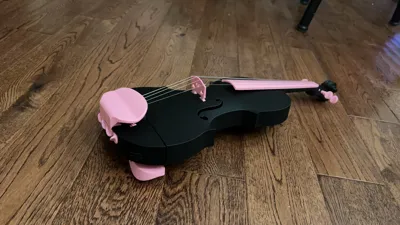
Presented here is a video showcasing my son’s performance using the fourth iteration of this violin:
Here is a video of my son playing with the fourth version of this violin:
Here is a video of my friend Karl playing with the v7.1b violin:
Optional Print Settings for the Third Plate:
- Fingerboard (horizontal print):
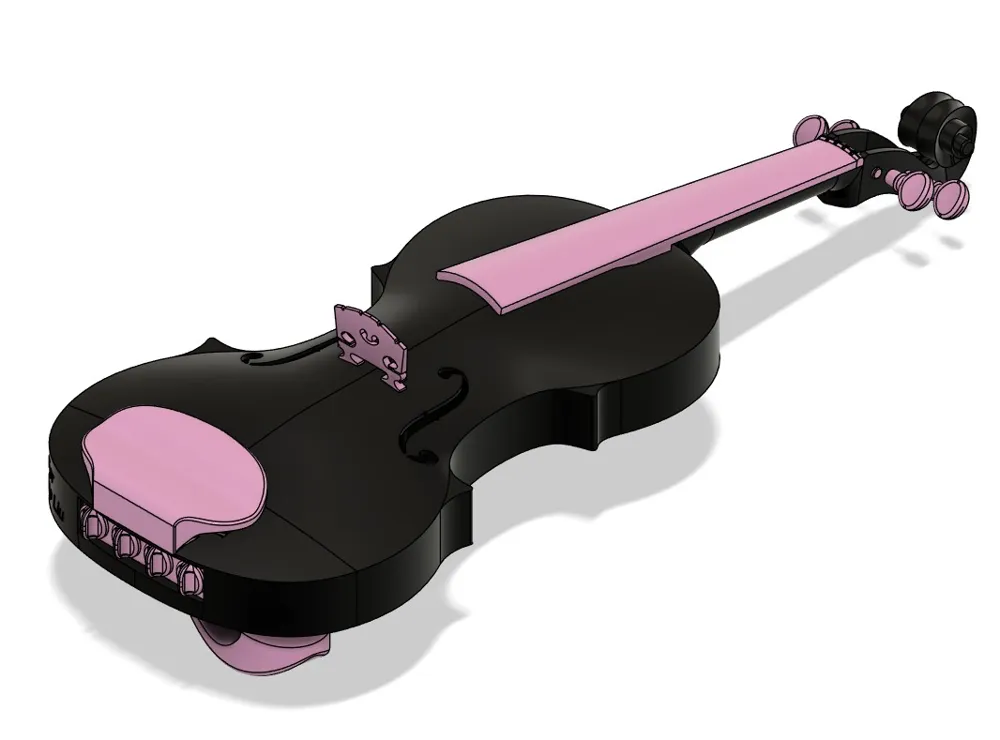
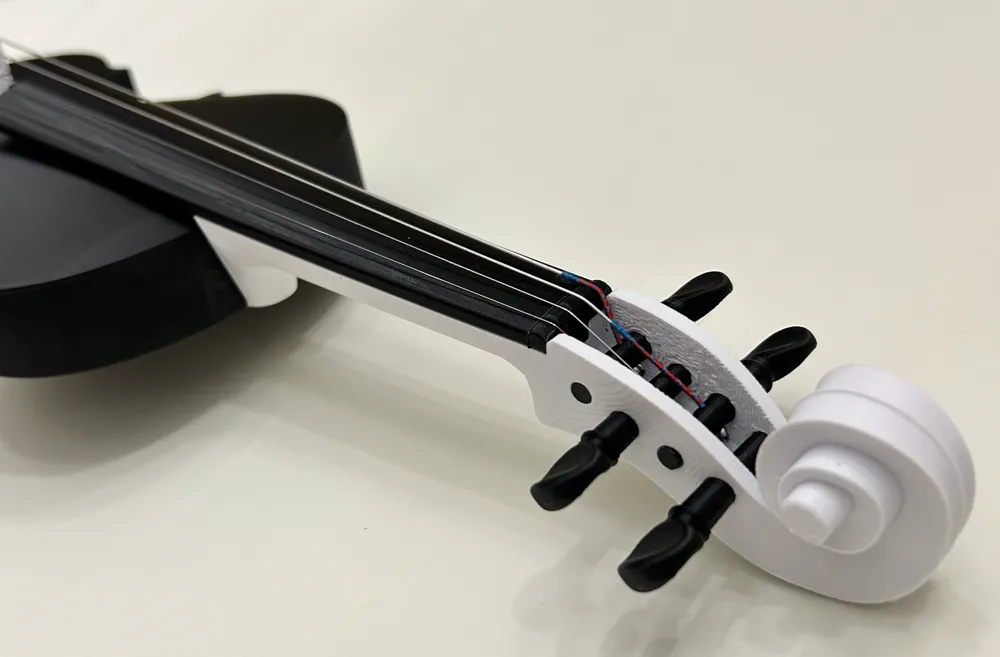
The fingerboard defaults to vertical printing, yielding an exceptionally smooth surface (as illustrated). By default, the fingerboard is printed vertically, which results in a very smooth surface (as shown in the picture).
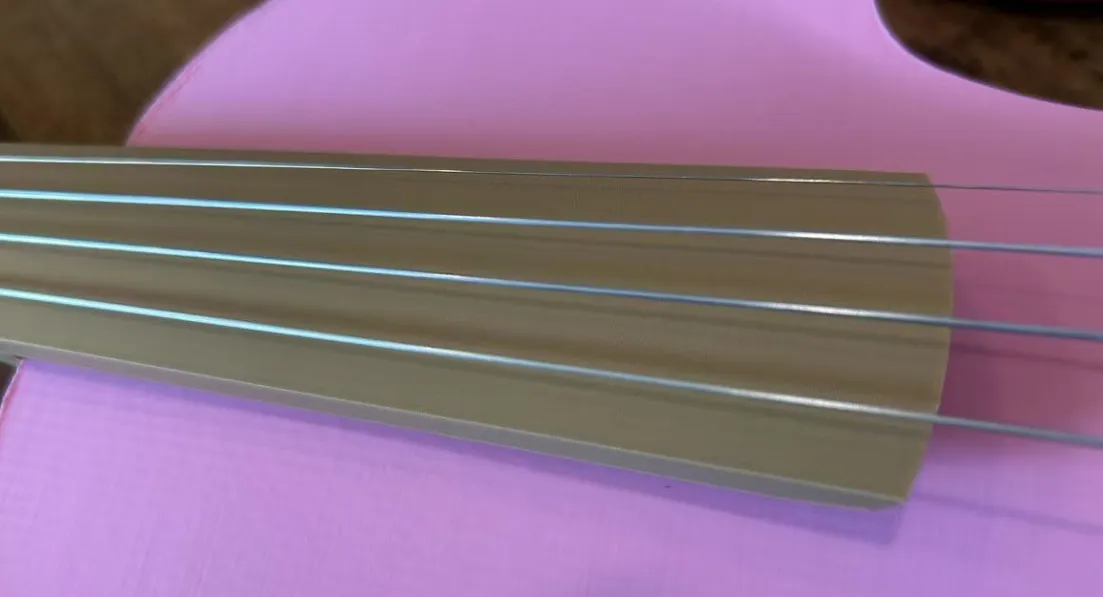
Should your print bed’s adhesion prove inadequate, horizontal printing is an alternative. Horizontally printed components exhibit a textured, almost scale-like finish—a characteristic I find aesthetically pleasing—but sanding is recommended for an improved tactile experience. If your print bed has insufficient adhesion, you can choose to print it horizontally. Horizontal prints will have a scaly surface texture — something I personally like — but I recommend sanding the surface for a better playing feel.
- Neck (45-degree angle print)
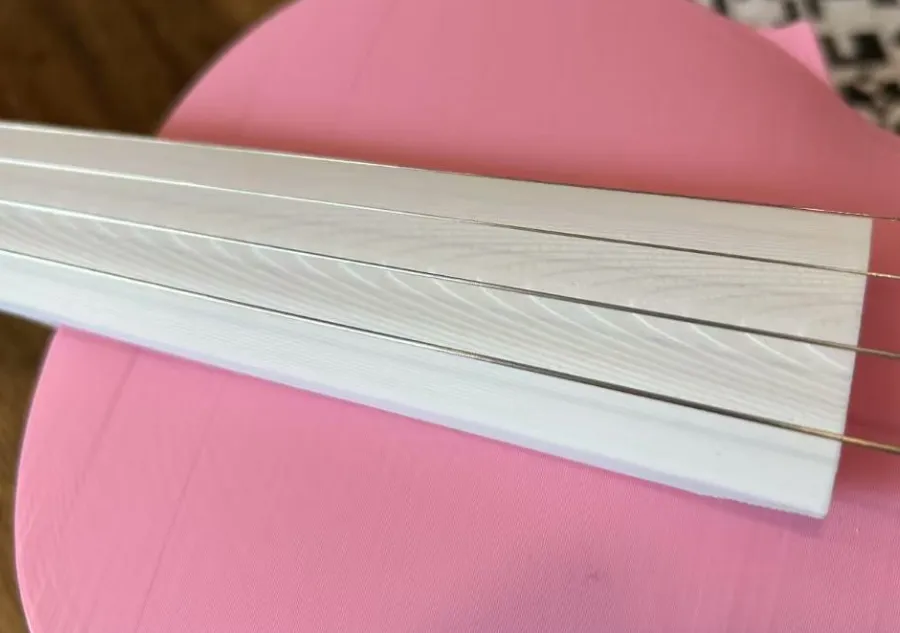
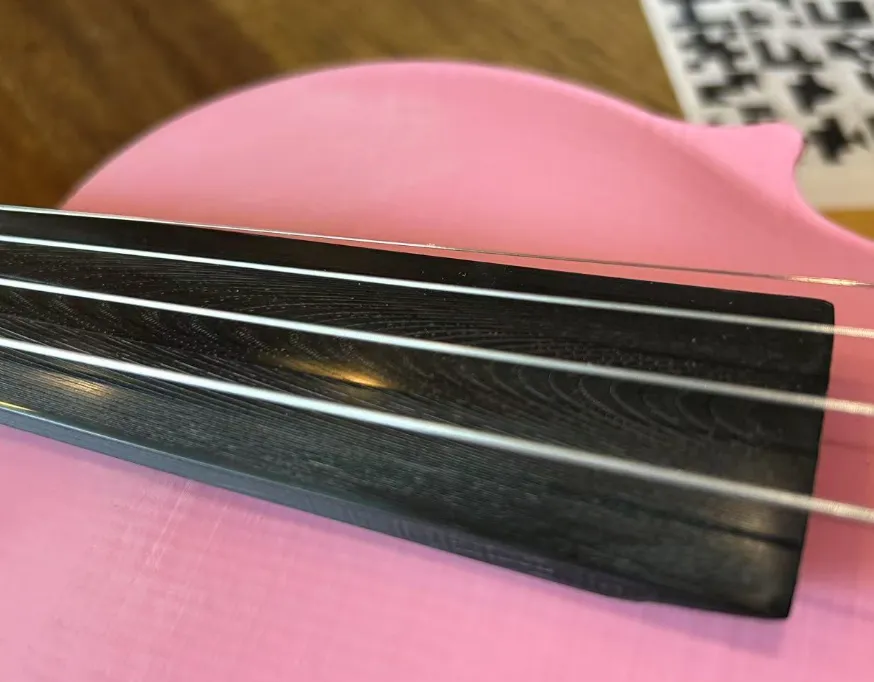
A 45-degree print orientation for the neck results in a superior, smoother surface finish. However, insufficient bed adhesion may lead to print failures. My preferred print surface is Bigtreetech’s Frostbite bed.
Printing the neck at a 45° angle will produce a better and smoother surface finish. However, poor bed adhesion may cause print failures. I used Bigtreetech’s Frostbite print bed for this.
Version 7.32c
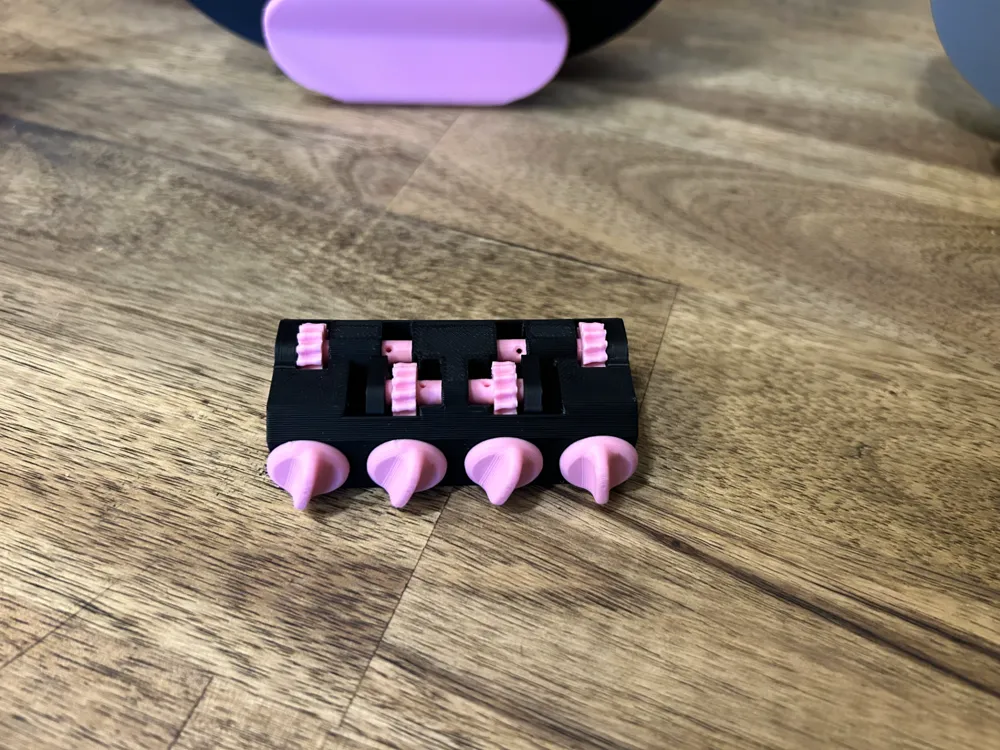
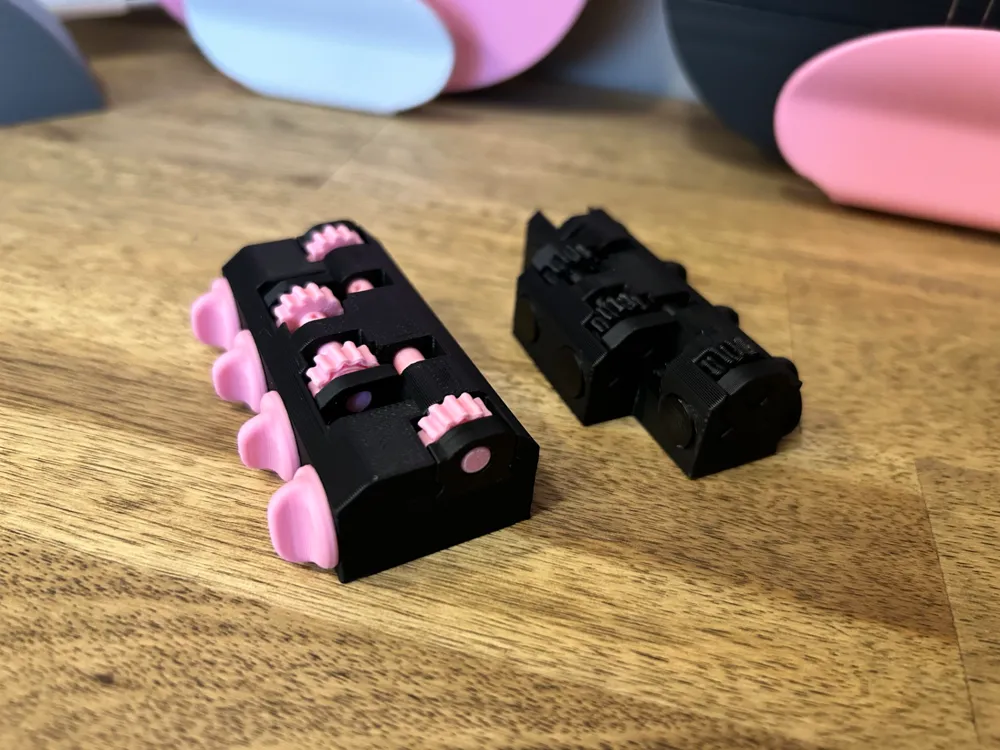
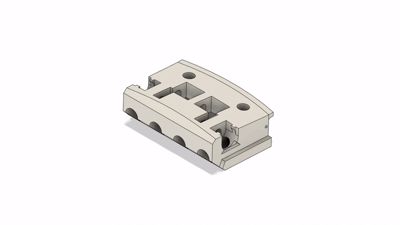
- Minor adjustments to the string tensioner body’s form, facilitating easier gear installation
- Minor modifications to the violin body’s front internal edge, minimizing visible bottom layer lines during printing
Version 7.31c
- Modified the fingerboard's default print orientation to horizontal, enhancing first-attempt print success rates
- Incorporated lateral gear stoppers into the string tensioning mechanism
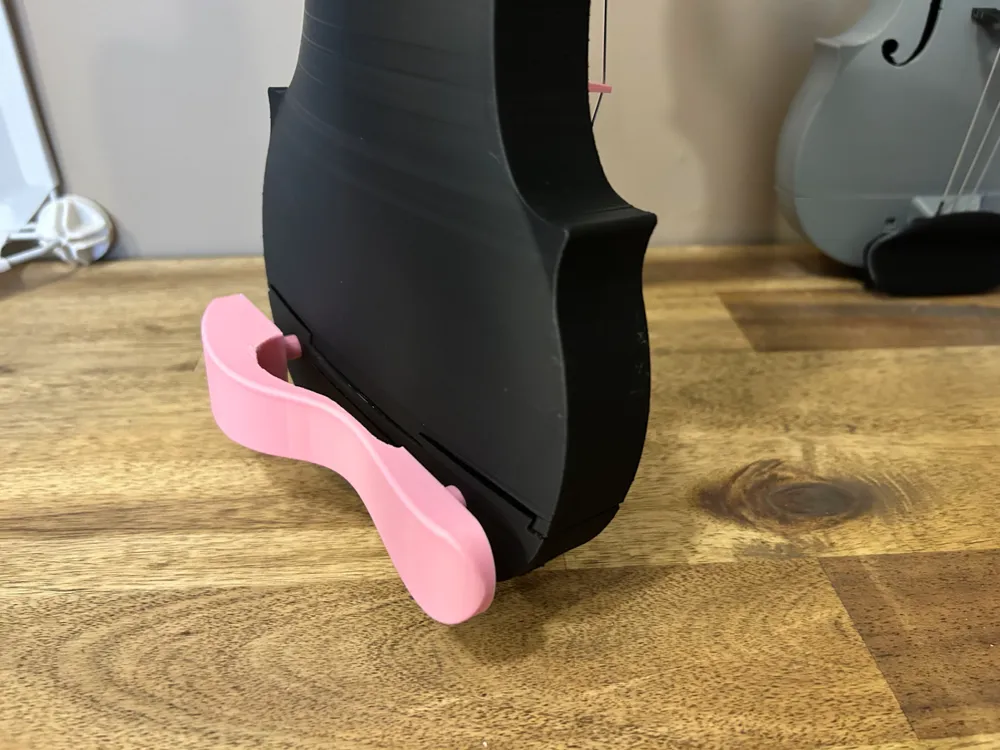
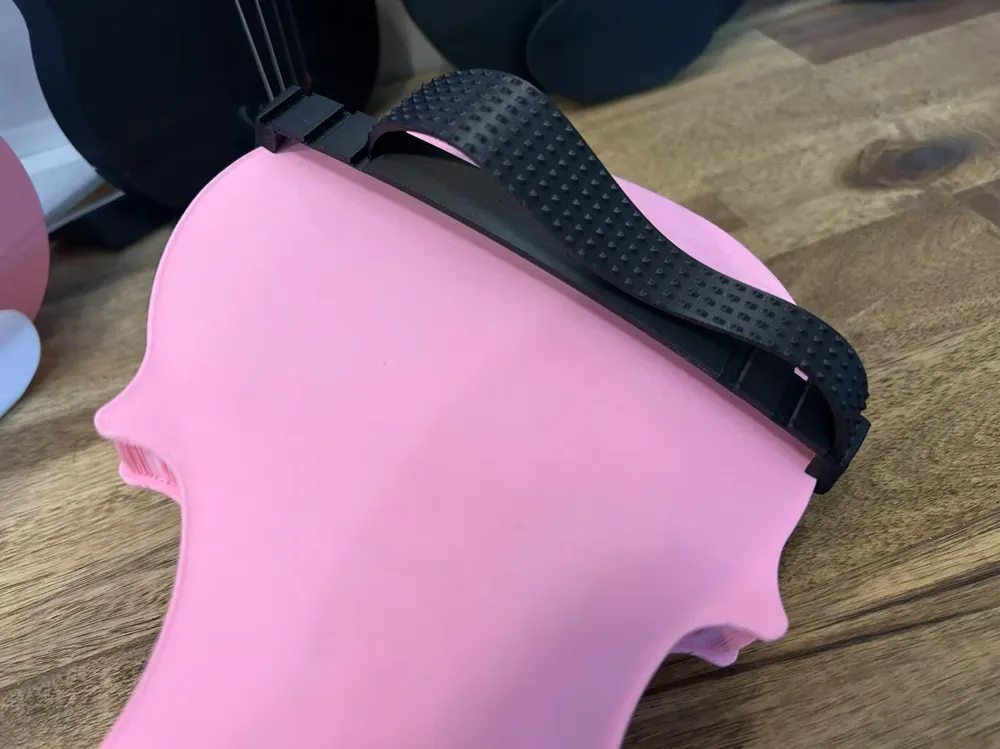
- Minor chinrest modifications for simplified installation and removal
Version 7.3c

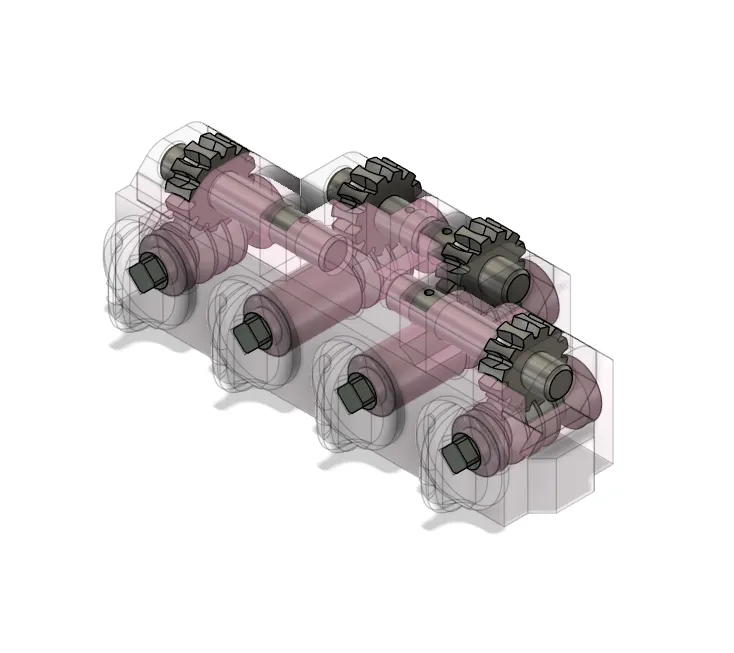
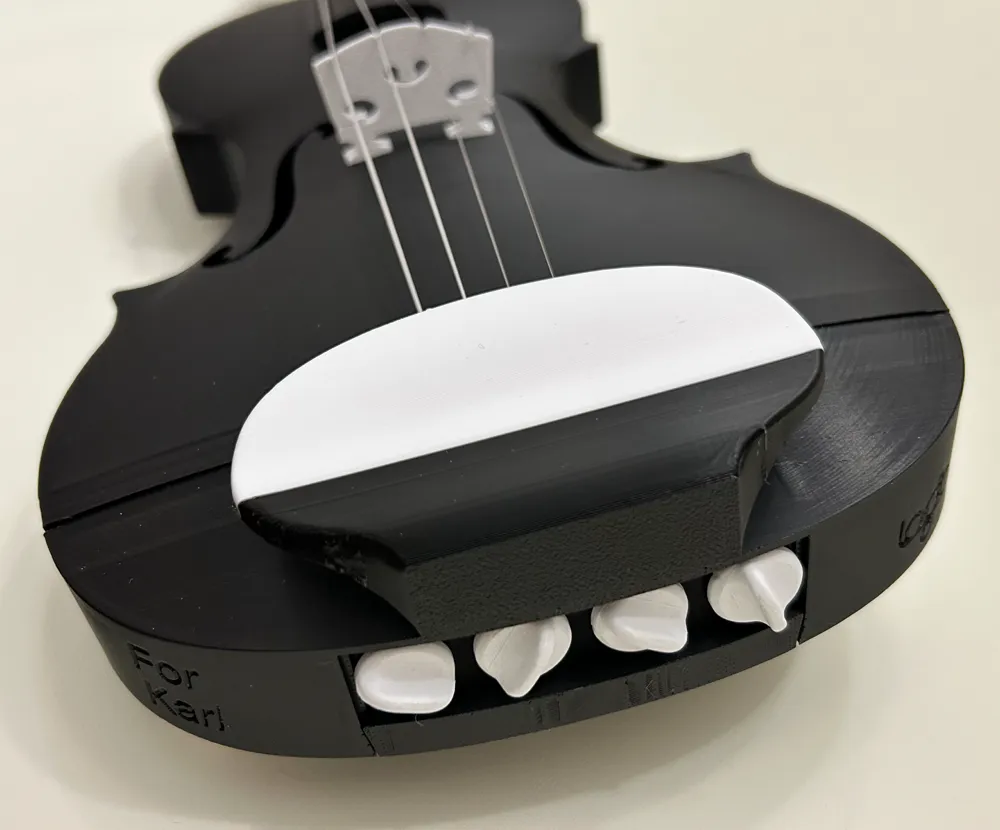
- Complete redesign of the string tensioning mechanism’s primary structure for streamlined assembly
- Adjusted chin rest and shoulder rest fit for enhanced security and reduced detachment
- Optimized model orientation and support settings within the print configuration for X and P series printer compatibility
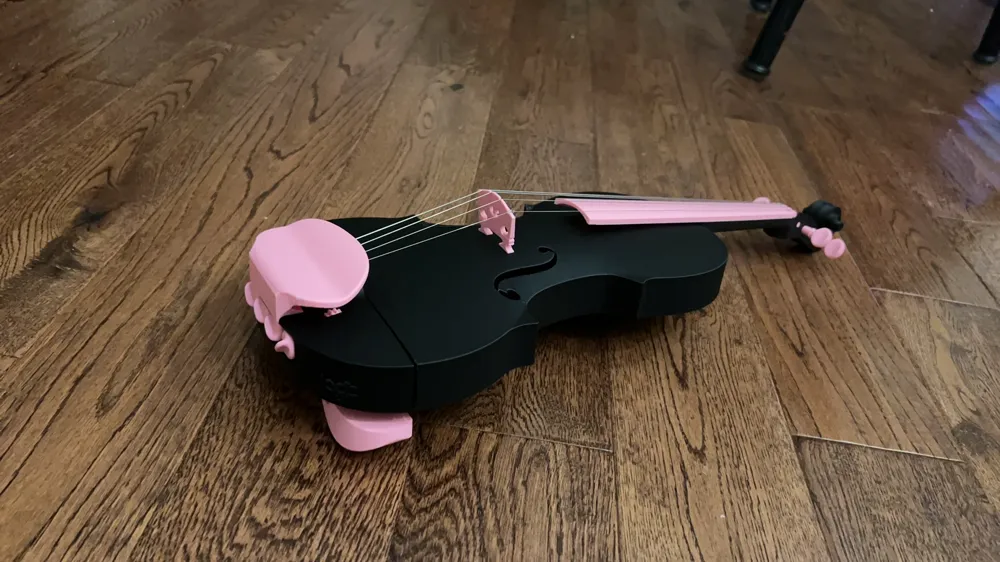
- Relocated the shoulder rest to the second print plate
Version 7.2c Updates:
- Redesigned the string tensioning mechanism for compatibility with most commercially available violin strings. Minimum lengths: 530mm for E and G strings, 545mm for A and D strings. The back section of the violin needs to be reprinted to accommodate the new tensioning mechanism. All other parts remain compatible with the previous version and do not require reprinting.
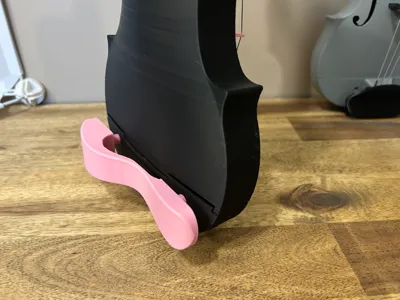
- Added an optional single-side chin rest. There are two versions of this chin rest. The one with support posts positioned farther from the violin’s edge is designed for the older versions v7.0 and v7.1. The version with support posts closer to the edge is intended for use with v7.2c. Please make sure to select the correct version when printing.
- Added a simple optional shoulder rest.
- Added an assembly instruction video.
Version 7.1c Updates:
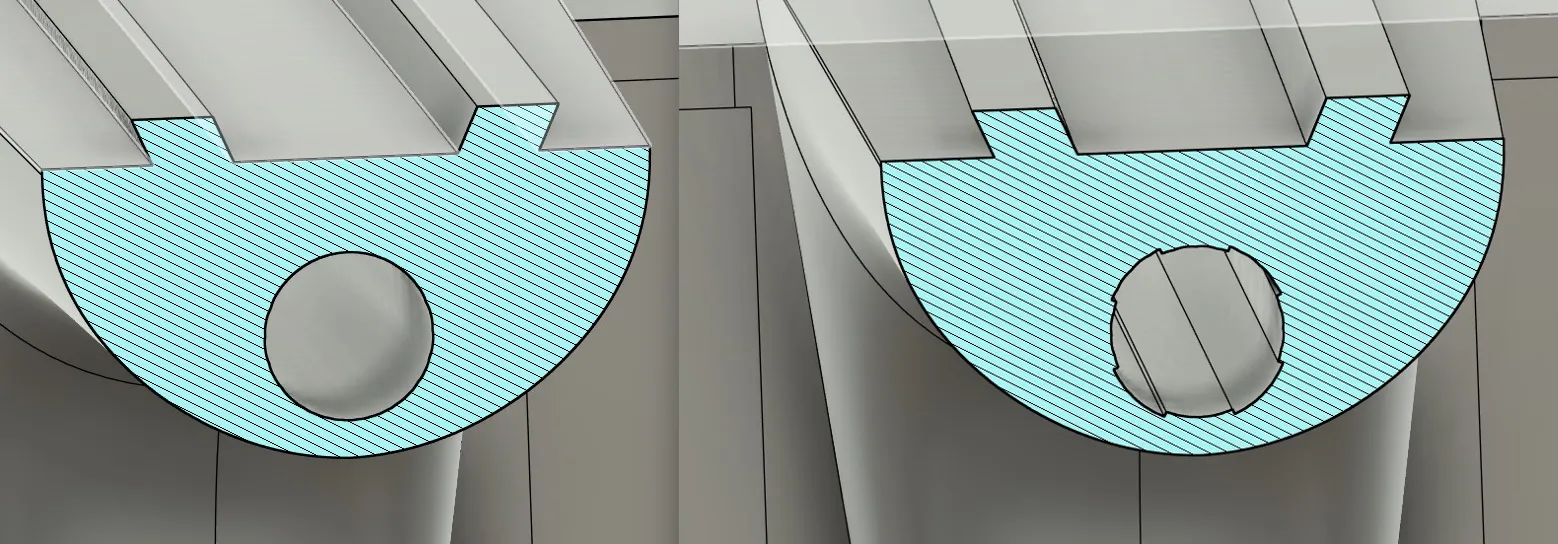
- Modified the 8 mm carbon fiber rod holes to simplify reinforcement rod insertion during assembly
- Slightly reduced the neck’s pre-bend
- Slightly increased the F-hole width
Assembly instructions for v7.31c can be found in the second animated GIF.
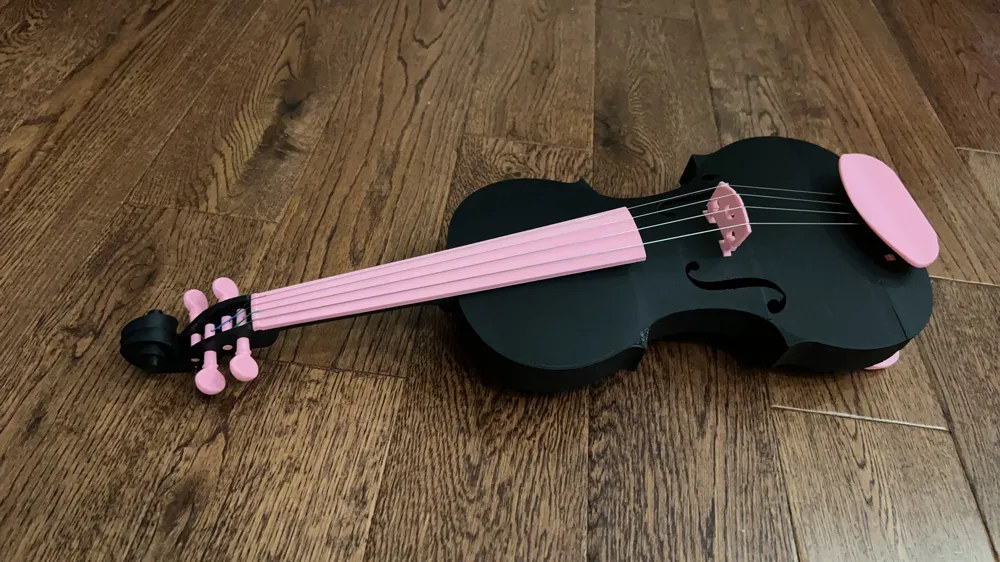
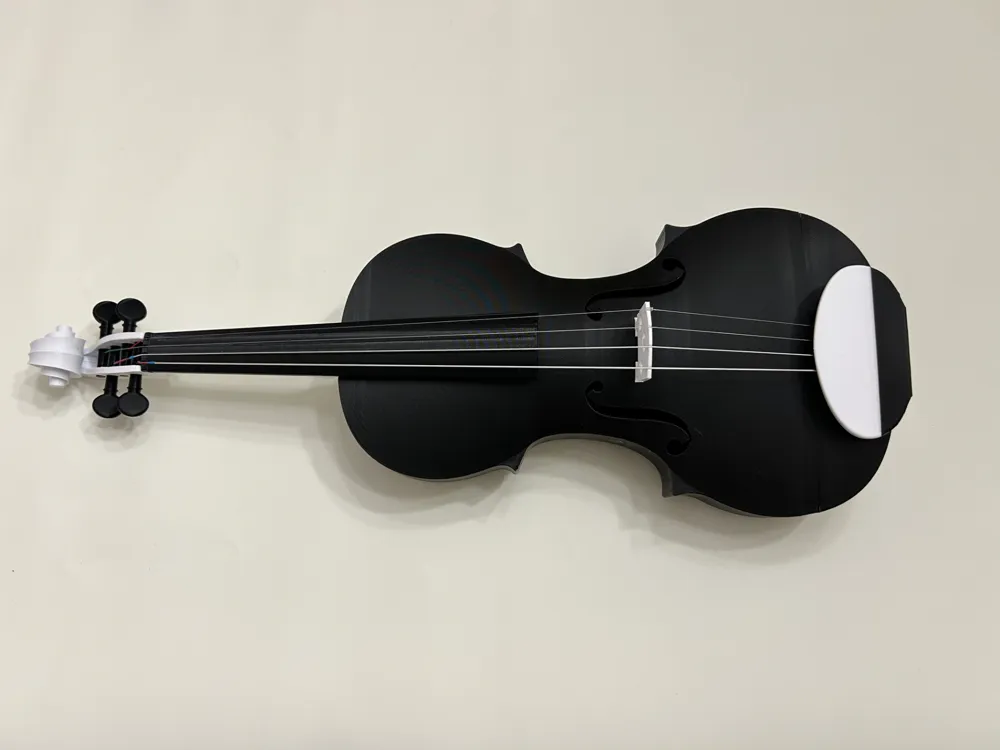
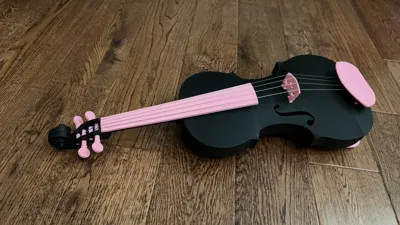
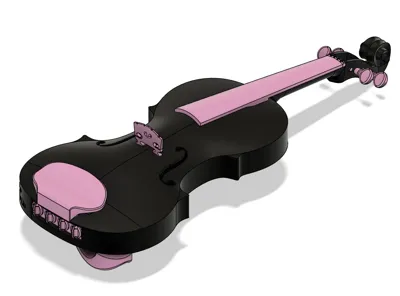
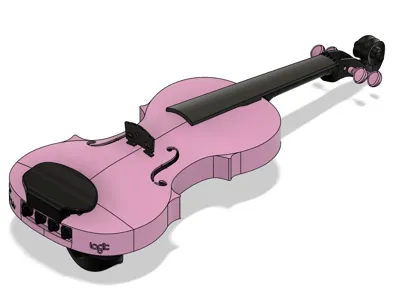
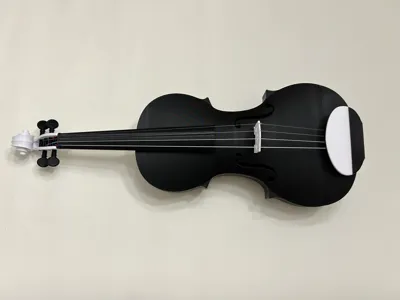
Full-size 4/4 3D Printed Violin Introduction
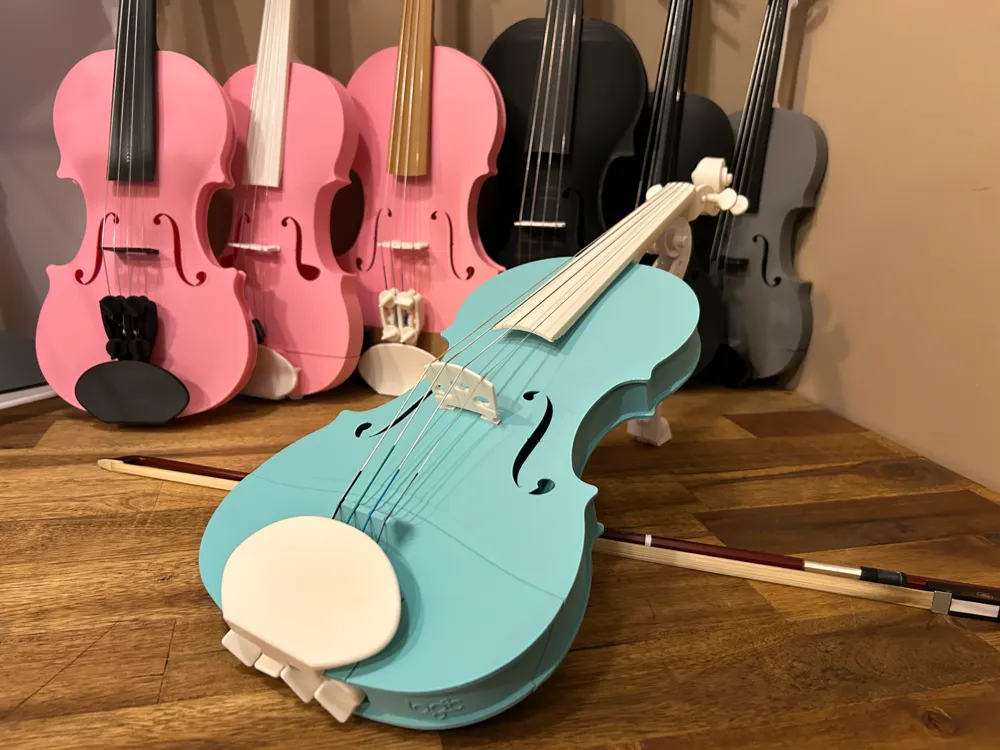
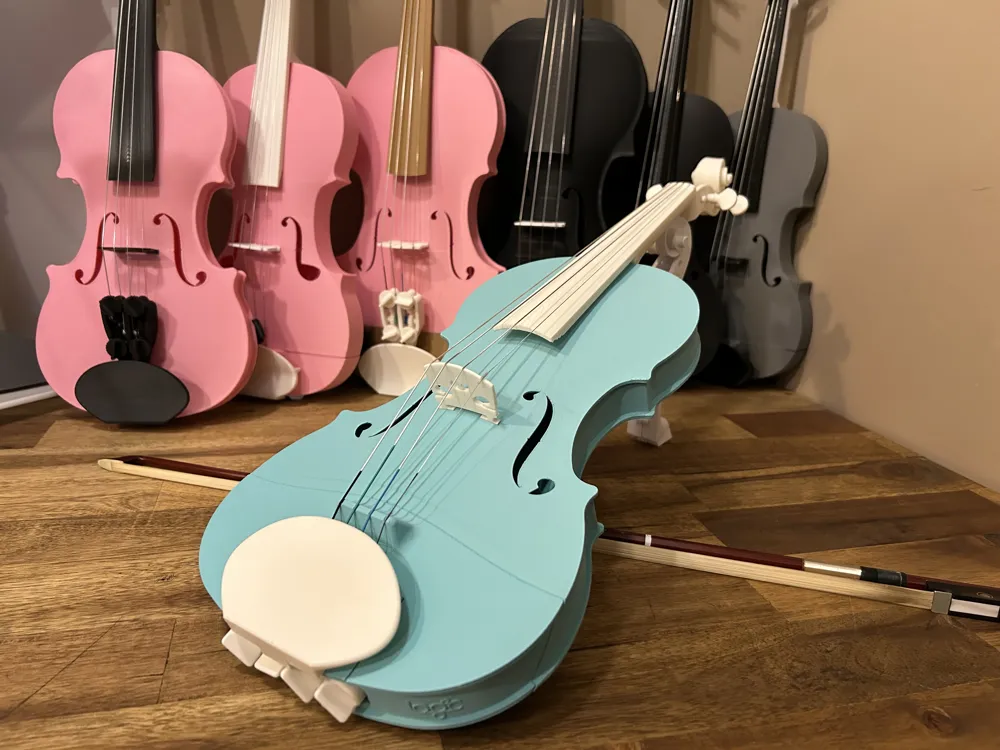
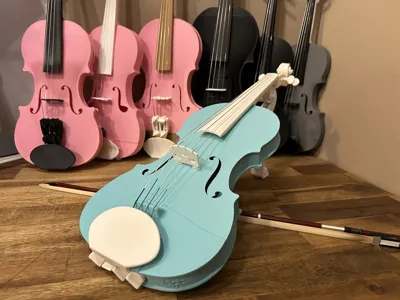
Considering material rigidity, damping, and cost-effectiveness, this 4/4 3D-printed violin design utilizes PLA+ filament. Design parameters are primarily based on PLA+ properties. Theoretically, carbon fiber or PETG filaments might yield a brighter tone, though this remains untested.
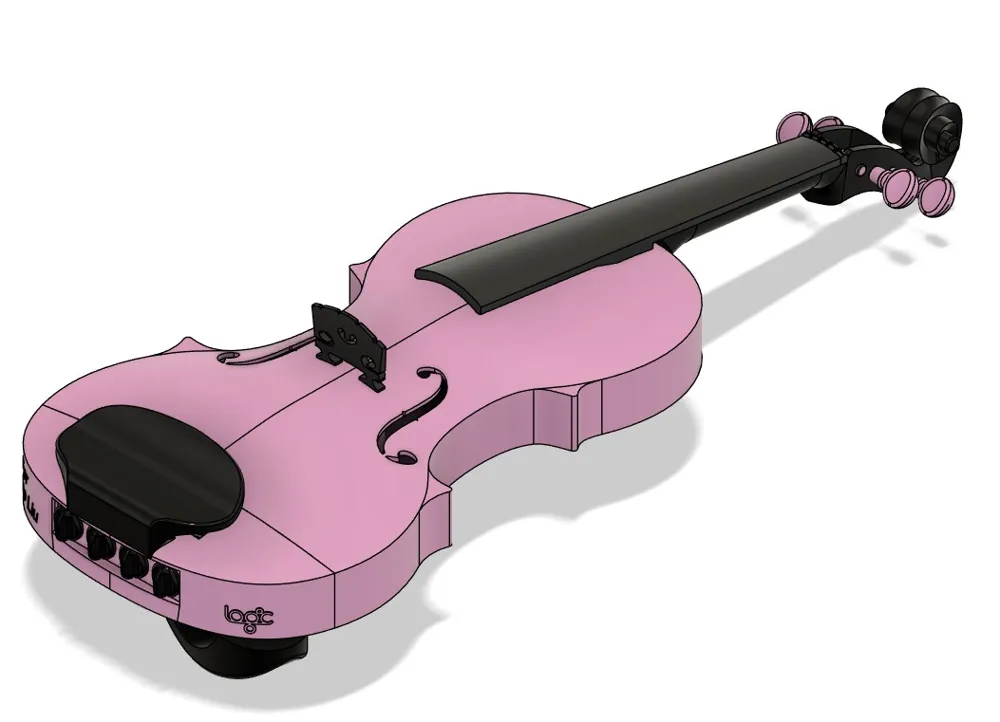
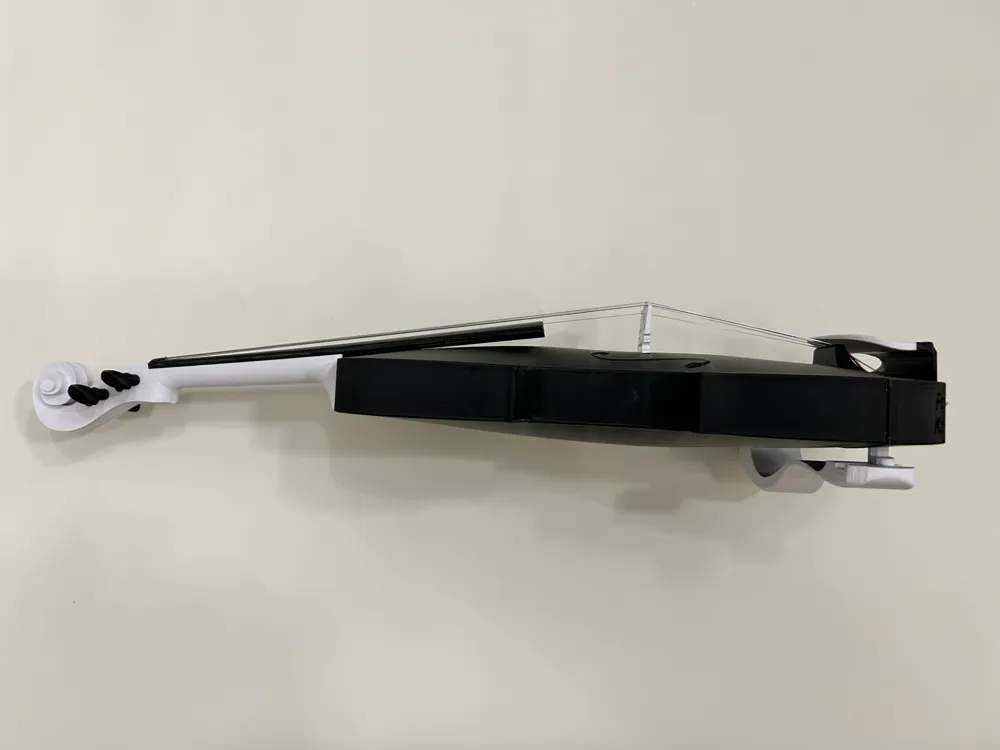
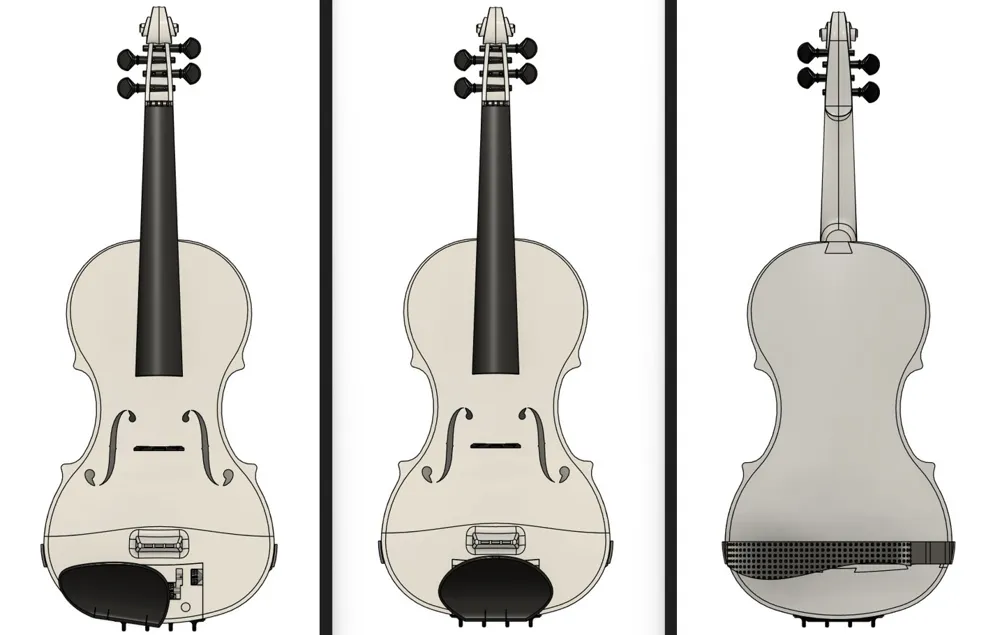
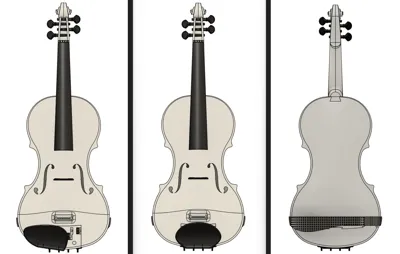
Given PLA+’s significantly higher density and slightly lower stiffness relative to spruce (a traditional violin tonewood), the design prioritizes enhancing overall volume, particularly high-frequency projection. The violin employs a low-arch design, its form inspired by Francois Denis’ Traité de Lutherie: The Violin and the Art of Measurement, with modifications to preserve the primary acoustic chamber. The top and back plates are thinner than traditional violins, featuring variable thickness for improved tonal quality, with particularly thin edges to enhance sound response. To maintain structural integrity, the bass bar’s form has been subtly modified. Drawing upon relevant literature, and considering 3D printing’s inherent characteristics, the F-holes have been redesigned. Each F-hole now comprises three components, and its narrower, more elongated form subtly reduces low-frequency resonance while enhancing high-frequency performance.
This 4/4 violin is designed for 3D printing using PLA+ filament, balancing material stiffness, damping, and cost-effectiveness. All design considerations were based primarily on the properties of PLA+. In theory, carbon fiber or PETG filaments may produce a brighter tone, but I haven’t tested them myself.
Since PLA+ has a much higher density and slightly lower stiffness compared to spruce (a traditional tonewood used in violins), the design mainly aims to improve overall volume — especially the projection of high frequencies.
The violin features a low-arch body design, with its outline based on Francois Denis’ Traité de Lutherie: The Violin and the Art of Measurement, and has been modified to preserve the main acoustic chamber while optimizing the design.
The top and back plates are thinner than those of traditional violins, with variable thickness for better tone quality. The edges are especially thin to enhance sound response. To preserve structural strength, I slightly modified the bass bar shape.
The F-holes have also been redesigned to better suit the nature of 3D printing. Based on reference literature, each F-hole now consists of three parts, and the overall shape is more slender, which slightly reduces low-frequency resonance and enhances high-frequency performance.
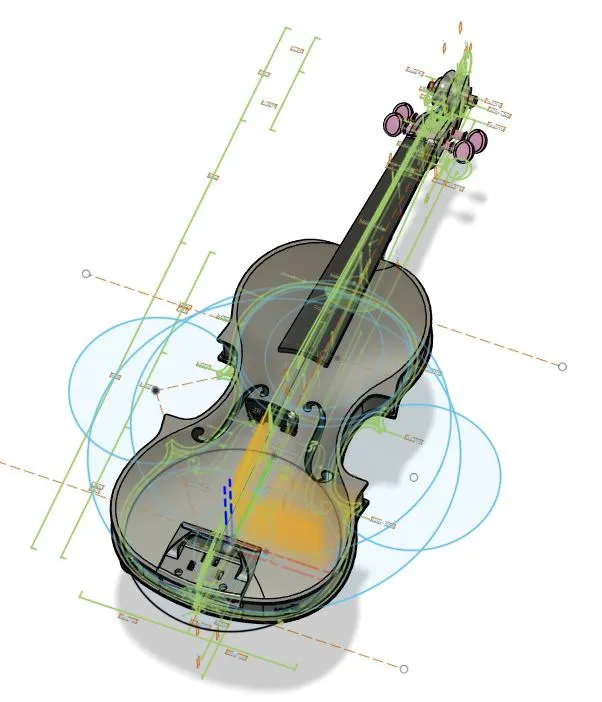
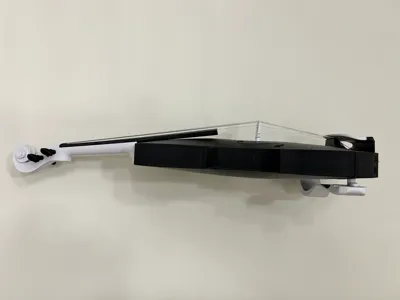
The neck incorporates a slight pre-bend; it straightens upon string installation and tuning.
The neck includes a slight pre-bend, which straightens out when all four strings are installed and tuned.
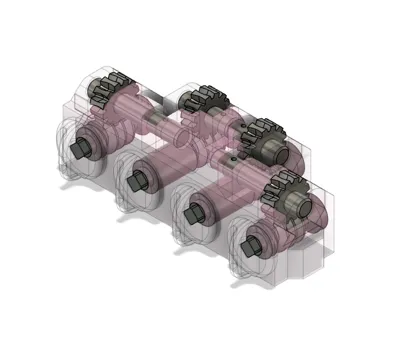
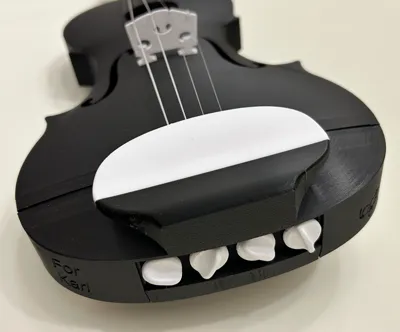
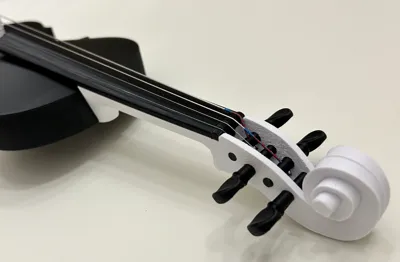
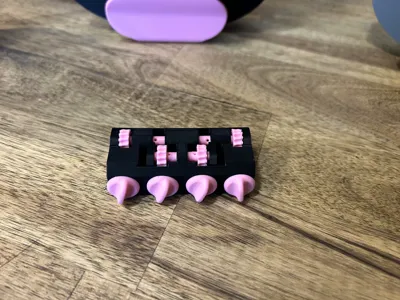
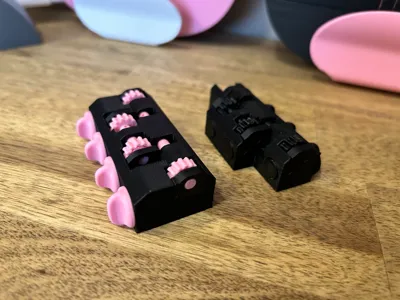
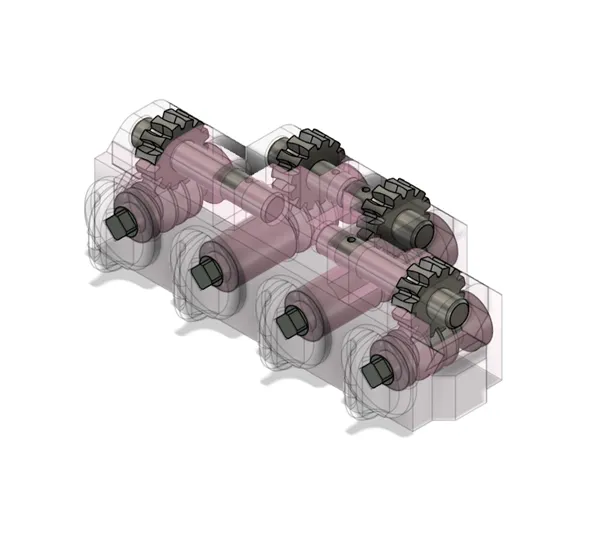
A novel worm gear-style string tensioning mechanism has been incorporated. The gears are eSUN PLA+ prints; seven violins have been produced to date without gear failures. For further details on this violin design, please visit my website:
A new worm gear-style string tension mechanism was designed. The gears are printed using eSUN PLA+, and in the seven violins I've made so far, there have been no gear breakages.
To learn more about this violin design, please visit my website:
https://sites.google.com/view/uv4u
Like my design?
Boost Me (for free)
Boost Me to support new designs
Membership
join my Commercial Membership to sell printed models
👉 https://makerworld.com/@viu.logic
— Logic
Documentation (1)
License

You shall not share, sub-license, sell, rent, host, transfer, or distribute in any way the digital or 3D printed versions of this object, nor any other derivative work of this object in its digital or physical format (including - but not limited to - remixes of this object, and hosting on other digital platforms). The objects may not be used without permission in any way whatsoever in which you charge money, or collect fees.


Comment & Rating (587)