
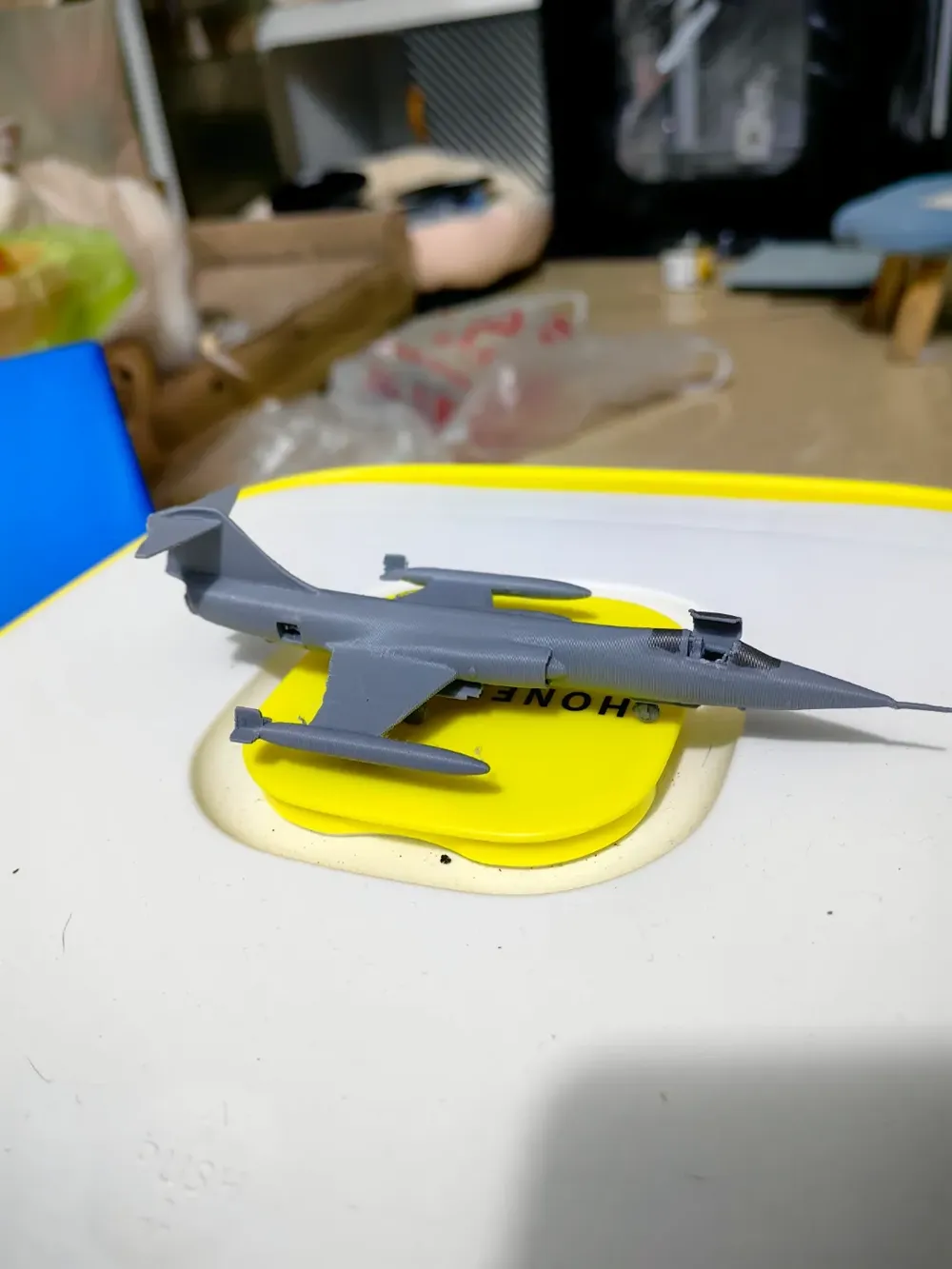
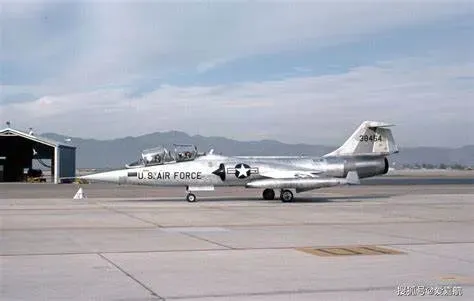
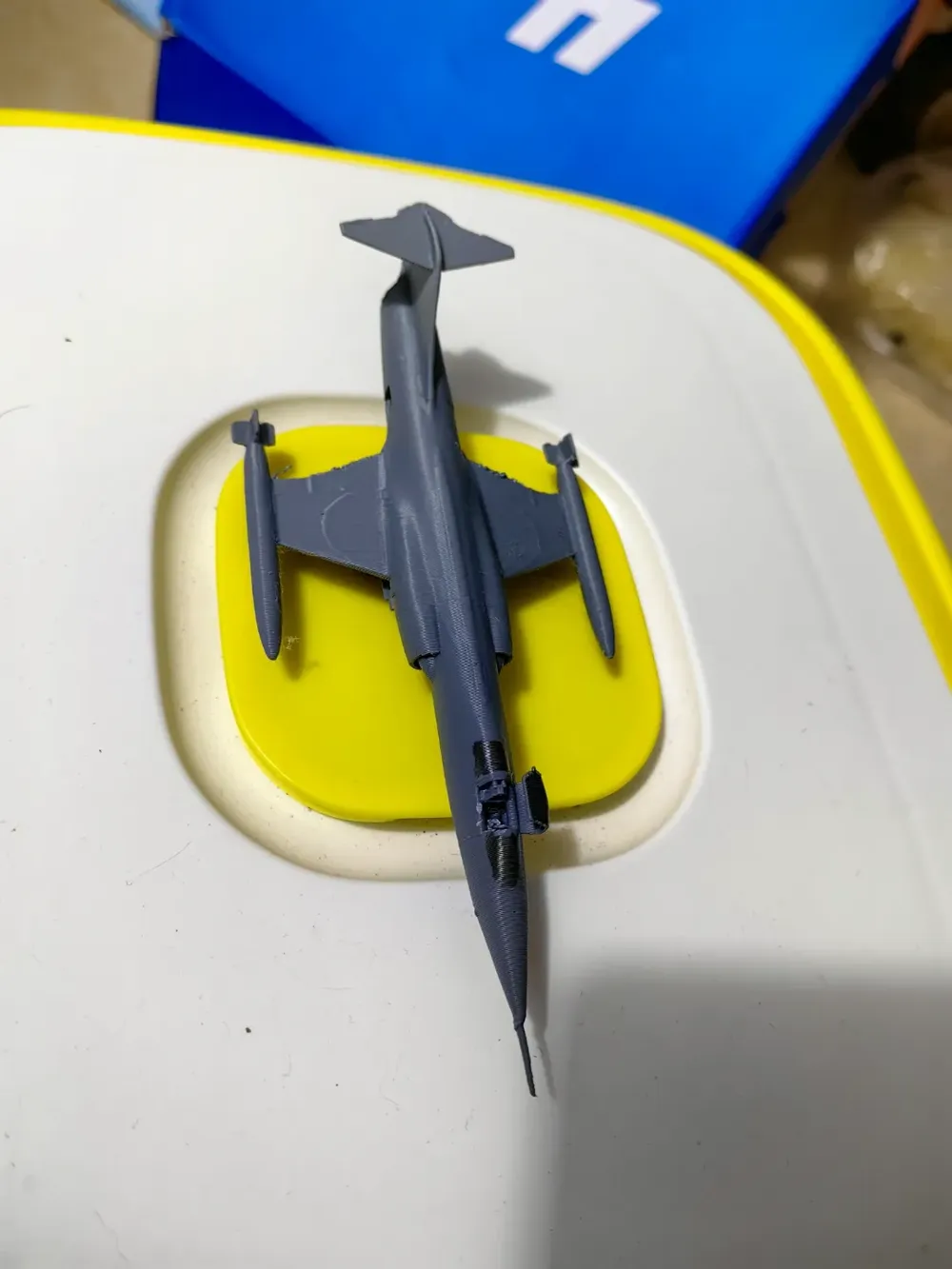
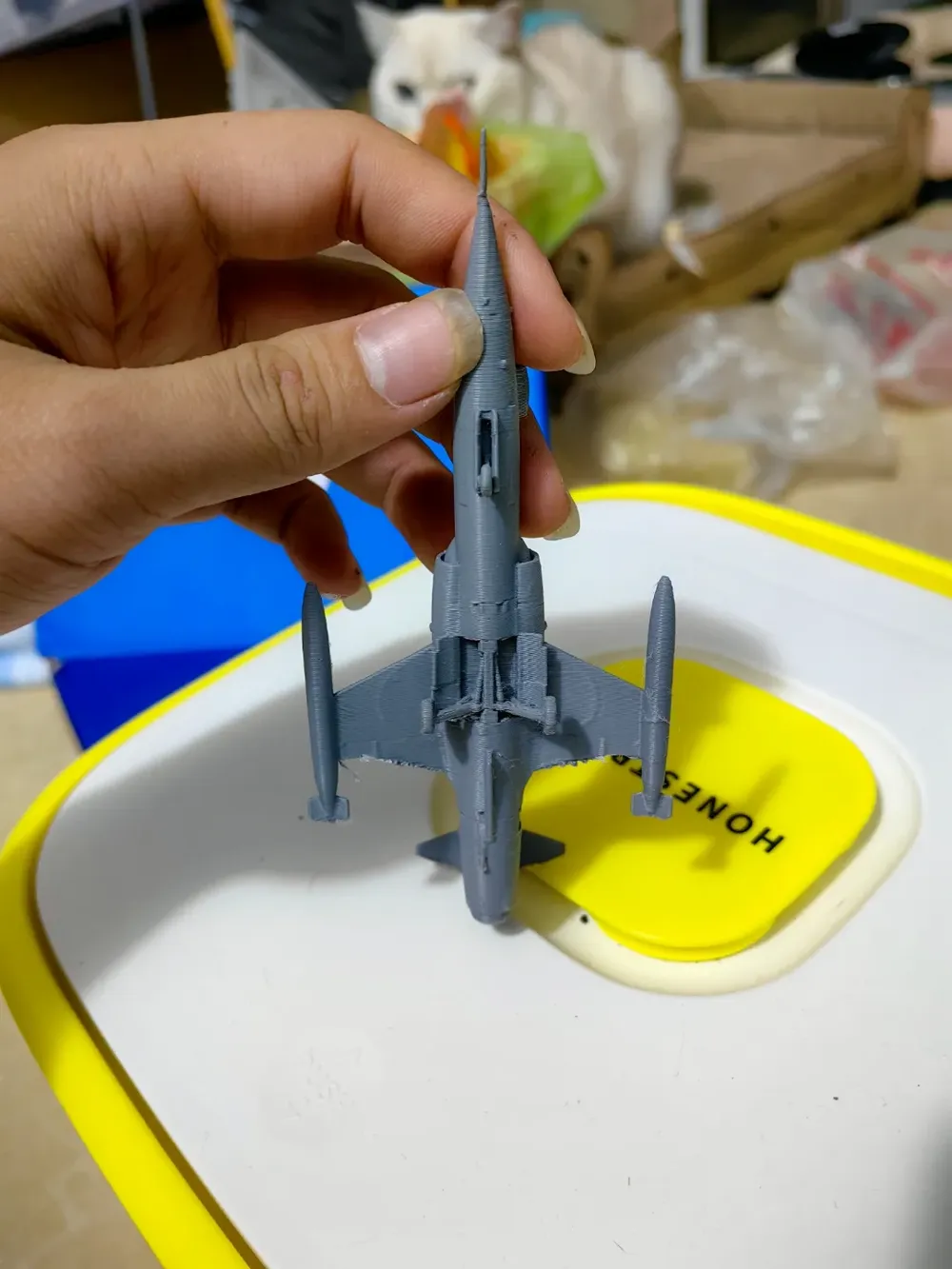
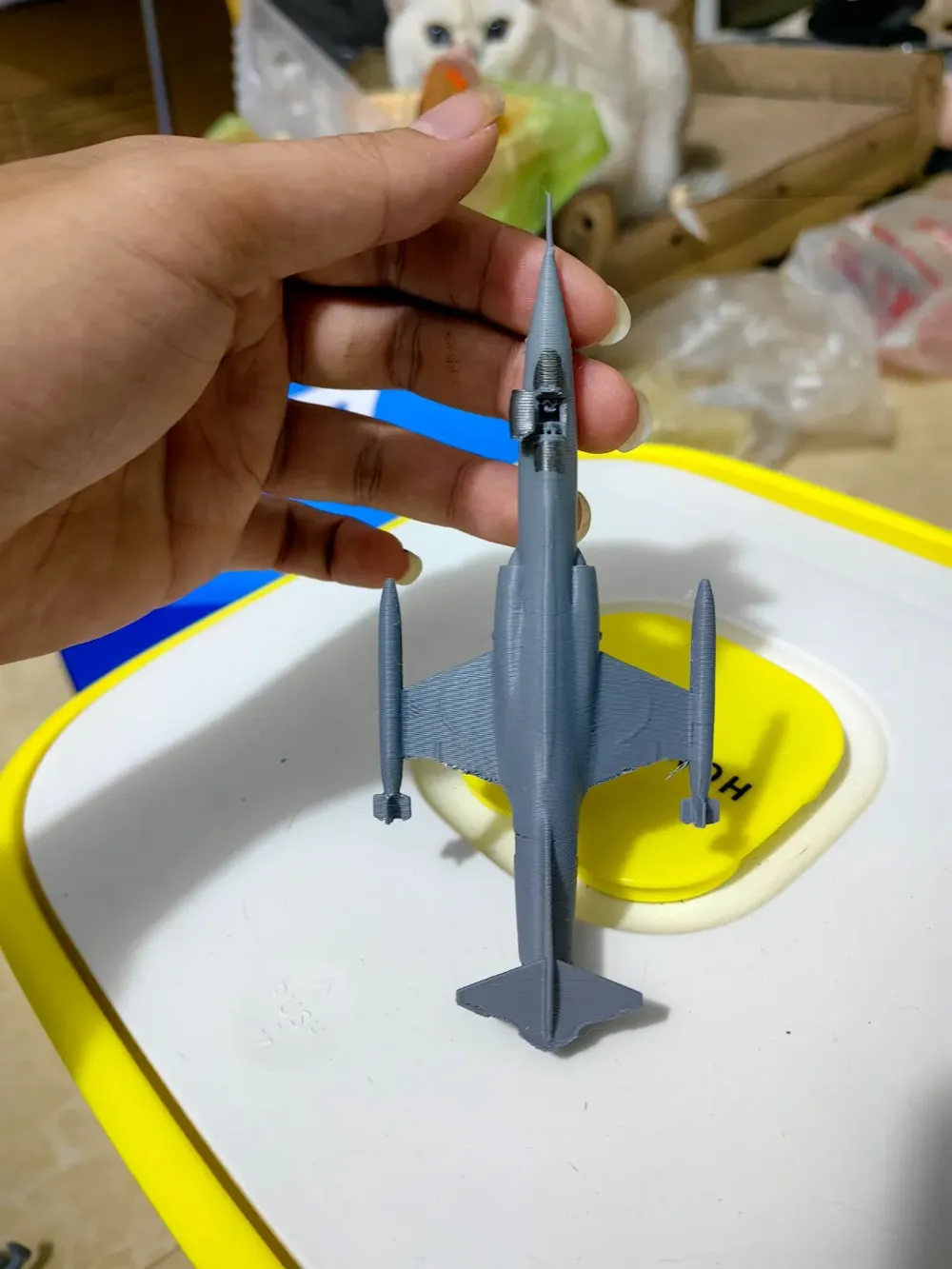
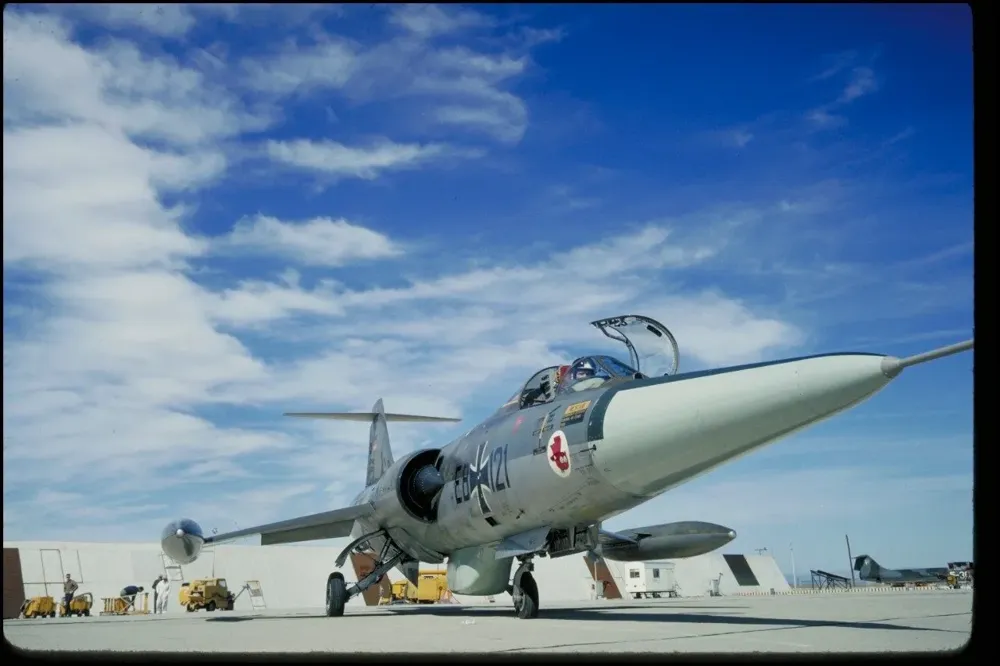
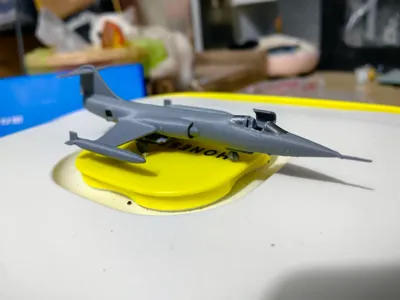
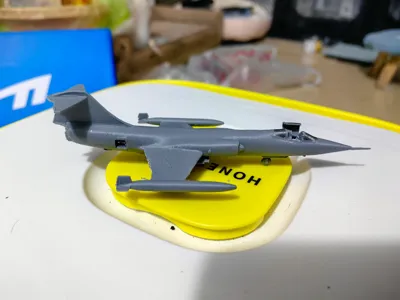
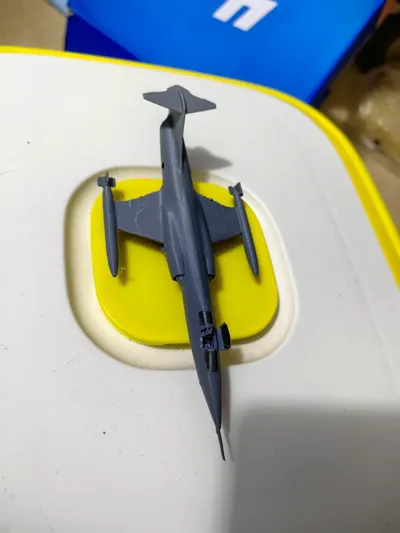
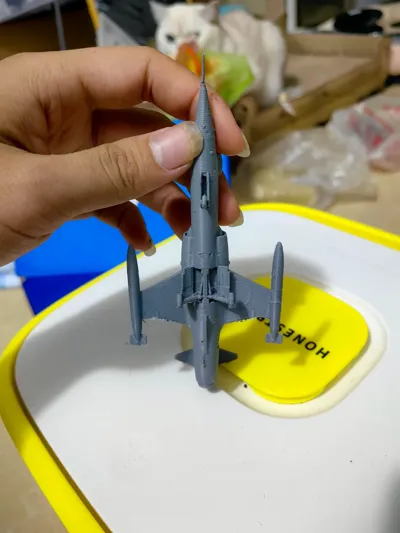
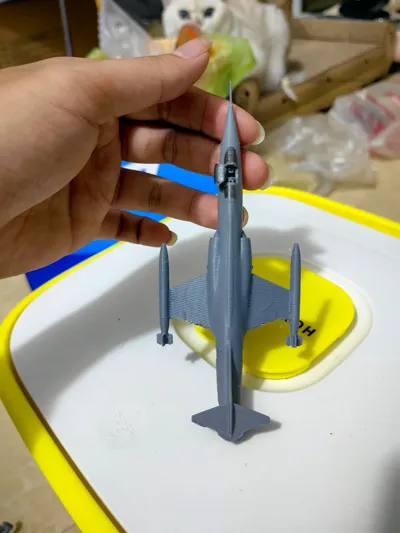
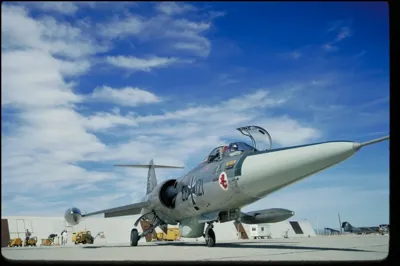
The world's first fighter jet to reach Mach 2, the F104A fighter jet
Print Profile(0)
Description
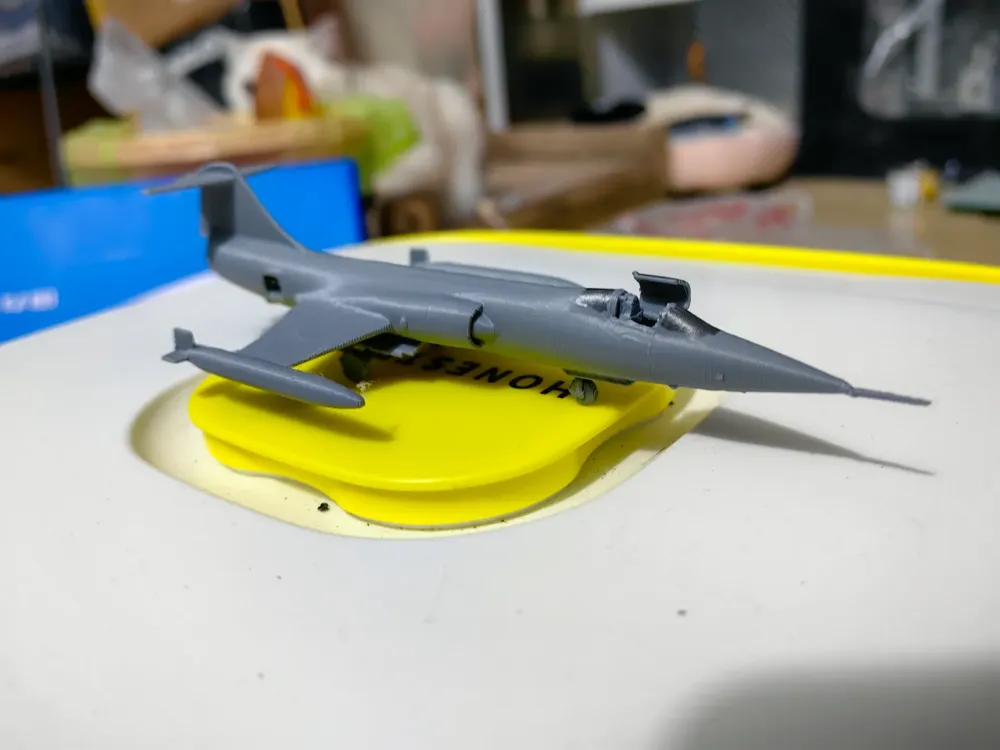
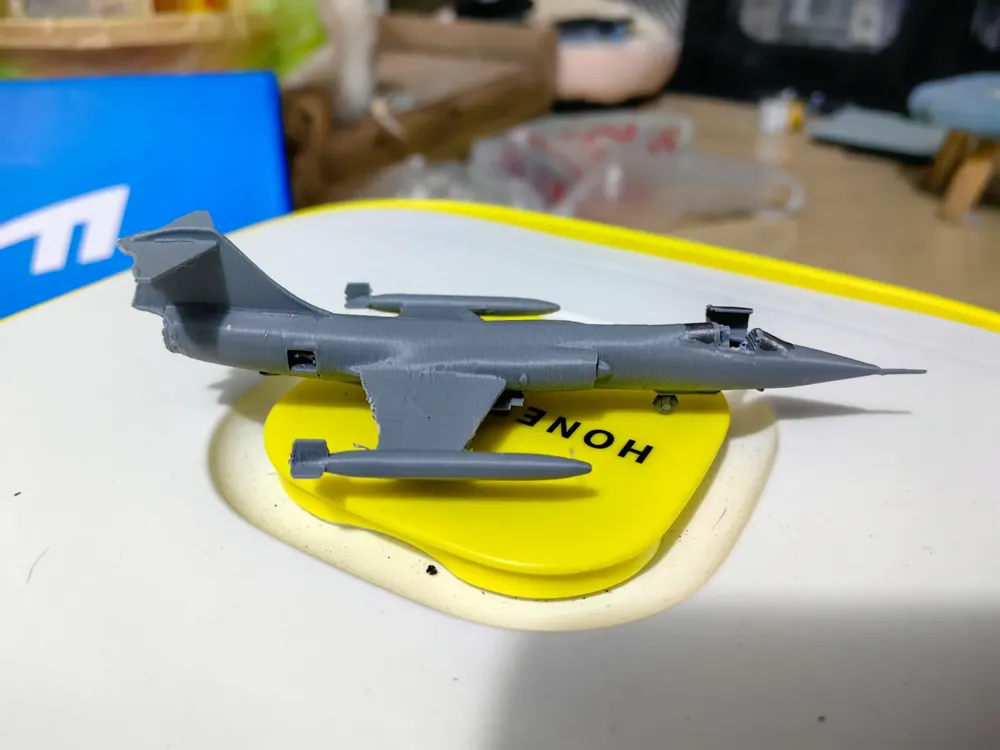
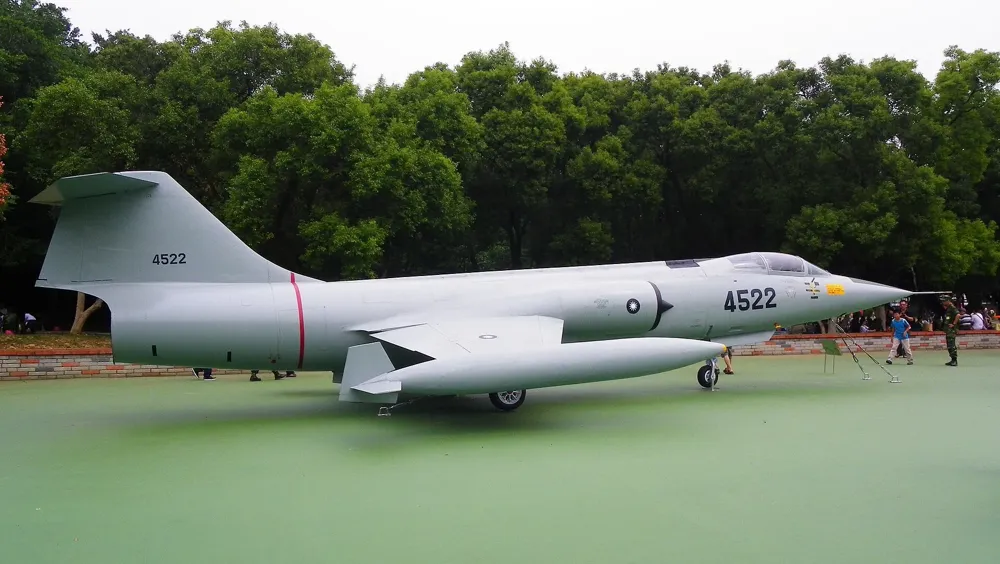
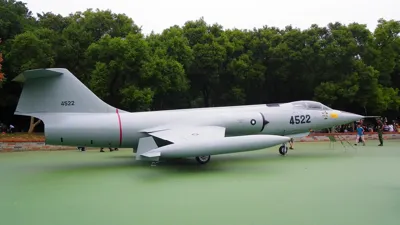
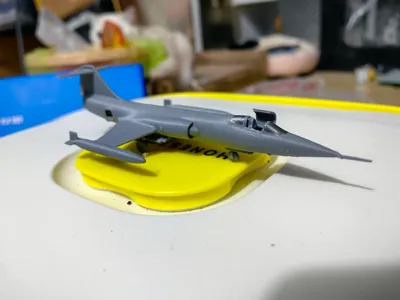
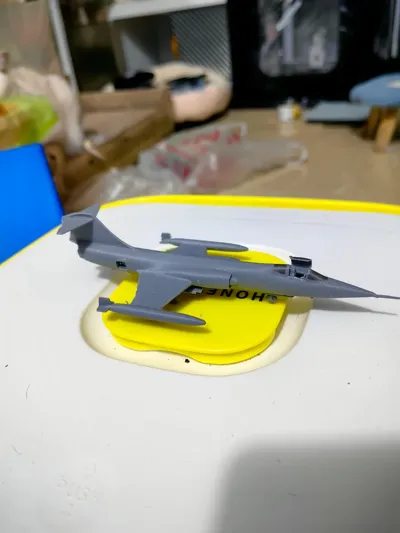
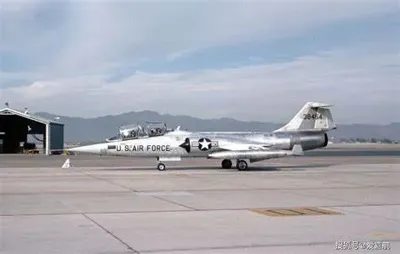
The F-104 Starfighter, also known as the F-104 fighter, is a second-generation supersonic fighter jet developed by Lockheed Corporation in the mid-1950s.
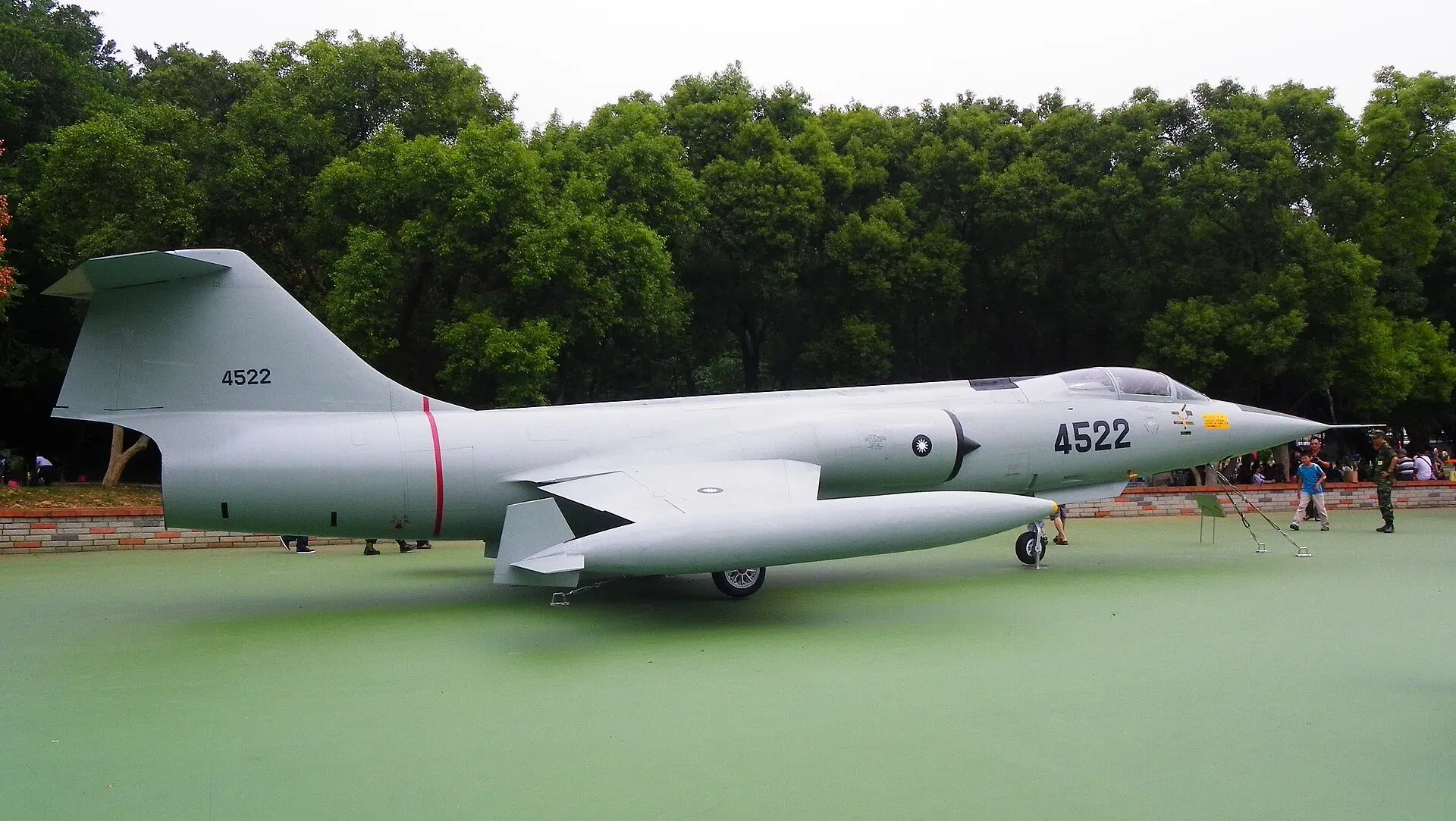
The design of the F-104 fighter jet went against the trend of large and heavy aircraft in the US Air Force at that time, emphasizing lightness and simplicity. The F-104 was the world's first fighter jet to reach twice the speed of sound, with a maximum usable G-force of 7.33, and it held the world record for climb rate and maximum ceiling for a long time in the 1960s.
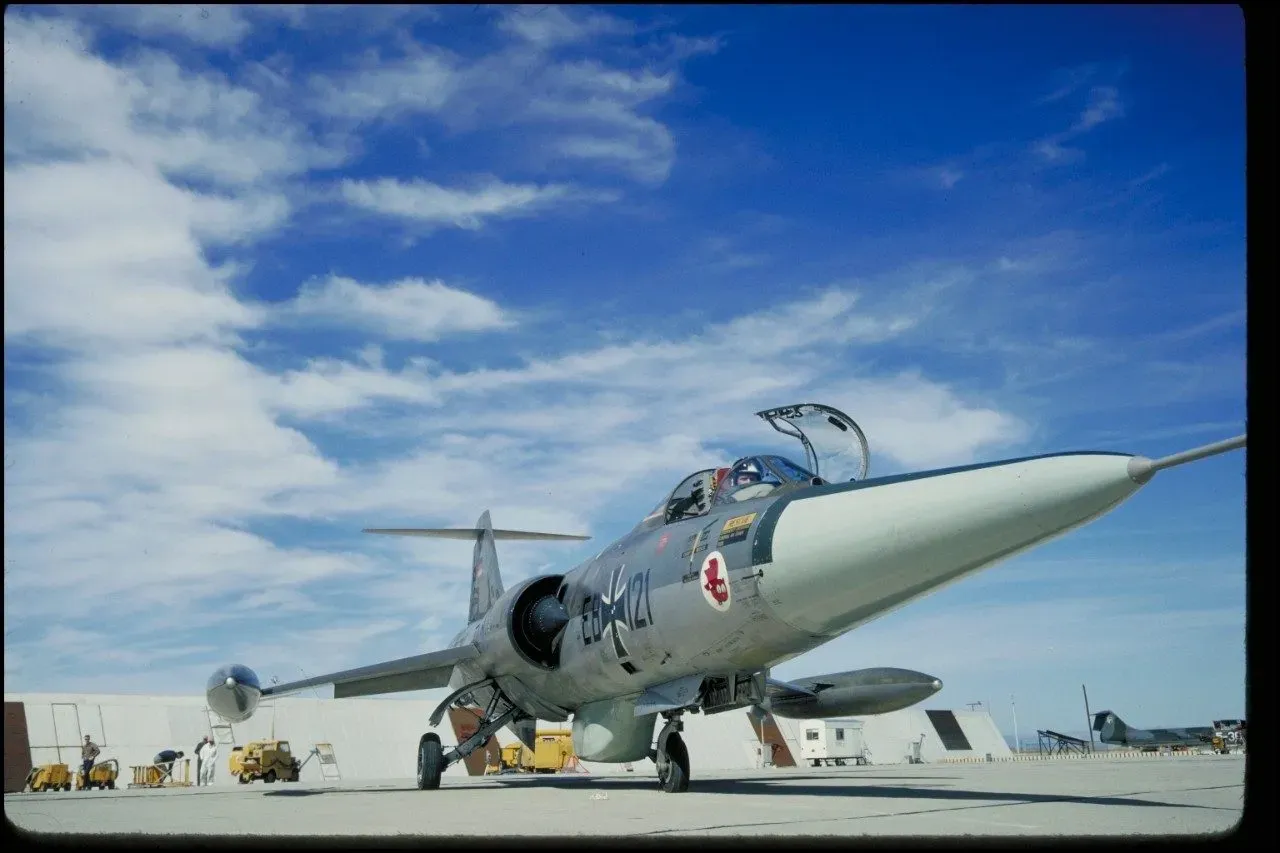
The F-104 fighter jet was exported to Germany, Japan, Canada, Italy, the Netherlands, and Denmark (F-104G modification), and mass-produced. The main variants of the F-104 include A, C, G, J, and S. A total of 2578 were produced.
In December 1951, Kelly Johnson, chief designer of Lockheed Corporation, visited a US Air Force base in South Korea to gather feedback from F-86 fighter pilots. Pilots wanted the new aircraft to be lighter, cheaper, faster, higher-altitude capable, with a better climb rate, and superior maneuverability compared to existing fighters. Upon his return, Kelly convinced Lockheed's management to invest in a new fighter jet: one that was simple and easy to operate, lightweight and inexpensive, yet superior in performance to current aircraft. In November 1952, Lockheed officially launched a self-funded project for the development of a lightweight fighter jet. The US Air Force did not comment on this project.
In January 1953, the bidding for the US Air Force's "Weapon System 303A" project was announced, and Lockheed's lightweight fighter prototype won. On March 12, 1953, the US Air Force and Lockheed signed a contract to produce two prototypes for verification and evaluation. The Air Force assigned it the designation XF-104, and Lockheed's internal design code was 083-92-01.
Development History
F-104 three-view drawing
On February 7, 1954, the first XF-104 (serial number: 53-7786) prototype was completed and transported to Edwards Air Force Base.
On March 26, 1954, the XF-104 made its maiden flight, completing its third and fourth test flights with the landing gear retracted. During testing, it was discovered that the original yaw damper was inefficient, causing the nose to yaw unstably during flight. This was later solved by improving the rudder centering device.
In December 1955, the first XF-104 was delivered to the US Air Force. On July 11, 1957, while providing escort for an F-104A, it encountered a tail flutter issue and crashed.
In July 1954, the US Air Force ordered 17 YF-104A pre-production aircraft for testing.
In February 1956, the first YF-104A (55-2955) was completed and transported to Edwards Air Force Base under strict secrecy. On February 17, 1956, it conducted its first test flight piloted by Lockheed test pilot Herman 'Fish' Salmon.
On May 7, 1958, Major Howard C. Johnson piloted a flight at Edwards Air Force Base, reaching a maximum altitude of 27,813 meters, setting a world altitude record.
License

You shall not share, sub-license, sell, rent, host, transfer, or distribute in any way the digital or 3D printed versions of this object, nor any other derivative work of this object in its digital or physical format (including - but not limited to - remixes of this object, and hosting on other digital platforms). The objects may not be used without permission in any way whatsoever in which you charge money, or collect fees.


Comment & Rating (0)