
Print Profile(1)

Bill of Materials
- BERGSHULT x 1: IKEA
Description
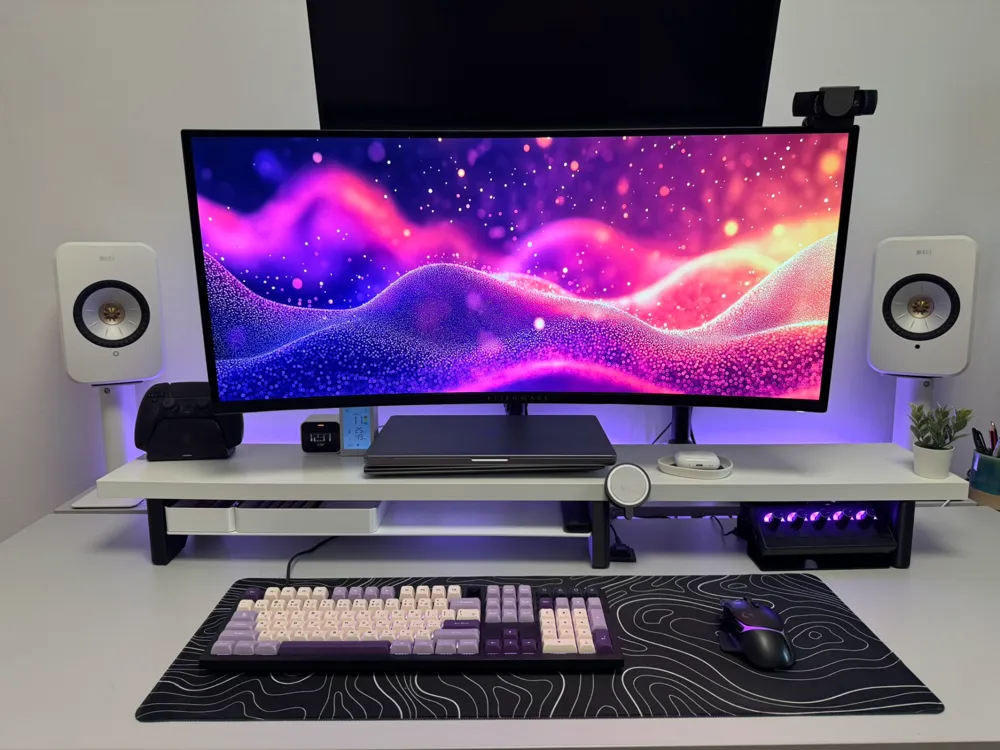
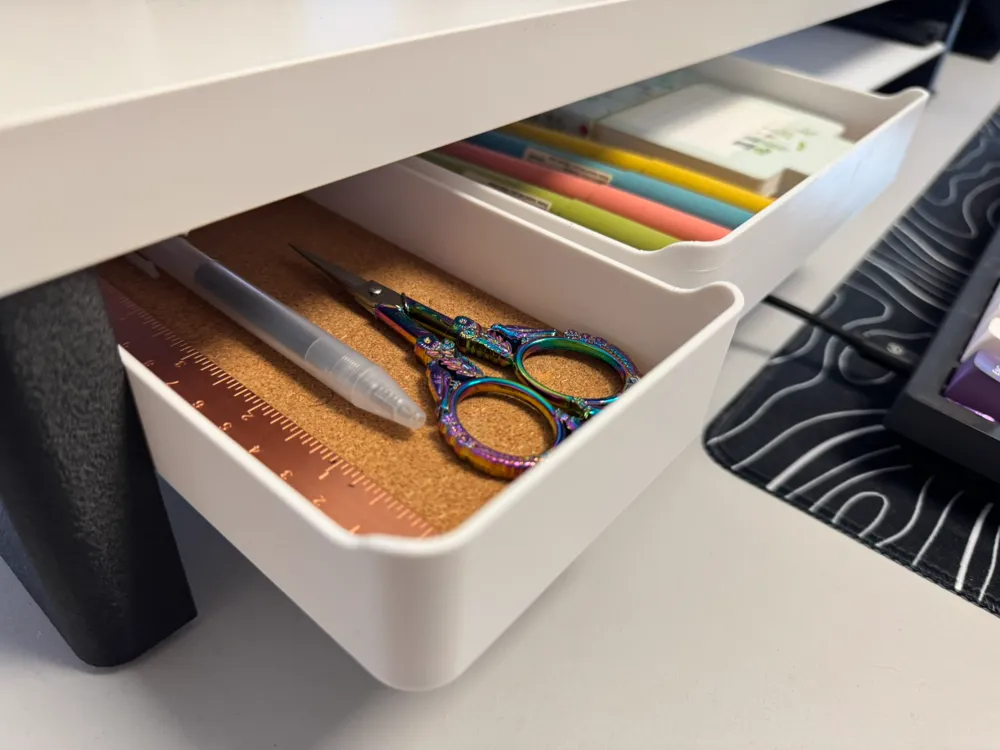
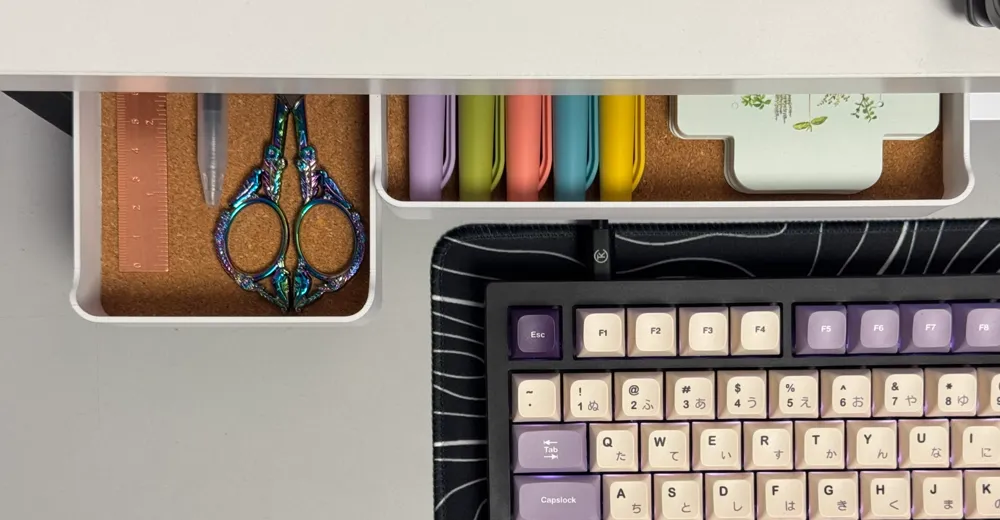
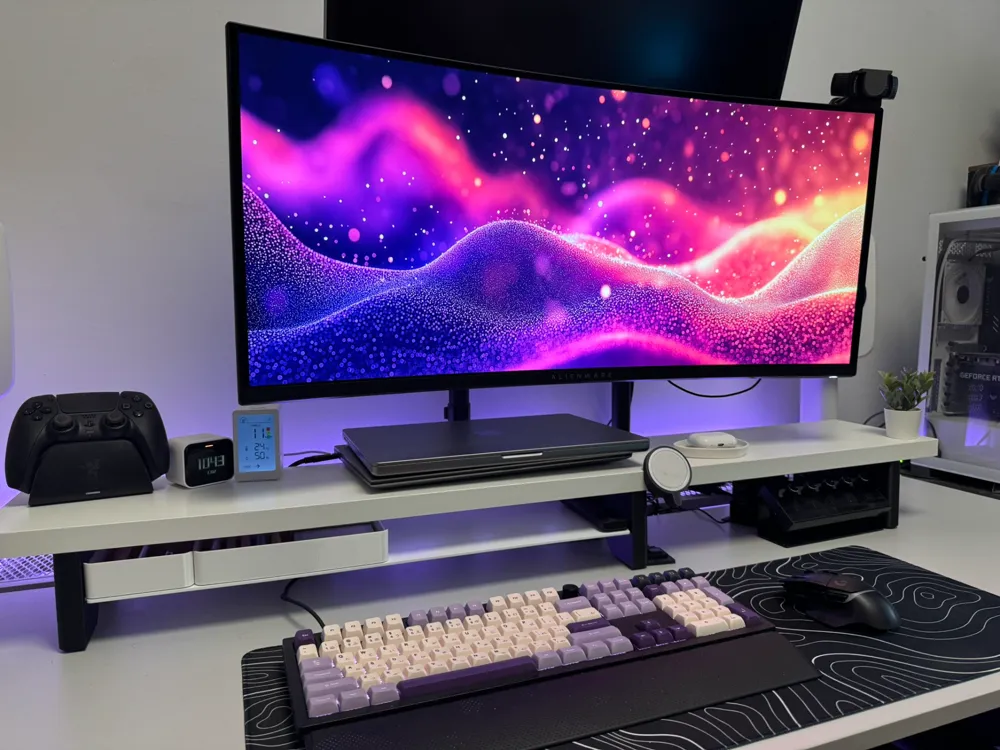
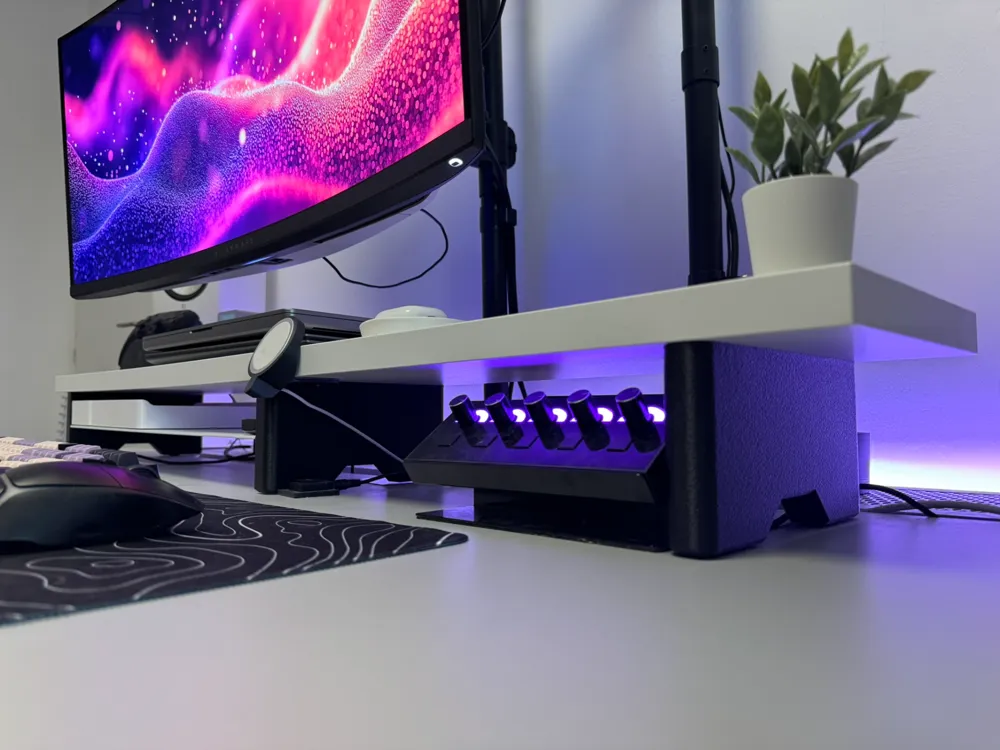
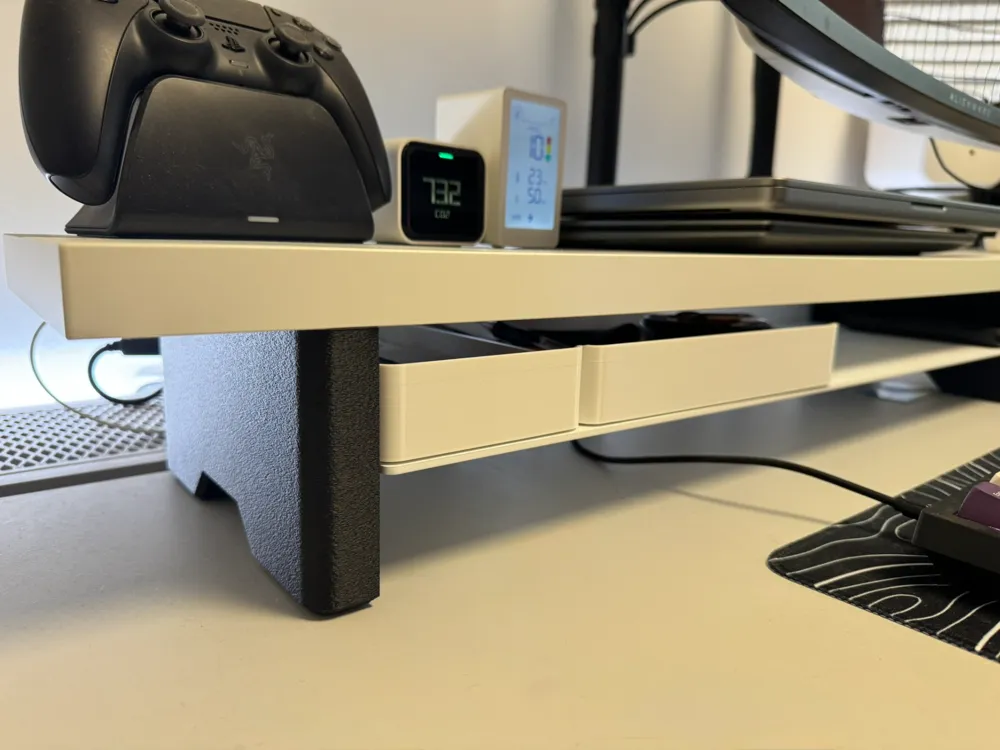
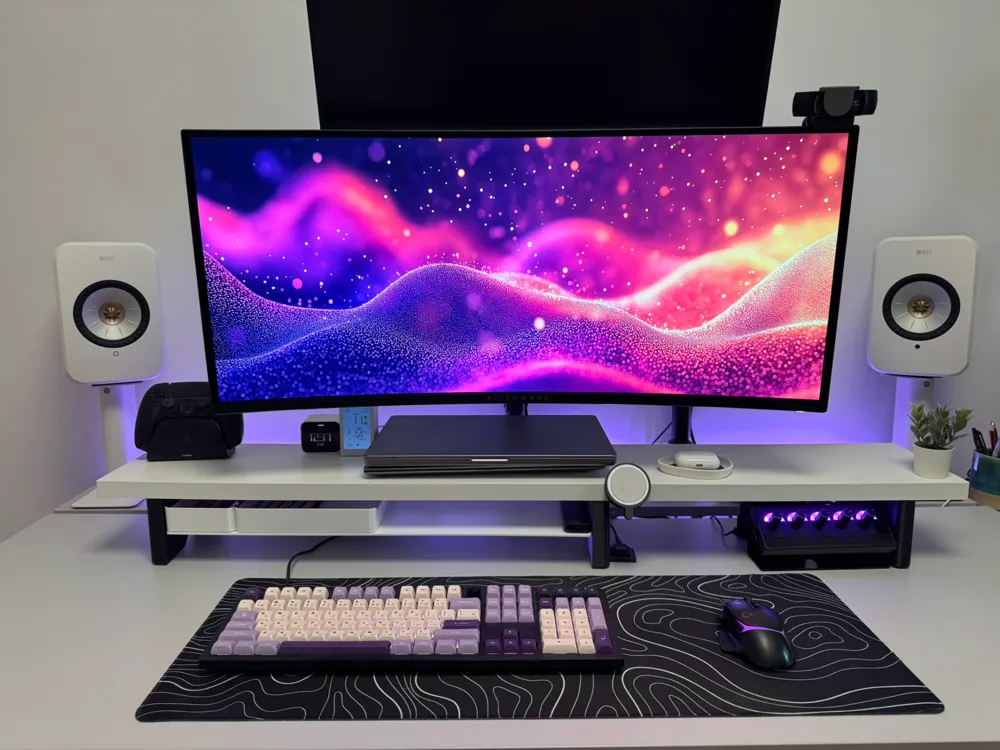
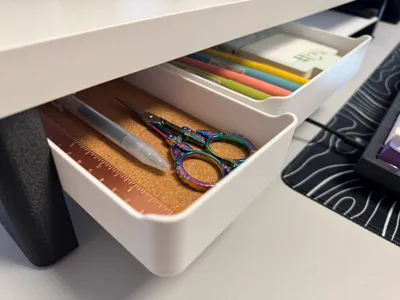
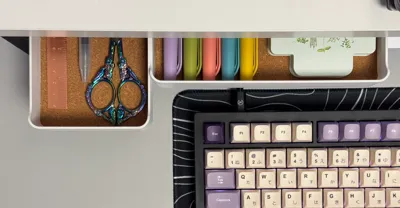
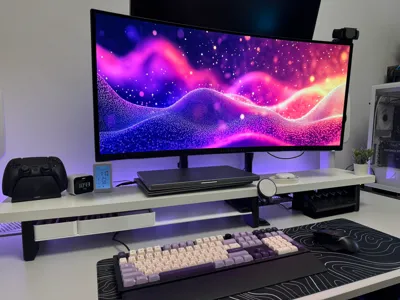
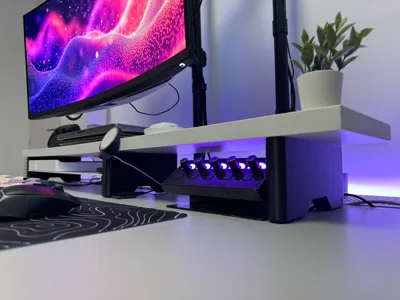
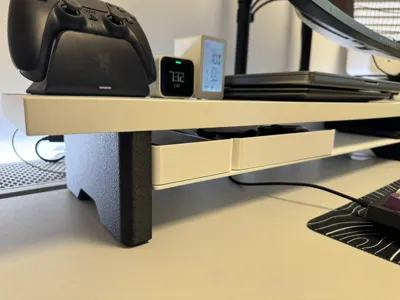
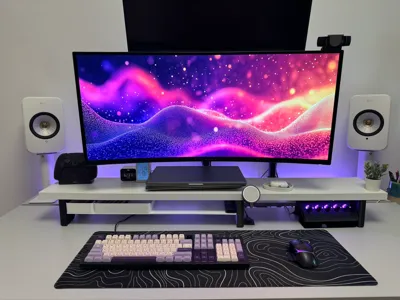
The Forgedeck is my take on a modern desk shelf, inspired by desk shelves from Grovemade, Balolo, and others. It uses an IKEA shelf as a base, which comes in several colors including white, walnut, black, and beige. It includes trays in two sizes, with cork lining for a premium feel.
Boost Me (for free)
If you like this model, please consider boosting it so more people will see it!
You can create the Forgedeck either with or without the metal shelf. The pictures show it with the metal shelf, and with one of each tray.
Bill of Materials
To build the Forgedeck, you will need:
- The IKEA Bergshult shelf, any color.
- ~500g of filament. Bambu PETG HF Black works great, but this can also be printed with PLA.
- Six (6) countersunk wood screws.
- (optional) cork sheet with adhesive, to line the trays.
- (optional) The metal shelf, which is 3mm aluminum that's cut, bent, and anodized for the best finish.
Printing the parts
Feet
If you're going for the metal shelf, you will need two copies of the “Foot with shelf” part and one copy of the “Foot no shelf” part.
Otherwise, if you don't want the metal shelf, print two or three copies of the “Foot no shelf” part. Use two if you're not planning on putting heavy things in the middle of the shelf, or three if you want extra strength.
- Any material, though I recommend PLA or PETG
- 0.2mm layer height
- 2-3 walls
- at least 15% infill
- Supports: Normal (auto)
- Fuzzy Skin settings: Contour, 0.4mm point distance, 0.2mm thickness.
- If you're not using my profiles, make sure you add a modifier to the feet where the slot for the aluminum shelf is, and turn off fuzzy skin in that area - otherwise the shelf might not fit into the slot.
Alignment Jig
The alignment jig will help us create holes in the shelf for the two edge feet, making sure they are the same distance from the edge. It's a helper tool, so it doesn't need high quality.
- Any material
- 0.28mm layer height
- 2-3 walls
- 10% infill
- No supports
Trays
- Any material (PETG preferred)
- 0.2mm layer height
- 3 walls
- 15% infill
- No supports
Assembly
Forgedeck with metal shelf
- Print the feet. You need 2 shelf feet and 1 no-shelf foot if you want the metal shelf. If you're not opting for the metal shelf, print 2 or 3 no-shelf feet.
- Place the BERGSHULT shelf so that the bottom side will be pointing up.
- Put the alignment jig on the bottom side of the shelf and drill two pilot holes with a small drill bit. This is not required, but it will help the shelf accept the screws with minimal effort.
- Put the two edge feet on the bottom side of the shelf so that the larger holes will be pointing up. Make sure that the edge foot that has a slot in it for the shelf is rotated so the slot is pointing inside.
- Using a screwdriver, place countersunk wood screws into the holes in the feet and screw them into the shelf.
- Place the metal shelf into the installed edge foot that has a slot in it. Note that the bend in the metal shelf should be pointing towards the back.
- Slot the other shelf foot into the metal shelf, and place it so that the shelf is aligned and stable. This will be the middle foot.
- Mark the holes for the middle foot and optionally drill pilot holes. Then, use wood screws to screw the foot in place.
Trays
- Print the trays.
- Using a cutting machine (blade cutter such as Cricut, Silhouette, Siser, or a laser cutter), cut lining and tracks from the cork sheet.
- If your machine doesn't have a cork setting, I found that the Denim setting with a rotary blade works great.
- Attach the cork lining to the inside of the tray using the adhesive backing.
- Attach the cork tracks to the bottom of the tray on either side.
License



Comment & Rating (7)