
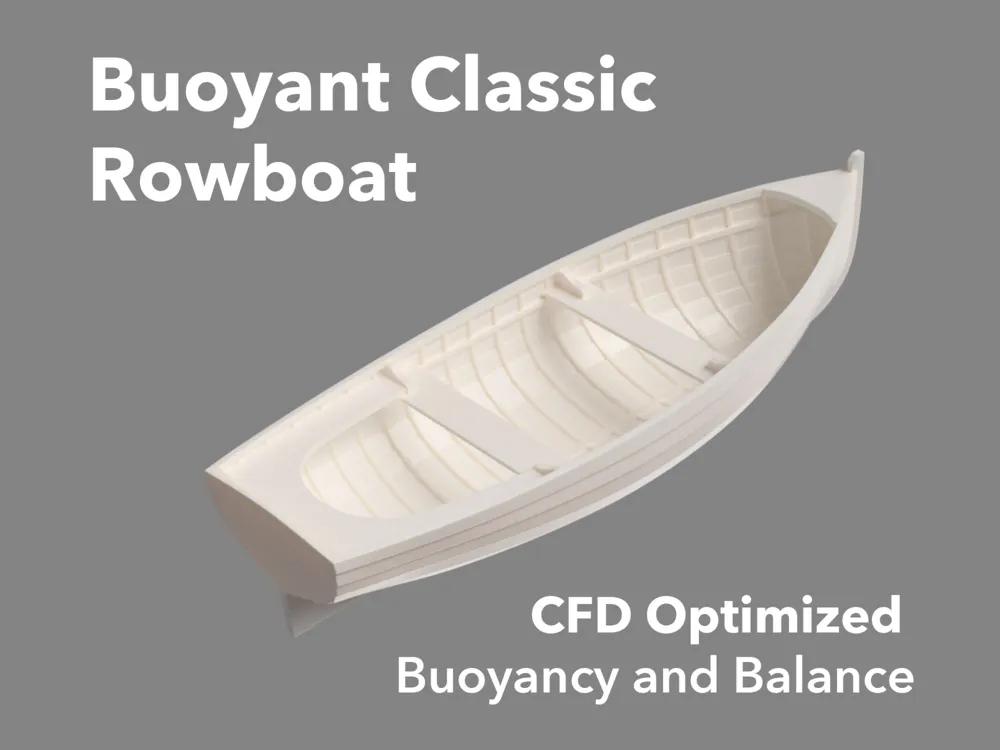
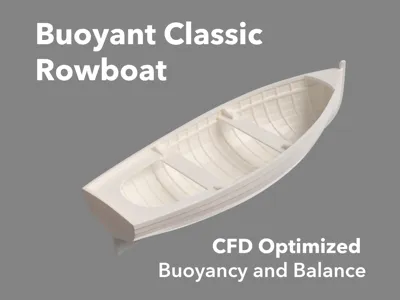
Detailed Buoyant Classic Row Boat - CFD Optimized
Print Profile(3)


Description
Important: Take a moment to read the Q&A before printing. Adjust the settings to your preferences ( The settings listed in the Q&A aren’t preset in the print profiles, so you’ll need to set them manually before printing). If you need any help, feel free to contact me.
I am not kidding. I know it sounds crazy and unreal, but this 3D model is truly CFD (Computational Fluid Dynamics) analyzed and optimized. I realize it's overkill, and that was the reason I initially did not mention this when publishing the model. But I genuinely didn't know any other way to guarantee it floats perfectly during the design process. After receiving positive comments from people who printed this model, I decided to reveal this little secret.
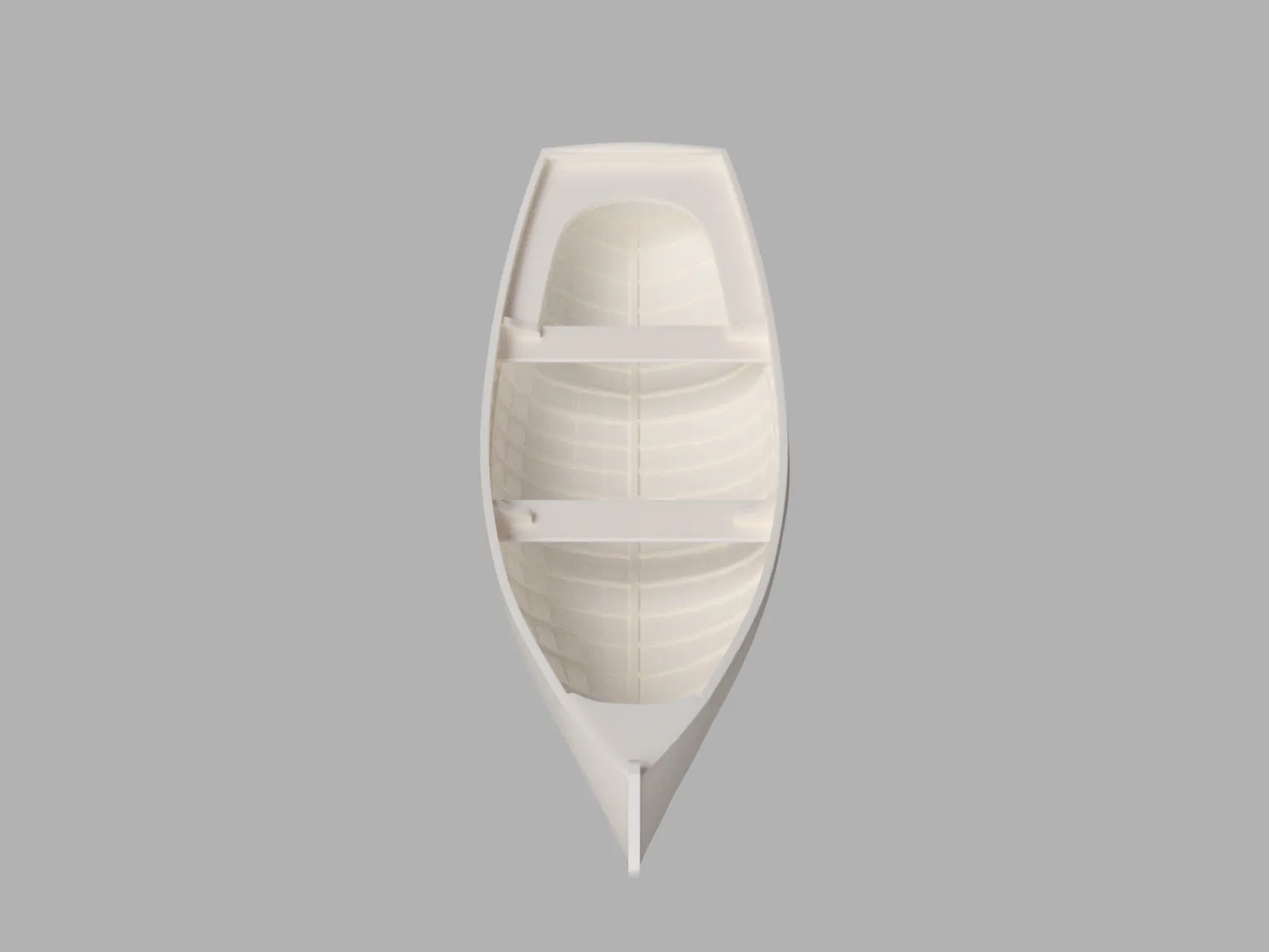
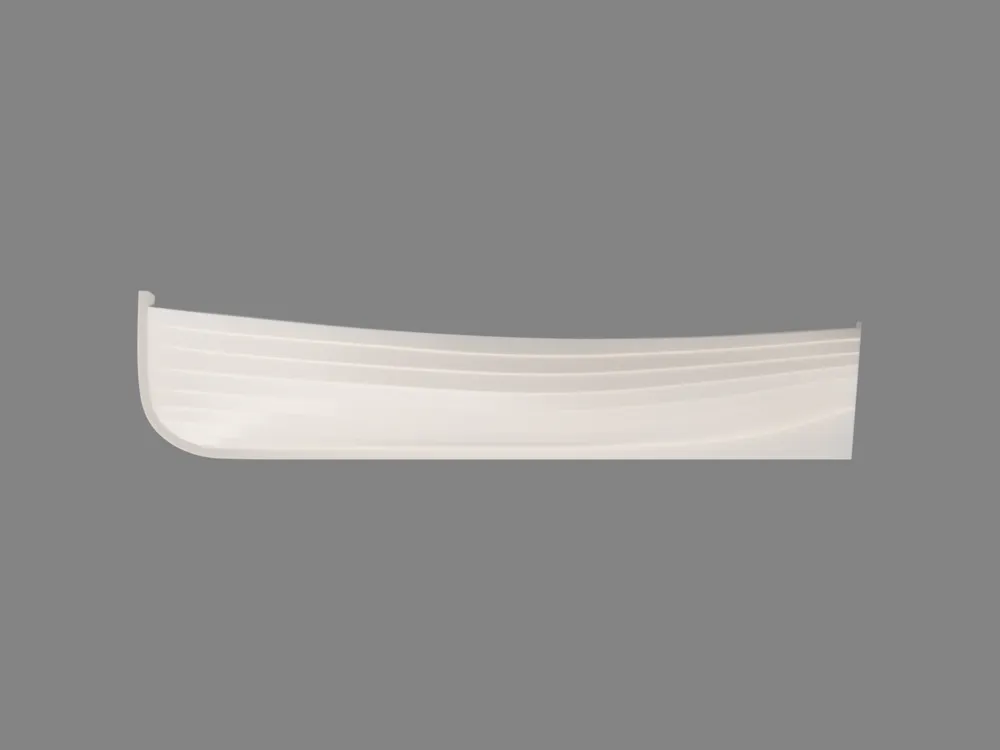
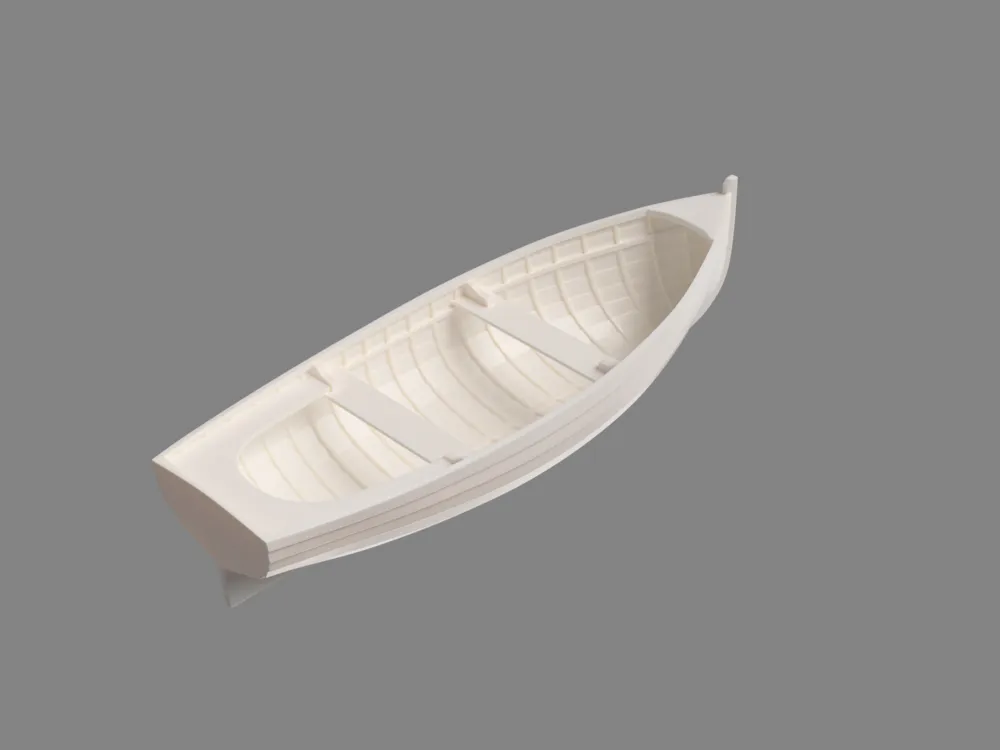
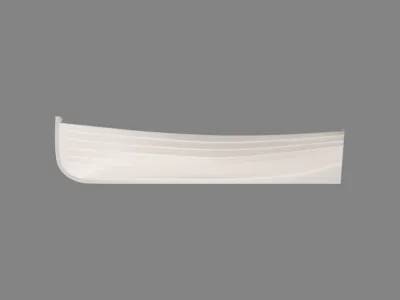
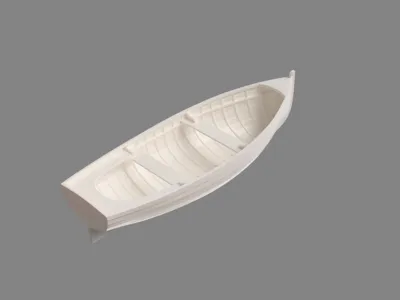
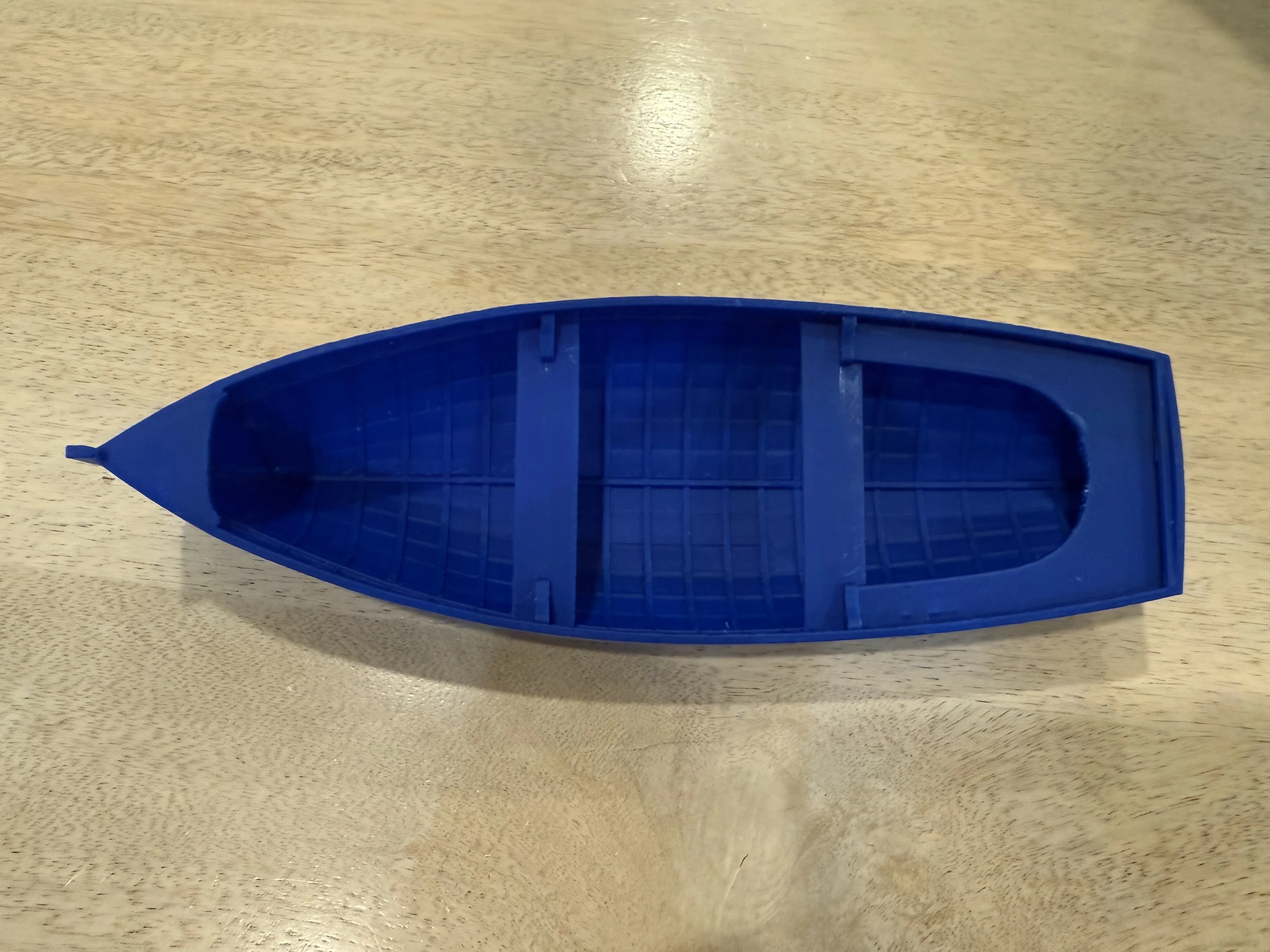
Inspired by my son’s fascination with a traditional/classic wooden rowboat featured in his school book, I created this detailed 3D model as a tribute to that childhood wonder.
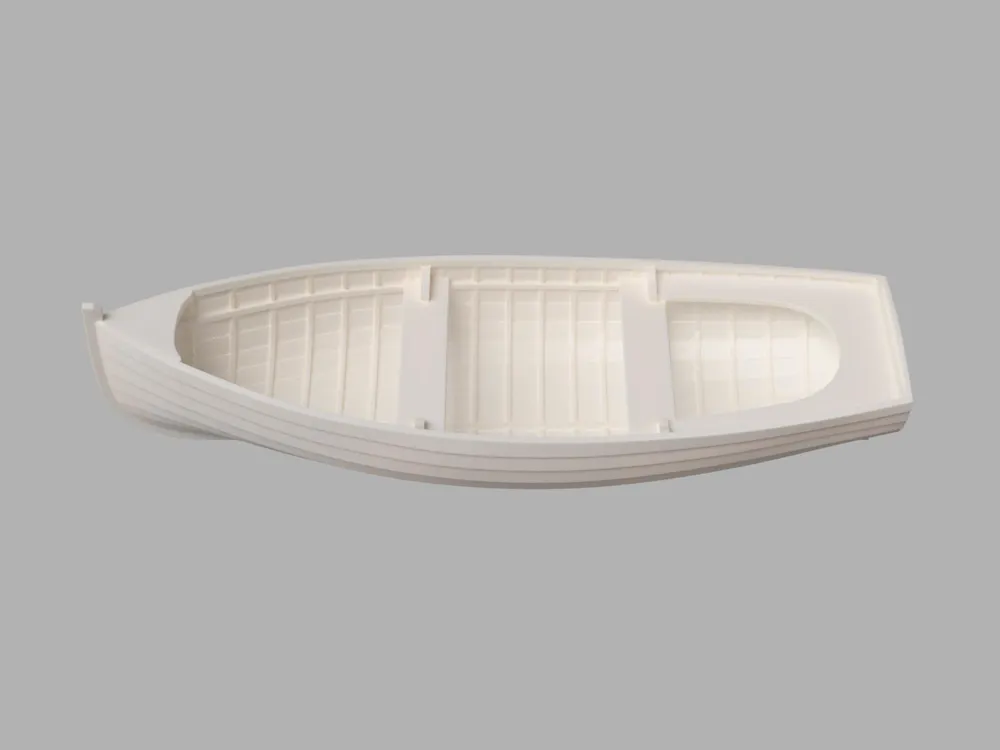
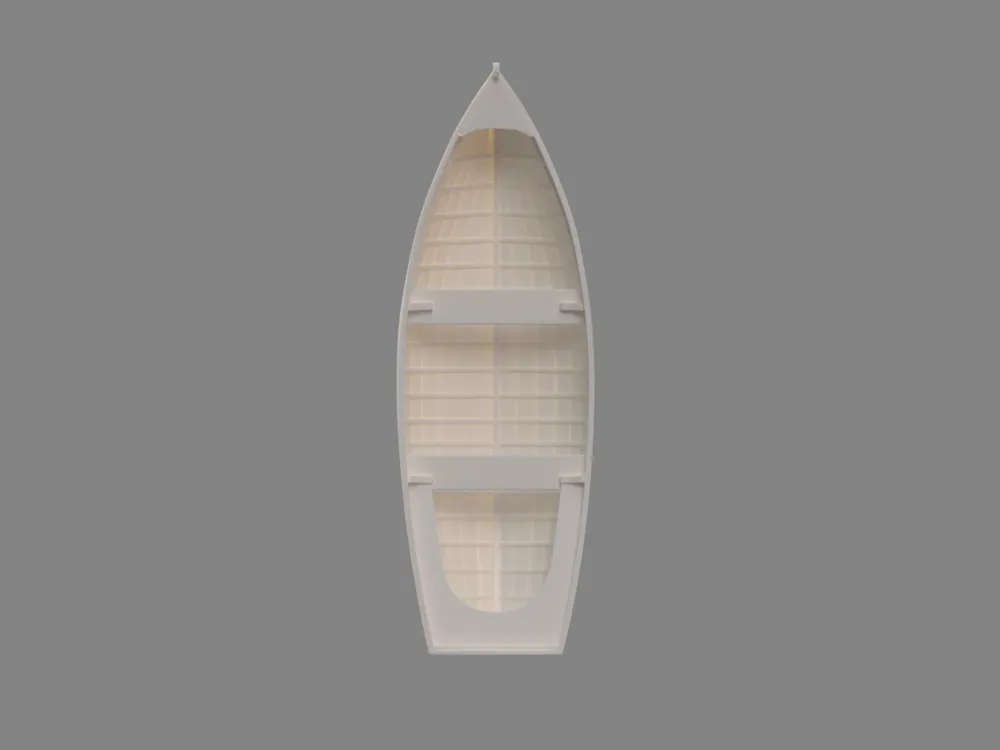
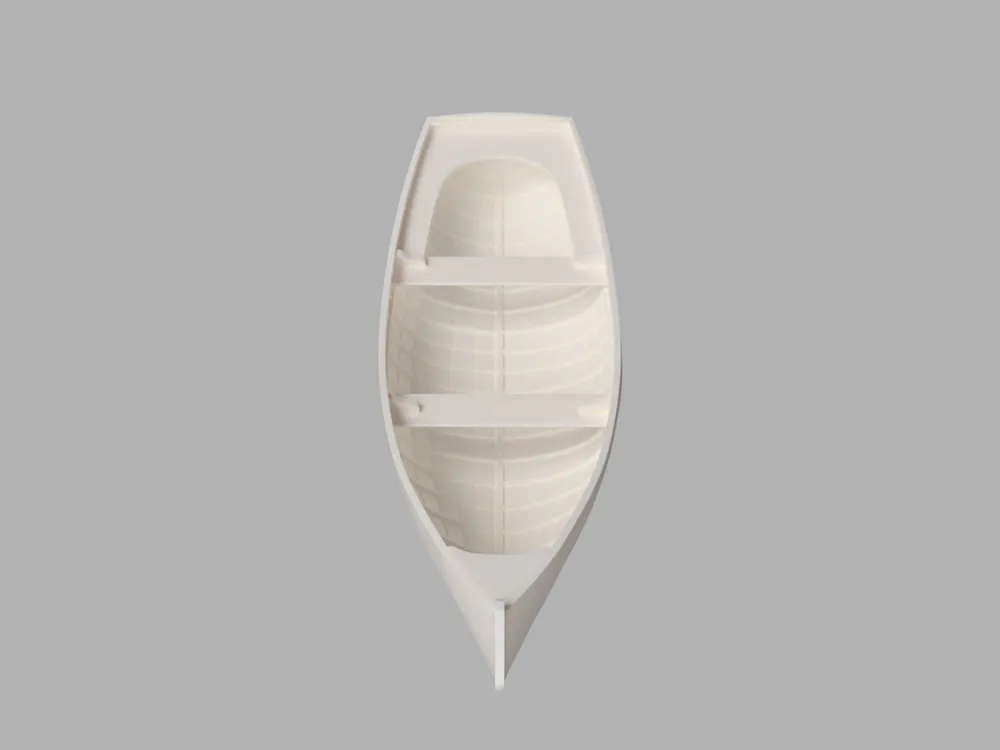
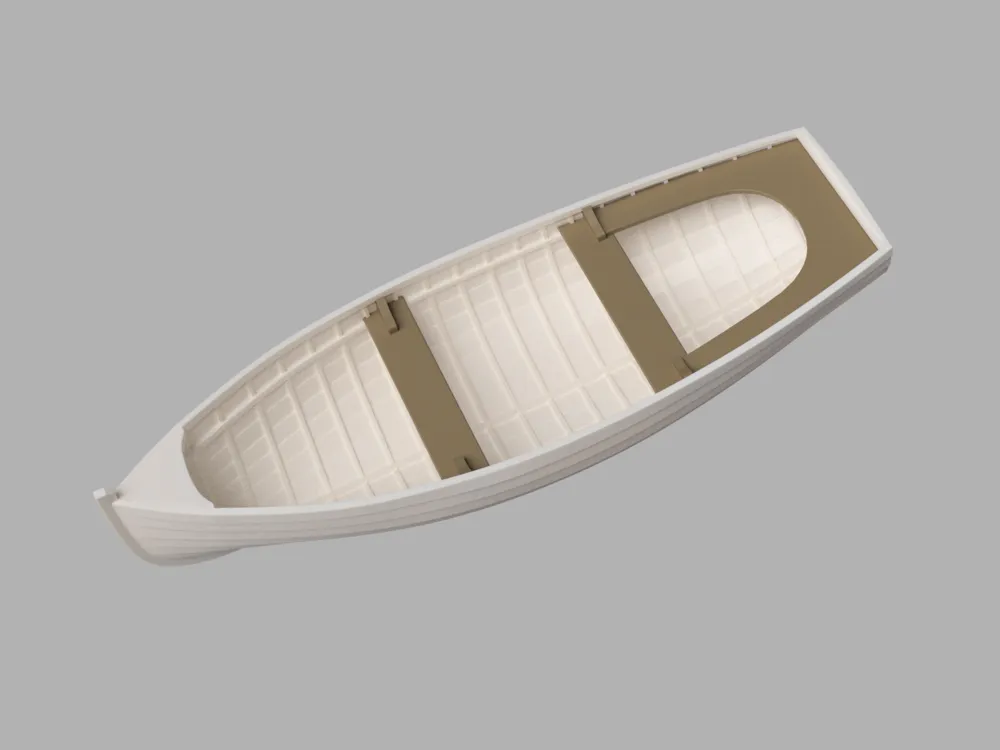
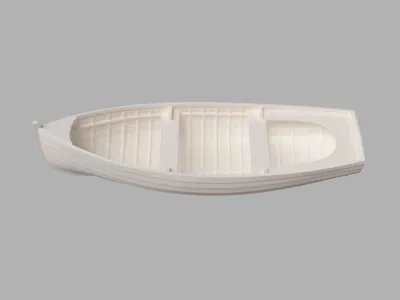
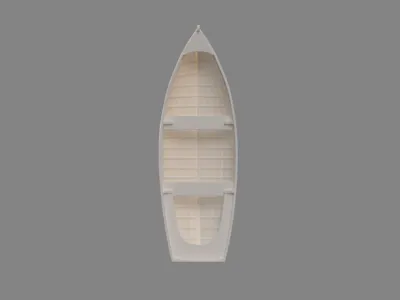
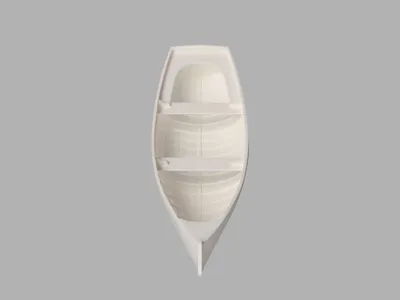
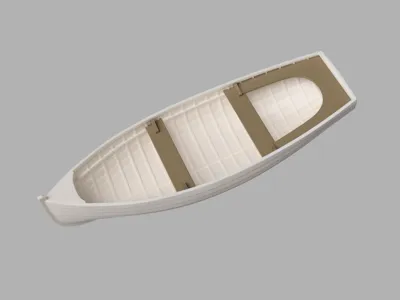
This meticulously crafted model captures every nuance of a traditional wooden rowboat, offering an educational and visually appealing piece that evokes classic maritime charm.
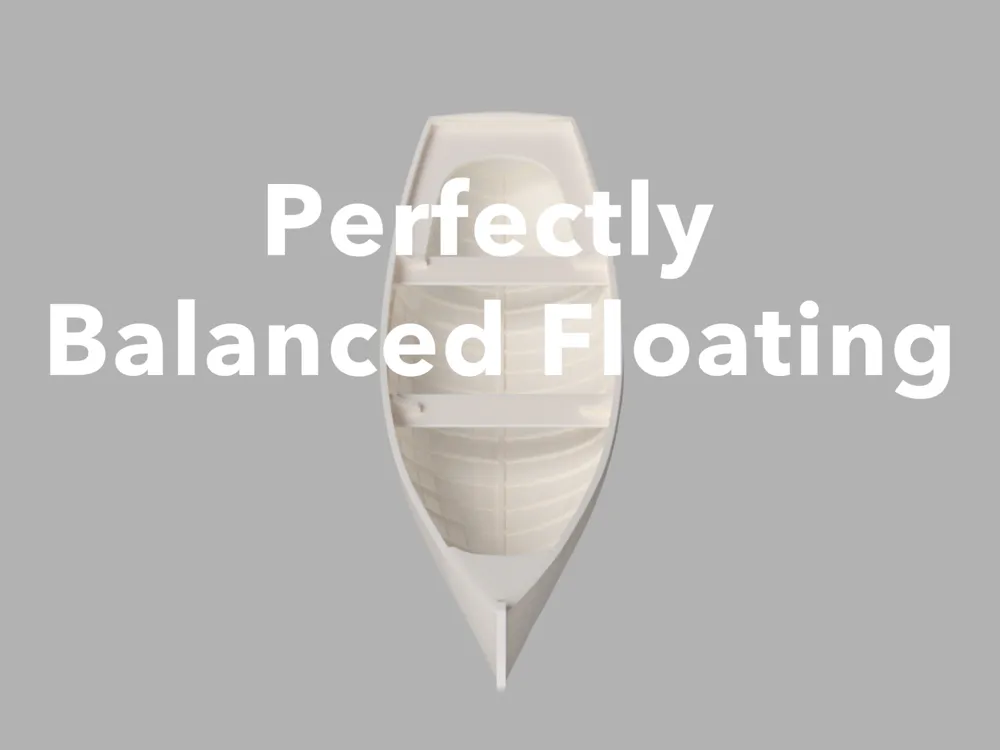
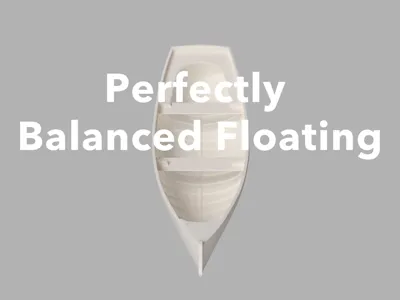
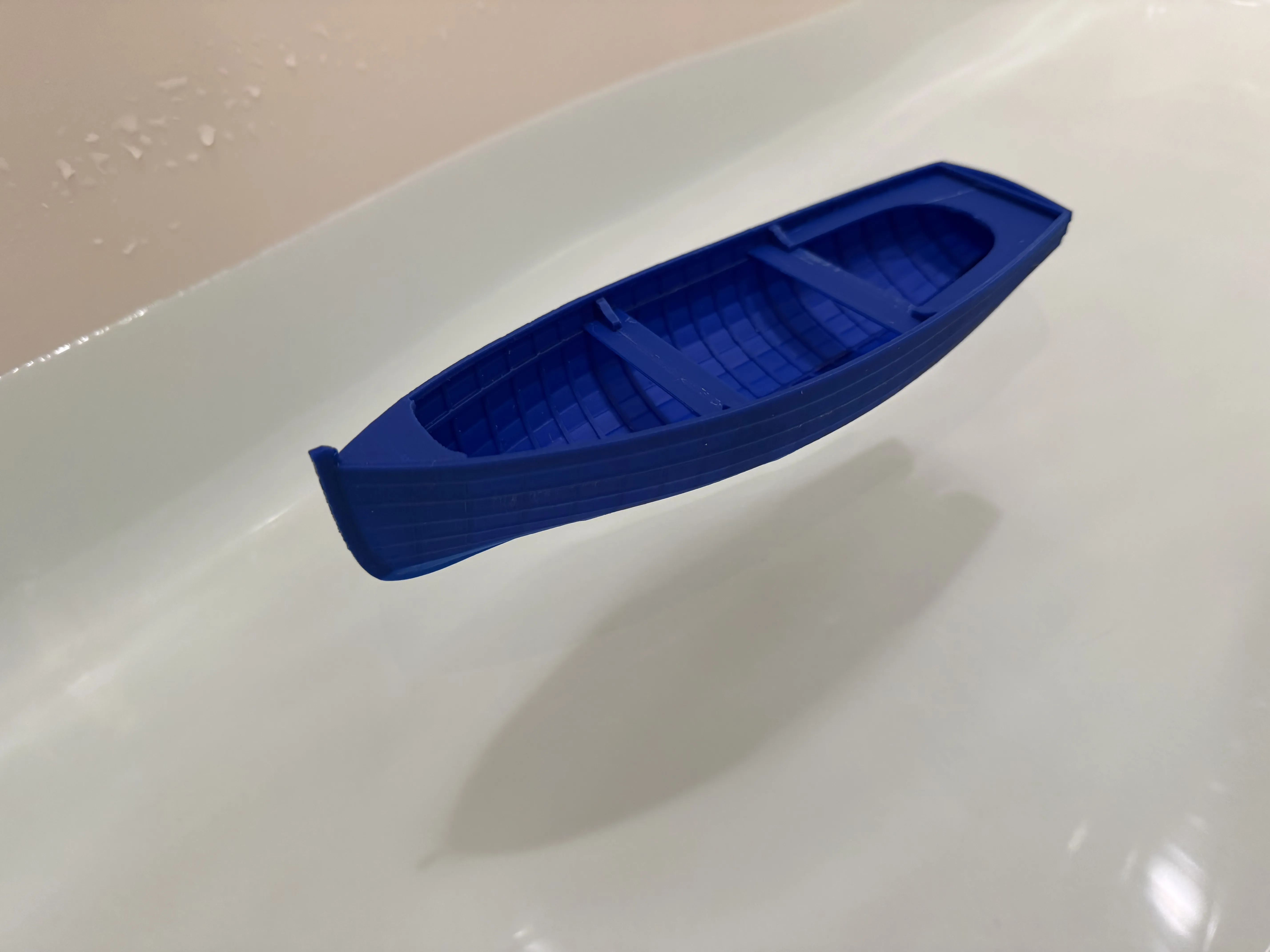
I designed this boat specifically to float naturally and maintain perfect balance. With assistance from a CFD engineer (a friend whom also helped me with the P1/X1 air duct airflow verification), the model’s buoyancy and stability were rigorously analyzed using advanced Computational Fluid Dynamics (CFD) software, ensuring realistic floating behavior and optimal stability when placed in water.
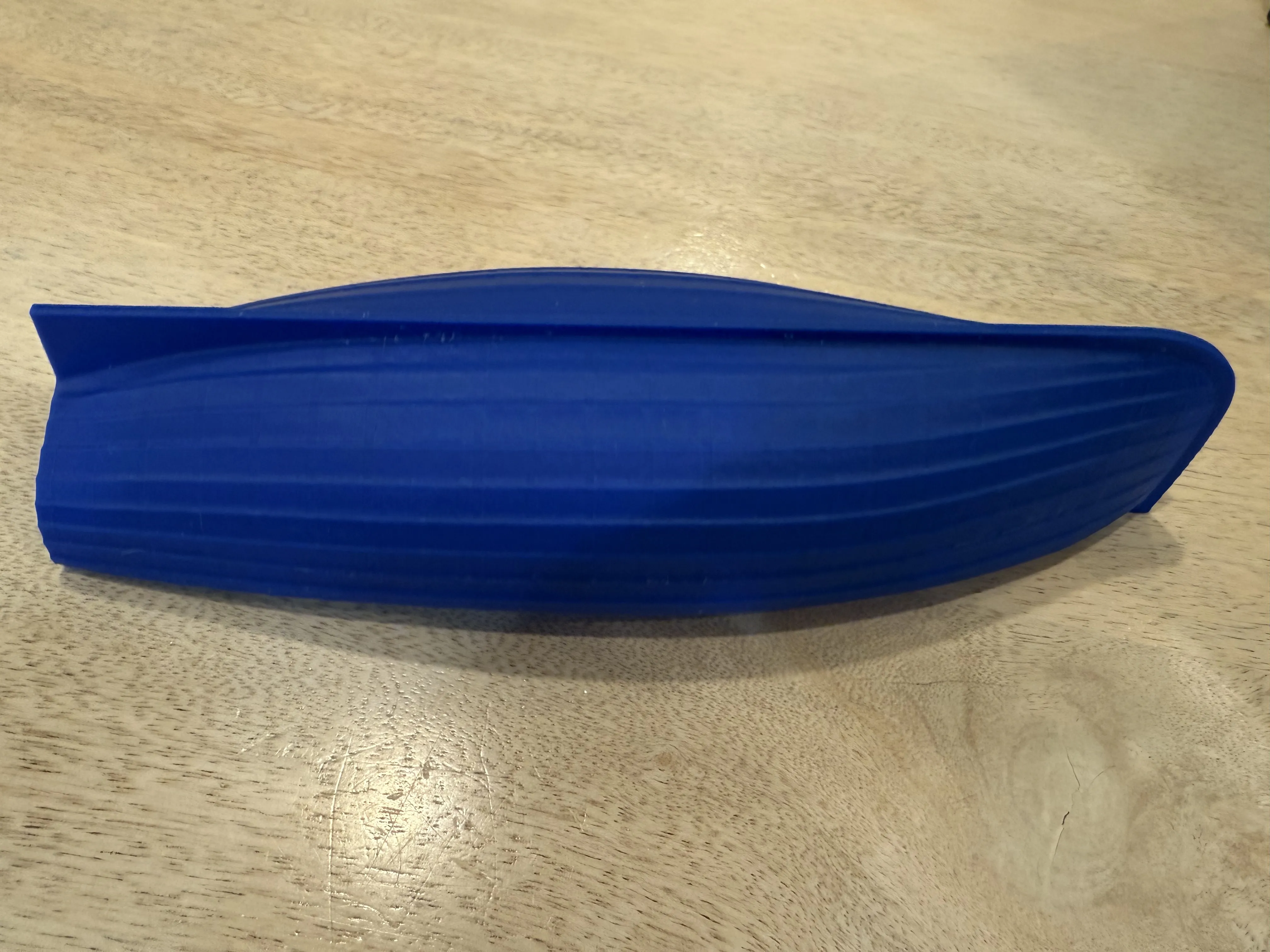
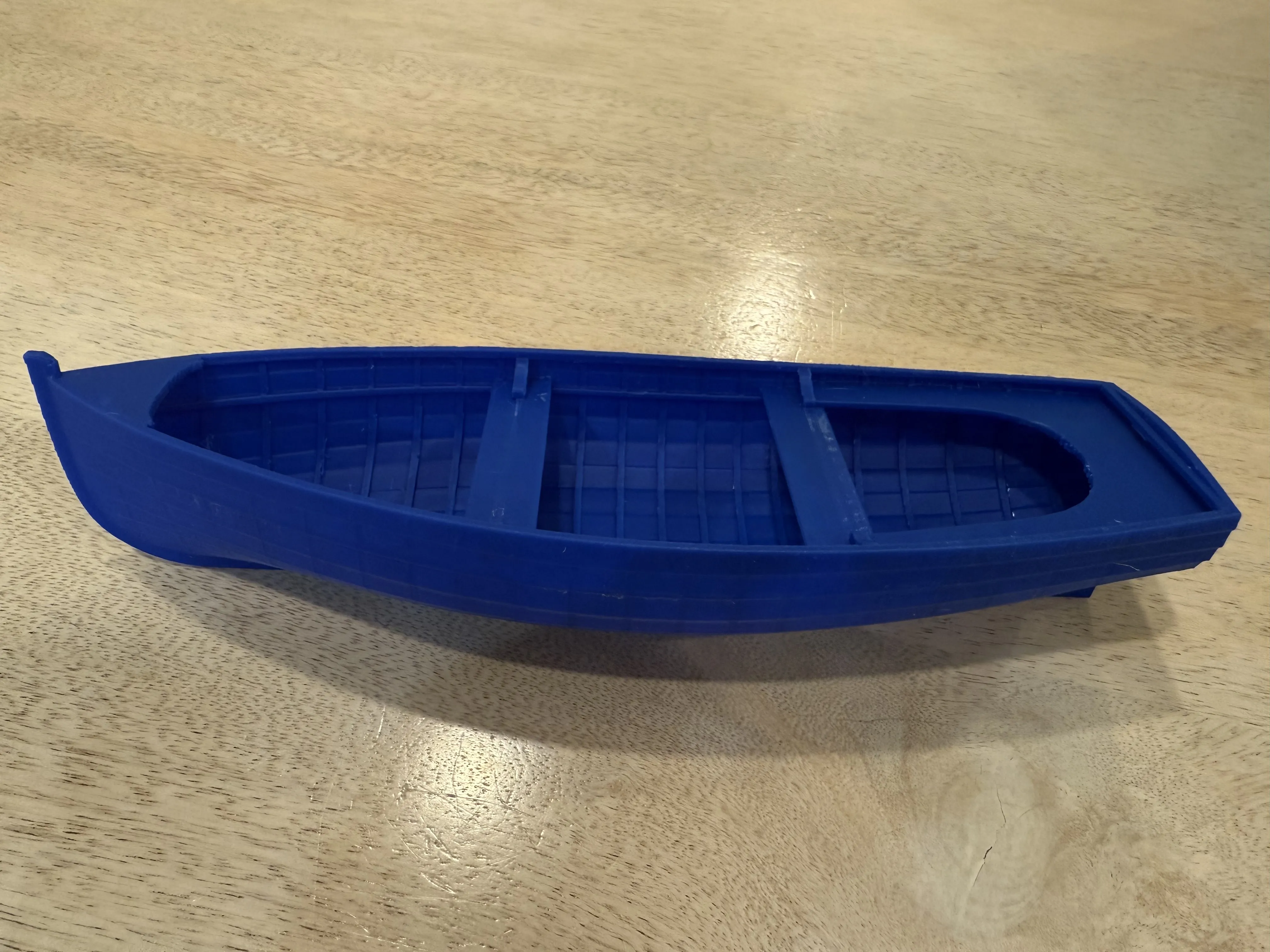
Originally designed as a toy for my son, this model works wonderfully as a bath toy—just print the “Durable Version”. It floats effortlessly and can carry various small objects, such as seashells, coins, hotwheels, and other small toys.
Whether intended for educational demonstrations, decorative displays, or playful bath-time adventures, this model beautifully blends authenticity with functionality.
Tips:
When removing the tree support, please be patient and use a proper tool.
___________
You are welcome to play with the printer settings. But be sure to use “Arachne” instead of “Classic” when generating walls to maintain structural fidelity.
I would not recommend scaling the model down with a 0.4mm or larger nozzle (if you have a 0.2mm nozzle, it will be a different story), as reducing its size will compromise the structural integrity, potentially creating excessive holes or leaks. However, it can be done with some print setting adjustments. See Q&A below for details.
Q&A
Q: Why are there holes in my printed model? How can I avoid them?
A: Holes in the printed model are often caused by improper wall generation. To avoid this, make sure to use “Arachne” instead of “Classic” when generating walls. If the holes appeared after scaling the model down, please refer to the answer below for additional guidance on scaling-related adjustments.
Q: How can I improve the print quality, especially the joints and seams?
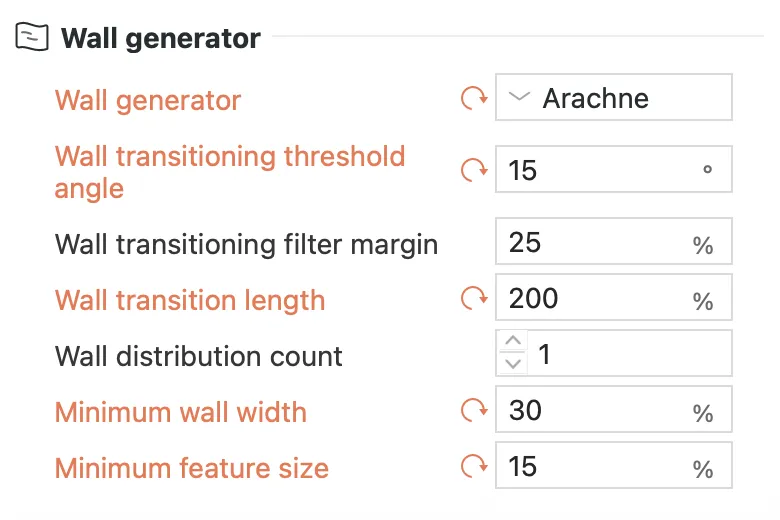
A: If you use the model as a static display and want to improve print quality, consider decreasing “Minimum Wall Line Width” and “Minimum Feature Size”. Here is a good start for 0.4mm diameter nozzle:

Q: Can I scale the model down?
A: Scaling the model down is not recommended for 0.4mm or larger nozzles (0.2mm nozzle is a different story), as reducing its size may compromise structural integrity and lead to unintended holes or leaks. However, if you must scale it down, PLEASE ensure that “Arachne” is used. Additionally, consider increasing “Wall Transitioning Threshold Angle” and “Wall Transitioning Length,” while decreasing “Minimum Wall Line Width” and “Minimum Feature Size” to better accommodate the reduced scale.
Here is an example ( 0.4mm diameter nozzle and model scaled down to 90%):
Q: Can I scale the model up?
A: Yes, scaling up the model is not a problem.
Q: Which software did you use?
A: DELFTSHIP (paid version) and Fusion (paid version).
Q: Which software was used for the CFD simulation?
A: The CFD simulation was performed by a friend who is a CFD engineer. To the best of my knowledge, he definitely used Siemens’ CFD software and possibly DELFTSHIP as well, since he requested access to my computer during the process.
Boost Me (for free)
For visitors from Makerworld CN (China) site:
I am sorry that I cannot reply your comments (CN site doesn't allow me to register without a CN phone number), and Makerworld Global site does not show your comments. Please leave the comments at Makerworld Global site and the system can translate it into English automatically. I will more than willing to help you or answer your questions.
License

You shall not share, sub-license, sell, rent, host, transfer, or distribute in any way the digital or 3D printed versions of this object, nor any other derivative work of this object in its digital or physical format (including - but not limited to - remixes of this object, and hosting on other digital platforms). The objects may not be used without permission in any way whatsoever in which you charge money, or collect fees.


Comment & Rating (87)