
Crew Dragon V2
Print Profile(2)
Description
Boost Me (for free)
Every like, collection, follow, and boost from you is a great encouragement for me to persevere in creating original models, thank you!
For more interesting models, please visit my homepage: CuriousAnt | Home - MakerWorld
♦ ♦ ♦ ♦ ♦ ♦ ♦ ♦ ♦ ♦ ♦ ♦ ♦ ♦ ♦ ♦ ♦ ♦ ♦ ♦
My SpaceX model series:
- Crew Dragon V2
- SpaceX Falcon 9 Rocket
- SpaceX Falcon Heavy Rocket – Falcon 9 upgraded to Heavy
- Starship Generation 1 S28+B10
- SpaceX Starship Generation 2
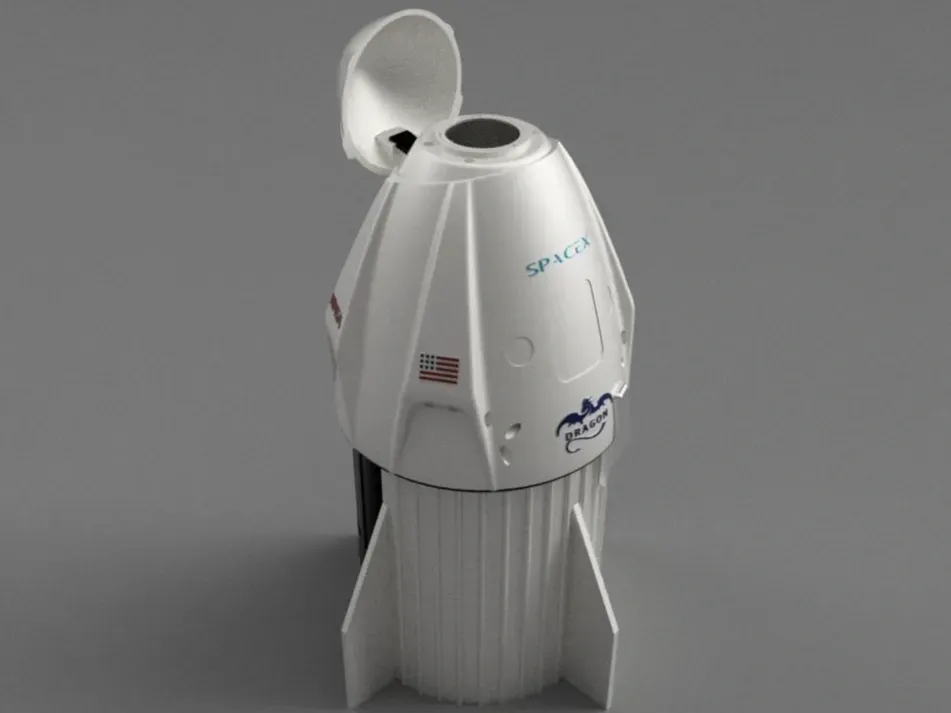
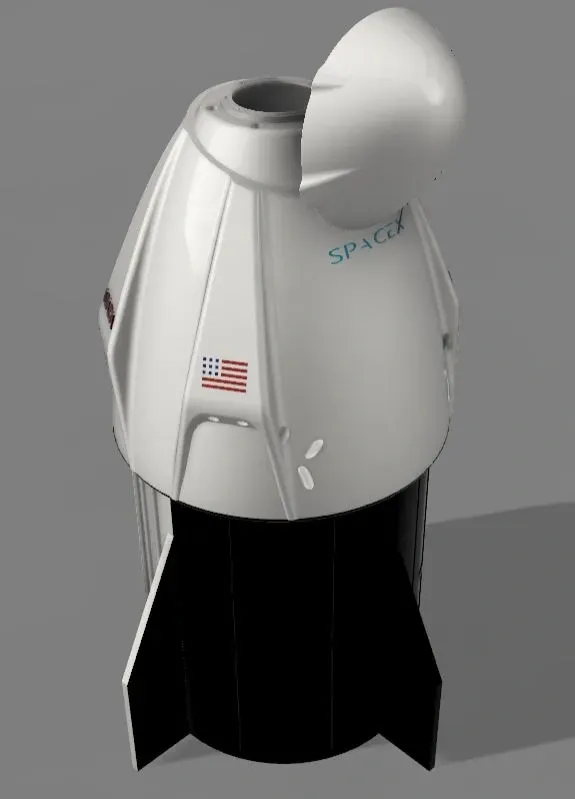
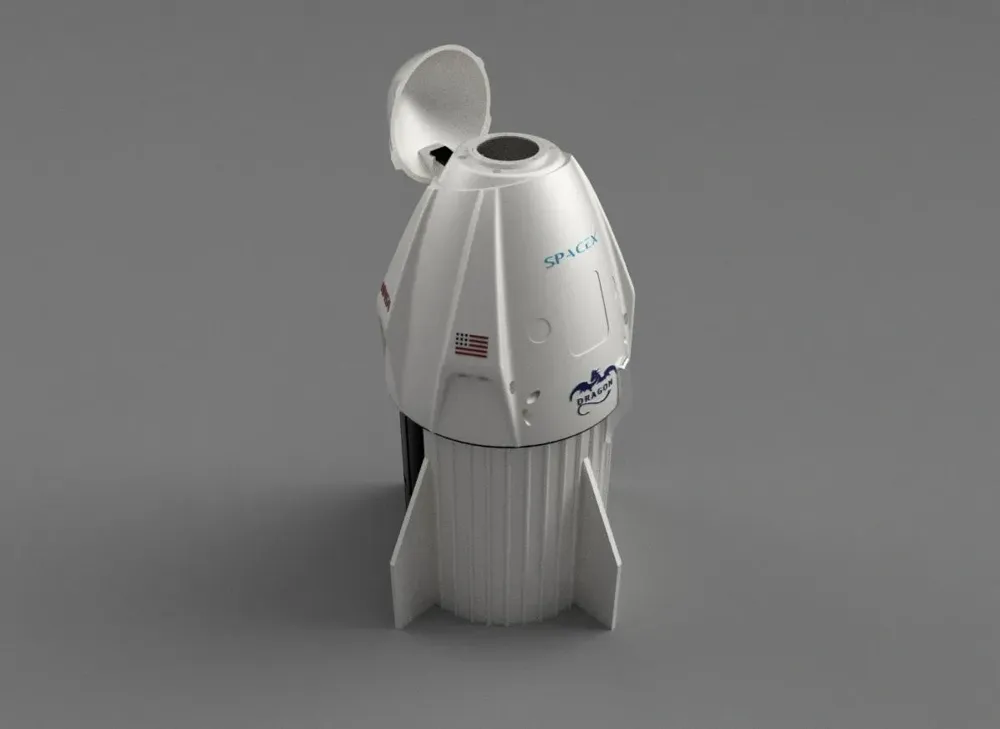
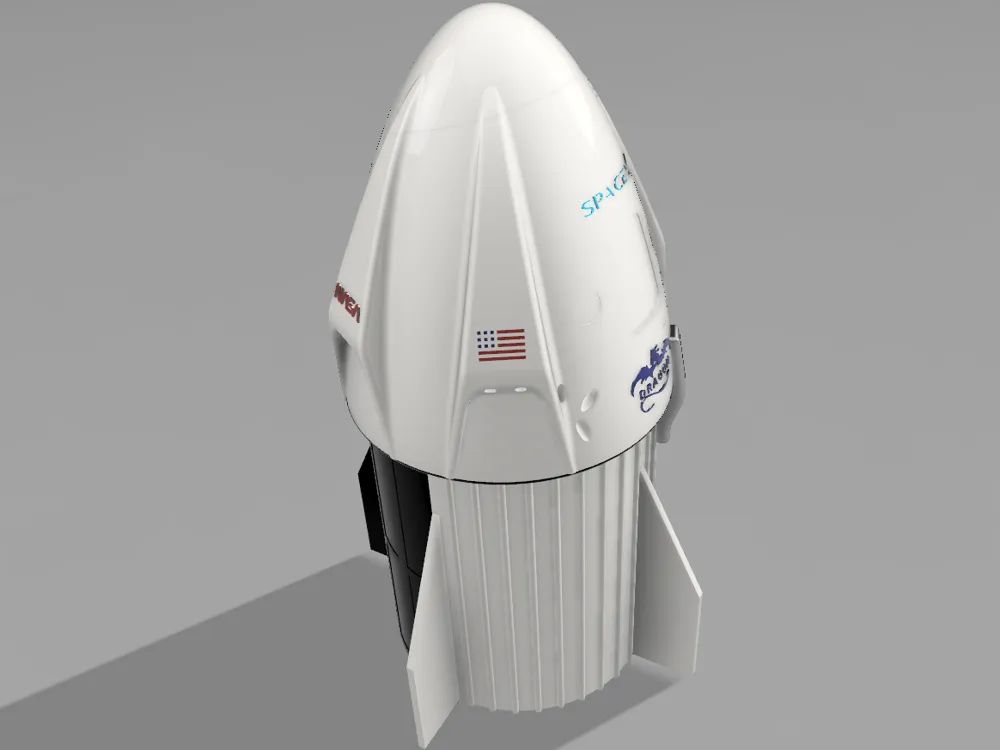
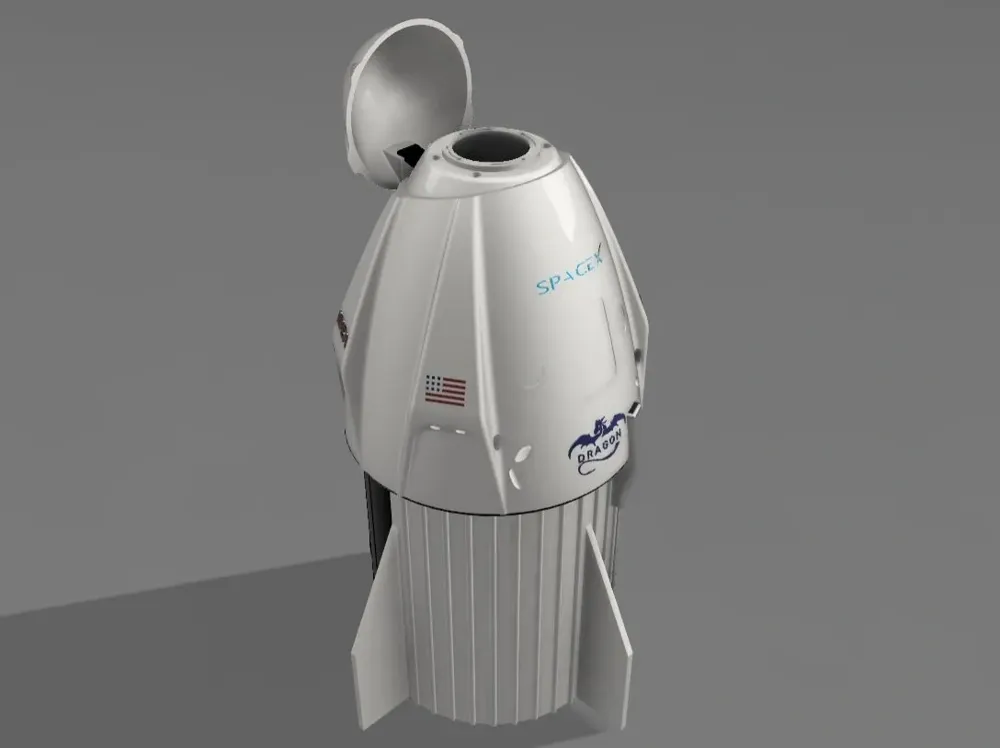
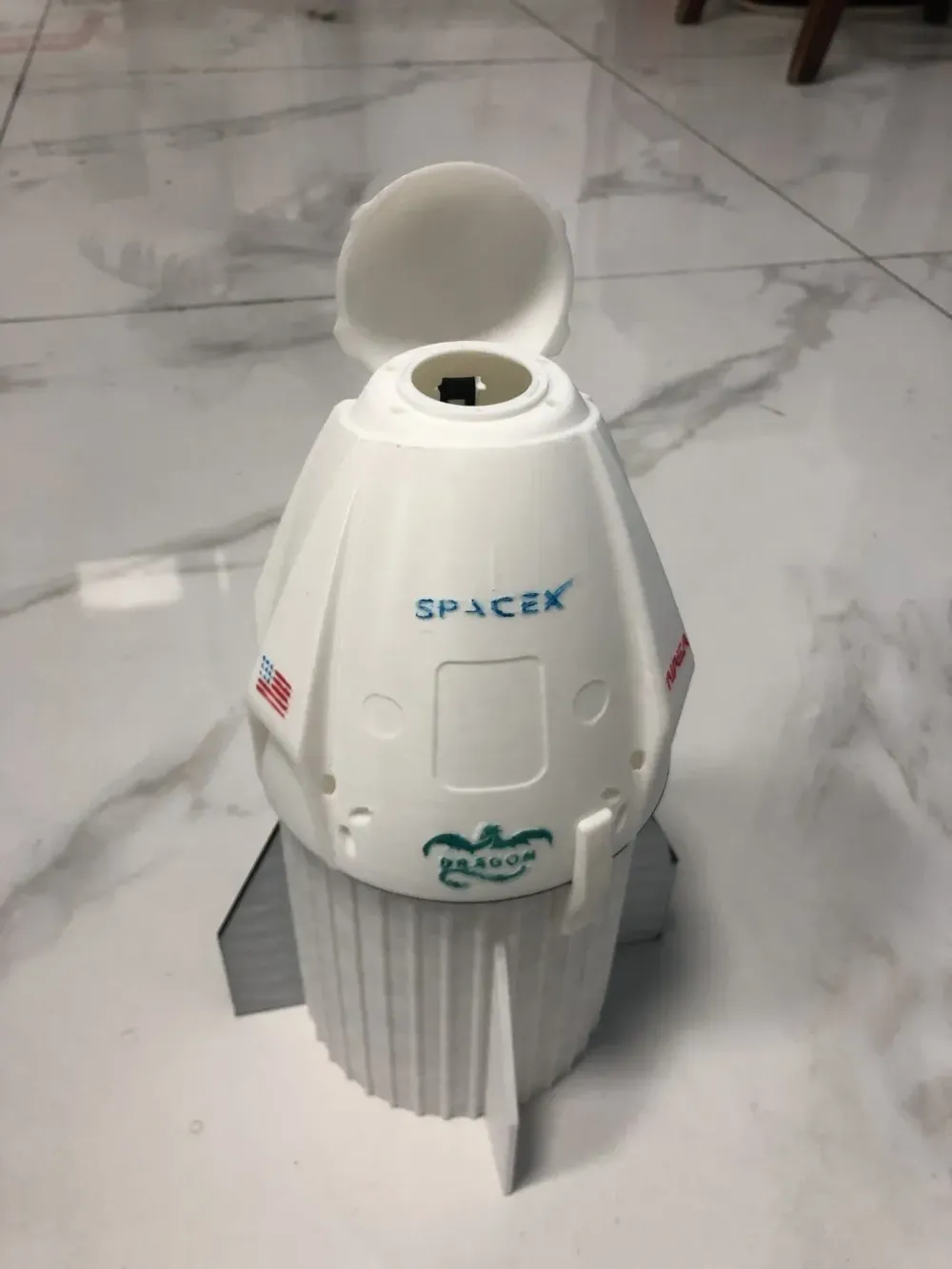
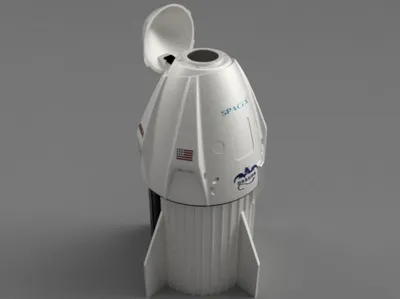
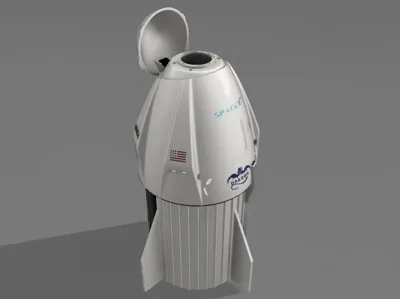
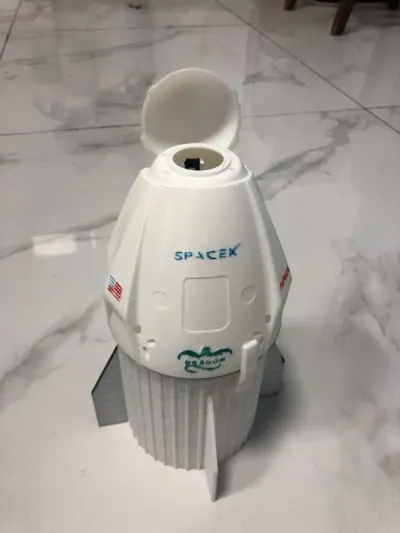
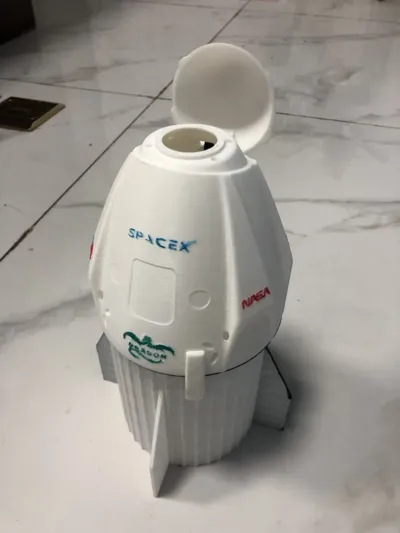
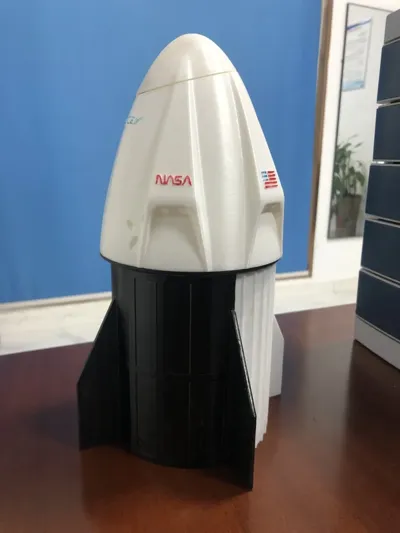
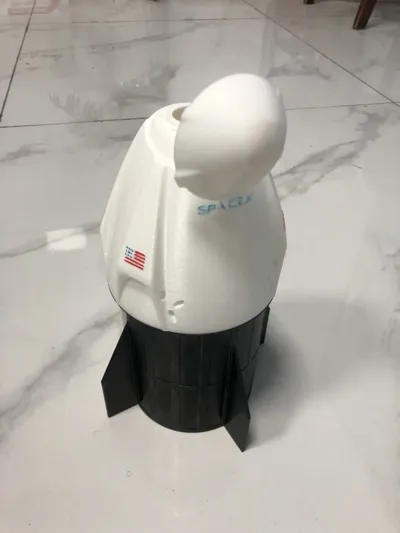
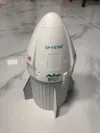
The Crew Dragon spacecraft, developed by SpaceX, represents the next generation of crewed spacecraft following the retirement of the US Space Transportation System. Its defining feature is reusability.
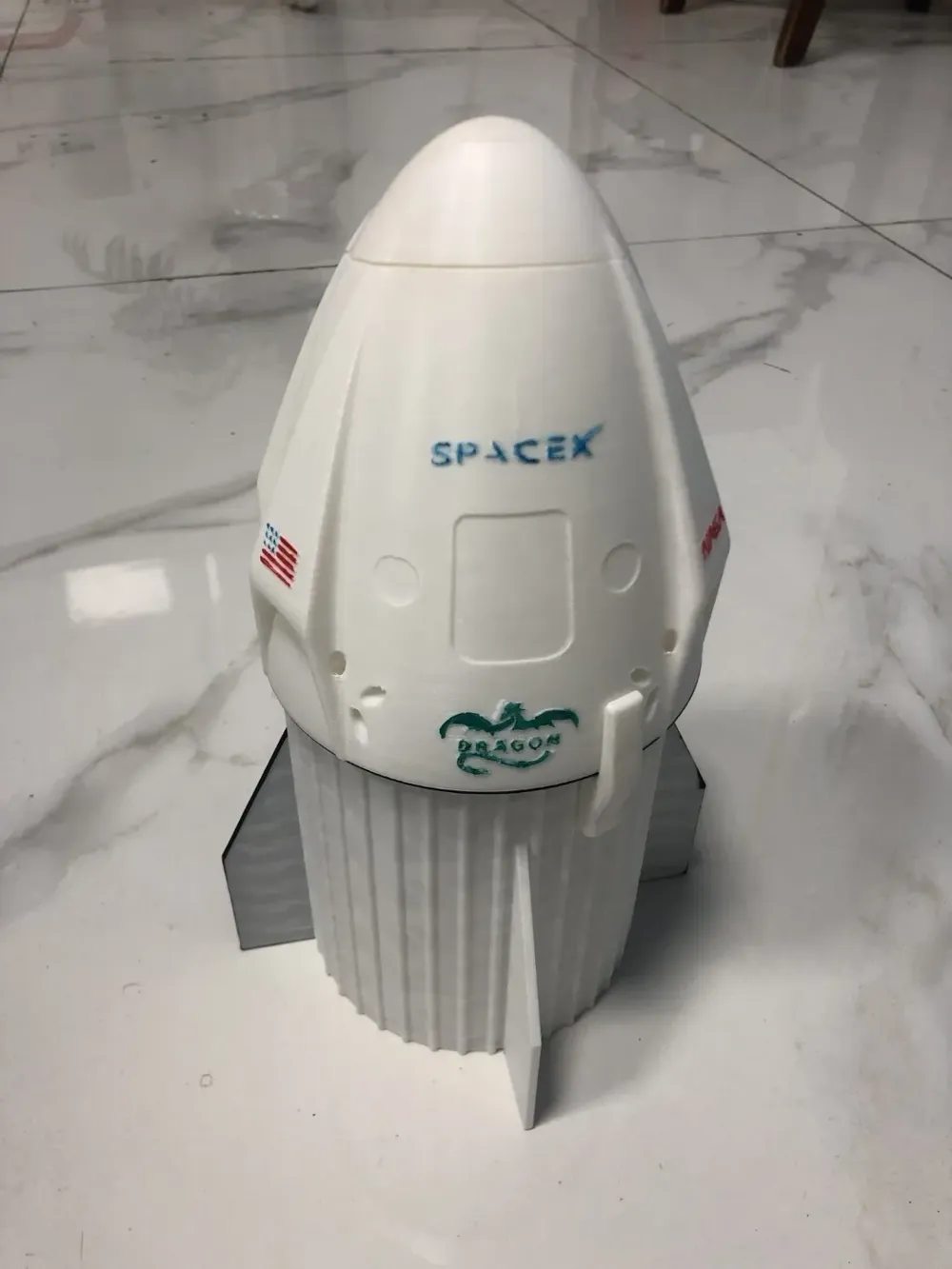
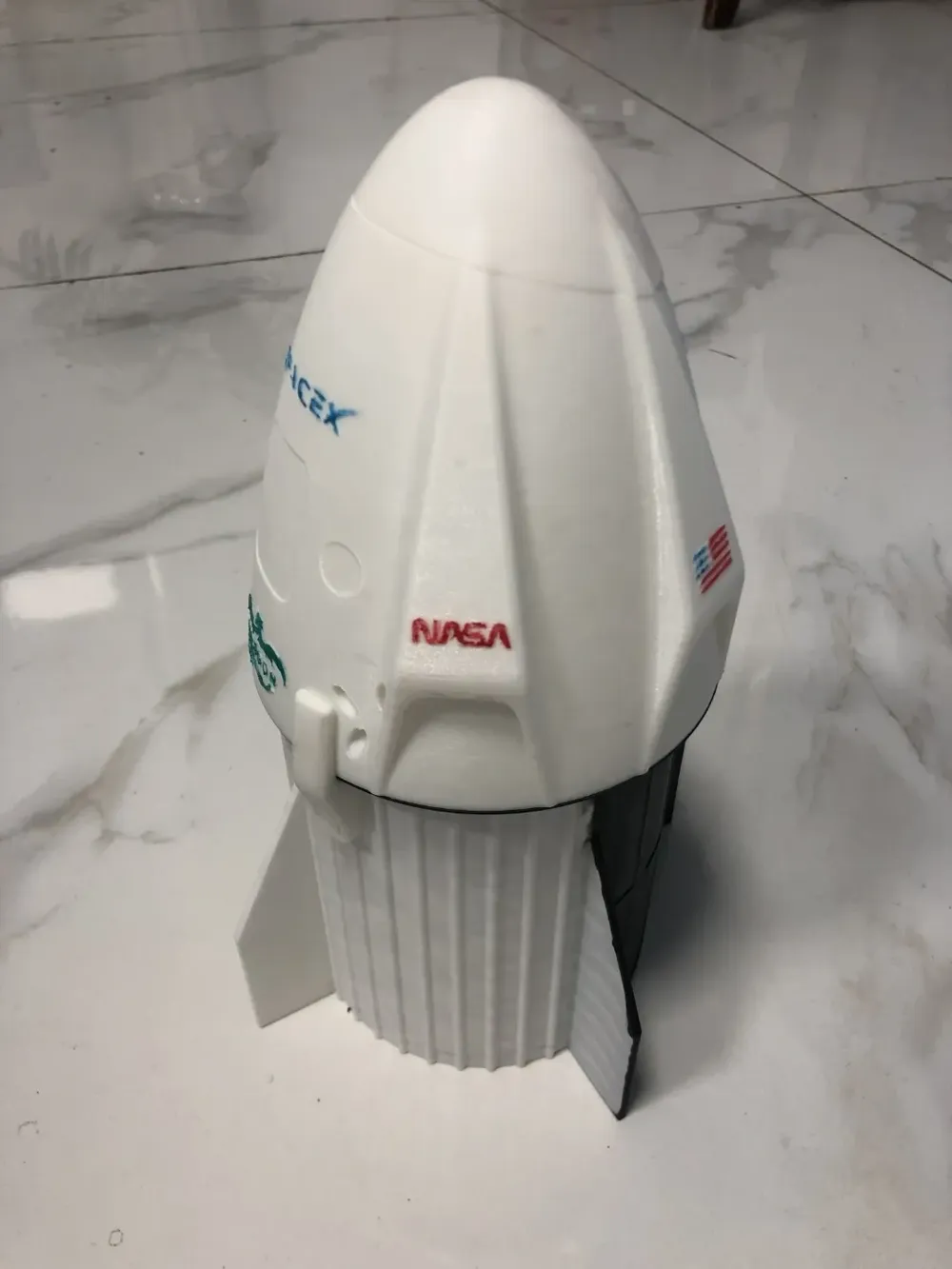
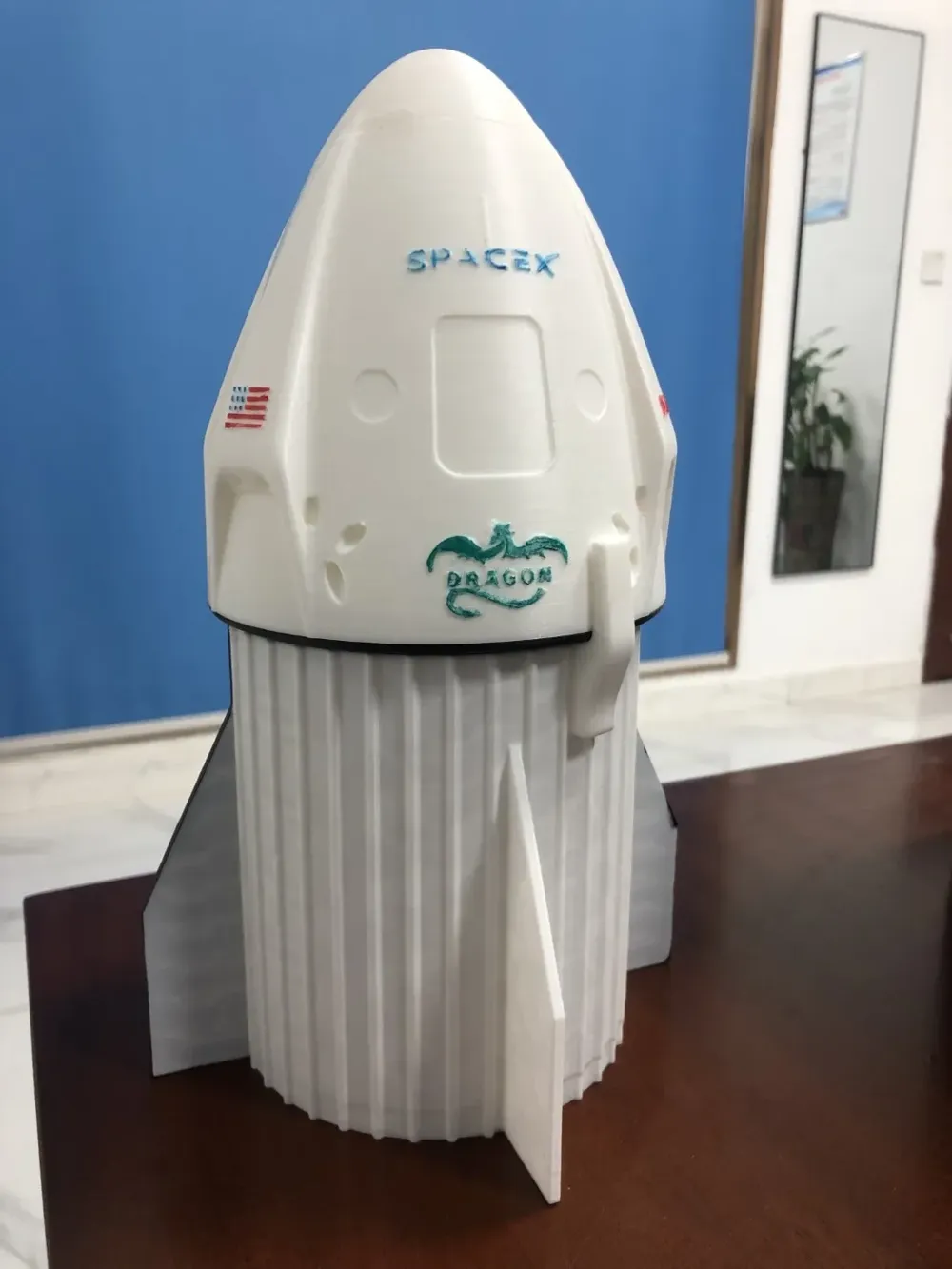
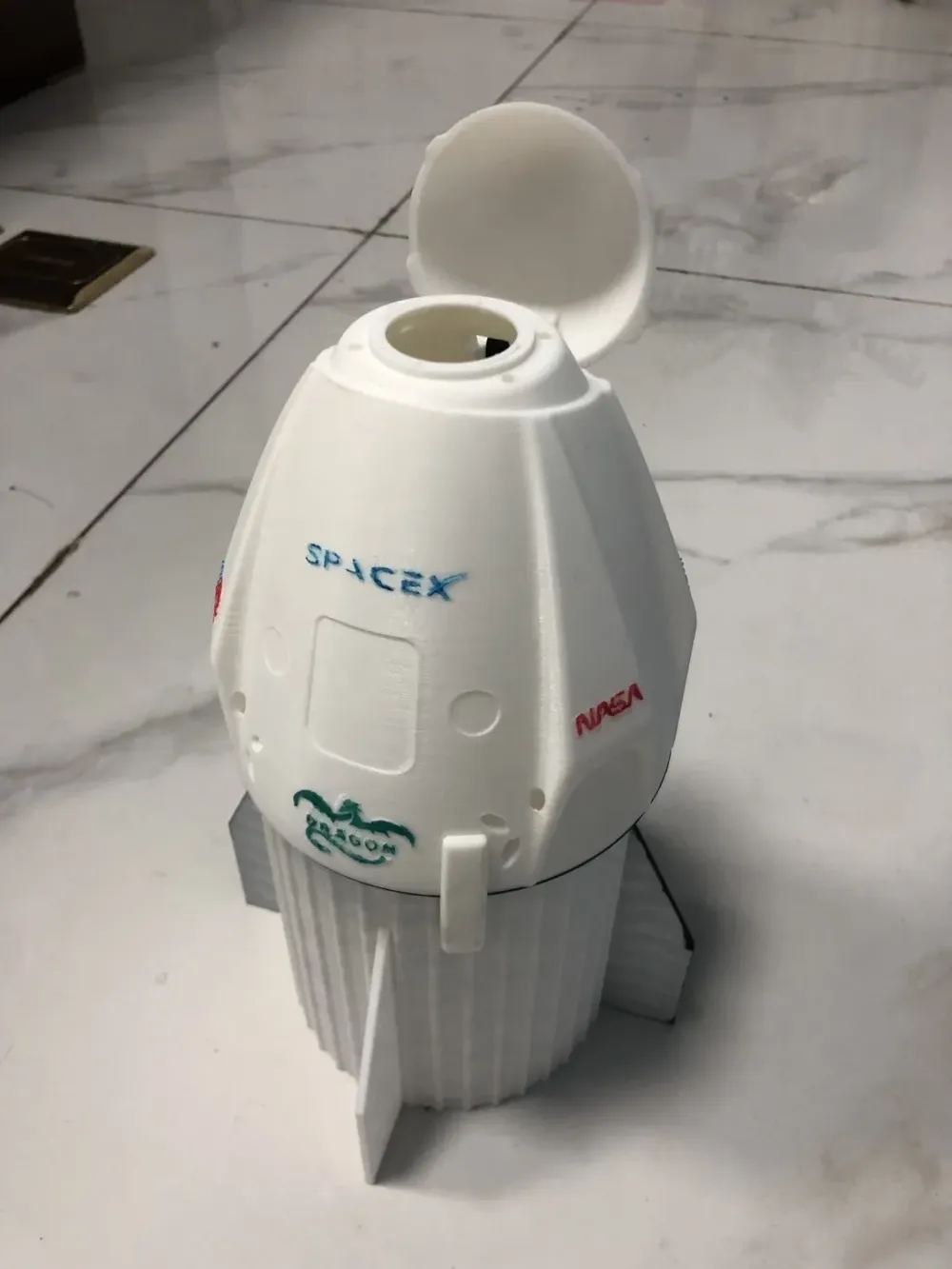
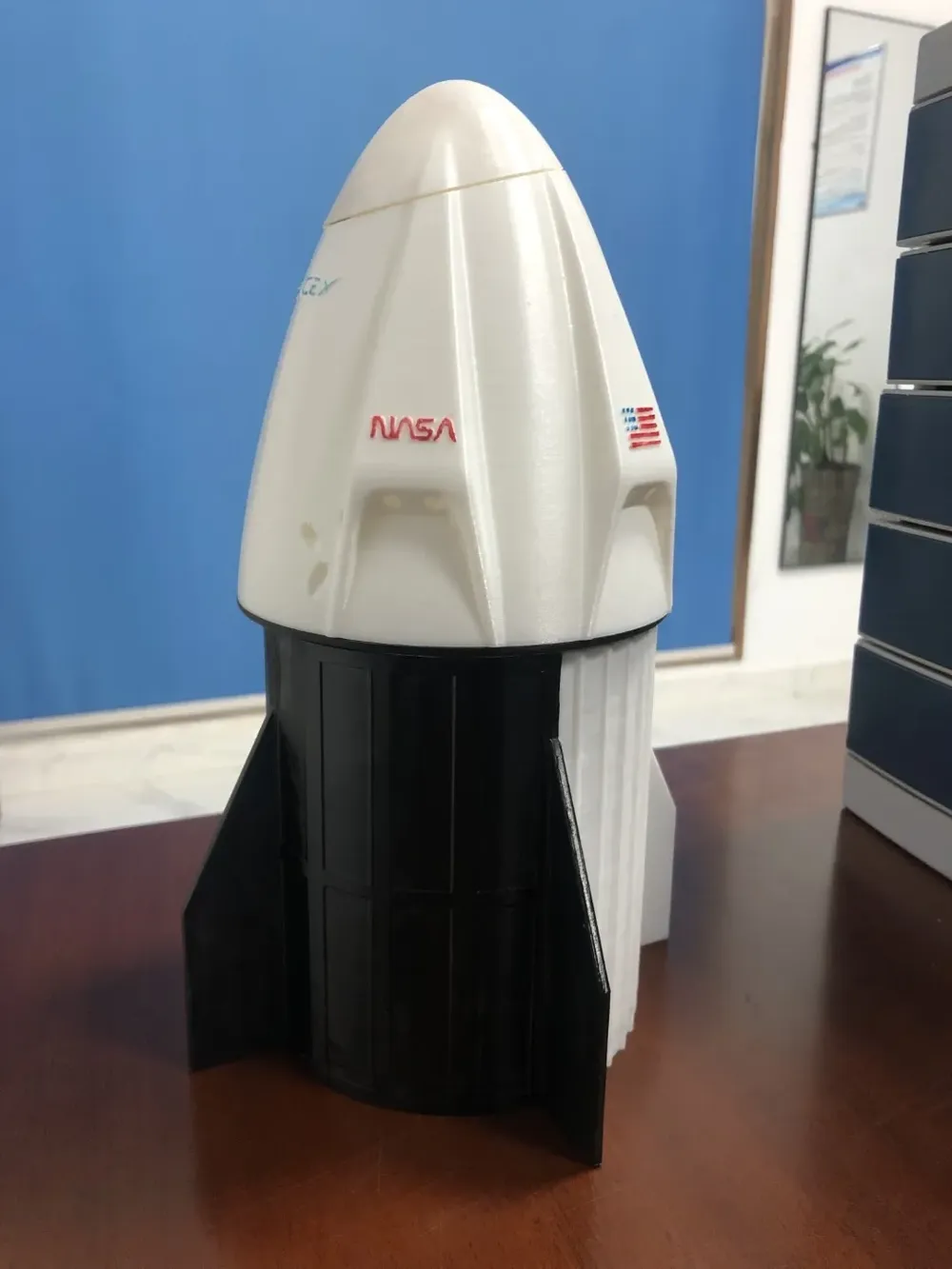
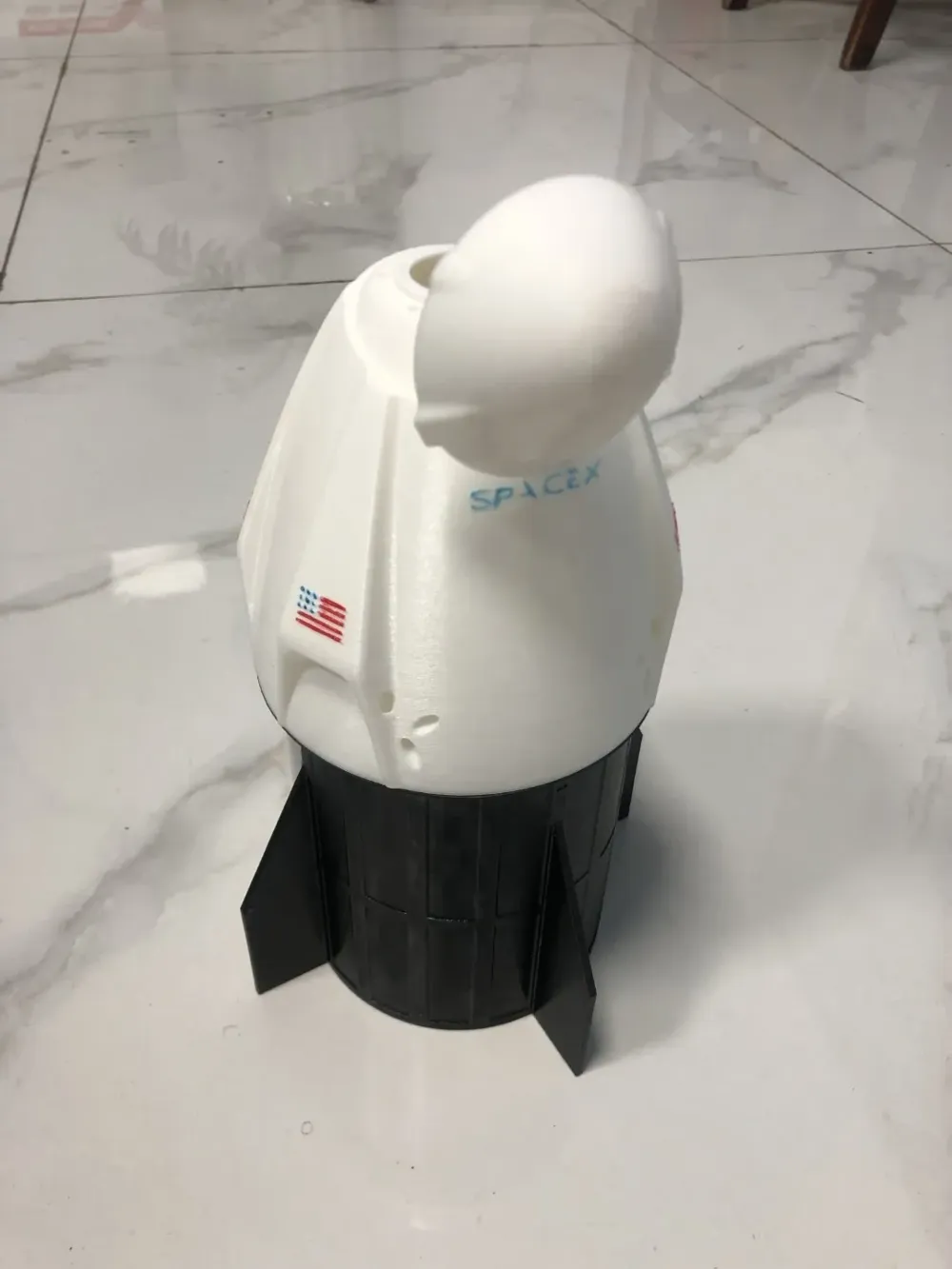
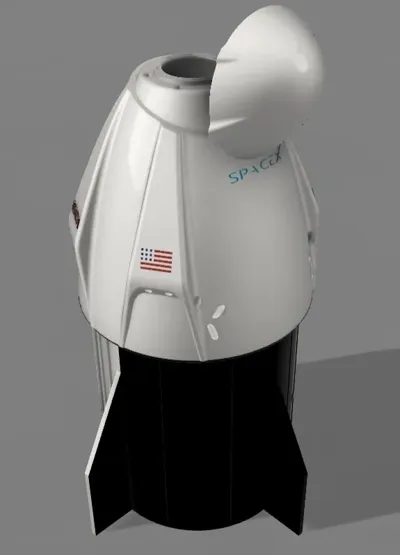
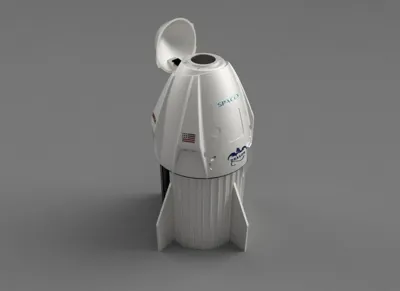
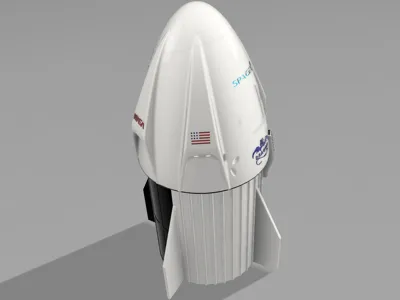
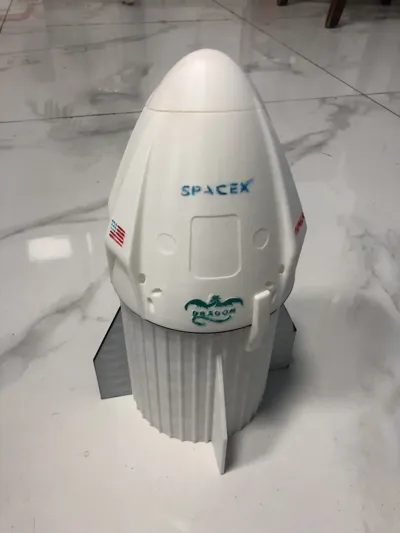
This model depicts the second-generation Crew Dragon, measuring 3.7 meters in diameter and 8.1 meters in length, with a launch mass of 12,055 kilograms and an upward payload capacity of 6,600 kilograms. The spacecraft comprises two sections: the crew capsule and the trunk.
The crew capsule forms the heart of the spacecraft, providing virtually all essential services. Eight SuperDraco engines are mounted on the underside for escape. Additional Draco engines manage attitude control, docking, and orbital maneuvers. The capsule’s side walls utilize a radiative thermal protection system, enabling replacement and refurbishment after return, thereby reducing turnaround time. The bottom heat shield, experiencing the most intense heat, employs an ablative thermal protection system and separates prior to splashdown, remaining unrecovered.
The trunk solely provides power generation and thermal control. It's a winged cylindrical structure. Four tail fins, positioned on the quadrants, primarily maintain stability during escape. Half the trunk’s surface area is covered with solar panels, supplying electricity during orbital operations. The opposite side, receiving minimal sunlight, maintains a lower temperature, housing the external radiators of the thermal control subsystem. The cylindrical trunk is hollow, accommodating cargo within. Once docked with the International Space Station, the robotic arm can retrieve cargo through an opening at the rear of the trunk. The trunk separates after atmospheric re-entry braking.
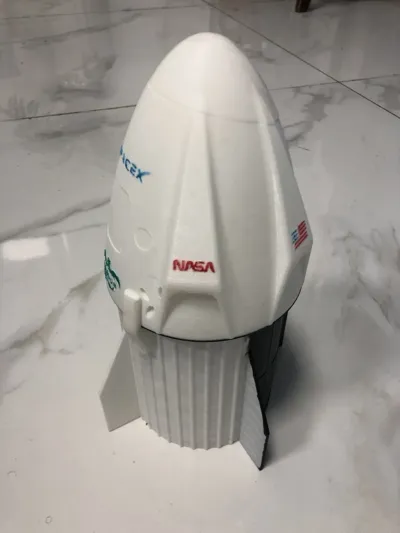
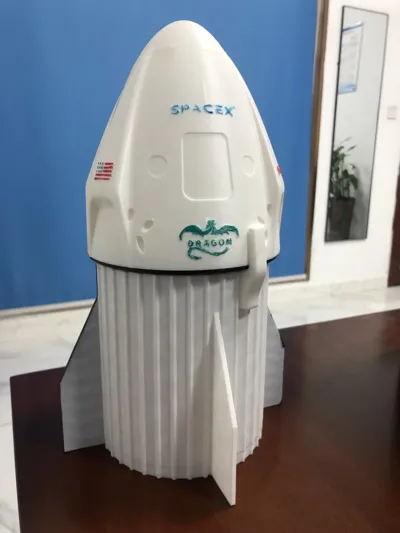
The original STL file is a 1:10 scale model; a 1:30 print profile is provided, which I believe is ideal. Almost any 3D printer can handle this scale; the finished product is a manageable size, perfect for display. Alternatively, you can utilize the STL file to slice at other scales, then incorporate it into my Falcon 9 rocket model for a complete launch configuration.
Boost Me (for free)
Every like, save, follow, and boost is invaluable encouragement for my ongoing creation of original models. Thank you!
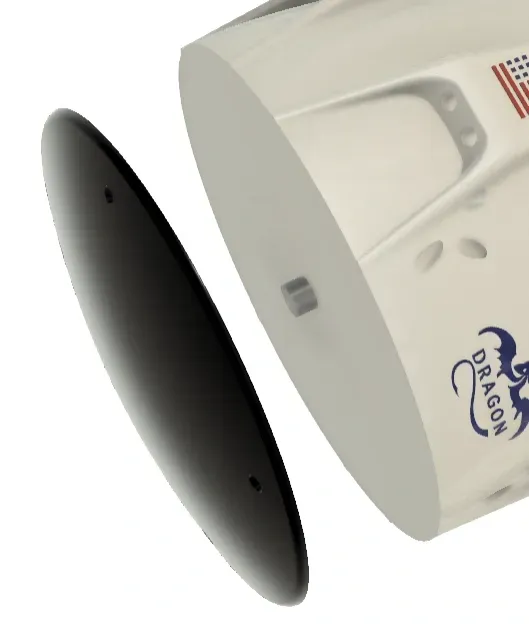
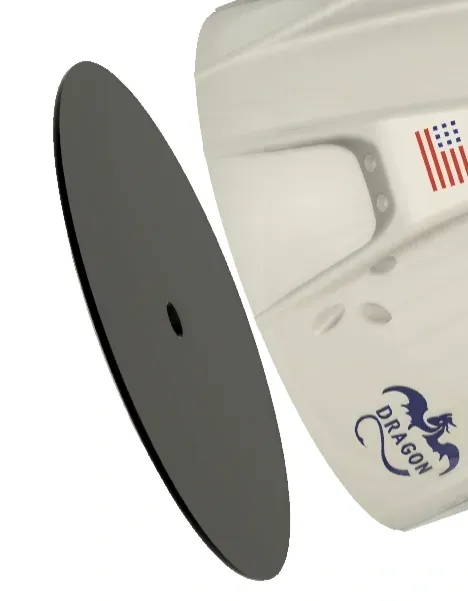
The “bottom heat shield” and “crew capsule” are connected using the “bottom heat shield connector pins”; adhesive application is recommended for secure fastening
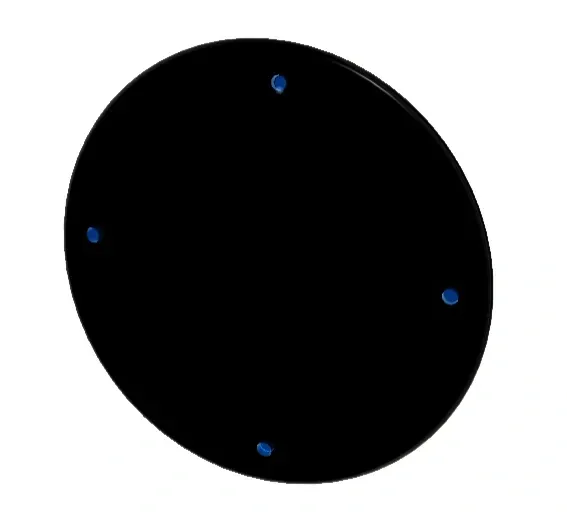
The curved surface of the “bottom heat shield” features four holes for four 4mm diameter, 2mm thick magnets; ensure all outward-facing poles have the same polarity.
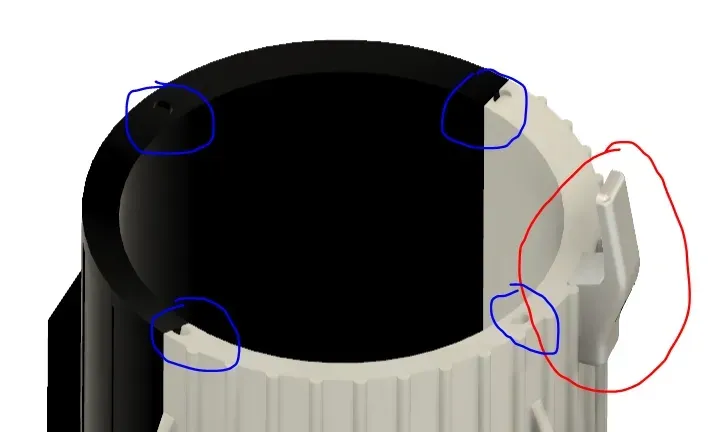
Securely attach the “trunk connector” to the “trunk” using adhesive; avoid applying adhesive to the end contacting the “crew capsule”; do not affix it to the “crew capsule”.
The “trunk” has four holes around its perimeter (indicated by the blue box in the image above). Install four 4mm diameter, 2mm thick magnets; all outward-facing poles should have the same polarity, opposite to that of the magnets on the “bottom heat shield”.
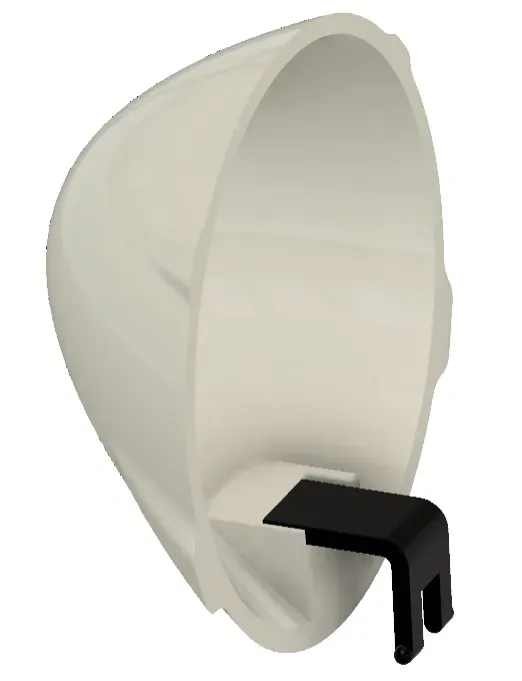
As shown in the image, attach the “docking port cover bracket” to the “docking port cover”. Apply adhesive if needed for a tighter fit.
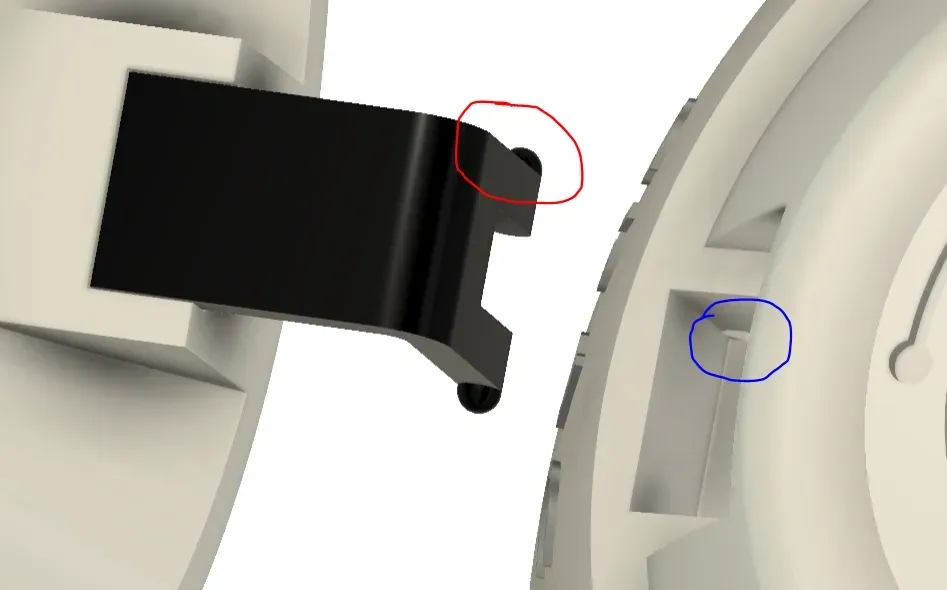
Attach the “docking port cover” to the “crew capsule”. The lower end of the “docking port cover bracket” is forked; utilize its elasticity to directly insert it into the slot in the crew capsule, pushing downwards until the protrusion (red box) settles into the corresponding hole (blue box).
Assembly complete – wasn’t that straightforward?
Visit my profile for more related models: Falcon 9 rocket, Falcon Heavy rocket, and Starship
License

You shall not share, sub-license, sell, rent, host, transfer, or distribute in any way the digital or 3D printed versions of this object, nor any other derivative work of this object in its digital or physical format (including - but not limited to - remixes of this object, and hosting on other digital platforms). The objects may not be used without permission in any way whatsoever in which you charge money, or collect fees.


Comment & Rating (35)