
Sailing Stones - Sand art machine
Print Profile(1)

Bill of Materials


- Steelball x 1:
Description
Sailing Stones - Sand art machine


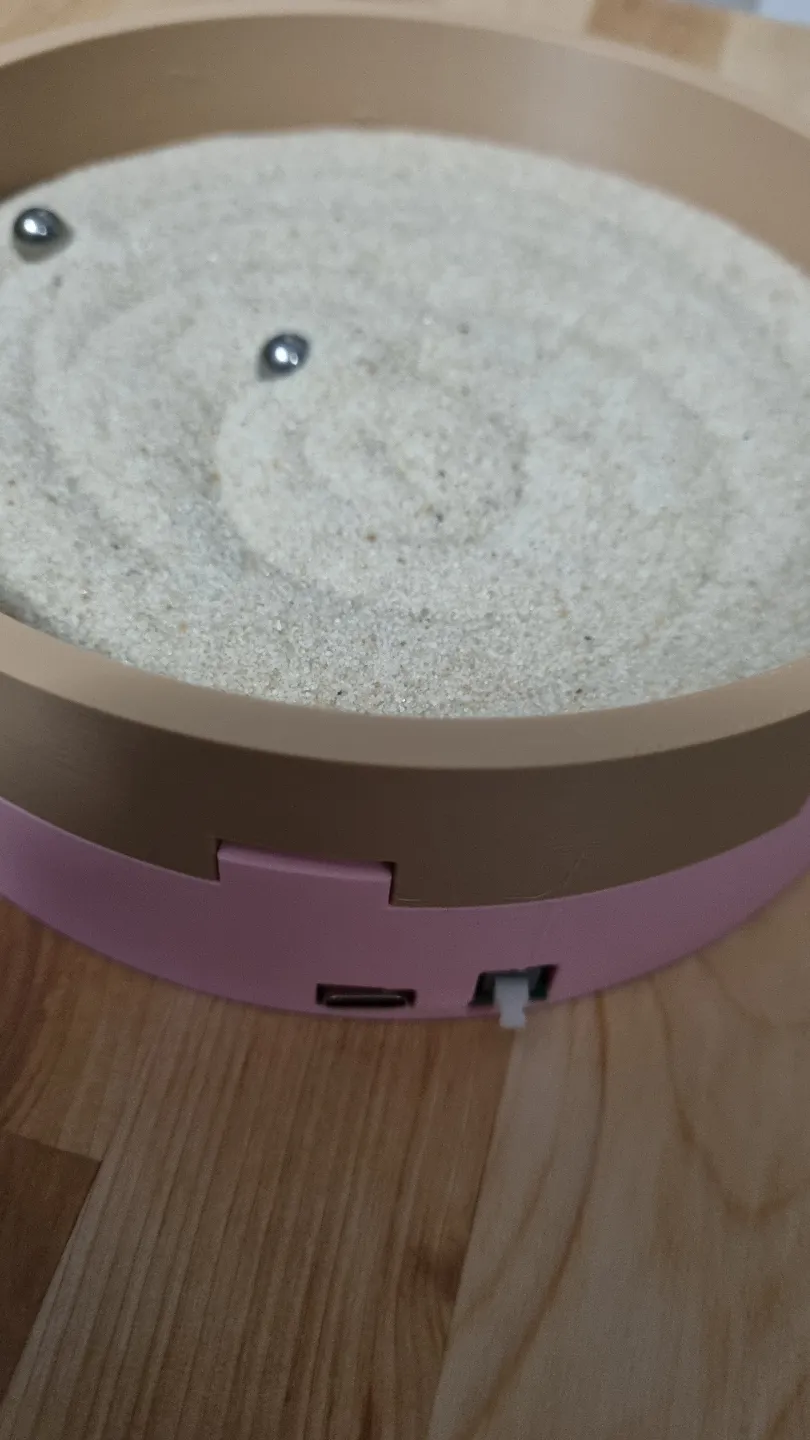
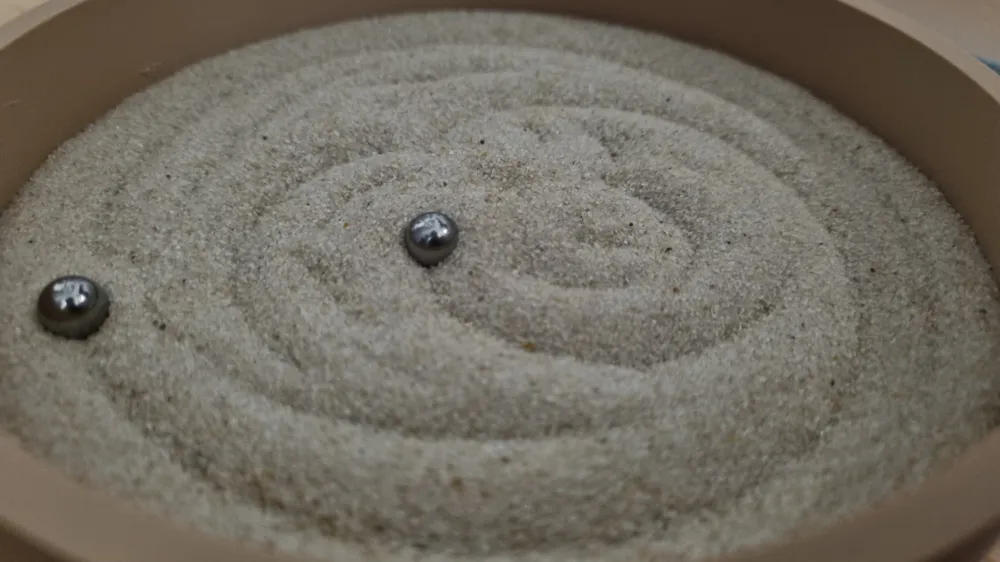
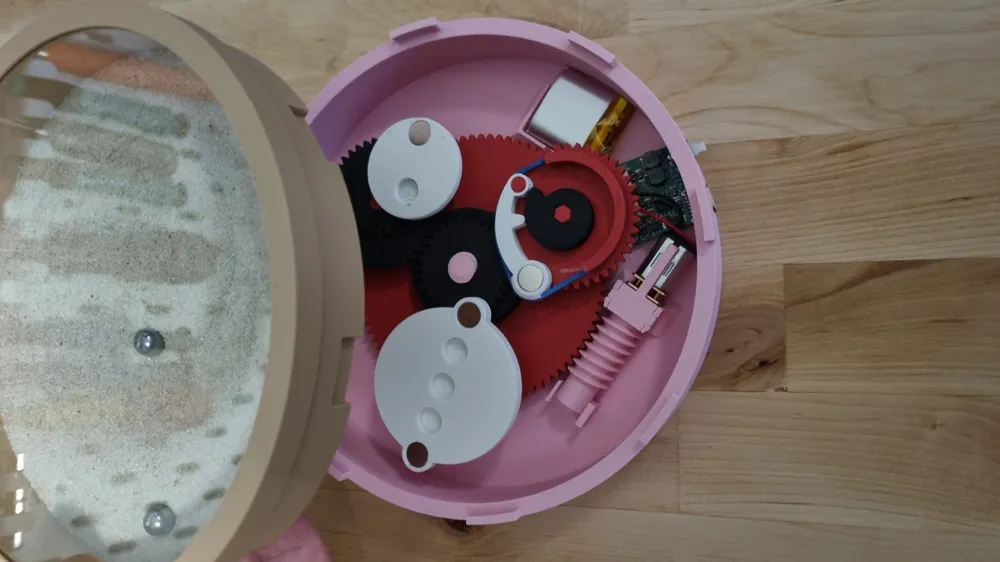
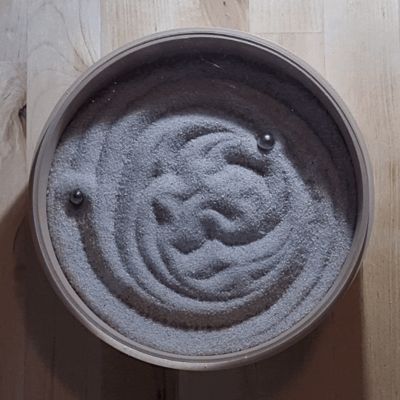
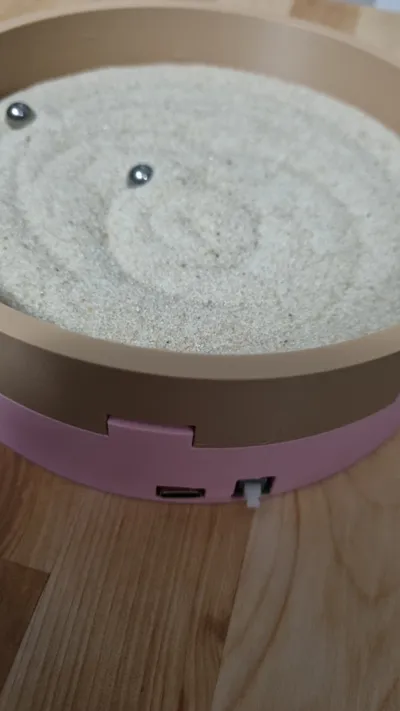
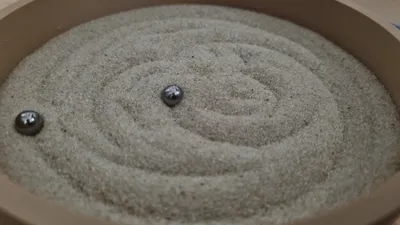
This 3D-model sand art machine is compact enough for desk or shelf display, yet capable of producing intricate and ever-changing patterns in fine sand. It’s powered by Bambu Lab’s Rechargeable Power Kit or via a standard USB-C connection. Magnets embedded in pre-defined slots underneath guide one or more 8 mm steel balls across the sand’s surface. As the balls glide, they leave behind patterns that echo the “sailing stones” phenomenon observed in Death Valley’s Racetrack Playa, where rocks appear to move on their own across parched desert flats.
- Plexiglass Top
- Dimensions: 146 mm diameter, 2 mm thick
- This circular window provides a clear view of the sand art patterns forming underneath. It also prevents accidental spills.
- Magnet Assembly
- Magnets: 8×2 mm magnets from Bambu Lab (multiple pieces)
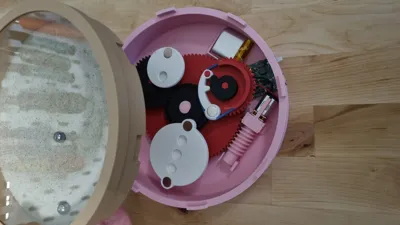
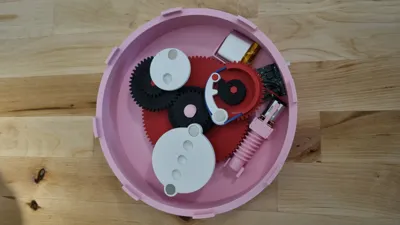
- Strategically placed magnet pockets on the underside of the machine allow you to configure the paths your steel balls follow. One path is designed to create heart patterns, another yields rotating tracks, and a third creates a unpredicted movement. Feel free to experiment with magnet placement to personalize the artwork.
- Steel Balls
- Standard 8 mm steel balls (since Bambu Lab’s own steel balls are non-magnetic)
- Use one ball for elegant single-path patterns or two balls to create an interplay of intersecting lines. Two chasing steel balls often produce dynamic geometric or overlapping heart shapes.
- Choice of Sand/Substrate
- Recommended: “Natural aquarium substrate” with 0.1–0.3 mm grain size
- Fine sand ensures smooth paths and clear lines. Coarser sand (like 0.1–0.5 mm art sand) can sometimes jam the ball or produce uneven patterns and a nasty noise. For the clearest trails, choose the finest grains available.
- Power Sources
- Bambu Lab Rechargeable Power Kit for cordless display
- USB-C for continuous operation
- Inspiration
- Designed for the “Geology/Geography Studies” Design Contest, this model embodies the same intrigue found in Death Valley’s “sailing stones.” The curiosity lies in how these stones appear to traverse the desert floor, leaving distinct trails in their wake, now recreated in miniature form on your tabletop.
Tips for Best Results
- Fine Grain is Key: The closer to 0.1 mm, the cleaner and sharper the trails.
- Avoid Moisture: Even slight humidity can clump the sand. Keep the machine in a dry area.
- Experiment with Layouts: Move magnets to see new patterns, especially around the heart path.
- Multiple Balls: Two steel balls chasing each other often create dynamically intersecting patterns. For more symmetrical results, start them at symmetrical spots on opposite sides of the tray.
Educational & Aesthetic Value
- Geology/Geography Connection
- By echoing Death Valley’s sailing stones, this machine provides a hands-on demonstration of friction, magnetism, and slow-motion drift. While real sailing stones are propelled by natural forces like wind and ice sheets, this project replicates the visual effect with magnetism.
- It’s an excellent tool for classroom demonstrations, showcasing how seemingly “magical” paths can form due to hidden or unexpected natural influences.
- Creative Decor
- As an interactive display, this sand art piece can serve as a conversation starter, a zen-like relaxing ornament, or an engaging scientific curiosity on any tabletop or office desk.
Enjoy the slow dance of steel balls as they carve new patterns in the sand, transforming your workspace into a mini geological exhibit.
Thank you for your continued support! If you'd like to support my work, visit this link.
Assembly
Print all parts :)
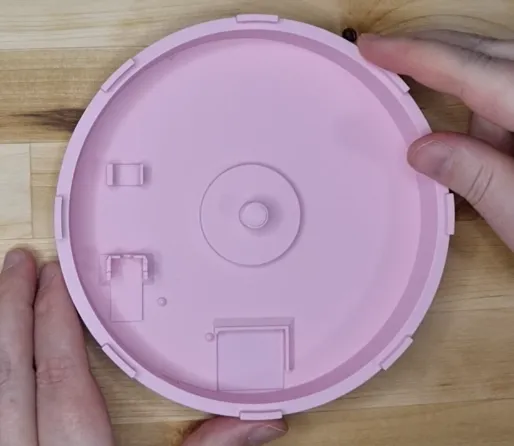
Start with the base.
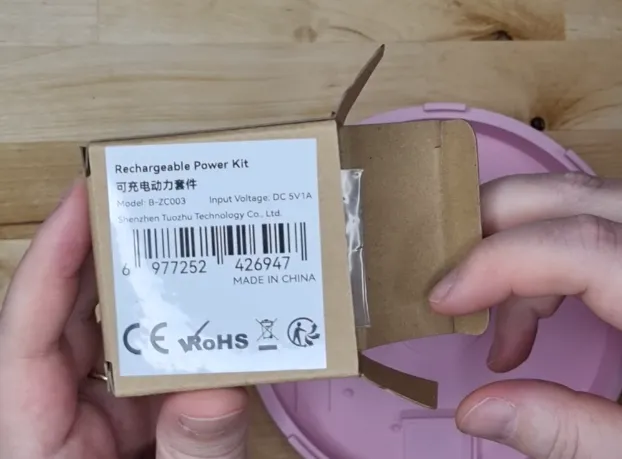
Take the power kit (N20 Reduction Gear Motor 500rpm is the main part).
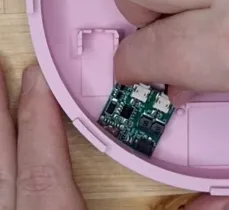
Slide in the power pcb to the slot on the side.
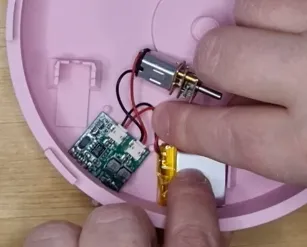
Connect wires.
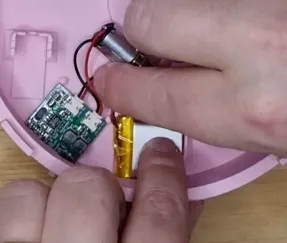
Add the battery (double sided tape in the bottom).
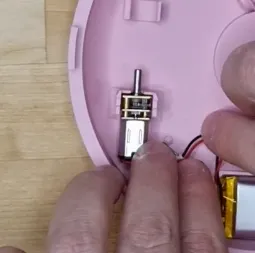
Place the motor in the housing.
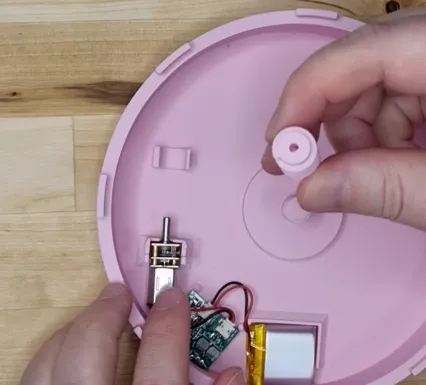
Take the worm gear and slide on to the shaft.
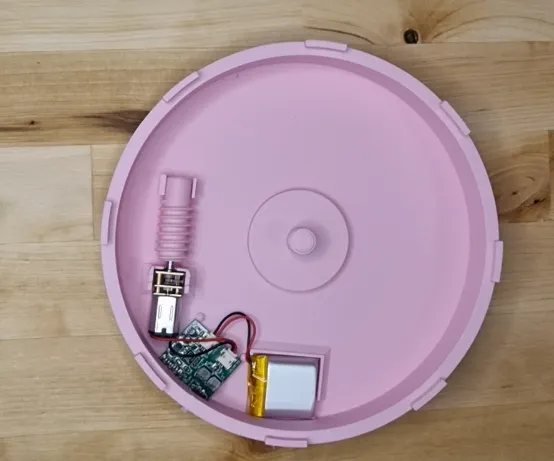
Should look like this.
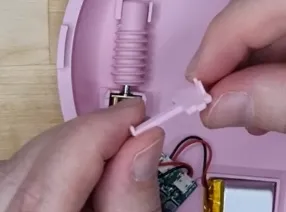
Take the motor lid.
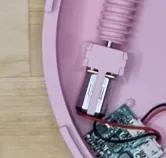
push down on the motor.
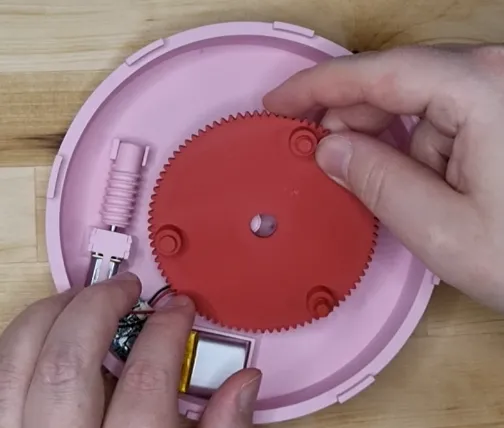
add the main gear, it should spin smoothly when the motor are running.
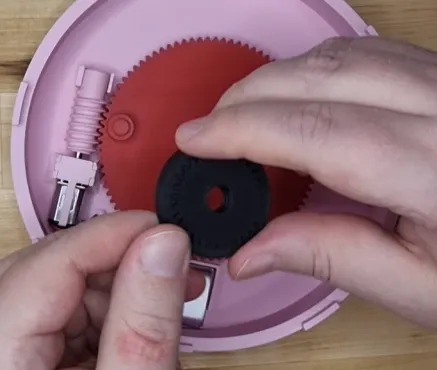
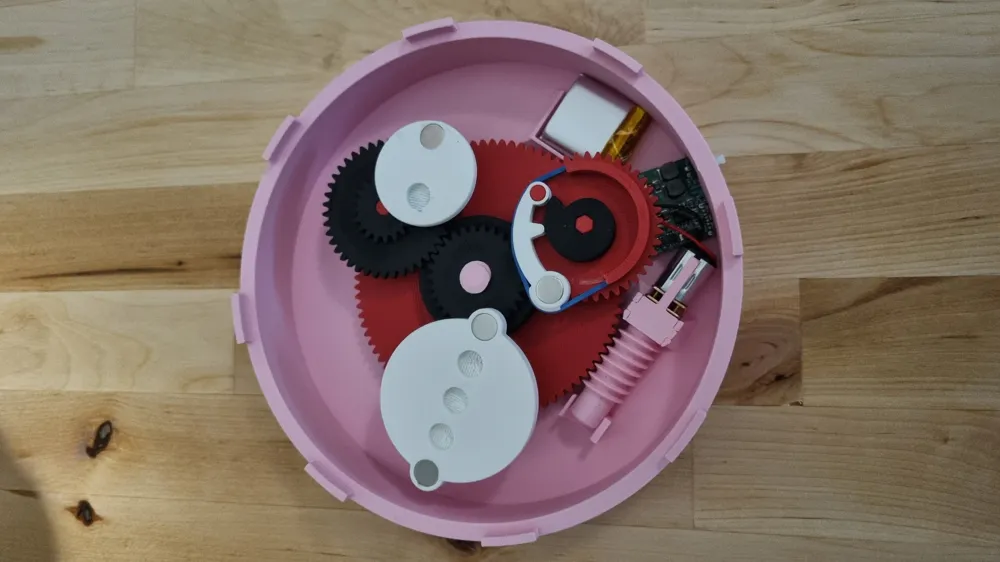
Take the “stationary gear”, it screws on ontop of the main gear.
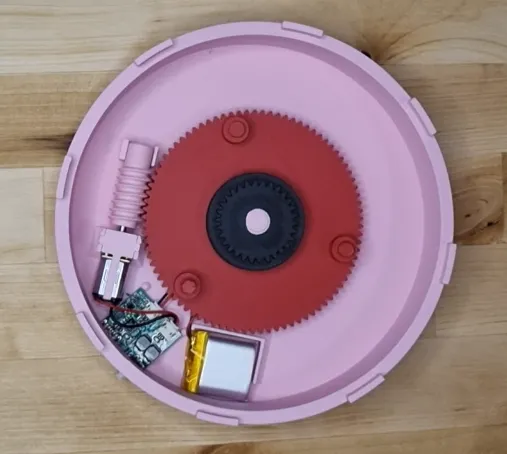
Varning, don't owertighten it so that the threaded rod breaks off!
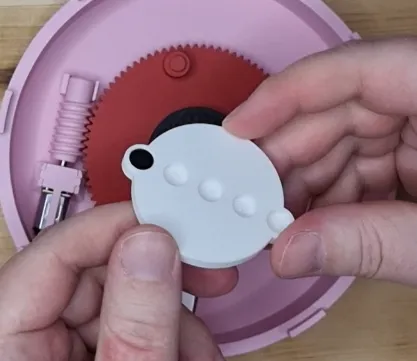
This part is up to you, add magnes where you want (a drop of glue in the bottom if they are loose). (also uploaded files for if you want to embed magnets into the prints).
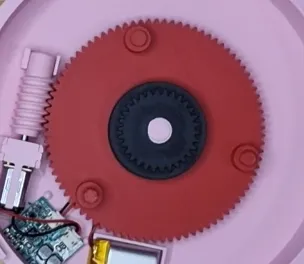
Note that the 3 axels on the main gear are all different!
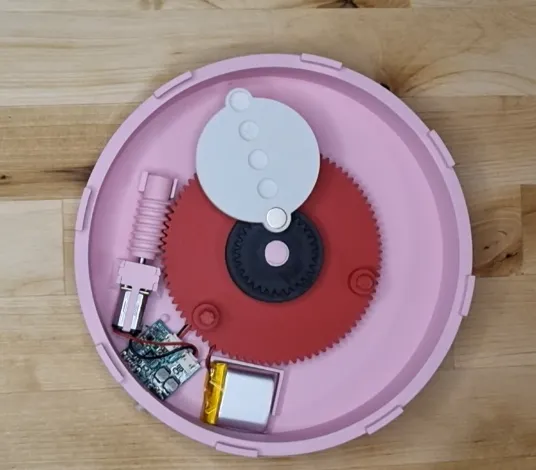
This magnet gear are just placed on the axel that are smooth and round.
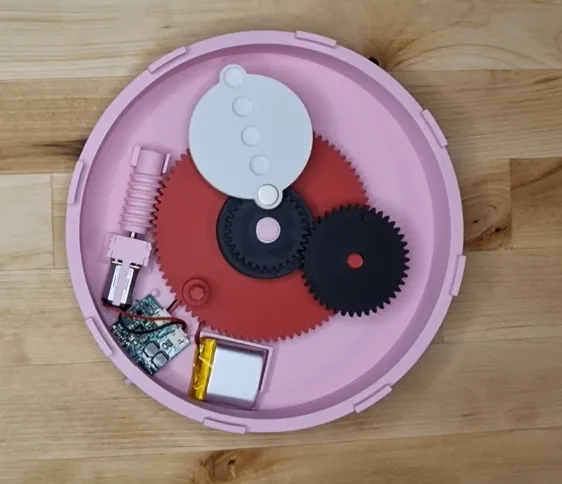
The magnet gear that has a small axel of it's own are placed on the axel that has threads on the top.
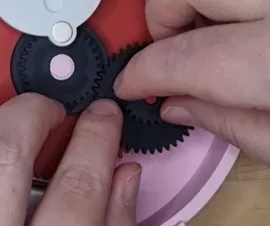
Screw on the small cog on the threads.
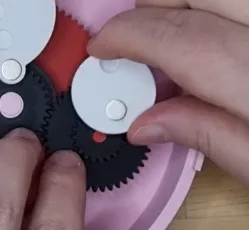
This magnet holder are placed on that small axel.
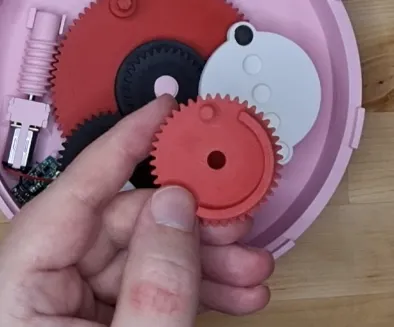
Now the wierd magnet holder with a cam mechanism.
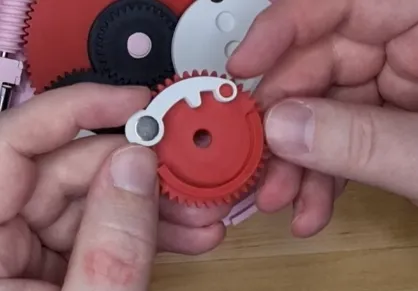
Add the cam/magnet.
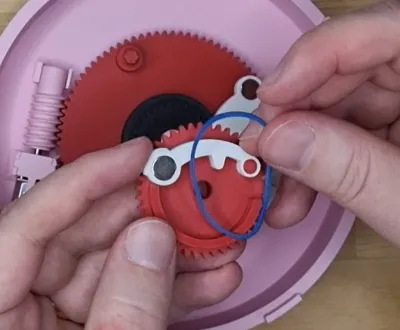
Add a rubber band, it sould be loose!
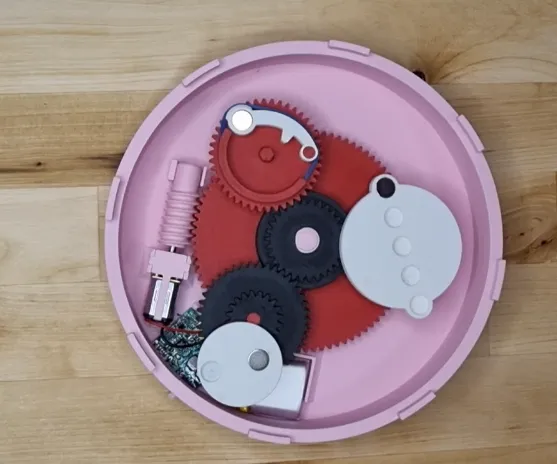
Place it on the axel with the hexagon top.
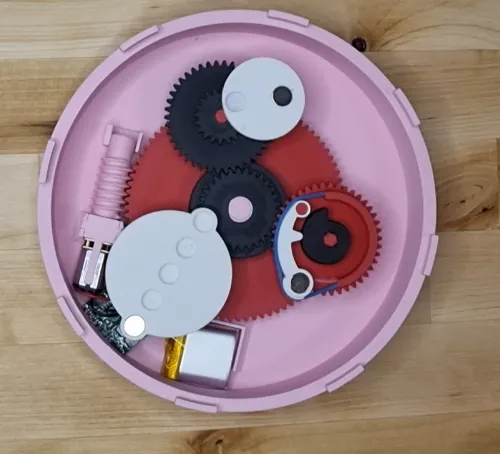
Add the cam on the hexagon, NOTE ORIENTATION. This is the mechanic that are the most demanding for the motor, and the pattern it creates are the weakest. My reccommendation is to skip it (remove the cam / the magnet holder).
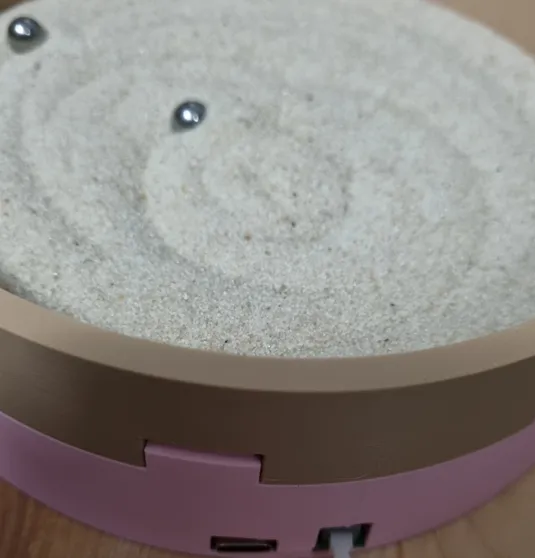
Add sand in the bowl, place the bowl on the base :)
(There are some optional thickness for the bowl as uploaded files)

Done! :D
Here's a quick video:
License

You shall not share, sub-license, sell, rent, host, transfer, or distribute in any way the digital or 3D printed versions of this object, nor any other derivative work of this object in its digital or physical format (including - but not limited to - remixes of this object, and hosting on other digital platforms). The objects may not be used without permission in any way whatsoever in which you charge money, or collect fees.


Comment & Rating (32)