
Sator Square
Print Profile(1)








Description
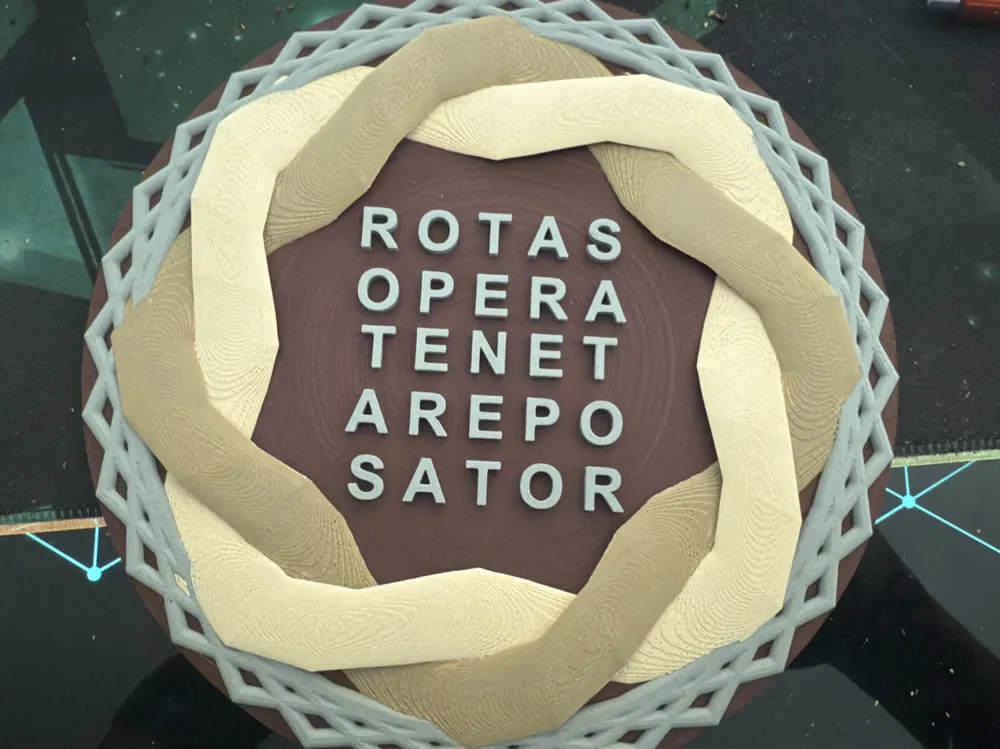
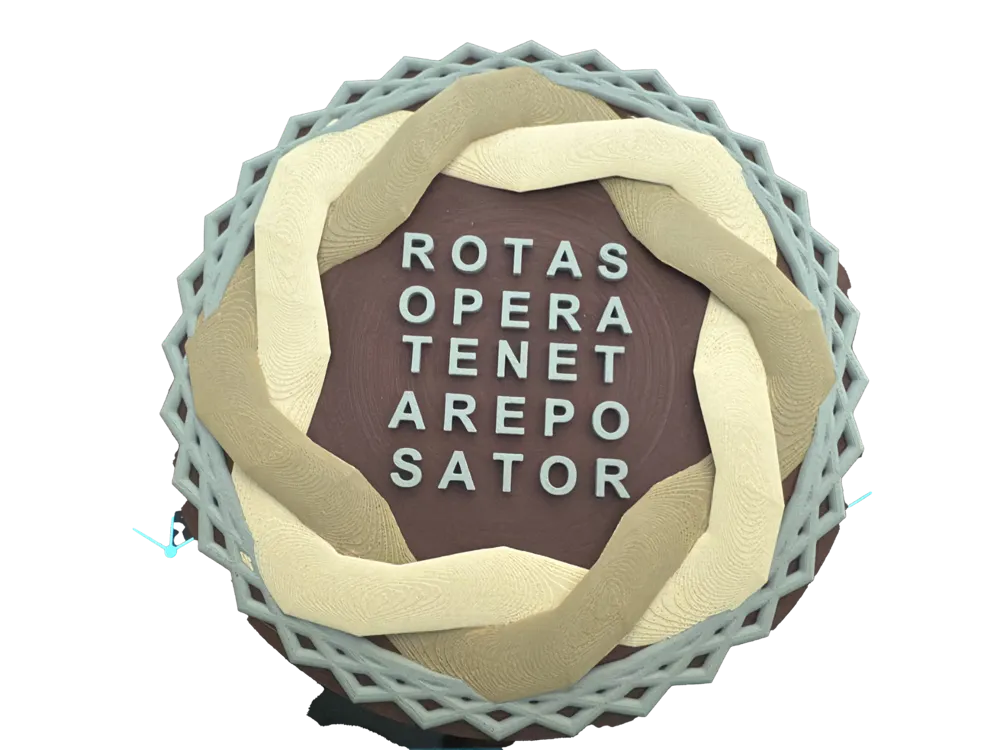
The Sator Square (or Rotas-Sator Square) is a two-dimensional acrostic class of word square containing a five-word Latin palindrome. The earliest squares were found at Roman-era sites, all in ROTAS-form (where the top line is "ROTAS", not "SATOR"), with the earliest discovery at Pompeii (and also likely pre-AD 62). The earliest square with Christian-associated imagery dates from the sixth century. By the Middle Ages, Sator squares had been found across Europe, Asia Minor, and North Africa.
The words are in Latin, and the following translations are known by scholars:
SATOR
(nominative noun; from serere, "to sow") sower, planter, founder, progenitor (usually divine); originator; literally 'seeder';
AREPO
unknown word, perhaps a proper name, either invented to complete the palindrome or of a non-Latin origin (see § Arepo interpretations);
TENET
(verb; from tenere, 'to hold') he/she/it holds, keeps, comprehends, possesses, masters, preserves, sustains;
OPERA
(ablative singular noun) service, pains, labor; care, effort, attention
ROTAS
(rotās, accusative plural of rota) wheels.
Rose Mary Sheldon noted: "Long after the fall of Rome, and long after the general public had forgotten about classical word games, the square survived among people who might not even read Latin. They continued to use it as a charm against illness, evil and bad luck. By the end of the Middle Ages, the "prophylactic magic" of the square was firmly established in the superstition of Italy, Serbia, Germany, and Iceland, and eventually even crossed to North America" The square appears in versions of several popular magical manuscripts from the early and late Middle Ages magical texts.
License



Comment & Rating (0)