
Filament Paternoster
Print Profile(7)



Description
I stored my filament in bags and vacuum-sealed them, but it proved too cumbersome to constantly re-vacuum, and after a week, the vacuum seal was gone anyway.
Then I looked at the box systems, but they were very expensive and also inconvenient.
It was all very frustrating.
After much deliberation on how best to store my filament, I found the solution in a kind of cabinet.
The problem is that the spools in the back are inaccessible without removing those in front.
Furthermore, a standard door would cause significant air exchange (humidity problem).
Boost Me (for free)
So my requirements were:
- Self-built with 3D-printed components
- Airtight
- Minimal air exchange upon opening
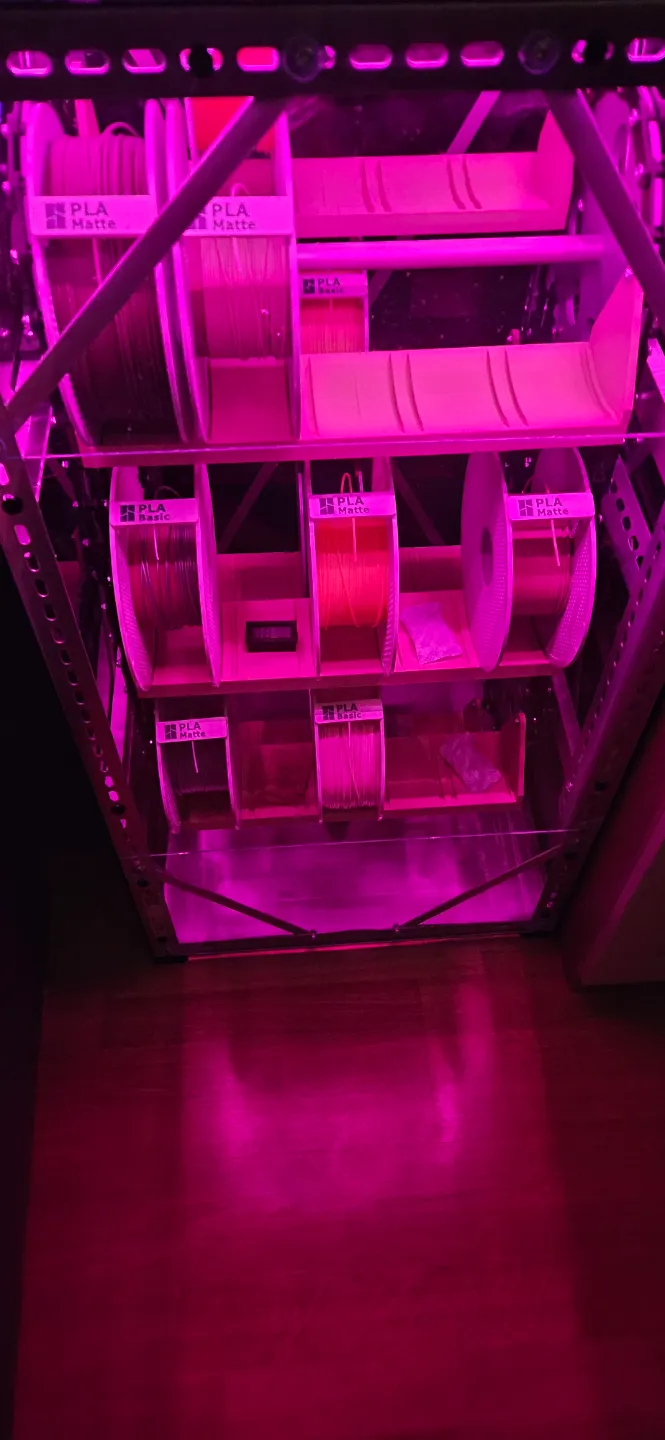

- Visibility (colour/material)
- Functionality
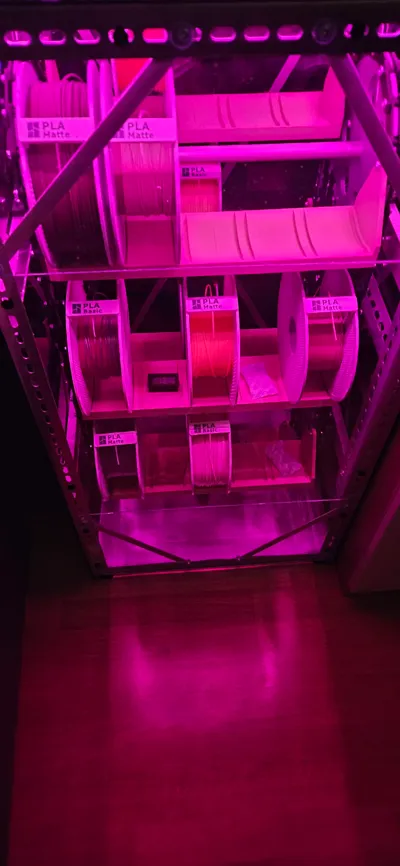
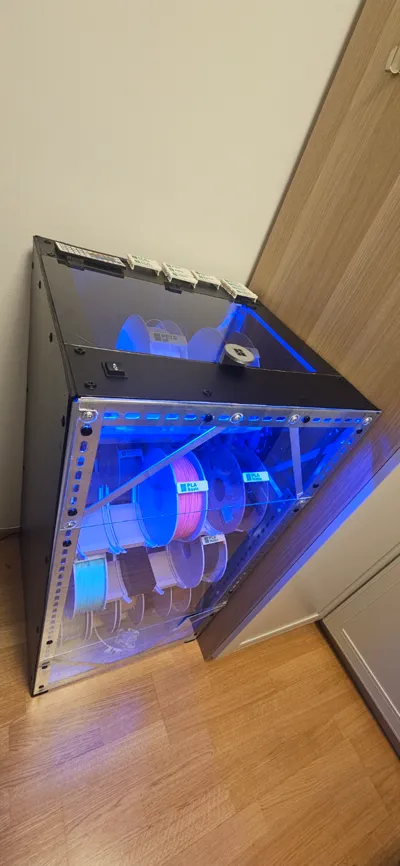
- Illuminated
- Must not visually offend my wife =)
It's still a PROTOTYPE!
All parts were printed on a P1S.
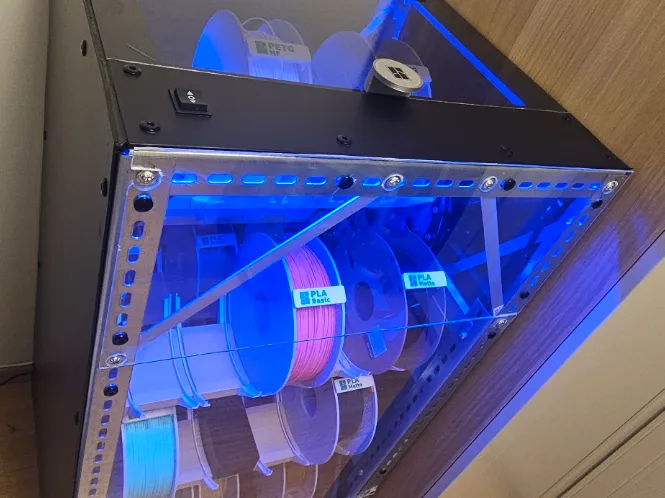
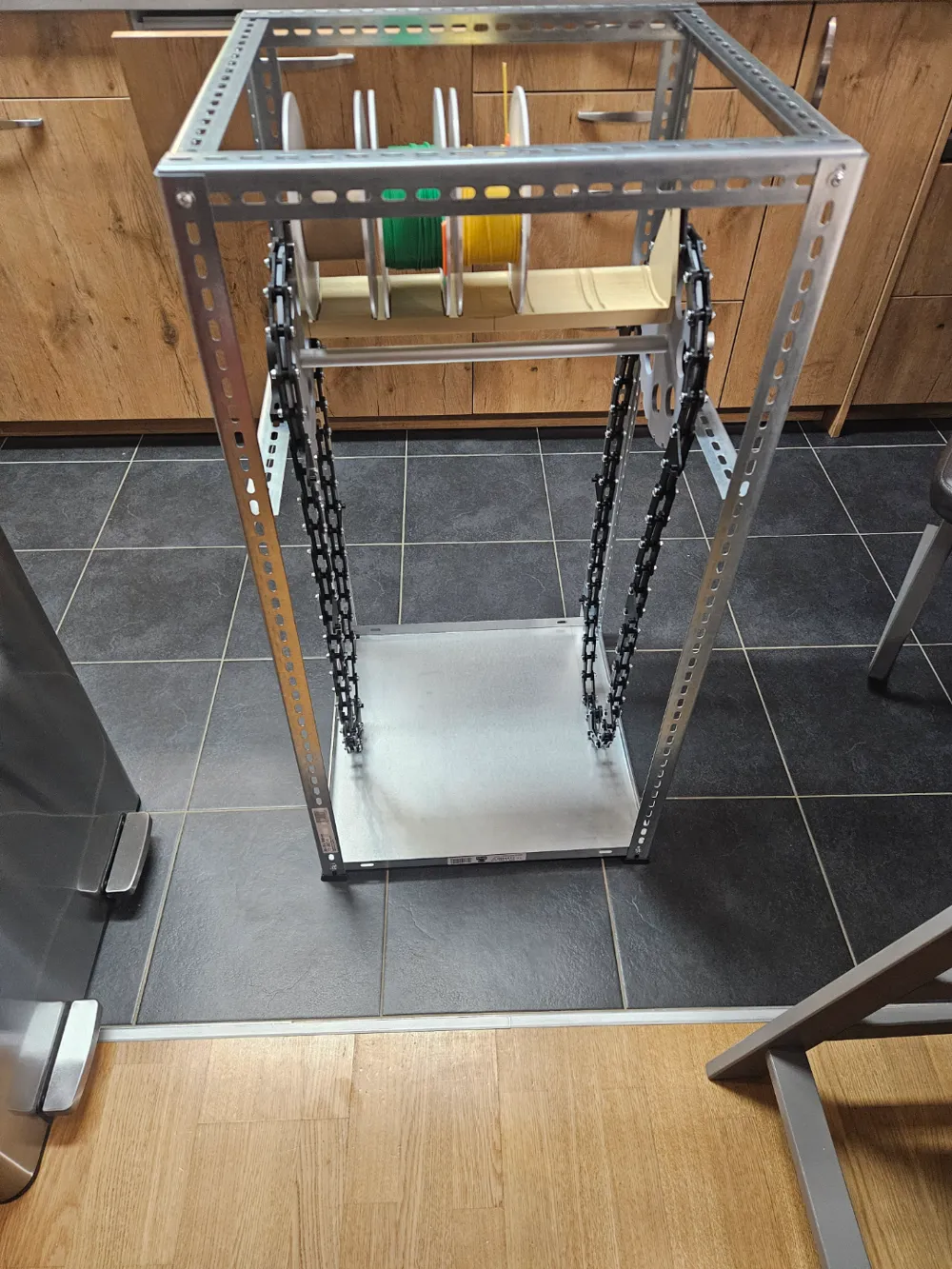
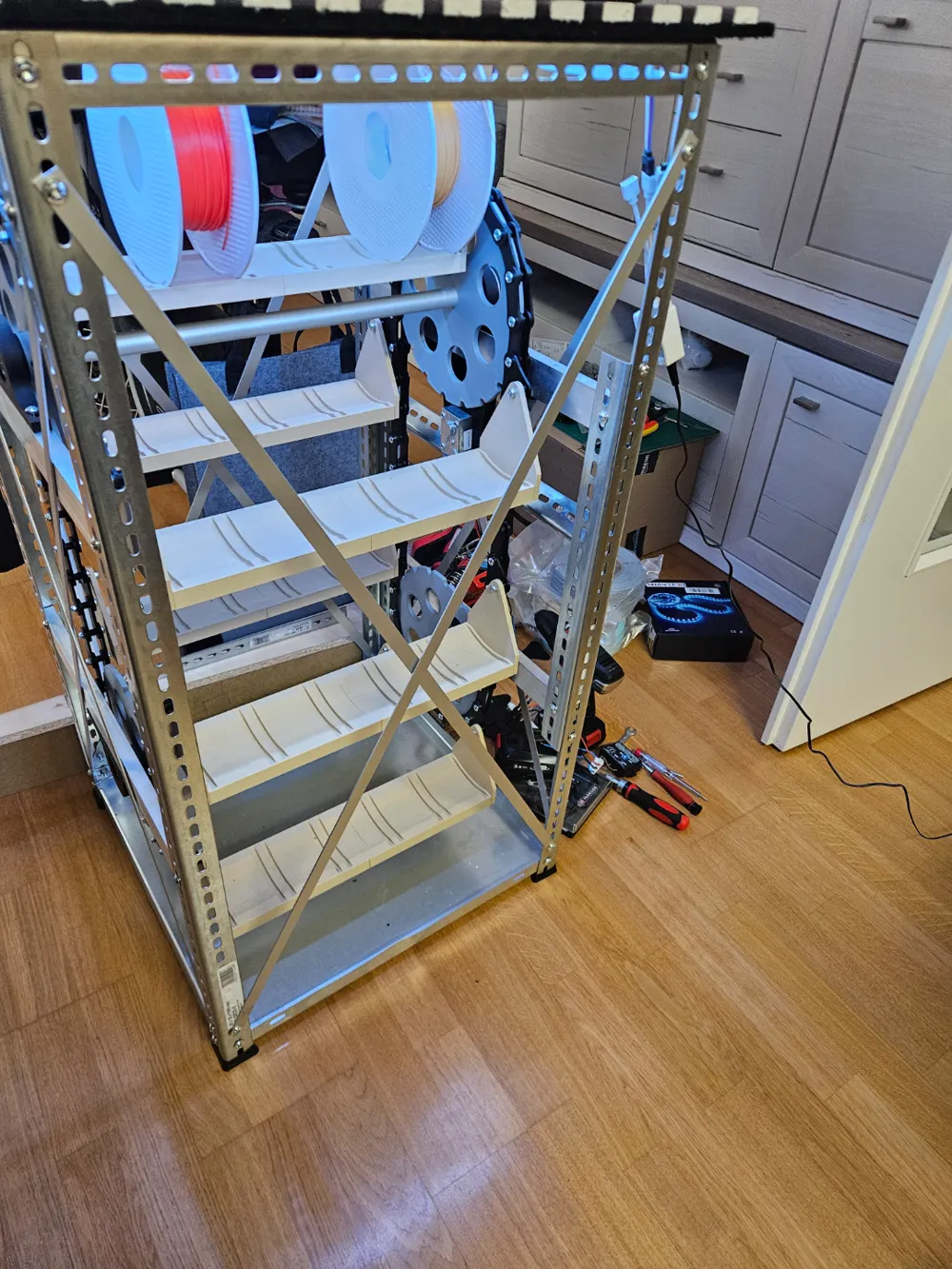
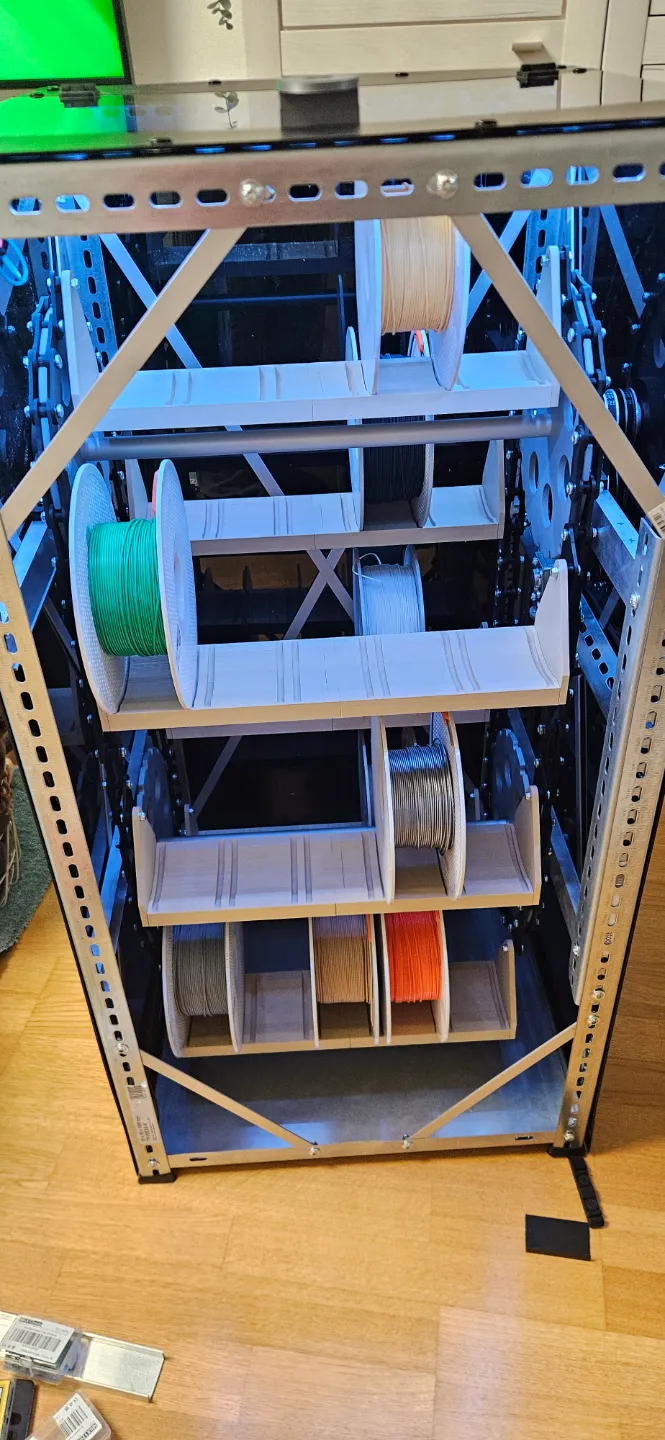
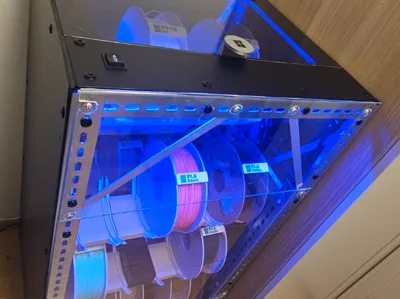
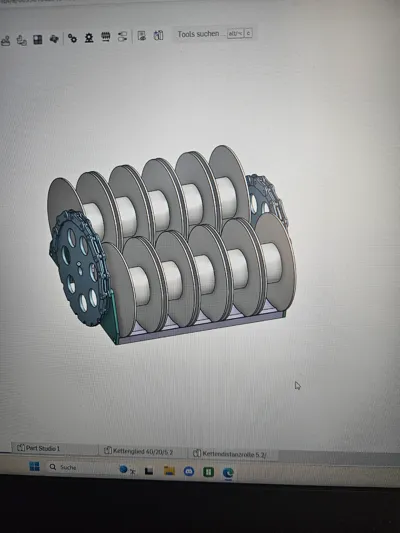
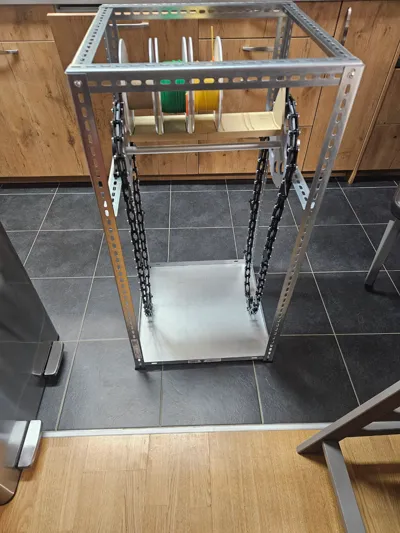
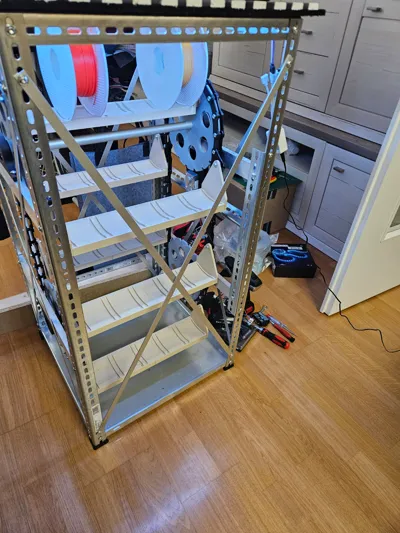
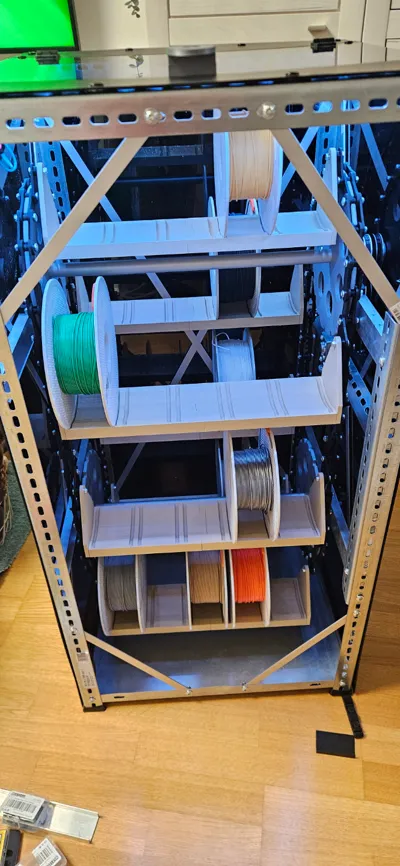

There is space for 35 spools.
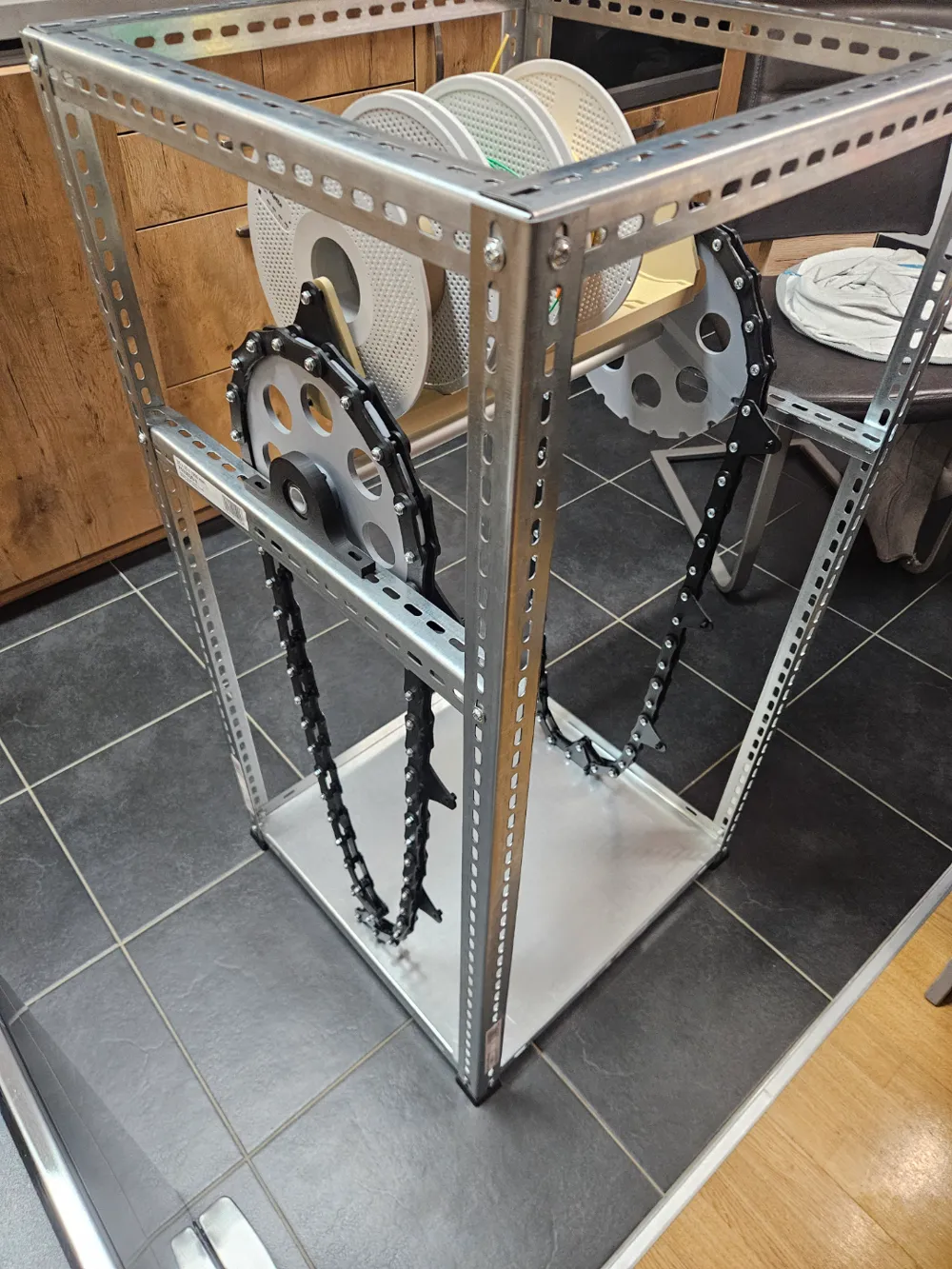
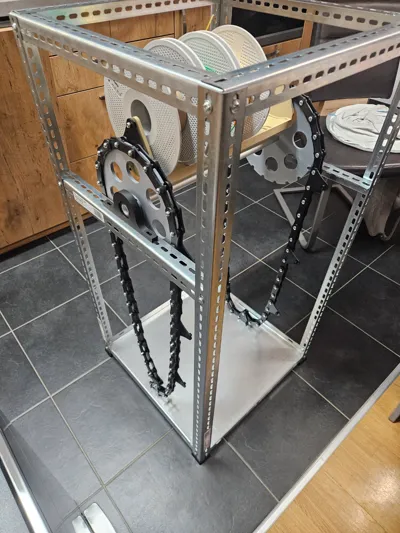
The frame is assembled on shelf components 50*50*100.
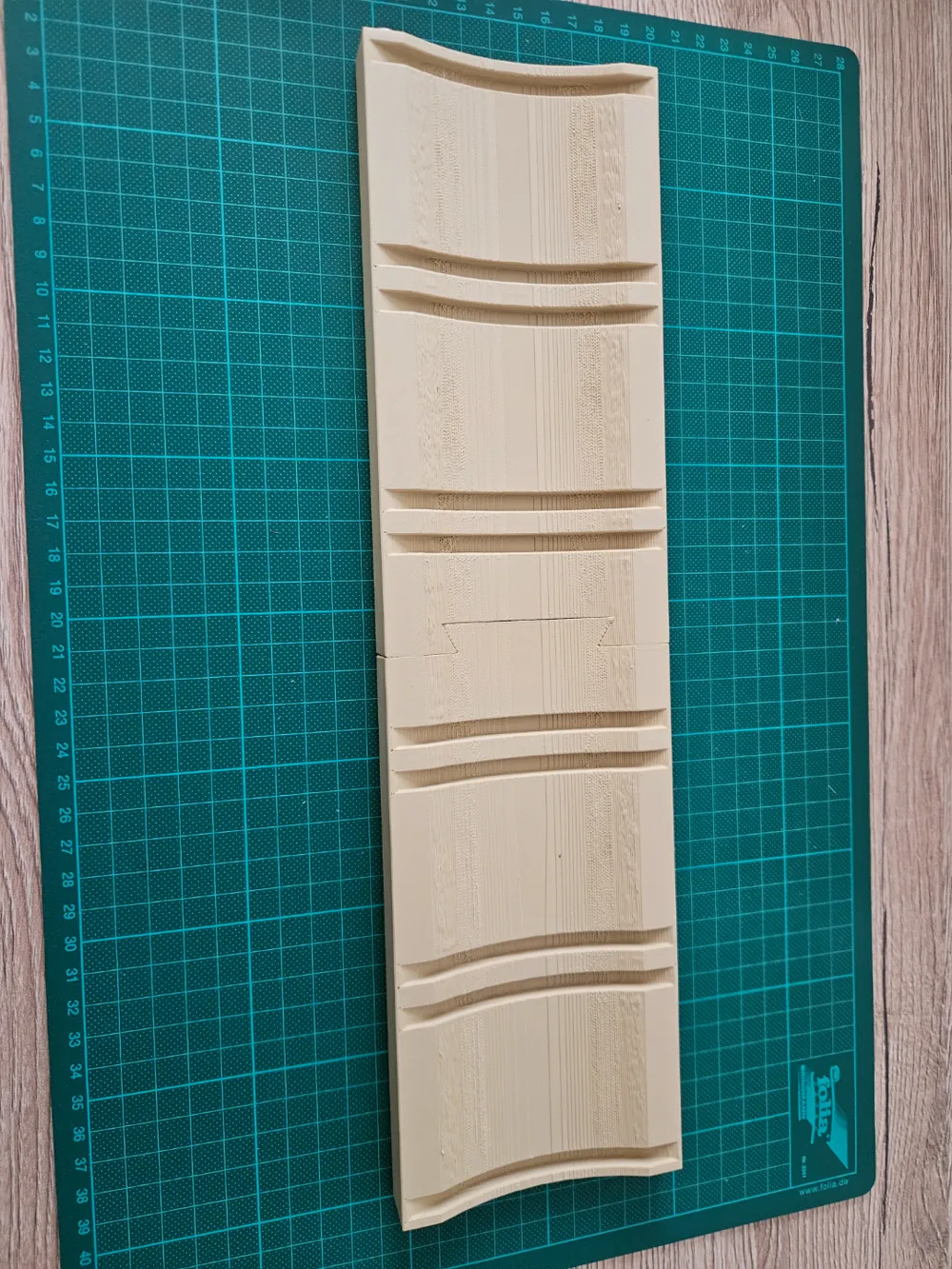
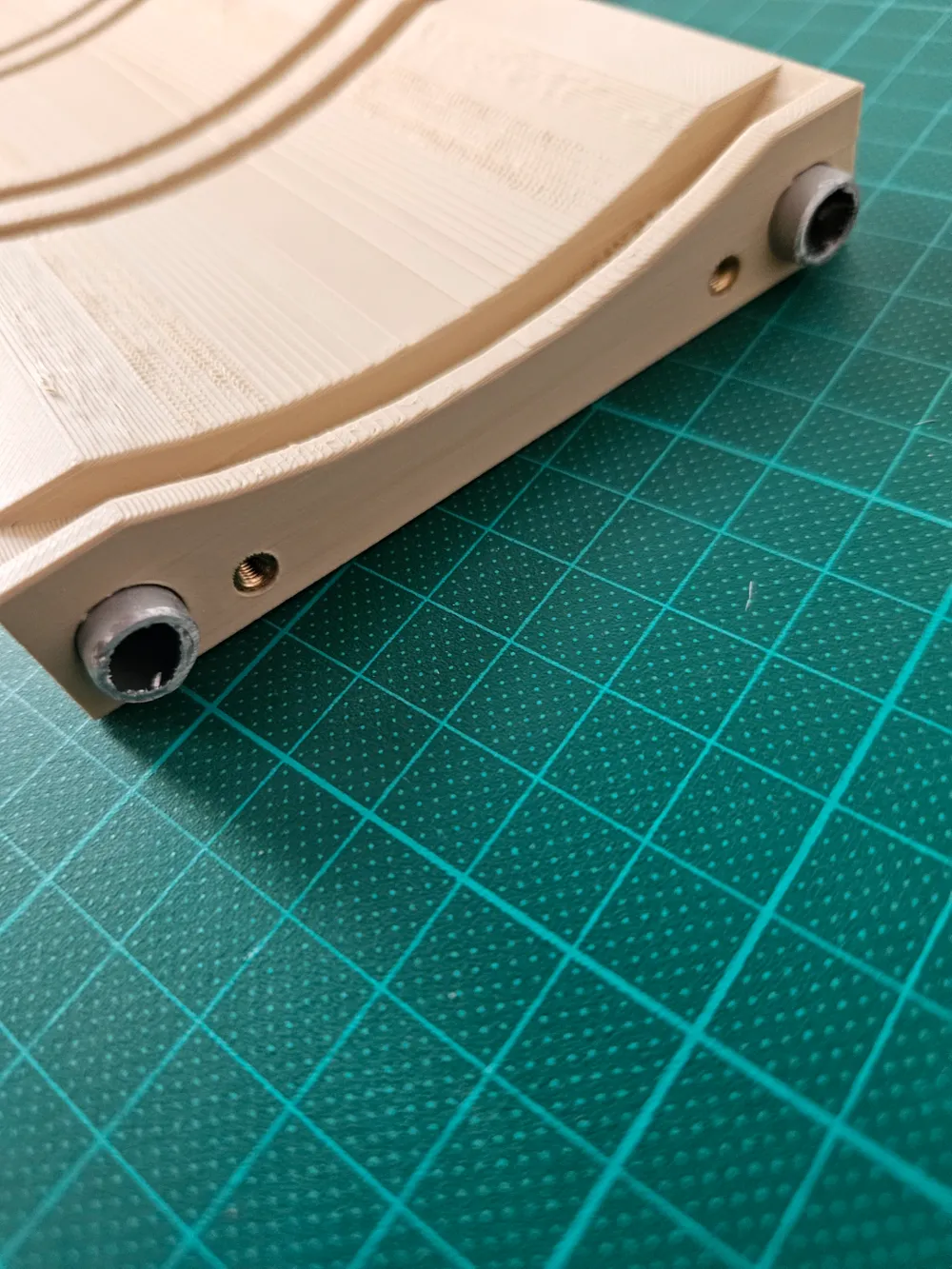
There is a bottom plate.
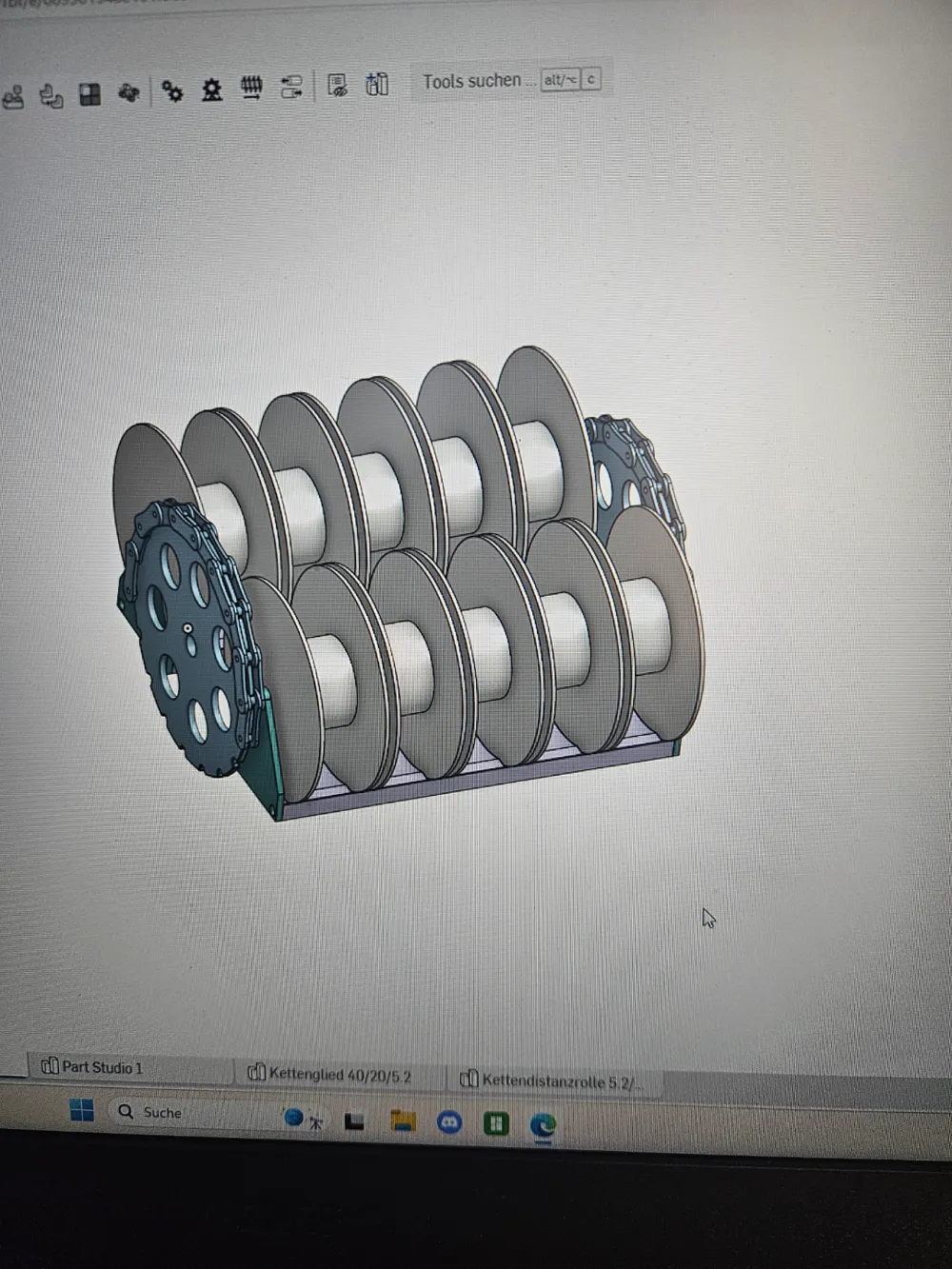
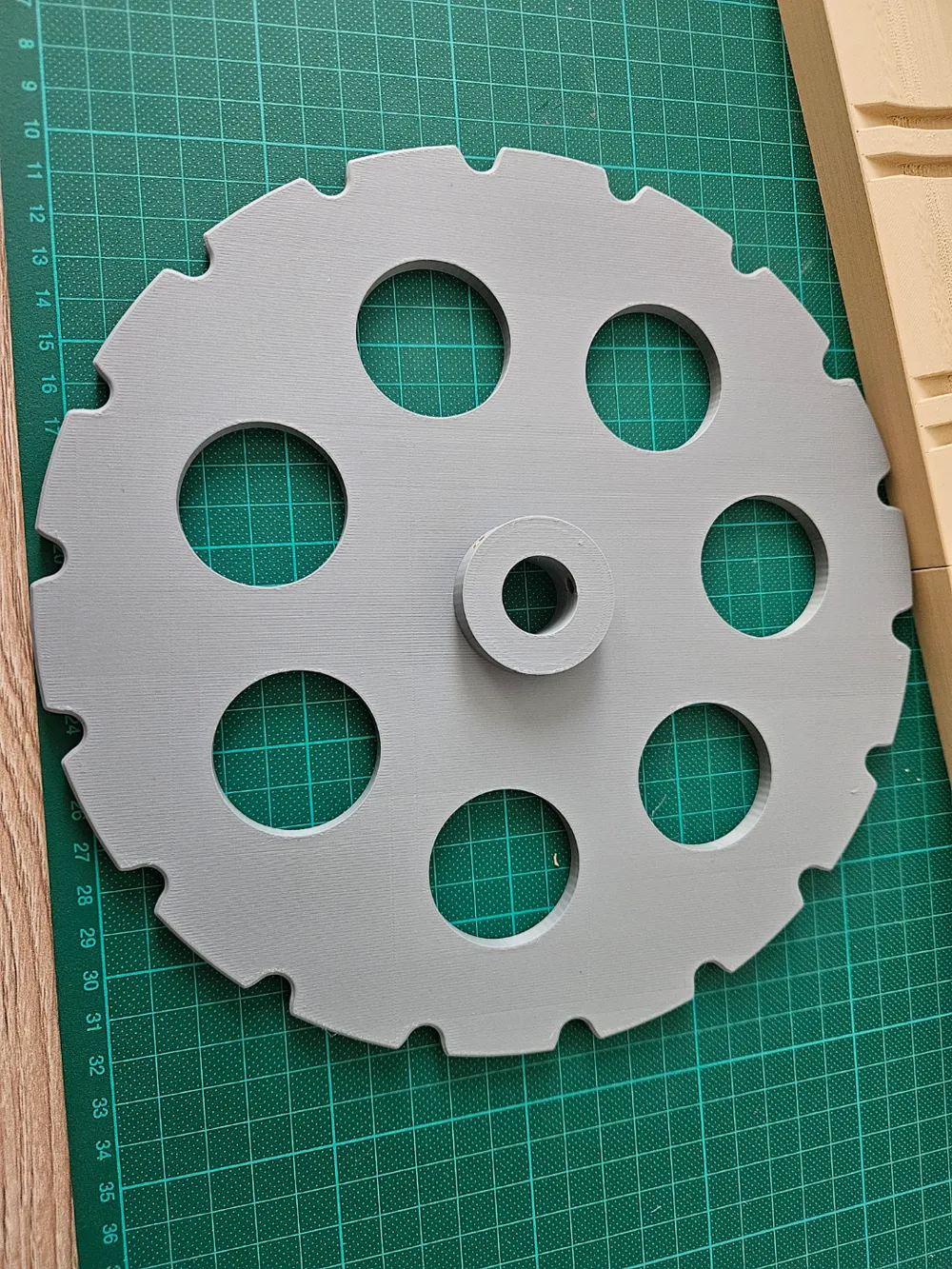
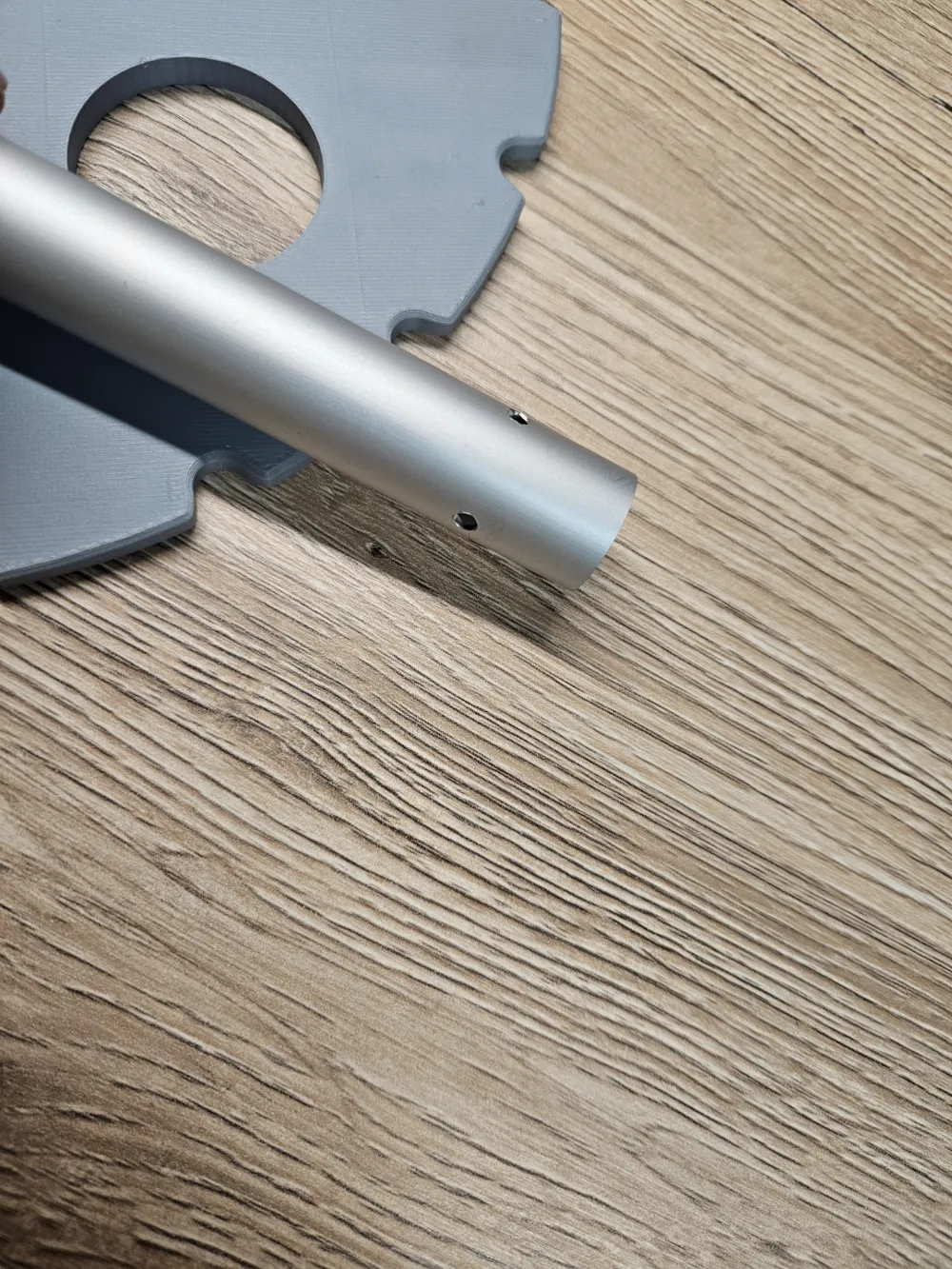
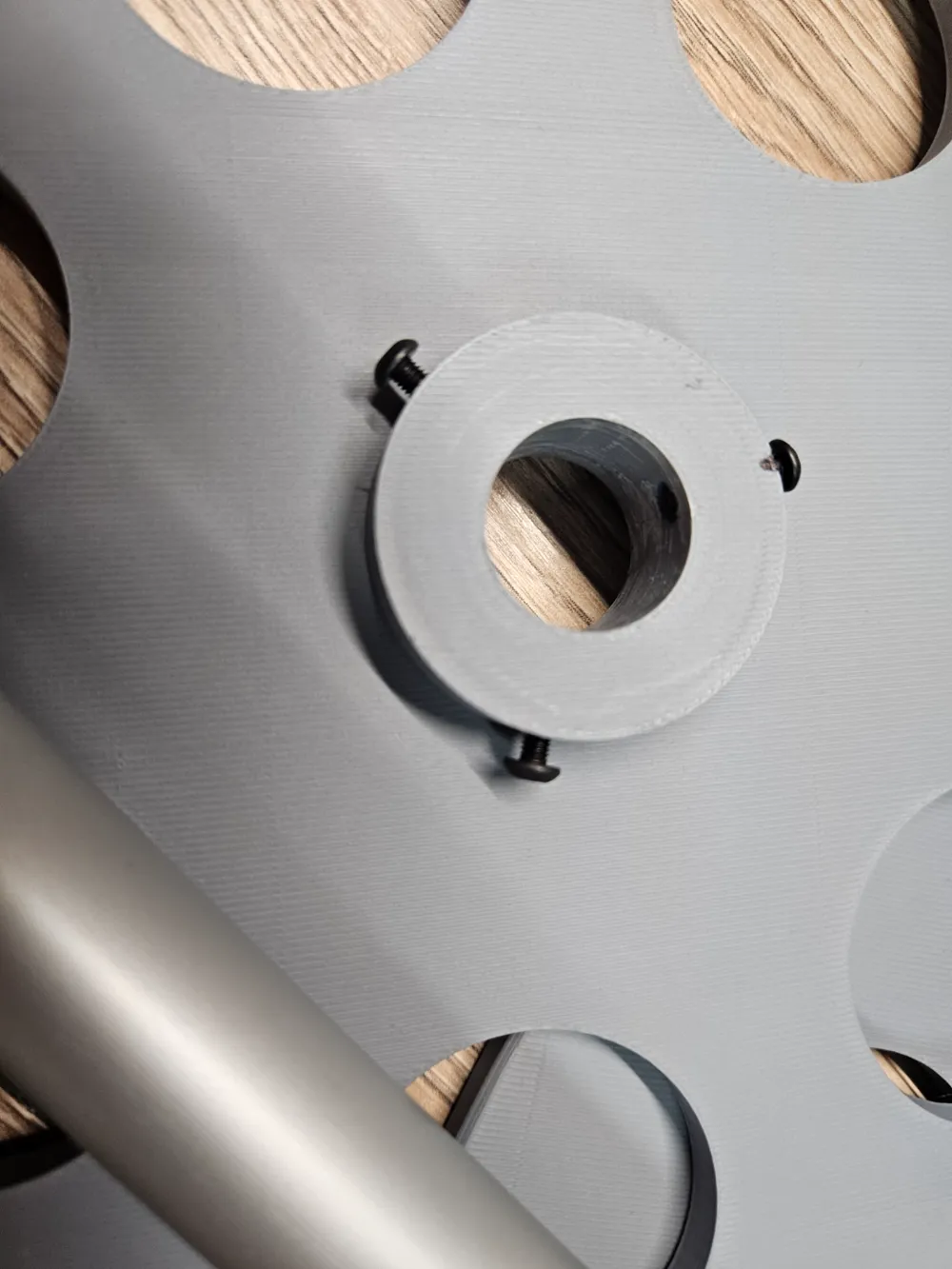
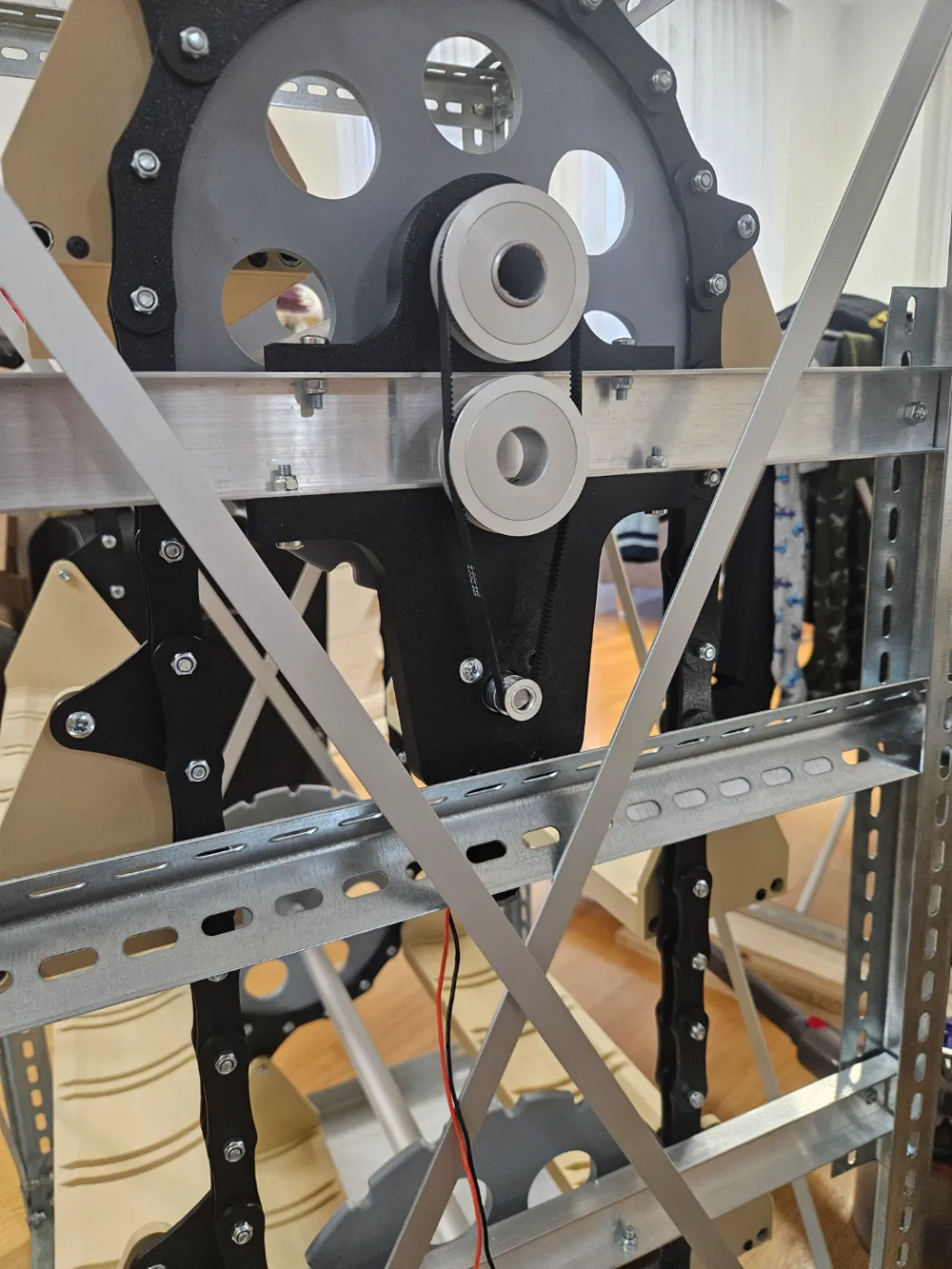

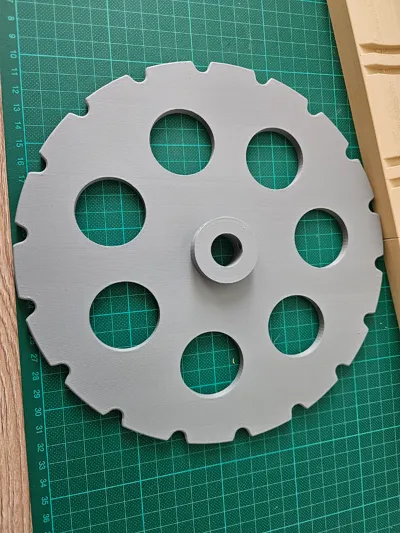
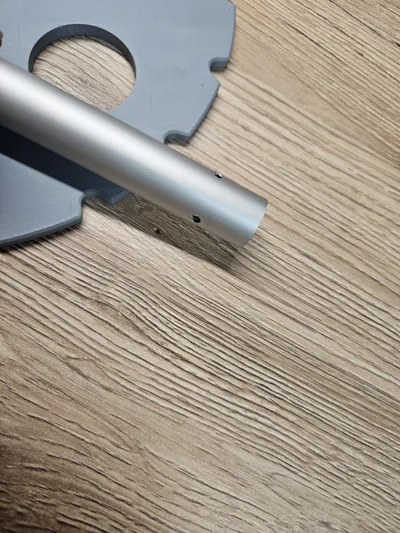
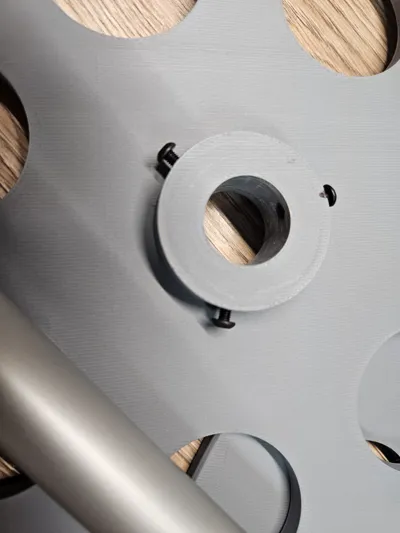
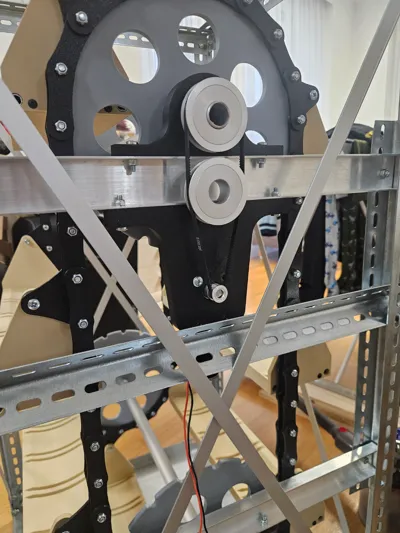
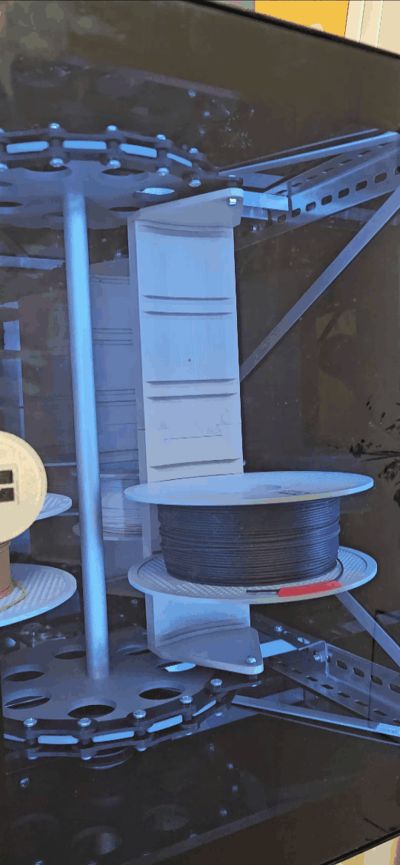
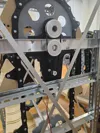
The main gears are 3D-printed PLA and are fixed to an aluminium tube.
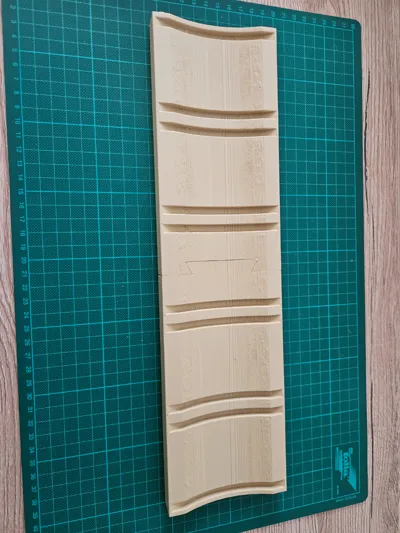
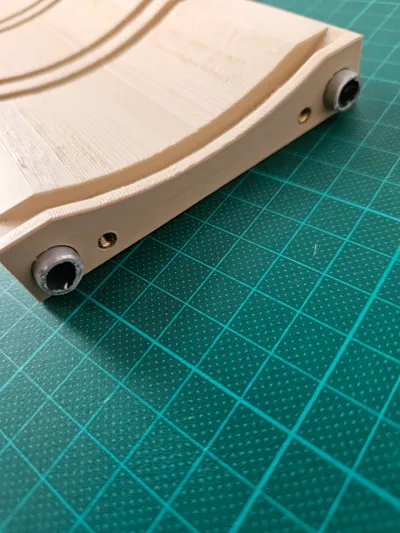
The gondolas are made of PLA and reinforced with two aluminium rods.
All chain links are PLA and assembled with screws and nuts.
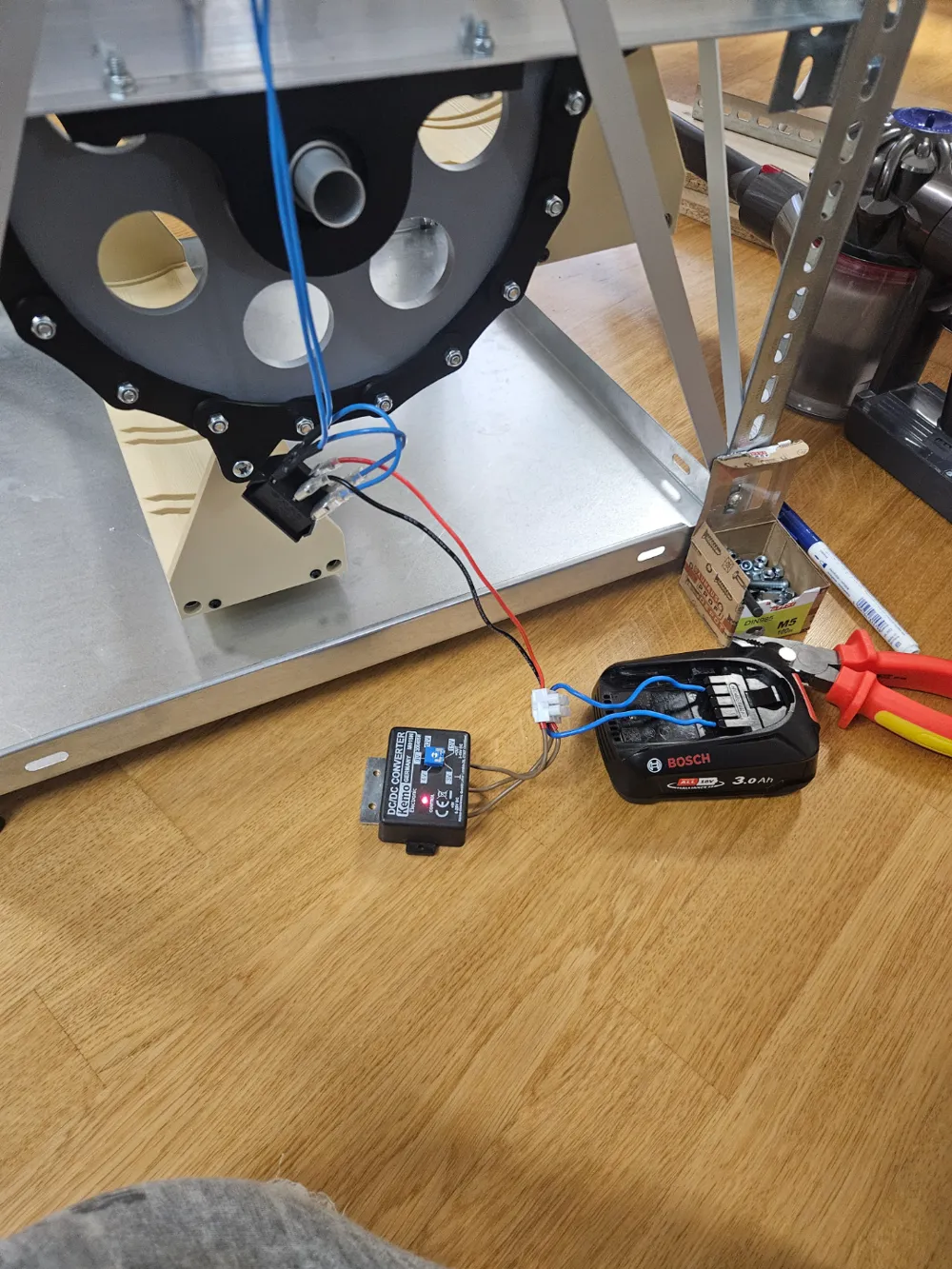
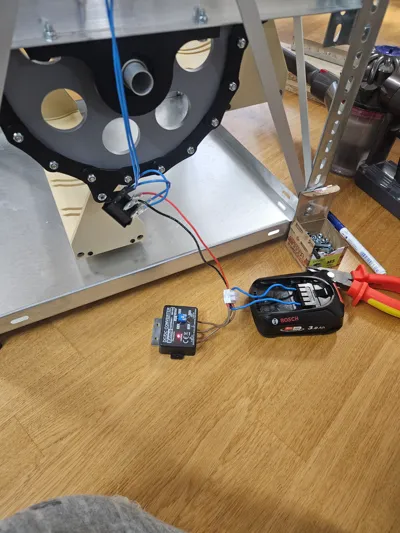
A geared motor drives the aluminium axles via a toothed belt.
Currently, it's operated by a simple up/down switch.
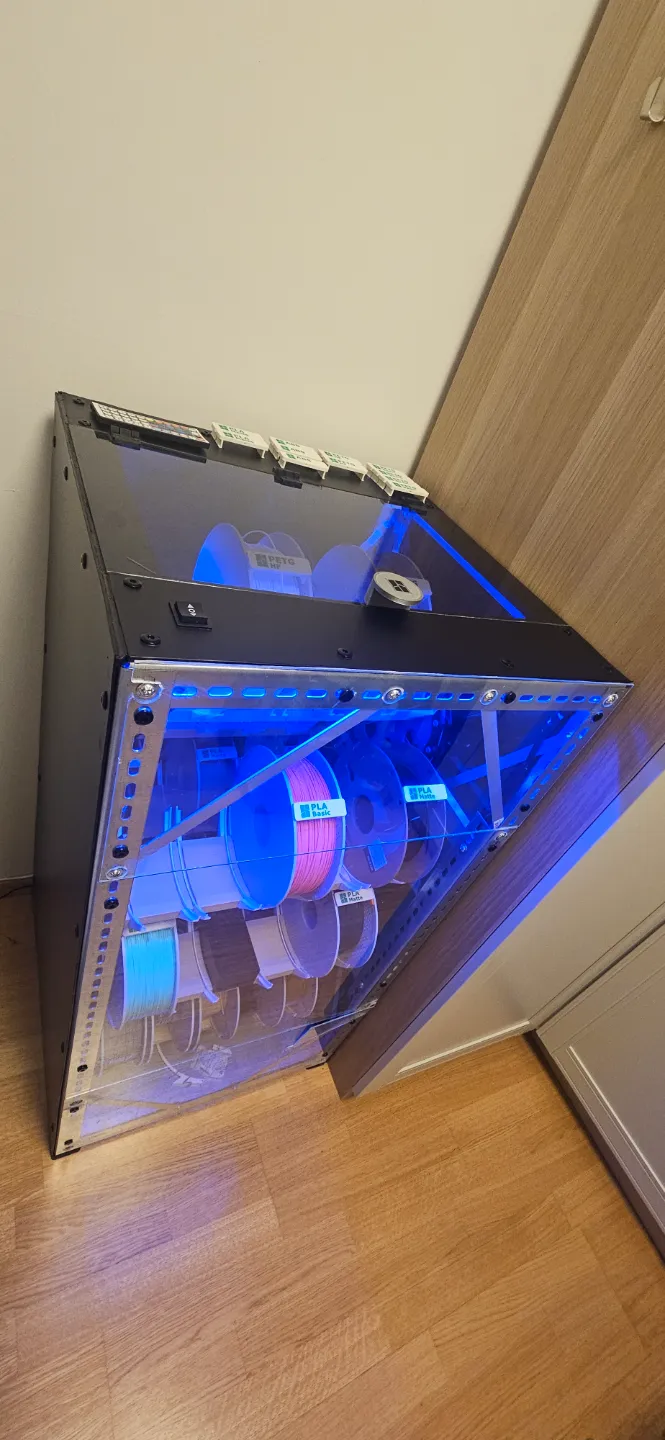
The frame is clad and sealed with acrylic panels, which are further laminated/tinted.
The top flap allows easy access with minimal air exchange.
I currently use silica gel to control humidity.
Unfortunately, I cannot create instructions as cool as many others here.
Nevertheless, I hope someone will be tempted to recreate it.
License

You shall not share, sub-license, sell, rent, host, transfer, or distribute in any way the digital or 3D printed versions of this object, nor any other derivative work of this object in its digital or physical format (including - but not limited to - remixes of this object, and hosting on other digital platforms). The objects may not be used without permission in any way whatsoever in which you charge money, or collect fees.


Comment & Rating (25)