
Patolli: Mesoamerican Race Game
Print Profile(1)

Description
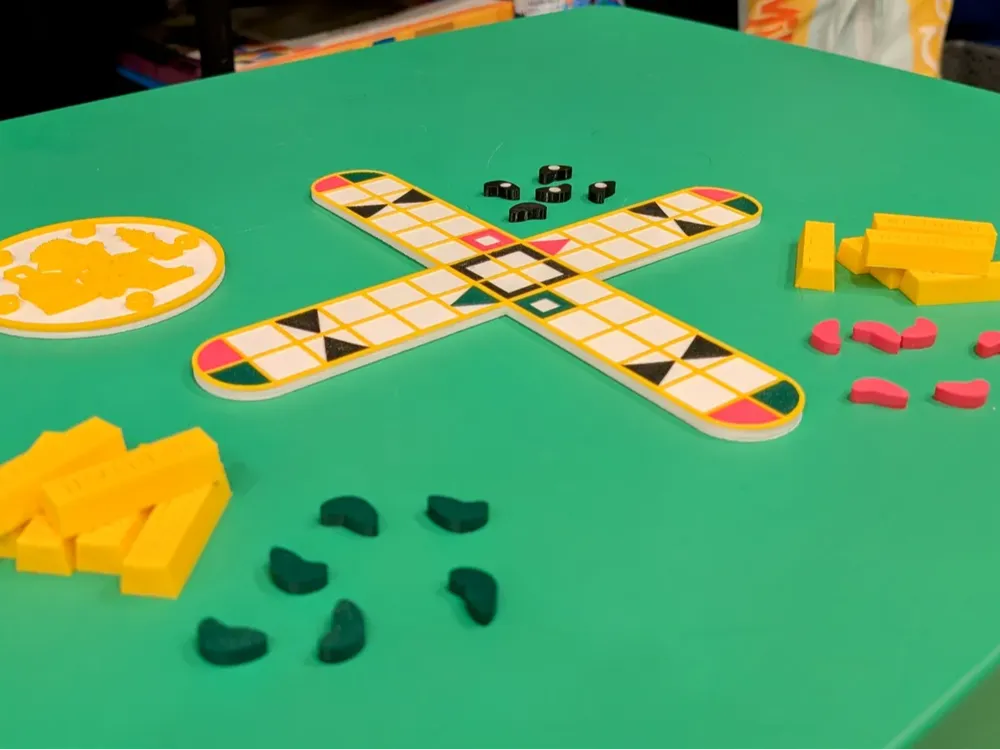
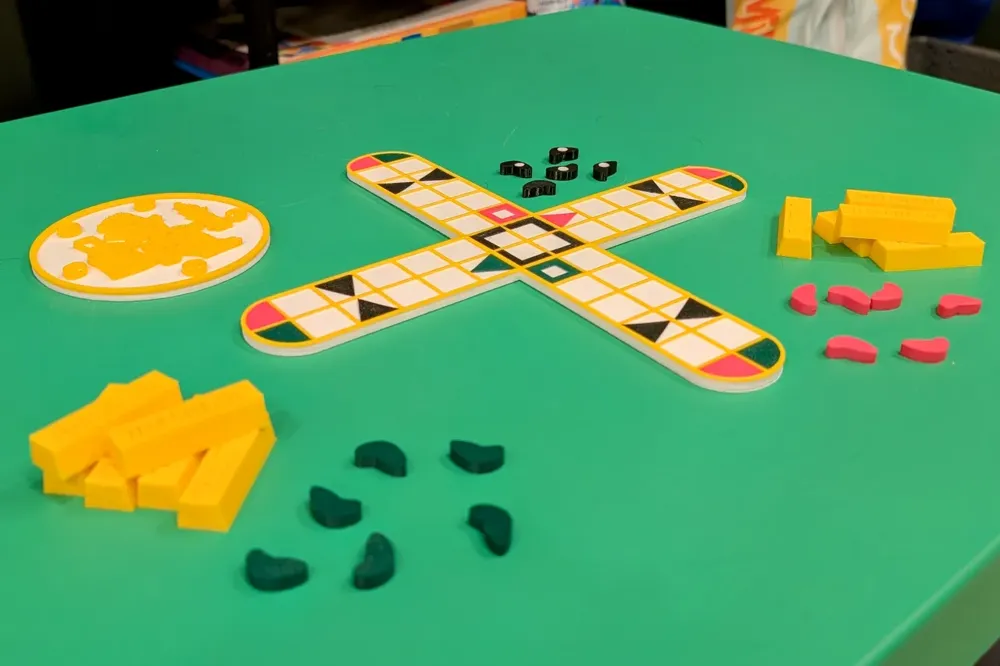
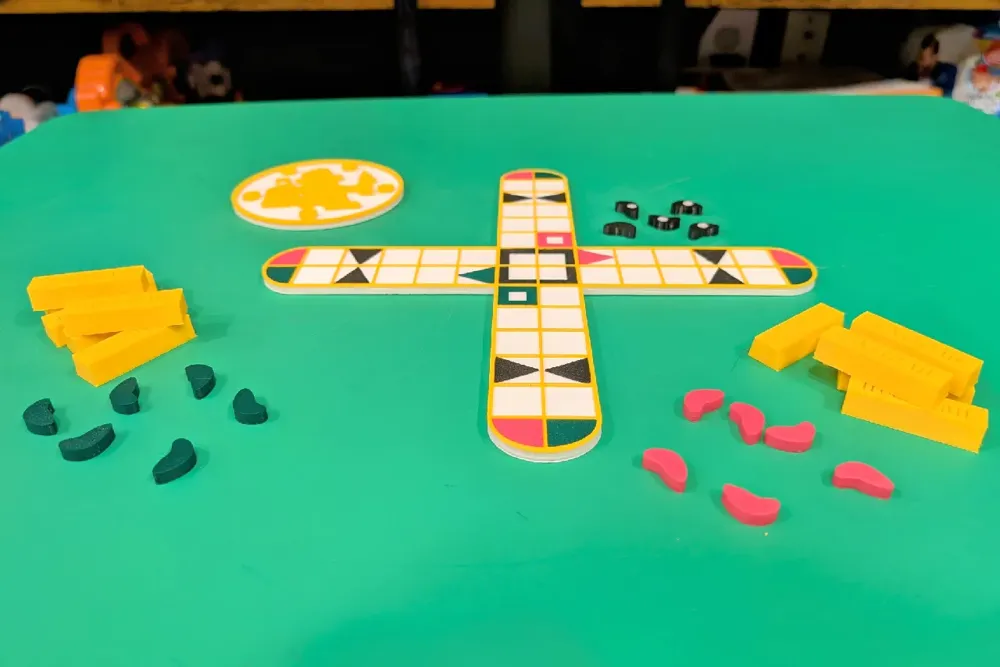
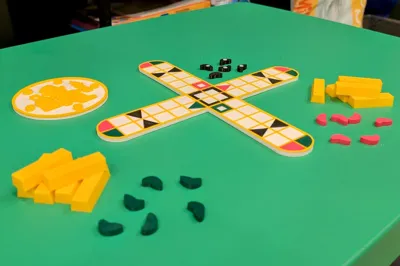
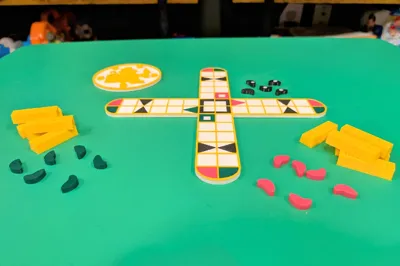
Patolli is an ancient Mesoamerican game dating back to at least 200 B.C. Similar to ludo, patolli is a race game with an emphasis on gambling, where players would wager their fortunes, homes, and lives on the outcome of the game.
Learn more about the game:
- https://en.wikipedia.org/wiki/Patolli
- https://otagomuseum.nz/athome/how-to-play-patolli
- http://www.cyningstan.com/game/1165/patolli
Playing the game:
This version of the game is for two players. Please see the attached rules file, which combines the various rules I've found across the internet.
About the model:
I have been on a bit of a kick researching and printing ancient board games lately. While Europe and Egypt are fairly well represented, I was surprised to see the lack of complete, fully printable, and free games from the Americas. Patolli stuck out as one of the most popular mesoamerican games that had practically no representation on 3D printing websites. I have no prior experience 3D modeling and thought recreating this game would help build some of these skills. The main goals for this model were:
- An easy, straight-forward print that fits most printer beds and doesn't require an AMS or multi-color machine to look good.
- A complete game with everything needed to play, all available in one place.
- All elements designed by me, as to not have to deal with different licenses and to easily serve as a base for others.
Printing:
Note: All pieces labeled as decorations for the board should be glued in place.
The game board:
- (1) Patolli Board (labeled patolli board). There is an easy layer change that can be done at layer 21 to add a colored frame to the game board. Print with 3 walls at 10% adaptive cubic infill.
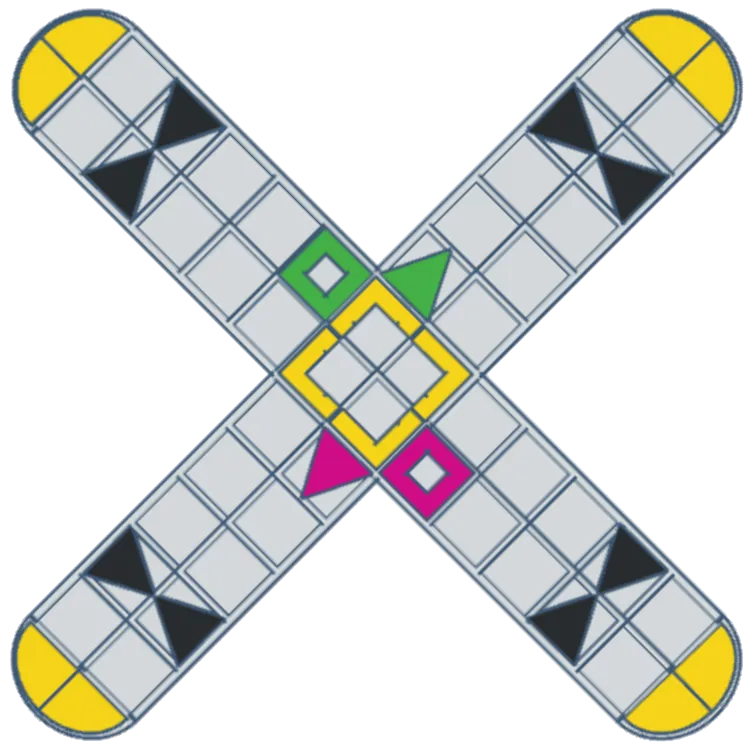
- (8) Triangle pieces (labeled Xpiece+Player-Start). These are used as special conditional tiles if landed on by the player. Print at 100% infill.
- (2) Triangle pieces (labeled Xpiece+Player-Start) in two different colors matching the player pieces. These serve as the starting position for the players. Print at 100% infill.
- (2) Square tiles (labeled Player-EndTile) in the same colors used for the player pieces and starting triangles. These serve as the end goal for each player piece. Print at 100% infill.
- Optional: (8) of the rounded pieces (labeled Tips). Not exactly required, but improves the general look of the print and helps to denote the special effects if landed on by the player. Print at 100% infill.
- Optional: (4) of the L-shaped pieces (labeled center squares). Like the tips pieces, helps with looks and denotes special effects within that area. Print at 100% infill.
- Optional: (1) secondary board with the god Macuilxochitl printed on it (labeled Macuilxochitl Board). Macuilxochitl is often referred to as the “third player” and there are certain game conditions that require players to give some of their treasure to the god. The image on this Board was taken from the Codex Magliabechiano, found via Wikipedia. Color change at layer 16 will have the outer ring and raised depiction of Macuilxochitl print in a different color. Print with 3 walls and 10% adaptive cubic infill.
- Additional: I've included a "Full Tile" piece that will fit into the the squares of the game board. This will allow you to fully customize the color scheme if desired. This piece is not used in the assembly of the print as covered here.
Player pieces:
- (5) beans to use as dice (labeled Dice-Bean). I recommend using a black material as, traditionally, the game was played with black beans that had a mark on one side. Print at 100% infill. Alternatively: You can use a regular dice, but that feels less authentic/fun.
- (5) pips (labeled Dice-Pips). Print in a contrasting color to the bean dice, preferably white. Print at 100% infill. Glue in place.
- (12) Player beans (labeled Player-Bean) printed in two colors. Each player gets 6 of the same color bean and the starting and end tiles should be matched to these colors. Print 10% infill.
- Optional: (12) gold bars with the Aztec word teocuitlatl, meaning gold, printed on top (labeled Player-Gold). This is used as treasures for betting, though you can use candy, real coins, or any objects you would like to wager. Each player will need 6. Print with 3 walls and 5% infill.
Assembly:
The Board is laid out as shown in this picture. I suggest using glue to keep the tiles in place. Likewise, use glue to put the pips into the bean dice. The pips should be relatively flush.
Hope you enjoy and please share any makes.
Documentation (3)
License



Comment & Rating (3)