
Star Trek Riker Pose Clock.


Print Profile(3)



Description
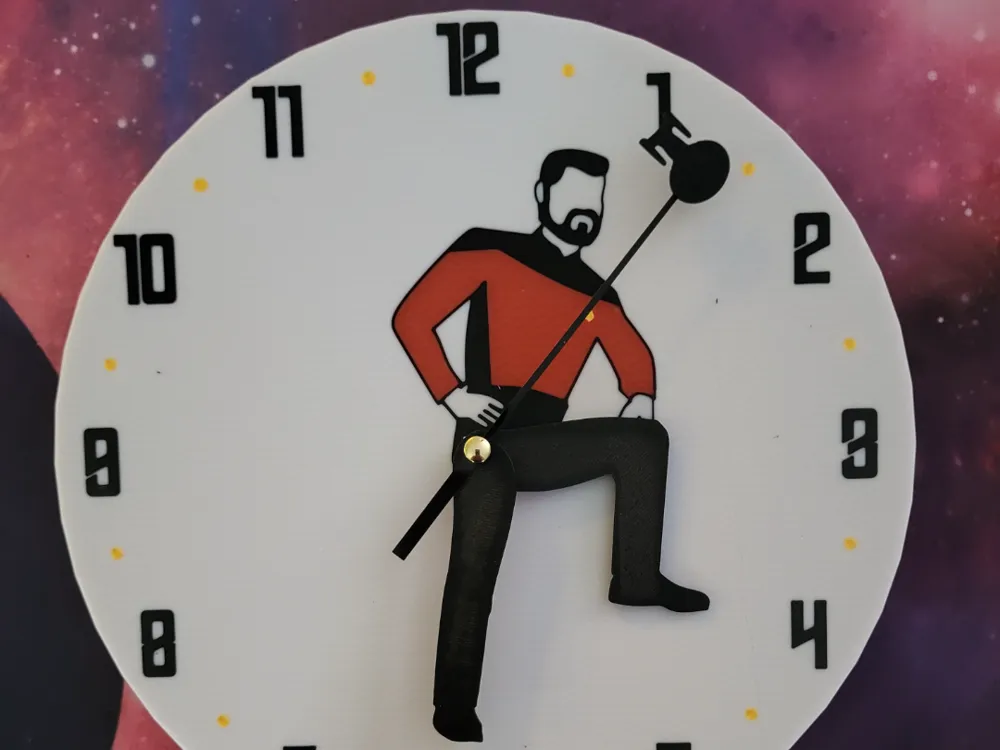
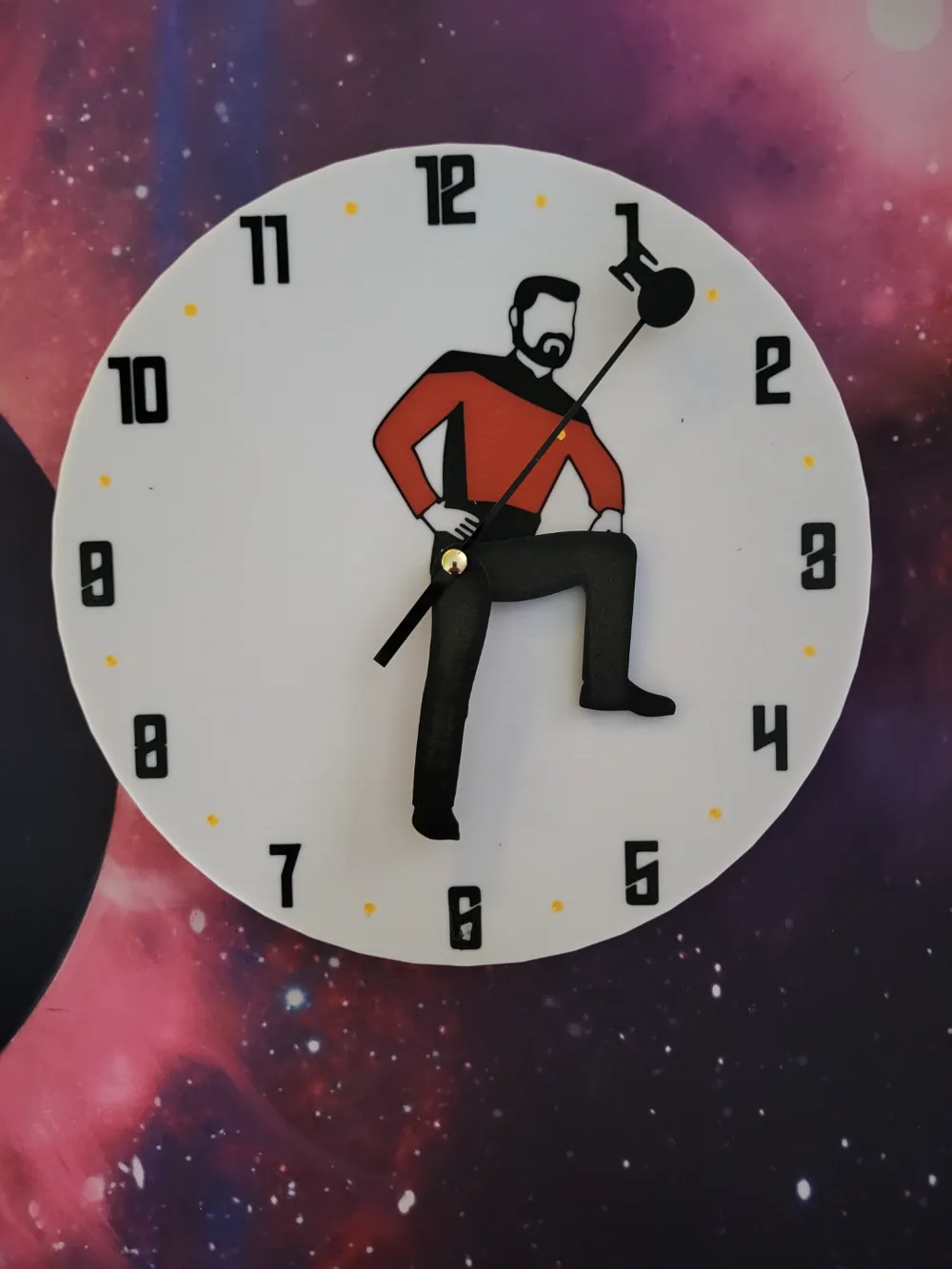
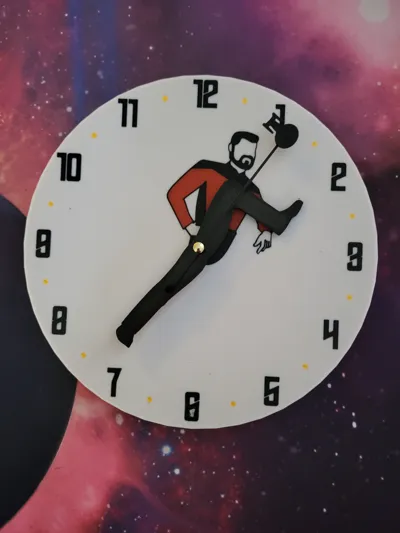
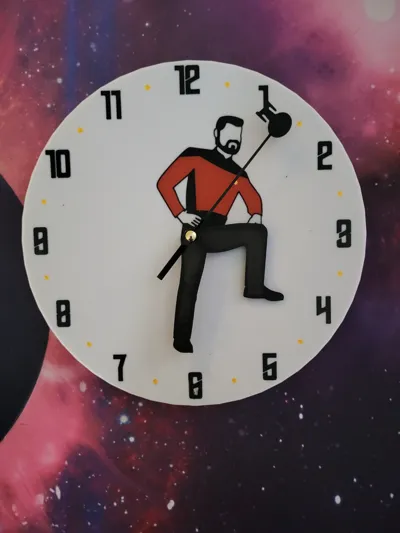
This is the Star Trek Riker Pose Clock—a fun, 3D-printed timepiece inspired by a hand-drawn version I stumbled upon while doom-scrolling. I decided to bring it to life in three dimensions.
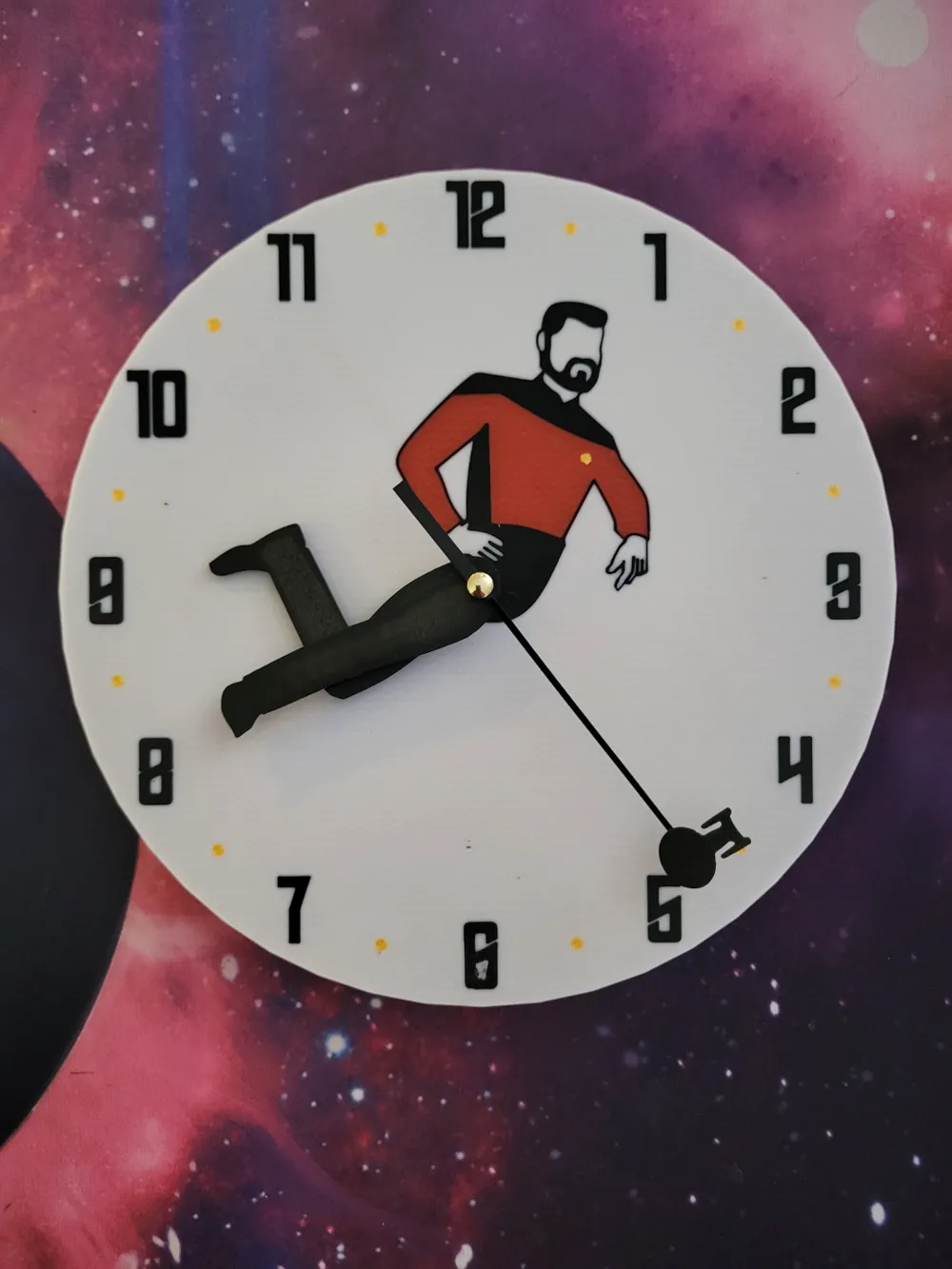
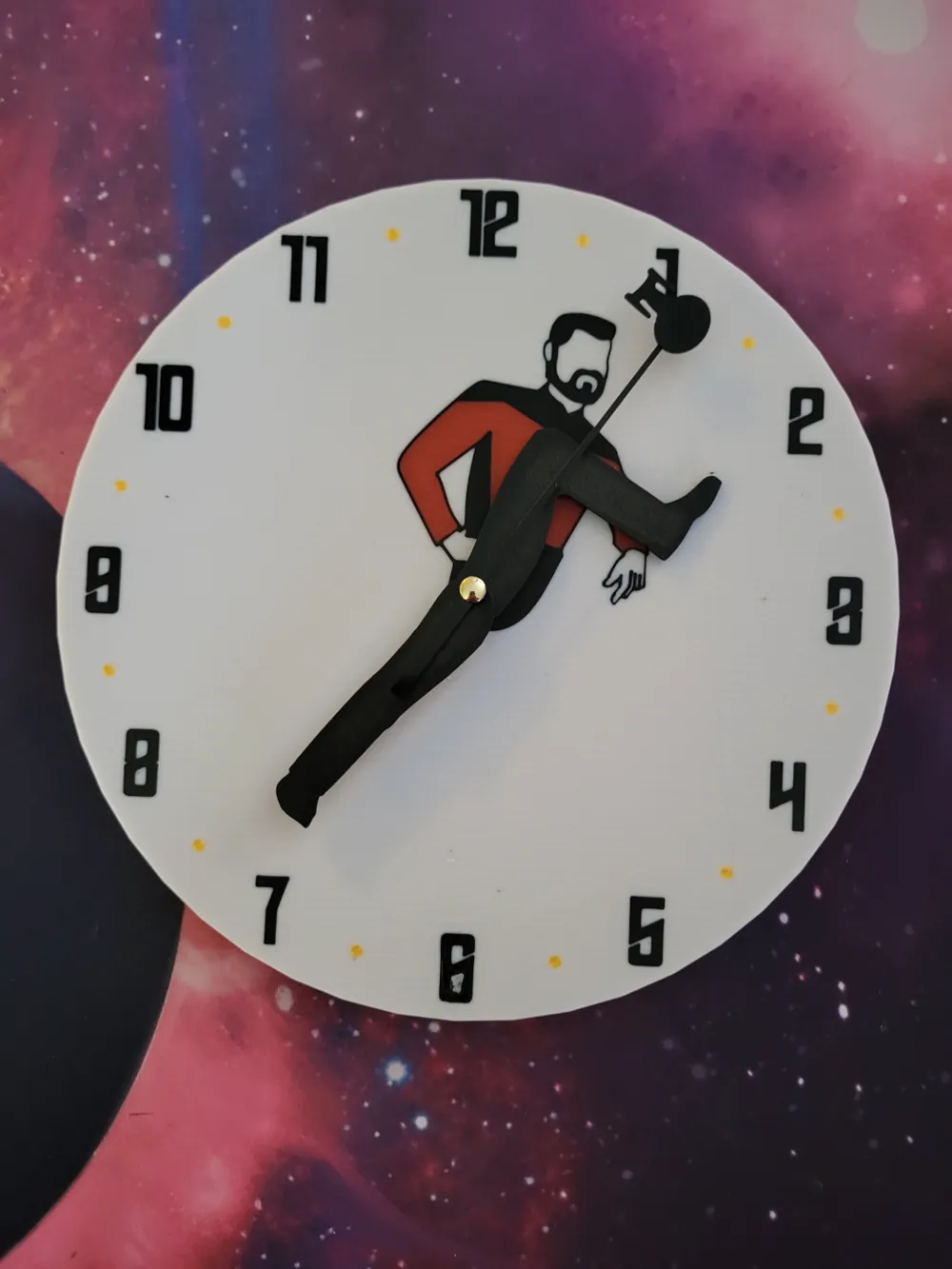
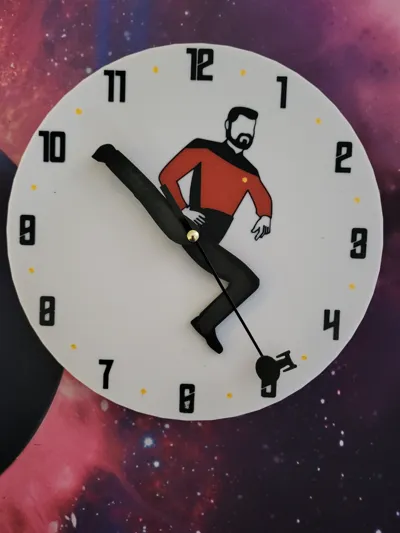
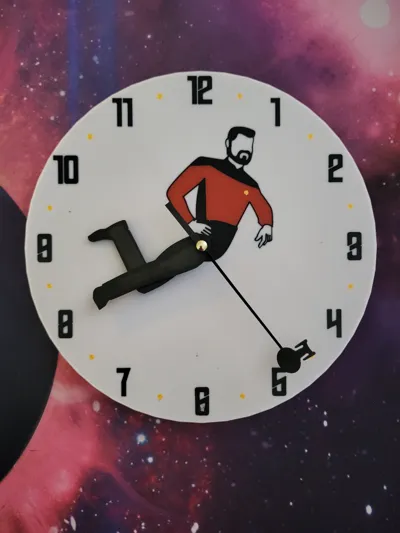
The clock features Commander Riker in his iconic pose, with one foot raised—a stance that has been widely referenced online. The bent leg serves as the hour hand, while the straight leg functions as the minute hand. For the second hand, I used the one included with the clock kit and superglued a silhouette of the Enterprise-D to its end. As time passes, Riker strikes some truly comical poses.
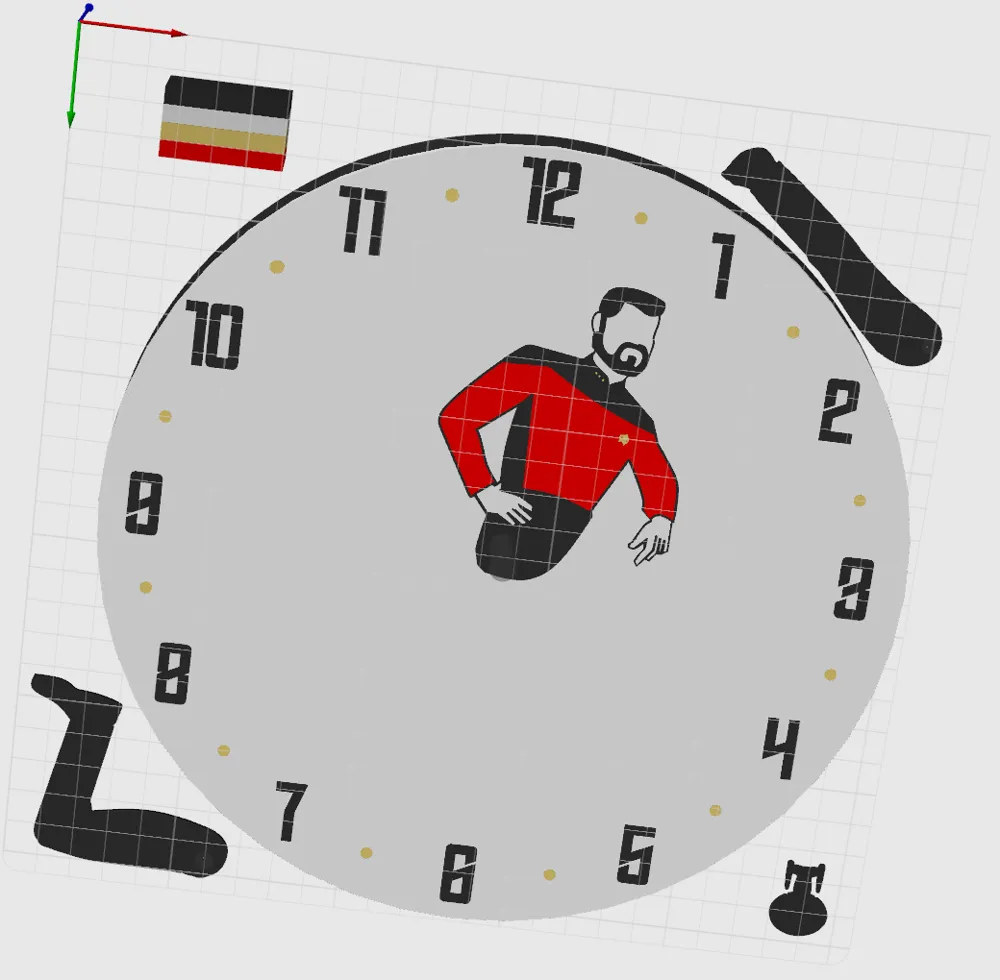
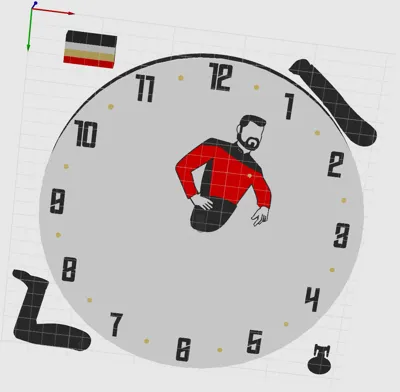
The MF3 file includes subtractive cylinders, allowing the clock to be adjusted to fit various clock kits or you can just drill out the holes. I recommend using a kit with a black second hand for the best aesthetic. This prints face down.
UPDATE (03/11/2025):
It turns out the Enterprise was too heavy for some clock kits, so I’ve added a counterweight print profile for the second hand. This counterweight balances out the Enterprise-D on the opposite end. It is currently sized for a second hand that measures 100 mm from the pivot point. It features a slot designed to accommodate the wider part of the second hand, allowing it to be slid up or down for precise balancing. Simply resize it as needed. You can adjust the size in Bambu Lab Studio and check the estimated weight in grams once it's sliced. This model is designed to be printed with 100% infill for maximum weight.
Bill Cassaday deserves credit as the origin of the concept.
Here is a link to his timelapse:
License



Comment & Rating (72)