
Eleven Basic Filament Calibration Test (with Swatches)
Print Profile(1)
Description
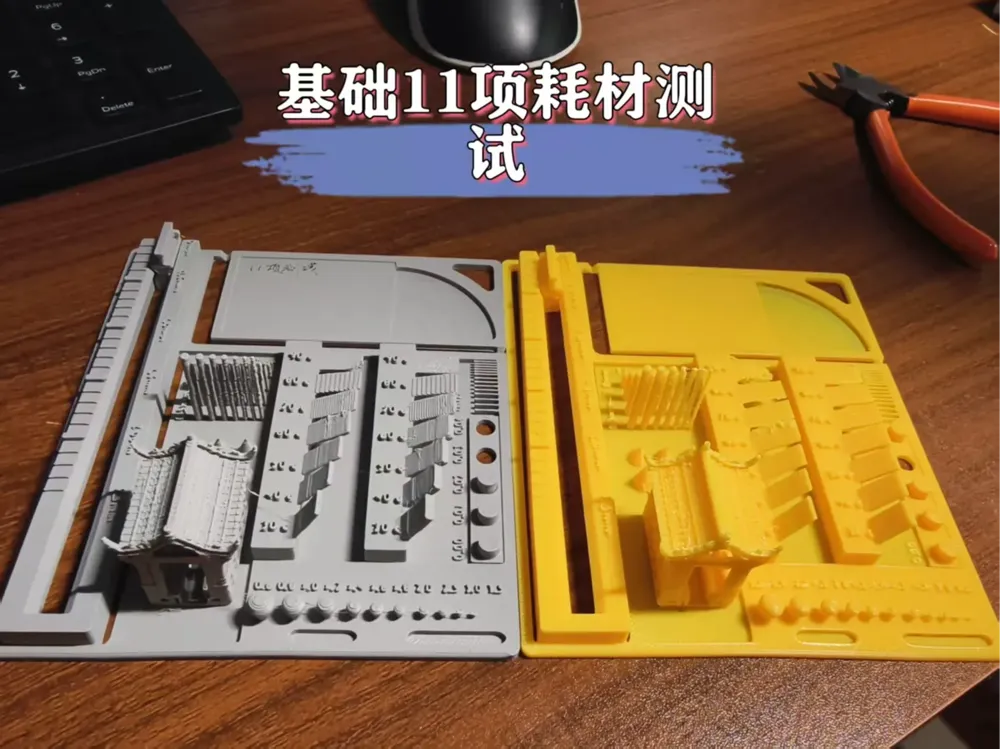
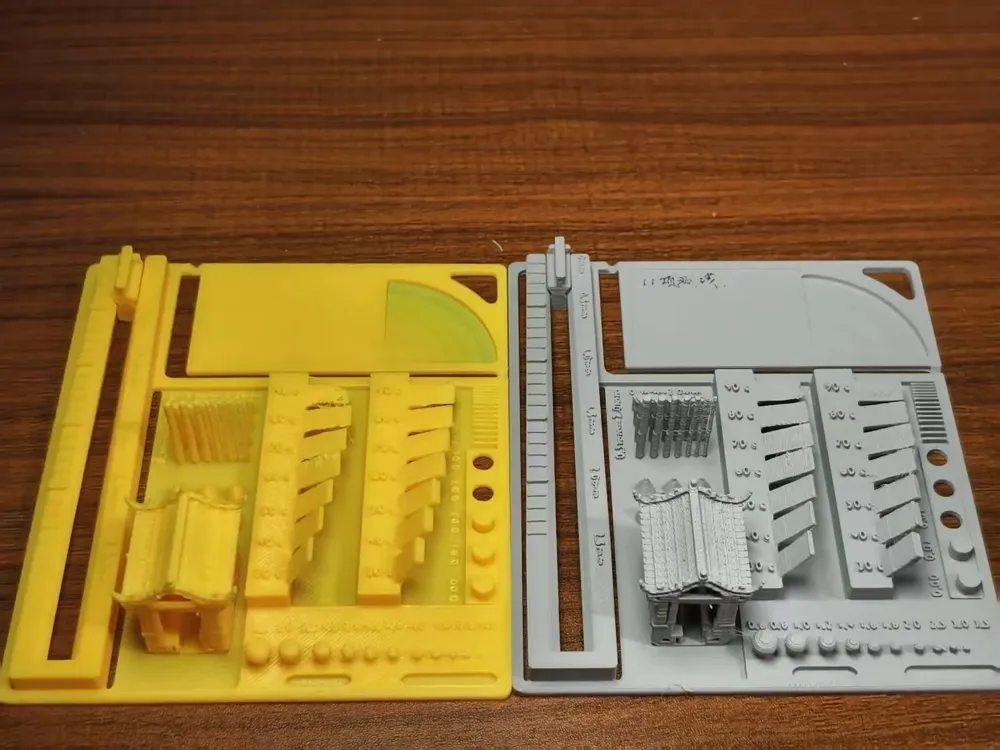
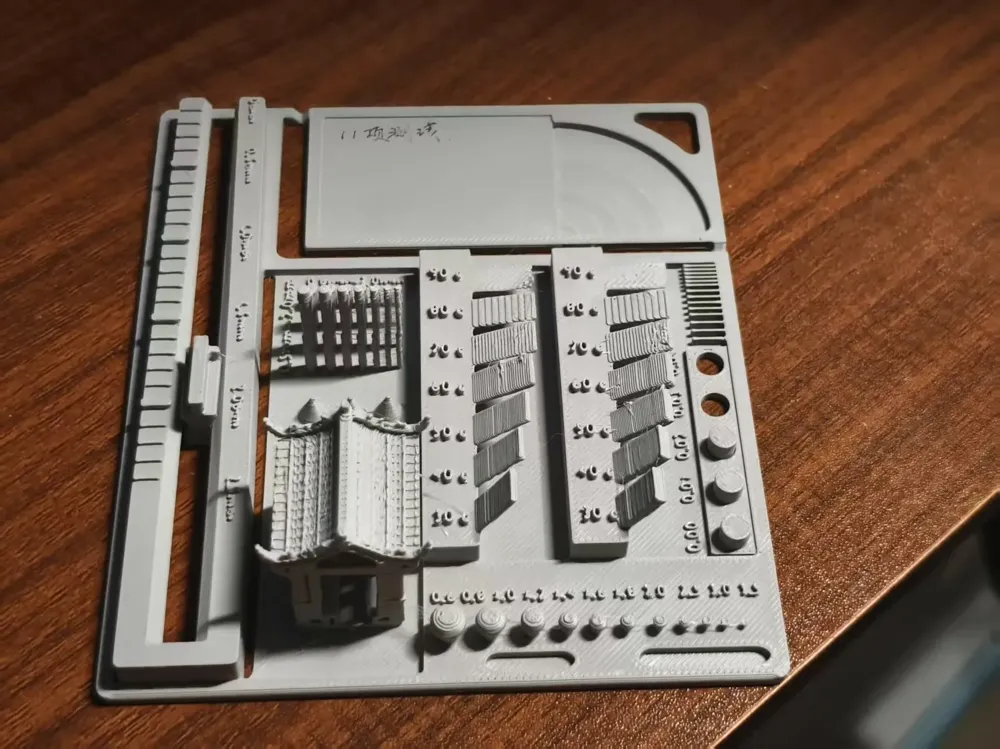
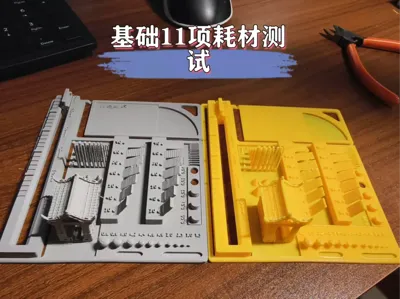
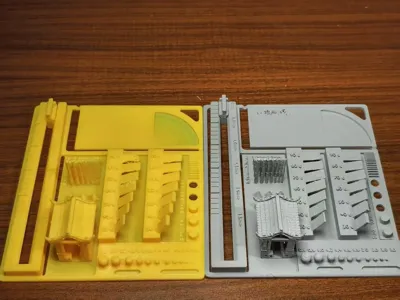
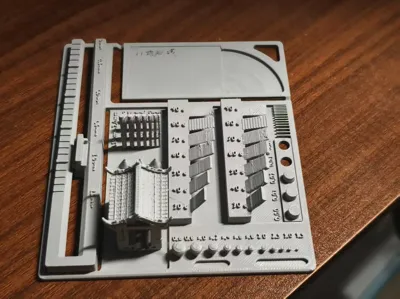
Eleven Fundamental Filament Test Models
An advanced twenty-item test will follow, encompassing features like elephant foot compensation and bridging, to foster a deeper understanding of FDM 3D printing and model creation
Communication Group: v: wannawowblm
Boost Me (for free)
PS: This is a test model I created to evaluate filament performance and blend characteristics. It incorporates six months of model-making experience, aiming to cover essential knowledge and considerations for both novice and experienced users.
Note:
*This is a filament test model; expect to see variations in print quality among the test components. Please refrain from giving negative reviews due to suboptimal test component results, warping, stringing, etc. Thank you.
*The numbers on the model represent 0.4mm detail limits; some filaments might display unclear printing. For example, the numbers on the yellow filament in the image are somewhat indistinct.
Please post any testing questions in the comments section; I should be able to answer most inquiries.
Next, I will elaborate on each section and my interpretation:
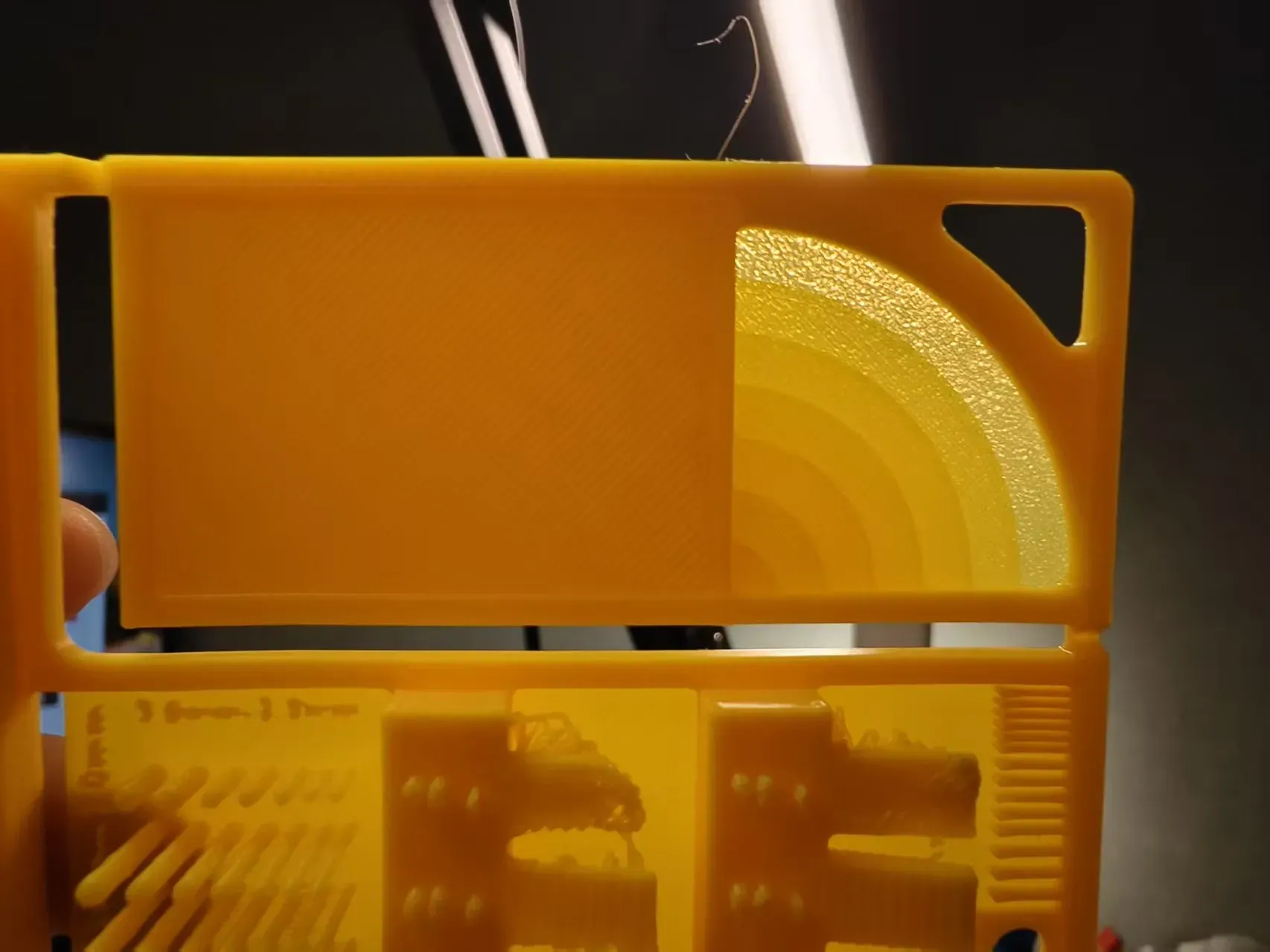
Test 1: Filament Translucency
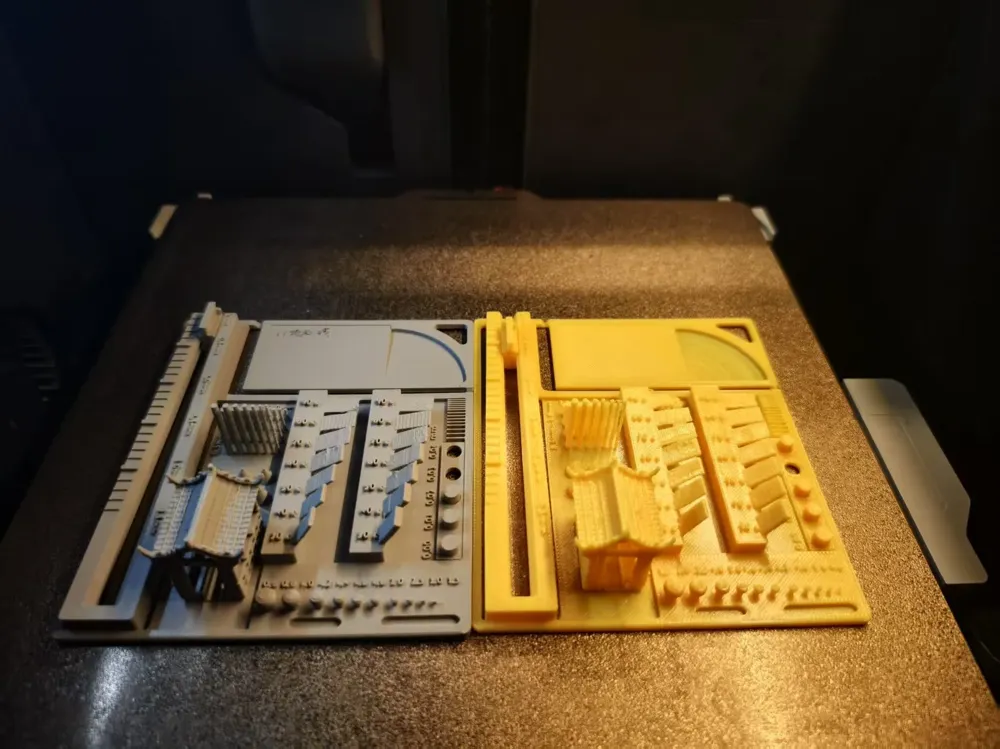
When printing models requiring internal lighting, translucency is crucial. PETG generally exhibits good translucency, while matte finishes display poor translucency.
Darker colors (black, gray, etc.) have poor translucency, while white yields excellent results with almost any filament.
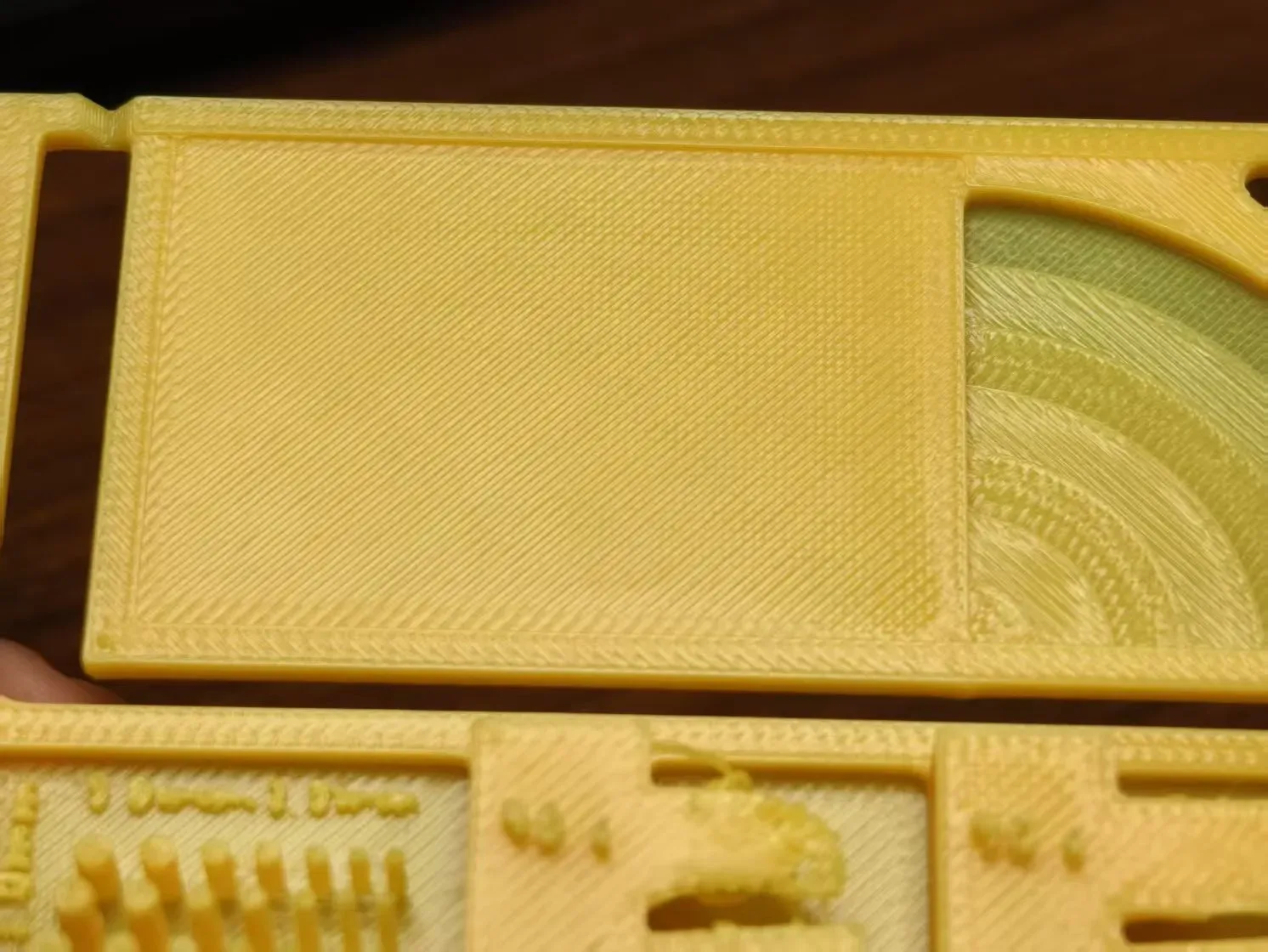
Test 2: Flow Rate and Surface Finish
Surface imperfections are infrequent. A smooth, gap-free surface is generally sufficient; perfection isn't necessary.
Pits or clumping indicate improper filament temperature or flow rate.
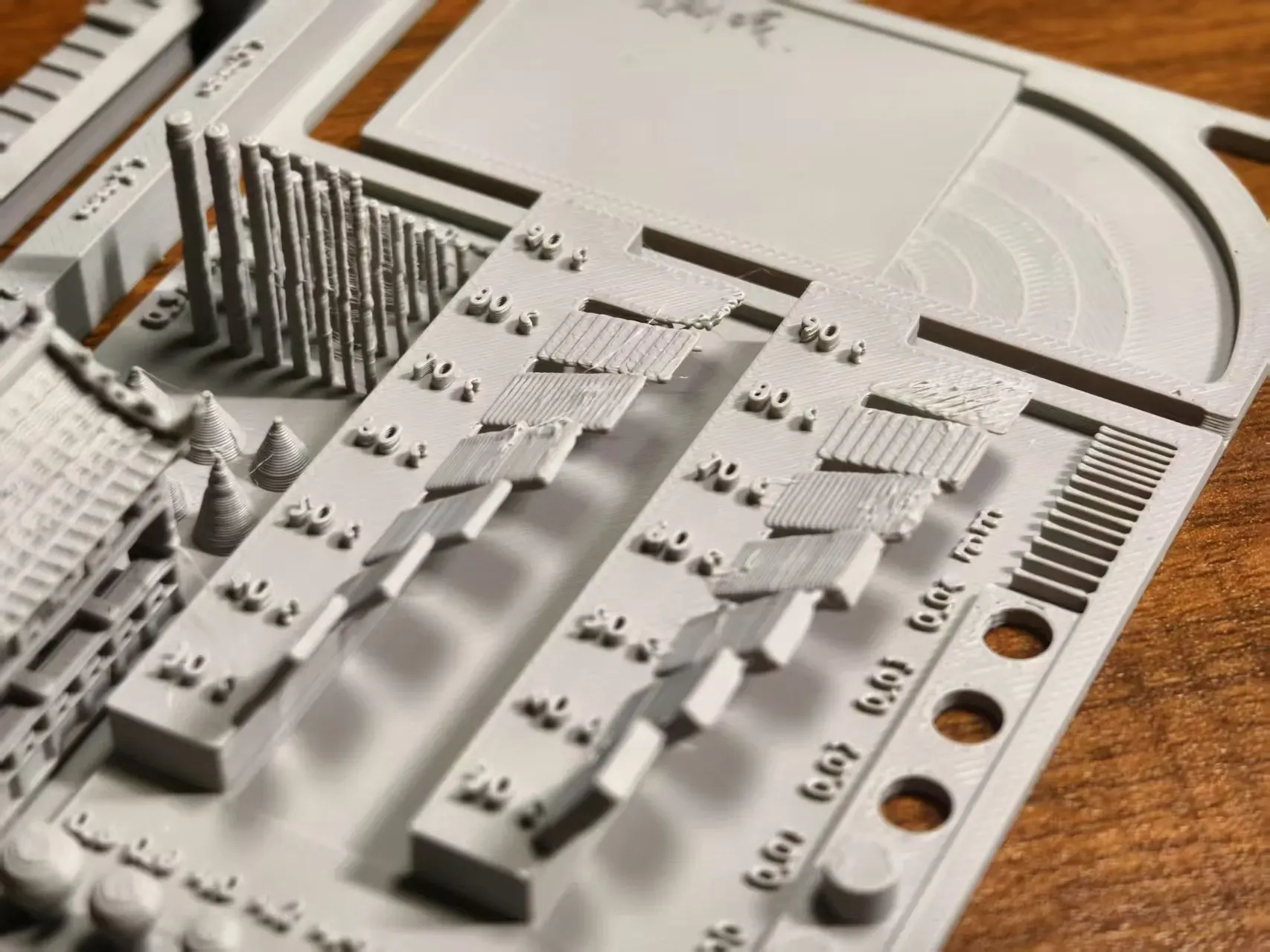
Test 3: Overhang/Bridging Test
Each angle is separated and arranged (90, 80, 70---30).
Generally, larger angles exacerbate issues. Overhangs exceeding 25 degrees typically require supports (though not always), with some filaments needing 40 degrees, while others suffice at 15 degrees.
Bambu PLA Basic demonstrates superior performance. At 90 degrees (0-degree overhang), with 0.25 and 0.5mm layer heights, the top surfaces form well-defined rectangles.
A 20-yuan PETG filament (from a popular online store) exhibits moderate performance. It prints adequately at 80 degrees (10-degree overhang) but fails to maintain the surface shape at 90 degrees (0-degree overhang). Among the filaments I've tested, its performance is average.
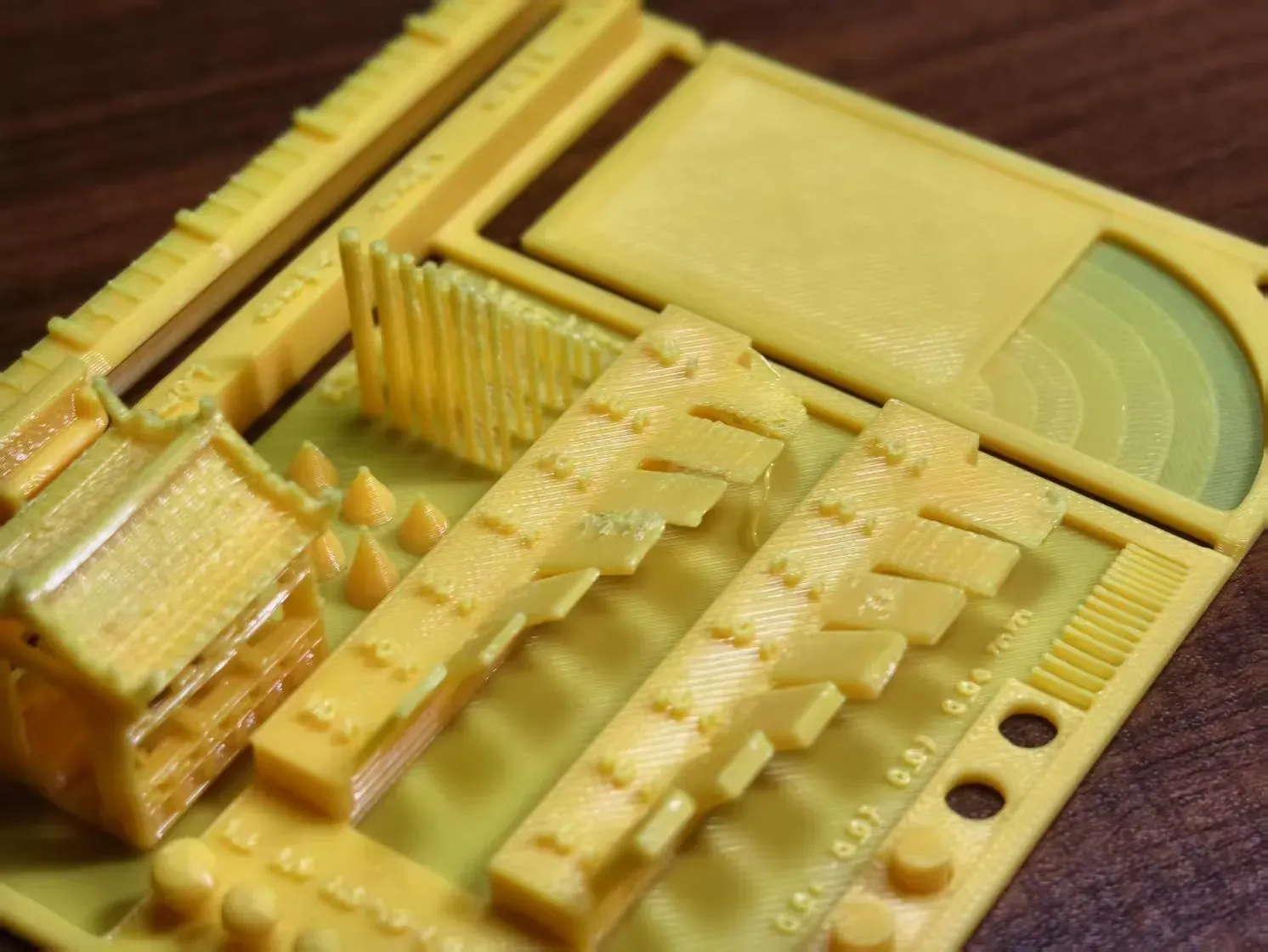
Poor performance typically results in significant stringing without supports.
Superior filament performance in this area significantly improves complex model print success rates.
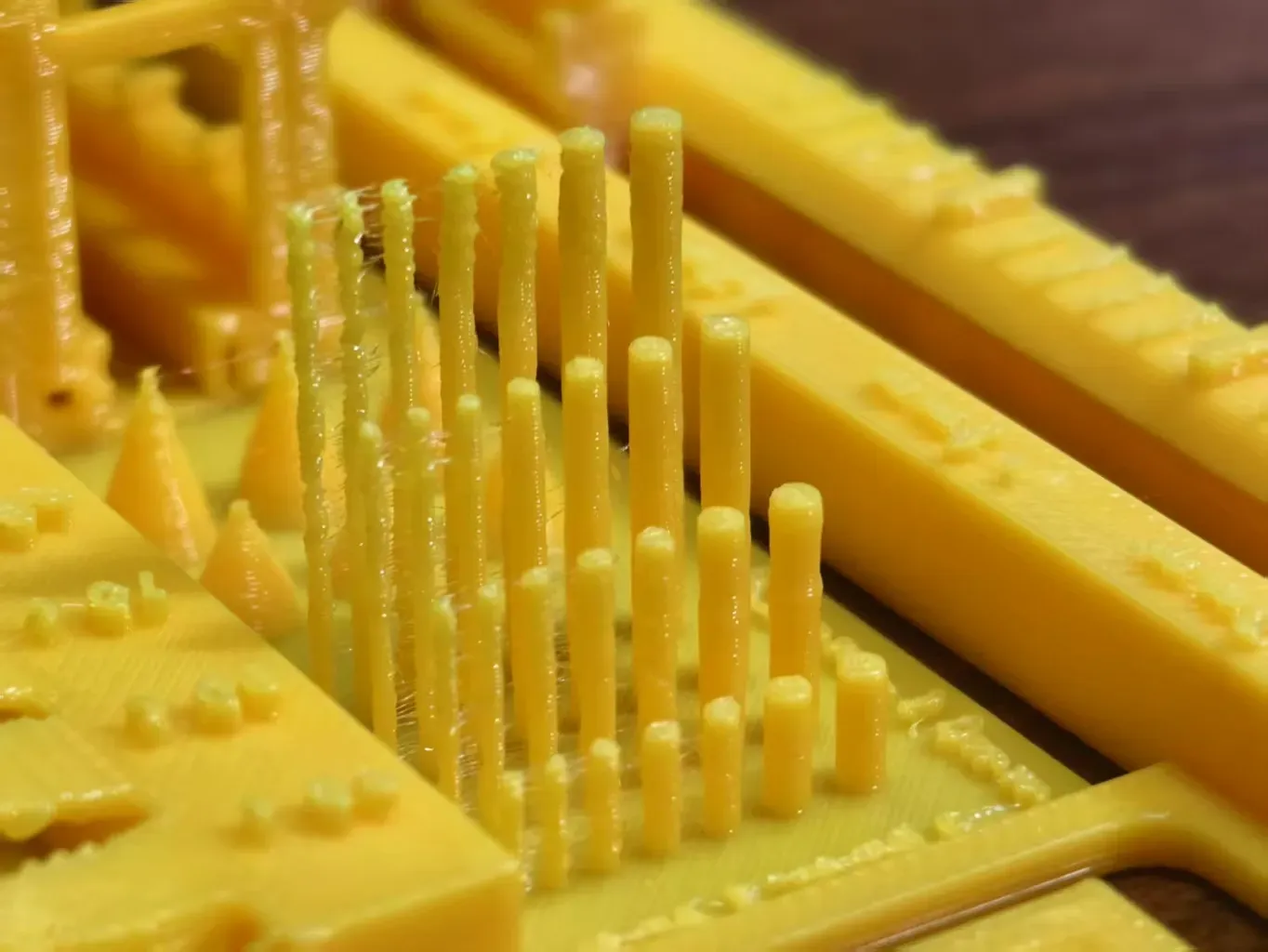
Test 4: Wobble (Unsure of Proper Terminology)
Significant wobble often impacts print quality in thin, tall models.
The image shows 0.6mm and 2mm diameter columns. Wobble worsens with increasing height in thinner columns and improves with increasing diameter.
This effect is influenced by temperature and filament strength; almost all filaments exhibit this, which is normal. If the tallest column on the left performs well, the filament is suitable for detail-rich models while maintaining quality.
Test 5: Stringing
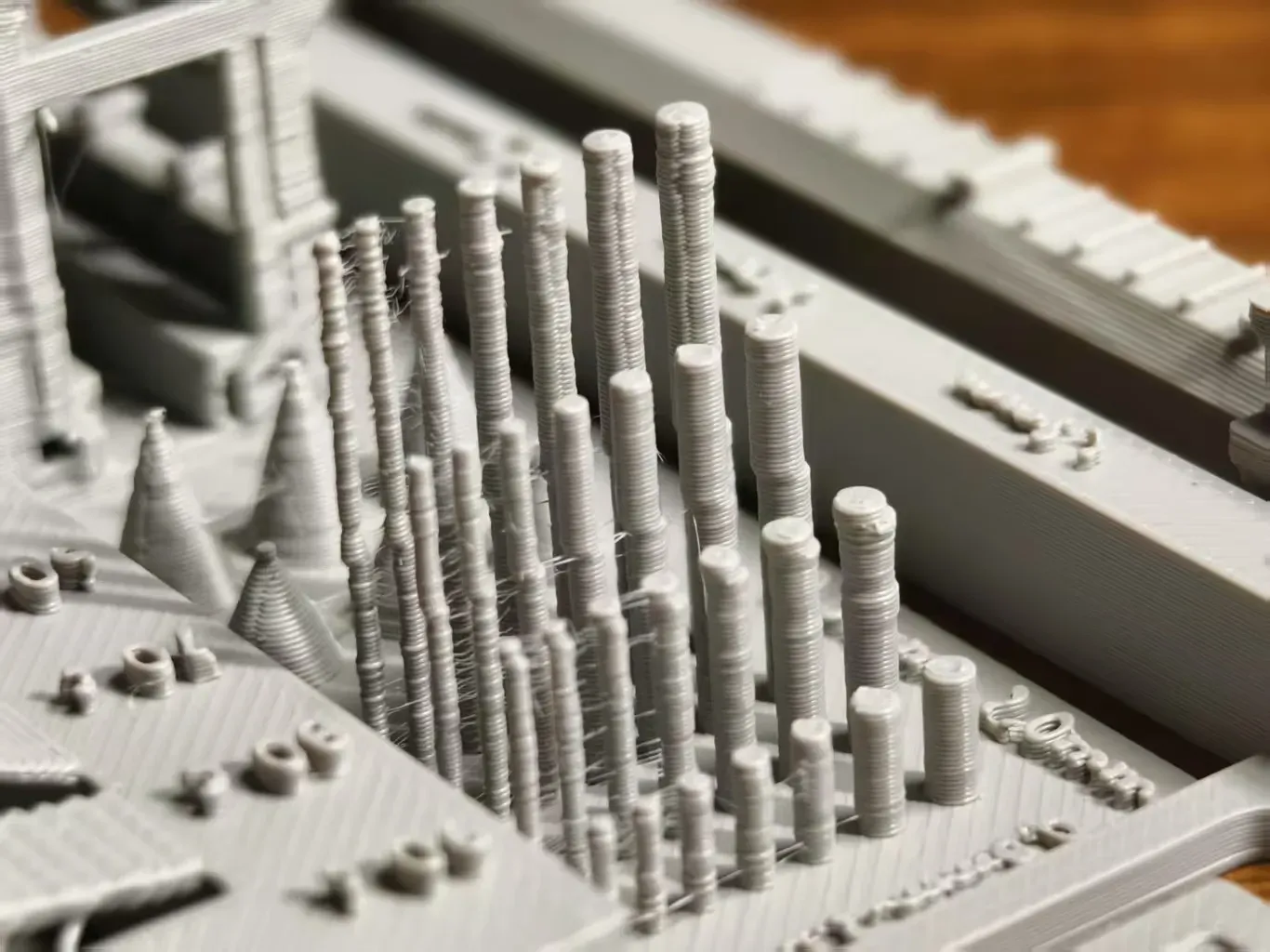
*All filaments exhibit stringing; high temperatures exacerbate this!
Fine-detail models require high-quality filaments and properly calibrated settings.
Optimization: Appropriate temperature, reduced print speed, and superior filament selection generally lead to better results. Silk and PETG tend to string less than PLA (based on my experience, possibly due to my greater use of PLA).
Stringing Solution: A lighter application of a flame works, but it's not advisable for delicate models. See the image below:
The lighter caused tilting in thinner columns, making this unsuitable for fine details.
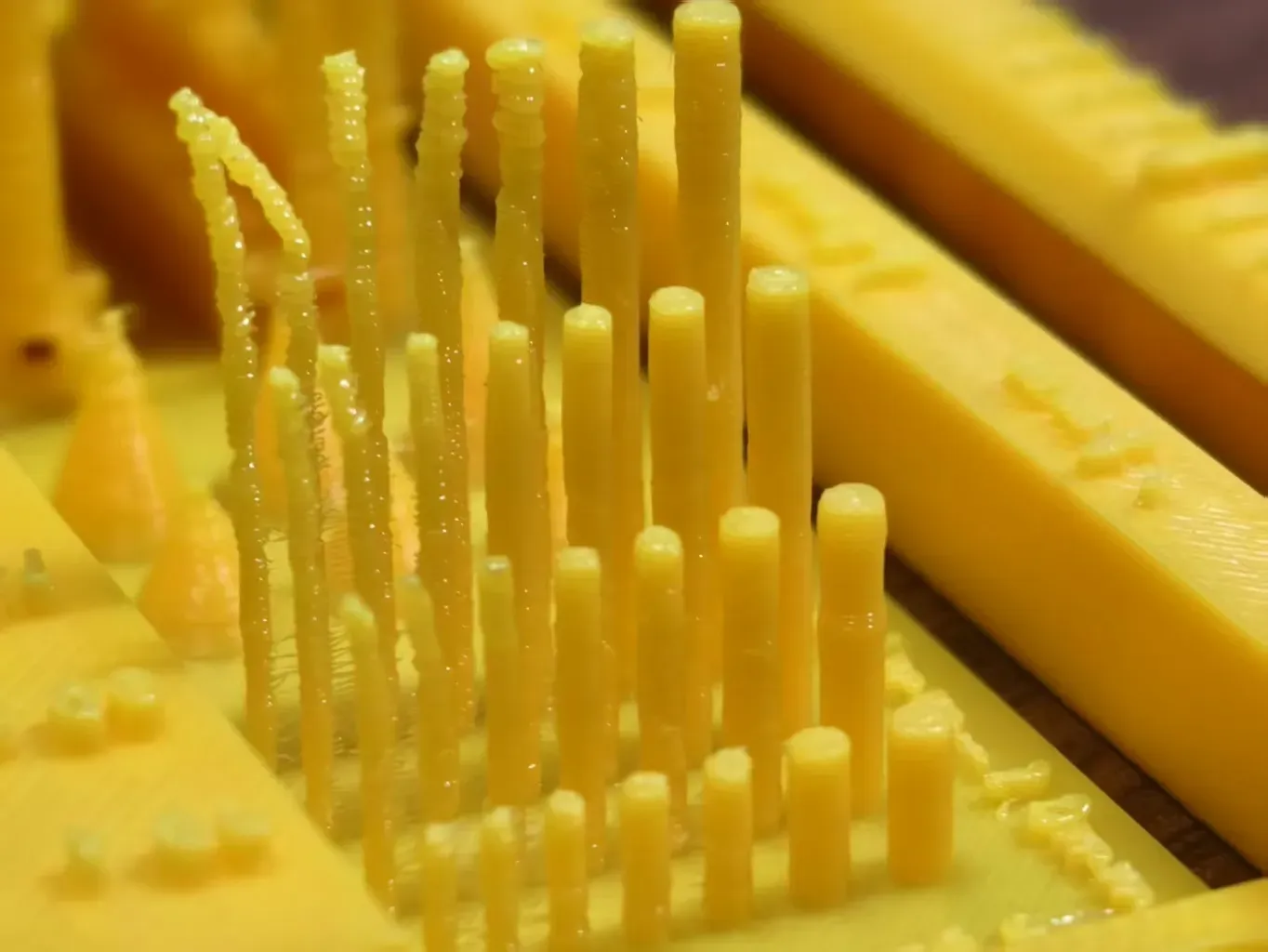
Moderate stringing (somewhat reflective, less than the gray filament)
Good stringing performance
Test 6: Collision
Common in A1-series printers. If the model is too thin, mid-print breakage (due to print head collisions) occurs, leading to stringing.
Solutions: Use a P1 or X1 printer or a stronger filament. Reducing speed (ineffective in my experience) Matte or other dull-finish filaments are more prone to breakage.
Test 7: Conical Tip Test
Many tests include this, but I'm unsure why. I've added it, but I'm not sure how to interpret the results.

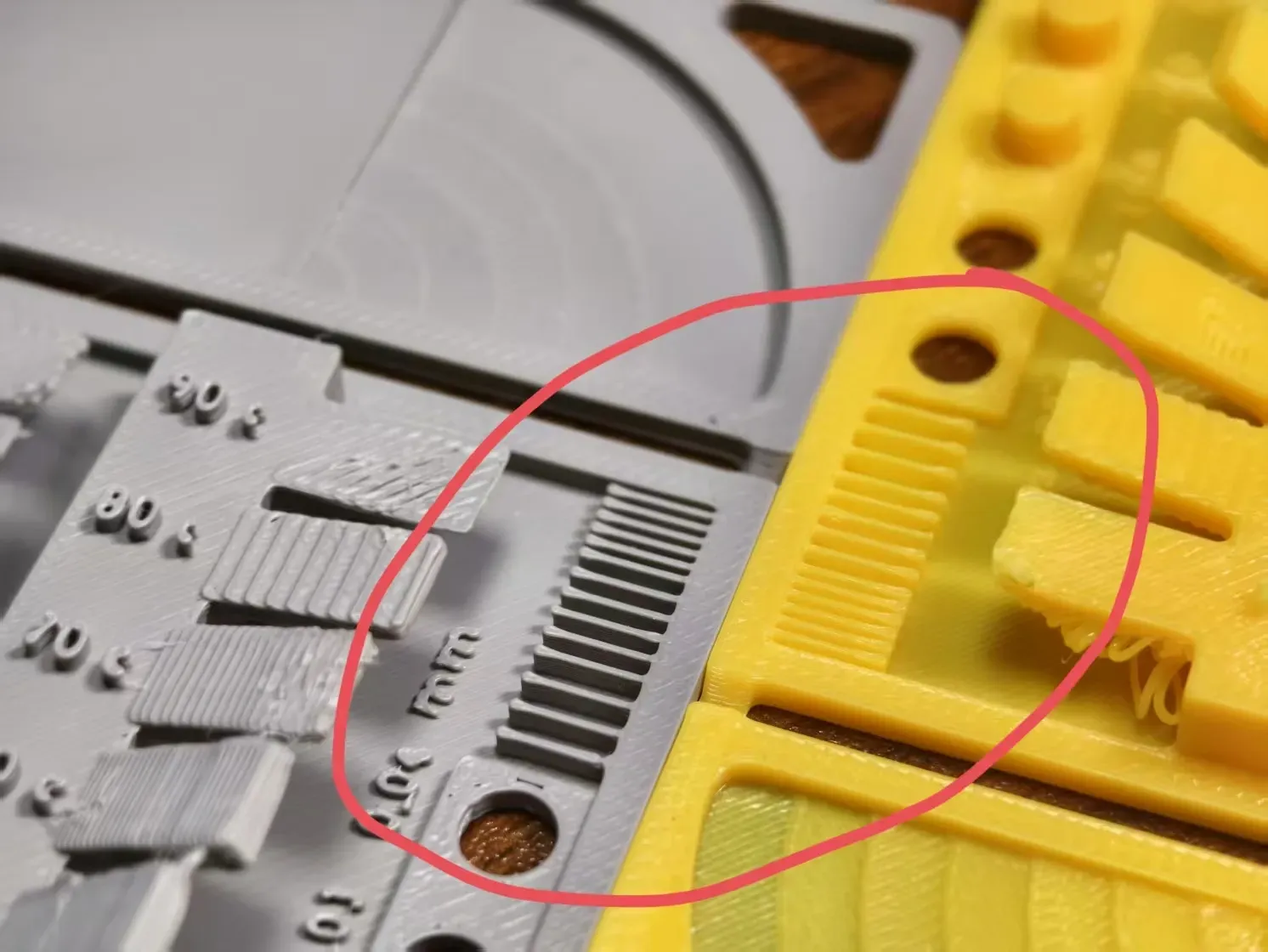
Test 8: Detail Stability Test
The gray filament shows superior performance, or possibly better settings.
Well-ordered, unbroken, string-free, fine-tipped prints with parallel lines signify good performance. The yellow section's lines are not as well-aligned.
Test 9: Print Tolerance
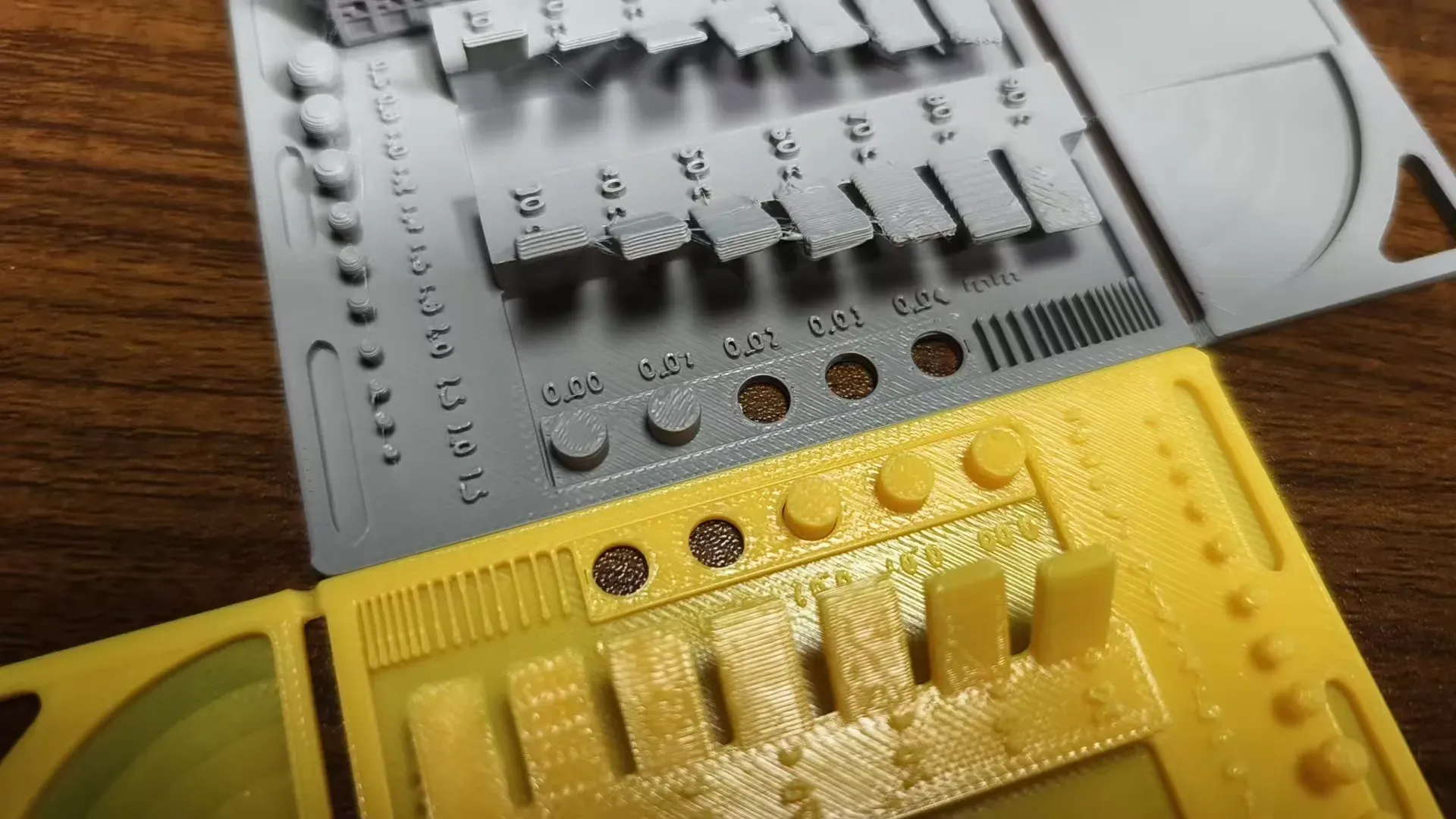
This assesses a filament's ability to maintain tight clearances. Poor performance can prevent articulation in hinge-based toys (like the Chinese dragon) or fidget spinners.
Silk and PETG typically have larger tolerances.
Note: High temperatures always increase tolerances!!!
The gray filament shows excellent performance; a 0.02mm clearance cylinder passes easily. The yellow performs well; a 0.03mm cylinder passes. A 0.03mm or 0.04mm tolerance typically suffices for most articulated toys and fidget spinners on MakerWorld.
Test 10: Snap-Fit Tolerance Test
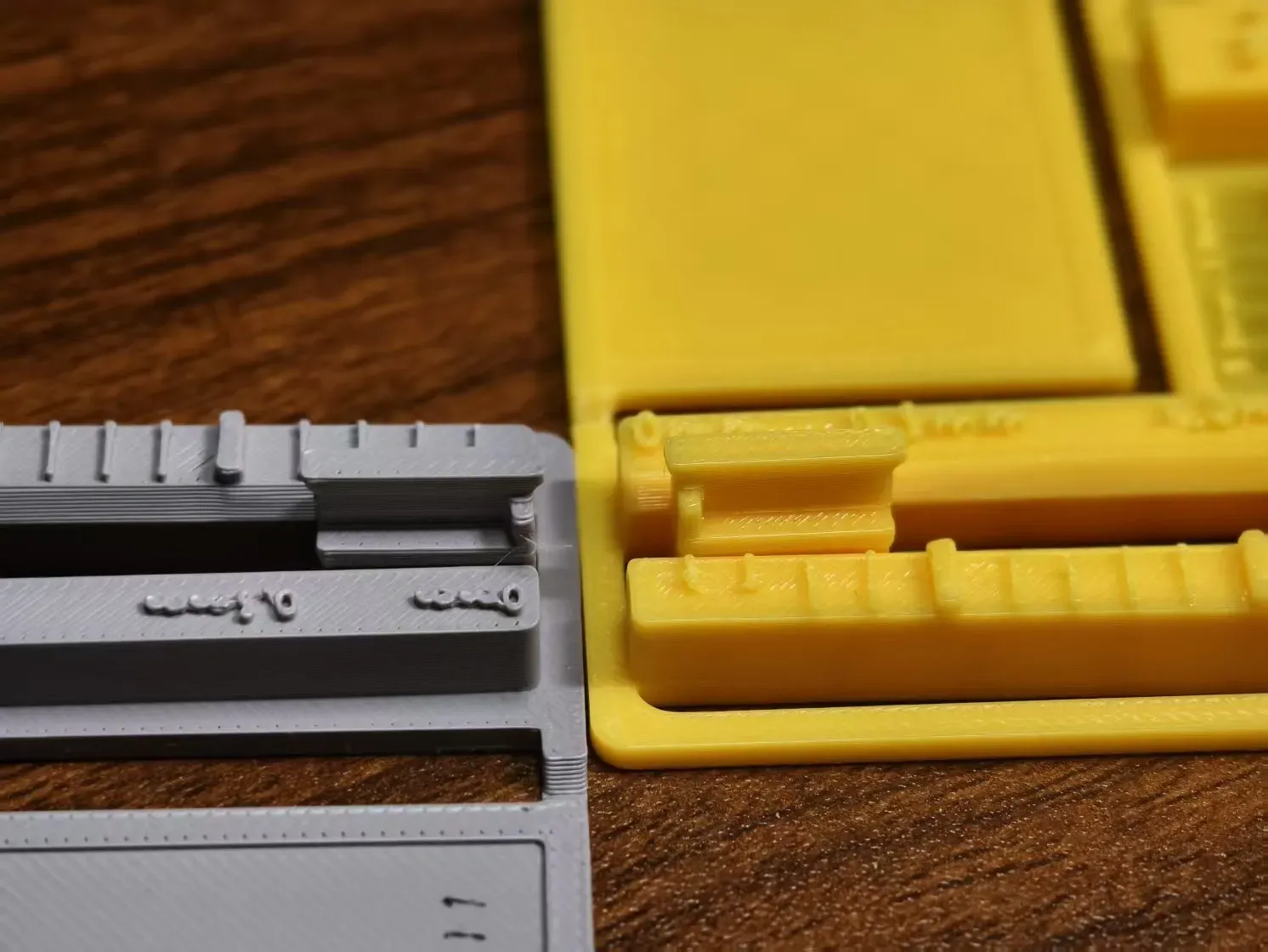
This measures the effectiveness of snap-fit joints. Large tolerances prevent proper assembly.
!! Testing Method: Press down and gently slide the slider forward (avoid force) until it stops.
The gray filament (excellent performance) slides to the end with no resistance, meaning even zero-tolerance models would fit. The yellow filament (moderate performance) only slides to 0.1mm. A 0.1mm design tolerance might prevent assembly with this filament, while the gray would be too loose.
Optimization: 1. Appropriate temperature (high temperatures increase tolerances). 2. Filament selection
Test 11: Z-Axis Strength Test
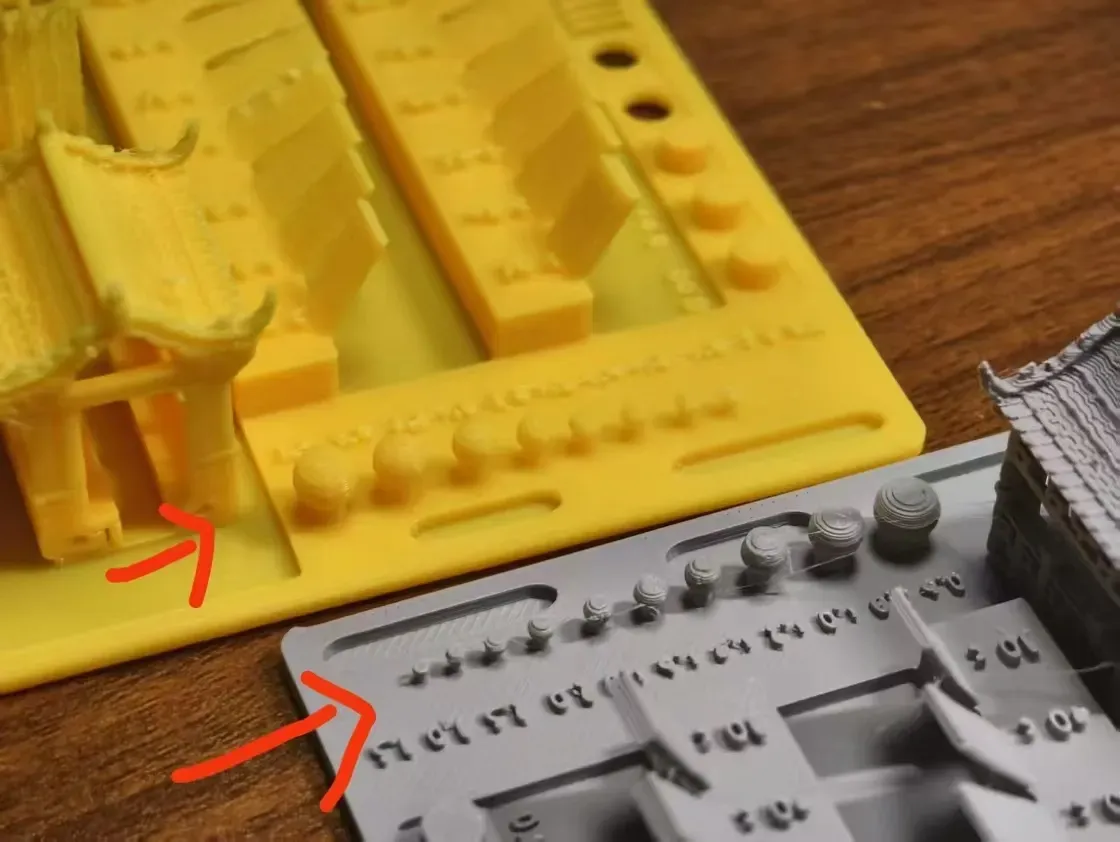
Testing Method: Gently rock the sphere (indicated by the arrow) until it breaks.
The gray filament, at a 0.8mm contact surface, demonstrates good strength without breaking. The yellow filament requires 1.2mm to maintain integrity. Models printed with the yellow filament might be more fragile.
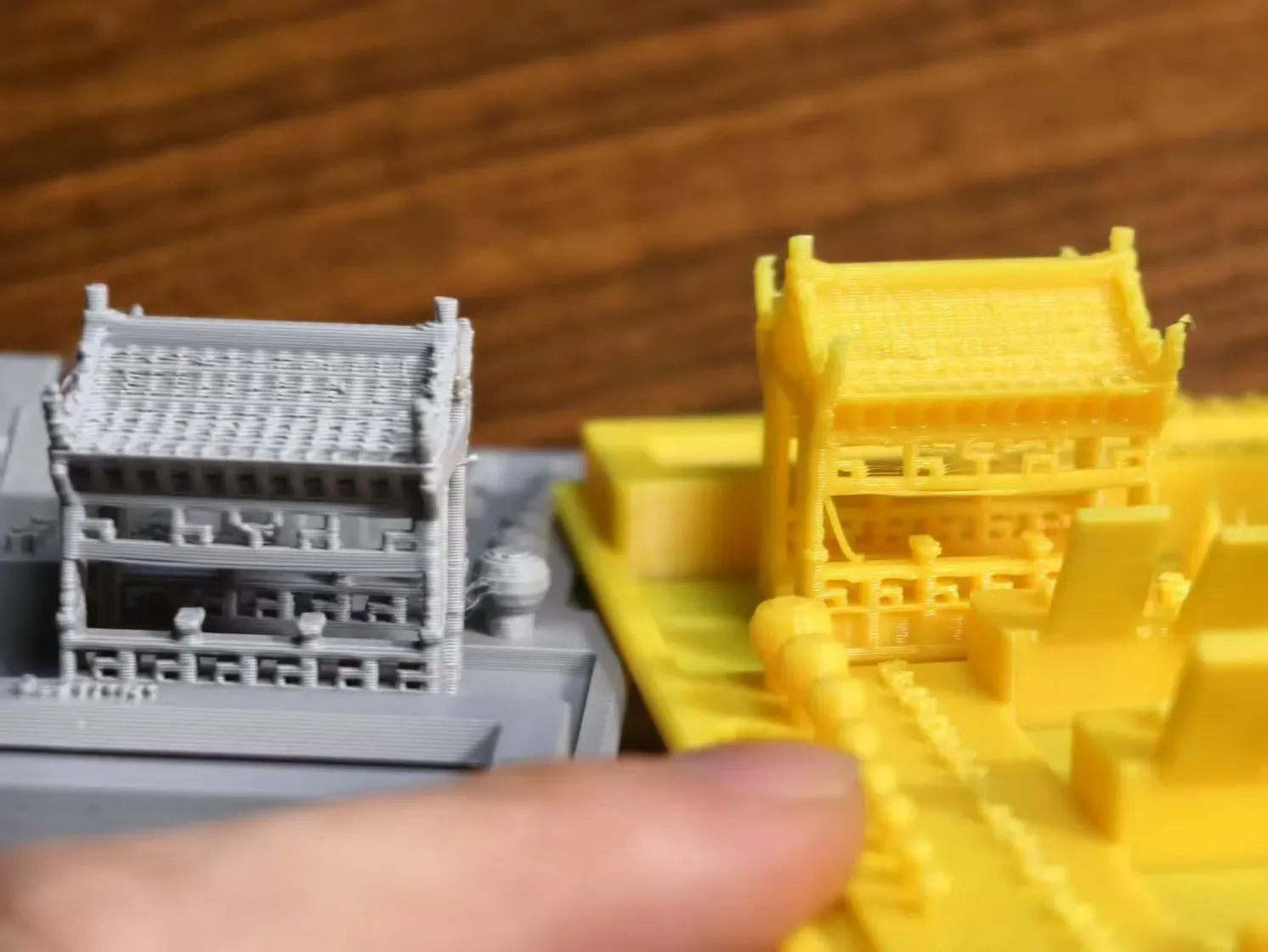
Supplemental Test 12: Complex Model Overall Performance
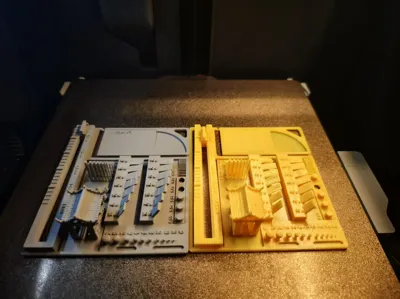
This showcases the overall performance of the test filaments.
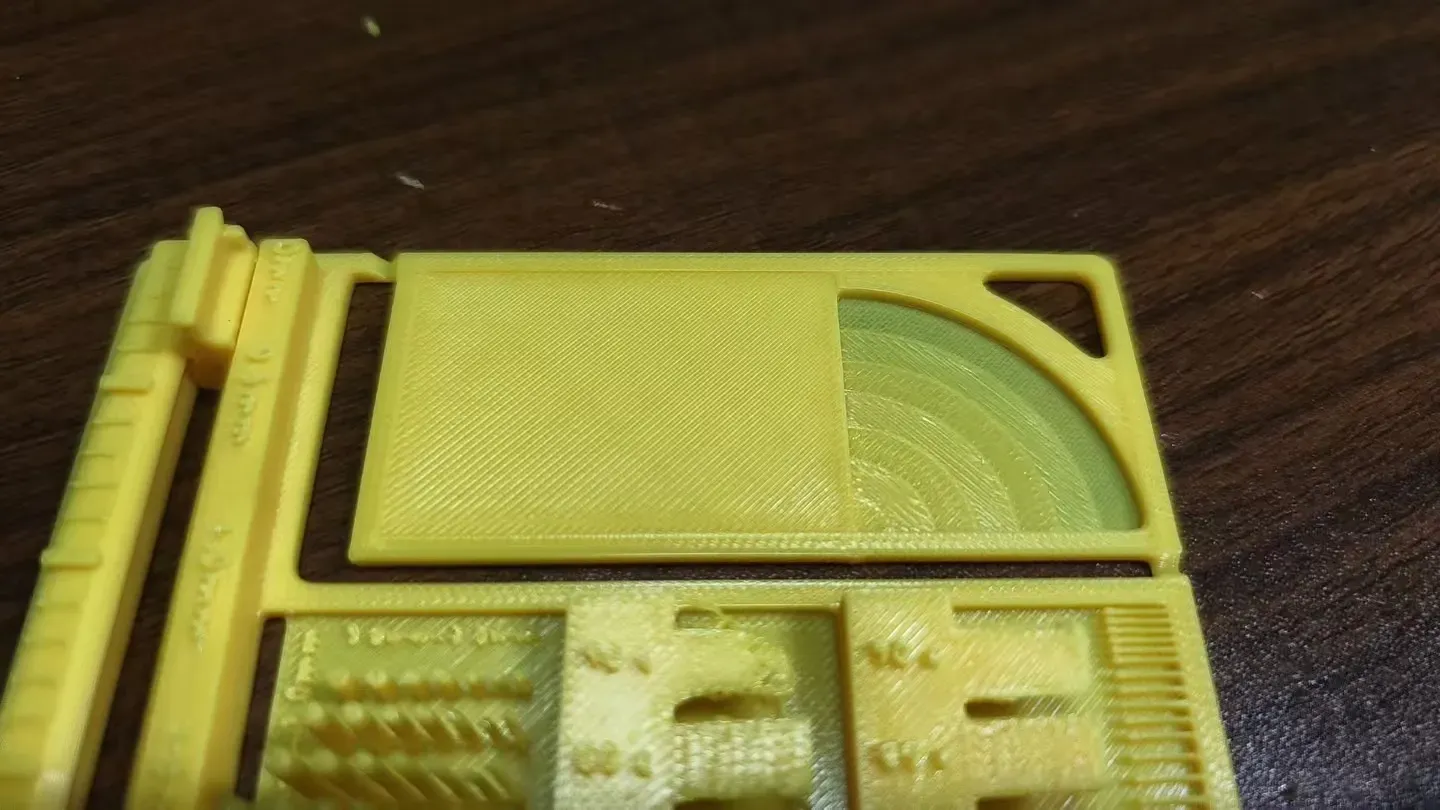
13: Filament Swatch
The top of the model contains a swatch you can cut out; affix your labels to the flat area.
License

You shall not share, sub-license, sell, rent, host, transfer, or distribute in any way the digital or 3D printed versions of this object, nor any other derivative work of this object in its digital or physical format (including - but not limited to - remixes of this object, and hosting on other digital platforms). The objects may not be used without permission in any way whatsoever in which you charge money, or collect fees.


Comment & Rating (20)