Search models, users, collections, and posts

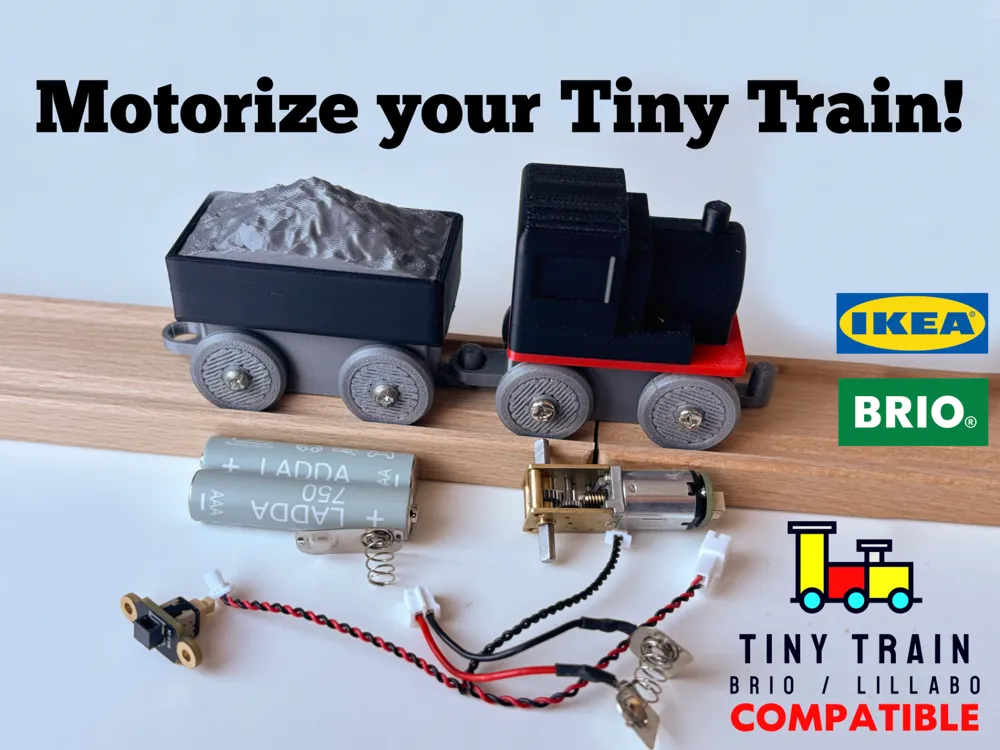

Motorization Kit For Your Tiny Train
GIF
GIF

Print Profile(3)

All
A1
P1S
P1P
X1 Carbon
X1E
X1
A1 mini
H2D
H2D Pro
H2S
P2S
H2C
X2D
A2L

0.2mm layer, 2 walls, 15% infill
Designer
2 h
3 plates
4.5(24)

Drive Wheels with smaller 3.2mm hub
Designer
14 min
1 plate
4.8(8)

High Friction Wheels (grippy)
11 min
1 plate

Open in Bambu Studio
Boost
396
1238
86
63
463
207
Released 

Bill of Materials

Maker's Supply Kits and Parts
Select all
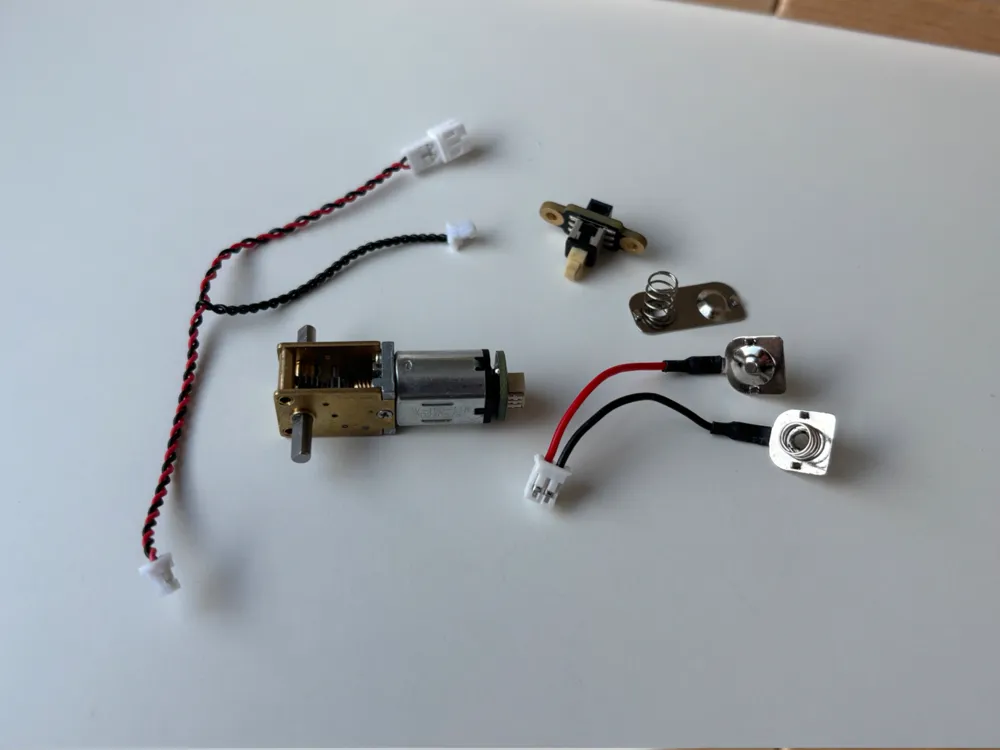
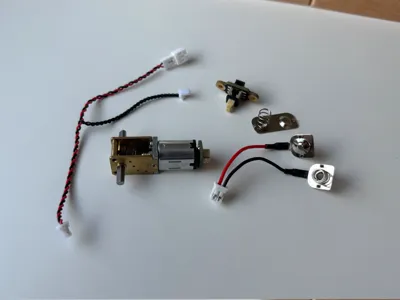
N20 Dual Shaft Worm Gear Motor 130rpm (1PCS) - LA009
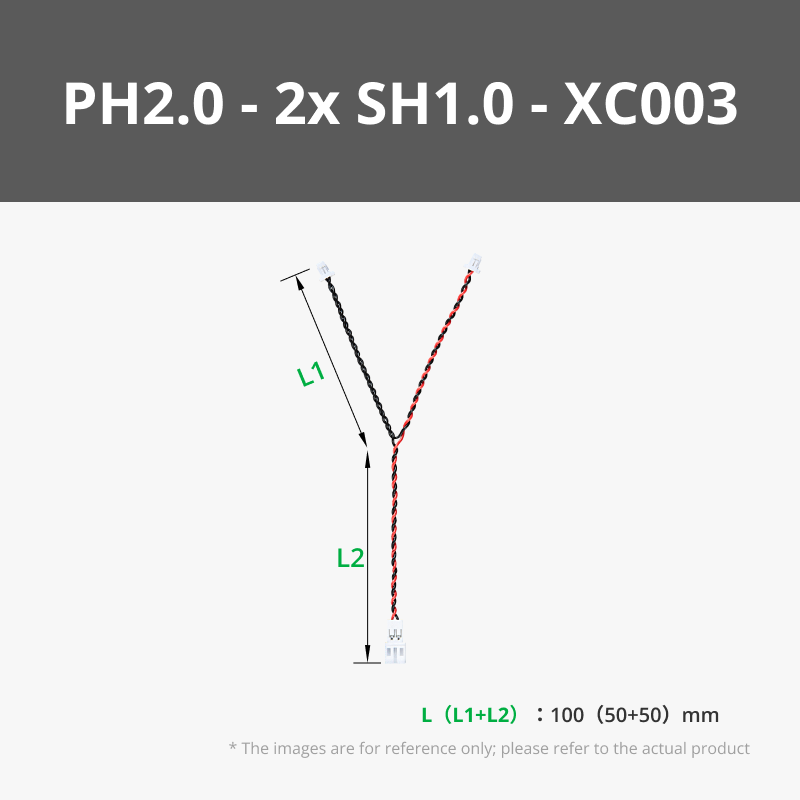
Self-Locking Button Switch with SH1.0 Connector (2PCS) - IA006
AAA Battery Spring Contact Plate with PH2.0 (1PCS) - IA008
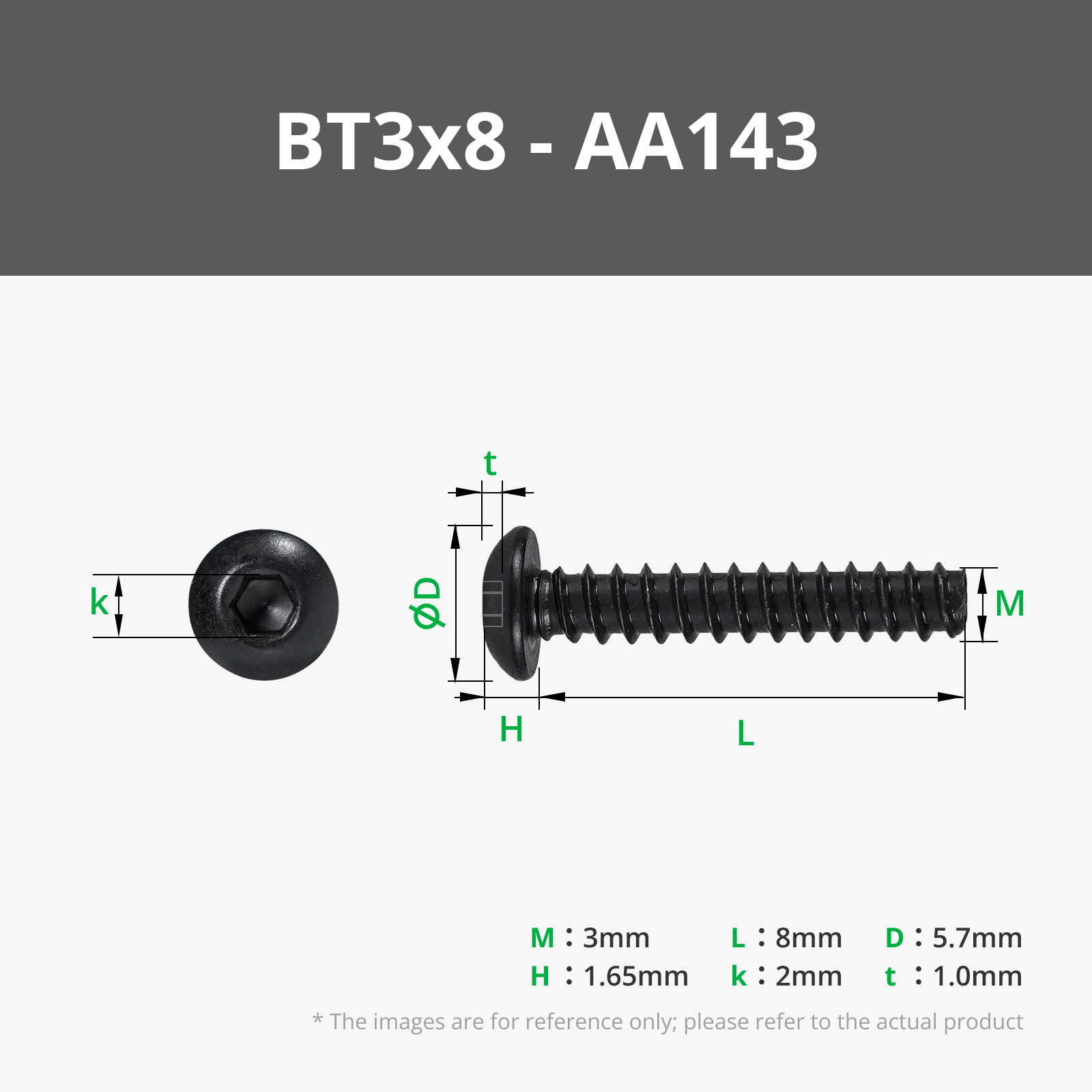
BT3x8 BHCS Self Tapping Screw (20PCS) - AA143
Endless Loop Express Kit (1pcs) - K016

Description

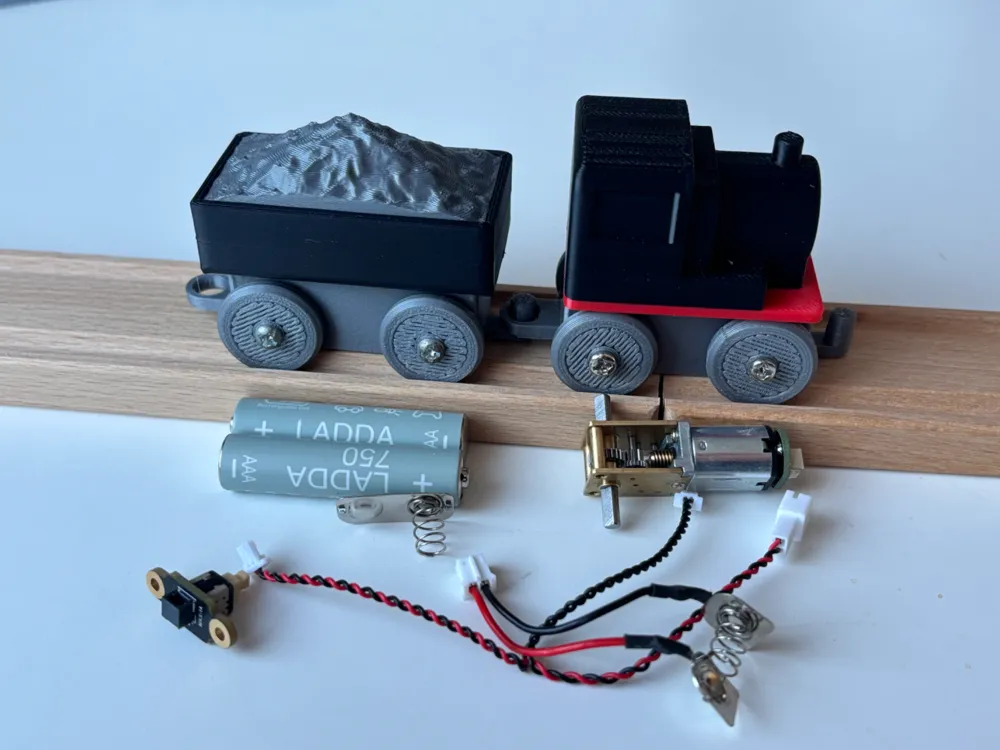

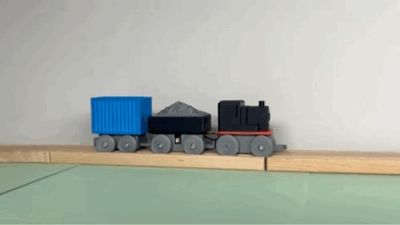
This is a motorization kit for One Maker Show's epic Tiny Train model! You don't realize how TINY that train system is until you're trying to stuff a motor into it, but it was a fun challenge!


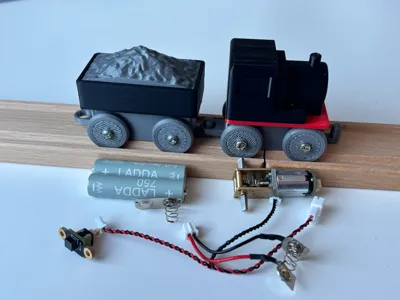
The secret is the equally tiny N20 Dual Shaft Worm Gear Motor. I used the parts included in the Endless Loop Express kit, but I will link to the supplies individually as well.


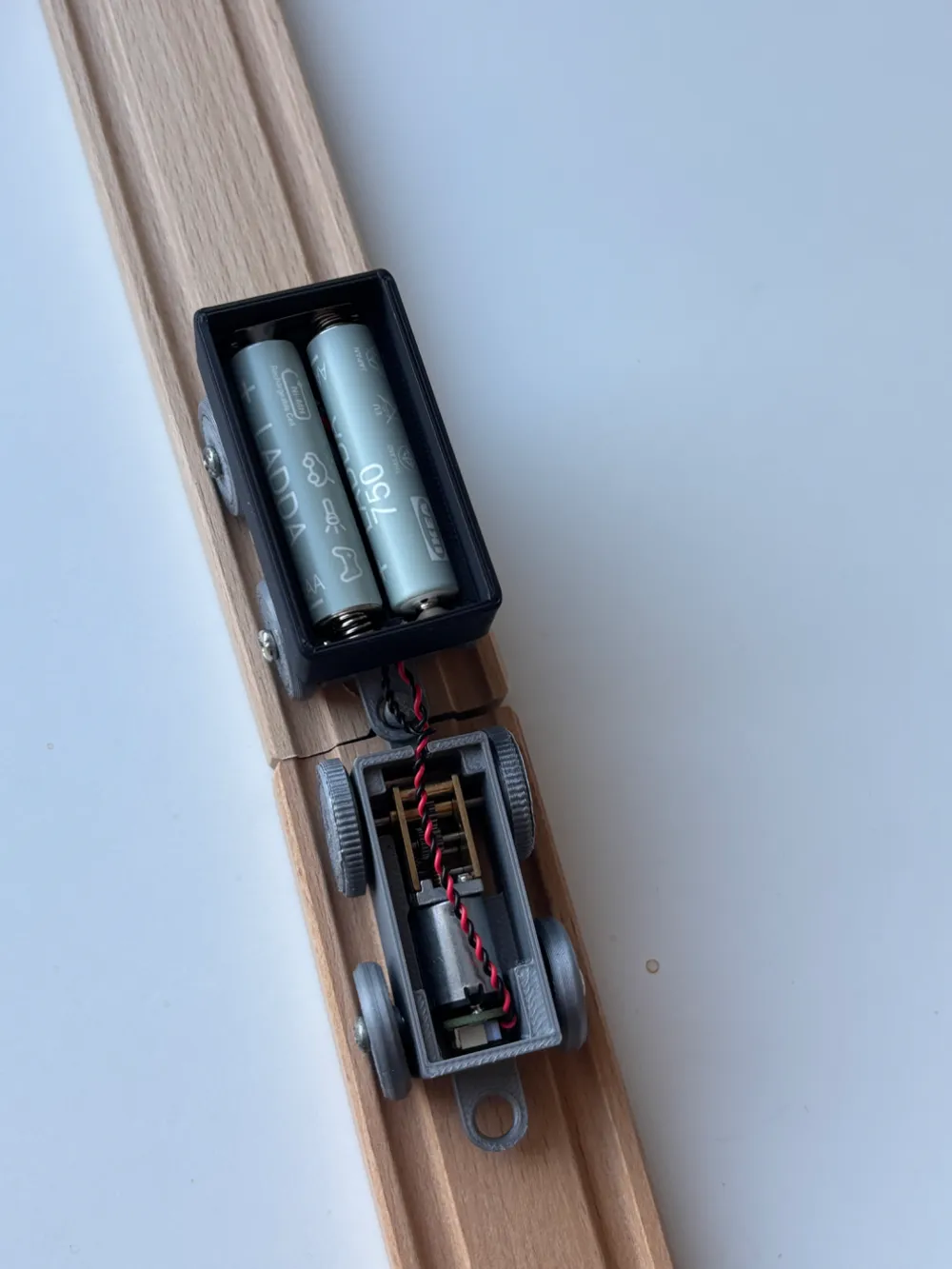
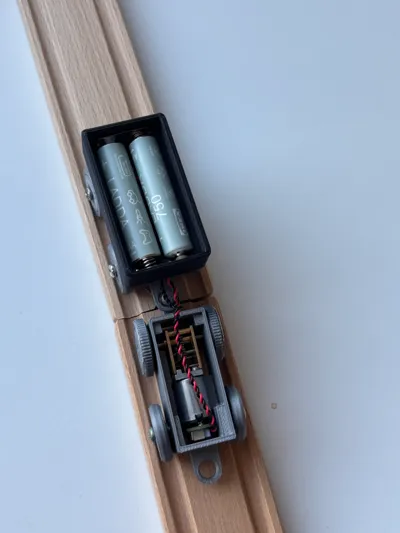
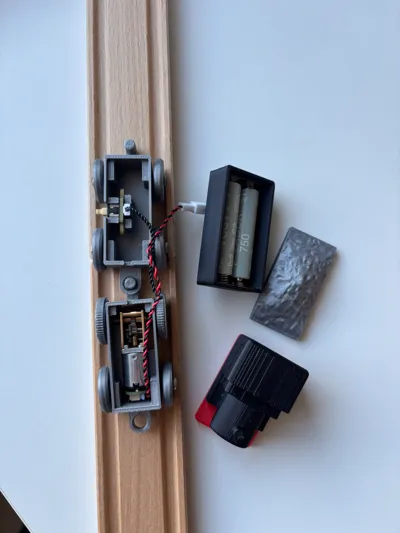
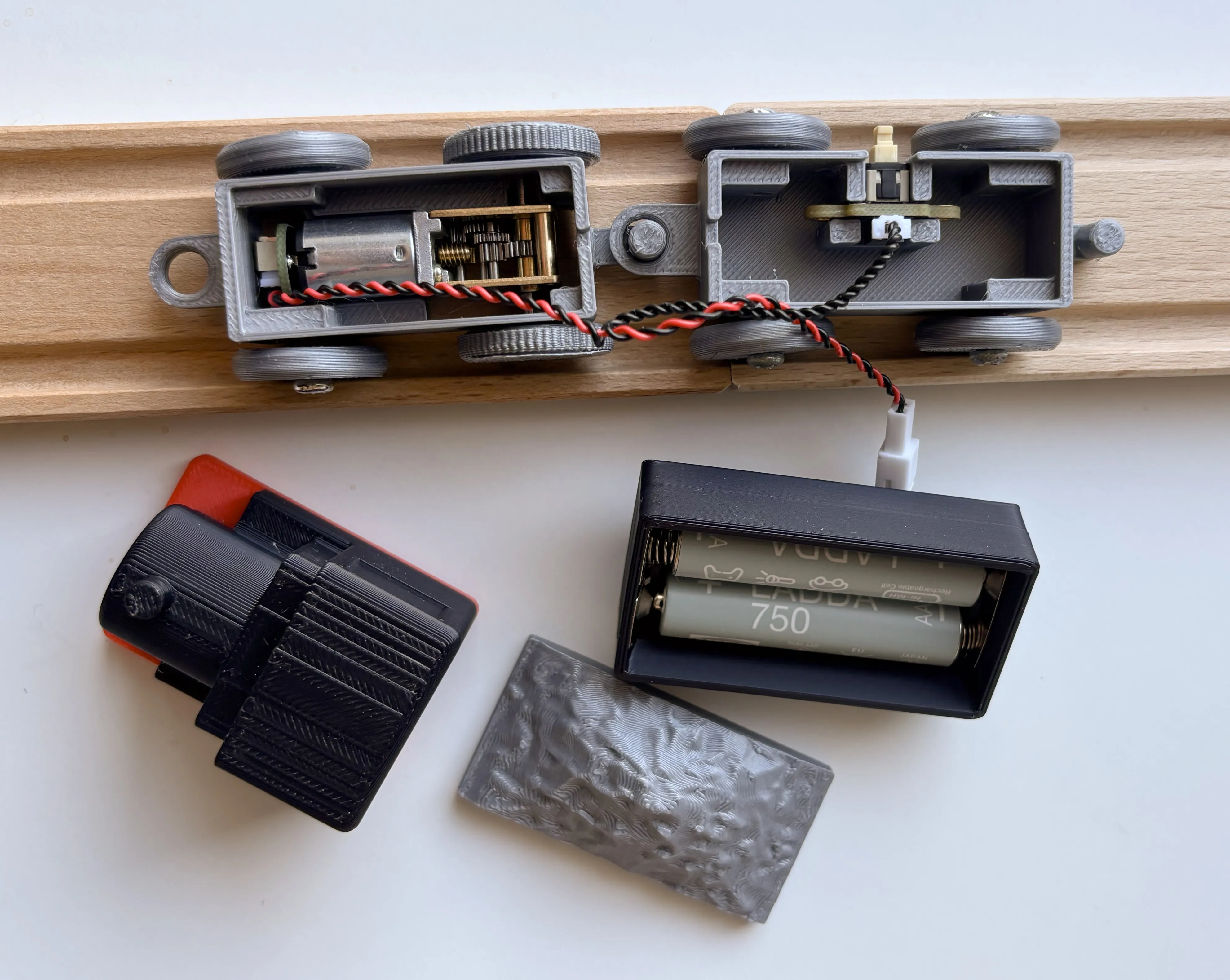
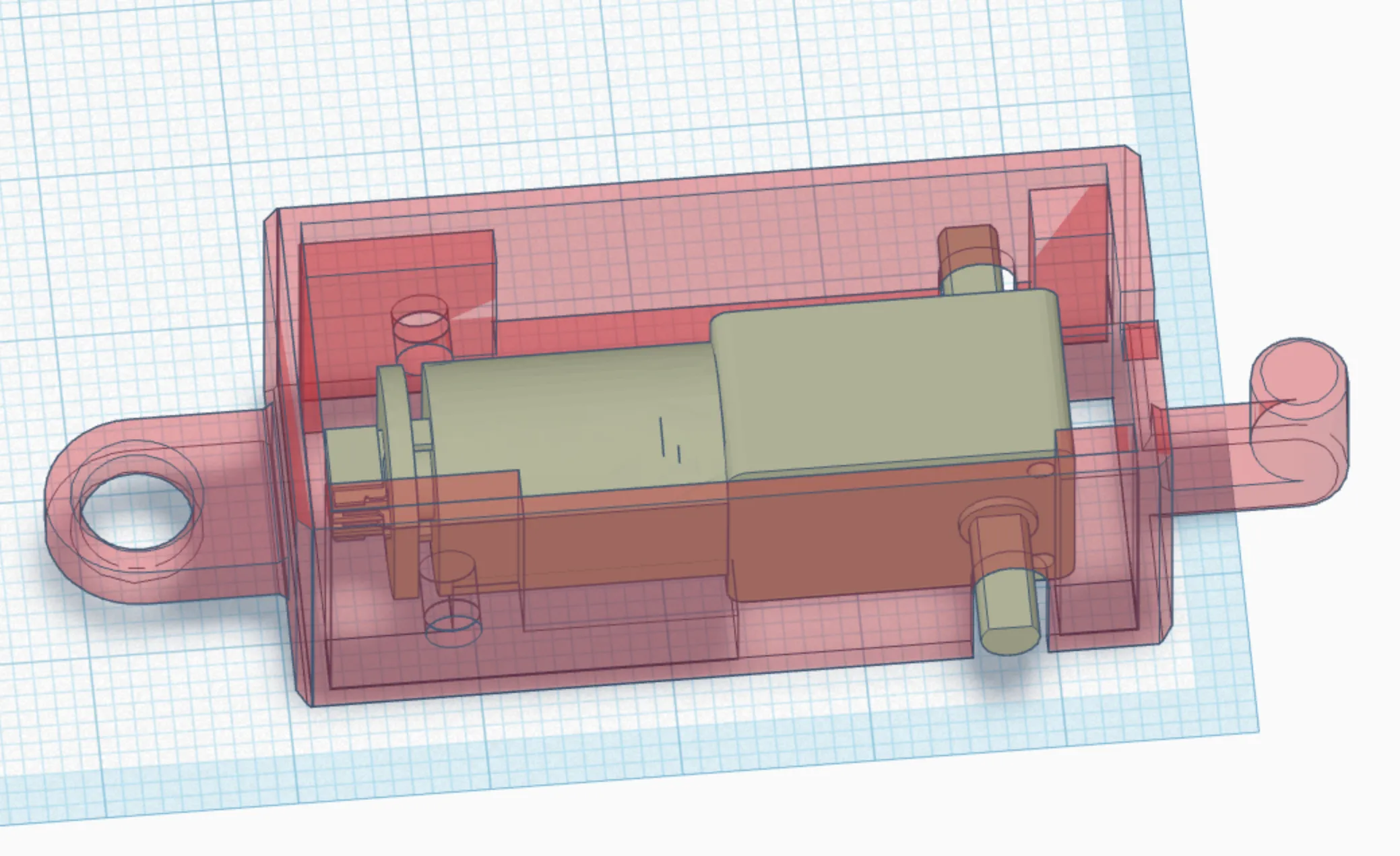
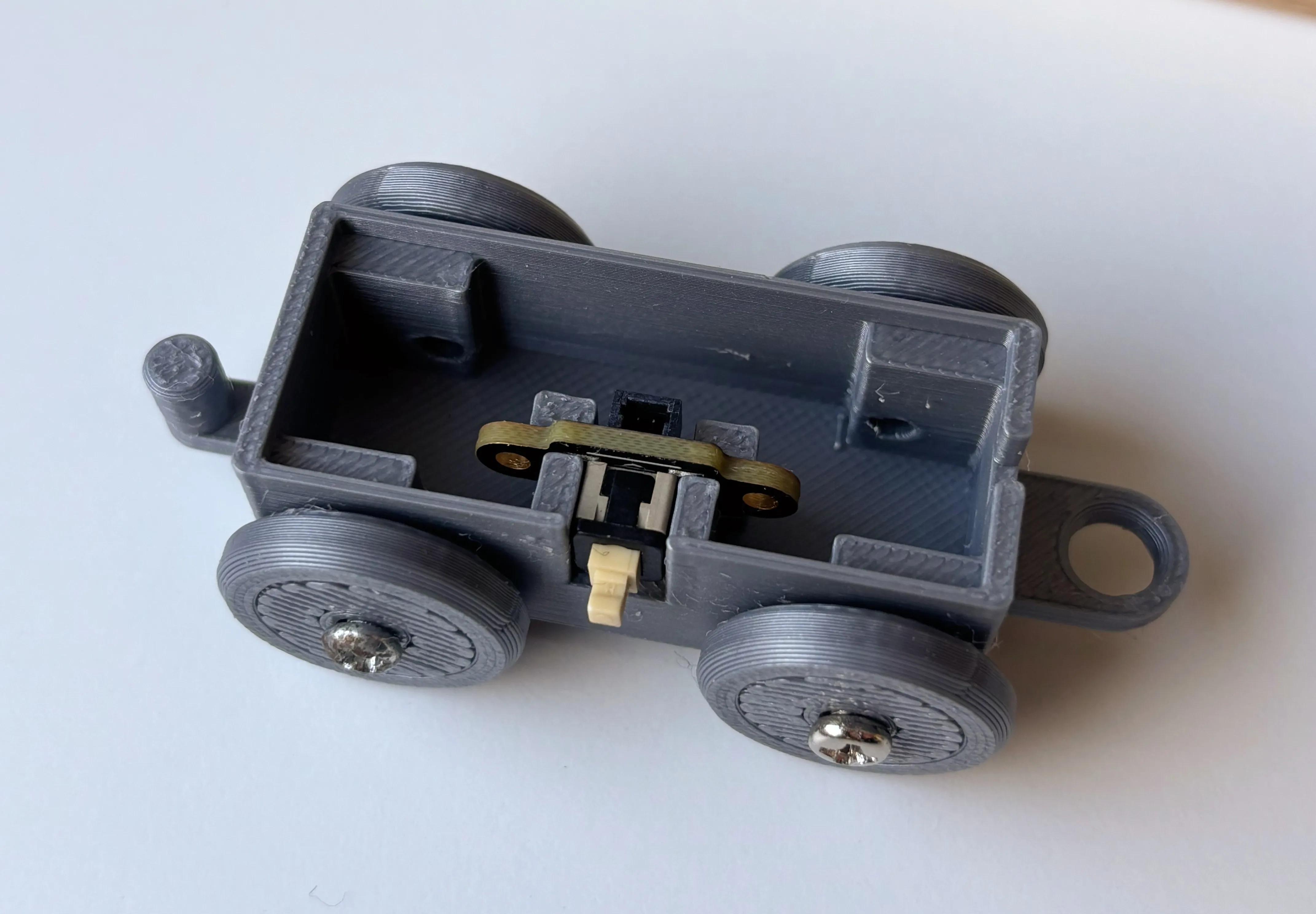
The concept is simple - I hollowed out one of the Tiny Train bases and extended the length and height just a little so that the N20 gear motor would fit inside. I designed a ridged train wheel (for traction) that press fits onto the gear motor shaft, and added a top lid so that when closed up, the box still holds your train car of choice using One Maker Show's modular system, though I recommend the old fashioned steam engine because the next car behind it will hold the 2 AAA batteries needed to power it, disguised as an extended coal car.
Assembly Instructions

For the Locomotive:

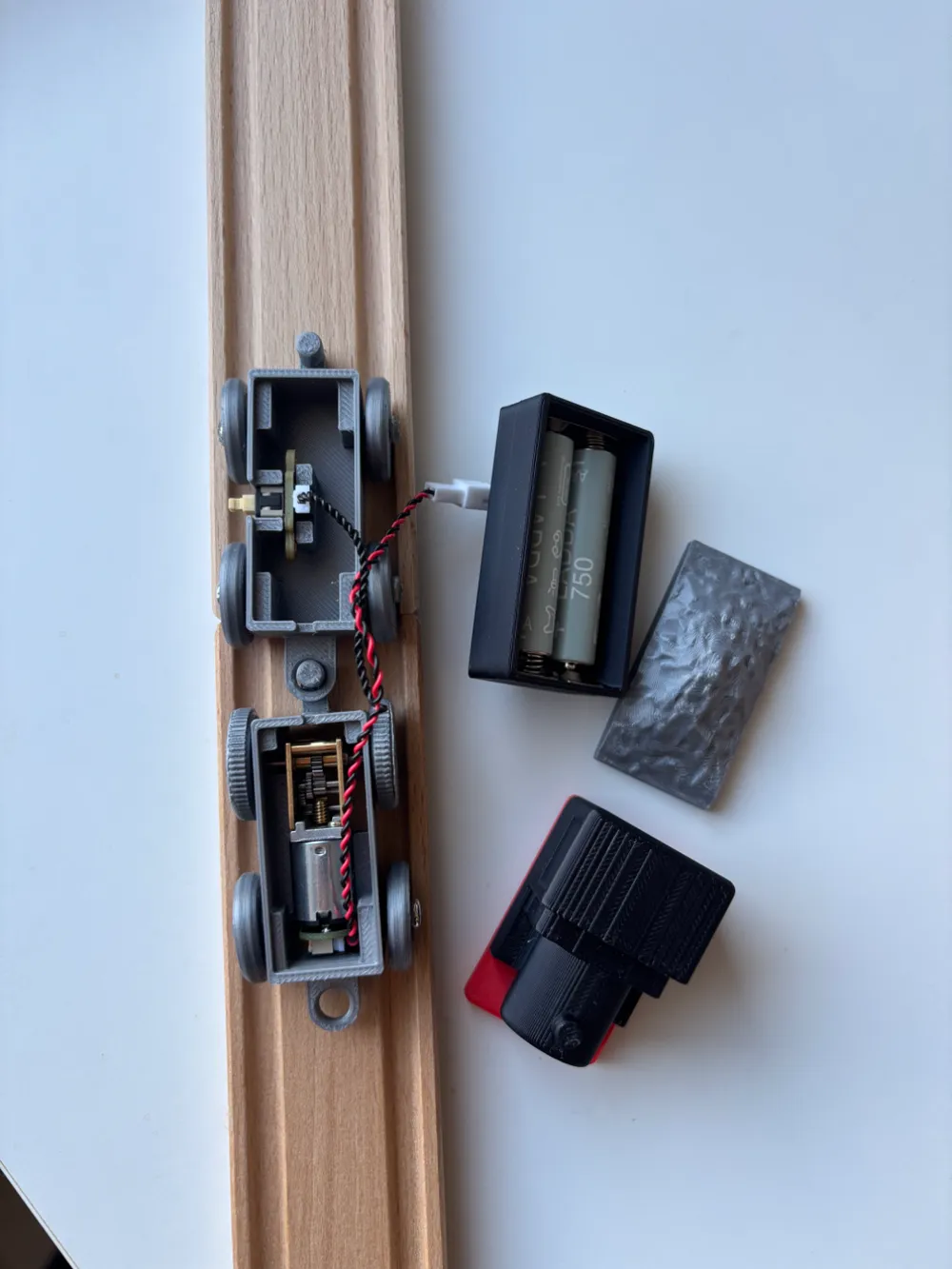
  1. Print the drive base, the drive base top, two free-spinning wheels, and 2 traction wheels.
  2. Attach the free-spinning wheels with button head M3 screws.
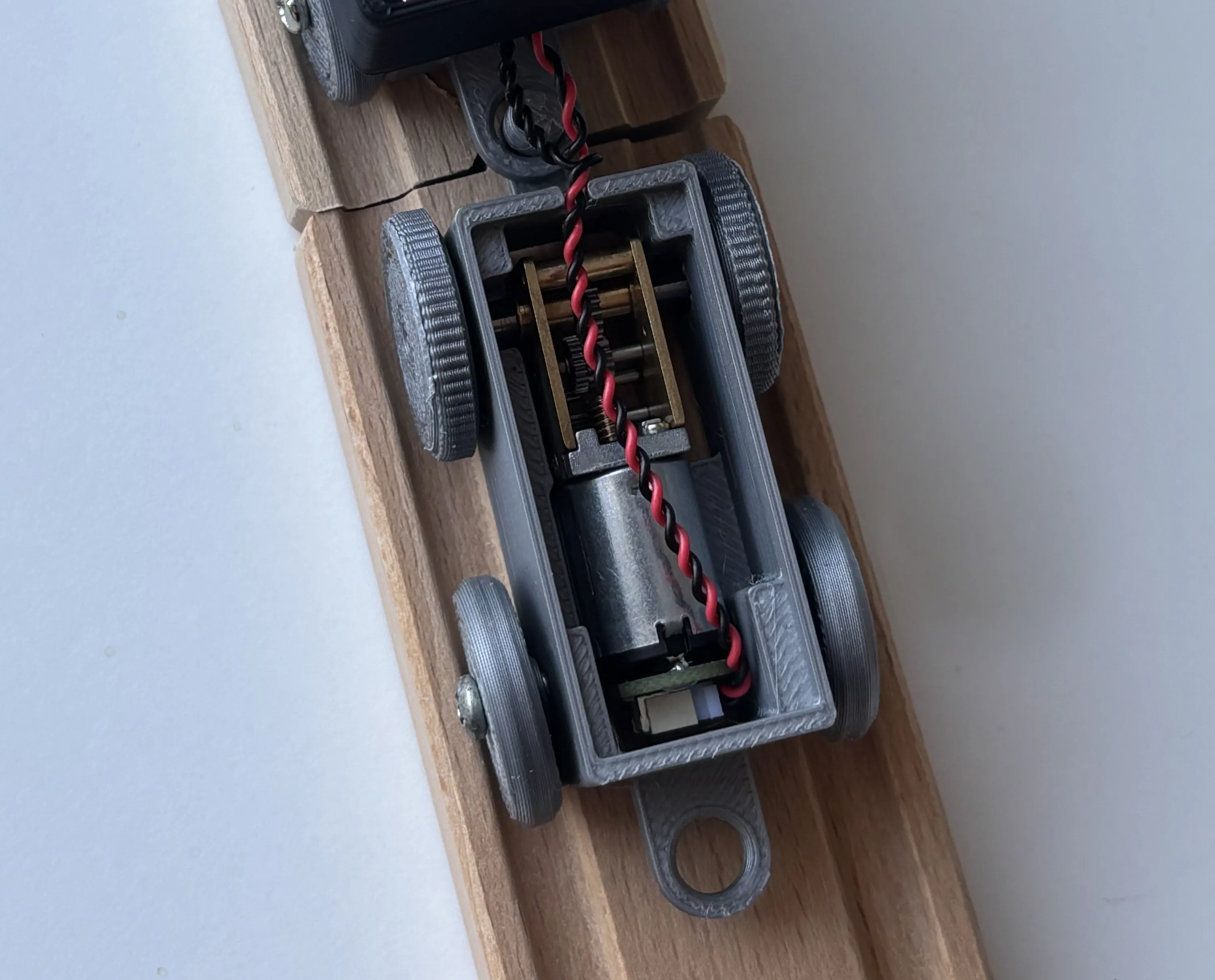
  3. Press-fit the traction wheels onto the shaft of the N20 gear motor (LA009).
  4. Drop the drive base chassis over top of the motor so the wheels fit into the axle slots, then rotate the motor and click it into place.
  5. Note: The direction of wheel spin depends on which way you drop the motor in. I recommend you give it a test run now, and if the wheels spin backwards, just flip the motor over 180 degrees.
  6. Attach the power cable (100mm Y Type PH2.0 to Dual SH1.0 Conversion Wire, XC003) and run it out the back of the drive base, through the hole above the coupler.
  7. Click the drive base top into place and add your favourite locomotive from the Tiny Train system.


For the Battery Car:

  1. Print the battery car base, the coal hopper top (which is the AAA battery holder), the coal, and four free-spinning wheels.
  2. Attach the free-spinning wheels with button head M3 screws.
  3. Drop the Self-Locking Button Switch (IA006) into the holder in the car base. Make sure the connector is facing up.
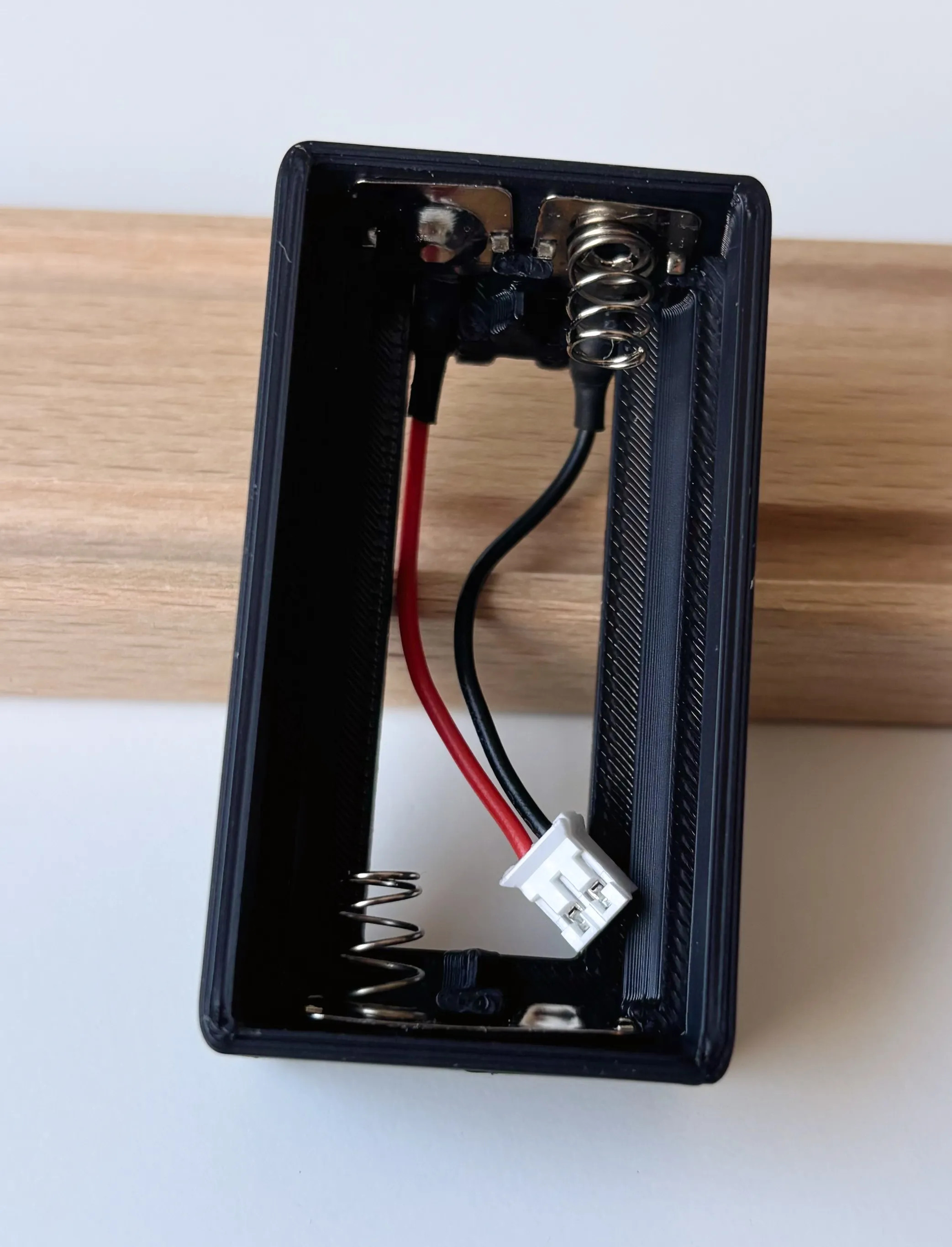
  4. Take the coal hopper top and the AAA battery terminal kit (AAA Battery Spring Contact Plate with PH2.0 Connector, IA008).
  5. Locate the end of the coal hopper with the slot for the longer AAA battery metal plate. Slide the plate into the slot.
  6. On the other side, slide the two metal terminals into the two separate slots, making sure to orient the wires pointing downwards. Also make sure that the terminals are opposite what is inserted on the other side, e.g. the spring terminals should not face each other.
  7. Install two AAA batteries and cover them with the coal.
 

Assemble Your Train:

  1. Now couple the battery car to the locomotive. Run the power wires through the slot into the battery car.
  2. Plug the smaller connector into the power switch.
  3. Plug the larger connector into the AAA battery terminal protruding down from the coal hopper.
  4. Tuck the wires into the battery car base and click the coal hopper into the base.
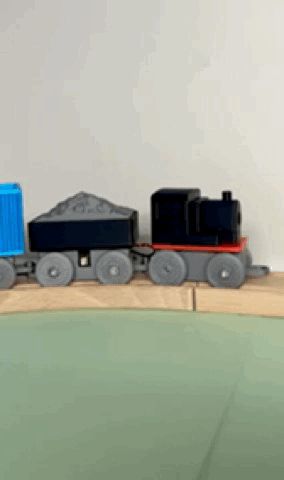
  5. Your train is now ready to run!


Enjoy your new, powered, Tiny Train!


Boost Me (for free)

I appreciate your support!

Comment & Rating (86)

(0/1000)

I modelled my own train body to go on top of this and the cab could have weights put in it. I think this will be needed as the wheel is kinda floating off the track at the moment
The designer has replied
1
Reply
Agreed, weights on the drive wheels really help. I thought about putting the battery box on top of the motor (so the batteries themselves would act as the weight) but it was too much to cram everything into one car. I also thought about developing a remix of the locomotive with empty space to put in weights.
0
Reply
hey, can you share the print files for your model? I'd really like a locomotive with space for weights, as I want to print this for my son and I don't want the train to not be able to go up ramps (my son said he'll want to do lots of ramps).
1
Reply
Replying to @Phoenix.3D :
I second this! I like this locomotive model :) please share <3
0
Reply
Are you able to handle inclines with this model? Since it's rear wheel drive, it seems to have trouble going up inclines as the rear wheels end up somewhat suspended in the air
The designer has replied
0
Reply
Hey! I didn't try inclines to be honest because I don't own any (although with so many track models to print, I suppose that's a solvable problem). I just edited the locomotive base to create a FWD version, I'll give it a quick try and then post it.
(Edited)
0
Reply
Thanks! Tomorrow I'll try to print with better quality filament and see if it works better as well. It kept stopping unless I pressed the back of the train I was just using my cheap stuff at first.
1
Reply
Replying to @j2sun :
I made the FWD version and found that it isn’t as good at pulling the train along in general, due to the weight distribution. With the RWD version the traction wheels are at least close to the AAA battery car which is where much of the weight is, but with FWD the wheels are farther away and spin more. Maybe if we could add weight to the locomotive? The best scenario would be to make a single car that has the batteries on top and the motor at the bottom, then the weight would help press the drive wheels onto the track and give it traction. Bigger wheels and more ground clearance would help, but then it would look too big compared to the rest of the tiny train. I also considered a grooved version of the drive wheels where I could slip an elastic band or rubber O ring around it, for better traction. I’ll keeping trying things but it may not be as easy as I hoped.
(Edited)
0
Reply
The idea is great but it still needs some fine-tuning, just like this point with the wheels. so that the wheel has a good grip on the drive rod, I simply reconstructed your wheel and added an extension. this way the wheel has a good grip on the drive rod. Maybe you will design something like this beautifully?
Show original
designer
1
Reply
so the connection holds but it doesn't solve the second problem with the weight
Show original
0
Reply
Boosted
nice, my version come with a remote controller
0
Reply
What kind of controller board is this? What type of controller will I be using? thanks
0
Reply
Boosted
Print Profile
0.2mm layer, 2 walls, 15% infill
You have spent a lot of effort into it, thanks for that and take a boost! As I created a own base and own wheels, I wanted to adjust your base, but didn't get it so smooth as yours. Thanks for sharing!
The profile uploader has replied
0
Reply
thank you!
0
Reply
I like this model, unfortunately I just got the parts (from Bambu) and the wheels don't fit tightly on the motor shaft. Has anyone experienced this?
The designer has replied
designer
1
Reply
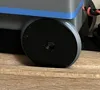
Hi! You're the first person to provide feedback actually, and I really appreciate it. I found that the wheels fit pretty tightly on my model but there's always differences in everyone's printers. I did shape the groove to match the shape of the motor shaft (at least in the CAD model), see attached photo. What happens if you print the two drive wheels sized down to 99% size, does that help? I made my wheels a little bigger than One Maker Show's original wheels, so hopefully there's a little leeway there. So sorry about that, I hope you're able to get this working! Thanks for giving it a try!
1
Reply
Replying to @k3vin :
I printed the Tiny Train "Studded Wheel" yes. I measure the N20 output shaft at 3mm, which I think agrees with the Bambu engineering data sheet drawing. However, in PrusaSlicer the studded wheel model has a hole diameter of 3.3mm. I scaled it down to 90% and it does fit the shaft but at that scale the outer rim diameter is too small to reach the bottom of my Brio track. Otherwise the N20 seems to fit very nicely in place, the way it snaps into the drive base is very satisfying.
designer
1
Reply
Replying to @user_2722290314 :
thank you! let me check my model to make sure I didn’t do something silly with the uploaded files. I appreciate the feedback and I hope you are able to get this working.
1
Reply
Print Profile
0.2mm layer, 2 walls, 15% infill
Finishing assembly, but it looks very good
Show original
0
Reply
Print Profile
0.2mm layer, 2 walls, 15% infill
profile
1
Reply
Can you make it so an O-ring can be fitted to the drive wheels Regards Berthel
Show original
3
Reply
I don't see the parts for the locomotive shown on either of theprintplats
(Edited)
The designer has replied
designer
1
Reply
correct, these are the motorized bases only. You can get the locomotive from One Maker Show’s Tiny Train project: https://makerworld.com/en/models/1035392#profileId-1019053 Just print my motor base and wheels and drop their locomotive onto it, they should all fit together.
(Edited)
1
Reply
thank you very much for the link.
1
Reply

License

This user content is licensed under a Standard Digital File License.

You shall not share, sub-license, sell, rent, host, transfer, or distribute in any way the digital or 3D printed versions of this object, nor any other derivative work of this object in its digital or physical format (including - but not limited to - remixes of this object, and hosting on other digital platforms). The objects may not be used without permission in any way whatsoever in which you charge money, or collect fees.