
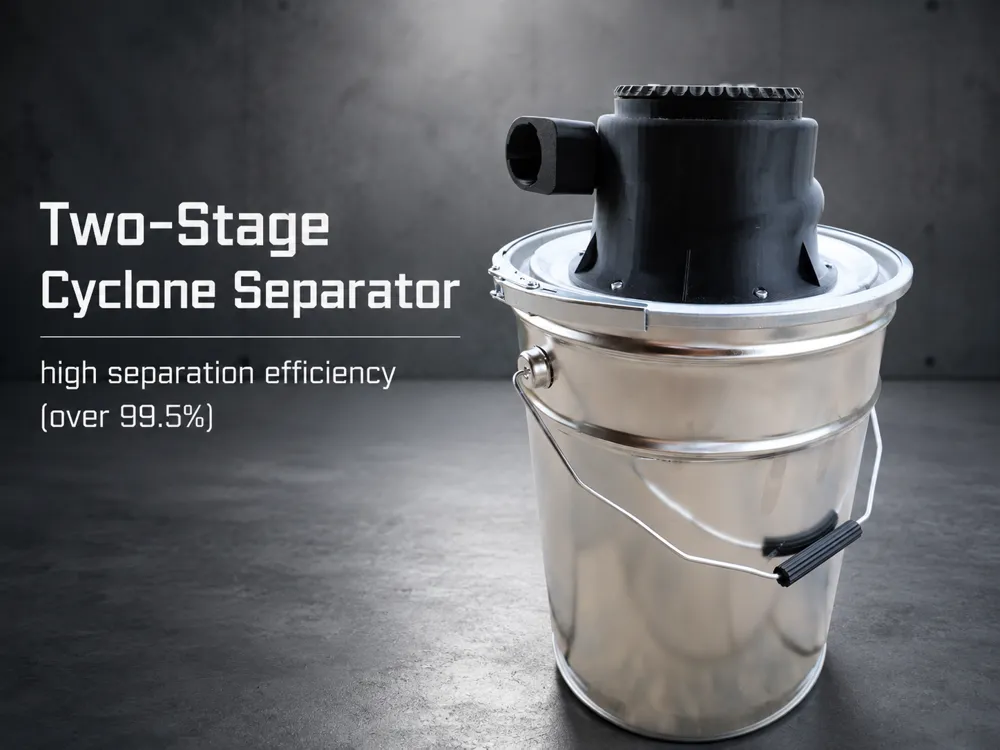
Two-Stage Cyclone Separator
Print Profile(1)
Description
Two-Stage Cyclone Separator
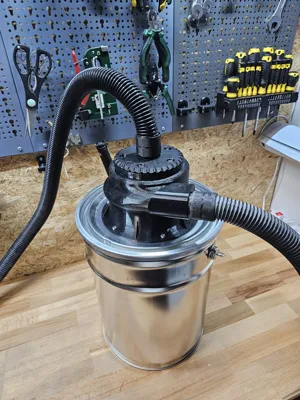
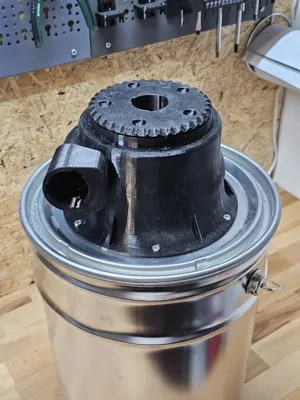
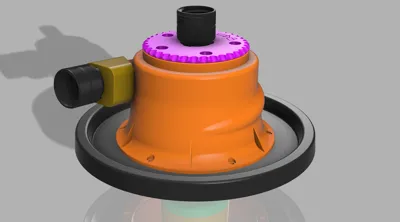
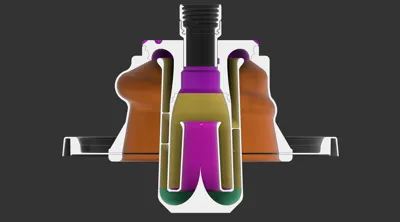
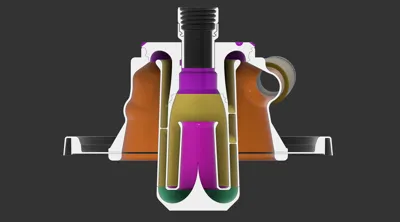
This model is a modified version of the original SL_ST TWO-STAGE CYCLONE SEPARATOR-02 created by SL_ST, redesigned to improve reliability when collecting larger or irregular debris particles and to add compatibility with the OSVAC hose system.
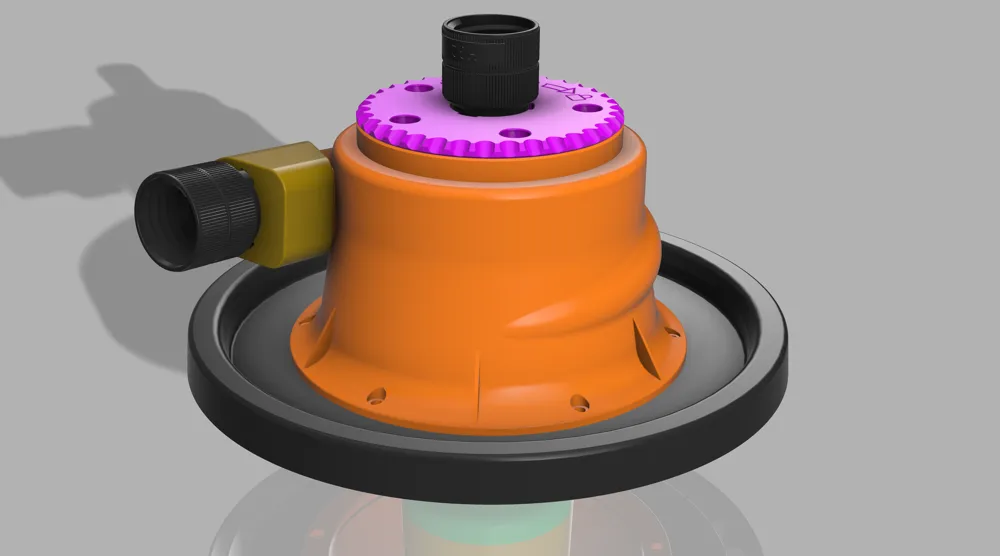
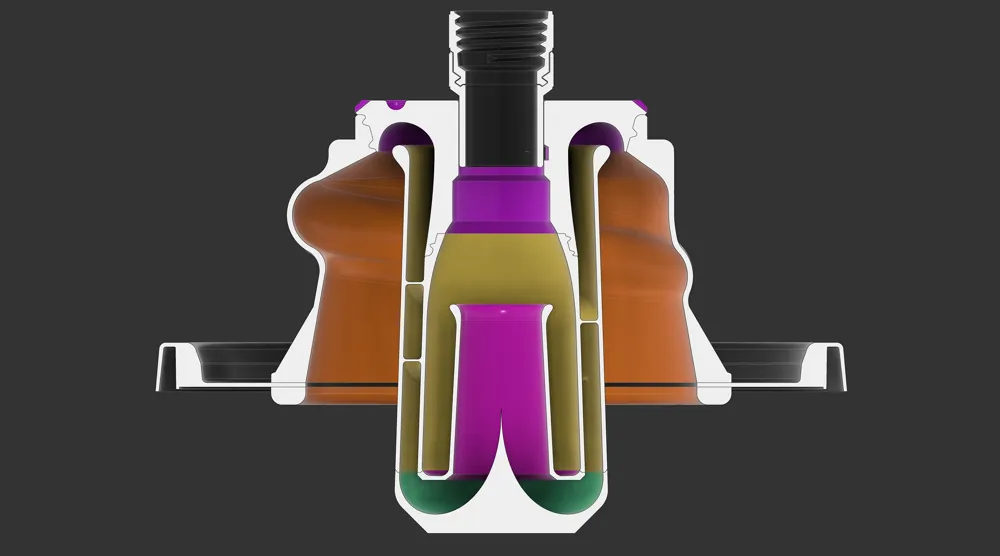
The main modification is increasing the gap between the outer shell and the internal cyclone core. In some situations, debris could become trapped between these parts, which occasionally required cleaning the separator or lifting the inner section to allow the collected material to fall back into the collection bucket.
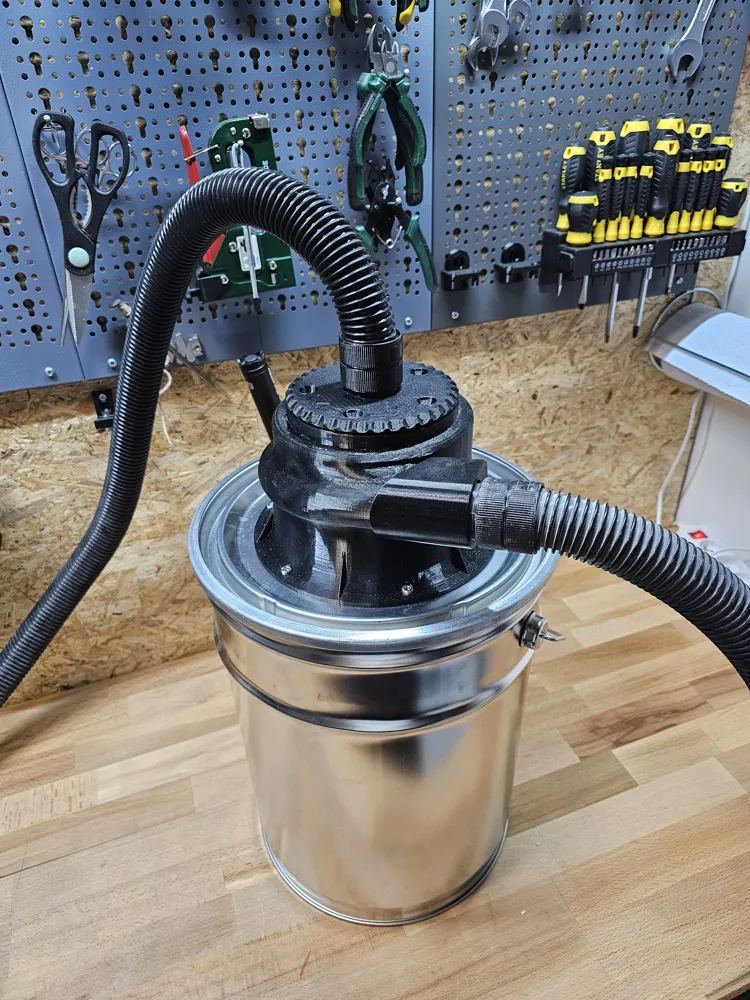
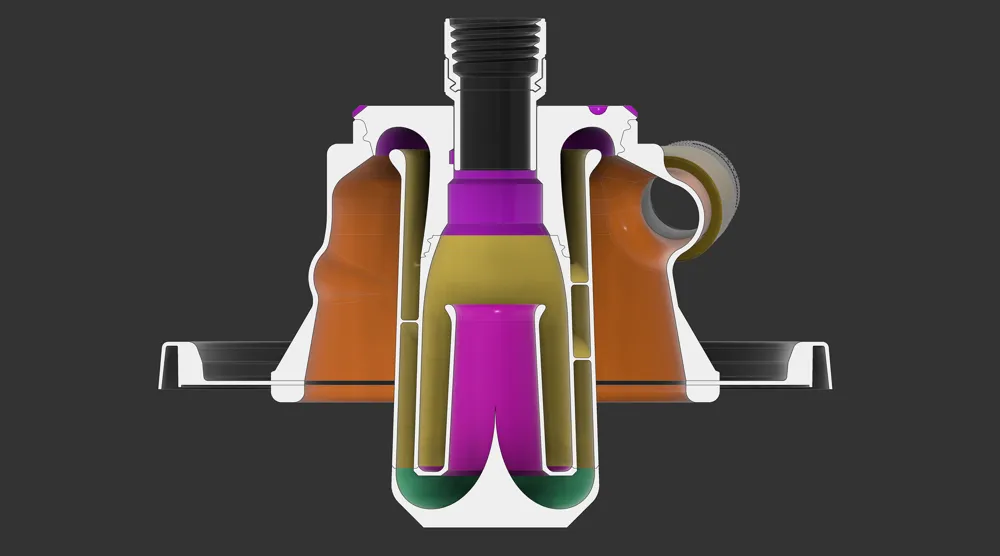
The inlet and outlet connections were also redesigned to be compatible with the OSVAC system, allowing easy connection of various vacuum hoses, adapters, and workshop accessories.
Here is a link to the adapter I used: osVACNeo 32mm Swivel Adapter (M32-H32)
Compatibility
The model was modified for 32 mm inner diameter hose systems. During testing, I used a Parkside PWD 30 C1 vacuum cleaner.
Printing Recommendations
I recommend printing the threaded parts from different material combinations (for example PLA and PETG) to reduce friction and make disassembly easier. When printing all parts in PETG, I occasionally experienced difficulty separating components after they had been tightly screwed together.
Assembly
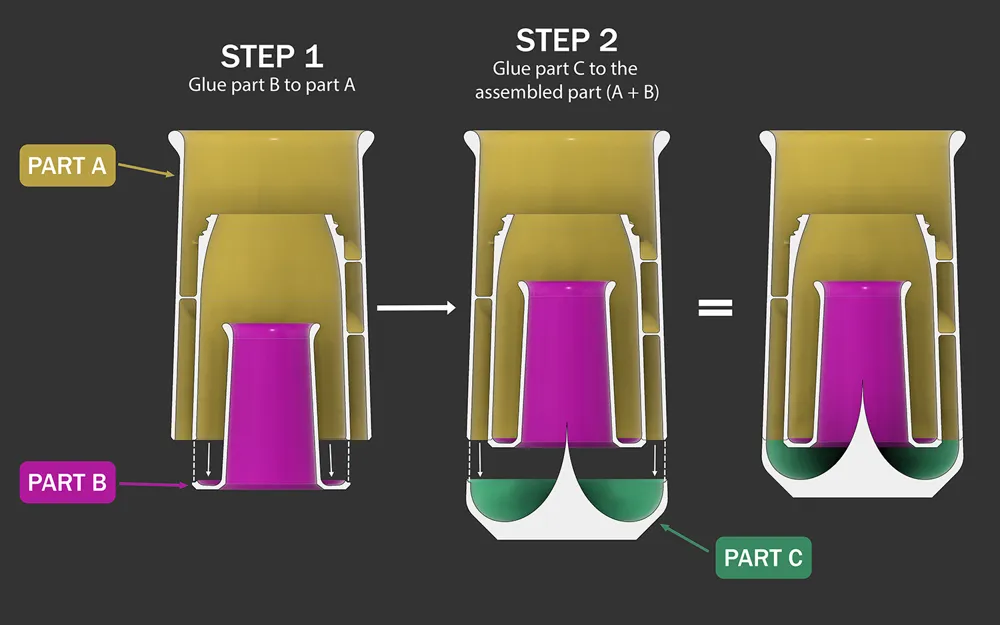
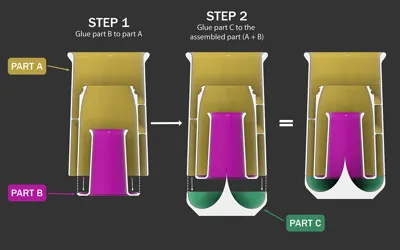
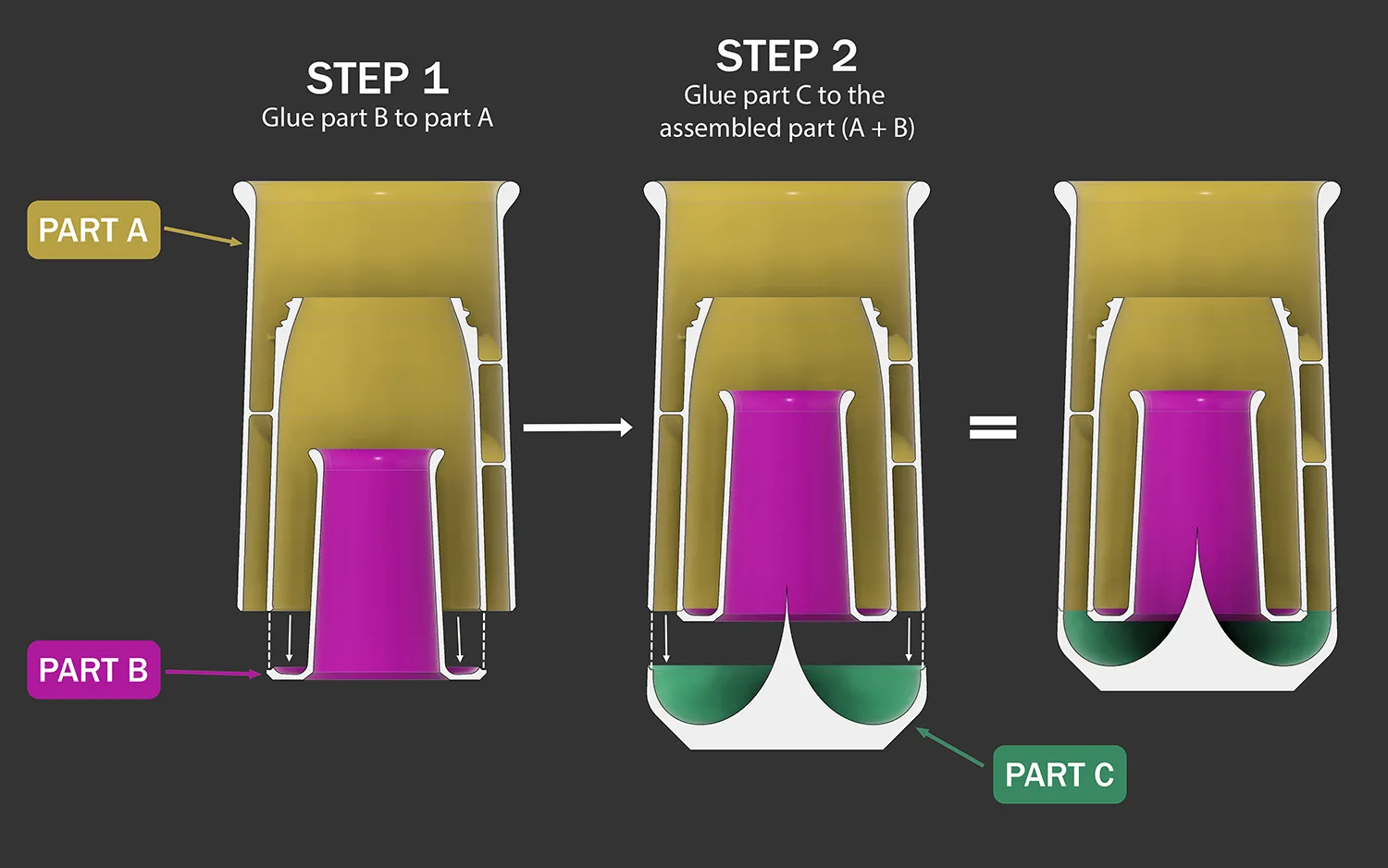
The parts CYK-03_CorePartA, CYK-03_CorePartB, and CYK-03_CorePartC must be glued together. First, glue CYK-03_CorePartA and CYK-03_CorePartB together. Then glue CYK-03_CorePartC onto the assembled unit. I used Pattex Contact Adhesive for bonding the parts.
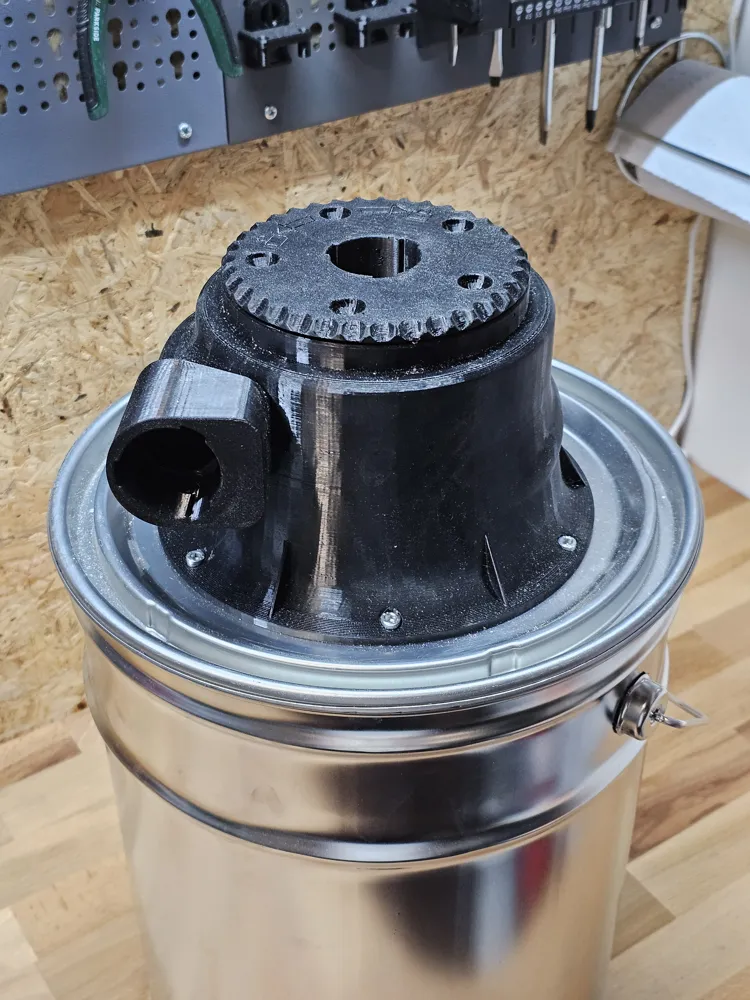
The cyclone is designed to be mounted to a collection container using a mounting ring, which secures the unit to the lid with screws.
- 6 × M5 socket head cap screws, 15 mm length (DIN 912)
- 6 × self-locking nuts
- 1 × 15-liter metal bucket with a snap-on lid
I also tested the design with a rigid 12-liter plastic bucket. However, the snap-on lid was significantly more difficult to open and close, making handling less convenient compared to the metal bucket solution.
Performance & Testing
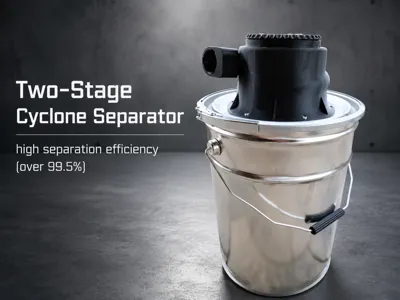
Repeated testing showed very high separation efficiency (over 99.5%) across multiple test runs:
- approximately 596 g / 600 g collected for sawdust generated by a cordless hand planer
- 599–600 g / 600 g collected for heavier debris such as filler and sand
This remix is based on

License



Comment & Rating (10)