Search models, users, collections, and posts
ozarkexpeditions
@ozarkexpedition
7.5 k
84.2 k
88.1 k
32.9 k
Social Media Links
Bio
Bringing family-friendly interactive designs to the community with a focus on detail. Print our fun games, toys, and functional designs that are built to last and engineered to entertain. Get a commercial license to sell physical prints of our designs here: https://patreon.com/Ozarkexpeditions
Achievements

MakerWorld Guardian
Active more than 20 days out of last 30 days UTC time

Contest Winner
Won 9 model contest awards.

Featured Creator
14 models are featured by MakerWorld.
Maker's Supply Contributor
1 model with Maker's Supply Model Kit achieves 500 successful prints.

Popular Model
1 model more than 5,000 successful prints.

Popular Creator
More than 1,000 followers.

Stellar Reviewer
Rate or Comment 318 different models
Pioneer Maker
Print successful 107 different models and 2,279 hours
Post Stars
22 posts featured by MakerWorld
Recent Article
Building a New Marble Run with a Unique Lift
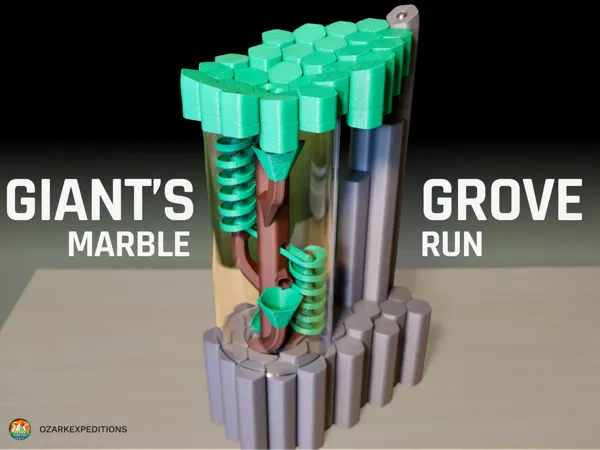
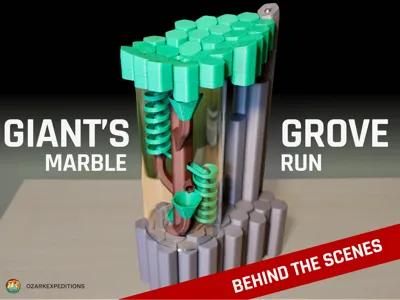
Building a New Marble Run with a Unique LiftWhen MakerWorld selected us, along with several other talented creators, during the last #KitChallenge for the #RechargeablePowerKit, we knew we wanted to use the opportunity to push ourselves into something we normally would have avoided. https://makerworld.com/en/models/2698922-giant-s-grove-marble-run#profileId-2991697  Marble runs have always been one of our favorite things to design, but we didn’t want to create another standard marble lift with a giant printed screw pushing marbles to the top. We became obsessed with the idea of using a marble pump system instead, even though they’re notoriously difficult to get working consistently.  One thing we’d encourage other makers to do is participate in those challenge discussions and drop ideas on the posts when they come up. Opportunities like this are really fun because they can push makers into experimenting with concepts they may never have tried otherwise.Inspiration from NatureOur kids have been completely into Minecraft lately. We kept thinking about blocky landscapes and terrain generation, but we didn’t want this to feel like just another square world. That led us toward thinking about hex geometry.  We became fascinated by the natural hex columns found in Giant’s Causeway in Ireland. The shapes almost feel artificial when you first see them, but they’re completely natural formations created by cooling volcanic basalt. When designing the rock formations, we initially tried manually varying the column heights, but it still felt too artificial. Eventually we wrote a small script to help randomize the rock heights so the landscape felt more organic.Credit: Pete Flynn - Google MapsOnce that clicked, we started carrying the hex language through the entire design. The stone base, the tree trunk, the canopy, and even the track structure all follow variations of that same geometric pattern language so the whole model feels connected together.  We wanted it to feel like a strange magical tree growing directly out of a hexagonal rock formation.The Marble Pump ChallengeThe hardest part by far was the lift mechanism.  We originally found inspiration while researching unusual marble lift systems and came across some incredible wooden marble pump builds on YouTube. One of them especially stuck with us because of how elegantly it moved marbles upward without relying on a large auger system.Credit VEProject1: https://www.youtube.com/watch?v=zCWnoSamN7gThat started a long process of experimentation. There were a lot of failed iterations trying to figure out the geometry, the timing, the angles, and how to reliably move marbles upward without jams. Tiny angle changes completely changed the reliability of the system.Many test to get smooth motion and marble movement. Eventually it started to click. Once the geometry finally came together, the system became surprisingly reliable. Even better, the Rechargeable Power Kit’s N20 motor had more than enough power to continuously lift the marbles through the system. Even though the base on this one is large, one of the things we’re most excited about now is how compact this style of lift could be compared to large printed screw elevators. We can already imagine future marble runs using this same concept in completely different ways.Designing for Future ExpansionAnother idea behind Giant’s Grove was designing it more like a platform than a single marble run. The acrylic tube section was intentionally designed so the internal flow paths could eventually become interchangeable. We plan to release the STEP file soon for the central tree trunk for anyone that wants to create their own designs for the marble path. Our hope is to create alternate internal modules in the future so makers could swap out entirely different marble flow systems while keeping the same outer structure.  That idea of modularity keeps making its way into our projects lately, and we think there’s a lot more room to explore there. Happy printing!
Behind the Scenes of PlayGrid
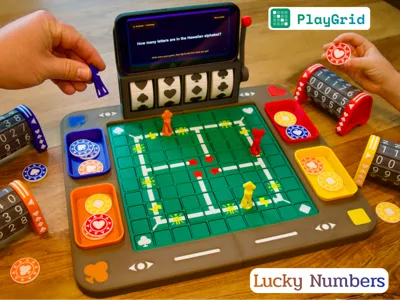
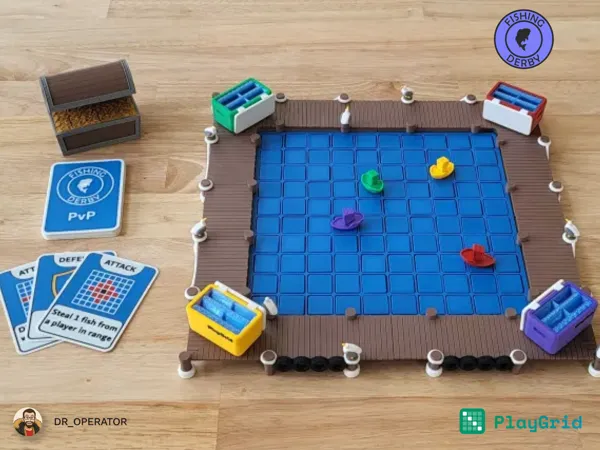
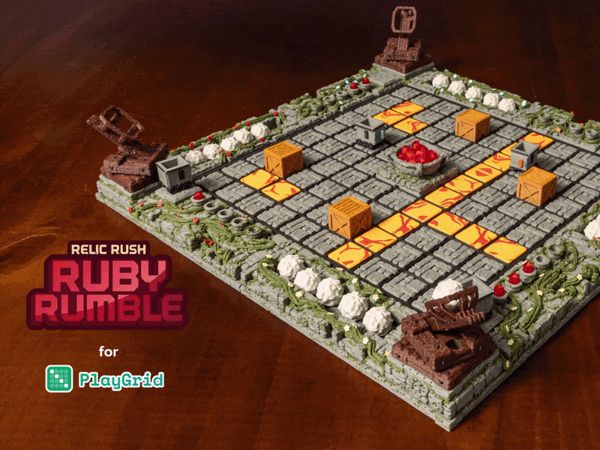
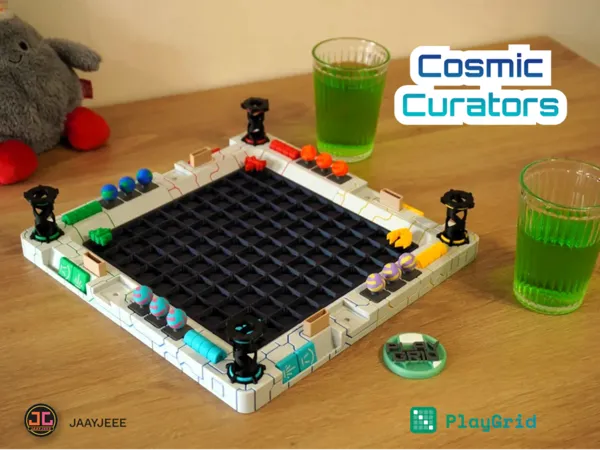
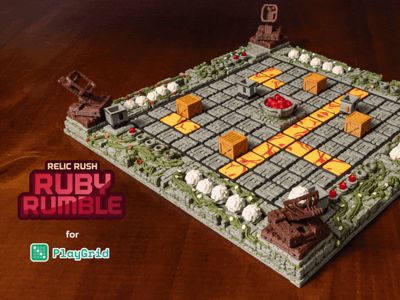
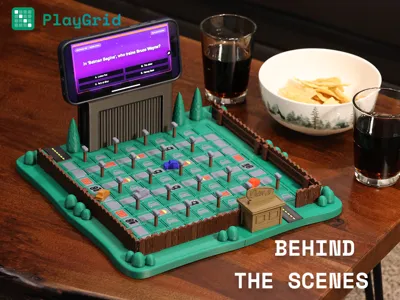
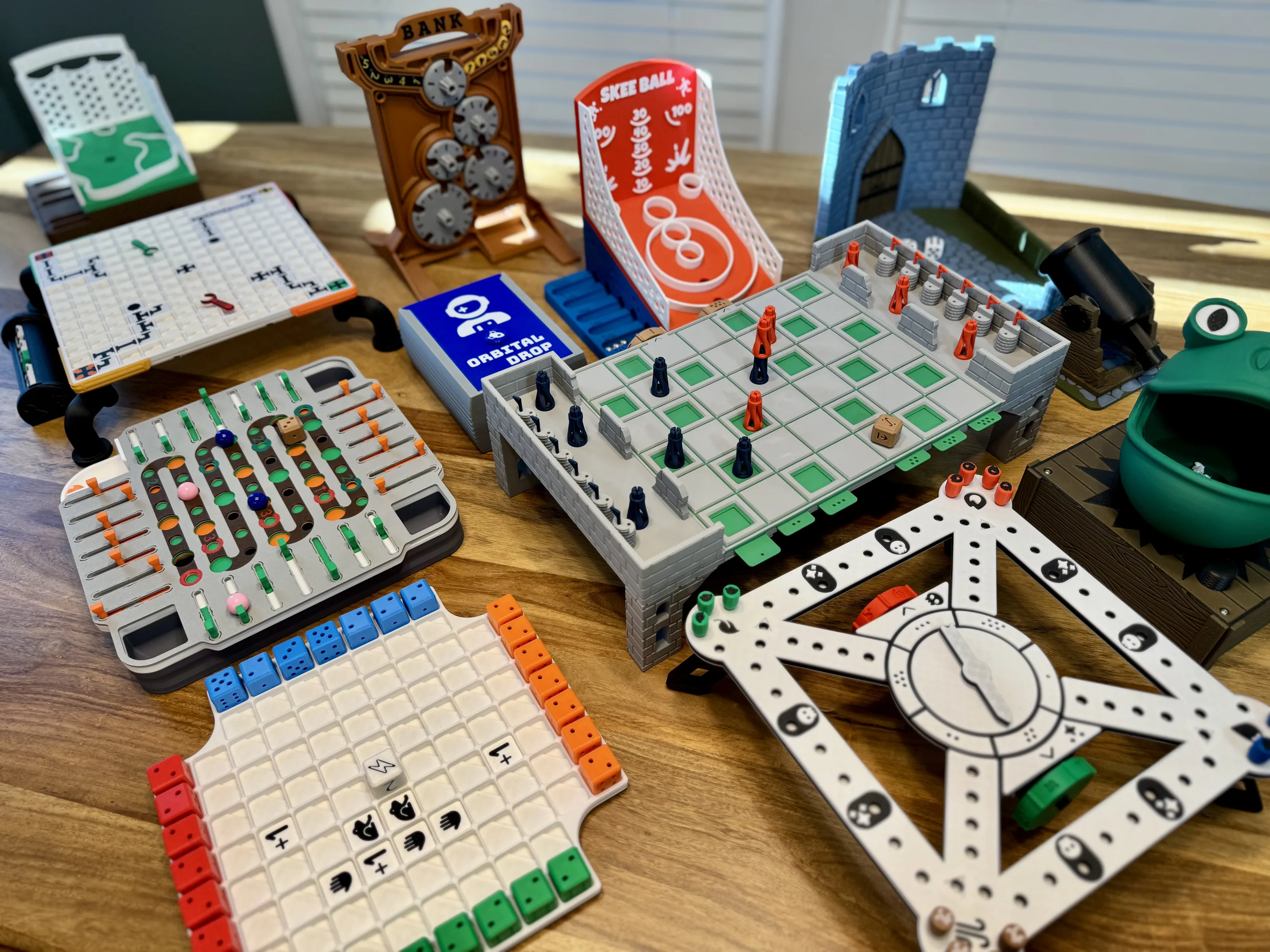
Behind the Scenes of PlayGridWe’re 10 days into the PlayGrid crowdfunding campaign, and the response has been incredibly encouraging. The kind words, thoughtful messages, and creative encouragement from backers have energized us more than we expected. Several of our top supporters have already shared ideas for future waves and new directions the system could take, which is exactly what we hoped would happen. When people start imagining what they could build on top of the grid, it shifts from being just a board to being a platform.  One message in particular stood out. A supporter shared that a young aspiring game designer in their family had already created a 10x10 grid game on paper. They backed PlayGrid because they saw it as a way to help turn that idea into something tangible and expandable. That story hit home for us. This project is not just about releasing finished games. It is about giving people a foundation they can build on, modify, and evolve over time. If you haven't checked out the project yet, you can learn more about it here: https://makerworld.com/en/crowdfunding/194-playgrid-modular-board-game-experience  We’re deeply thankful for the early momentum. We have our eyes set on the 10k milestone, which allows us to accelerate the next wave of games and expand the system further. No pressure, just progress. We are building carefully, refining constantly, and excited to keep growing this alongside the community.Meet the Designers Behind The CampaignI was really close to launching PlayGrid a few months ago, but after some deep reflection I realized that it was missing something, collaboration. That's when we reached out to some of our favorite designers to see if they wanted to be a part of what we were building.  There's a really good chance you've seen many of these designers around on MakerWorld, but I wanted to take a moment to say a few words on why I think their design skills are awesome.  @JaayJeee brings the playful side of making to the table with creative concepts that feel approachable and fun right away. Whether it’s the clever details in his Cyberbrick factory or the playfulness in the Sink’n Ships or fidget models, his designs don’t take themselves too seriously while still being executed at a top level. That’s a big part of the PlayGrid spirit.@MaKim’s work often feels like a complete world, not just a single model. Projects like Relic Rush and his 360 marble run show how much thought he puts into how parts interact and how a model comes together as a whole. That systems-level thinking translates really naturally into PlayGrid-style games.What stands out about @Dr_Operator is how much character his designs have. From his incredibly fun Docobots to innovative games like Are You Chicken? His models feel expressive, funny, and a little chaotic in the best way possible. They’re the kind of builds that immediately draw people into the hobby of 3D printing.Prototyping the GridWe’ve used grid systems before, but they were always designed around a single game. Projects like Tumblin Tactics and Wrench Racers had custom bases tailored specifically to their mechanics. They worked well for what they were built to do, but they were not designed to become a shared platform. With PlayGrid, the goal shifted. We wanted one foundation that could support many different games, not just one idea at a time.From the beginning, we focused on maximizing compatibility across Bambu Lab X, A, H and P series printers so the largest number of makers could participate. The 10x10 layout balances playable space with practical print size. We iterated on wall thicknesses to maintain strength without adding unnecessary weight or filament cost. Magnets were selected to hold modules securely during play while minimizing hardware usage so people can print and play without feeling like they are assembling a kit full of extra parts. Every tolerance adjustment was about keeping the system reliable while lowering friction. Because we enjoy building lightweight companion apps for some of our models, we also wanted the grid to support optional digital elements. In a few games, traditional card decks can be handled through a simple web app, allowing for dynamic effects or hidden information. The key was making sure the app enhances the experience without distracting from the physical interaction. The grid remains the center of the table. The digital layer, when used, stays in the background and supports the gameplay rather than replacing it.Thank you supporters!!If you've already supported us, just message us and we'll add you to the list as we want to ensure to have permission for the named recognition. Cheers!
Sketching Ideas for Let’s Make It Fund
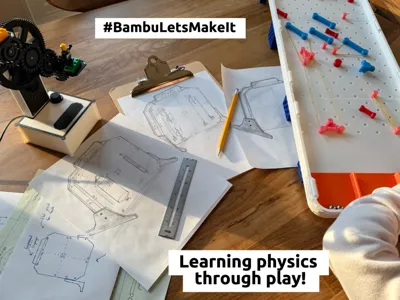
Sketching Ideas for Let’s Make It FundPrint-First Interactive Science Exhibits for Classrooms and LibrariesMy idea for the Let’s Make It Fund, is simple, “I’d love to bring science center level exhibits right to classrooms”. Most schools cannot afford interactive science exhibits and a single professional museum-quality physics station costs $3,000 to $15,000. Title I schools and rural districts often have zero hands-on equipment beyond basic classroom supplies. This means millions of students around the world learn physics purely from textbooks and videos, missing the tactile experimentation that builds understanding and scientific thinking. Whenever we travel with our kids, we make it a point to visit science centers. Watching them light up at an exhibit, spending twenty minutes figuring out how gears mesh or why a marble follows a certain path, that's where we see learning happening the most. The problem is those experiences are brief and they get a few hours or maybe a school field trip once a year if you're lucky. Then it's back to worksheets and videos. We want more kids to have those moments more regularly, in their own classrooms and libraries. The recent accessibility of reliable and affordable 3D printing from Bambu Lab changes what's possible. What once required tens of thousands in specialized equipment can now be printed locally, maintained by students and teachers, and expanded as needs evolve. Which is why we think having an open and shared platform could be super cool. Early Sketches of ConceptWe will be proposing a modular system of fully 3D-printable interactive science exhibits that brings $40,000 worth of professional museum-quality learning stations into any classroom for under $600 in filament. Wehile some will be simplified demonstrations others could be more complex to ensure we capture a wide range of knowledge and experience. We want to design this to be durable, precise, and pedagogically sound, teaching core physics principles through hands-on experimentation. The core idea is a structural standard built around a honeycomb-style mounting pattern. Schools can start with a few exhibits and expand over time. Students and educators can swap modules, rearrange layouts, and eventually design their own experiments using the same connection system. We’re hopeful that everything would follow open standards so the maker community can contribute and share new modules worldwide. Initial exhibits focus on fundamental physics, like some fun one around momentum laboratories with adjustable ramps and flywheels. I’m always a fan of  gear logic stations for mechanical advantage. Oh, or even a challenge towers for stability and torque or probability machines using marbles to demonstrate distribution patterns. Each includes adjustable components so students can change variables after writing down what they think will happen, and then test it. Community ImpactIdeally this project addresses educational equity directly for schools serving low-income communities, rural districts with limited resources, homeschool co-ops, and library maker spaces get access to learning tools that were previously out of reach, but really it could be used in any learning environment. The same exhibits that cost $40,000 from educational suppliers become accessible for the cost of filament and printer time. One thought is that parents could make the base set even at home and swap out lessons for their kiddos so there is always something fun to print and try. Join the ProgramThis is exactly the kind of opportunity the maker community needs. Bambu Lab is offering real funding and technical support to turn ambitious ideas into reality. If you've been sitting on a project that could solve real problems or help specific communities, now's the time to put it out there. The program is looking for projects that push boundaries, require serious craftsmanship, and create genuine value for people. Check it out and submit your ideas: https://bambulab.com/letsmakeitfund #bambuletsmakeit #bambulab