
Soldering Tool Dock
Print Profile(1)
Description
This model is for personal download and use only. You may not sell digital or physical printed versions of this model in any form
Project Background
For a long time, every time I prepared for soldering, I had to move tools like the soldering iron, PCB holder, solder wire, and smoke extractor to the desktop one by one
After soldering, I had to put them away one by one
As soldering became more frequent, I realized that what truly wasted time was not soldering itself, but **setting up for soldering and cleaning up the desktop**. With more and more tools and an increasingly crowded desktop, it not only affected work efficiency but also made the entire workspace messy and disorganized
On the other hand, I had been using an air purifier as a temporary solution for soldering fumes. As soldering time increased, I wanted to add a professional solder fume extractor, but most products on the market are standalone devices, which means adding another new device to the desktop, further exacerbating the already cluttered soldering environment
I began to realize that the real problem I needed to solve was not adding a new tool, but **reorganizing the entire soldering environment**
Vision
So, I started conceptualizing a new idea—the **SolderDock**
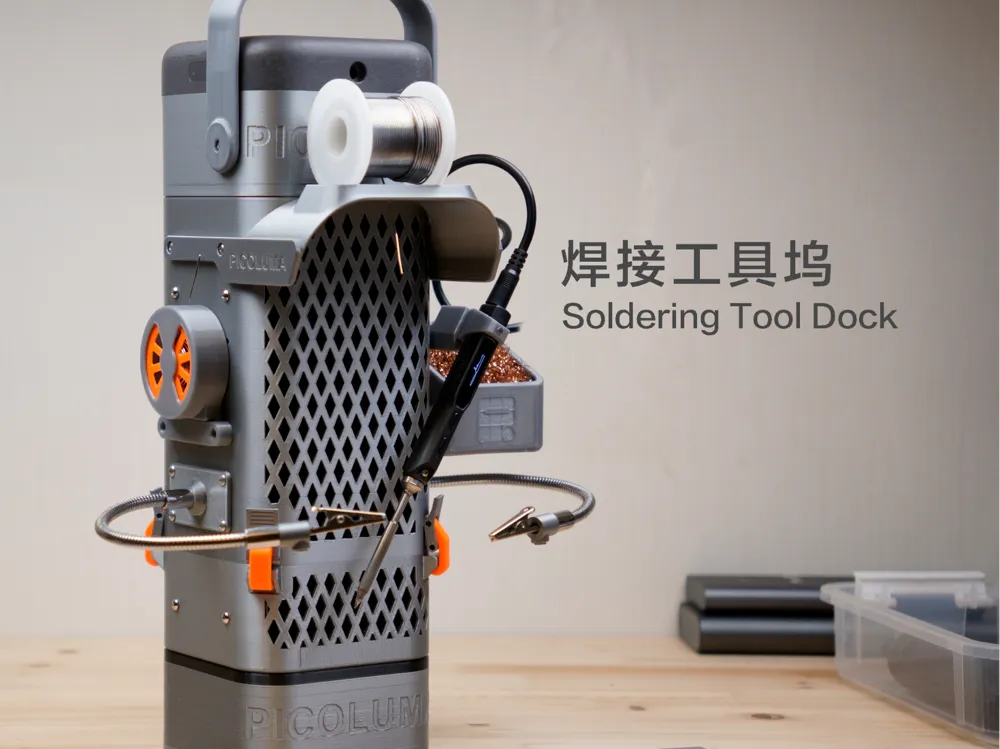
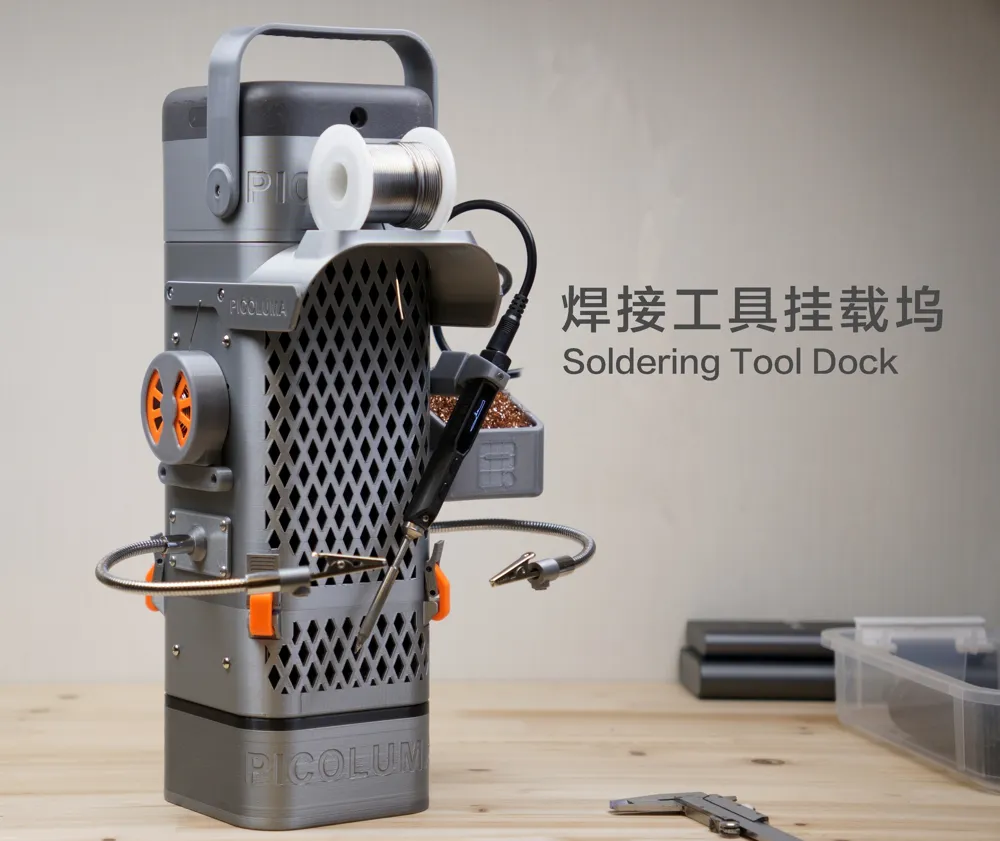
It's not just a solder fume extractor; it should be a "docking station" for all common tools used in soldering
I hope it can simultaneously fulfill the following roles
- Solder fume filtration
- Common tool mounting
- Soldering tool storage
- Modular expansion platform
More importantly, I hope that after soldering, I only need to move one device to quickly organize the entire soldering environment, allowing the workbench to quickly switch from **soldering mode** to other work modes such as **assembly, joining, and measurement**
Design Considerations
Since the goal is for all tools to revolve around a single main unit, the core of the entire system needs to be identified first
After observing the entire soldering environment, I found that the solder fume extractor itself is the largest device and the most fixed part among all tools, so I decided to make the solder fume extractor the core of the entire "SolderDock"
Subsequently, I started looking for existing solutions on the market
After some research, I largely abandoned existing products, mainly for three reasons
1. Size and Cost
Products with better filtration performance are usually bulky and relatively expensive, making them unsuitable as a central device for long-term desktop use
2. Filter Element Cost and Maintenance
Many products use proprietary filter elements, which not only require re-verification of filtration effectiveness but also make long-term stable procurement difficult when replacing them later, leading to higher maintenance costs
3. Insufficient Expandability
Almost all solder fume extractors on the market are standalone products, without any provisions for installing other tools, let alone serving as the center of the entire soldering environment
Therefore, I hope the final solution can meet several goals
- Use standard filter elements that are inexpensive and readily available
- Keep costs as low as possible
- Easily integrate other soldering tools
- Retain future modular expansion capabilities
Solution
Basic Selection
The entire design started with the selection of the filter element
I wanted to directly adopt mature, stably supplied standard filter elements, which would not only reduce costs but also facilitate long-term replacement later on
Ultimately, I chose the filter element used in the Xiaomi car air purifier
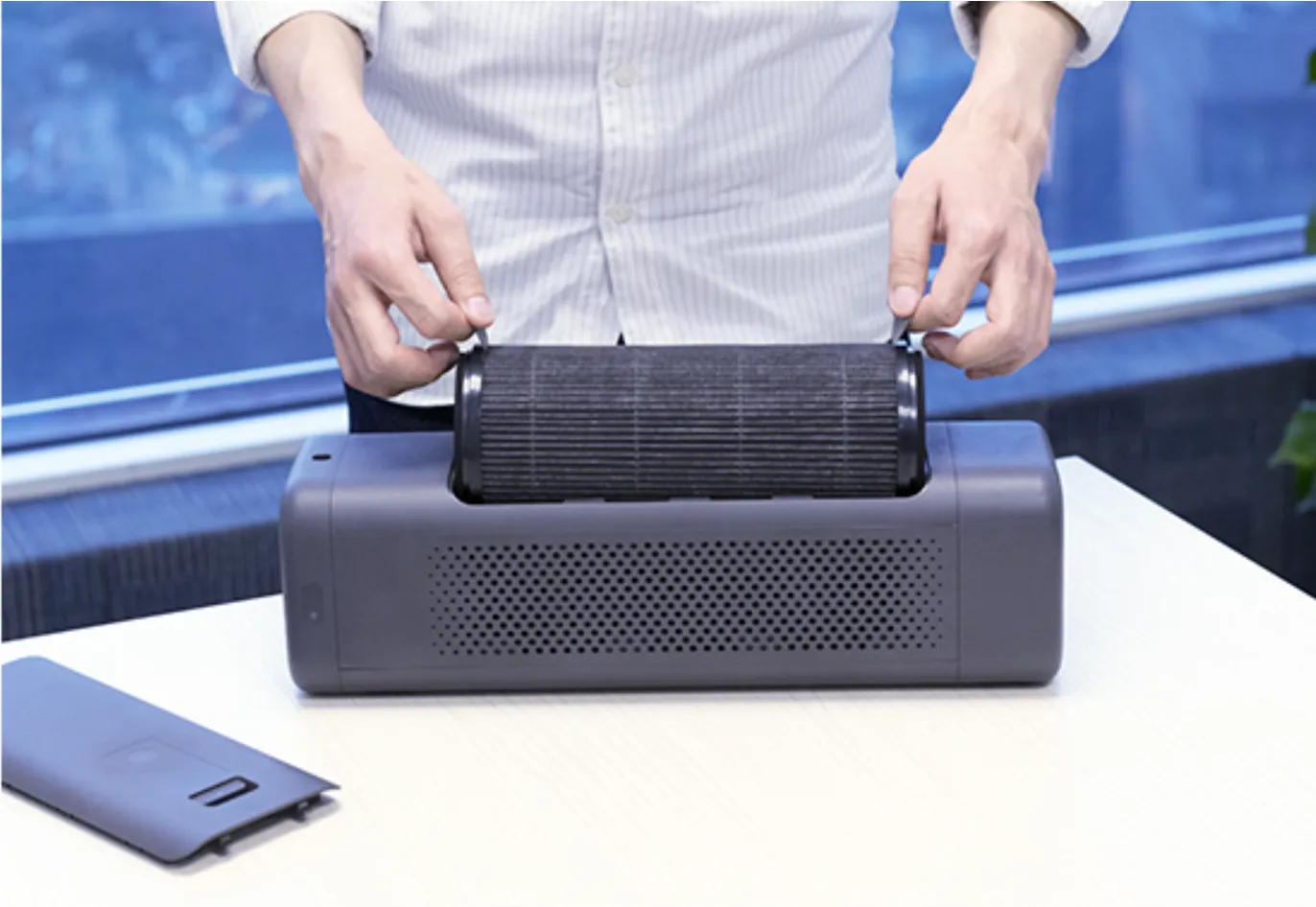
The reasons are simple
- Large market share
- Ample supply of original and third-party filter elements
- Low replacement cost
- Virtually no pressure for subsequent maintenance
After selecting the filter element, I considered directly modifying the Xiaomi car air purifier
However, I quickly discovered two problems
First, the original unit features a multi-sided air intake design, which, when used as a solder fume extractor, cannot concentrate suction to the soldering area
Second, the original unit's air outlet direction was not consistent with the ideal structure, and no space was reserved for tool mounting
Redesigning the entire casing was clearly more reasonable than continuing to modify the original unit
Subsequently, I began to research fan and drive solutions
Initially, the plan was to purchase a centrifugal fan and a drive board separately, and then redesign the overall structure
But when comparing prices, I suddenly realized: **buying a used Xiaomi car air purifier directly was actually cheaper than buying the fan and drive circuit separately**
So the final decision was to disassemble the entire unit, keeping only
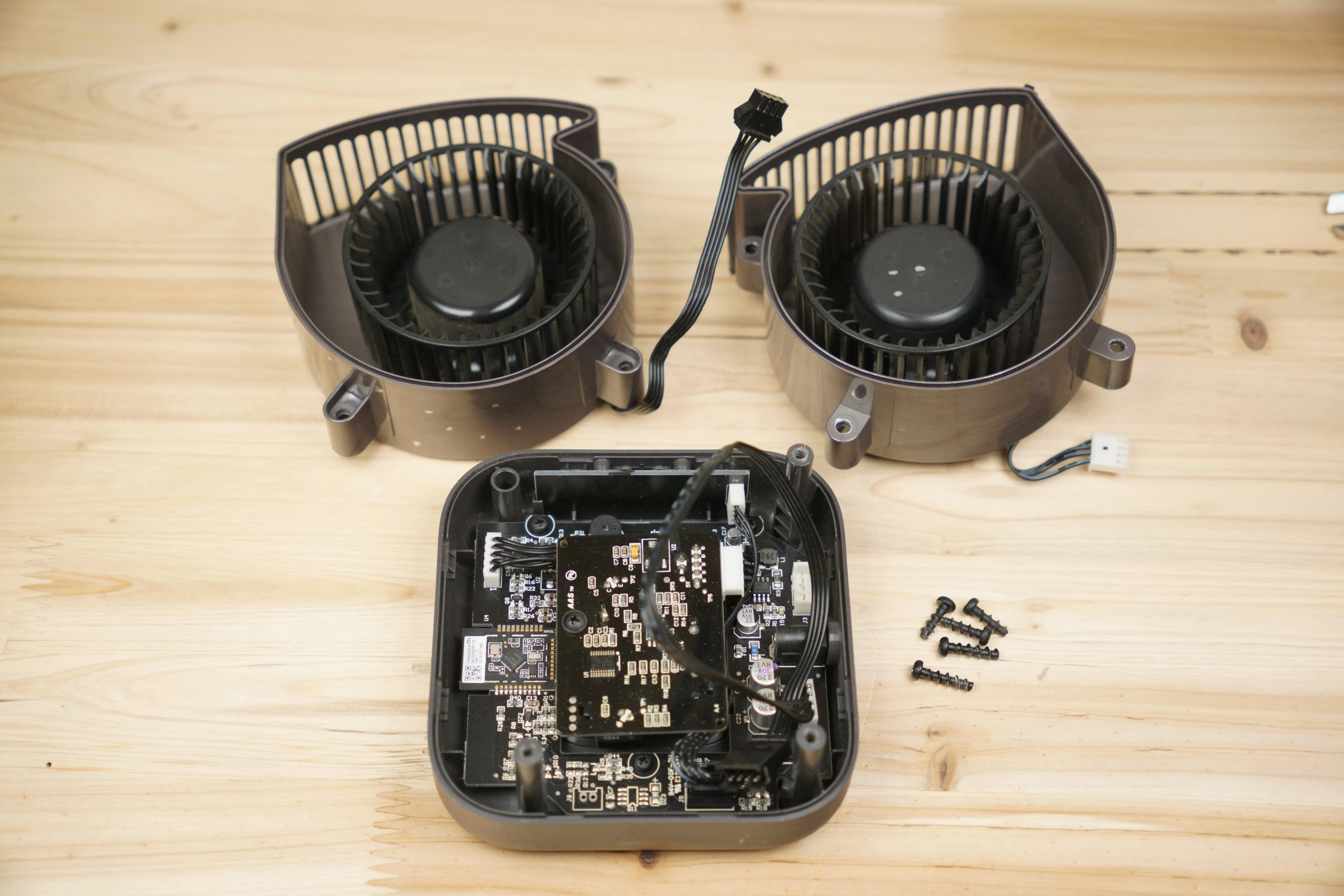
- Fan
- Drive board
- Power system
Furthermore, this drive board also brought an unexpected bonus
It not only supports three-speed wind adjustment but can also connect to the Mijia App to view simple air quality information via Bluetooth, adding a nice interactive experience to the entire product
Structural Design
After determining the core hardware, the entire design began to revolve around the "SolderDock" concept
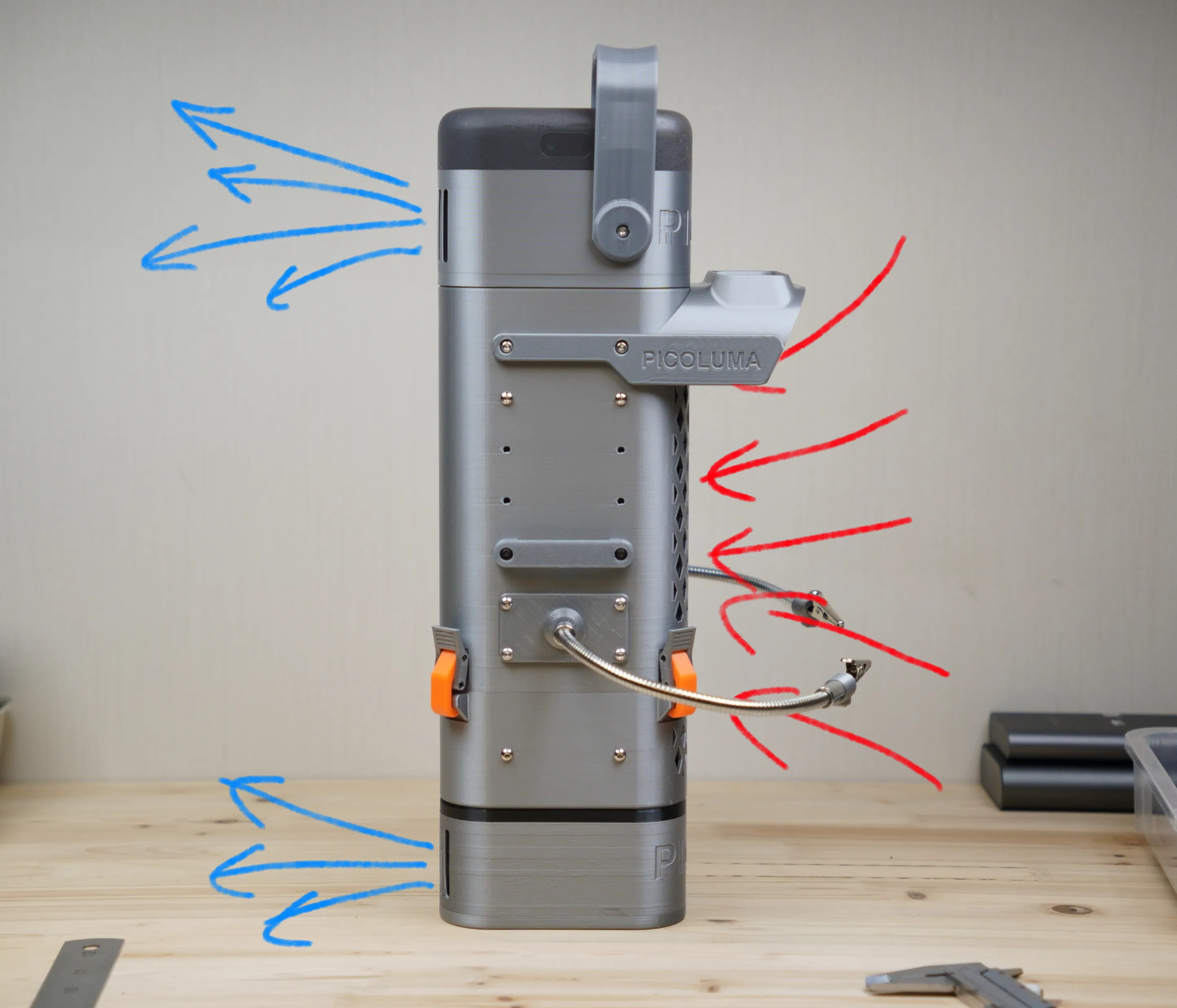
Optimizing Airflow

Redesigned the casing to ensure the air inlet and outlet are in opposing directions, allowing smoke to flow along a more logical path and improving smoke extraction efficiency

Precise Reverse Engineering
Since the original fan's mounting holes and interfaces were irregularly shaped, to ensure assembly precision, I obtained the original model via 3D scanning and performed reverse engineering to ensure the motor snap-fit precisely into place
Modular Expansion
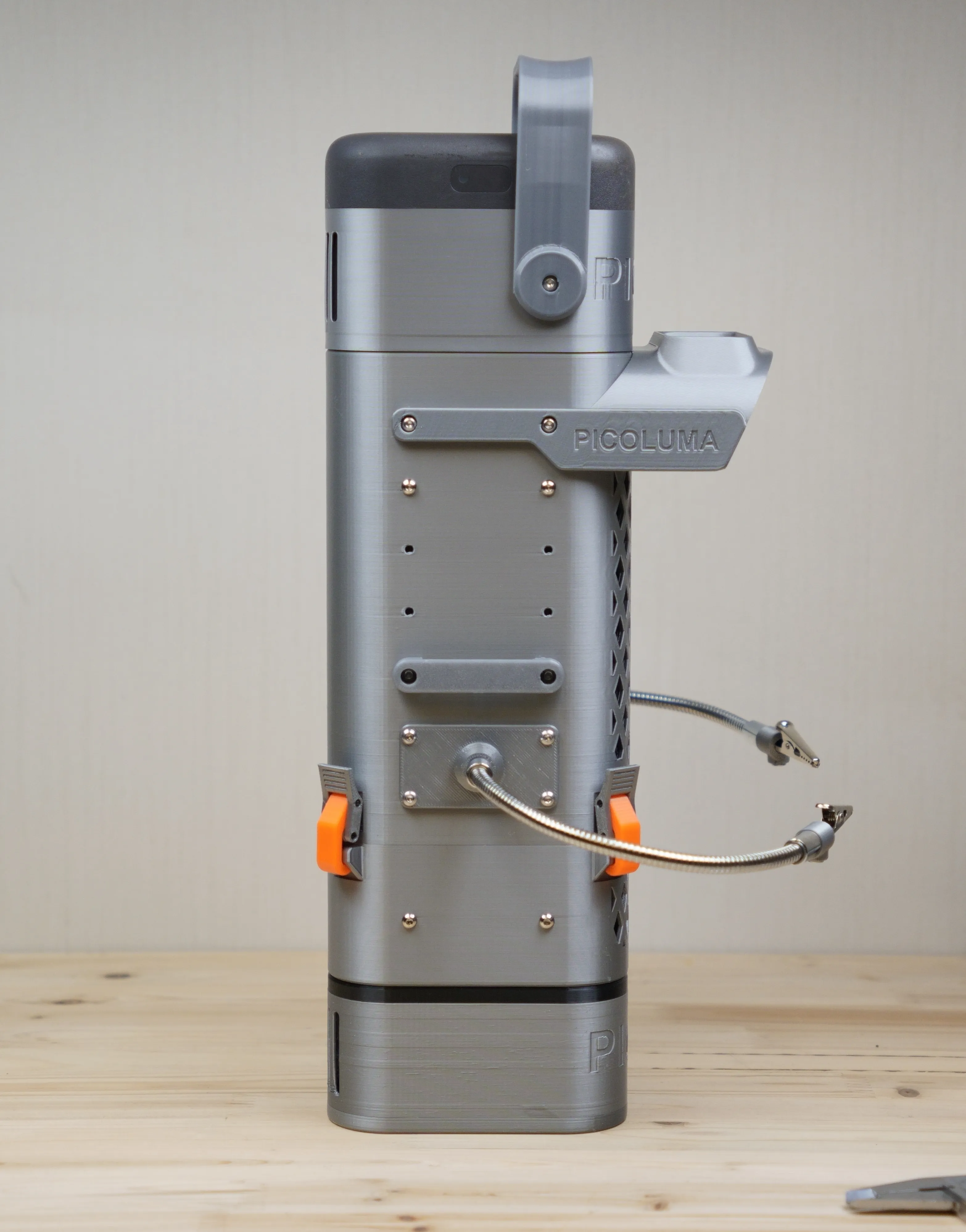
The casing has numerous standard M3 mounting holes, making it easy to add new functional modules later and allowing users to expand according to their needs
Solder Holder

A wind deflector was added to the top, integrating a standard solder wire spool, which ensures effective airflow while also allowing direct access to solder during the soldering process
Solder Dispensing Storage Box

The full spool of solder wire is for storage, while the dispensing box is for use
With the mountable solder dispensing box, solder wire can be freely switched between **storage, organization, and soldering**
PCB Holder
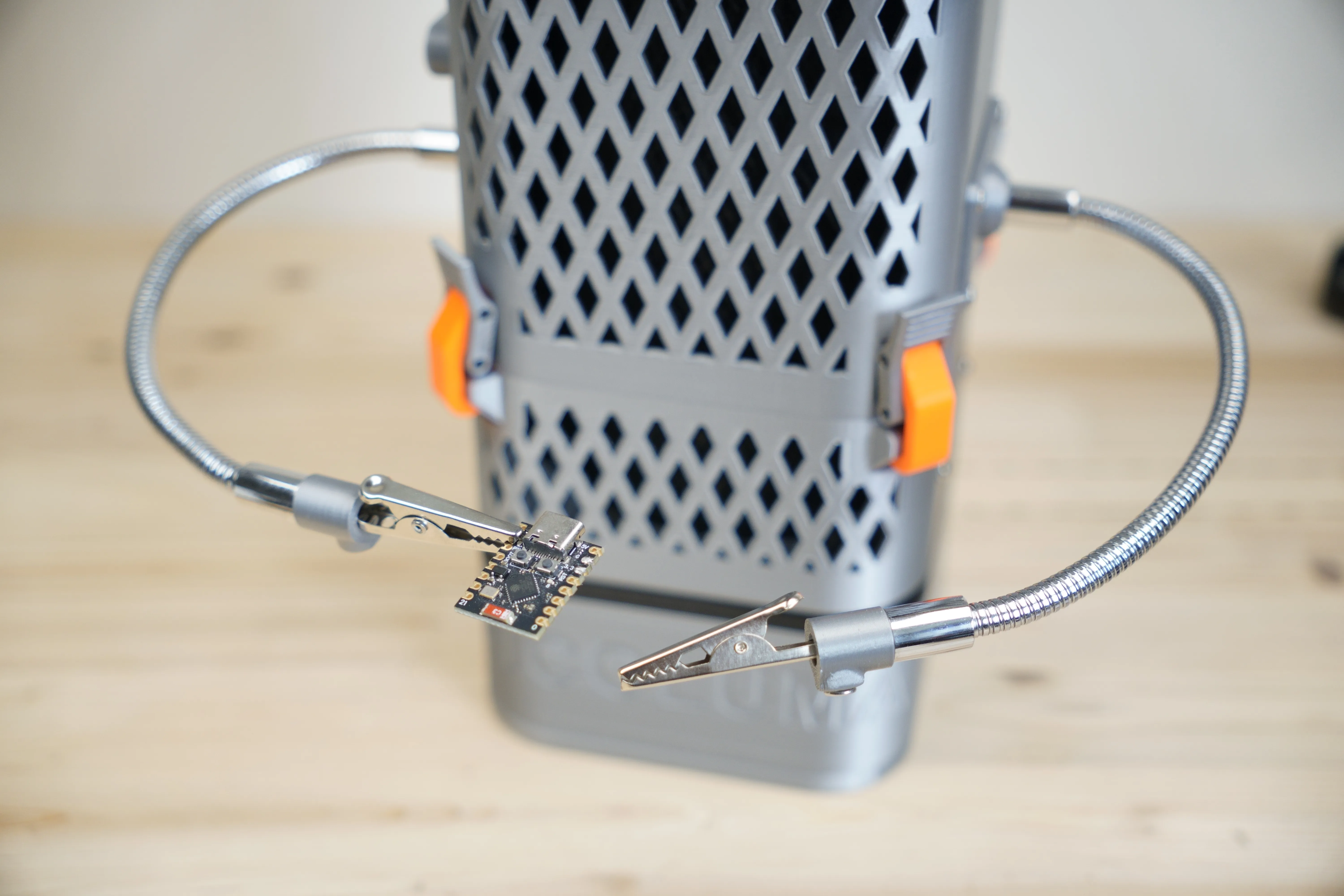

A PCB holder is installed using a flexible metal gooseneck, allowing the holder to be directly fixed to the SolderDock's main body, further reducing the number of desktop devices
Copper Wire Ball Cleaner Mount

A mounting position is reserved on the side for a copper wire cleaning ball holder, integrating the soldering iron tip cleaning function into the SolderDock and reducing standalone desktop devices
Soldering Iron Holder
An angled soldering iron holder is designed on the right side
This design not only aligns with daily usage habits but also allows residual soldering fumes to continue being drawn into the filter, while reducing the risk of accidental burns (This design came from a real-life lesson)
Image: Soldering Iron Mounting Diagram
Quick-Release Maintenance

Utilizing a quick-release snap-fit structure, changing the filter element does not require disassembling the entire unit
Additionally, the filter element can be rotated periodically to ensure more even use of the filter material, further extending its lifespan
Product Validation
Ultimately, this "SolderDock" largely achieved its initial goals
Common tools such as the soldering iron, PCB holder, and solder are all concentrated on a single main unit, allowing the entire soldering setup to be moved with just one hand, significantly reducing deployment and storage costs

In actual tests, in an indoor environment with air conditioning and fans turned off, solder fumes could be stably drawn in from approximately **12 cm** away from the air inlet, meeting daily soldering needs
Future Optimizations
Currently, the soldering iron and solder fume extractor still use independent power supplies
In the next stage, I hope to further integrate the power supply system so that the entire SolderDock can be deployed with just one power cord
At the same time, I also plan to add top auxiliary lighting, more expandable modules, and a unified power interface, allowing the entire system to truly become a sustainably expandable modular soldering platform
This model is for personal download and use only. You may not sell digital or physical printed versions of this model in any form
Boost Me (for free)
License

You shall not share, sub-license, sell, rent, host, transfer, or distribute in any way the digital or 3D printed versions of this object, nor any other derivative work of this object in its digital or physical format (including - but not limited to - remixes of this object, and hosting on other digital platforms). The objects may not be used without permission in any way whatsoever in which you charge money, or collect fees.


Comment & Rating (11)