
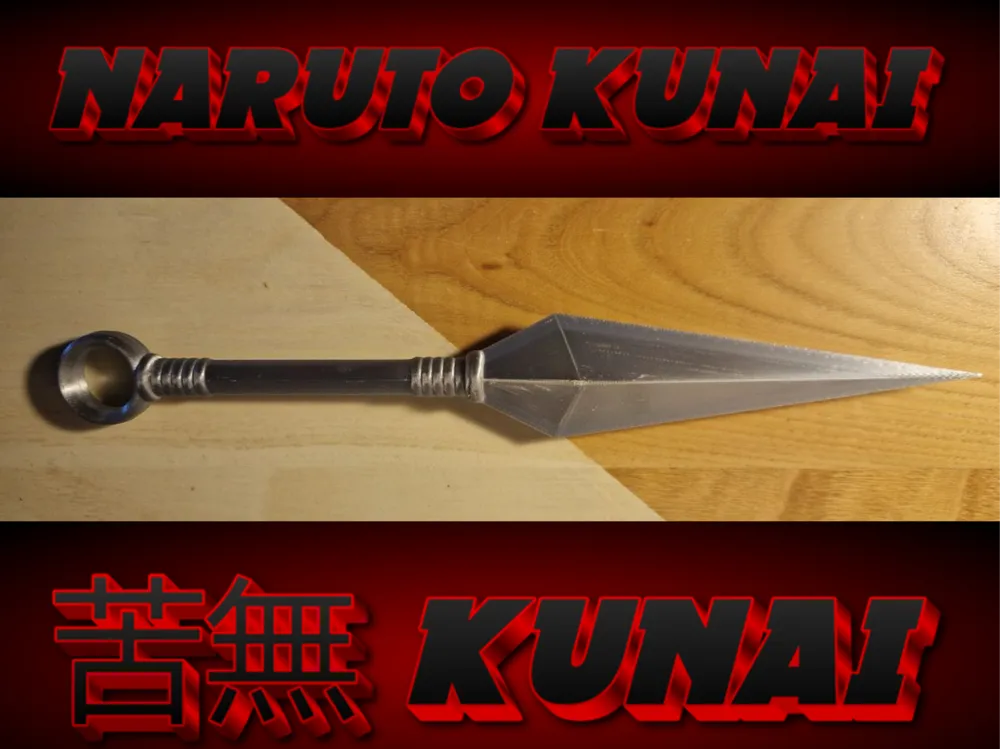
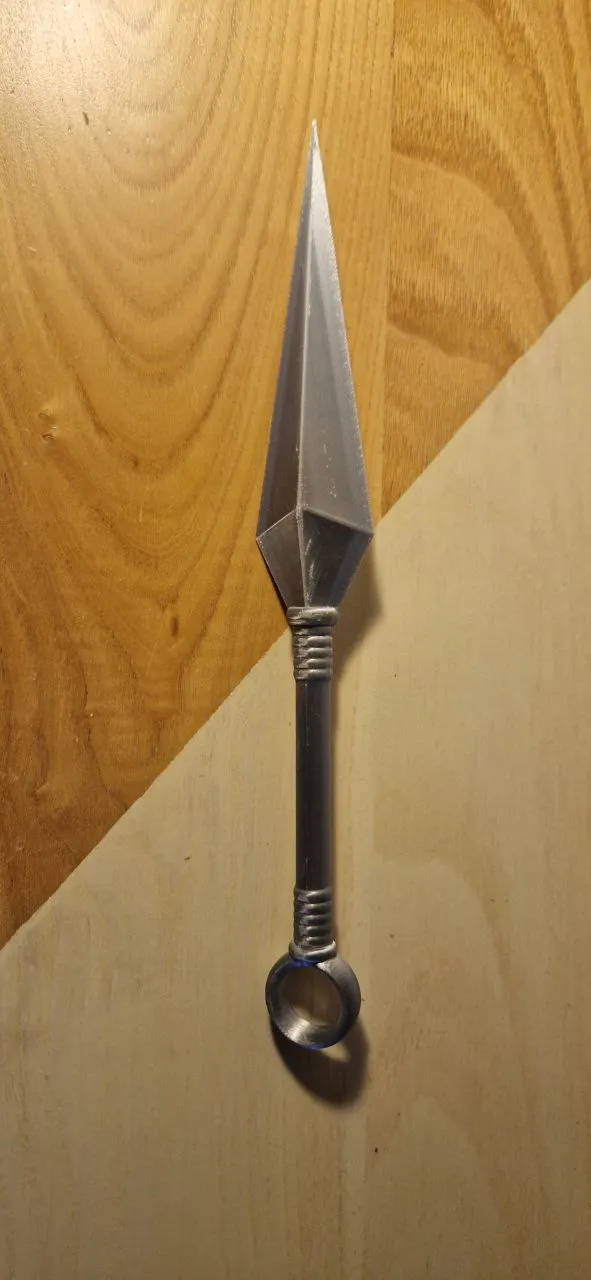
Naruto Kunai
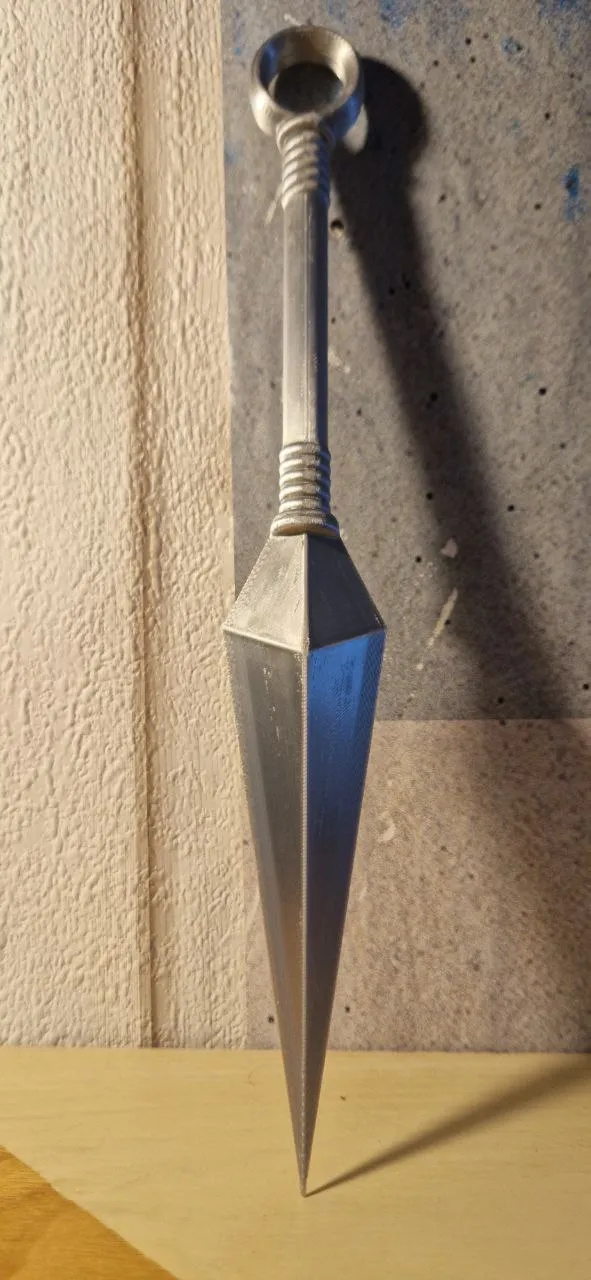
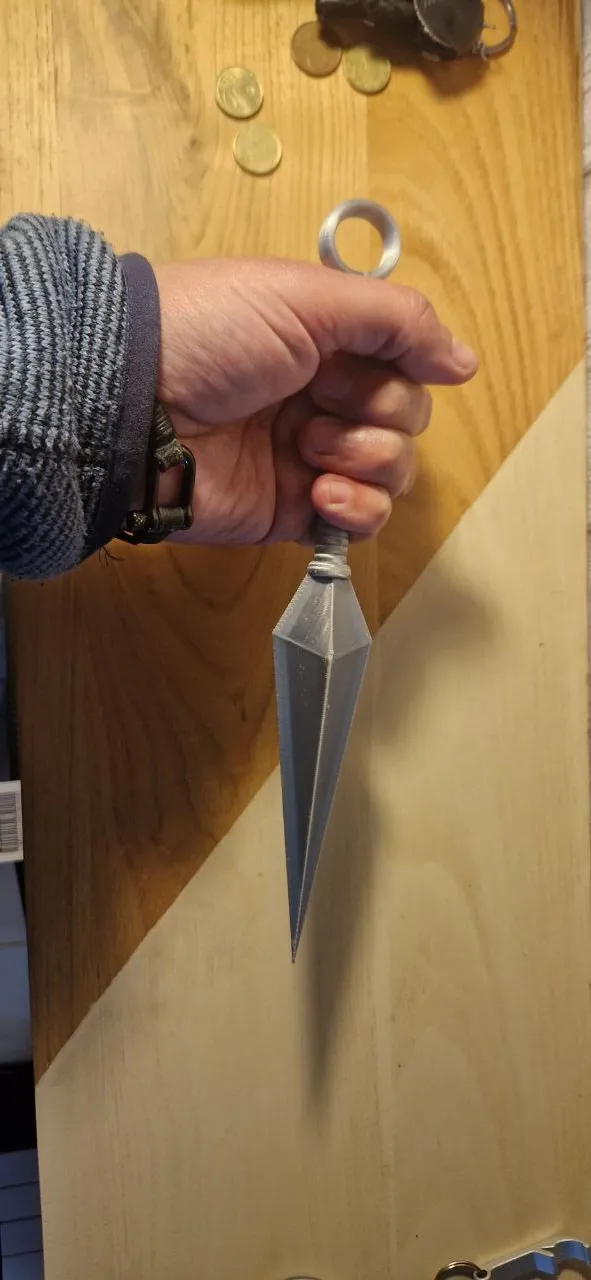
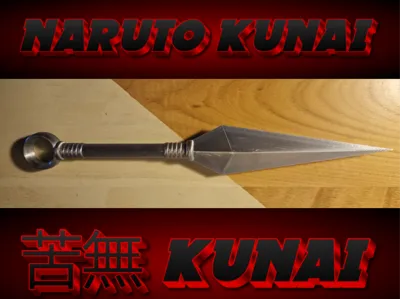
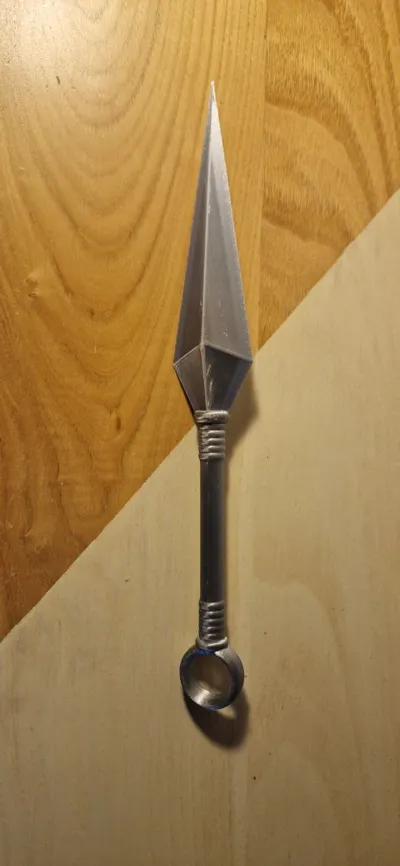
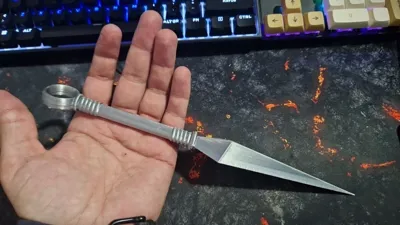
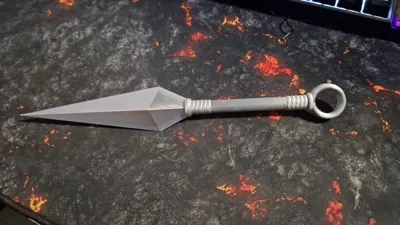
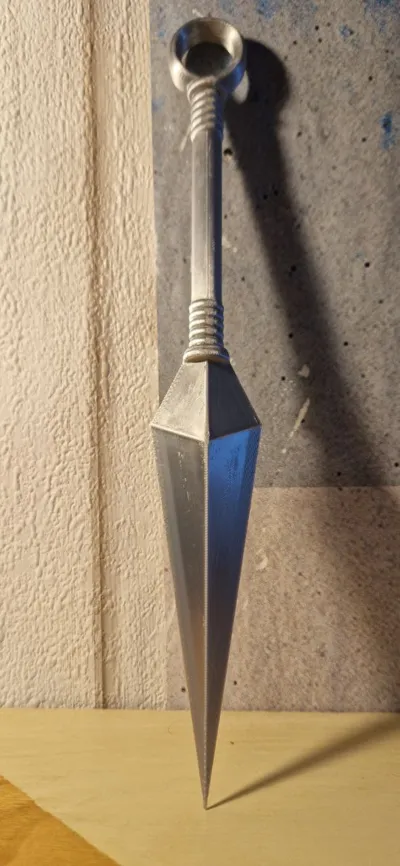
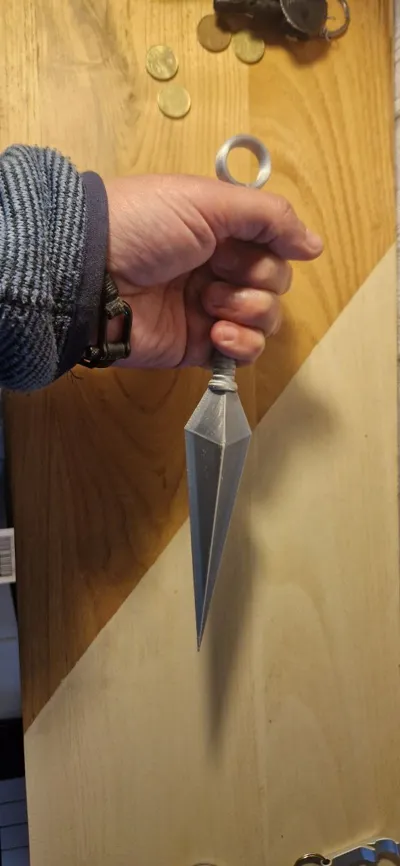
Print Profile(1)

Bill of Materials


Description
Exercise caution, it is sharp. Keep out of the reach of children.
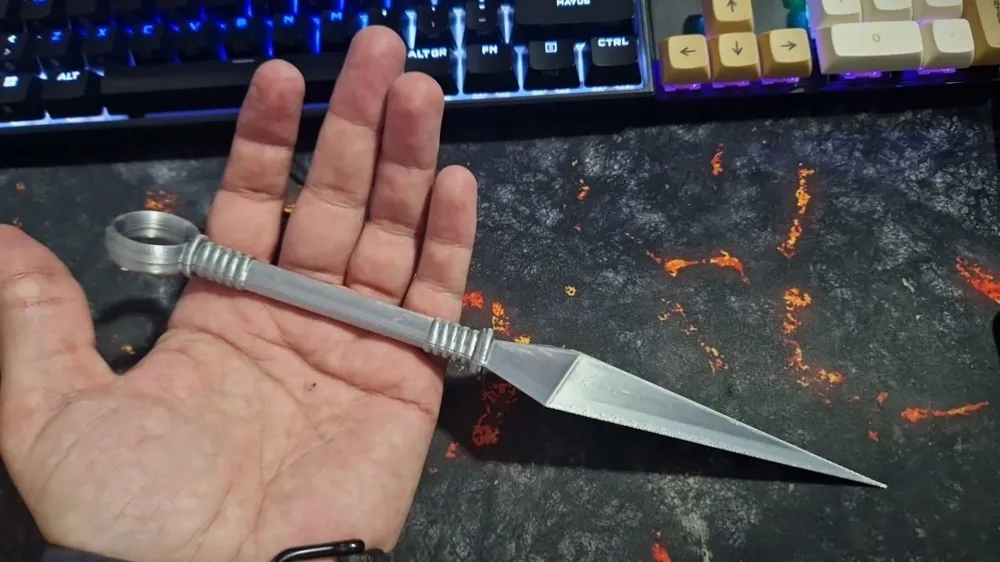
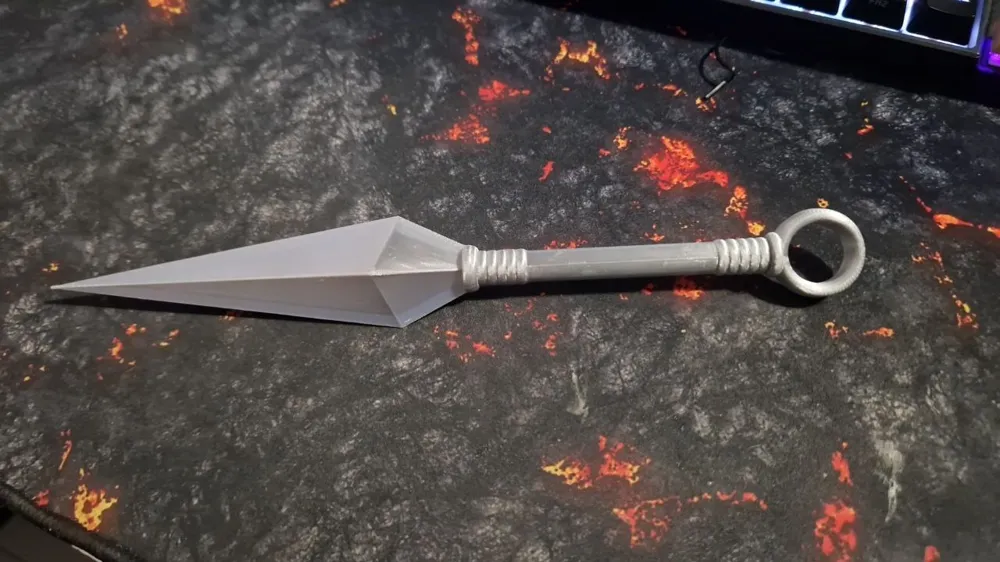
This kunai comprises two parts; robust adhesive is required.
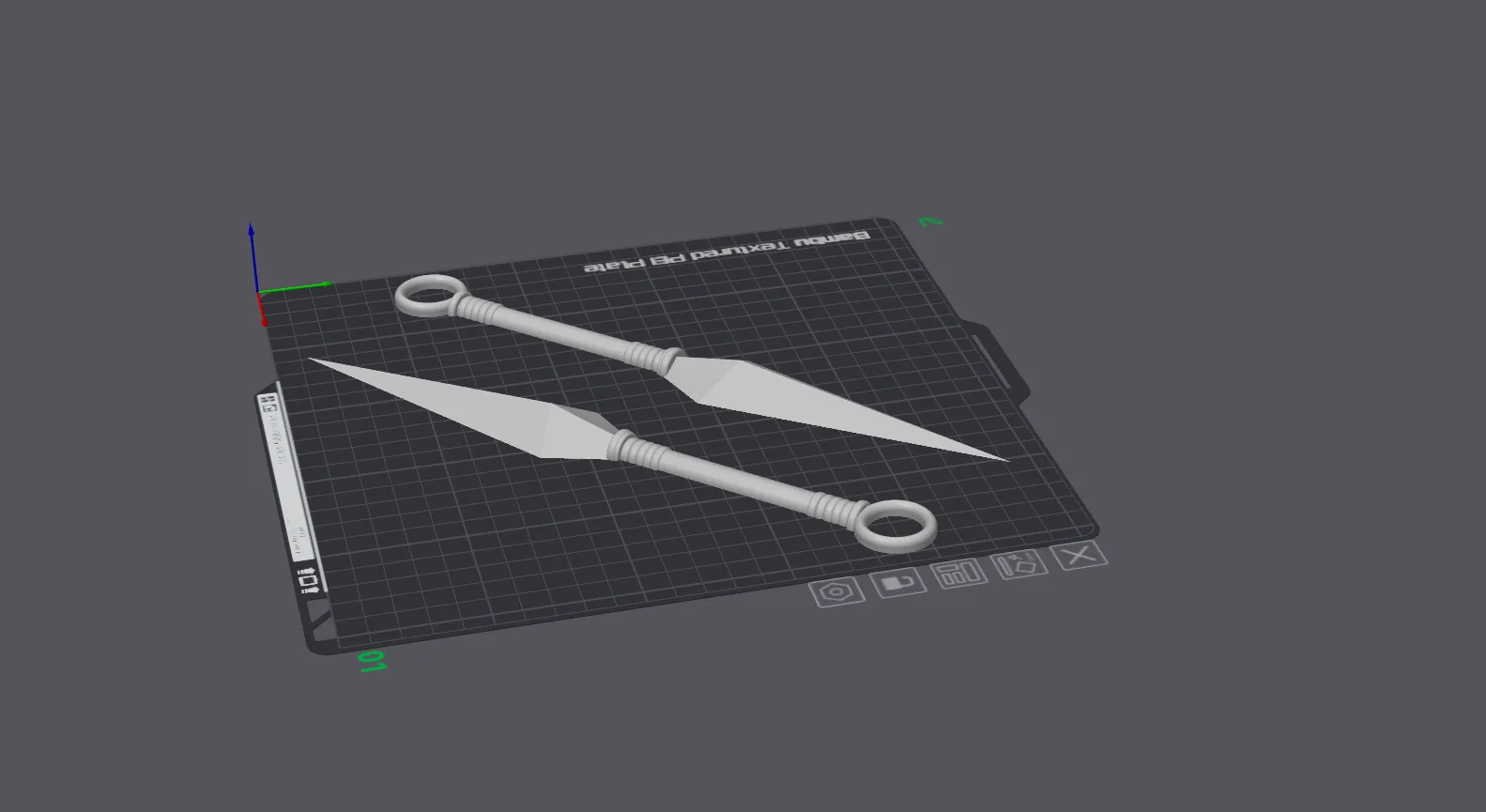

A kunai (苦無 kunai?) is a Japanese tool from the Sengoku period. Initially employed as an agricultural implement, a kunai in capable hands could become a multi-purpose weapon, and due to its widespread use as such, it is strongly associated in popular culture with ninjutsu and its practitioners.
Design
Two primary variations exist: the short kunai (少苦無 shō-kunai?) and the large kunai (大苦無 dai-kunai?), which can range in size from 20 to 60 cm. The blade is triangular, and a ring at the handle's end is designed for attaching a cord. The lateral edges are not sharpened, as using the tool as a trowel or chisel would damage the bevel.
The kunai served a wide array of trades in feudal Japan, particularly in gardening, carpentry, various material carving, and even masonry, and was used for piercing, carving, cutting, digging, and any task requiring an iron blade, much like the modern hori hori. Its inexpensive and simple construction facilitated its widespread use.
Use

A kunai alongside a shuriken.
The kunai's sharp point made it ideal for stabbing, and the ring on its handle facilitated attachment to a shaft as a spear or to a cord for use as a dart. Contrary to popular belief, the kunai was not designed as a throwing weapon, but its symmetrical design and balanced center of gravity allowed for some effectiveness in this manner. Variations existed with blades of different sizes, multiple blades, or even serrated edges, similar to another tool called a shikoro.
Beyond its martial applications, the kunai served warriors as a climbing pick, grappling hook, or anchor for scaling walls and other obstacles, as well as a punch for creating holes in walls or forcing doors. It was often said that the only limit to the kunai's use was the wielder's imagination.
The kunai was far more prevalent than the shuriken in a ninja's arsenal, being comparatively more affordable, discreet, versatile, and easy to use. Its commonality as a tool allowed for unobtrusive carriage, avoiding suspicion if the wielder was searched or discovered during a mission.
Source: https://es.wikipedia.org/wiki/Kunai
License

You shall not share, sub-license, sell, rent, host, transfer, or distribute in any way the digital or 3D printed versions of this object, nor any other derivative work of this object in its digital or physical format (including - but not limited to - remixes of this object, and hosting on other digital platforms). The objects may not be used without permission in any way whatsoever in which you charge money, or collect fees.


Comment & Rating (8)