Search models, users, collections, and posts

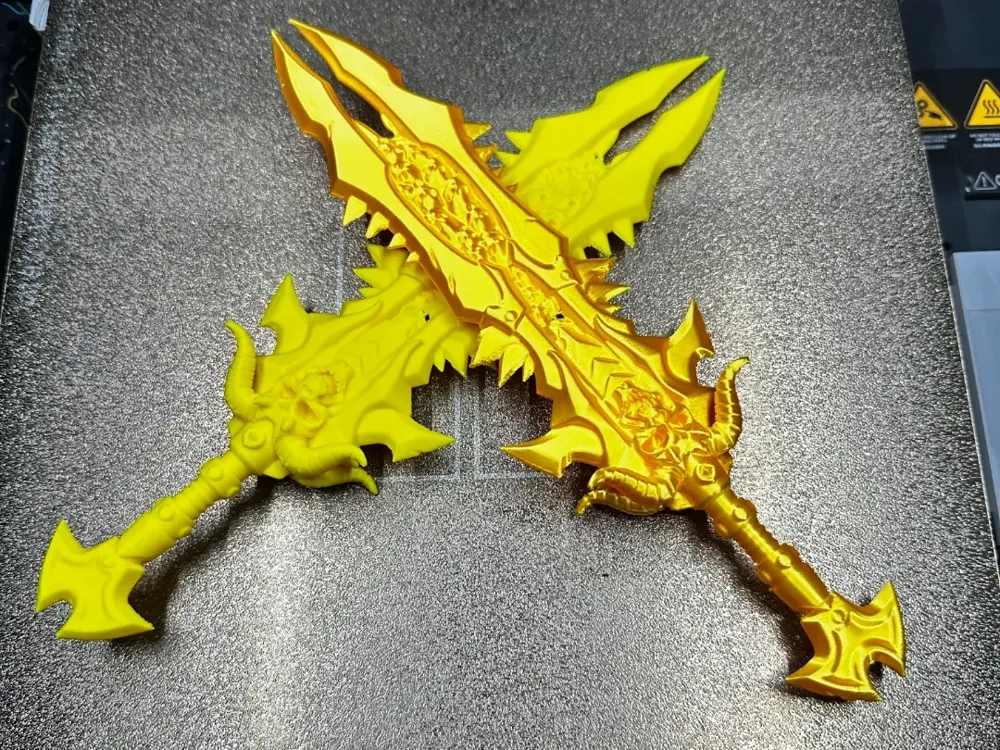
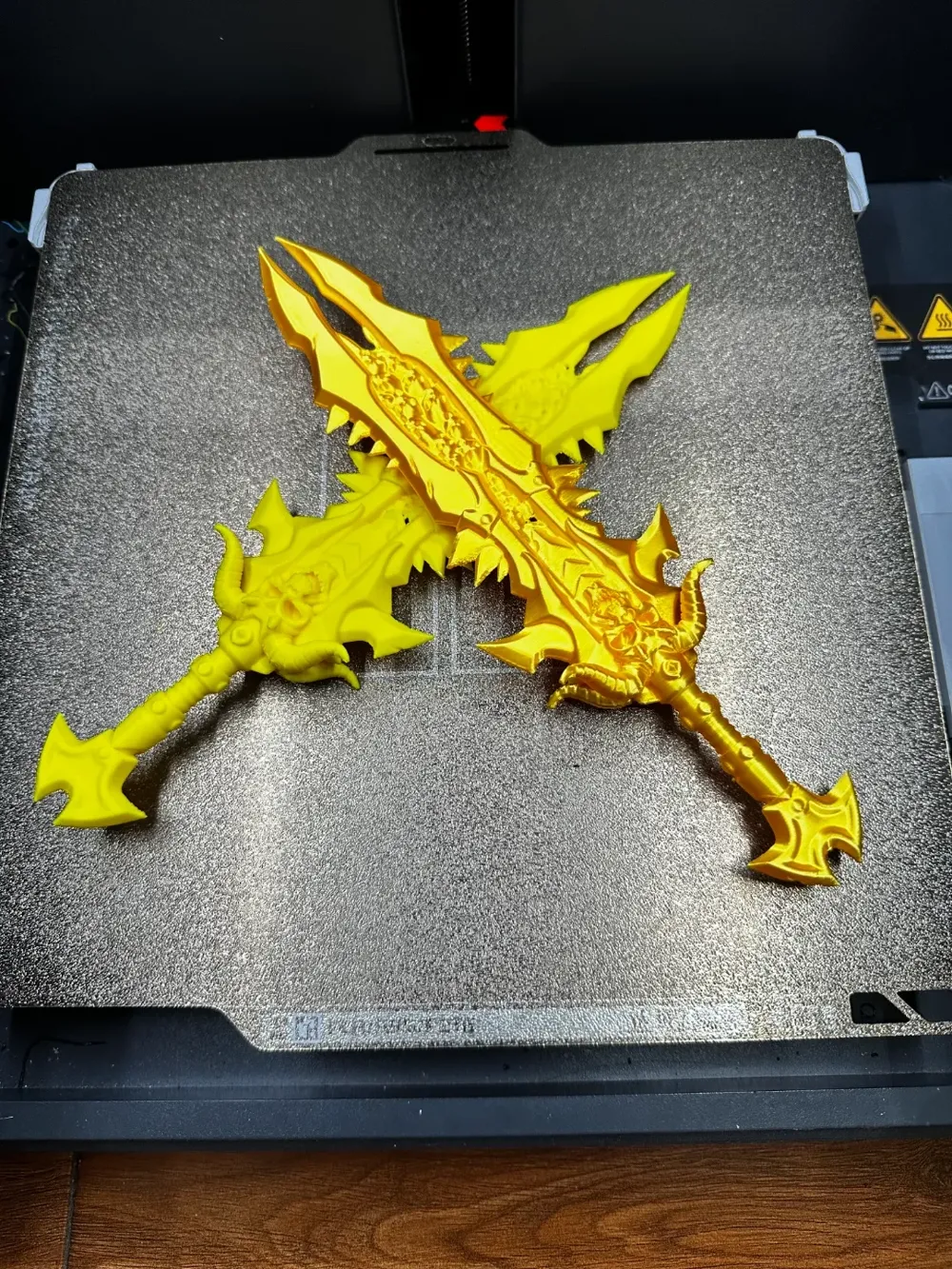
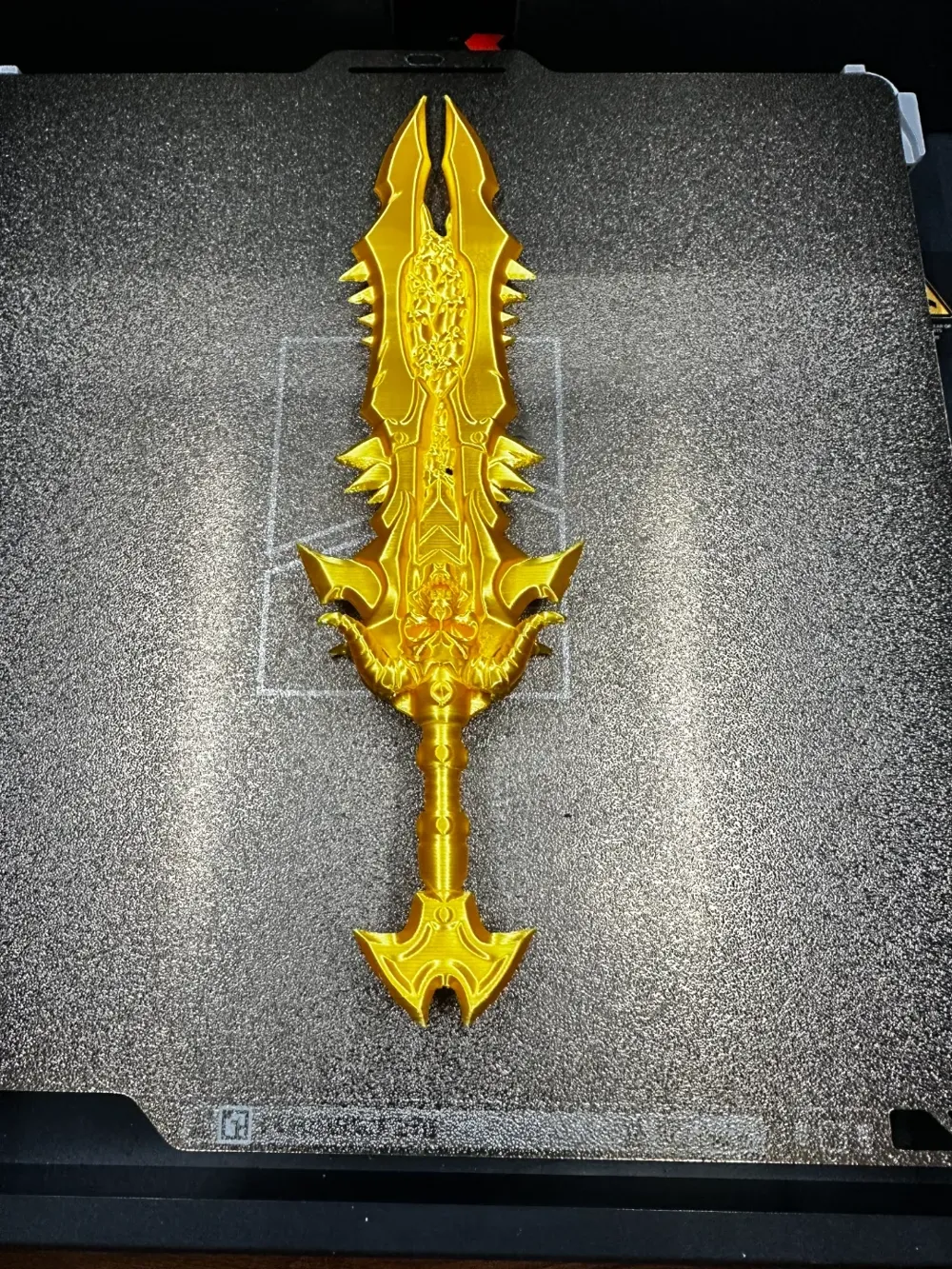
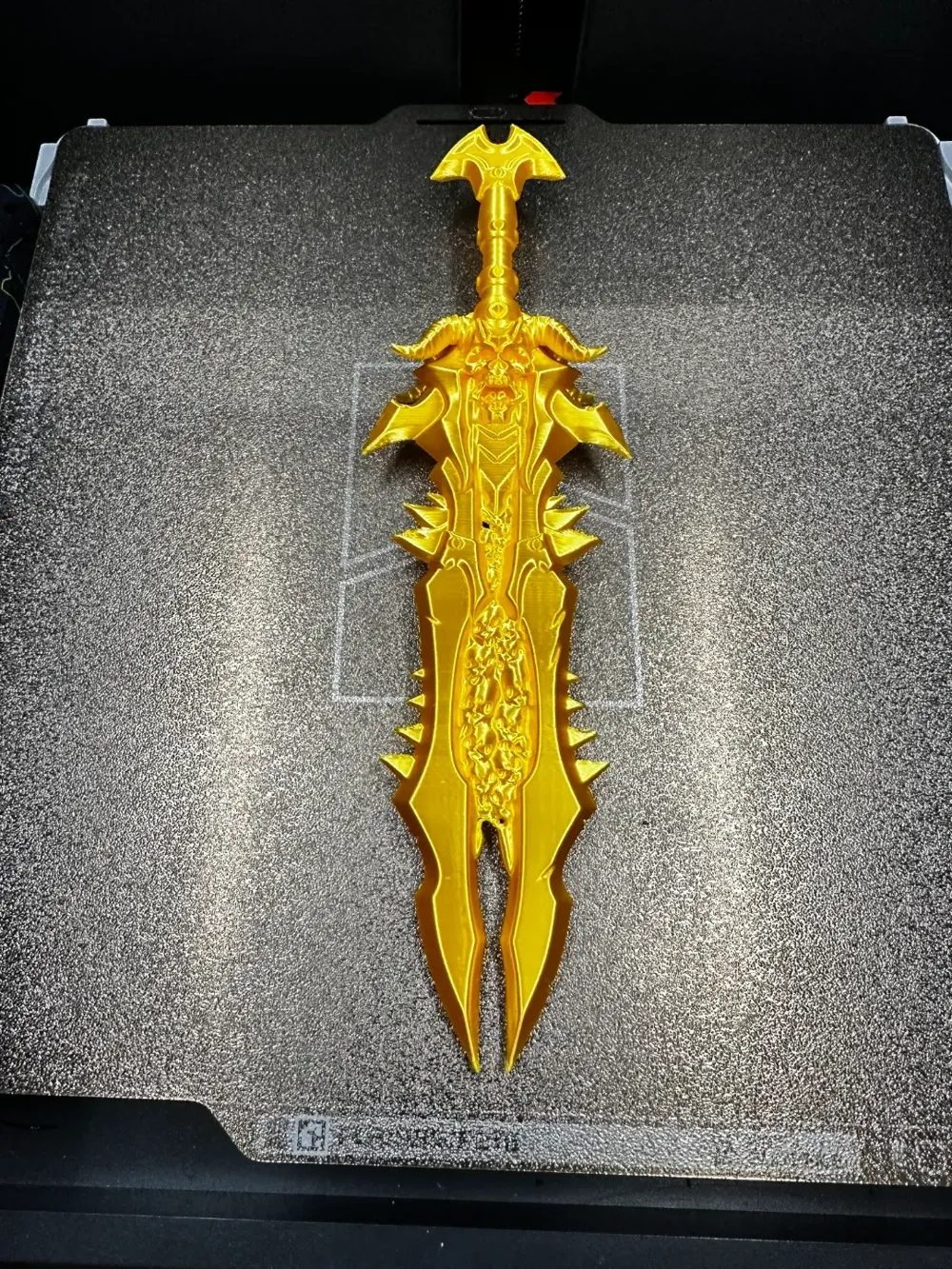
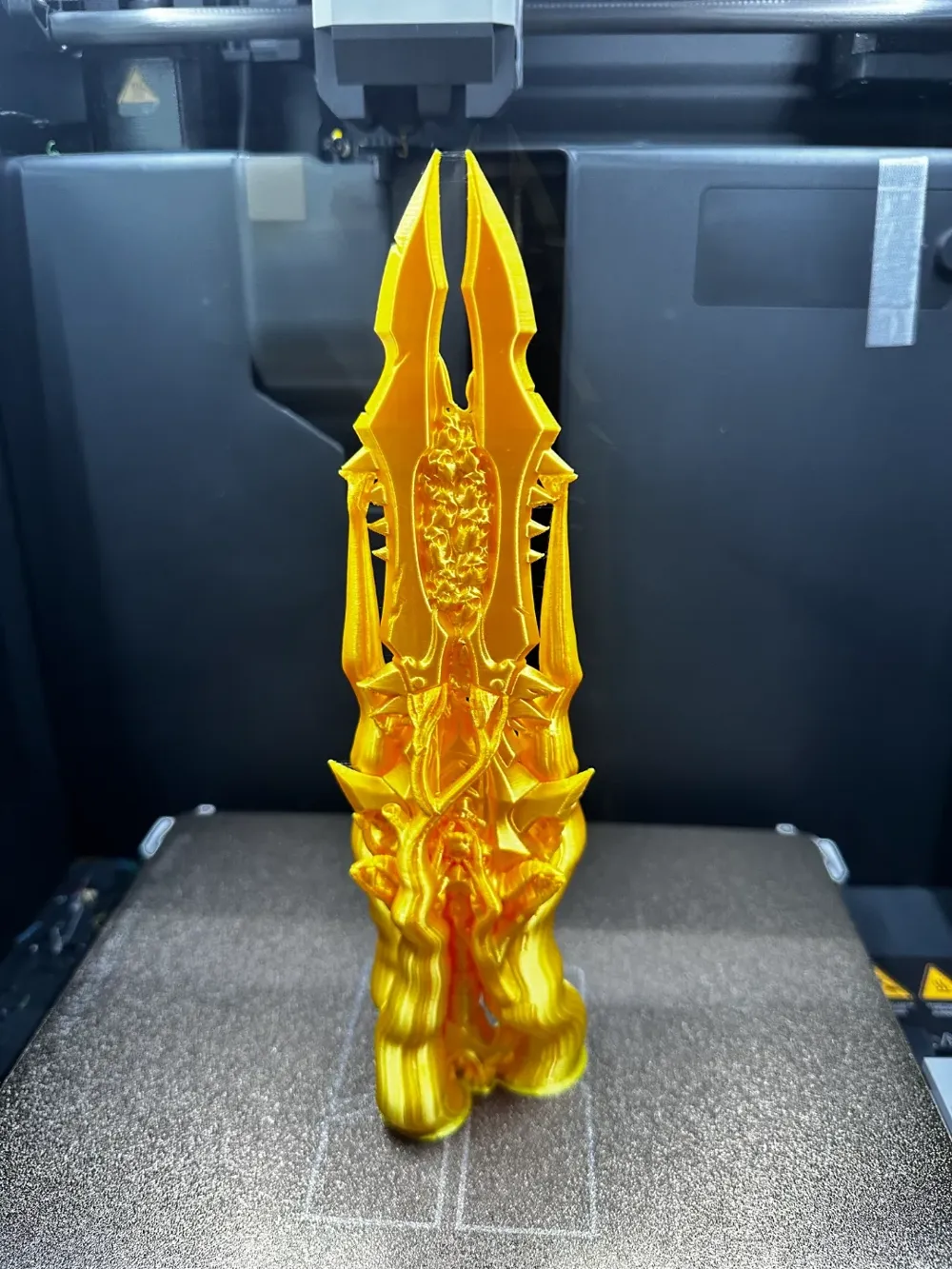
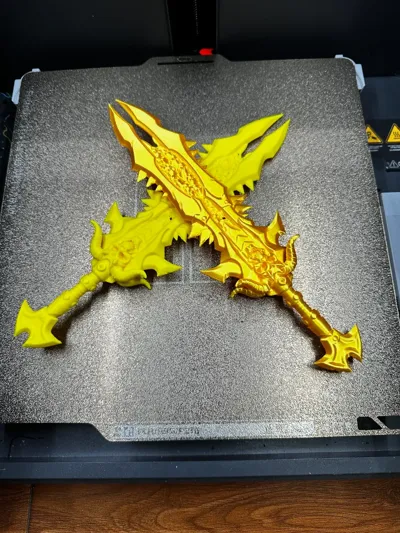
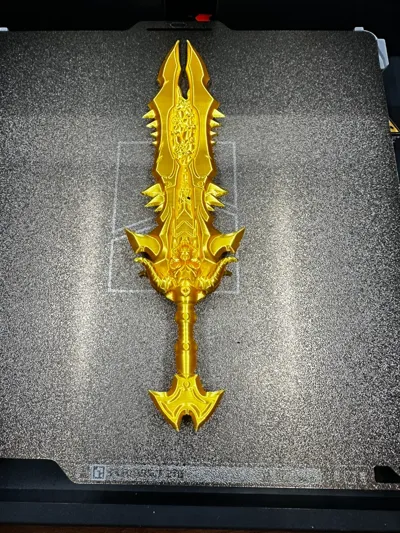
Handheld Sword - Third Edition
IP Report
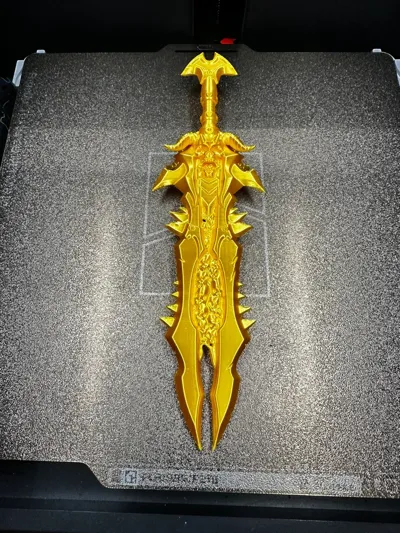
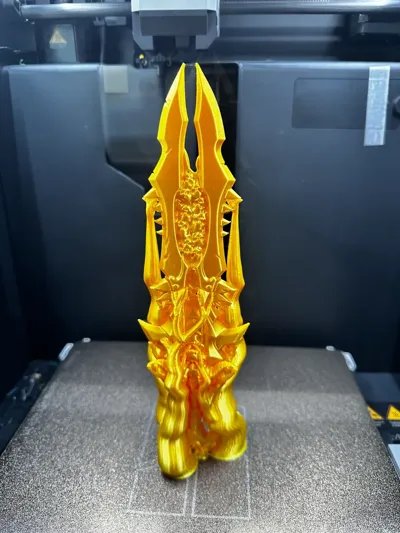
Print Profile(1)
0.2mm layer, 2 walls, 15% infill
Designer
2.6 h
1 plate
Open in Bambu Studio
Boost
31
50
3
0
40
20
Released
Description
Content has been automatically translated.
Handheld Sword Third Edition
Pocket-sized, highly playable, less than 50 grams of filament used for printing.Note: For supports at sharp corners, please shorten the wrapping section first, remove the large supports, then remove the small supports wrapping the sharp corners!!
This design can be used as a handheld item or children's toy. The printing material shown is Ai Le Ku golden silkPLA (not recommended, too brittle; Tianrui or Tu Zhu golden filament will provide better results!) Yellow is Tu Zhu PLA,, default parameters are “0.2 layer height, tree supports, slender tree, threshold 30, top support layers 4, bottom support layers 4,support removal difficulty 1 star.
Please adjust the filament temperature before printing. For any questions, please discuss in the comments section. We welcome all professionals to share pictures in the comments! Thank you all!!!
- Size can be scaled according to personal preference,it is recommended to use PLA material for printing, the effect will be more delicate!
- Default parameter printing is also possible; users with high requirements can adjust the parameters themselves.
- Personal experience: When removing supports, remember to use gentle force in the direction you need to remove; be sure to cut off the support parts away from the contact surface first, leaving just enough for the pliers to grip. This allows you to firmly grip the support at the topmost layer closest to the model. Plier rolling method----Once you have a firm grip on the support closest to the model, use the rolling motion of the pliers to tear the supports, this can effectively roll up the support layer. Pay attention to adjusting your hand position, be patient, and proceed step by step...
Boost Me (for free)
If you like my content, please give me a boost! Your support is the motivation for my content updates! Thank you!!!
3D Printing Tips and Preparation Precautions
- (All models published by this account have been test printed and are compatible with all models. Before printing, check if your printer and filament are functioning correctly. If you encounter any problems that you cannot solve, feel free to send me a private message, and I will do my best to help you solve them!)
- Precautions:
- For problems, you can refer to Reference learning area:Print Quality and Troubleshooting | Bambu Lab Wiki
- Ensure the printer bed is clean; it is recommended to wipe it with 95° medical alcohol after each print to ensure stable print quality and prevent failures. Oil residue from touching the print bed greatly reduces adhesion; previous print debris and micro-residues from printed objects also affect the quality of the first layer, thus reducing the yield.
- Pay attention to filament drying (PLA generally does not need drying, it has good moisture resistance), this will greatly affect your print quality and print experience! Filament will inevitably absorb moisture after being stored for a long time; if stringing or spaghetti occurs, you need to ask the vendor for drying and printing parameters to adjust.Most vendors do not dry filaments before shipping, so it's better to pre-dry if possible, which will improve the print result.
- The choice of printing material, appearance parts generally use PLA, structural parts generally use PETG, the prices of these two materials are relatively affordable and the release of toxic gases is almost zero. (For health, it is best to have an air purifier running)
- When using new filament, it is recommended tocalibrate the filament flow immediately, modify the calibration coefficient; this will greatly affect your print quality and is a necessary step for new filaments to adapt to your printer.
- If the print quality suddenly deteriorates, and the yield is low,check if the nozzle is clogged, check if the printer is stable (it is better to place it directly on the ground), and you can also try recalibrating the printer.
- Print at the recommended speed in the model description. Overhang quality, model face count, and print speed are directly related.A suitable speed (neither too fast nor too slow) allows the material more time to cool and form during deposition.
- Set the heat bed and nozzle temperature reasonably according to different materials.Too high or too low temperature will cause warping, layer deformation or adhesion problems, affecting print quality and success rate. For P1S and higher models, if the temperature inside the enclosure exceeds 35 degrees, be sure to open the glass door.
License

This user content is licensed under a Standard Digital File License.
You shall not share, sub-license, sell, rent, host, transfer, or distribute in any way the digital or 3D printed versions of this object, nor any other derivative work of this object in its digital or physical format (including - but not limited to - remixes of this object, and hosting on other digital platforms). The objects may not be used without permission in any way whatsoever in which you charge money, or collect fees.


Comment & Rating (3)