

Print Profile(1)

Description
PLHAT - Craft Your World, One Tile at a Time
Infinite Shapes, Endless Possibilities
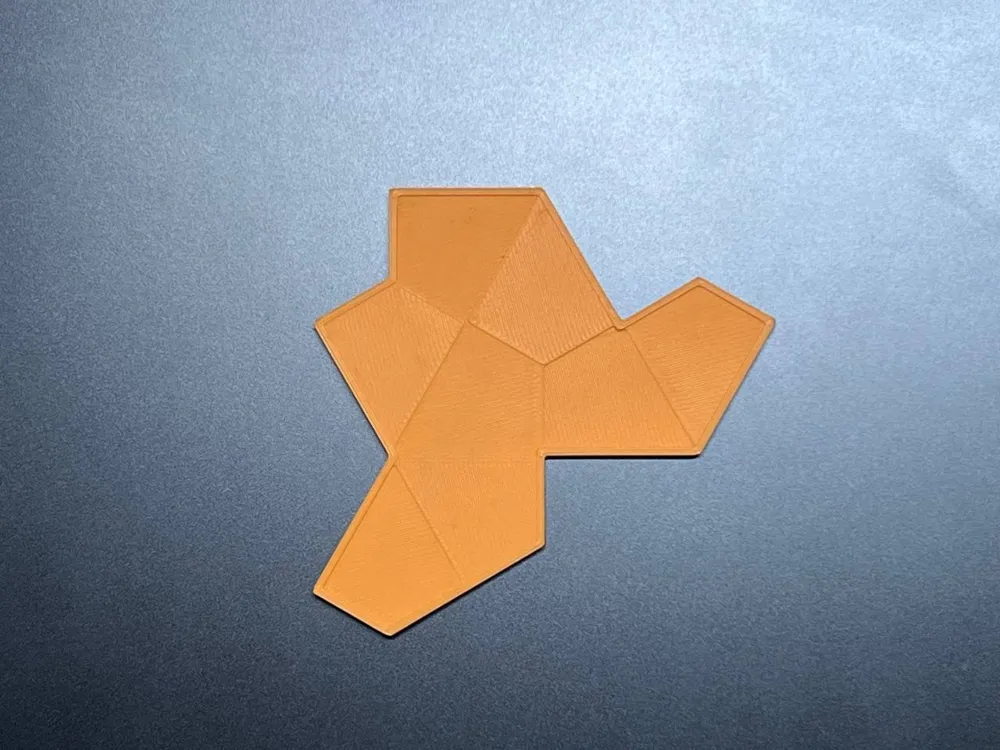
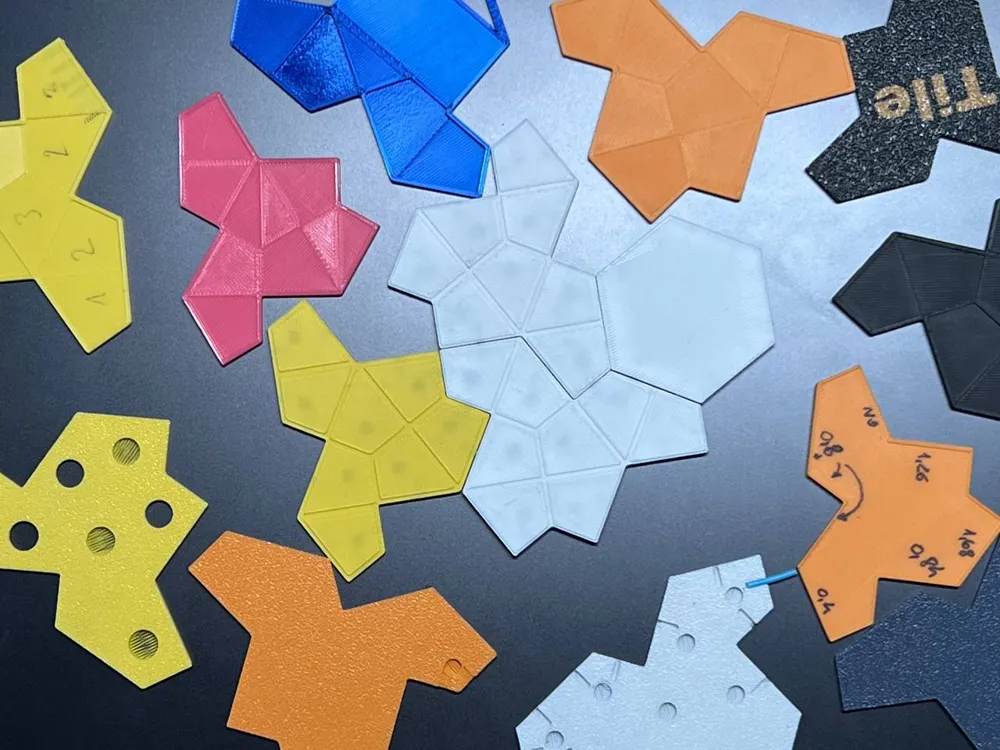
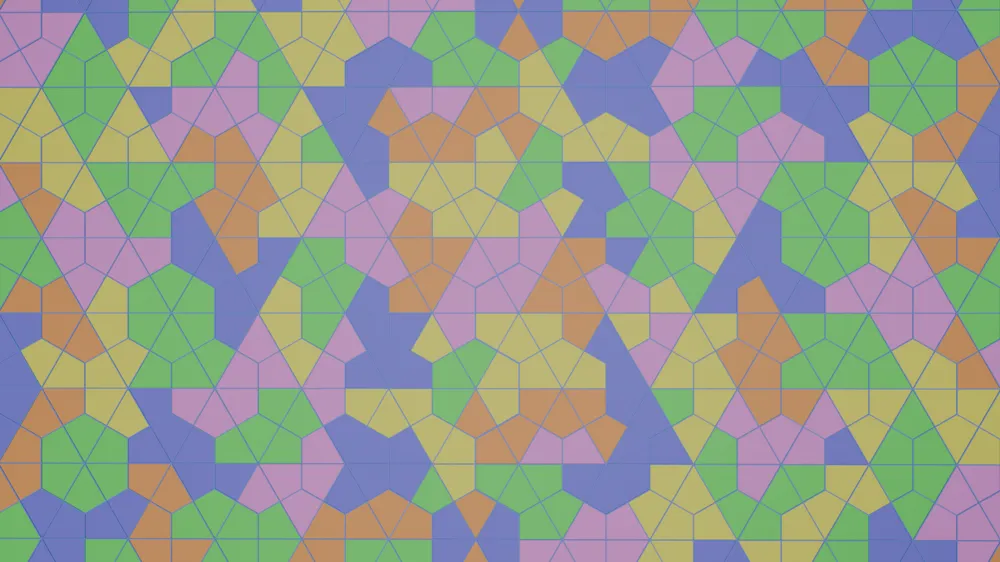
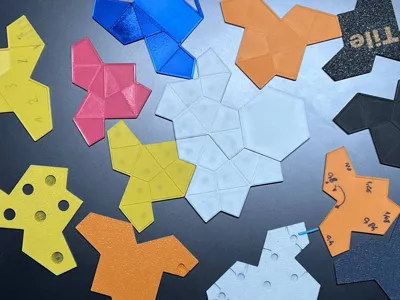
PLHAT is built around a fundamental concept: every Tile is unique, yet perfectly compatible with the others. Starting from the basic kite-shaped unit, you can create an infinite variety of shapes, including the renowned Einstein Tile (Hat).
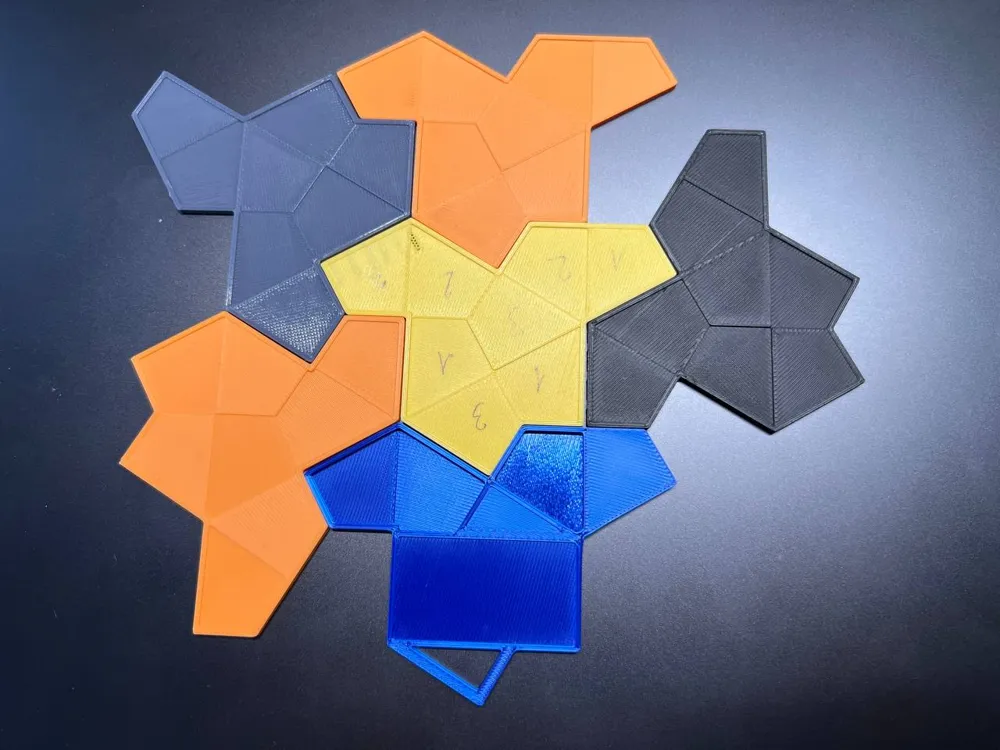
Whether you’re looking to create a mural artwork, a filament sample display, or simply explore the possibilities of geometric design, PLHAT offers unparalleled versatility. Each shape is a puzzle piece that you can assemble to bring new ideas to life.
What You Can Do:
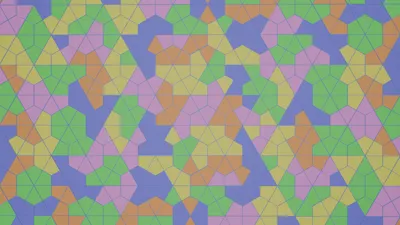
• Wall Art: Use Tiles made from different materials and colors to create unique patterns.
• Filament Demonstrations: Showcase the quality of your filaments on organized modular pieces.
• Hueforge Prints: Create multicolor Hueforge prints on PLHAT tiles to compose your larger artwork.
• Infill Testing: Experiment with different types of infill to evaluate structure and strength.
• Textures and Patterns: Explore various surfaces to enrich your projects.
• Color Combinations: Create Tiles to test color palettes or make artistic compositions.
• Board Game Bases: Design dungeons, paths, or modular maps for fantasy and strategy games.
• Geometric Games: Create visual games and puzzles by leveraging the aperiodic nature of the Tiles.
The Only Limit is Your Imagination
PLHAT is an open platform that empowers designers to choose how to use it. Let your creativity run wild and discover new applications that we might not have imagined yet. With PLHAT, the possibilities are truly endless.
Boost Me (for free)
“A sea of coffee and 2500 lines of code… come on, I deserve a boost! ☕💻”
Design. Customize. Connect.
PLHAT is designed to offer maximum creative freedom through a simple and intuitive process:
• Design: Each Tile can be designed with unique shapes based on the geometry of the kite-shaped polygon. Thanks to this structure, all Tiles are perfectly compatible and easily fit together.
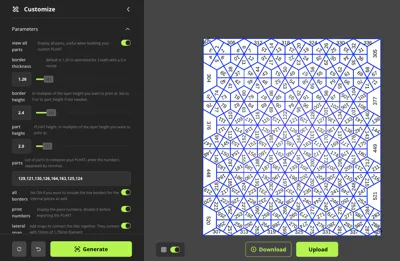
• Customize: The OpenSCAD customizer allows you to personalize every detail:
• Shape: Select which kites will make up the final shape of the PLHAT.
• Borders: Decide whether to add an outer and/or inner border, with options for height and whether to include borders between the internal kites of the PLHAT.
• Custom Heights: Choose whether the borders (outer and inner) should be taller than the central part of the PLHAT or, conversely, be recessed.
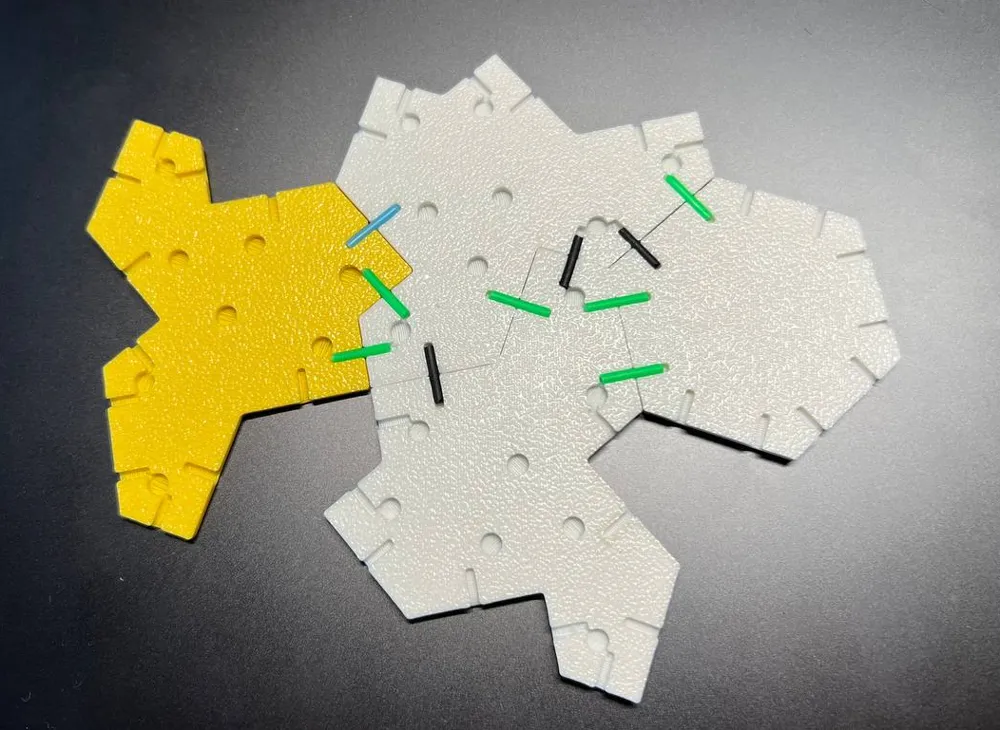
• Filament Connection: Enable the connection system to easily join PLHATs together.
• Border Continuity: If all borders are used, there’s an option to make the outer border half as thick as the inner one, ensuring visual continuity and minimizing gaps between adjacent PLHATs.
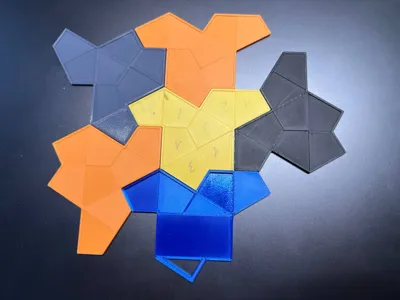
• Connect: The original hooking system uses a simple 1 cm filament piece to join the Tiles (Don’t tell me you don’t have a piece of filament 😜). This makes the connections easy to print and reliable: the pieces stay firmly in place but can be easily disassembled if needed.
Practical Example:
Imagine creating an artistic installation with Tiles of different heights and colors, connected without the need for additional supports. Or, use the system to build a material sample display to showcase in a showroom.
Advanced Features of the PLHAT Customizer
The PLHAT customizer offers a range of advanced tools to design and print customized pieces, adaptable to any need.
Maximum Dimensions
• You can create a single piece up to a maximum size of 292.5x324 mm, a size that exceeds most common print beds.
• This allows you to create large Tiles or design layouts that make the most of modern 3D printers’ capabilities.
Customizable Borders and Corners
• The customizer includes options to add linear borders and corners to your designs.
• These elements are useful for:
• Framing the Tiles linearly.
• Creating orderly and visually coherent compositions.
• Facilitating integration with other modular systems.
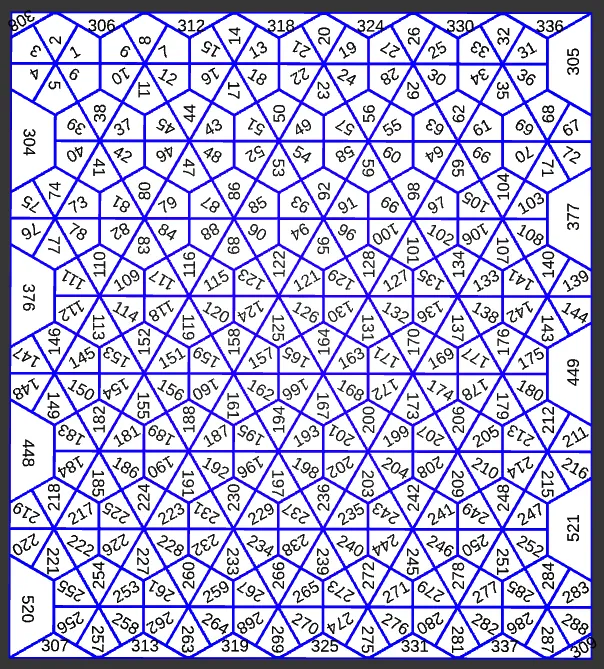
Numbered Pieces Grid
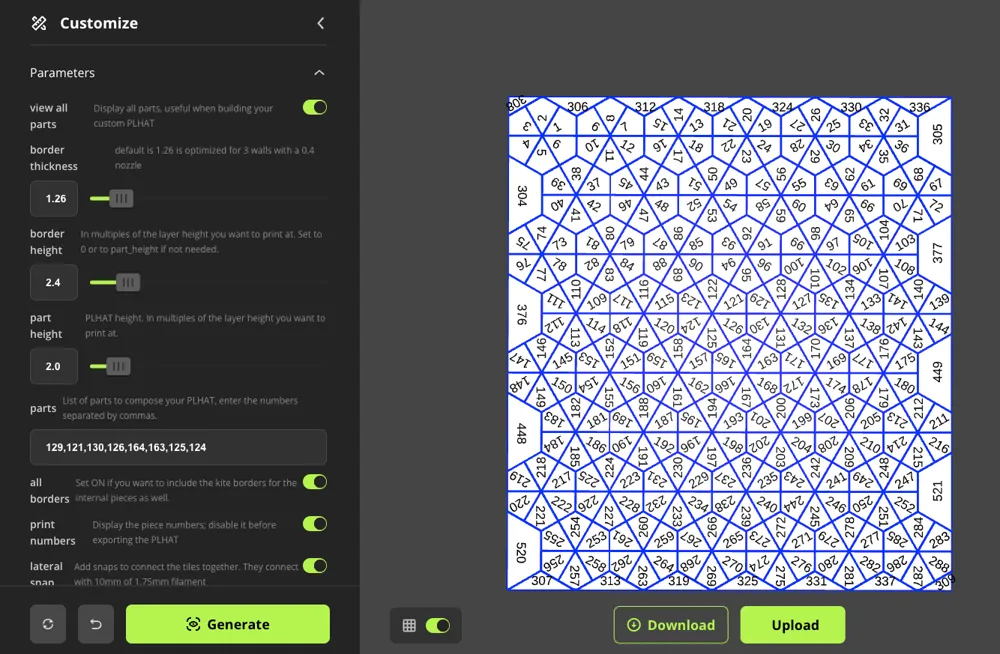
1. By activating the “View All Parts”, “All Borders” and “Print Numbers” options, a complete grid of all numbered pieces will be generated.
• This layout shows each individual component, including borders and corners.
2. Enter the numbers of the pieces needed for your project in the “Parts” field.
3. Export the generated mesh, ready for printing.
Below are some numbers to generate common PLHATs:
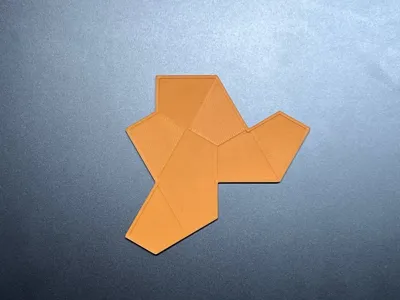
HAT (Aperiodic Tile)
129, 121, 130, 126, 164, 163, 125, 124
Small Hexagon 45x51.96
121, 122, 123, 124, 125, 126
Medium Hexagon 90x77.94
89, 90, 94, 95, 115, 129, 120, 130, 158, 157, 165, 164, 121, 122, 123, 124, 125, 126
Large Hexagon (180x155.88, printable on a Bambulab A1 mini, you can rotate it a few degrees to avoid the edge)
47, 48, 52, 53, 54, 58, 59, 99, 100, 101, 135, 136, 170, 171, 172, 193, 194, 195, 200, 201, 187, 188, 114, 109, 151, 152, 156, 79, 83, 84, 79, 85, 86, 87, 88, 89, 90, 91, 92, 93, 94, 95, 96, 127, 128, 129, 130, 131, 132,
115, 116, 117, 118, 119, 158, 159, 160, 161, 162, 163, 166, 167, 168, 89, 90, 94, 95, 115, 129, 120, 130, 158, 157, 165, 164, 121, 122, 123, 124, 125, 126
Maximum Customization, One Rule: Do Not Scale
The essence of the PLHAT system lies in its perfect modularity, allowing Tiles to be placed side by side without leaving empty spaces. However, there is one fundamental rule: do not scale the Tiles.
Why Not Scale?
• Precise Geometry:
The shapes of PLHATs are designed with rigorous geometry, based on extensive studies and dozens of tests. The size of the Tiles is not random but the result of research to ensure:
• Absolute Modularity: All Tiles can be combined to cover a plane without gaps or overlaps.
• Universal Compatibility: Every PLHAT, regardless of design, fits perfectly with others.
• Consequences of Scaling:
If a Tile is scaled, even slightly, it loses compatibility with the others. This compromises the entire system, preventing the creation of continuous and modular surfaces.
Perfect Dimensions
The size of the basic shapes has been optimized through:
• Practical Tests: Dozens of printed prototypes to verify compatibility between Tiles.
• Balancing Modularity and Practicality: The dimensions were chosen to fit both common print beds and aesthetic and functional needs.
Infinite Customization, No Compromises
Although Tiles cannot be scaled, the system offers limitless customization:
1. Border Modification: Customize the height, shape, and appearance of the border.
2. Unique Design: Use the customizer to create unique variants without altering the fundamental dimensions.
3. Modular Combinations: Create complex layouts by combining different PLHATs, all perfectly compatible.
The strength of the PLHAT system lies in its precision. By keeping the base dimensions intact, you can leverage maximum customization without sacrificing modularity, ensuring that each Tile integrates seamlessly with the others.
The Hat
One of the most important shapes usable with the PLHAT system is the Hat Tile (from which the project name, Platform Hat, is derived).
The Hat (Einstein Tile) is an extraordinary geometric polygon that has attracted much attention in the fields of mathematics and design. Despite its name, it has nothing to do with Albert Einstein: it comes from the German “ein Stein,” meaning “a stone” or “a piece.”
Main Features
• Aperiodic Shape:
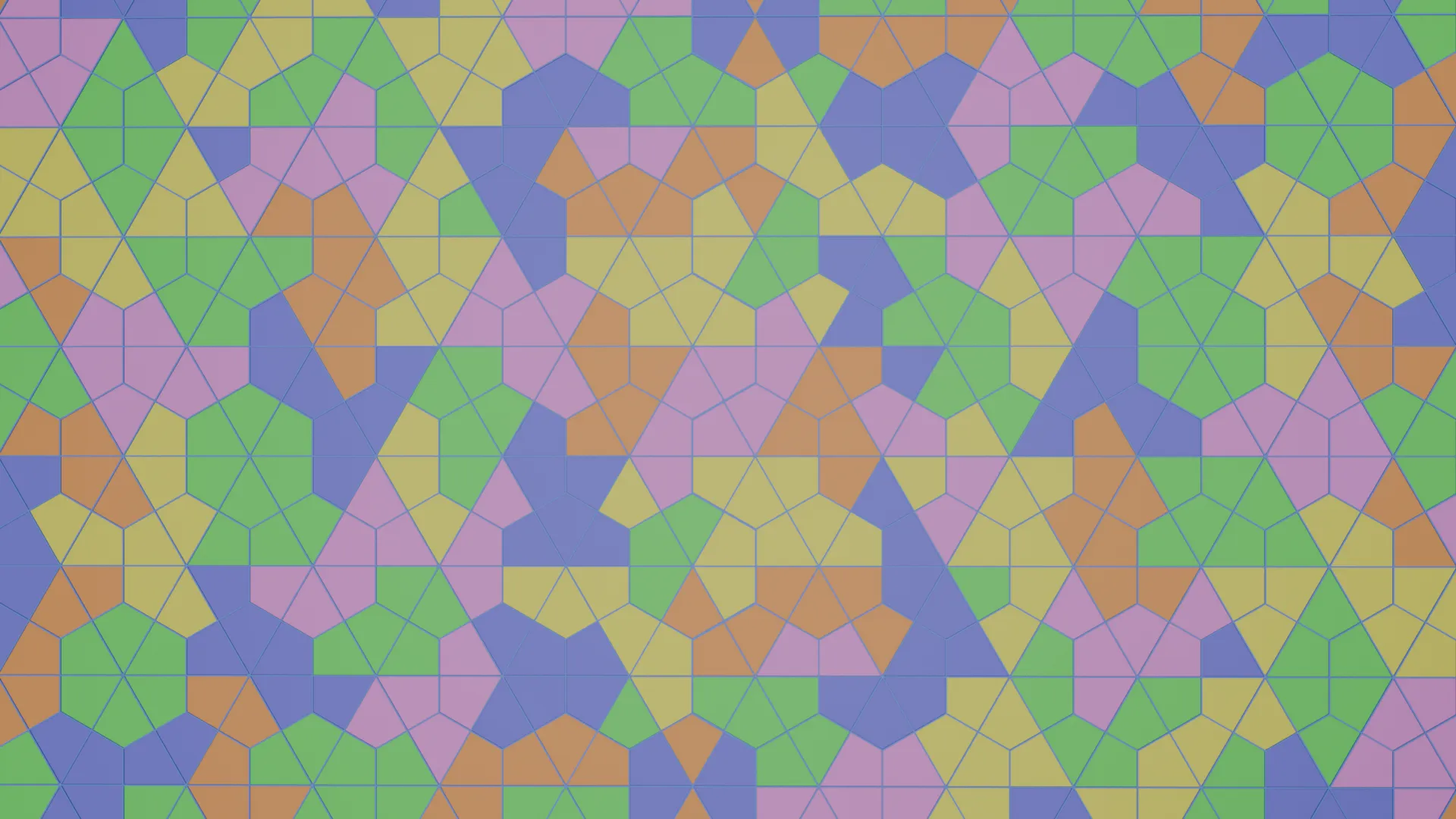
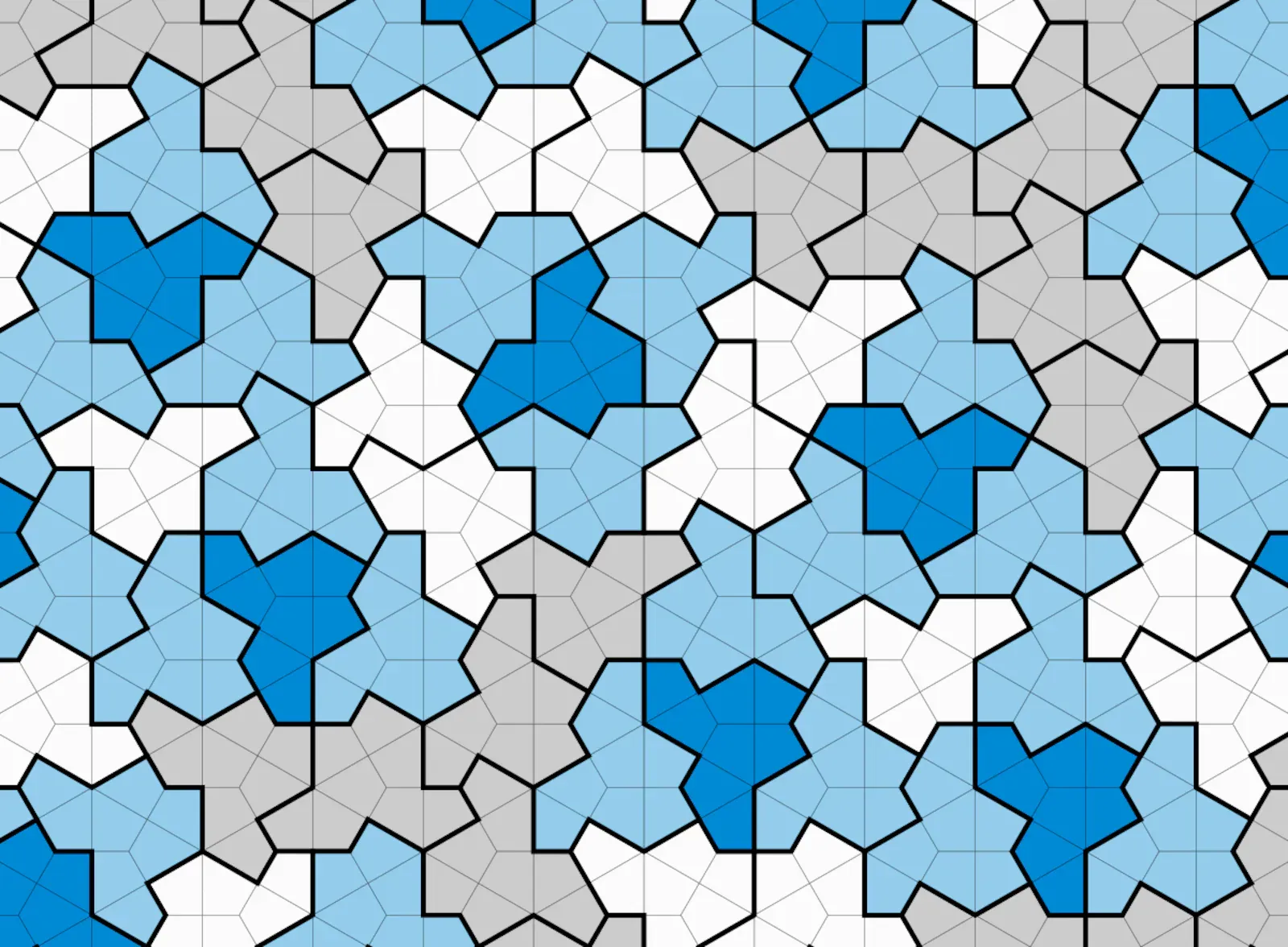
The Einstein Tile is a polygon that can completely cover a plane without periodic repetitions. This means that even though the Tiles fit together perfectly, a regular and repetitive pattern is never created. It is the opposite of a traditional tiling like squares or hexagons.
• The Hat Shape (“Hat”):
In 2023, a team of mathematicians discovered a new shape called Hat (“hat”), which is the first known single polygon capable of creating an aperiodic tiling. The shape resembles a hat with wide wings and is composed of simpler polygons (e.g., kites).
• A Monotile Polygon:
The Hat is one of the few known monotiles, meaning a shape that alone can tile a plane aperiodically. Before this discovery, other aperiodic systems were known but required multiple different shapes.
Basic Design and Technical Features
The PLHATs are designed with the goal of being as thin as possible, focusing on the importance of the visible face. The base model has been optimized to have a thickness of only 2 mm, a measurement that allows for the implementation of an effective connection system without compromising robustness. It prints in 10 minutes!
Mounting Options
If the Tiles do not require mechanical connections, the thickness can be further reduced. In these cases, PLHATs can be mounted using alternative methods, such as:
• Adhesive glue;
• Double-sided tape;
• Silicone or other fastening materials.
This flexibility allows the Tiles to be adapted to a wide range of applications, always ensuring a stable and functional result.
Innovative Connection System
To implement a practical and economical hooking system, I conducted dozens of tests to identify the most effective solution. The best result was achieved using a piece of standard 1.75 mm filament, pressed in or inserted sideways. This approach offers a solid connection without requiring complex or expensive parts.
Optimization for Thinness
To keep the Tiles as thin as possible:
• The filament protrudes 0.15 mm below the PLHAT.
• This allows adding an additional layer of 0.2 mm, maintaining the total minimum thickness.
• The slight filament protrusion does not compromise the planarity of the Tile, making it suitable for both decorative and functional applications.
This balance between reduced thickness and structural stability makes PLHATs ideal for a wide variety of uses, while ensuring ease of production and compatibility with different fastening techniques.
Join the Project
Print your PLHATs, share your creations and the tiles you’ve made, and let us know how we can improve the project. I would love for users to share the tiles they create. Your feedback is essential to evolve PLHAT and make it even more versatile and creative.
Support the Project
If you believe that PLHAT deserves support, help me give the project a boost. Every contribution allows us to develop new features, expand the possibilities of using the Tiles, and reach a broader audience. Thank you for your support and for believing in our vision!
How to Use PLHATs for Advanced 3D Modeling Operations
Thanks to the integrated customizer, PLHATs offer an advanced feature that allows you to generate an inverse mesh of the created model. This feature significantly expands the usage possibilities, making them ideal for boolean operations and unique customizations.
Inverse Mesh Generation
• How It Works:
When you create a customized PLHAT with the customizer, you can export not only the positive model but also its inverse (negative) version.
• The inverse mesh is a solid that represents the negative imprint of the PLHAT, perfect for use in combination with other 3D models.
Practical Applications
1. 3D Object Cutting (e.g., a Hueforge):
• Import the inverse mesh into 3D modeling software like Blender, Fusion 360, or Tinkercad.
• Use the boolean function to cut another solid with the shape of the customized PLHAT.
• This allows you to create shaped objects or custom textures on existing surfaces.
2. Integration with Other Solids:
• After creating a customized PLHAT, you can merge it with another 3D model (e.g., a box, a stand, or a decorative object).
• The result will be a single solid that incorporates the geometry of the PLHAT, ready for printing.
Beautiful Hexagons, But Enough Already!
The hexagon is one of the most fascinating geometric shapes: elegant, versatile, and perfect for creating honeycomb grids. I love it too, especially for its ability to cover surfaces harmoniously and continuously. But let’s be honest: it’s everywhere now.
• Hexagons Everywhere:
Search for “hexagon” on Makerworld and you’ll find thousands of modular projects based on this shape. Hexagonal patterns repeat in designs, 3D prints, furniture, and even packaging.
The hexagon is undoubtedly beautiful, but isn’t there a risk of it becoming boring? Seeing the same shape repeatedly can flatten the originality of a project.
PLHAT: Beyond the Hexagon. Although the hexagonal motif can also be referenced in PLHAT (thanks to its modularity and the ability to create complex patterns), the hexagon is not the base shape.
Why Limit Yourself to Hexagons?
With PLHAT, you can explore new geometric possibilities, stepping out of the box and bringing freshness to your projects. There’s no need to abandon the hexagon entirely (it’s a fantastic shape), but it’s time to look beyond and experiment with something new.
How the Idea of PLHAT Was Born
The idea for PLHAT comes from my daily experience with 3D printing. I was continuously printing all sorts of tests: from filament type, color, ironing effects, patterns, wall transparency, to the classic Benchy, Hueforge prints, and a thousand other experiments. However, after printing them, they ended up in a drawer… and eventually in the trash.
I asked myself: “Is there a way to reuse these tests creatively, perhaps artistically?”
At the same time, I always had a certain frustration with repetitive patterns. It stresses me out to see regular motifs: I end up obsessively searching for an element that breaks them, and this takes away all the pleasure of composition. It was then that I became fascinated by the Einstein Tile, particularly the Hat shape. The fact that a single tile could cover an entire plane without ever creating a repetitive pattern was exactly what I was looking for.
From the Initial Idea to the Complete Project
Starting from these reflections, I decided that all my test prints would take the shape of a Hat. But what would be the “perfect” size? After countless trials, I found the ideal dimension, balancing modularity, aesthetics, and practicality.
Then came the next insight: what if, by maintaining the angles and border dimensions, I could print pieces compatible with the Hat shape? From there, the idea of developing a customizer was born, a tool that not only allowed generating modular Tiles but also offered complete customization.
As always, when faced with a challenge, I got carried away. Despite the efforts, I transformed the customizer into something much more powerful: a complete system for customizing borders, hooks, corners, and much more.
PLHAT is not just a modular system; it is the answer to a creative and functional problem: giving new life to print tests by transforming them into unique works, free from the constraints of repetitive patterns and capable of expressing something original.
License

Comment & Rating (0)