Search models, users, collections, and posts

Xiao, Chinese Traditional Flute, G Key, 8 Holes (Printable on A1 mini)
Print Profile(1)

All
A1 mini
P1S
P1P
X1
X1 Carbon
X1E
A1
H2D
H2D Pro
H2S
P2S
H2C
X2D
A2L

Tested successfully on P1S and A1 mini,  A1 printing requires silent mode
Tested successfully on P1S and A1 mini, A1 printing requires silent mode
Designer
7.9 h
1 plate
4.7(438)

Open in Bambu Studio
Boost
3667
8675
667
645
8.6 k
4.1 k
Released 

Bill of Materials

Bambu Filaments
Select all
Black (33102) / Refill / 1 kg

Description

Content has been automatically translated.
Show original

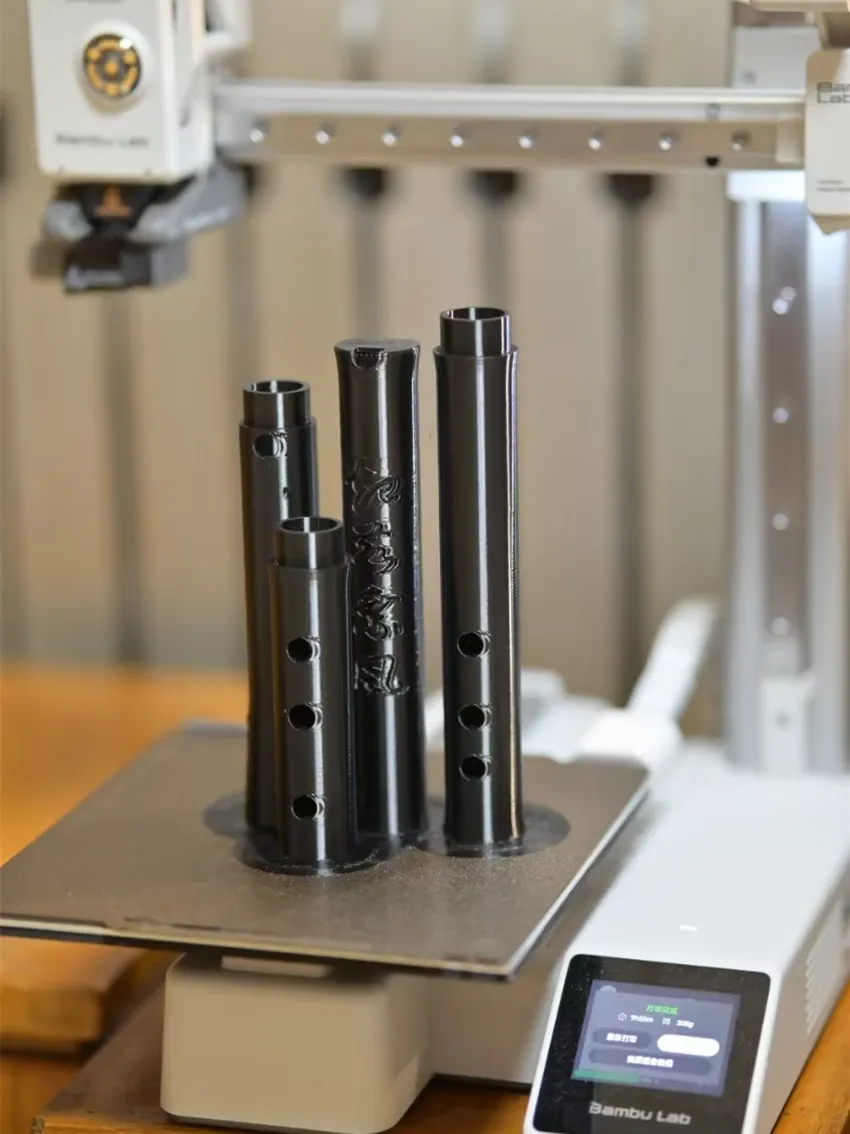
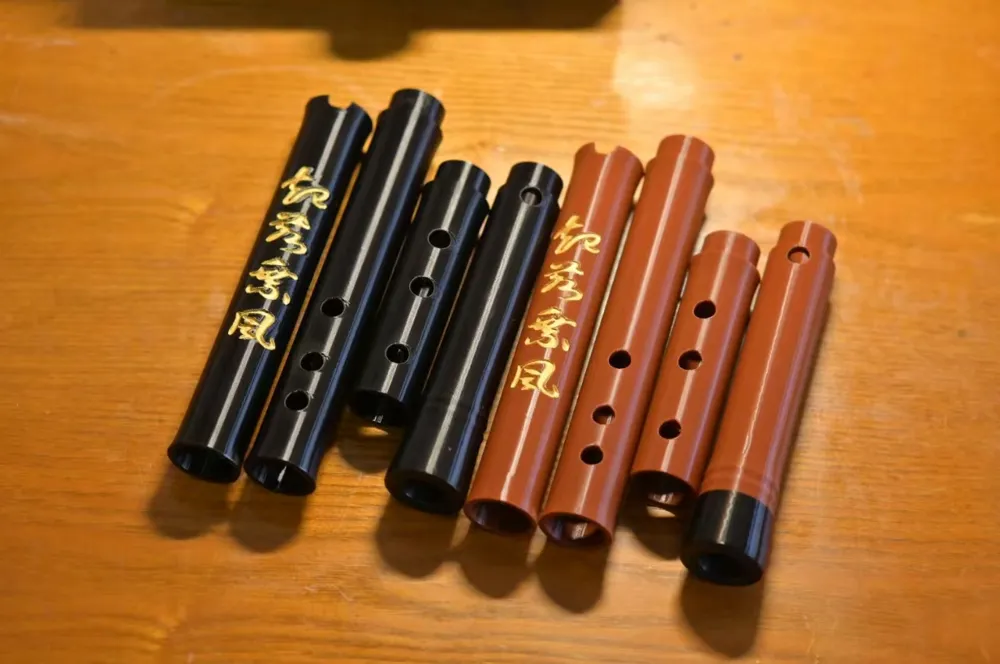
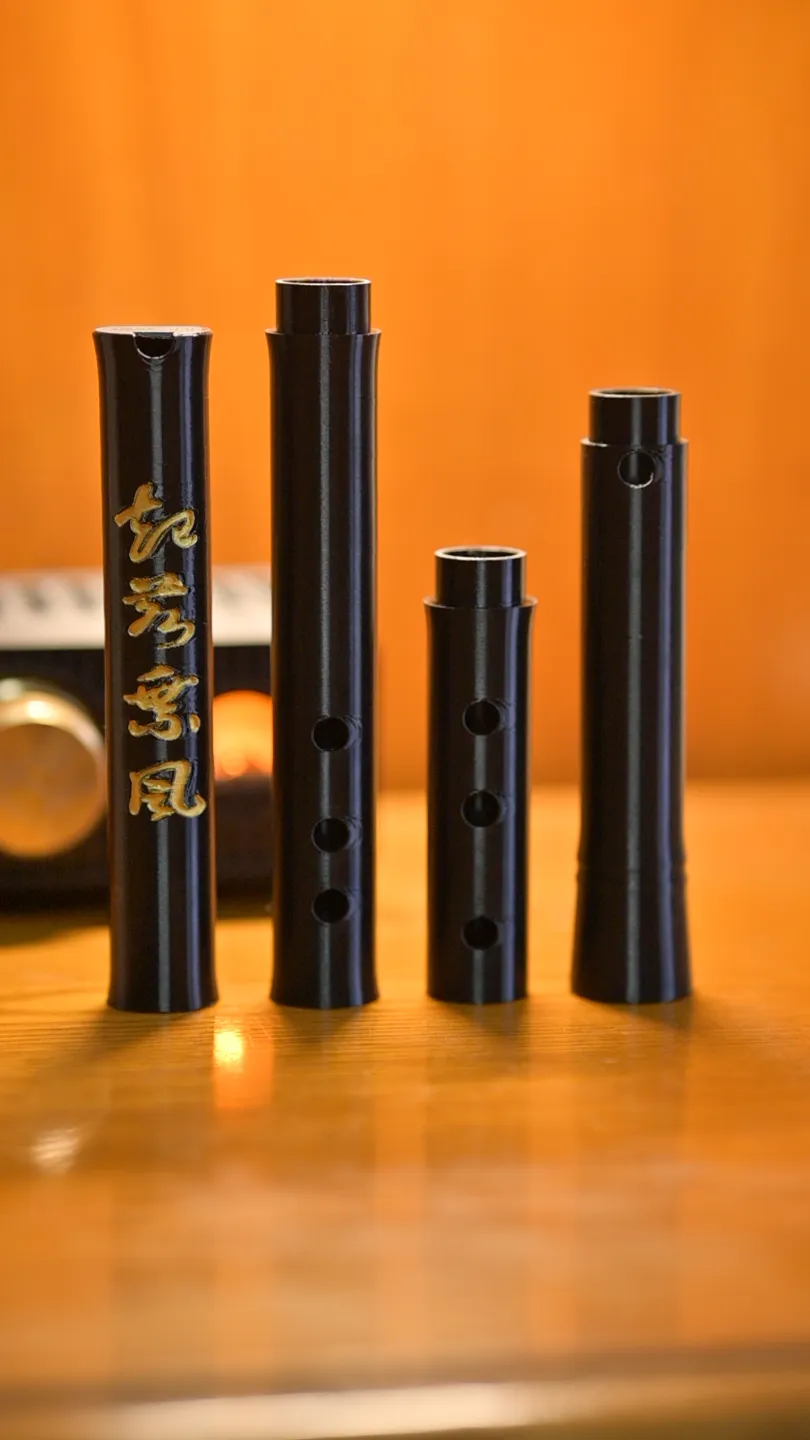
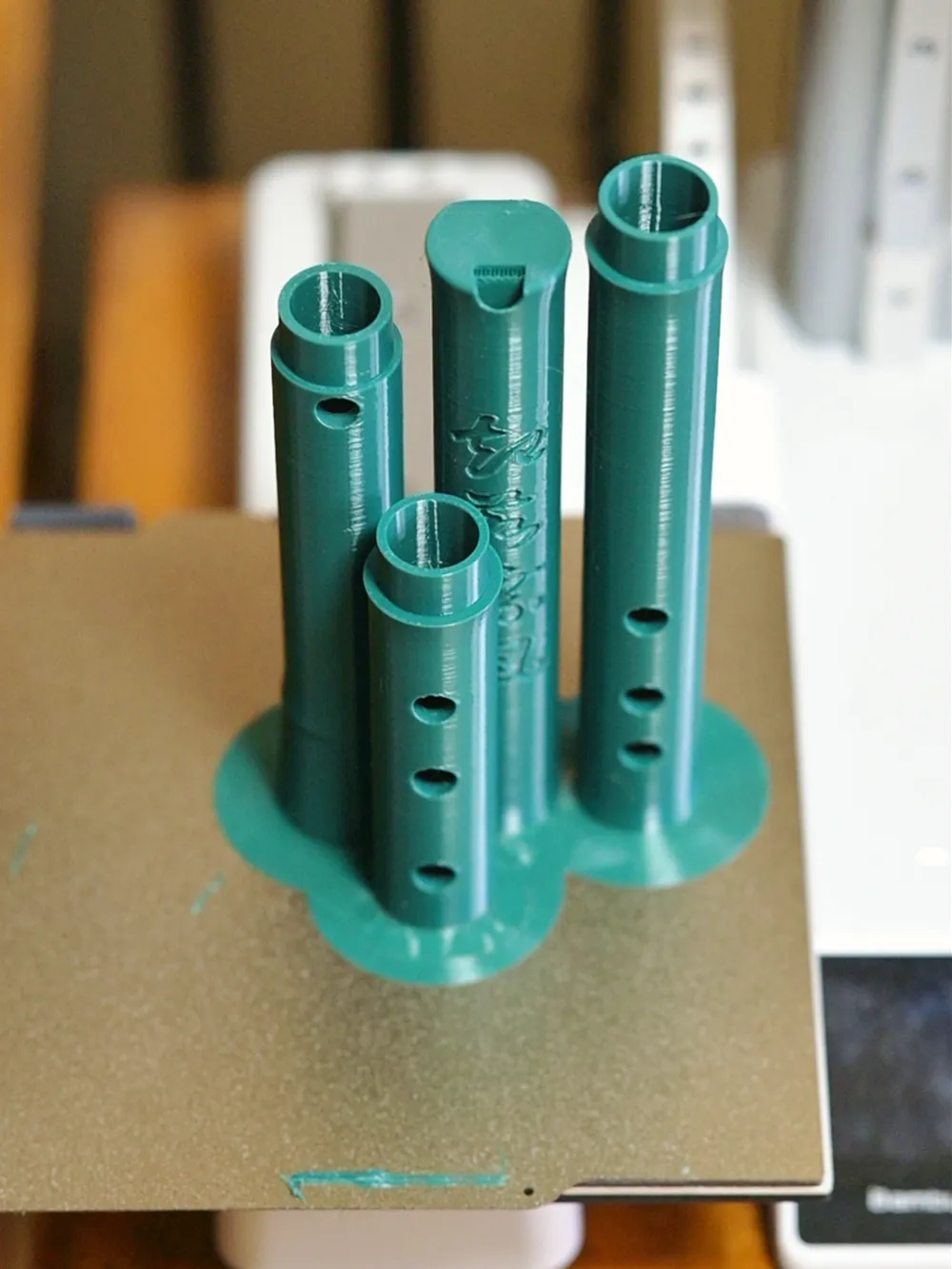
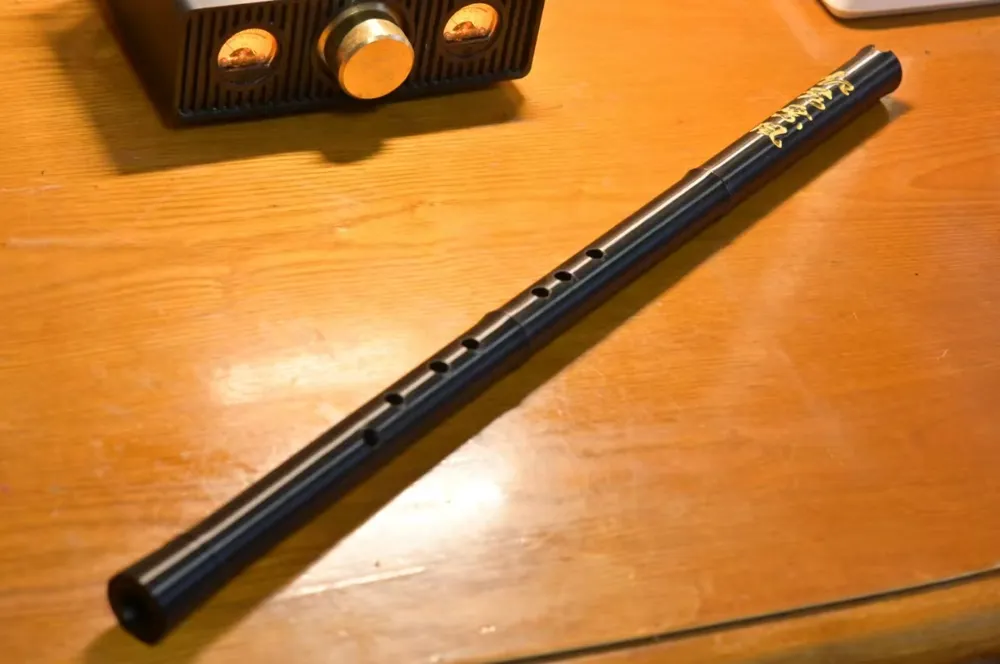
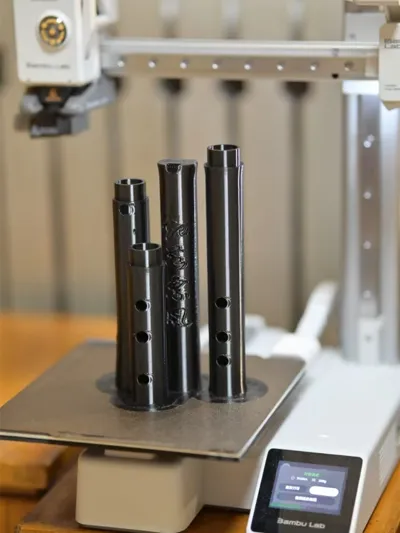
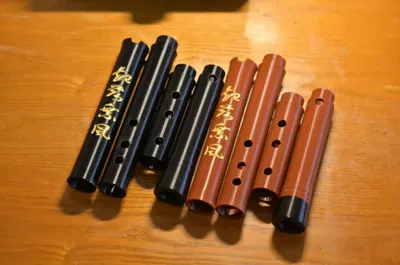
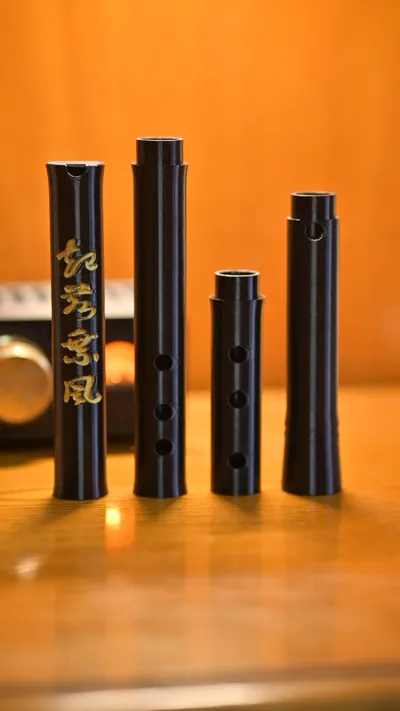
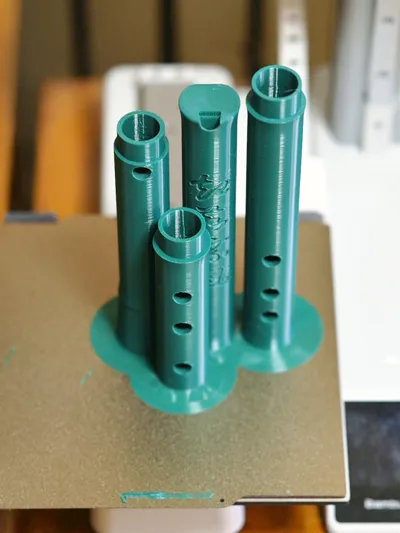
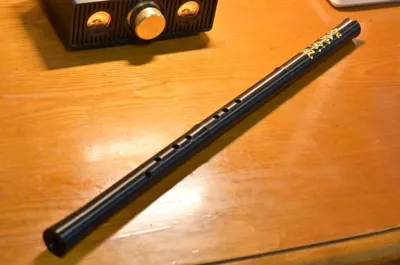
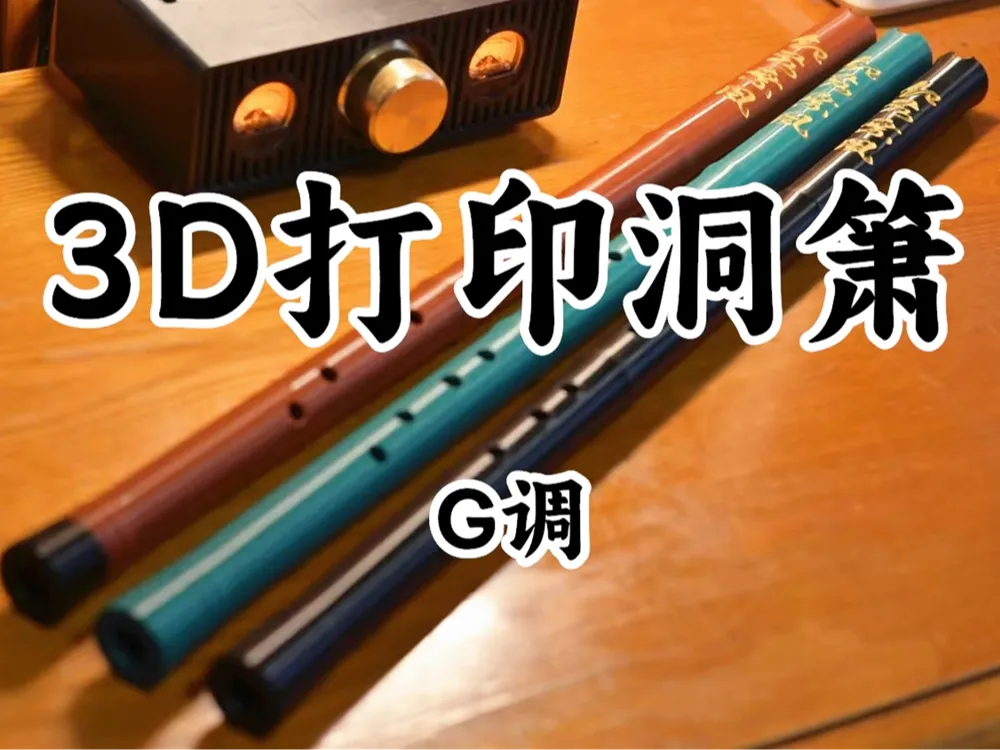
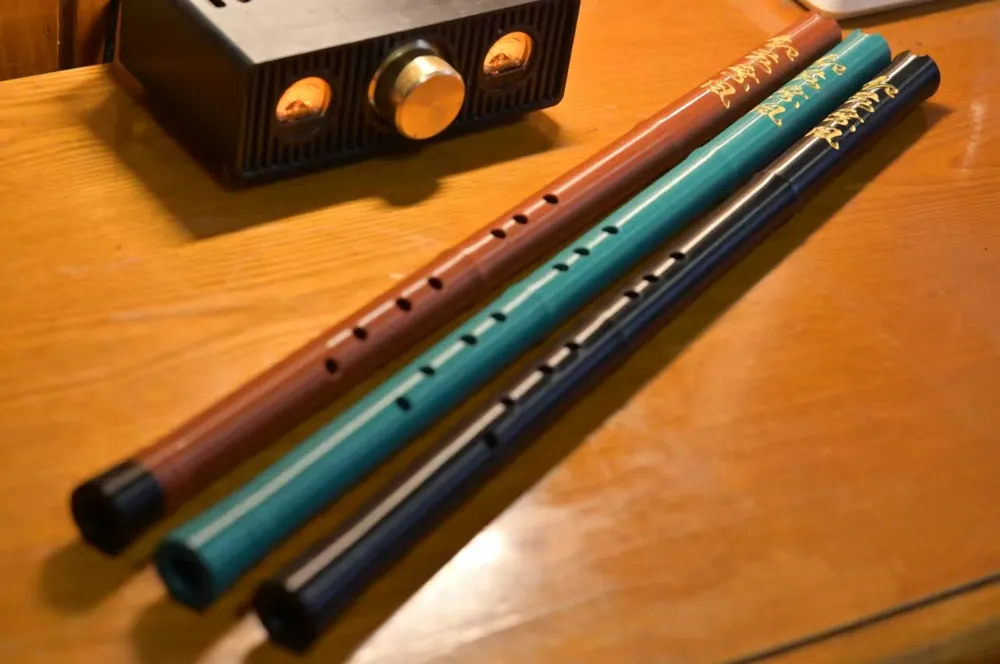
This is an original design for a Chinese flute, featuring a traditional timbre, increased inner diameter, conical bore, G key, eight holes, short tailpiece, and A1 mini printability. It's designed in four interlocking sections, with a rotatable first hole allowing for both right- and left-handed use. Testing shows successful printing with the A1 mini using r3d PETG and Tianrui PETG-ECO (for A1 mini printing, it's recommended to disable flow calibration to prevent unexplained printing pauses). The video showcases black PETG-ECO, but feel free to experiment and use AMS to incorporate other colors for the tailpiece and similar parts. Initial testing indicates a pleasing tone, suitable for casual playing or finger exercises; however, for serious study, purchasing a professional-grade flute is recommended.

Tall, slender models are prone to toppling if the base adhesion is poor; A1 mini users are advised to utilize silent mode for printing.

Originality is not easy; please credit the source if reposting this design. Thank you.

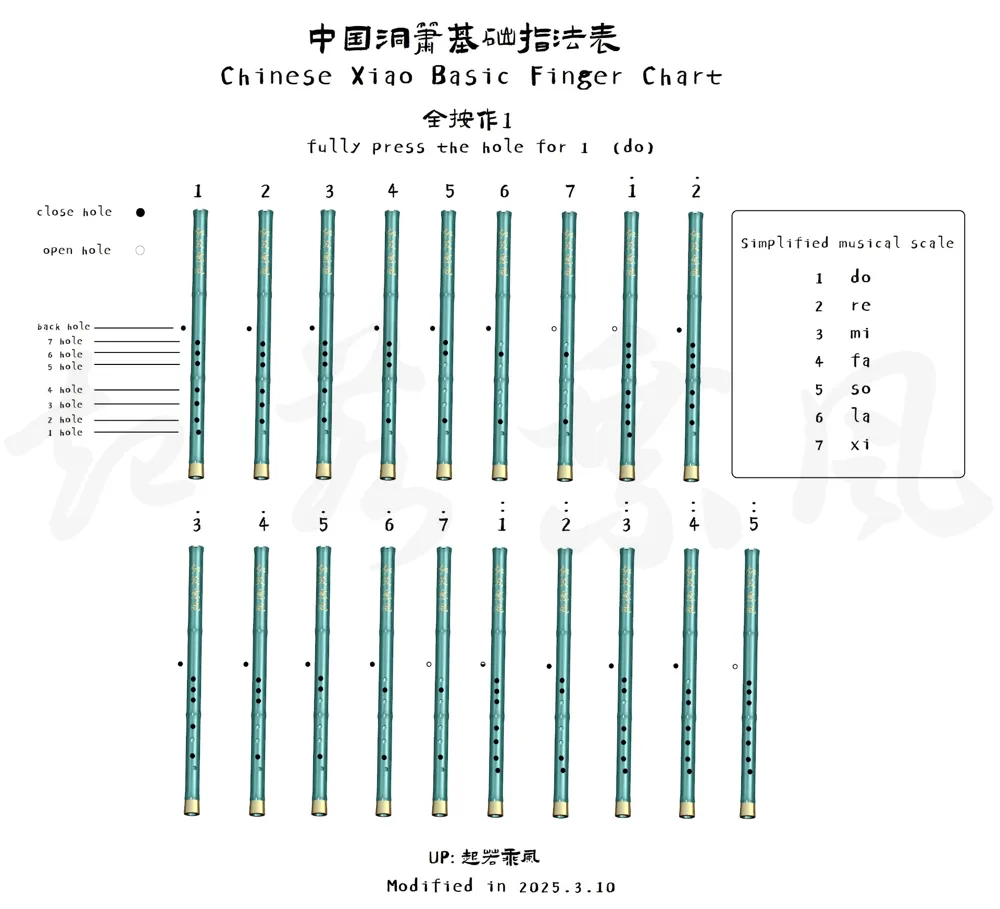
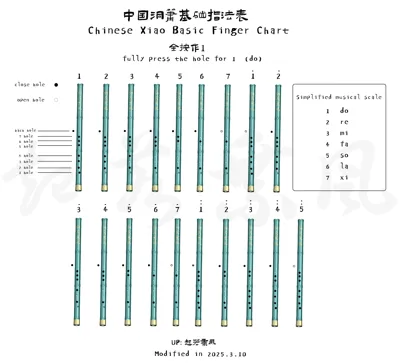
March 10, 2025: A basic fingering chart has been added, available as the seventh image.

Comment & Rating (667)

(0/1000)

Boosted
Print Profile
Tested successfully on P1S and A1 mini, A1 printing requires silent mode
very good, I printed one in black pla and a second one in bronze pla with a layer height of 0.12 and I found that the second one makes a little bit of a lower sound, checking with a tuning app I found one or two notes that required removing a finger to play correctly between the two flutes, after a few hours of learning from YouTube I was able to play a classic song https://goamcan.com/lessons/Xiao-02.html
The profile uploader has replied
profile
31
Reply
thank you so much for the link , i was searching the notes :)
(Edited)
1
Reply
Here is a fingering chart for your reference
(Edited)
Show original
2
Reply
Boosted
Replying to @user_32806021 :
thanks, i had already found something similar but these charts are made for a properly tuned flute, this one is 3d printed so it can't be perfect. here's a video of me playing the first column (all holes closed, each row is a different way of blowing that produces a different note) https://streamable.com/f6ir03 the end result is slightly different from the chart, like this:
(Edited)
1
Reply
Print Profile
Tested successfully on P1S and A1 mini, A1 printing requires silent mode
I am a saxophonist, and I decided to buy a transverse flute for a change. Browsing Maker World, I found this, and it couldn't have been better! I love Chinese culture, food, and music. This flute is wonderful, in tune, works perfectly, and has allowed me to approach Chinese music, which I can now study with dedication and with the original instrument. Despite not being made of bamboo, it has a very beautiful and relaxing sound and is in no way inferior to a bamboo flute
The profile uploader has replied
Show original
profile
28
Reply
I forgot, I used Bambu PLA Basic
(Edited)
Show original
5
Reply
Excellent work, I also printed an alto saxophone mouthpiece today. Being left-handed, suitable instruments are difficult to find, so I might attempt to create a left-handed saxophone for beginners, haha. Unlike transverse flutes, in China, the dizi is considered a scholar's instrument, often played in conjunction with the guqin, hence the term "qinxiao". When people hear that you play the dizi, they perceive it as somewhat unique, as if playing the dizi is inherently more refined than playing the flute.
(Edited)
Show original
2
Reply
Replying to @user_32806021 :
The pan flute is a large and challenging instrument, possessing unique characteristics much like the xiao flute As a saxophonist, I can confirm that a left-handed saxophone does not exist; it has not been created to date, because after a few months of handling it, I’m sure you’ll encounter no further difficulties Positioning the fingers on the saxophone’s keys is easier than on the xiao flute The mouthpiece I use on my saxophone is one I 3D printed myself, and I even use it for jazz concerts Thank you again for sharing; this is an excellent project
(Edited)
Show original
3
Reply
Great print! Sounded very good. You could save about 10g of support materials by just flipping the mouthpiece part (with words on it) on the X axis for 180 degrees. And you'll also cut down the printing time by another 30 mins. I printed mine on 20% infill, Gyroid pattern. And it is holding up nicely.
The designer has replied
6
Reply
Inverted printing of the mouthpiece will result in some overhanging parts, slightly affecting the sound quality
Show original
2
Reply
Replying to @user_32806021 :
ahhh... You're right, I did have some trouble making sounds out of it. Gonna print one with your settings and see if its better! Thanks again!
1
Reply
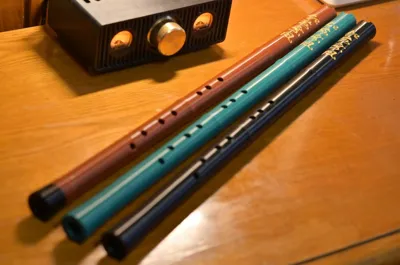
Thanks for the file! Model was perfectly sized to slip into each piece firmly. Don’t know the first thing about playing a flute, but my wife was able to play each note clearly! Will be a fun thing to play with. Printed in overture PLA pro brown. Took about 5 hours on my mk4s
The designer has replied
designer
7
Reply
Your wife can play the instrument very well right after getting it, the mk4 prints very fast, and the print quality looks very good
Show original
3
Reply
Printed in PETG. In trying to save filament and time, I lowered the flushing volumes a bit much so I didn't get the embedded clear blue on the writing. What does it say and where is a video to show how to play it?
The designer has replied
0
Reply
The four-character idiom roughly translates to "rising like the wind," conveying a sense of effortless grace and freedom in action
Show original
2
Reply
The introduction includes a link to my Bilibili upload, I wonder if you are able to view it
Show original
1
Reply
Replying to @user_32806021 :
Thanks for the reply. Yes, I saw the video, but not sure how to position my mouth to it. I've managed to sometimes get a response from it, but not consistently. Thanks for the hyperventilation !
1
Reply
Print Profile
Tested successfully on P1S and A1 mini, A1 printing requires silent mode
Magnificent! My son plays the flute, I play the xiao, my wife plays…
The profile uploader has replied
Show original
profile
6
Reply
Clearly the most favored member of the family, haha
(Edited)
Show original
1
Reply
Print Profile
Tested successfully on P1S and A1 mini, A1 printing requires silent mode
Love the Xiao. Amazing that printers can make such instruments.You should create different print profiles. I made a silk+ Xiao and slowed it down to 50mm/s to make it extra shiny. the problem is that slowing down the print speed gives higher quality which makes the print lines more precise and caused the tension between joints to be different. Some were too loose. That is my theory as I haven’t printed it at normal speed and with the recommended filament. I also lowered layer height. Thanks!
The profile uploader has replied
profile
4
Reply
Silk filaments are undeniably beautiful, however, the weak interlayer adhesion of silk filaments is likely an inherent material property Similarly, matte materials, wood-like filaments, and fiber filaments exhibit reduced interlayer adhesion due to added additives
Show original
0
Reply
Print Profile
Tested successfully on P1S and A1 mini, A1 printing requires silent mode
Very nice design. I flipped the mouthpiece section over so to not need support for printing. Had to print the longest section on its own after it got knocked off the bed during the first attempt. Now the flute is amongst my collection of flutes I made (with bamboo). This is my first Xiao and I have difficulty getting a sound from the two lowest notes (all finger holes covered or opening the bottom one only), is that normal?
The profile uploader has replied
1
Reply
Excellent, I see many Quena flutes on the shelf. It’s unusual that none of them produce sound when blown; there’s likely an issue with the embouchure or a leak somewhere. Further inspection is needed to check for any foreign objects inside the tubes
Show original
0
Reply
Replying to @user_32806021 :
Yes, I do make a lot of Quena, Quenacho and Native American flutes. What could be the issue with the embouchure? I've added a layer of tape at each connection but it didn't help. I might have to fully seal with superglue instead. The inside of the flute looks clean.
0
Reply
Replying to @user_32806021 :
There is indeed a leak. I used soapy water to try find it but could not, however, when the flute was still wet it played perfectly! I will try fix it but coating the inside with clear polyurethane.
0
Reply
This one is really sturdy 200g gotta learn to talk it up
The designer has replied
Show original
designer
2
Reply
Hi, I see you added a silver color to your flute, what material did you use
Show original
0
Reply
Replying to @try3000_off :
I manually drew it using the metallic silver paint pen "Mr-Hobby GunDam Marker EX"
Show original
4
Reply
Replying to @wakedream1234hm :
Thank you, I found it
Show original
0
Reply
Print Profile
Tested successfully on P1S and A1 mini, A1 printing requires silent mode
Mine came out perfectly. I am not quite sure how to get it to work as I've never used this instrument before, but I will stay persistent with learning!
profile
5
Reply

License

This user content is licensed under a Standard Digital File License.

You shall not share, sub-license, sell, rent, host, transfer, or distribute in any way the digital or 3D printed versions of this object, nor any other derivative work of this object in its digital or physical format (including - but not limited to - remixes of this object, and hosting on other digital platforms). The objects may not be used without permission in any way whatsoever in which you charge money, or collect fees.