
Starlight 2
Print Profile(4)
Description
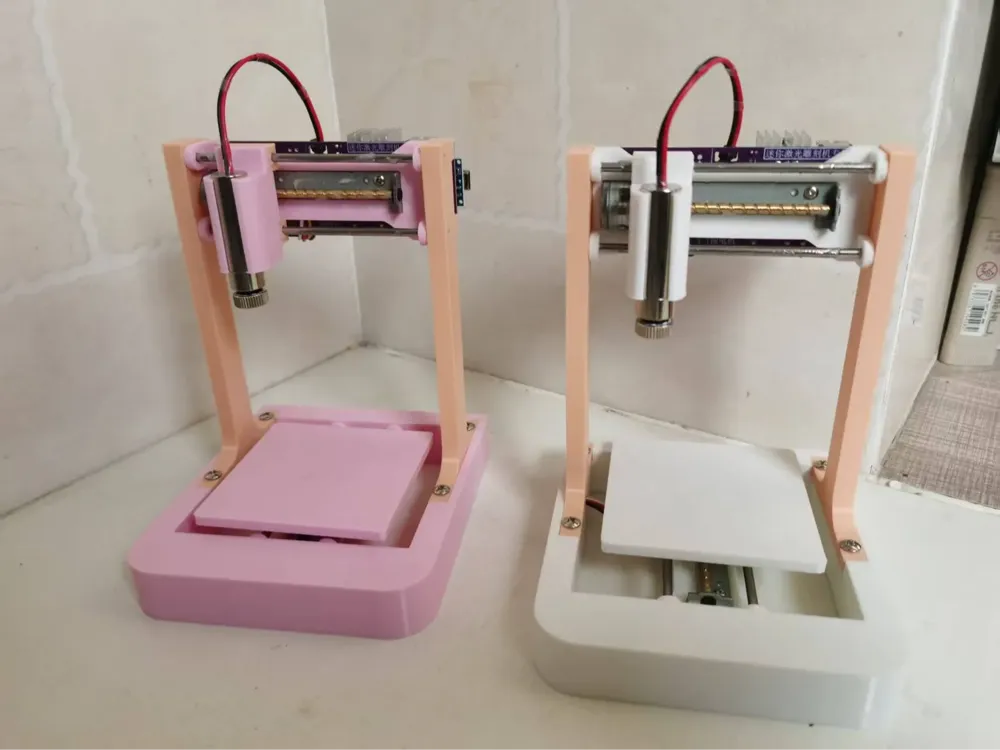
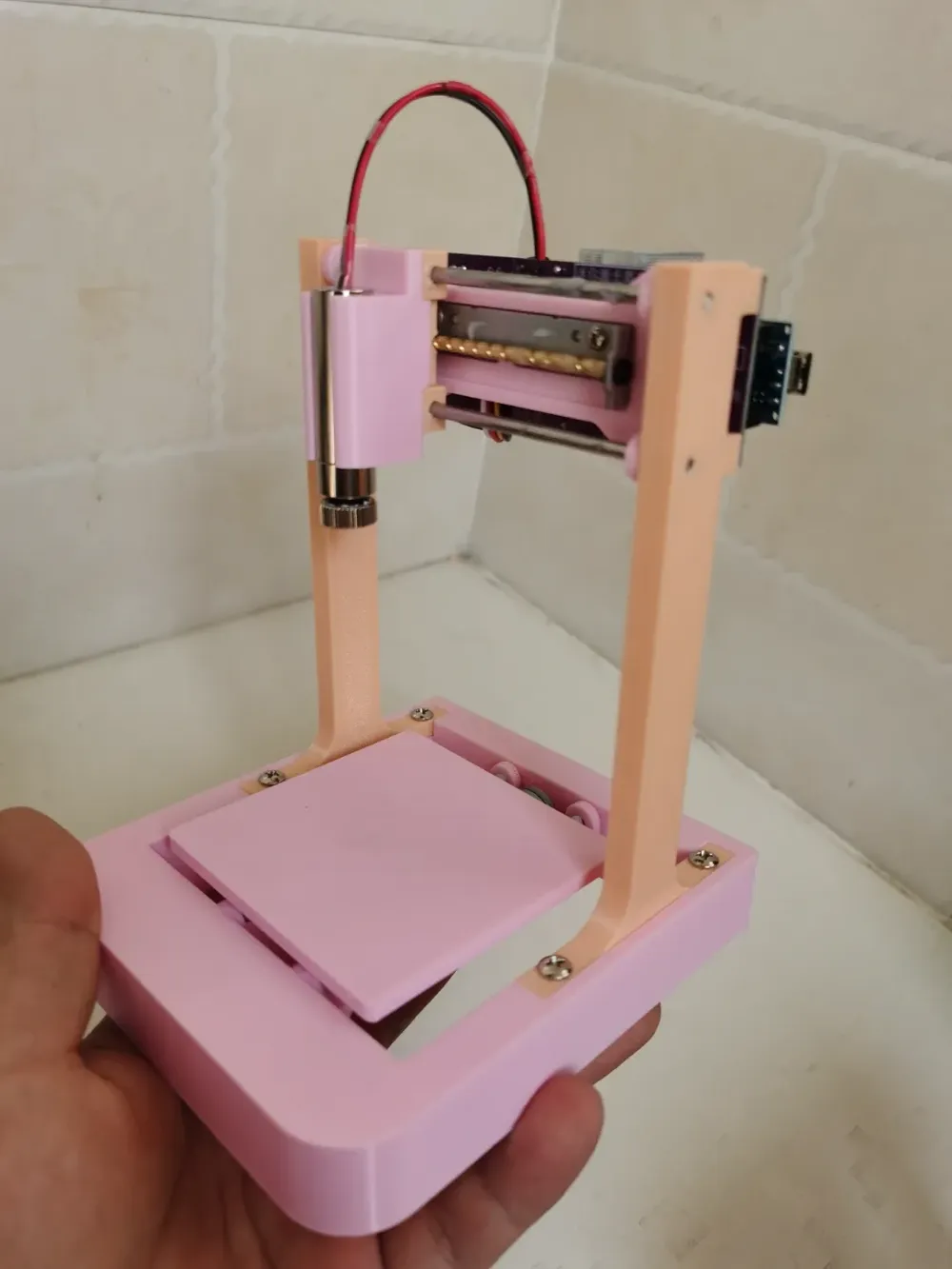
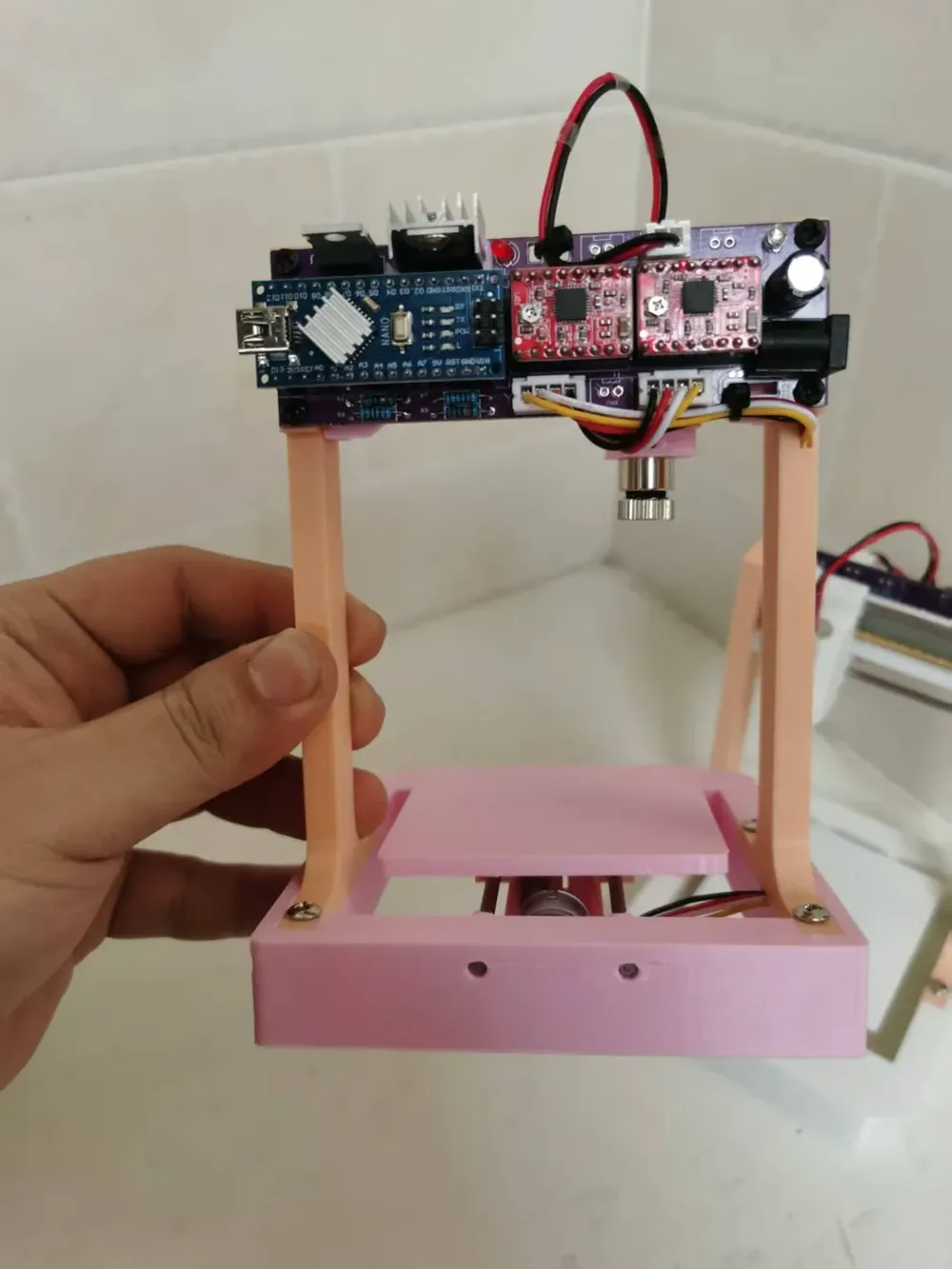
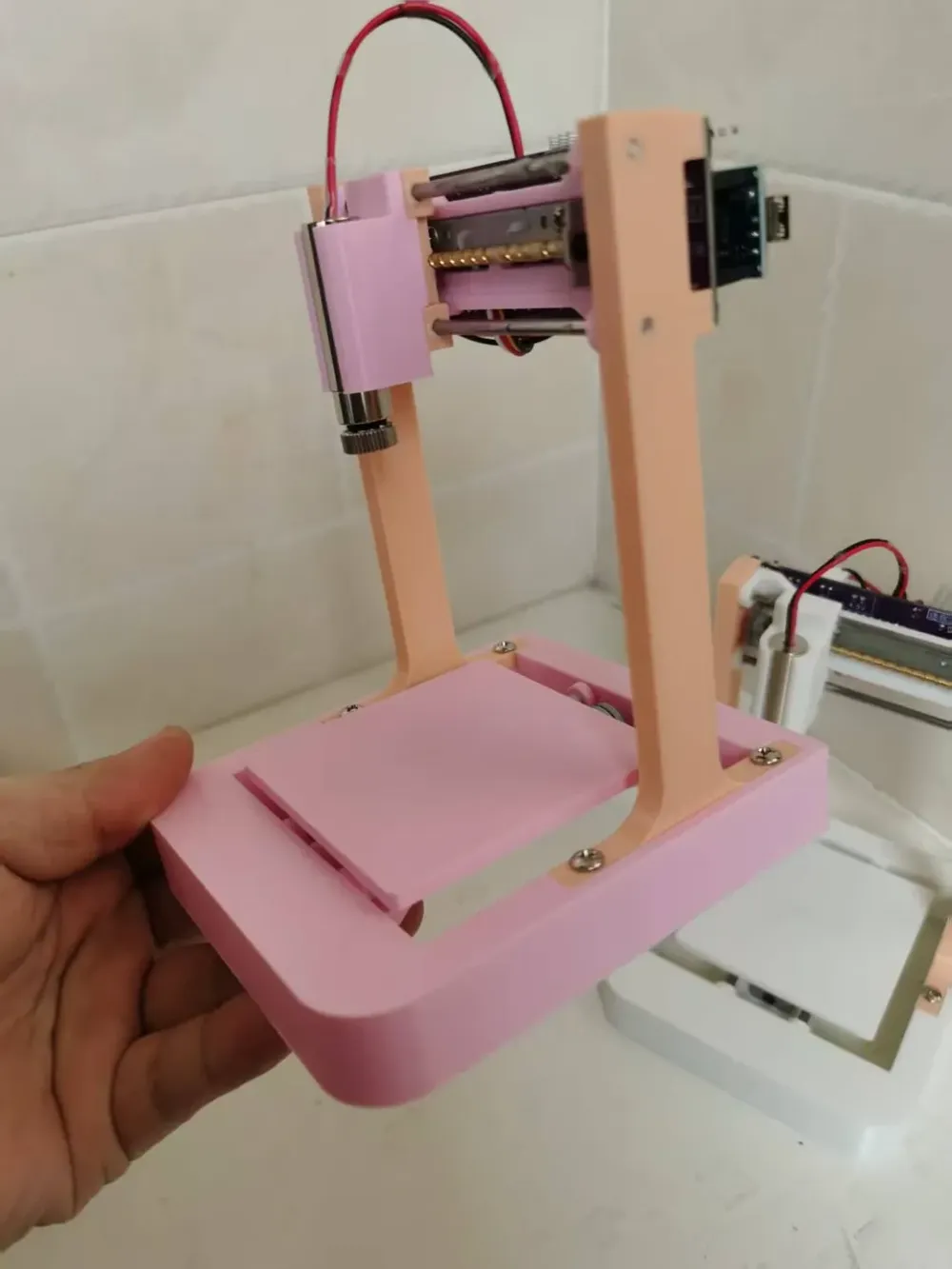
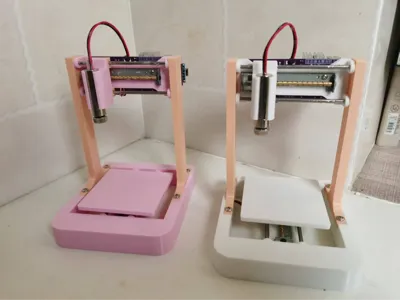
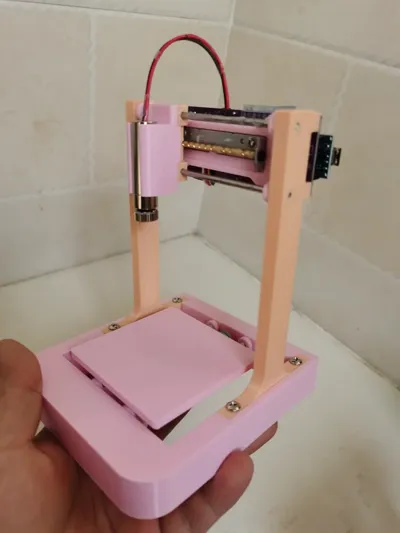
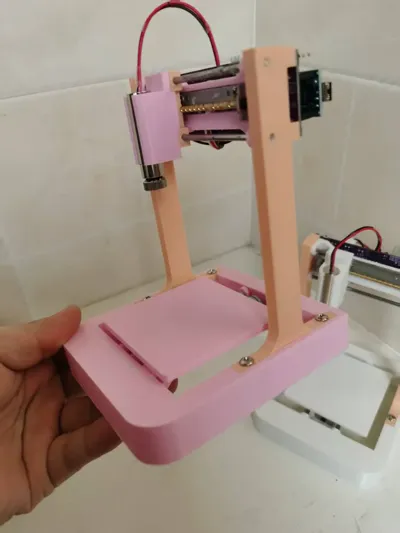
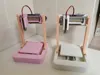
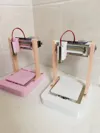
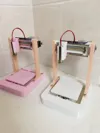
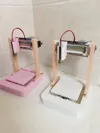
Open Source Starlight Series Mini Laser Engraver - Starlight 2
- Notice: Due to the matching motors for this open-source project being taken by a mysterious person, to enable more people to replicate the mini laser engraver, I have updated the design for a new motor model - Starlight 4S, and made it open source. If you plan to replicate it, please go to this new projecthttps://makerworld.com.cn/zh/models/1227220-xing-guang-4s#profileId-1307219
- If the previously matching motor model can be found later, I will change the notice content again! Date: May 16, 2025
Open-source model printing files and modeling files (can be downloaded from the webpage). In addition to 3D printed models, all related open-source materials are on the Lichee Open Source Hardware Platform. Circuit boards can be prototyped for free at JLC PCB, enabling a low-cost, self-made beautiful mini laser engraver for 70 yuan
Boost Me (for free)
Design and creation are not easy, thank you for your support
Assembly videos have been uploaded to both Douyin and Bilibili. It is recommended to watch Douyin for higher content concentration. Douyin username: Wandering Star; Bilibili username: Wandering Star-dy
Assembly video Douyin link: 6.48 Copy and open Douyin to watch 【Wandering Star's Works】Mini Laser Engraver Getting Started # Starlight 2 https://v.douyin.com/i5W7MC2a/ 11/19 u@s.EU CuS:/
Model printing parameters: It is recommended to use a layer height below 0.15, slow down the printing speed. Commonly used materials like PETG and PLA are suitable. I usually use PETG for printing because it has better toughness. Other parts can be printed as usual (0.2 layer height, 3 walls, 15% infill, 3 top and bottom layers). If only the bracket that fixes the laser head needs supports, other printed parts do not require supports
The holes in the slider that the optical axis passes through need to be deburred. It is recommended to ream with a 3.05mm twist drill to ensure smoothness
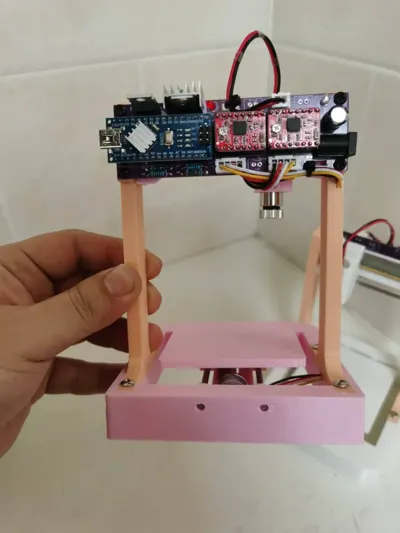
An accurate list of components is provided for everyone. The circuit principles can also be explored by yourselves, they are intuitive and simple (you can also directly choose a finished mainboard; detailed solutions refer to the Lichee Open Source Platform, MakerWorld only publishes open-source model files)
1. PCB prototyping x1 piece FR4 double-layer, choose other free options as you see fit
2. Arduino Nano development board x1, ATmega328P chip 9-12 yuan each, free shipping
3. A4988 stepper motor driver x2, unit price 3-3.5 yuan each, two cost 7 yuan (related electronic components can be bought from one supplier to save on shipping costs; wholesale components usually have a lower unit price but no free shipping, which will not be elaborated on below)
4. N-channel switching MOSFET model IRFZ44N x1, TO220 package, 0.4-0.5 yuan each
5. Three-terminal voltage regulator model LM7805 x1, TO220 package, 0.3 yuan each, TO220 heatsink x1, M3*4 screw x1, used in combination with this voltage regulator, total cost about 1 yuan
6. F3 LED x2, one power indicator light, one laser signal indicator light, unit price about 0.03 yuan, (not essential, optional)
7. 1/4W plug-in resistor, one each of 4.7Ω, 47Ω, 2K, 10K, 100K, (unit price 0.01 each, but usually sold as 100 for 1 yuan)
8. XH2.54 terminal block (female header): 4P straight pin x2, 2P straight pin x4, one 2P can also be replaced with a bent pin for Starlight 4 (unit price 0.02 each, buy as you please)
9. DC female jack 5.5*2.1 pure copper x1 (over 0.1 yuan each)
10. Through-hole electrolytic capacitor: 16V100UF 5*7 specification x2, 16V470UF 8*12 specification x1 (a few fen each)
11. Specification 2.54MM straight female header 1*8P x4, Specification 2.54MM straight female header 1*15P x2 (about 0.1 yuan each)
The above are all the components required for the mainboard, all are through-hole components, convenient for beginners to solder, costing around 20 yuan
IV. The following are other parts required to assemble the mini laser engraver
1. Laser head 5V 250mW, 12mm diameter (about 23 yuan each)
2. Laser safety goggles (buying one individually costs about 3 yuan, buying more means about 1 yuan each)
3. Data cable (It just needs to match the development board's data interface. The cost of the development board is included in the mainboard; actually, just buy it with the development board, about 0.5 yuan each. There are also C-port development boards, just like mobile phone data cables)
4. A set of framework (model STL files have been uploaded, those with printers can print them themselves, material cost is a few yuan; those without printers can refer to my handmade version tutorial, or contact me to get the framework and a complete set of loose parts and finished products, ps: a meager source of profit for craftsmen)
5. Matching screws: four M3*10, four M3*8, five M2.5*10, four M2*4, no nuts needed (worth a few mao)
6. Micro stepper motor x2, 58mm long lead screw, 3.75mm pitch, 1.2 yuan each. This motor is from Shenzhen Jiasheng Motor (sells stock goods, I don't know them, no cooperative relationship). They sell an original imported 15MM two-phase four-wire micro stepper motor - C model from Nidec Japan. It is said there are four to five thousand in stock. The only drawback is that they do not offer free shipping, which costs 6 yuan. Those who are clumsy can buy a few more to be more cost-effective
7. Motor wires: XH2.54-4P double-ended motor wire 30cm long (about 0.3 yuan each), or buy two shorter single-ended wires
8. Stainless steel optical axis 3MM diameter, 10cm long, 50 pieces can be bought for 7 yuan, however, only 4 pieces are needed to assemble one machine. I prepare kits long-term, so I buy a lot; you can also look for retail options
9. Grease (butter-like substances might also work, but I use 3D printer grease; perhaps other lubricants would also work, without lubrication it won't be smooth)
10. 12V 2A power supply (about 5 yuan each). The power port needs to be 5.5*2.1 or 2.5 to match the mainboard's DC female jack. 2A is used considering potential power supply mislabeling; if not mislabeled, 0.5A is sufficient
11. The Starlight 2 base can have 8 round magnets, 6mm in diameter, 1-3mm thick; actually, it's fine whether they are installed or not
All materials completed, the cost of the entire set of replicated materials is about 70 yuan. The software is also open source, materials are shared free of charge, with no other paid content
It is recommended to download the model from MakerWorld so I can earn some points, haha, feels like begging t.t
If there are any omissions in the open-source content, please contact me for correction, thank you
License

You shall not share, sub-license, sell, rent, host, transfer, or distribute in any way the digital or 3D printed versions of this object, nor any other derivative work of this object in its digital or physical format (including - but not limited to - remixes of this object, and hosting on other digital platforms). The objects may not be used without permission in any way whatsoever in which you charge money, or collect fees.


Comment & Rating (3)