
filament drying box


Print Profile(3)


Description
The print profile was updated on 2025-11-1, adding the missing plates, adjusting their arrangement, and removing the need to disable print volume restrictions
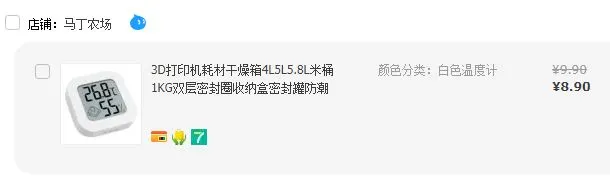
Updated on 2023-12-16: A lid without a hygrometer has been added. The hygrometer's dimensions are 43*43*13mm, purchased from Taobao Martin Farm. Please refer to "【Taobao】https://m.tb.cn/h.5pR5qhyyUssQI9j?tk=b1jhWSCSgj3
For those who have not purchased an AMS, filament drying is a major issue. Most drying boxes sold online are modified rice containers or similar, which can only hold one spool of filament. Each filament change becomes very cumbersome, or one might need to purchase multiple drying boxes, which are bulky and not aesthetically pleasing
This designed drying box can be printed on a P1S heat bed. It can hold three filament rolls at once and features three outlets. The lid and bottom shell use an embedded structure to maintain a decent seal even without a sealing ring. It also includes a hygrometer slot. The bottom houses three containers for molecular sieves or other desiccants, making them easy to access and replace. The humidity can be continuously maintained at 24%. With the 4-way splitter I designed, there's no need to fully retract the filament; simply pull it out past the splitter to quickly feed other filament, enabling fast material changes
The pneumatic quick connector used is a PC4-M8*1.25 non-through type, which can be tightened onto the bottom shell with the designed guide nut. Common 608ZZ bearings are used. Due to variations in materials and printing parameters, the fit may differ. It is recommended to print using PETG material, with increased infill specifically at the pivot point, and the nut is best printed with a 0.08mm layer height
Note: When printing the lid, it is necessary to remove the print volume limit. Refer to "Print volume limitations, and how to use the full build volume 256x256x256mm³ | Bambu Lab Wiki"
License

You shall not share, sub-license, sell, rent, host, transfer, or distribute in any way the digital or 3D printed versions of this object, nor any other derivative work of this object in its digital or physical format (including - but not limited to - remixes of this object, and hosting on other digital platforms). The objects may not be used without permission in any way whatsoever in which you charge money, or collect fees.


Comment & Rating (54)