
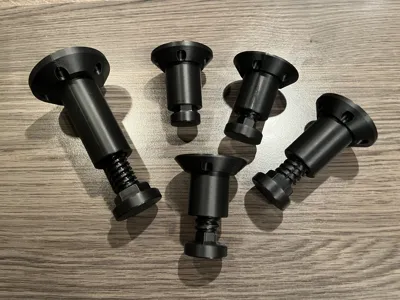
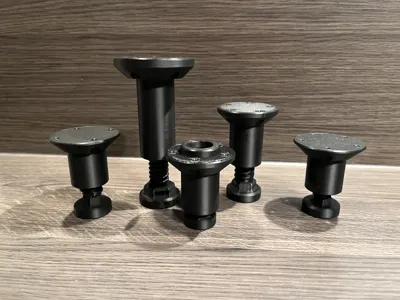
Parametric adjustable leg
Print Profile(1)
Description
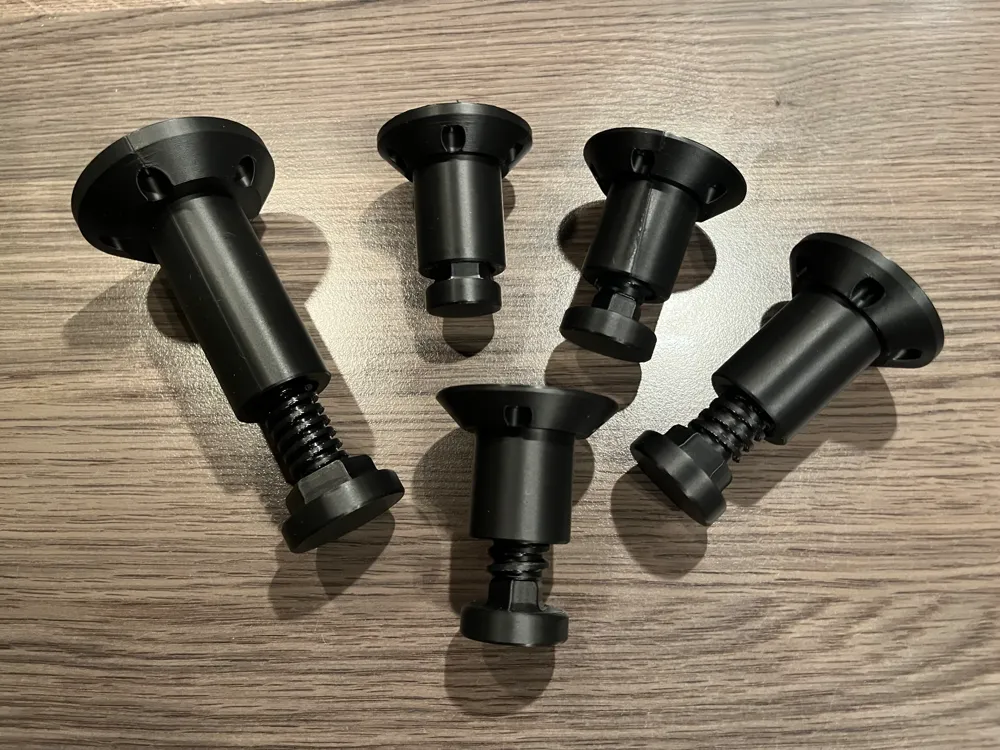
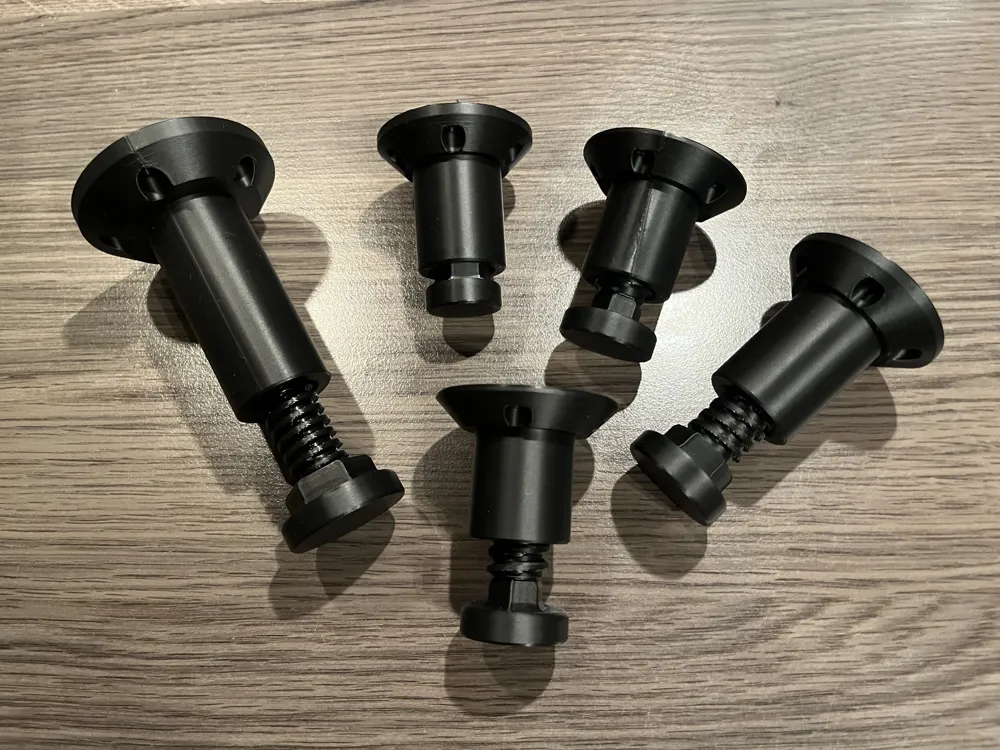
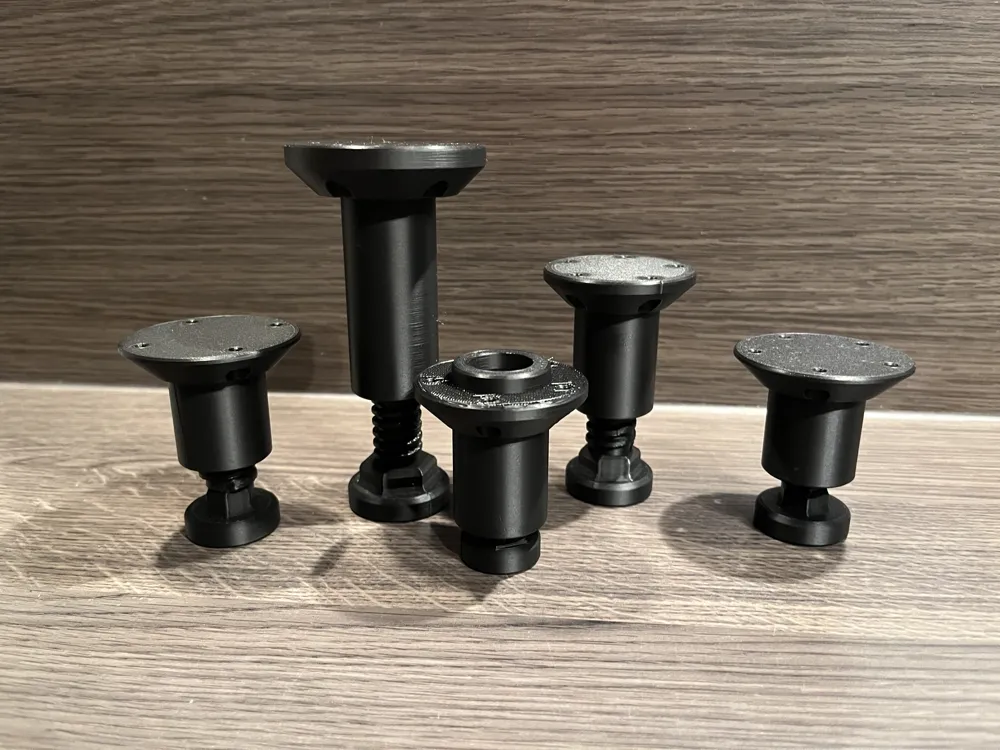
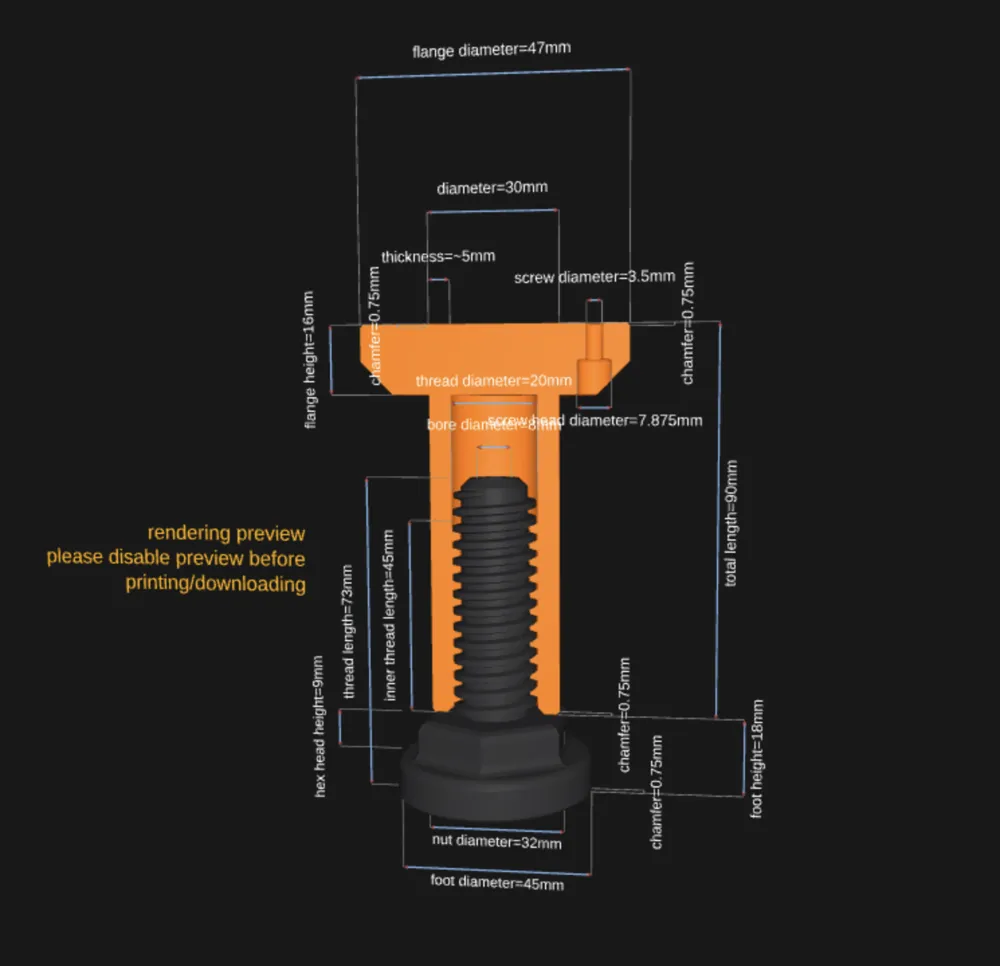

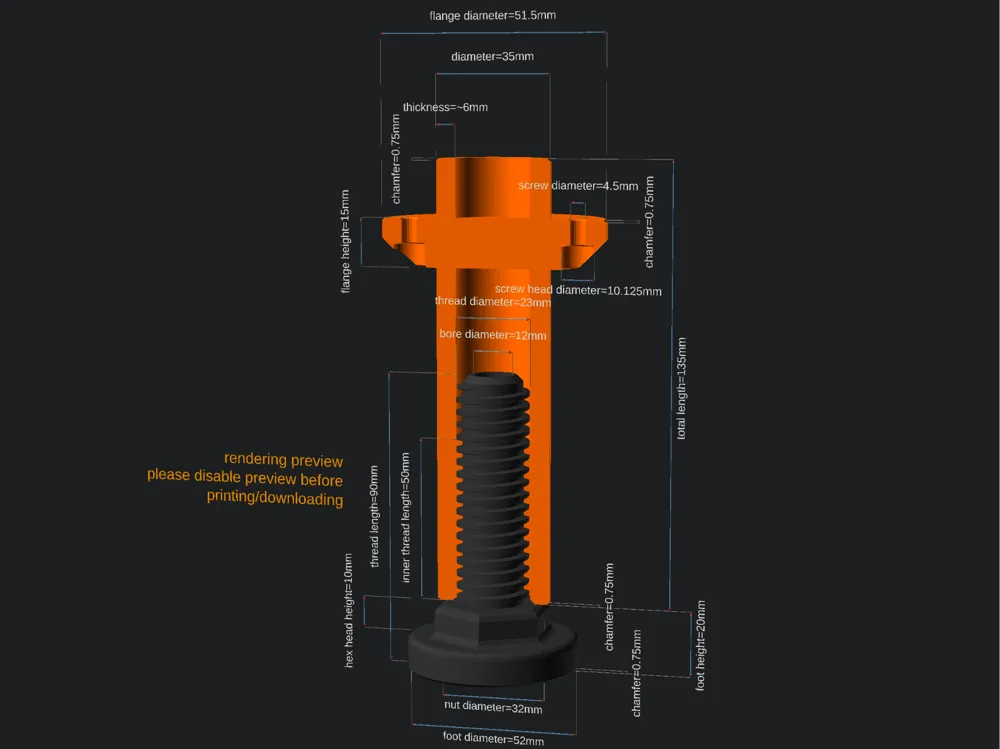
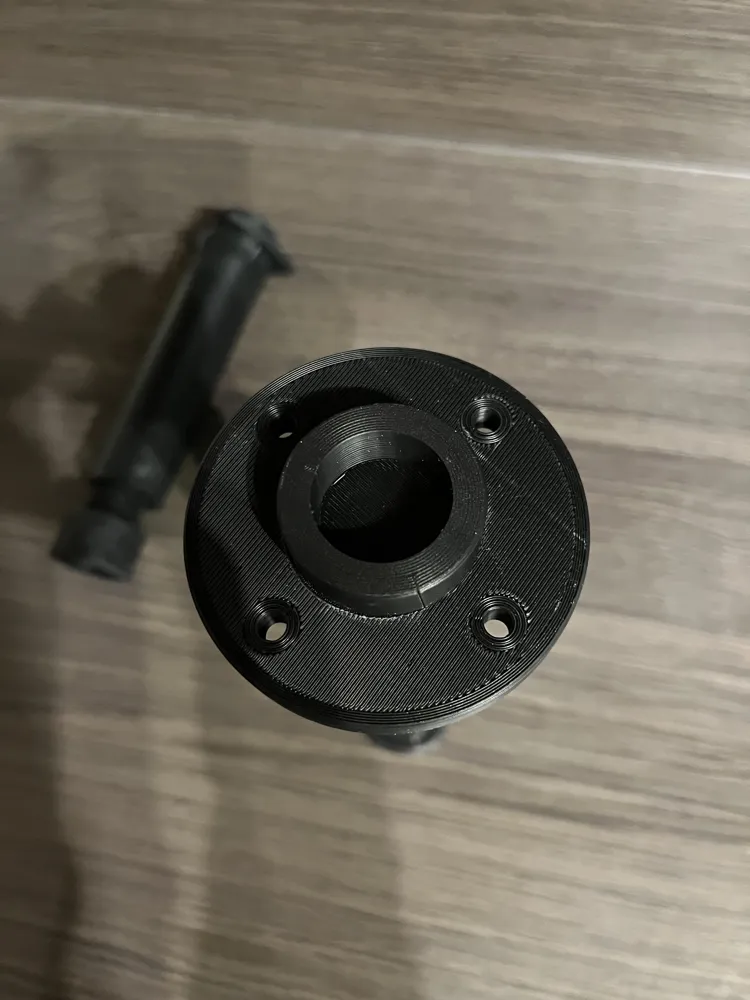
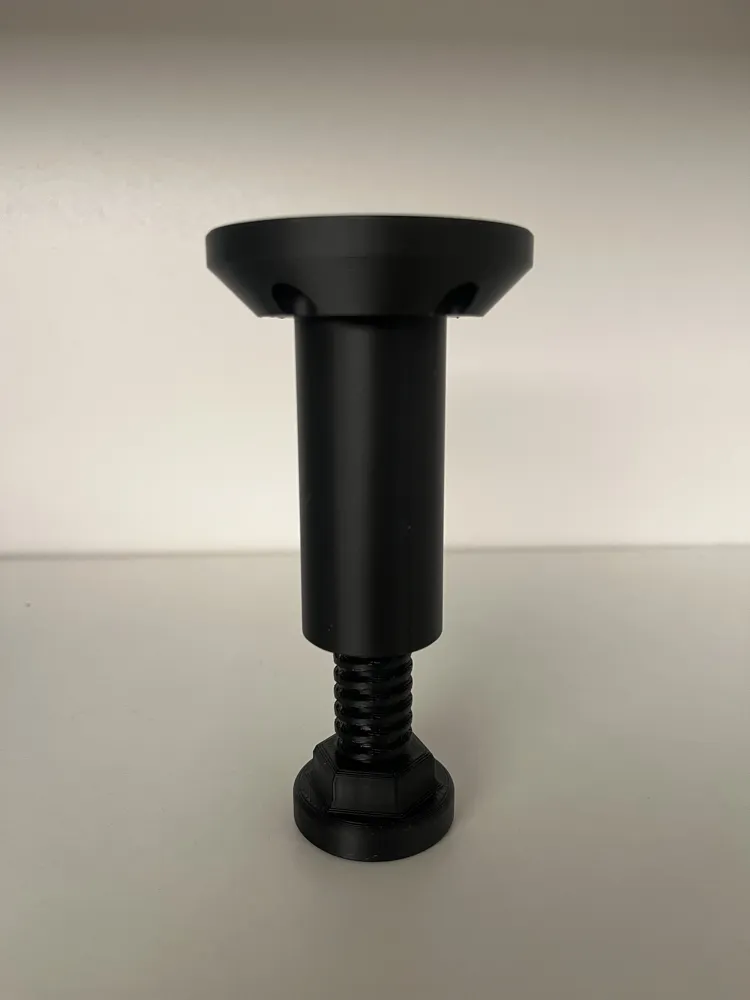
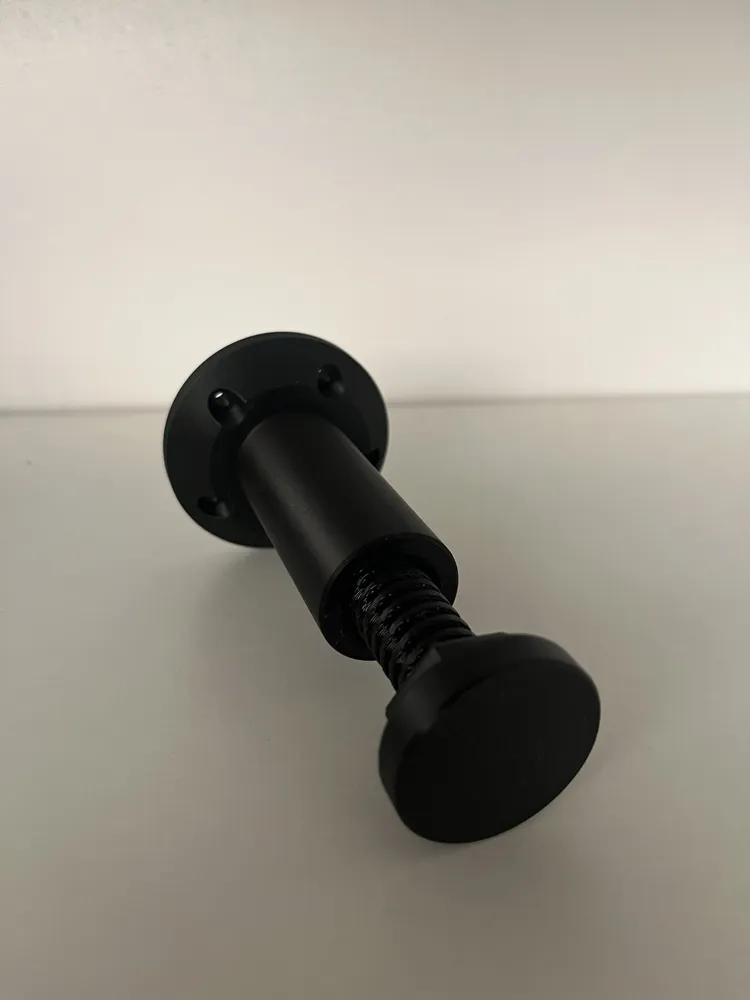
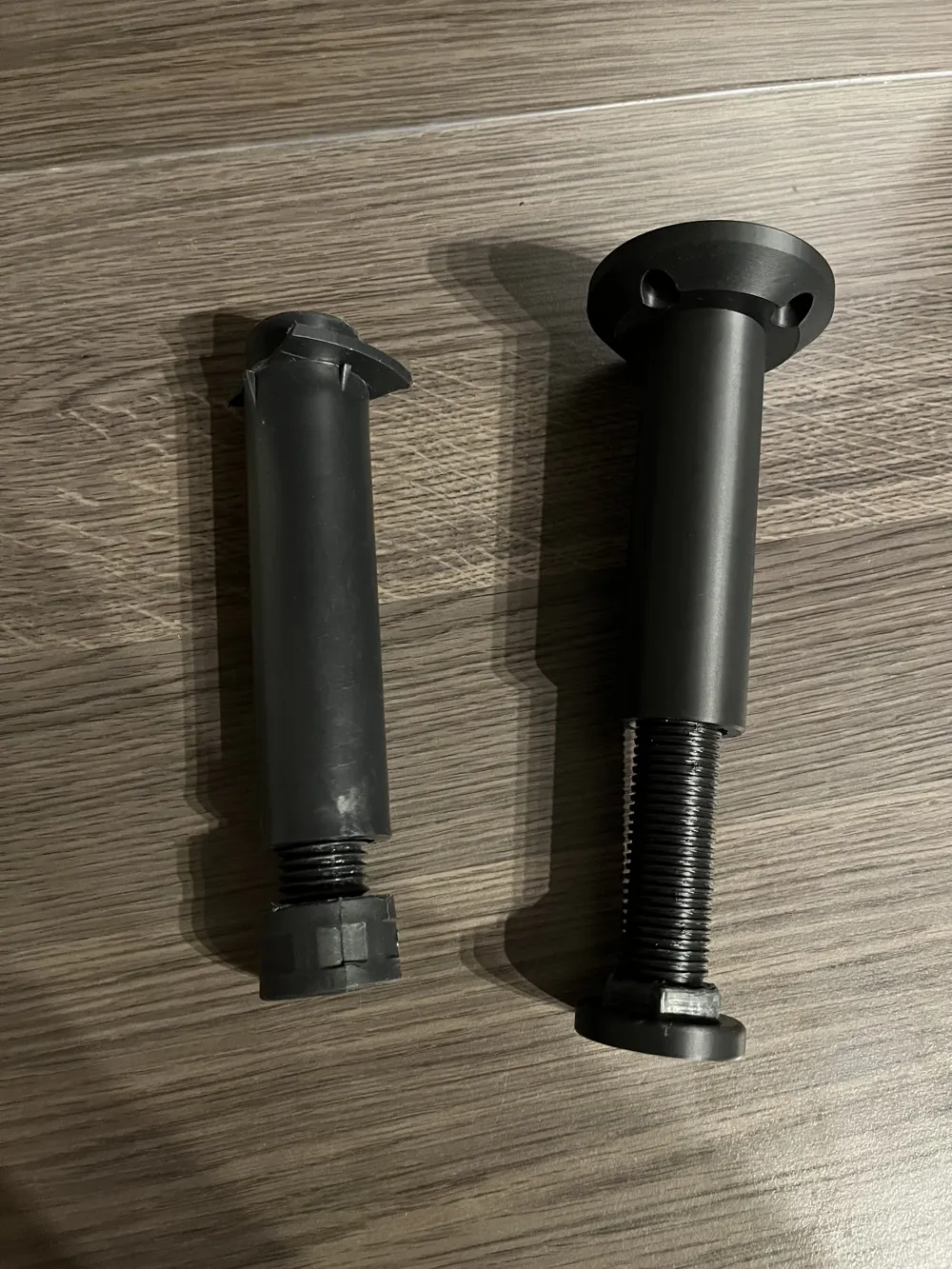
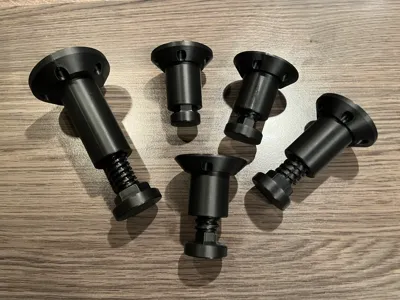
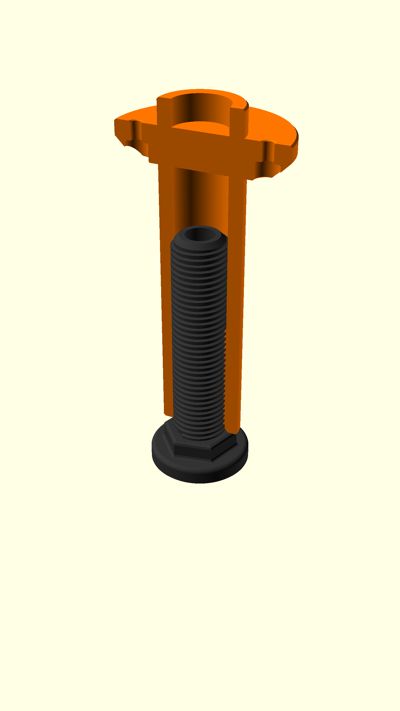
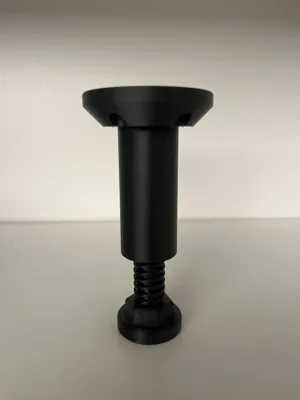
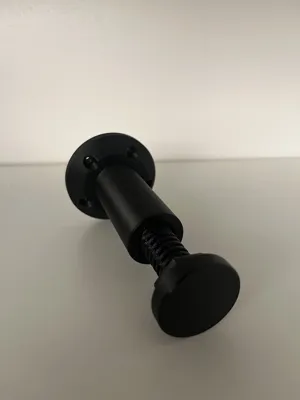
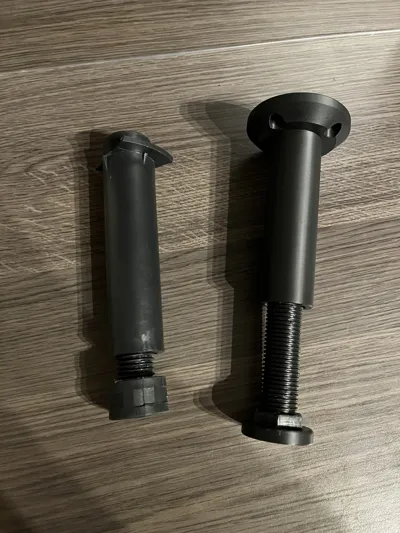
Make adjustable table / furniture legs to your specifications. Height, diameter, thickness, flat flange or offset, you decide. Fix your bed frames, kitchen cabinets, freezers and fridges, add adjustable legs to other furniture to adjust height, etc.
Tolerances
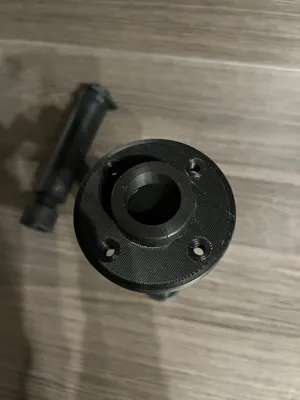
People have complained about tight tolerances, I've adjusted the default tolerance to be a bit higher. But you can set your own tolerance according to your needs in the customiser.
Printing
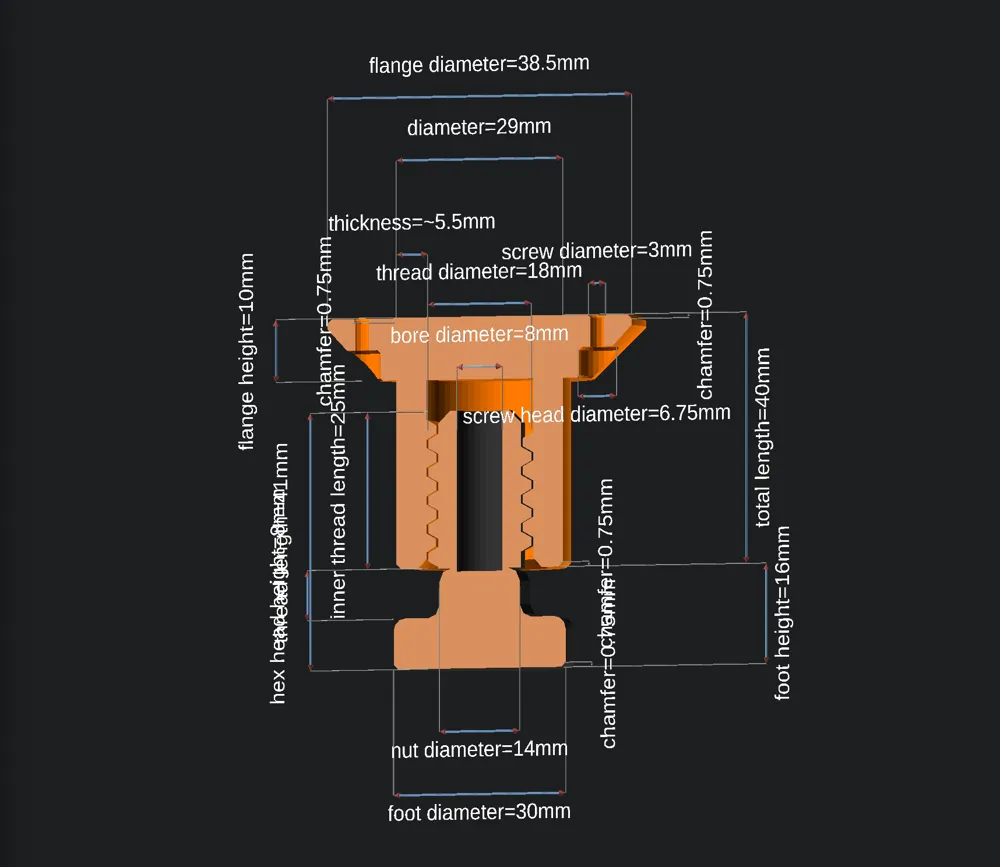
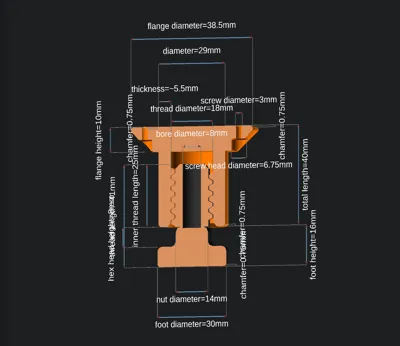
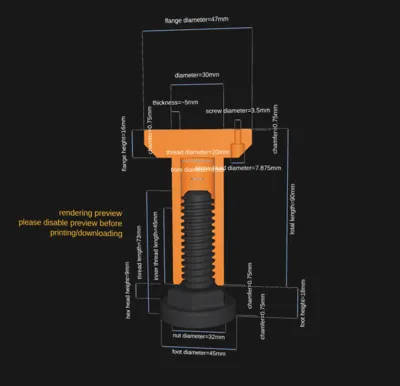
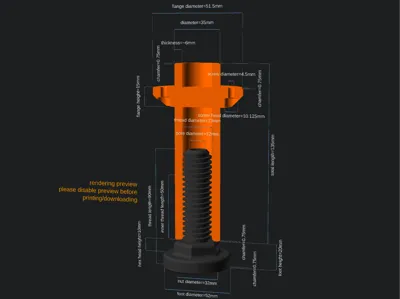
The model renders measurements and annotations, these will automatically disappear when you either click on the first plate, or when you download the rendering.
Allow the outer part to have supports if your flange is not even with the pipe. No other supports should be printed because it will just be a pain to remove at no benefit. The included print profile shows the correct orientation and placement.
Strength
This model uses a relatively strong type of thread, the trapezoidal type, which is stronger than normal threads under static axial or gravitational loads. If you need to use this for dynamic loads, such as for bed frames (😉), you need to make sure you add enough margin for multiple times the static load.
If you are putting weight or dynamic load on the leg, make sure to increase the wall count to a higher number and choose an appropriate diameter for the purpose. The outer part is by definition a pipe, pipes are stronger than solid cylinders in 3D prints because they have more walls, inside and outside as opposed to only outside with relatively weaker infill. The inside part, the screw, is also intentionally hollow for this reason. So balance the amount of walls with the width of the leg and the hole in the center of the screw such that you get a stiffer print.
Make sure you have enough of the threads touching, it's the weakest part so you need a number of turns to spread the weight over the surface area of the thread.
I can make no guarantees about the strength of your prints, so use this responsibly and at your own risk.
Material choice
I suggest you print in PLA, unless you have stronger materials such as PC or carbon or fibre reinforced filament, PETG is too flexible.
Slicing Parameters
There were some comments on the parts not able to be screwed together. There are 2 main things to consider:
- The tol variable in the customiser sets a tolerance for the rendering, if you have a printer that is carefully calibrated and can handle a smaller tolerance set it to something low like .10 or .15mm, if it's not, set it to something like .30 or more. The tighter the fit, the more the contact area within the thread. Increase the amount of thread to increase the surface area if you plan to set higher tolerances to compensate. See the strength section.
The layer height. Threads have overhangs, no way around that. Worse so with trapezoidal threads like this model uses. If you select a layer height of .20mm or more, it will probably droop too much to thread smoothly. So set it to .15 or lower, .12 should work fine. Your options:
- Use a .12mm or so layer height for the entire model:
- Threads are smooth
- Prints slowly, especially if you need a couple of big legs.
- Depending on your printer and how it's tuned it can either increase lateral shear strength through better layer bonding, or decrease it by offering more opportunities to separate layers.
- Use a height modifier in the slicer (the example profile has this).
- Set the modifier to the height of where the threads begin on either sider of the leg, this allows you to set a layer height below the thread and another layer height on the thread, allowing you to print the threaded layers at e.g. .12mm and the rest of the leg at .20mm or more.
- Prints relatively fast while still allowing smooth threads.
- Or use adaptive layer height to get a best of all worlds, speed and smooth threads
Bottom line: print threads with a low layer height.
- Use a .12mm or so layer height for the entire model:
Boost Me (for free)
Making parametric designs like this takes a lot of time, boost allow me to get filament to test print my models before uploading them. Thanks for your support!
License

You shall not share, sub-license, sell, rent, host, transfer, or distribute in any way the digital or 3D printed versions of this object, nor any other derivative work of this object in its digital or physical format (including - but not limited to - remixes of this object, and hosting on other digital platforms). The objects may not be used without permission in any way whatsoever in which you charge money, or collect fees.


Comment & Rating (13)