
Sincro: The 3D Printed Mechanical Clock, Optimized and Easy to Assemble
CLICK HERE FOR DETAILS!
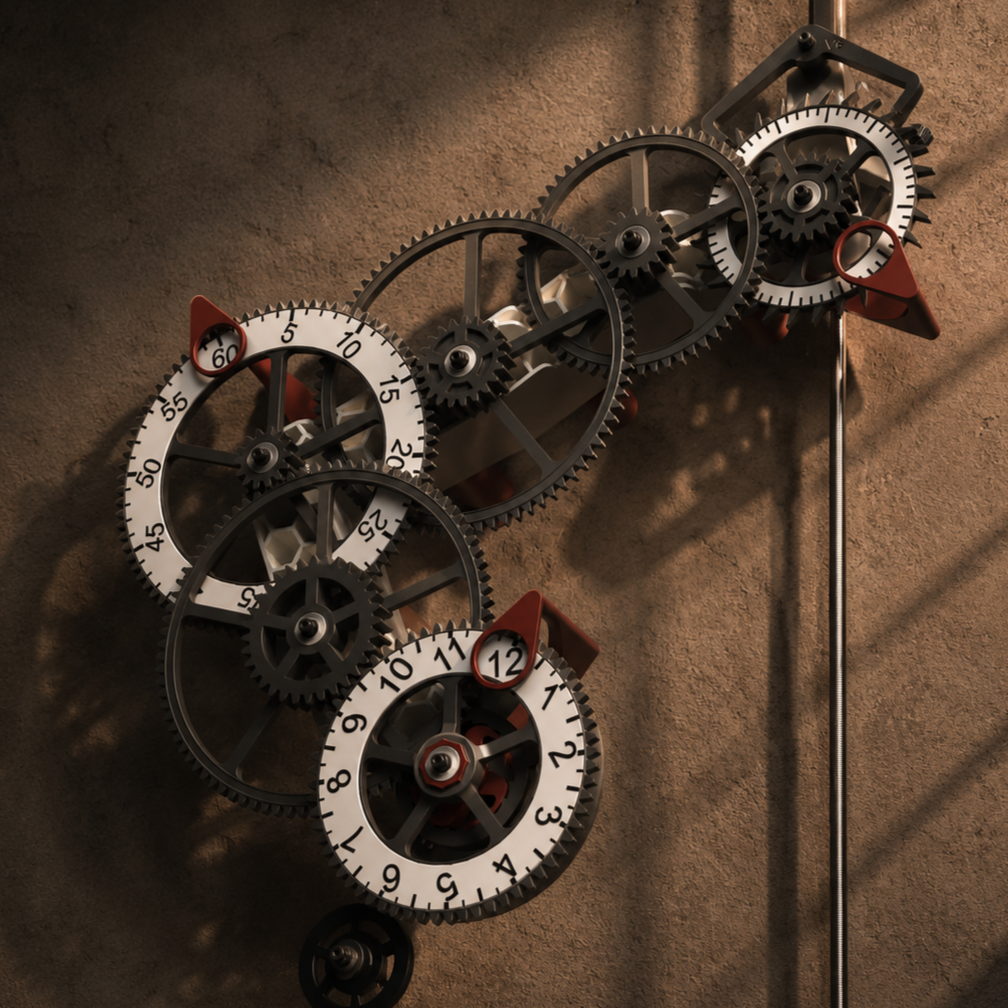
My vision in short:
Sincro is a gravity-driven mechanical clock, entirely 3D printable. It was designed from the ground up with three core goals: eliminating the typical complexity of printed clocks, drastically reducing internal friction, and running on the lowest possible suspended weight thanks to highly optimized geometries.
The Idea: How Sincro was Born
Anyone who has tried to print a 3D mechanical clock knows the most common frustrations: hours spent sanding components, gears getting stuck due to micro-imperfections in the print, and the need to use massive weights (often kilos of lead or sand) just to get the mechanism moving, risking structural failure over time.
Sincro was born to solve all of this. I wanted to create a clock that wasn't just a beautiful styling exercise to look at, but a reliable, smooth-running project, and above all, fun and rewarding to assemble even for those who have never built a clockwork mechanism.
Main Features & Technical Innovations
- "Plug and Play" Assembly & Setup: No more frustrations. Tolerances have been calibrated to the thousandth of a millimeter to ensure components fit together perfectly.
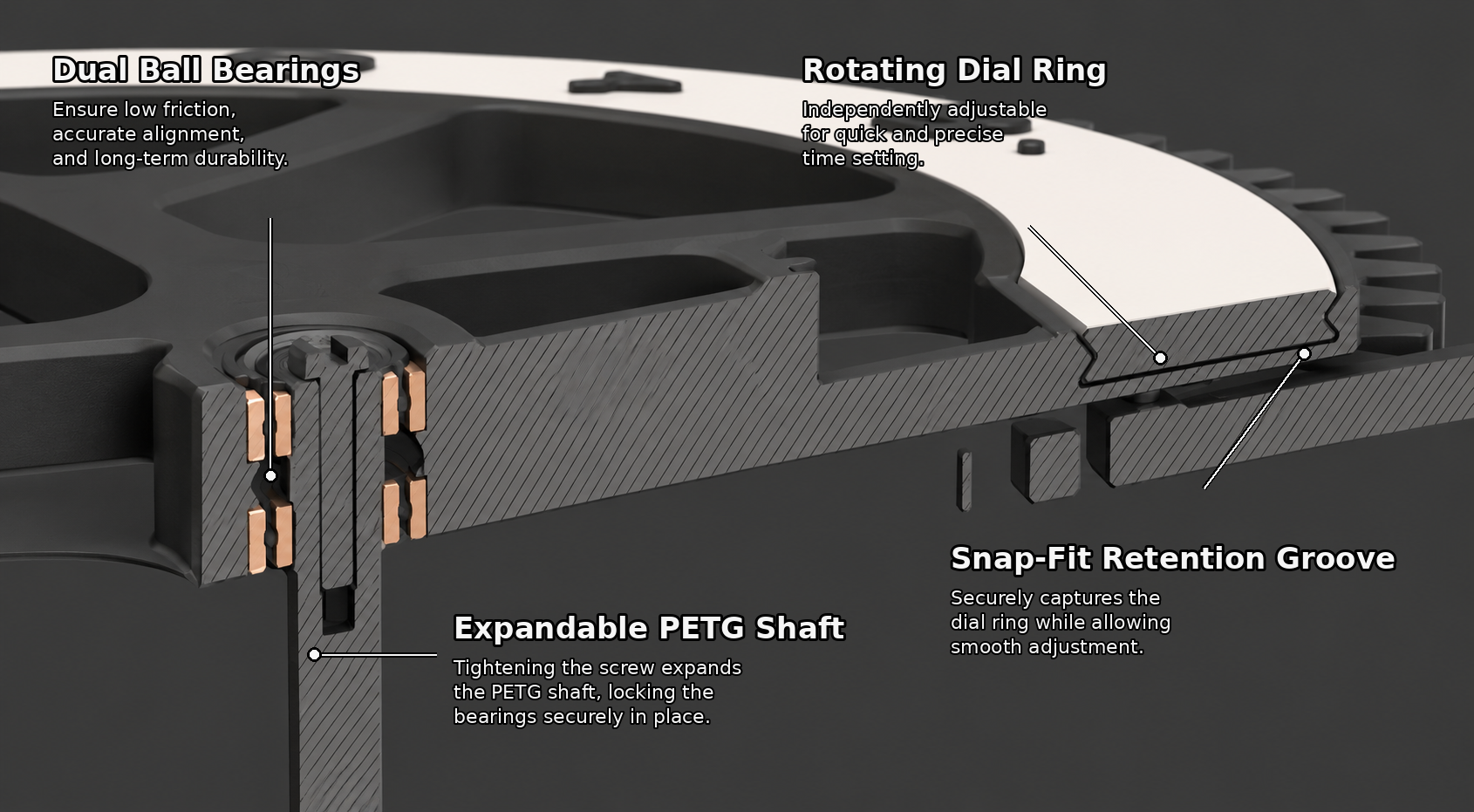
- Friction Kept to a Minimum: Thanks to an in-depth study of contact points and the strategic use of targeted tolerances, the components glide over each other, reducing mechanical resistance to almost zero.
- Ultra-Lightweight Geometries: Every single tooth, gear, and lever has been structurally optimized. This overall weight reduction allows Sincro to run with a fraction of the weight normally required by standard 3D printed clocks, preserving the lifespan of both the components and the driving cord.
No Extreme Post-Processing: Forget about hours of sanding. If your printer is well-calibrated, the parts are ready to use straight off the build plate.


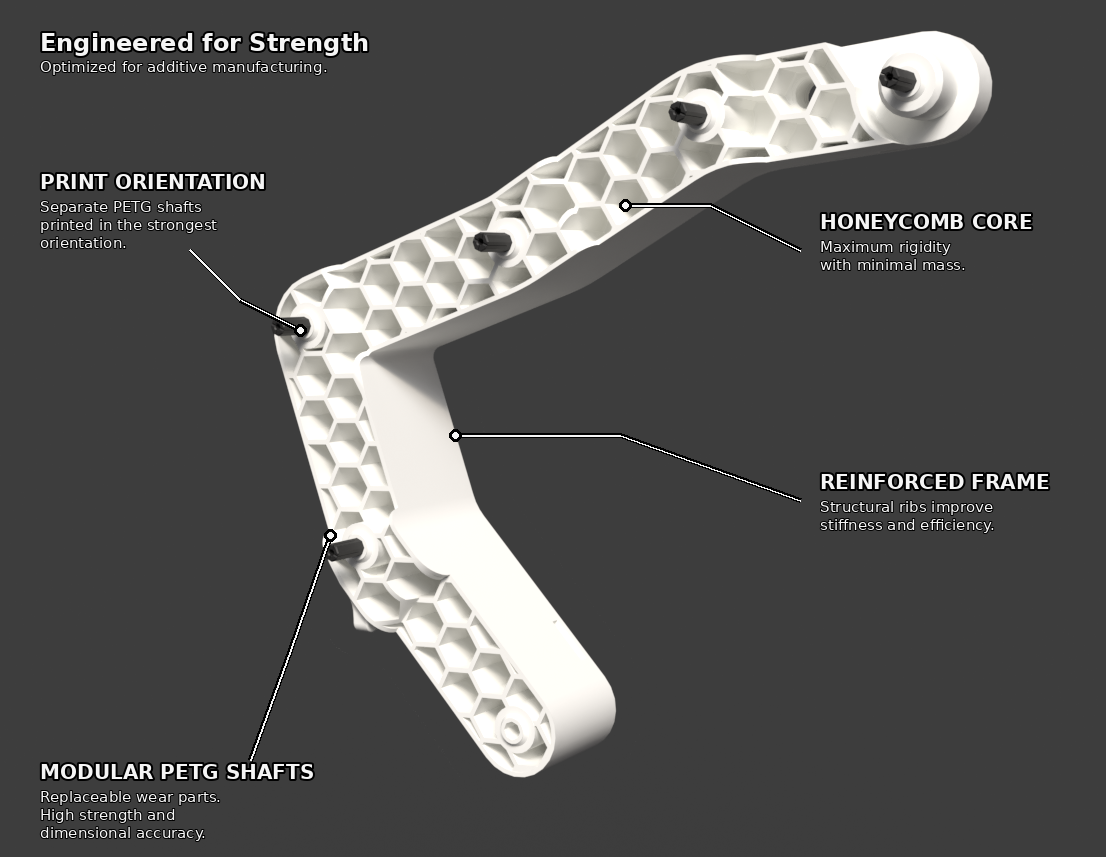
Materials and Required Hardware (BOM)
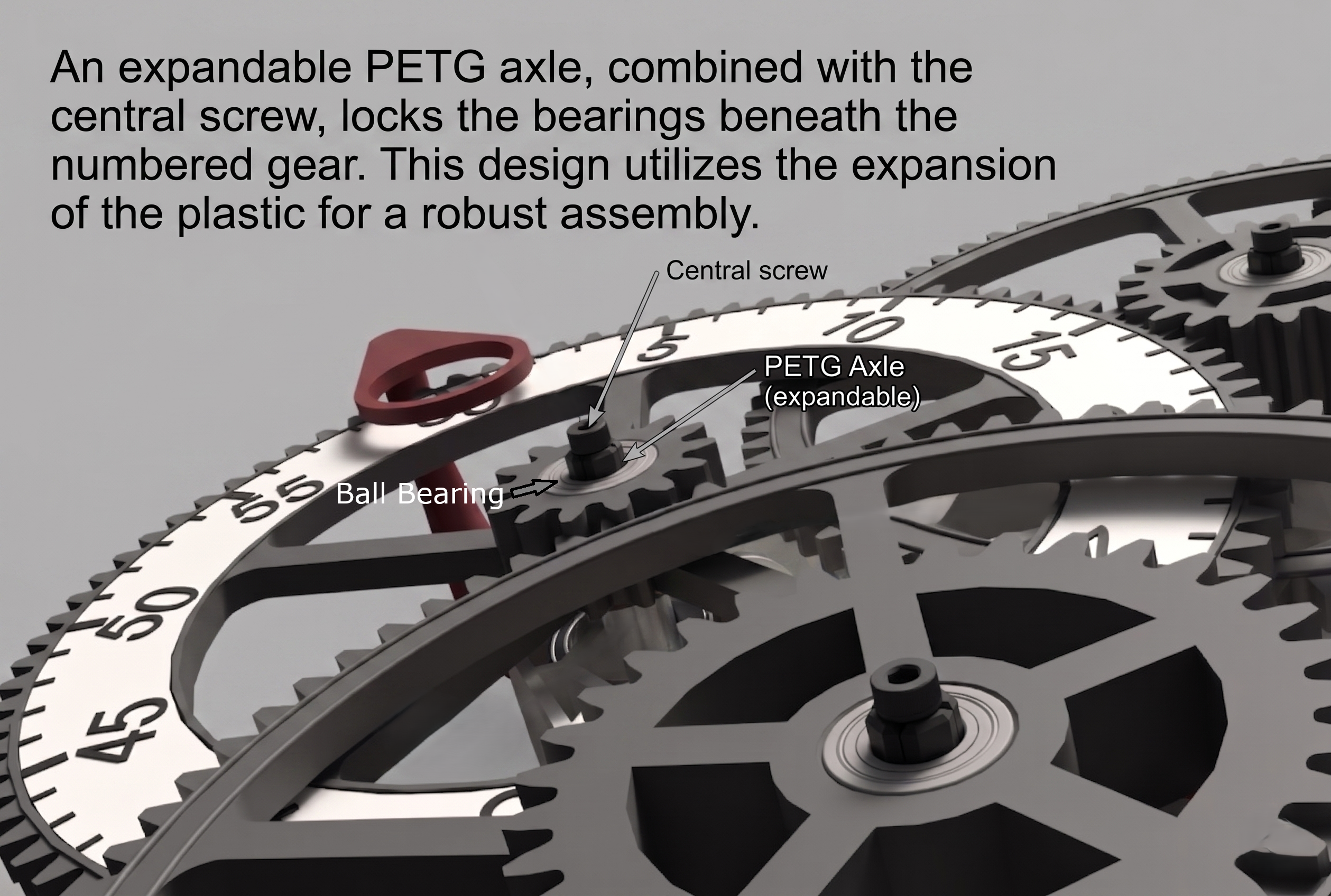
Sincro is designed to be accessible and durable. In addition to the 3D printed parts (which can easily be made in both PLA and PETG), basic hardware is required to ensure maximum smoothness and structural solidity:
- Self-tapping screws for a solid and quick assembly.
- Ball bearings to eliminate friction on the main rotation axes.
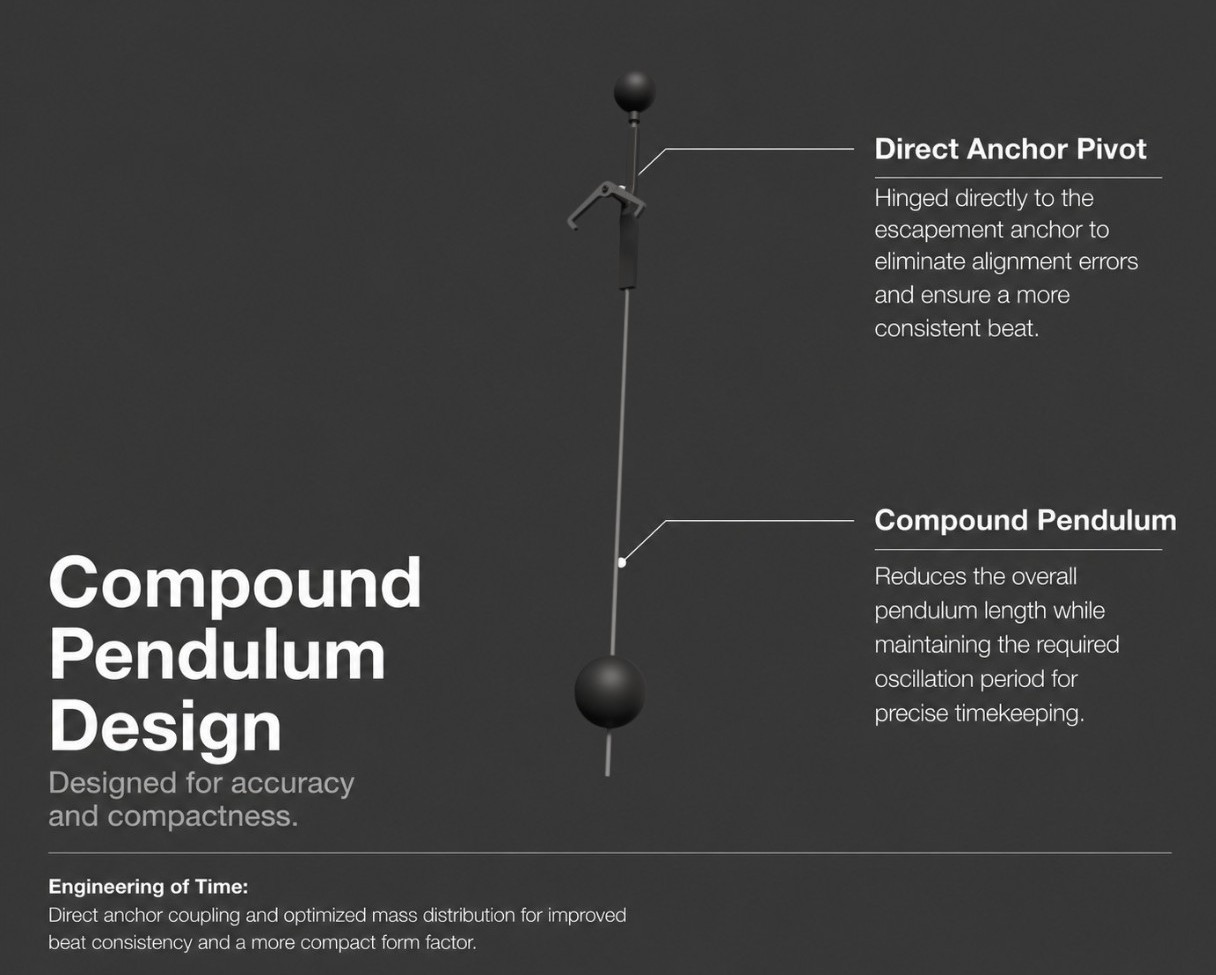
- 1x M6 Threaded Rod for the pendulum, which provides the perfect weight and rigidity for oscillation.
- Fishing line for hanging the weight
To make the build process as seamless as possible, I am committed to keeping the required non-printed parts within the Bambu Lab ecosystem. Priority will be given to components that can be purchased directly from Maker's Supply, allowing you to order your hardware right alongside your filament. For any specific parts not available on Maker's Supply, I will provide direct purchase links to Amazon or similar easy-to-access websites. (You will find the exact measurements and detailed quantities in the included assembly manual).
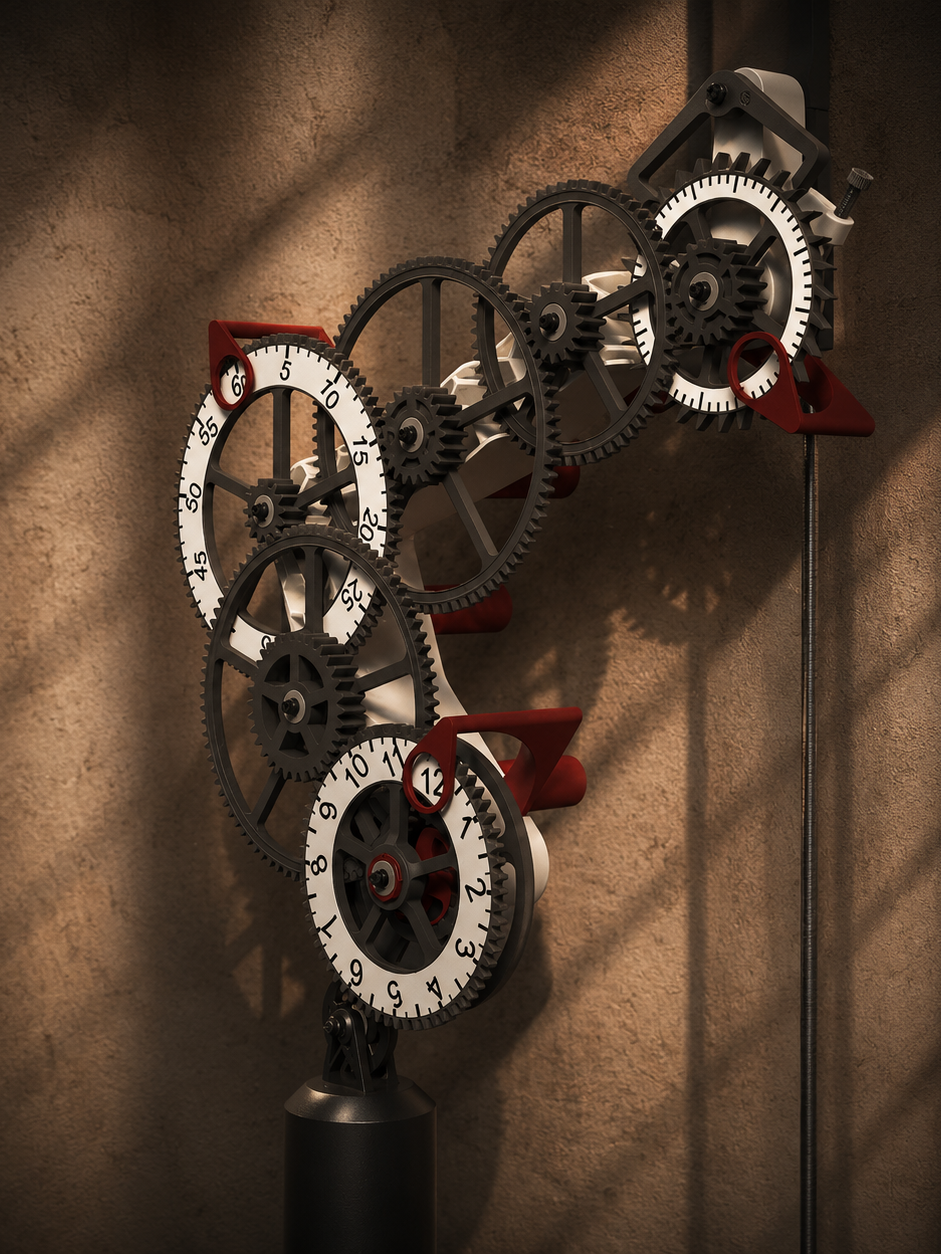
Why I Need Your Support
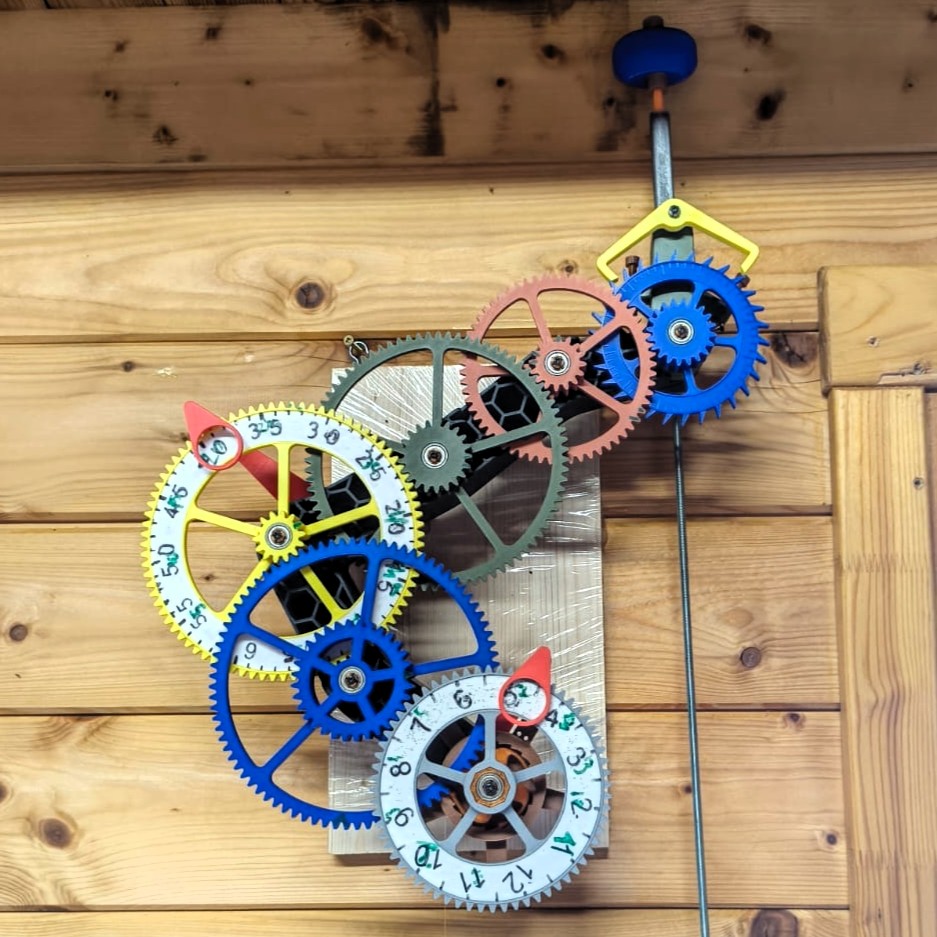
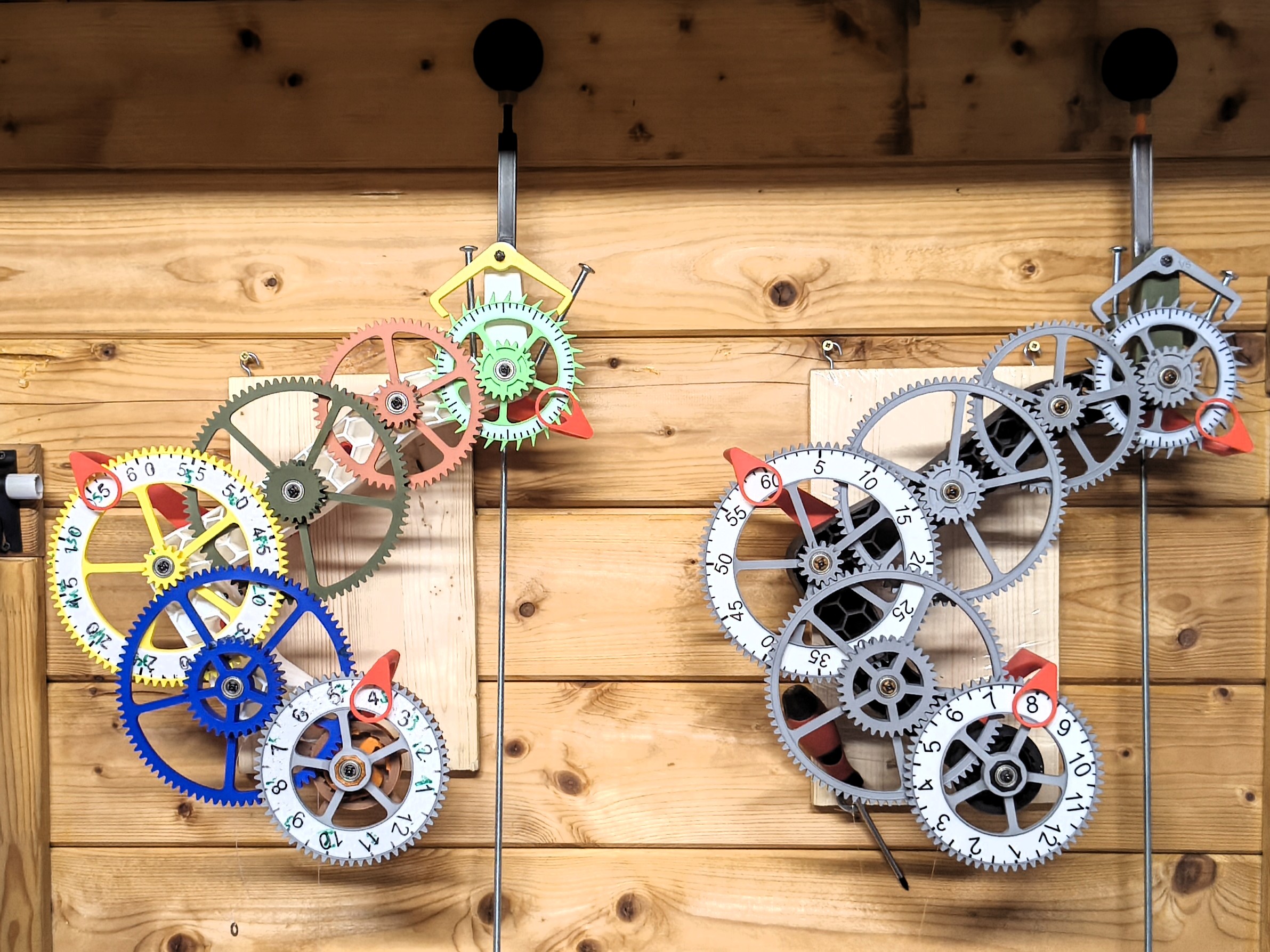
The Sincro project is now fundamentally complete and a huge success: the first prototypes (visible in these photos) have been running continuously for two weeks, with a deviation of just a few seconds per day. An exceptional result for a 3D printed mechanism, made even more extraordinary by the fact that the driving weight required to run it is only 800 grams. Furthermore, Sincro boasts an autonomy of about 6 days: the actual running time obviously depends on the vertical space available, but the mechanism is so efficient that it only consumes a weight drop of 25 cm per day.
However, there are two major limitations I want to overcome to make this project accessible to everyone, and this is where your support comes in. I currently prototyped the clock on a large-format printer, which means the single-piece frame is too large for standard X and A series printers (with the exception of the new A2L). Additionally, the fine-tuning of the escapement timing still requires a lot of patience and manual precision.
With the crowdfunding funds, I will focus on two fundamental upgrades:
- Sincro for Everyone (Even for the A1 Mini): I will use the funds to test and prototype dozens of frame configurations, finding the perfect cut points and designing ultra-rigid fastening systems. The ultimate goal is to release a modular version that anyone can print, regardless of their printer's build volume.
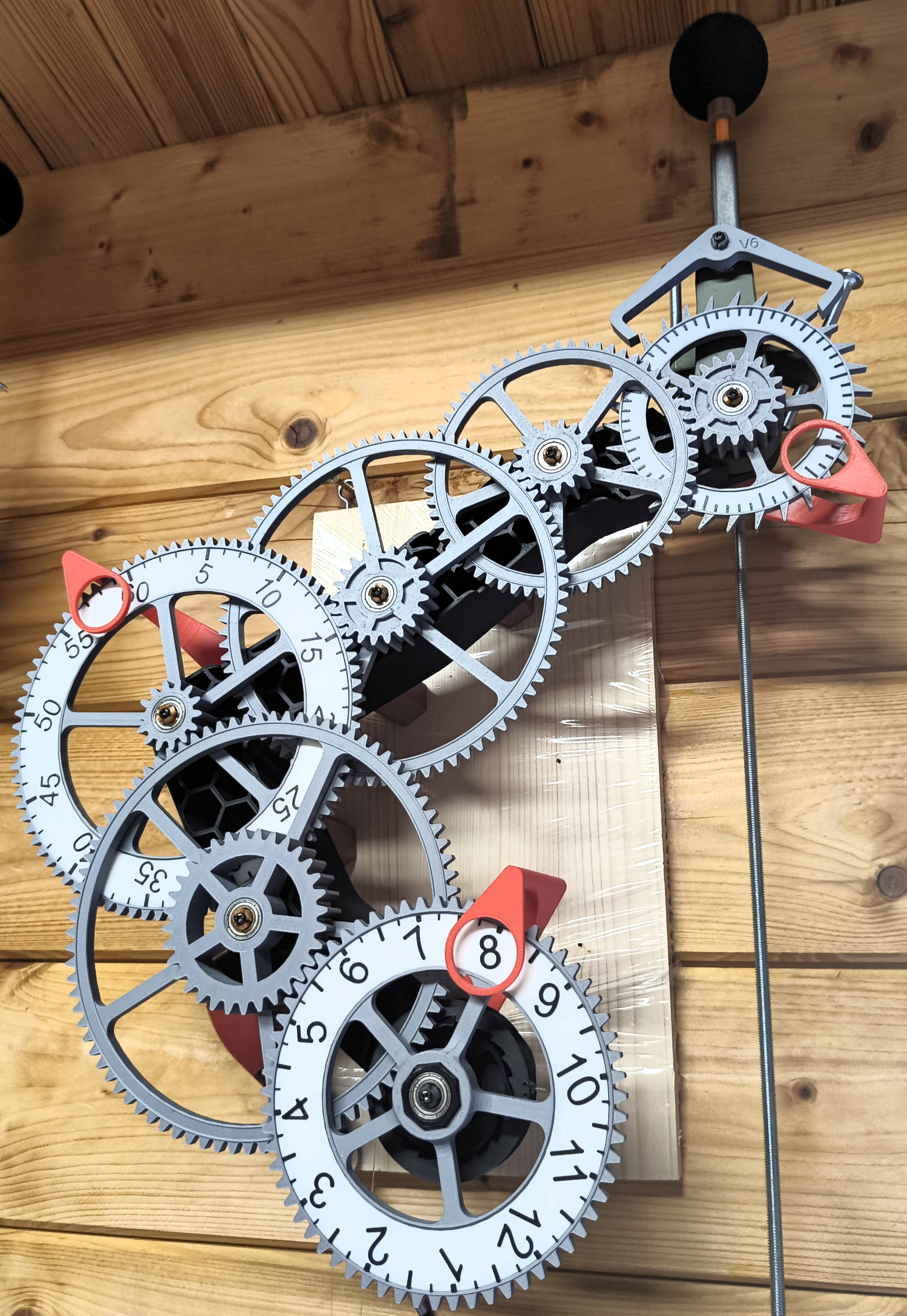
"Easy-Tune" Escapement: I will design, test, and build a simplified and intuitive mechanical system for calibrating and timing the escapement, making the clock's setup easy and accessible to everyone, without any frustration.
What You Get by Supporting Me
- The Complete Sincro File: All the optimized STL files and print profiles of the current working version.
- Assembly Guide and BOM: Access to the step-by-step instructions to assemble the clock without errors, along with the exact hardware list.
- Lifetime Updates: Future versions, including the universal modular frame and the simplified escapement, will be yours for free as soon as they are completed.
Who I Am
I am a maker passionate about mechanical engineering and 3D printing. With Sincro, I wanted to combine these two passions to prove that FDM 3D printing can be used to create functional, accessible, and easy-to-replicate precision mechanisms right at home.
If you have any questions, assembly issues, or suggestions, leave a comment below. Have fun printing Sincro!
