Search models, users, collections, and posts
Jorge Rui
@JorgeRui
16.2 k
133.2 k
254.5 k
143.1 k
Social Media Links
Bio
As a Mechanical Engineer, Industrial and Product Designer, and Teacher, I extend my portfolio beyond what is showcased here. My design process begins with hand-drawn sketches that are not shared publicly. These sketches serve as the foundation for creating the first 3D model in Autodesk Fusion, which leads to the initial virtual prototype. The production phase follows, and it's uncommon to achieve an ok model on the first try—no miracles here. Although I use Fusion. For rendering, I often prefer Blender. For the latest and greatest, check my blog at: https://designrepcom.com/
Achievements

MakerWorld Guardian
Active more than 20 days out of last 30 days UTC time

Contest Winner
Won 3 model contest awards.

Featured Creator
22 models are featured by MakerWorld.

Maker's Supply Contributor
7 models with Maker's Supply Model Kit achieves 500 successful prints.

Popular Model
5 models more than 5,000 successful prints.

Popular Creator
More than 1,000 followers.
Recent Article
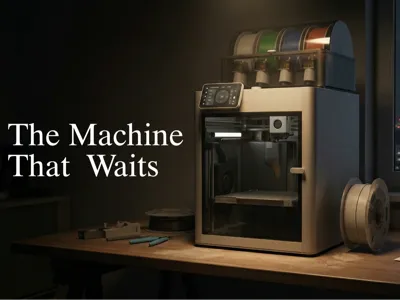
The Machine That Waits
The Machine That WaitsWe talk a lot about the democratisation of manufacturing. But spend time in this community, really spend time, and a harder truth becomes visible.The machines have never been better. Bambu Lab's A1 is practically a household appliance at this point. Self-calibrating, smartphone-connected, quiet, fast. The hardware barrier has been dismantled.And yet printers go idle. Filament spools go stale. Machines end up listed at half their purchase price.Because the barrier was never the machine. It was always the model. A 3D printer without a 3D model is an expensive paperweight. And creating a functional model, one that is dimensionally correct, structurally sound, ergonomically sensible, and actually printable, requires skills most people don't have and have no particular reason to acquire. The learning curve for CAD isn't steep. For most people, it's vertical.So users do what's rational: they come here, to MakerWorld. They look for something that already exists. When it doesn't exist in exactly the form they need, which is often, they hit the wall. The platforms have a partial answer: some parametric models with exposed variables. Real engineering under the hood, a more or less friendly interface on top. MakerWorld's Parametric Model Maker (with Fusion support) is a genuine step forward. I've been experimenting with it; the Gridfinity rack I published is an example, and the potential is real.But the limitation is structural. The user can only customise what the creator already anticipated. The form, the logic, the constraints, all decided in advance by someone who knows what they're doing. The user is a passenger, not a driver. And the community of creators who build these models is smaller than it looks. Attrition is brutal. Someone discovers they can model, publishes a few things, gets little visible traction, and quietly disappears. Those of us who've stayed are genuinely exceptional — and I mean that in the literal sense. We are the exception that the system depends on but cannot reliably reproduce. AI generative tools are the obvious next candidate. Text-to-3D, image-to-3D, the forms they produce can be remarkable. For decorative objects, sometimes genuinely surprising.But here's the problem: current AI is fundamentally stochastic. It generates geometry from statistical patterns. It doesn't know what a tolerance is. It doesn't know that the wall thickness matters, or that the gap between two mating surfaces is measured in tenths of a millimetre and determines whether the thing works or binds or falls apart.You cannot derive physical correctness from pattern-matching alone. The two are different in kind. So where does that leave us?Form generation: AI has it. Deterministic engineering logic: CAD has it. Distribution: platforms have it. Manufacturing knowledge: simulation tools have it. Conversational interface: large language models have it.What no one has yet is the architecture that connects them — the system that decides when to be generative and when to be deterministic, when to ask the user a question and when to apply a rule silently.I've published a longer piece exploring this in detail — the full argument, the map of tools, the research gap, and what I think convergence between the major players might look like. I'd genuinely love to hear what this community thinks. You've all lived this from the inside. What am I missing? → [Full article: The Machine That Waits] Jorge Rui Silva — Mechanical Engineer, Industrial Designer
Modules available for the 4All Ecosystem
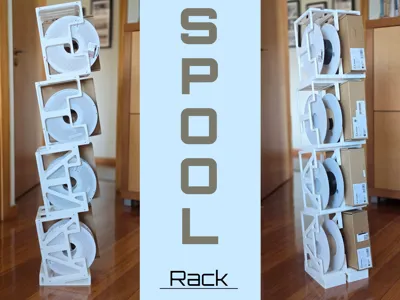
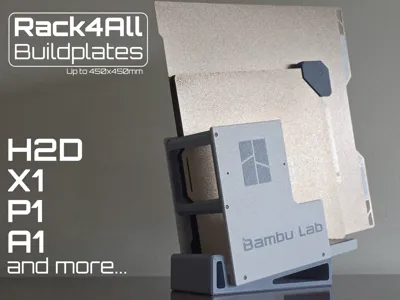
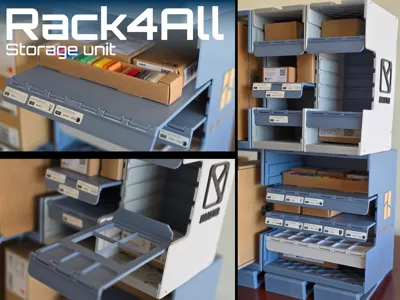
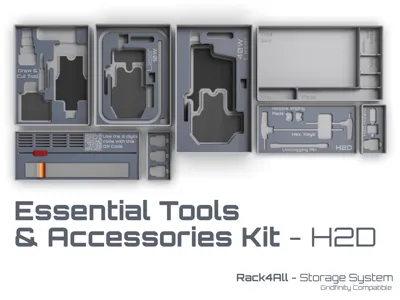
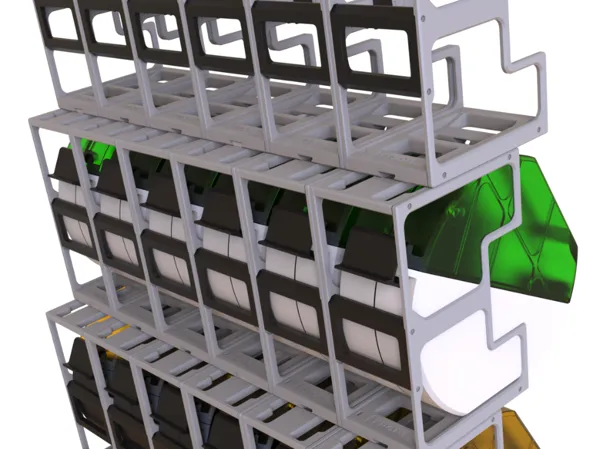
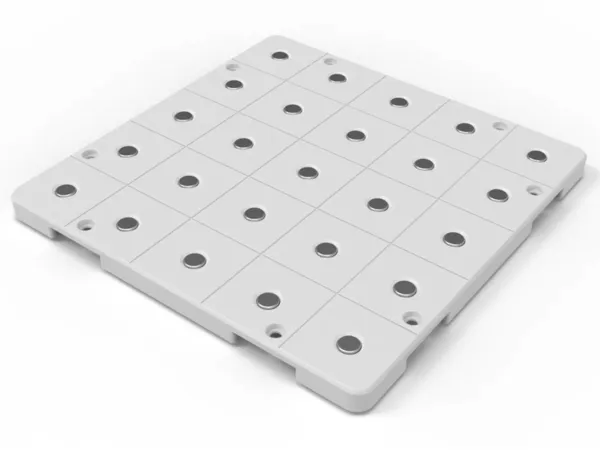
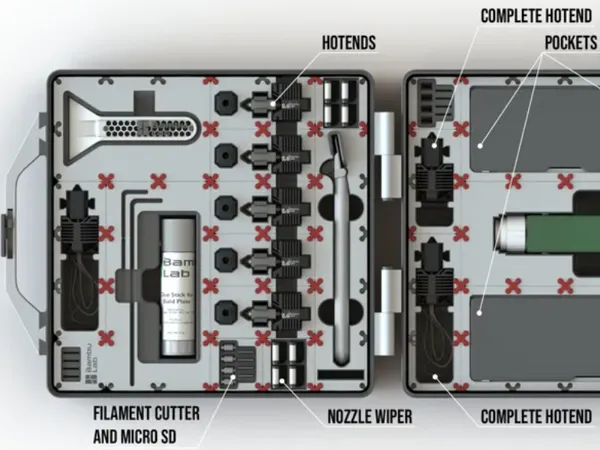
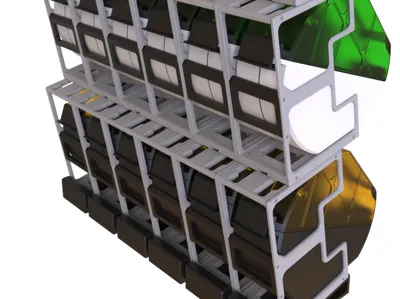
Modules available for the 4All EcosystemModules available for the 4All Ecosystem4All Ecosystem StructureTo help our community navigate the growing number of interrelated projects, I’ve created a new visual structure that organizes all components within the 4All Ecosystem. At its core lies the Rack4All – Spools Rack, from which several modular systems have evolved — including SpoolBox4All, Rack4All Storage Units, and a complete set of Gridfinity-based modules designed for tools, accessories, and H2D equipment. This structure makes it easier to understand how each project connects, from foundational storage modules to the smallest functional components, ensuring users can quickly locate compatible elements and extensions. You can explore the entire 4All Collection, including every project and its related modules, here: https://makerworld.com/en/collections/6004654-4all Modules available at the time of this diagram’s creation Mentioned ModulesURLRacks4All - Spools Rackhttps://makerworld.com/en/models/1297903Racks4All - Tagging Systemhttps://makerworld.com/en/models/1361397Wall Fixation Modulehttps://makerworld.com/en/models/1479157Rack4All EVA Foam Feet'shttps://makerworld.com/en/models/1452620Bambu Lab Logo for the Rack4All Panelshttps://makerworld.com/en/models/1419567Jorge Rui Logo for the Rack4All Panelshttps://makerworld.com/en/models/1418780SpoolBox4All - For All Brandshttps://makerworld.com/en/models/467045SpoolBox4All - For All Brands + Filament Feedhttps://makerworld.com/en/models/1114720BuildPlates for H2D, X1, P1 and A1https://makerworld.com/en/models/1343785Storage Unithttps://makerworld.com/en/models/1429661Parametric Model Maker - Gridfinityhttps://makerworld.com/en/models/1572815Essential Tools & Accessory Kit for H2Dhttps://makerworld.com/en/models/1574681Padding for the ToolBoxhttps://makerworld.com/en/models/1581492Handles for H2D Hex Keyshttps://makerworld.com/en/models/159057610W Laser Module - Paddinghttps://makerworld.com/en/models/1584887Drawing and Cut Tool - Paddinghttps://makerworld.com/en/models/1613955Essential Tools & Accessories X1 & P1https://makerworld.com/en/models/1602781Handles for X1 & P1 Keyshttps://makerworld.com/en/models/654655Essential Tools & Accessories A1 & Minihttps://makerworld.com/en/models/1641608Essential Tools for 3D Printinghttps://makerworld.com/en/models/1647998BuildPlate Care Kithttps://makerworld.com/en/models/1776866The BuildPlate Cleanerhttps://makerworld.com/en/models/1850486BuildPlate Small Scraperhttps://makerworld.com/en/models/604286
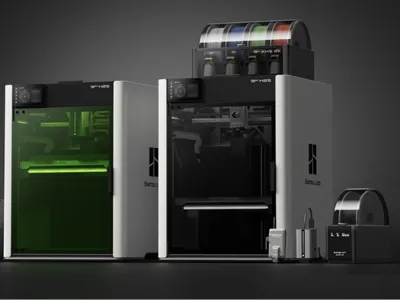
MF Machines and the Future of the community
MF Machines and the Future of the communityMultifunction MachinesFor years, the progress of 3D printing seemed to revolve around faster speeds and better print quality. But in 2025, some 3D printers are no longer just printers. The new generation, led by the Bambu Lab H2 series, has redefined the game. These machines are more than 3D printers — they’re creative manufacturing platforms, capable of 3D printing, laser engraving, cutting, and even plotting. A single device can now feel like a full workshop.And this is where things get interesting. Because when a single printer can combine so many different technologies, it changes not only what the machine can do, but also how we approach design itself. For the first time, makers have at their disposal hybrid systems that go far beyond plastics and FDM. Suddenly, it’s possible to integrate laser-cut parts, engraved details, or even multi-material assemblies in a single workflow.For a deeper dive into how multi-material printing is evolving beyond just color, I explored this in detail here: Unlocking the Potential of Multi-Material Printing in FDM 3D Printers — Beyond Just Color.Yet with machines that offer so much, there’s also an unexpected challenge: sometimes their sheer potential can feel intimidating. As a designer, I often feel far from unlocking everything they can do. Each of these technologies; 3D printing, laser, cutting, or plotting; and in some cases more, already has enough depth to create entire products on its own. Each of these technologies requires its own mindset, workflow, and learning curve. That’s exactly the journey I described in my series The Journey From Idea to Object — Part I and Part II, where I break down the tools and processes behind moving from concept to finished product.Bringing them all together into a single, coherent design can create a real sense of overload. I suspect I’m not alone in this; many others will feel the same. But for sure, you can use them one at-a-time.The obvious answer, to so many potential uses, is to rely on tools that help us manage a flood of possibilities; systems that can integrate, filter, and present complex information in ways that are easy to understand. The truth is, our human brain has its limits in “bandwidth”. But with practice, habits form. For experienced designers, switching between materials, methods, and disciplines is second nature. We deal daily with semiotics, ergonomics, aesthetics, functionality, and countless other variables (The Journey from Idea to Object). For us, the challenge is smaller. But for solo makers without a design background, facing a hybrid machine like this could quickly become overwhelming.And here lies a deeper point: human knowledge is finite, but artificial intelligence has an almost limitless bandwidth. Integrating AI into these new creative machines makes perfect sense — it can expand our capacity, simplify workflows, and make multifunctionality truly accessible (The Journey from Idea to Object — Part II).Press enter or click to view image in full sizeI had a taste of this tension myself with a very simple project: The “Nice purge bin”. The design combined not only plastic, 2 colors, but also other materials — cork, in this case, a noble material loved by many designers for its unique properties (Why Cork — Natural Mind blowing). I shared the model on a social platform known for being critical, just to see the reaction. The backlash came quickly. Some accused me of using AI-generated images — false, of course. The only “crime” was showing a product that combined multiple materials and techniques, supported by good photography. That alone triggered suspicion.Press enter or click to view image in full sizeNice Purge Bin — MakerworldTo be fair, the critics aren’t entirely wrong: many of today’s trending models online really are AI renders that look nothing like the final printed object, which misleads the community, just take a look at some of makerworld trending models. Another criticism was about cost. Because the bin wasn’t purely functional — it carried some of the qualities I mentioned earlier, closer to what you’d expect from a commercial product — some called it a waste of material. The question arises: why so many criticisms? The answer is simple. People aren’t used to seeing 3D printed projects that resemble finished products, both in look and feel. And when they do, it disrupts expectations.A lot of this shift lies in the community. When technology empowers makers with such versatile tools, collaboration and shared projects become the next frontier. I saw this firsthand in the Cyberbrick Project, where open collaboration reshaped not just the design process, but also the sense of belonging within the maker community.This brings us to a practical question: which machines are truly capable of supporting this new way of thinking? Not all 3D printers can handle multiple processes in one workflow. Only a few have reached the level of hybrid systems; combining 3D printing with laser engraving, cutting, and even plotting; a production Hub. These are the machines that will transform the idea of “just a printer” into a complete creative platform. Let’s take a closer look at the main players redefining what a single machine can do. … continues with further analyst on the full article on my blog … The conclusion The evolution of 3D printing in 2025 shows that we are no longer talking about simple machines that produce plastic parts. We are looking at hybrid creative hubs — tools capable of printing, cutting, engraving, plotting and more in one integrated workflow. This power can feel overwhelming, especially for solo makers, but it also opens a door to unprecedented creativity.As I mentioned in the introduction, the real challenge is not just technical specifications — it’s how we, as designers and makers, learn to navigate this abundance. Human bandwidth is limited, but habits, experience, and above all, the support of communities and AI can bridge the gap. A machine is only as valuable as the ecosystem it belongs to: the tutorials, the feedback, the shared projects, the conversations that shape its use.Criticism, like what I faced with the Nice Purge Bin, only proves how disruptive it is to move closer to commercial-grade design in the maker space. And yet, this disruption is exactly what pushes the boundaries of what 3D printing can be.So when choosing a 3D printer today, you’re not just buying a faster or larger machine. You’re deciding how far you want to go into this new creative era — an era where design, community, and intelligence (both human and artificial) merge to transform possibility into reality.