
Door Stopper with Spring Mechanism

Print Profile(2)


Description
TLDR; Measuring, Customizing & Printing Your Door Stopper 📏🖨️
Measuring Your Door:
- Location: Measure the door gap where you’ll place the stopper.
- Precision: Measure at 1 mm accuracy, but better note down 1 mm less than more

- Thickness: Measure the door thickness; it doesn’t need to be exact, just ensures the door rests on the spring.
Using the Customizer:
Input your measurements into the customizer and generate your STL file.
Printing Your Door Stopper:
- Brim: Use an outer brim to stabilize the spring mechanism while printing.
- Materials: PLA and PETG work well; other filaments should too.
With these steps, you’re ready to print your door stopper!
Shoes & Laundry Baskets as Doorstoppers? Been There! 👟🧺
Do you sometimes toss random things—like old shoes or a laundry basket—in front of doors to keep them from slamming shut? I did. Especially during shock ventilation, I’d be running around, pushing stuff in place to hold the doors open. But let’s be real, it’s a hassle. Constantly shifting things just to stop the doors from banging shut in the wind.
From Wedges to Stoppers: A Smarter Solution 🛠️✨
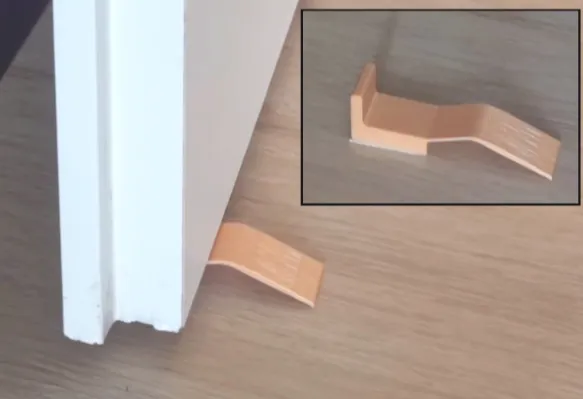
After my window wedge became a household favorite for managing airflow, I realized I needed something just as practical for the doors. The typical wedges were either too bulky or annoying—you have to shove them under the door or fiddle with some mechanism to release them. I thought: why not design something simpler and smarter? That’s when the idea for this spring-based door stopper was born.
Stop the Slam Before It Starts 💨✋
We’ve all seen it—doors don’t slam shut right away. First, they start to move slowly, and soon the door acts like a sail in the wind - and GAME OVER! It crashes against the door frame. My door stopper catches exactly that slow movement, holding the door before it gains momentum. It doesn’t take much force to keep it steady; the key is making sure it doesn’t move in the first place.
This is How It Works ⚙️🌀

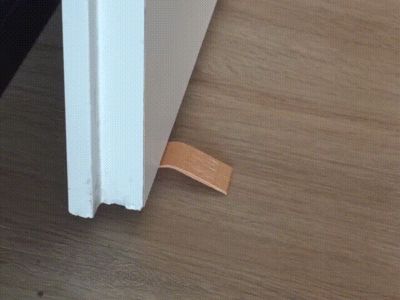
You slide the door over the spring mechanism, which gently pushes it toward the stopper. The flat part where the door rests is slightly shorter, so the door stays on the spring, and the stopper keeps it from moving too far. Even with a gust of wind, the spring nudges the door back, preventing any slow escapes. But, when pulling with moderate constant force the door overcomes the spring tension and slides over it. So it's use is as easy as pushing the door over the spring mechanism and pulling back over it when you want to close it again.
License

You shall not share, sub-license, sell, rent, host, transfer, or distribute in any way the digital or 3D printed versions of this object, nor any other derivative work of this object in its digital or physical format (including - but not limited to - remixes of this object, and hosting on other digital platforms). The objects may not be used without permission in any way whatsoever in which you charge money, or collect fees.


Comment & Rating (35)