
Simple Bottle Cap Launcher
Print Profile(2)
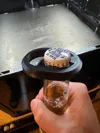
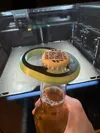
Bill of Materials
.jpg)

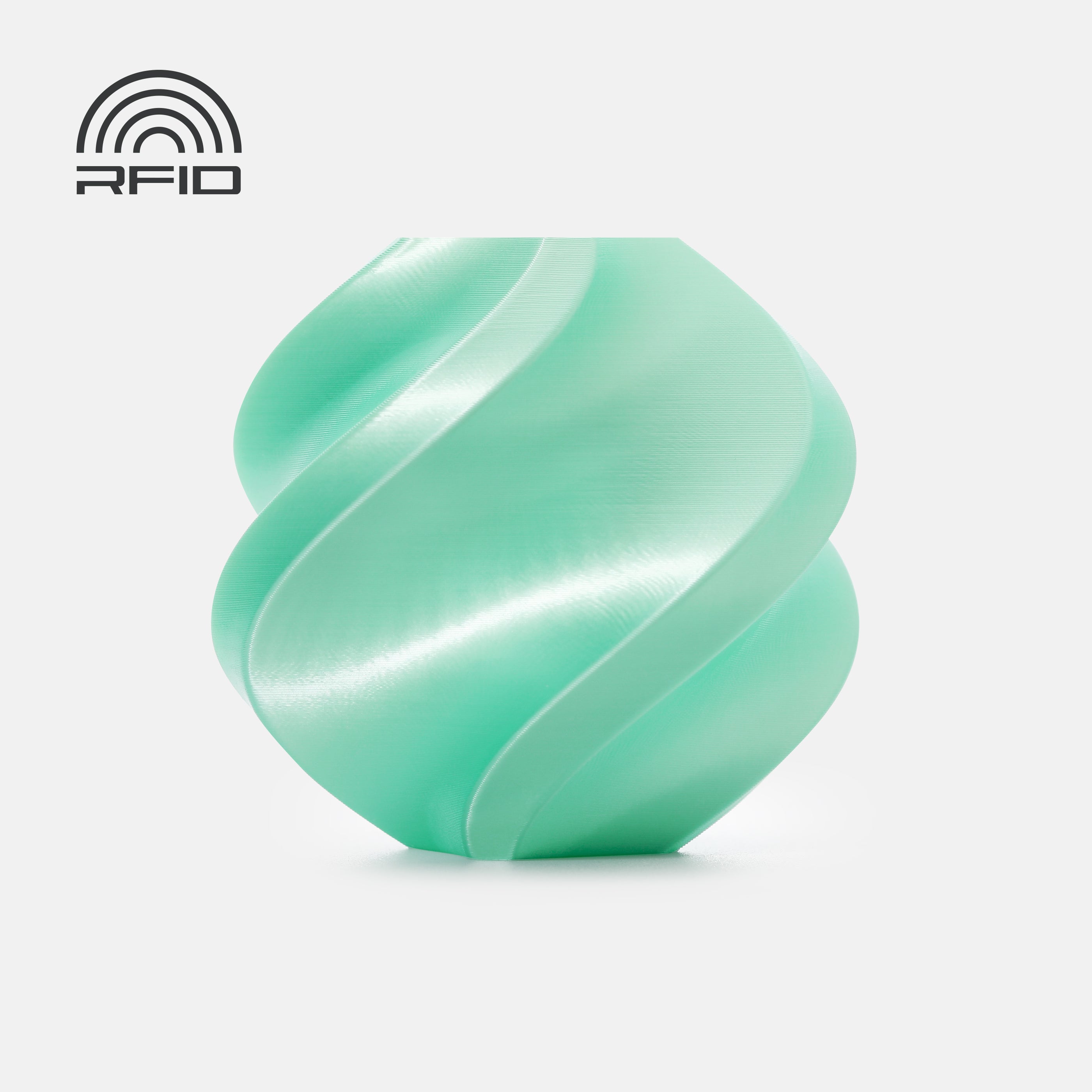

Description
Simple bottle cap launcher (Non German Version)
WARNING: Bottle caps can be launched at high speed and may travel a considerable distance, so be mindful of your own safety and your surroundings. Be aware of the direction in which the bottle cap may be ejected before opening. Keep your fingers clear during use to avoid pinching injuries. Use at your own risk.

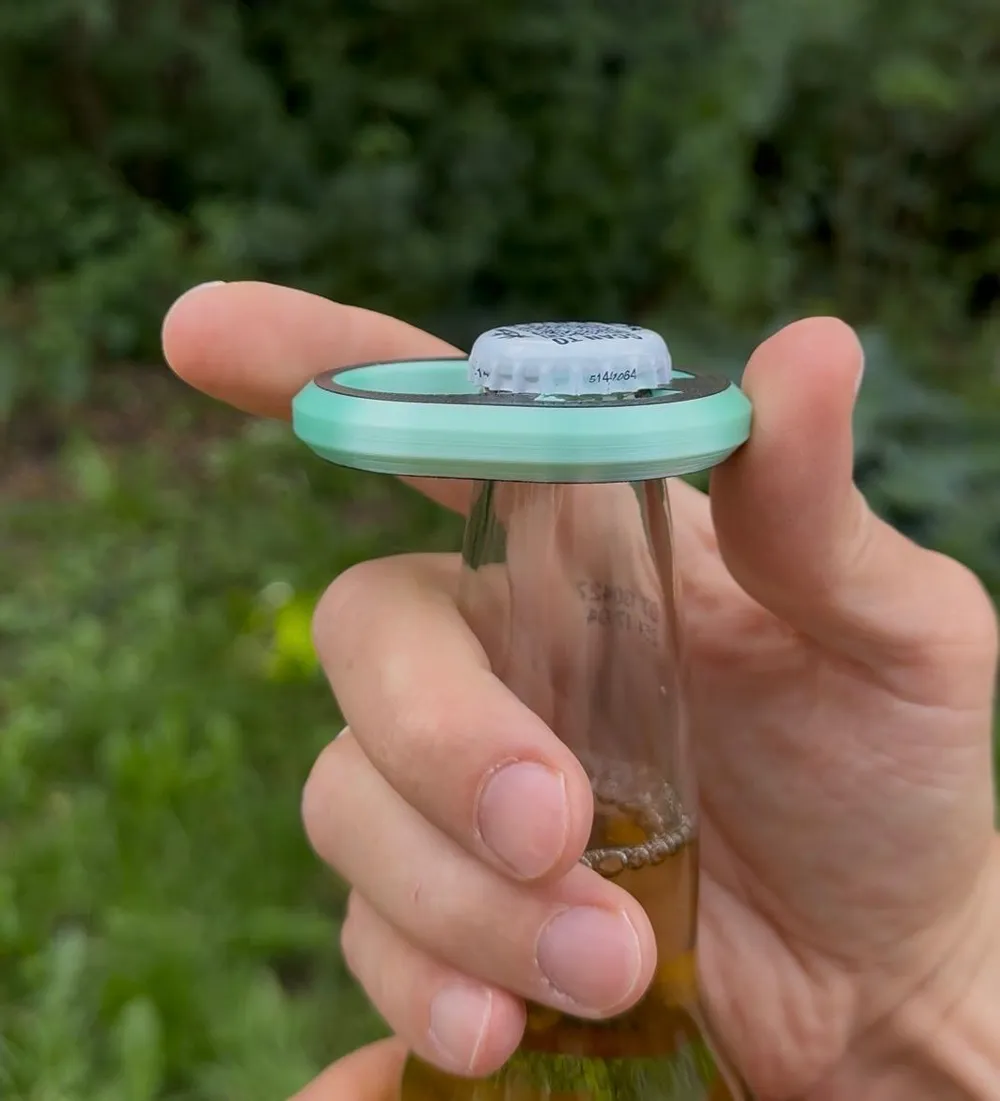
Don't underestimate this little gadget. It turns almost any bottle cap into a loud flying projectile, and it's almost as easy to use as snapping your fingers. Unfortunately, it doesn't work as well with German bottles, but it works even better with most others. You'll find a little more information about that further down in the description.
Give it a try and have fun!
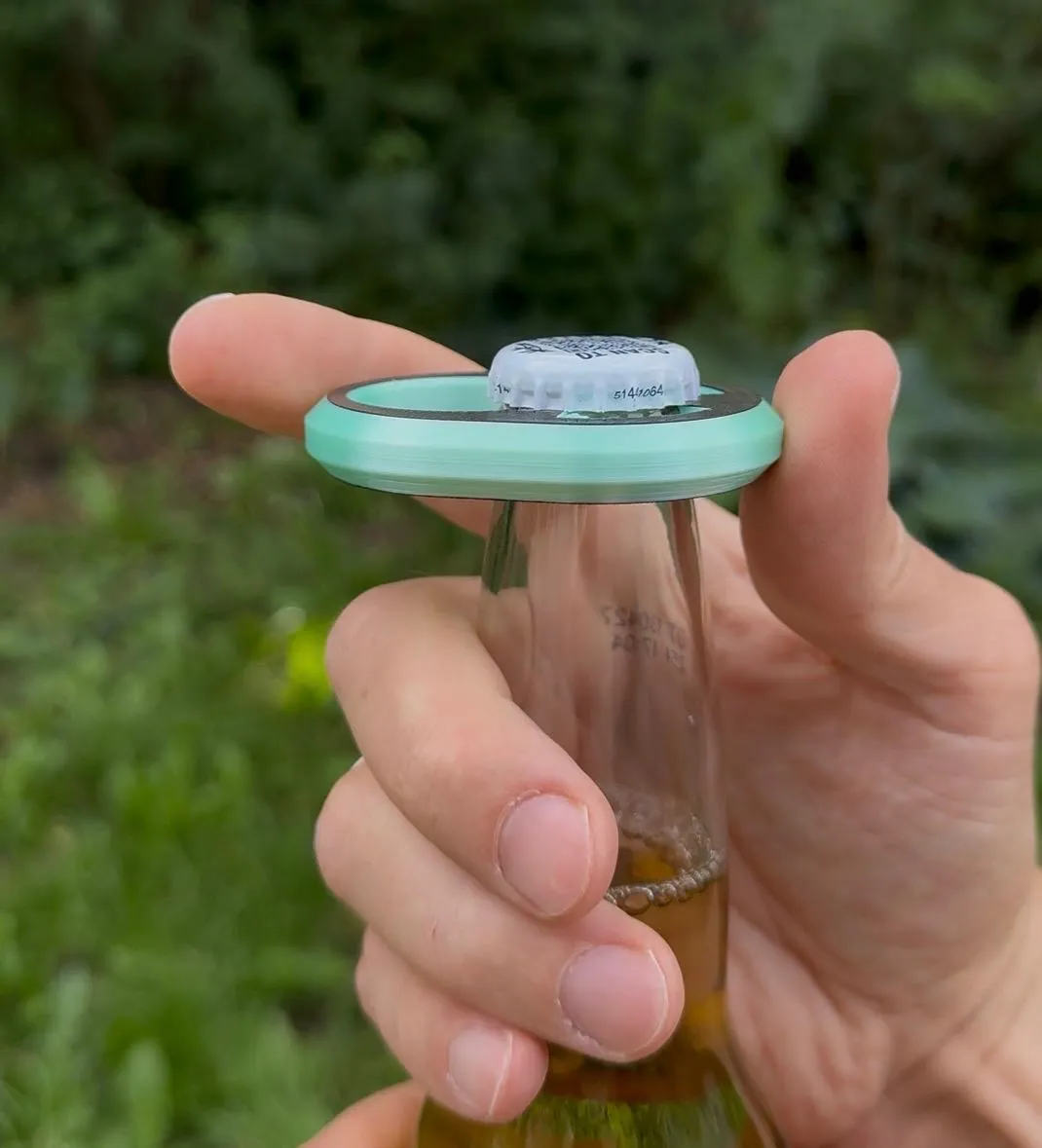
As mentioned above, it works best with non-German bottles due to the shape of the bottle neck. The next image shows what to look for so you can easily tell the different bottle types apart.
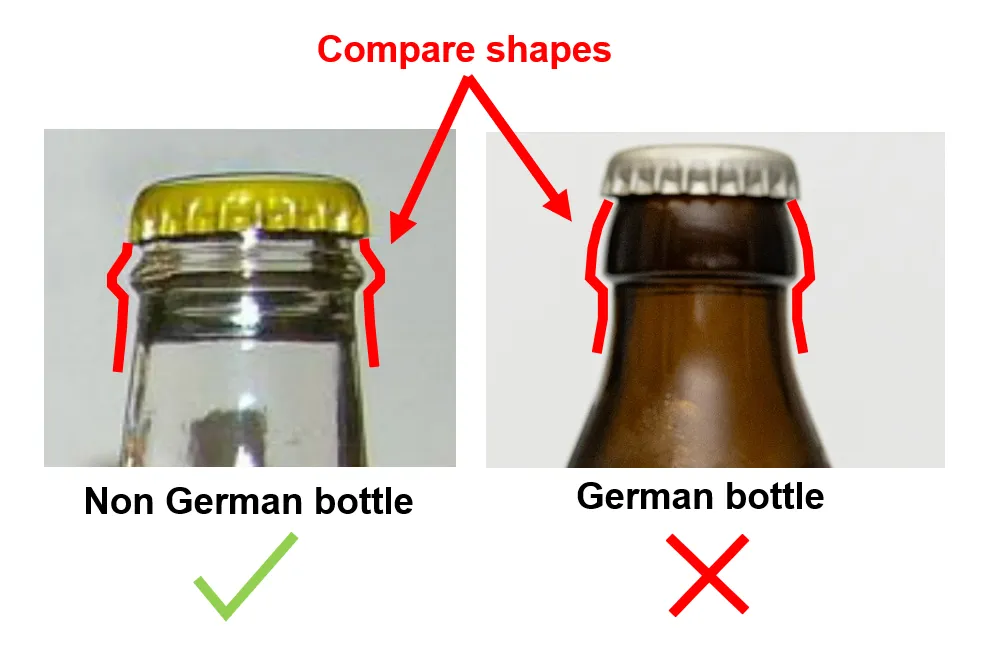
Important Information
Warning: Bottle caps can be launched at high speed and may travel a considerable distance, so be mindful of your own safety and your surroundings. Be aware of the direction in which the bottle cap may be ejected before opening. Keep your fingers clear during use to avoid pinching injuries. Use at your own risk.
Printing Recommendations
This bottle opener is not just a decorative print—it is a functional tool that has to withstand significant force during use. To ensure the best performance and durability, please keep the following recommendations in mind.
Filament Choice
Choosing the right filament is essential. Filaments with additives such as silk, matte, wood, or similar effects are generally more brittle and less durable than standard materials, making the opener more likely to fail under load.
For the most reliable results, standard PLA is highly recommended.
Recommended Material
The opener base performs best when printed in regular PLA. It is stiff, resists bending, and provides the precise fit needed to open bottles reliably.
PETG is also suitable, but keep in mind that it is significantly more flexible and will bend more under load.
If you choose to use more advanced materials, I assume you're already familiar with their properties and printing requirements.
Please only use profiles uloaded by Designer. Other profiles were not created by me and may be outdated.
Global settings
- Filament: tested with PLA
- Multicolor: 2 Colors
- Layer height 0,24 mm
- Print time: approx. 40 minutes
- Filament usage: approx. 20 g
- Supports not required
Strength settings
- 8 walls
- 15 upper and lower layers with 100%
- 50% gyroid infill
Usage:

- Insert the bottle through the opening and slide the opener underneath the bottle cap.
- Make sure the opener hooks securely under the ridges of the bottle cap.
- Hold the opener firmly in place with your thumb.
- Press the lever with your index finger.
- The faster the bottle cap is ejected, the louder the gas will escape from the bottle.
A Few Final Notes
Many factors can influence how well the opener performs, including the filament brand, bottle manufacturer, beverage temperature, print quality, printer calibration, and even the way the opener is used.
I've designed and tested this model to work reliably for as many users as possible. However, since I can't control all of these variables, I can't guarantee identical results in every situation.
If you run into any issues, feel free to get in touch—I'll be happy to help.
License

You shall not share, sub-license, sell, rent, host, transfer, or distribute in any way the digital or 3D printed versions of this object, nor any other derivative work of this object in its digital or physical format (including - but not limited to - remixes of this object, and hosting on other digital platforms). The objects may not be used without permission in any way whatsoever in which you charge money, or collect fees.


Comment & Rating (2)