
Rope Paracord Ratchet Tensioner Outdoor Tie-Down
Print Profile(1)
Bill of Materials



Description
Membership
Love this model? With my Commercial License tier, you can legally sell 3D prints of it! Join now to unlock over 80 designs and boost your shop. Start selling today! 🚀
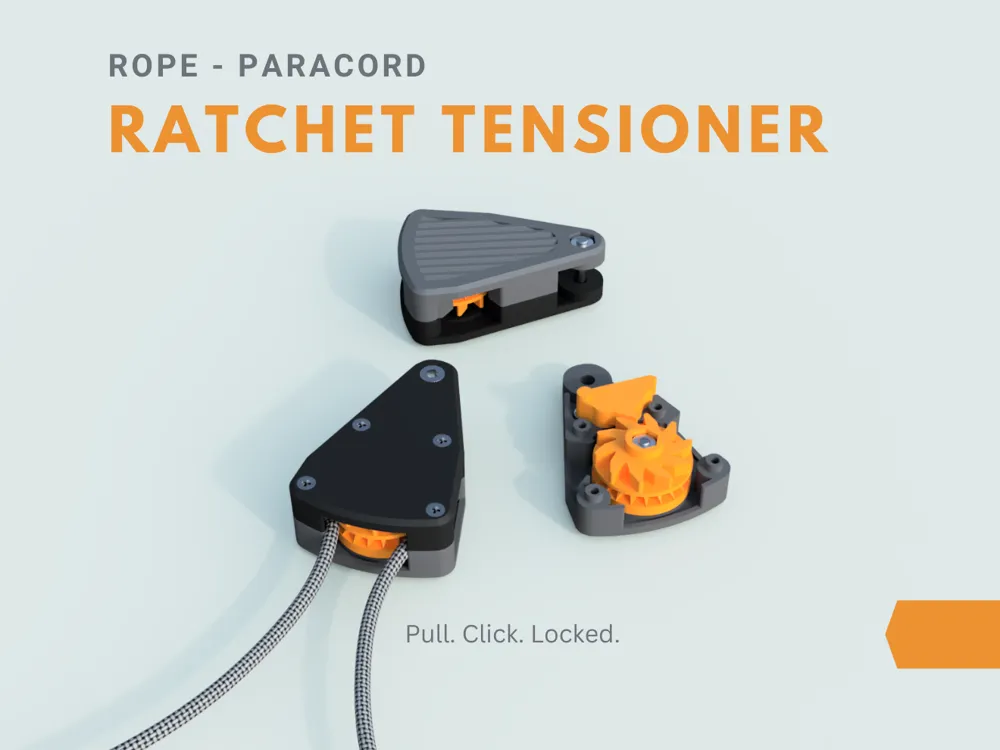
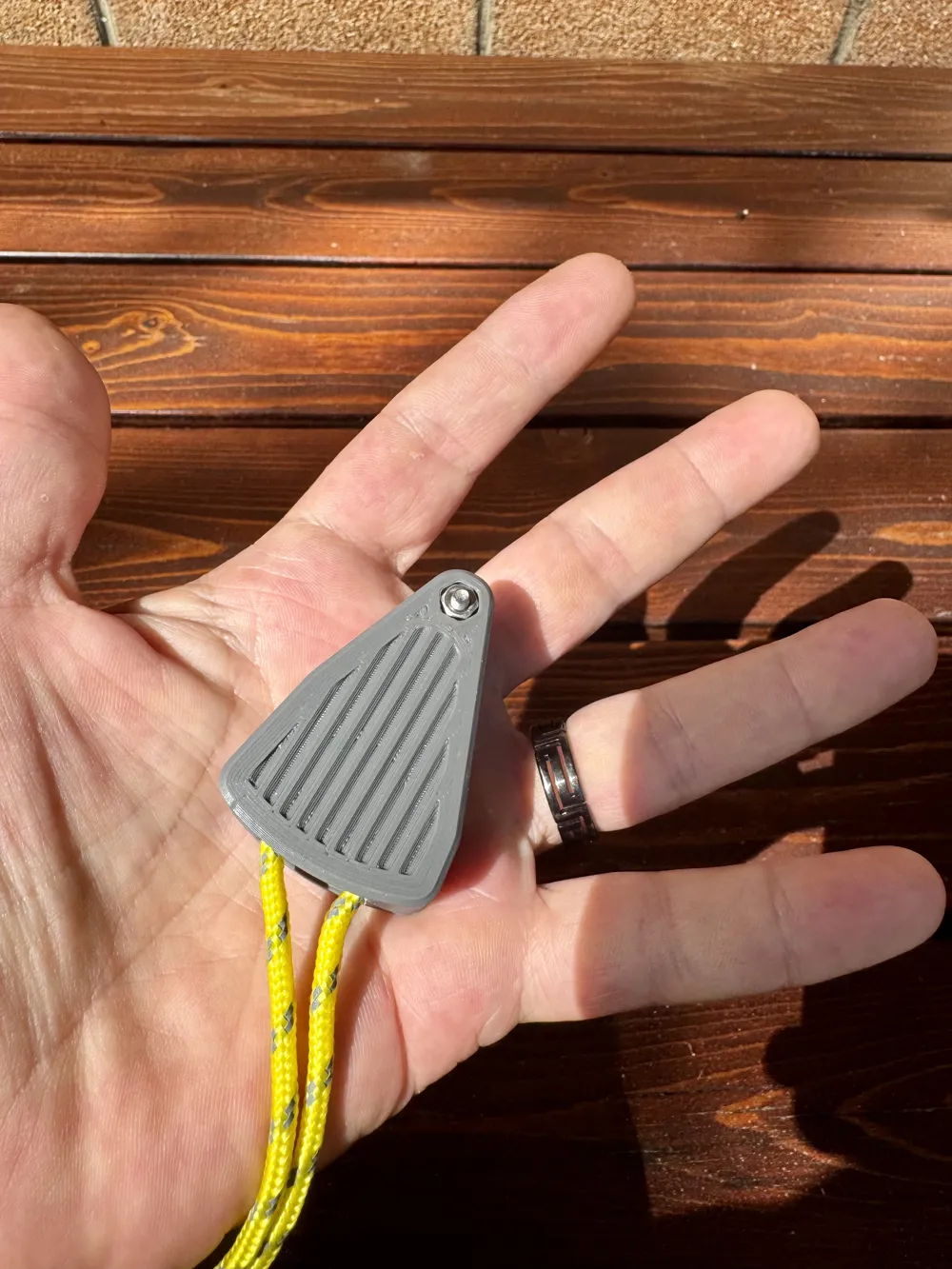
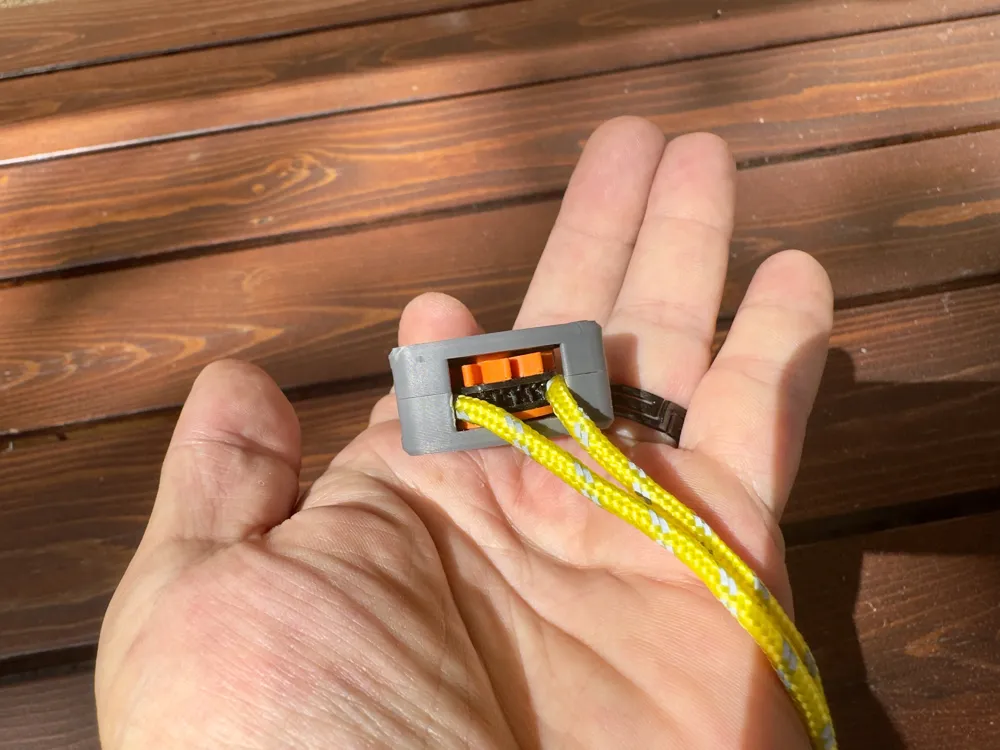
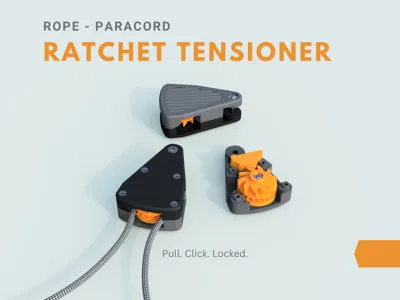
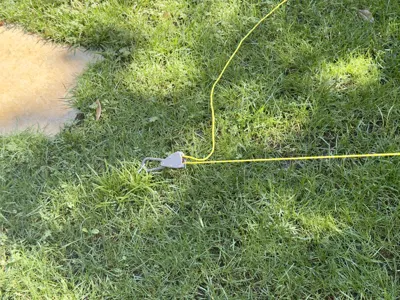
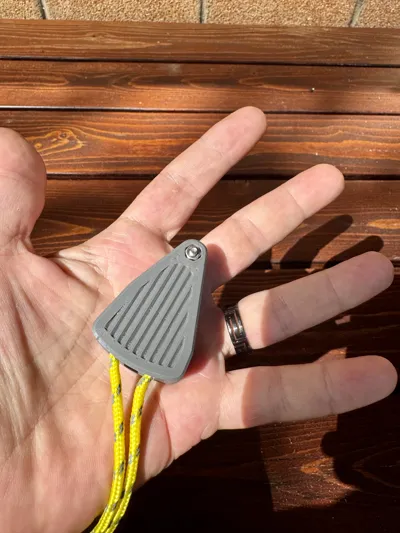
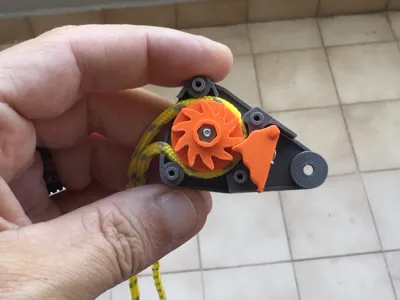
A fully 3D-printed rope ratchet tensioner that tightens your line one satisfying click at a time, and releases with a thumb press. No knots, no fiddling, no metal ratchet wheel to source. Pull the cord, let the ratchet do the holding, and dial in tension with one hand.
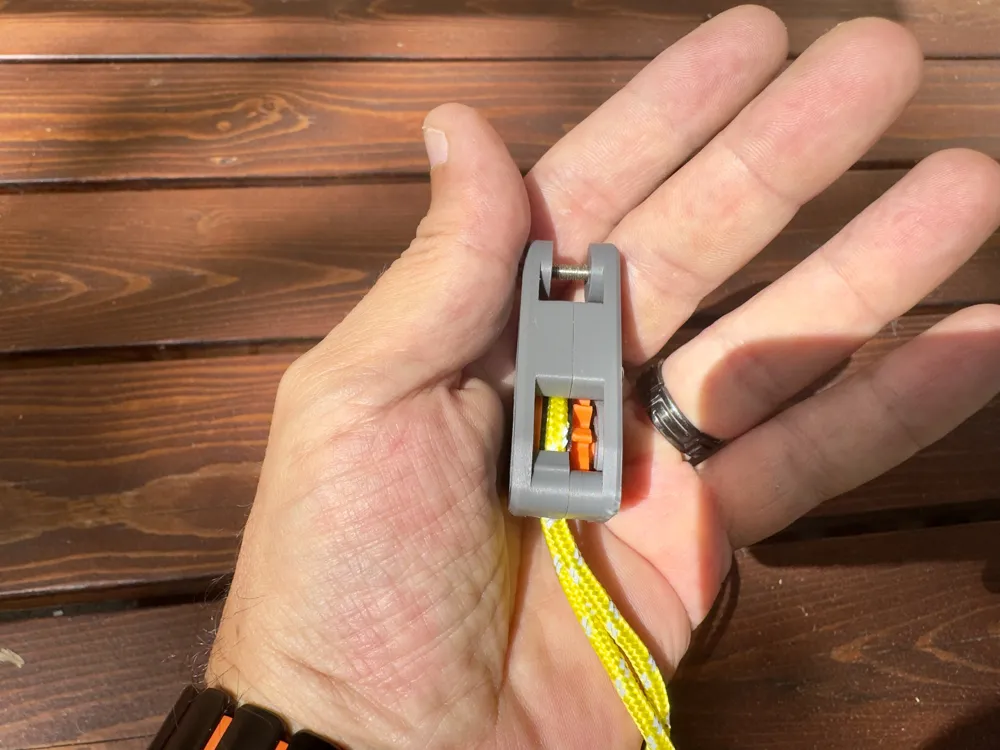
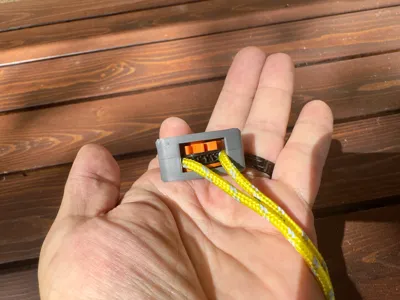
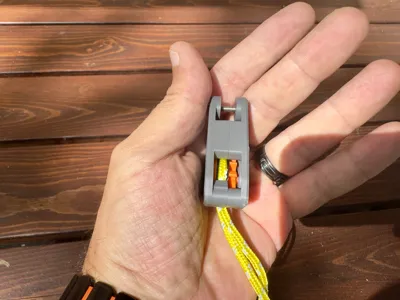
Inspired by the little aluminum rope-tensioner pulleys you see on tent guylines and grow-light hangers, but reimagined so almost everything comes off your printer. The grip comes from the cord wrapping the knurled wheel (capstan effect) combined with a directional ratchet that only lets the wheel turn one way.
Honest performance - Read this first
I test my functional models to failure and I tell you the real numbers, not marketing ones.
- Recommended working load: 3–4 kg (or 20+ kg with a backup knot, read below).
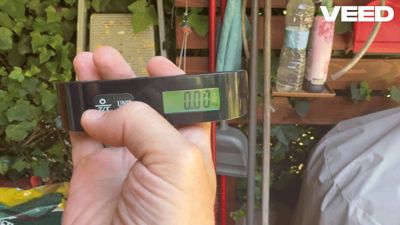
- Slip point observed in my tests: 5–7 kg, depending on the cord.
- It does not break under load, when overloaded, the cord slips on the wheel rather than the part snapping.
- The limiting factor is grip between cord and printed wheel, not the mechanism (the ratchet and clicker themselves hold far more). A steel wheel like the commercial versions grips harder, a printed wheel can't fully match that, and that's the honest trade-off of an all-printed design.
Tip to squeeze out more grip: printing the wheel in a slightly abrasive or matte/porous filament increases surface friction and can push the slip point higher. Smooth glossy filament grips the least.
Tension is cord-dependent, different cord material, diameter and sheath change the grip. Always test with your own cord before trusting a load.
Backup stopper knot — a big safety margin
Here's the trick that changes the game for the rare high-load moment: tie a simple stopper knot on the tail (the free end running through). If the cord ever starts to slip, the knot jams against the tensioner and can't pass, and from that point the load is carried by the structure of the part, not by friction grip.

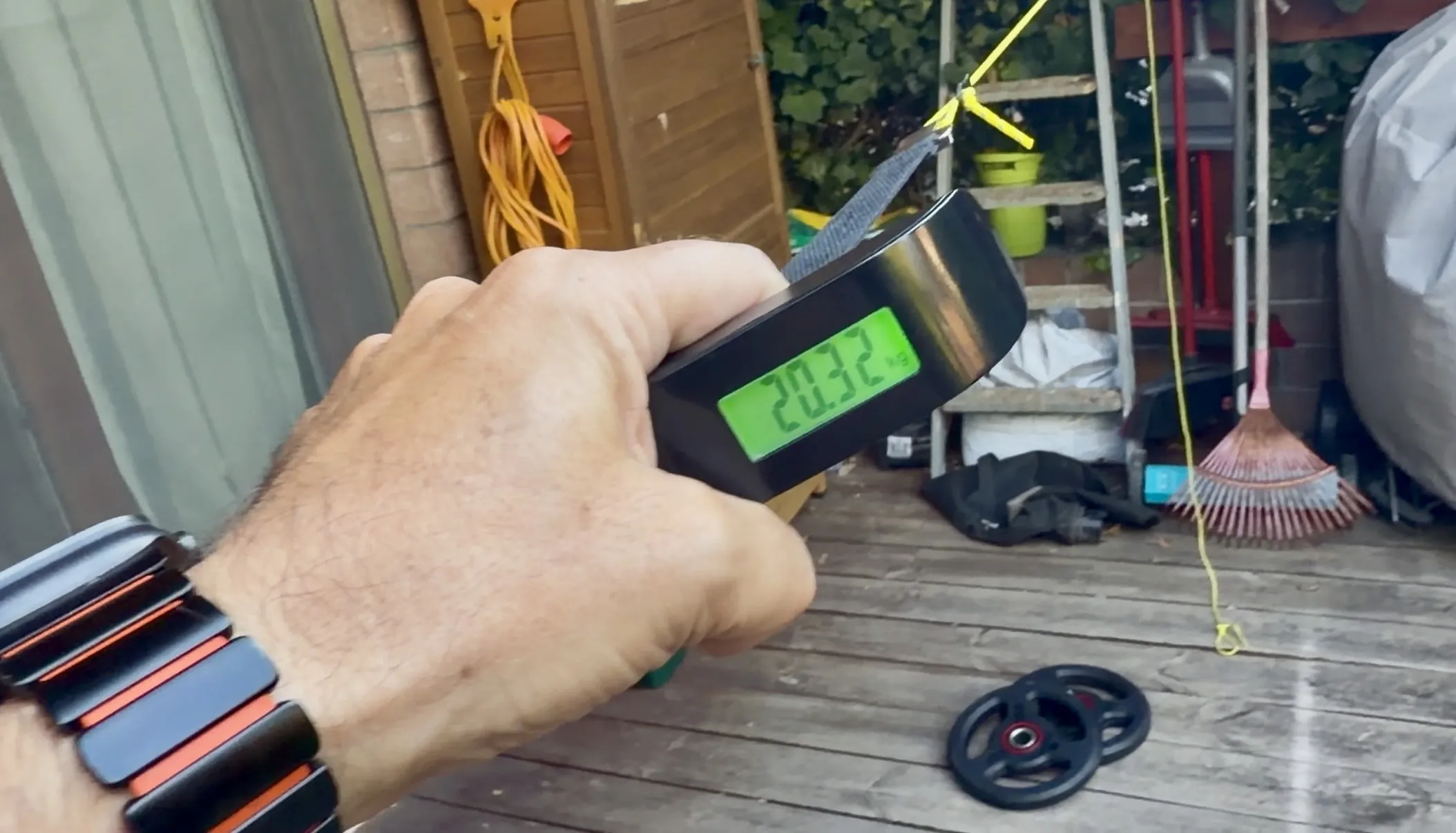
In my own testing, with a backup knot I pulled it to 20 kg one-handed with zero drama, and that was the limit of what I could safely pull by hand, not the limit of the part. Beyond that it's the shell and anchor taking the load, and there's clearly more headroom.
Where it works well (≈3–4 kg working)
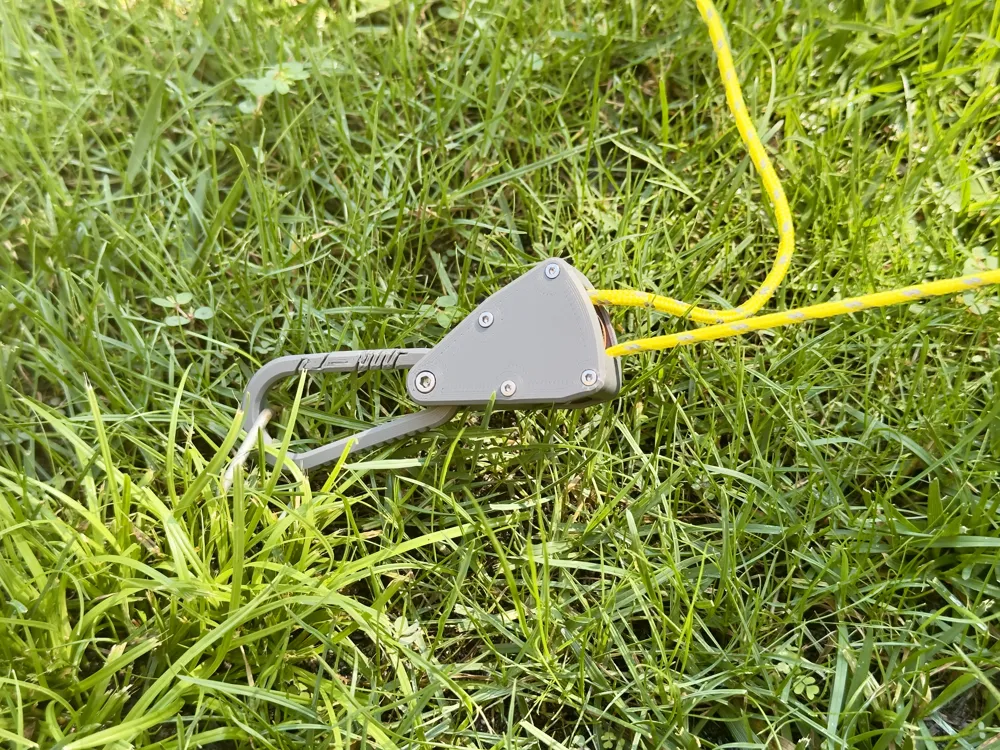
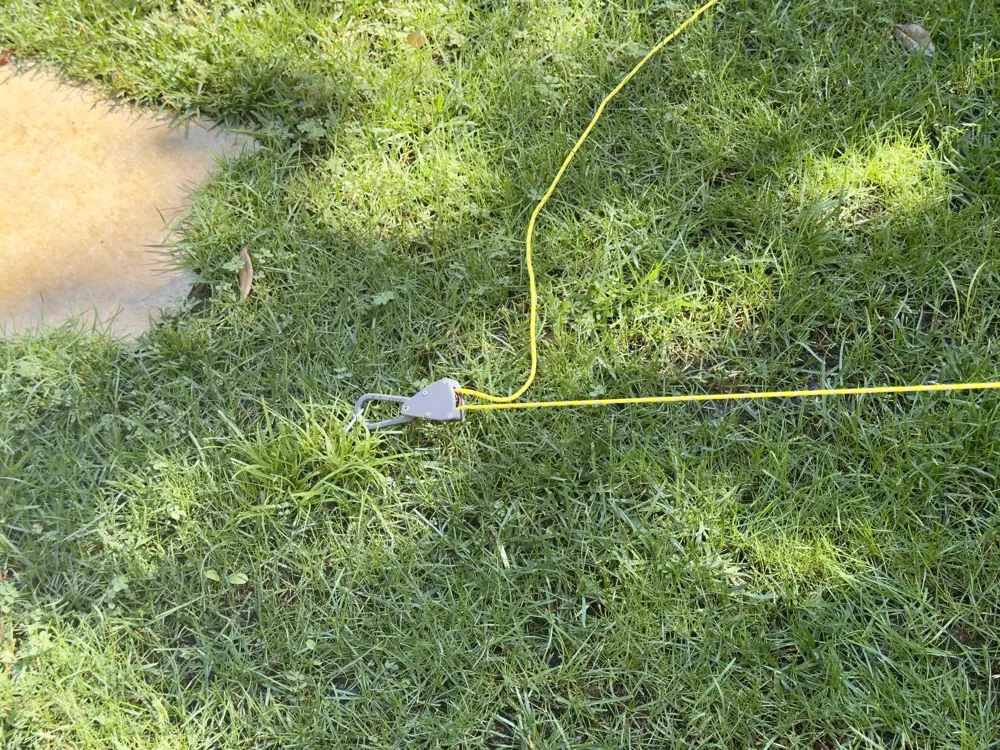
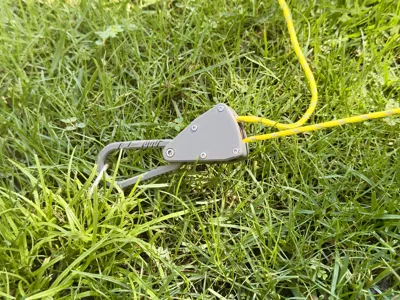
- Tent and tarp guylines - the core use
- Tarp ridgelines, camp clotheslines, drying lines
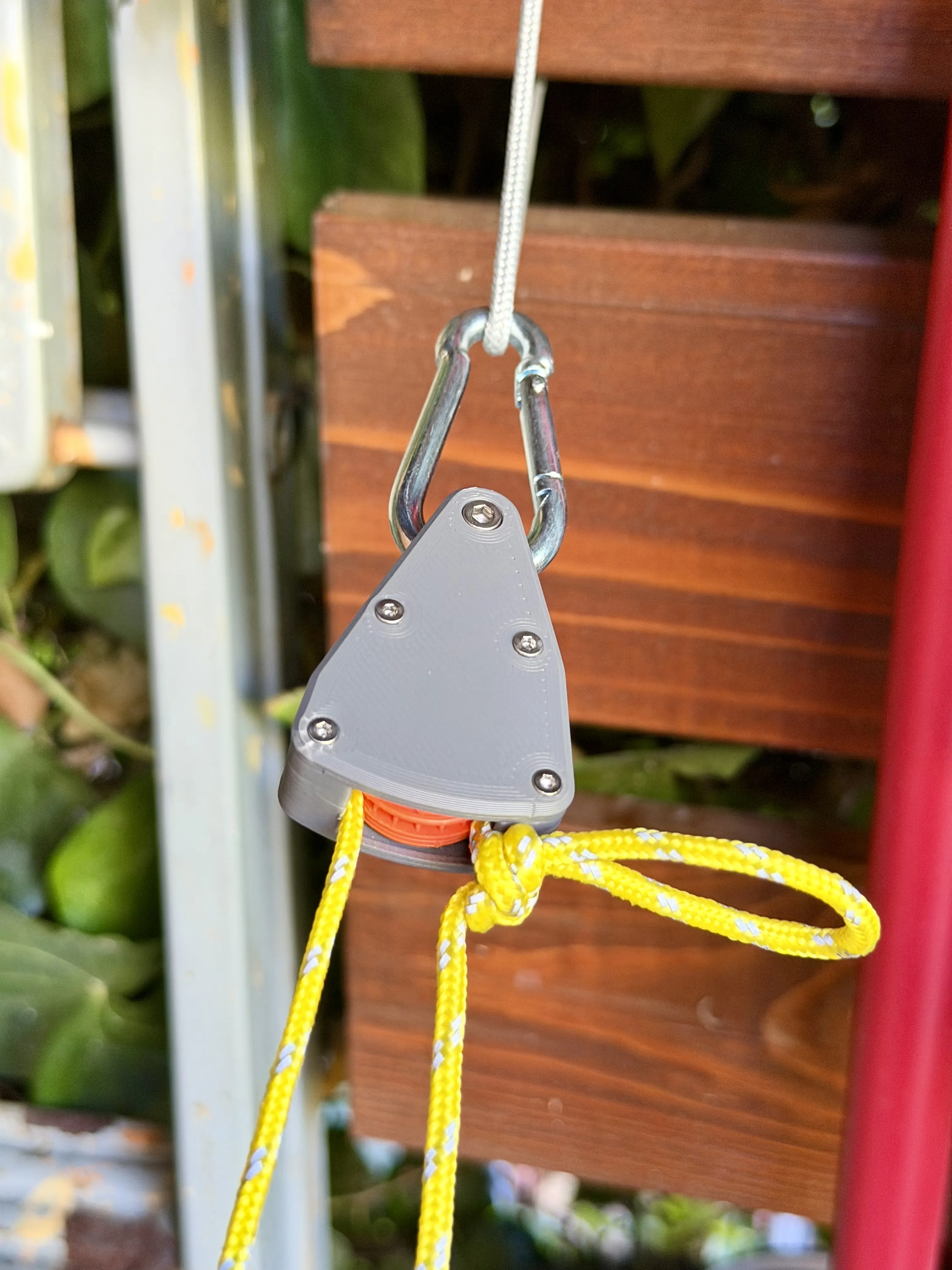
- Hanging grow lights, lanterns, camp lights (1–3 kg) - the classic rope-ratchet job
- Hanging planters, bird feeders / birdhouses
- Backpack compression and lashing light gear
- Kayak / canoe deck rigging for light gear
- Tensioning banners, bunting, light signs, shade cloth, awnings
Where NOT to use it (please respect this)
- ❌ Climbing or anything a person hangs from, never. This is not safety equipment.
- ❌ Hammock body (80–150 kg). Tarp suspension over a hammock is fine; the hammock itself is not.
- ❌ Primary vehicle / roof cargo tie-down. Use as a light positioning aid only, never as the load-bearing restraint.
- ❌ Leash or tie-out for medium/large dogs, a single lunge exceeds the working load instantly.
- ❌ Anything overhead where a drop could injure someone or damage something.
Print settings
- Layer height: 0.16 mm, or adaptive (adaptive is set in the included profile), this matters for the printed closure-screw threads to come out clean.
- Supports: optional, only for the retention-screw holes. The rest prints support-free.
- Material: PETG recommended for outdoor UV/heat durability; PLA is fine for indoor / light use.
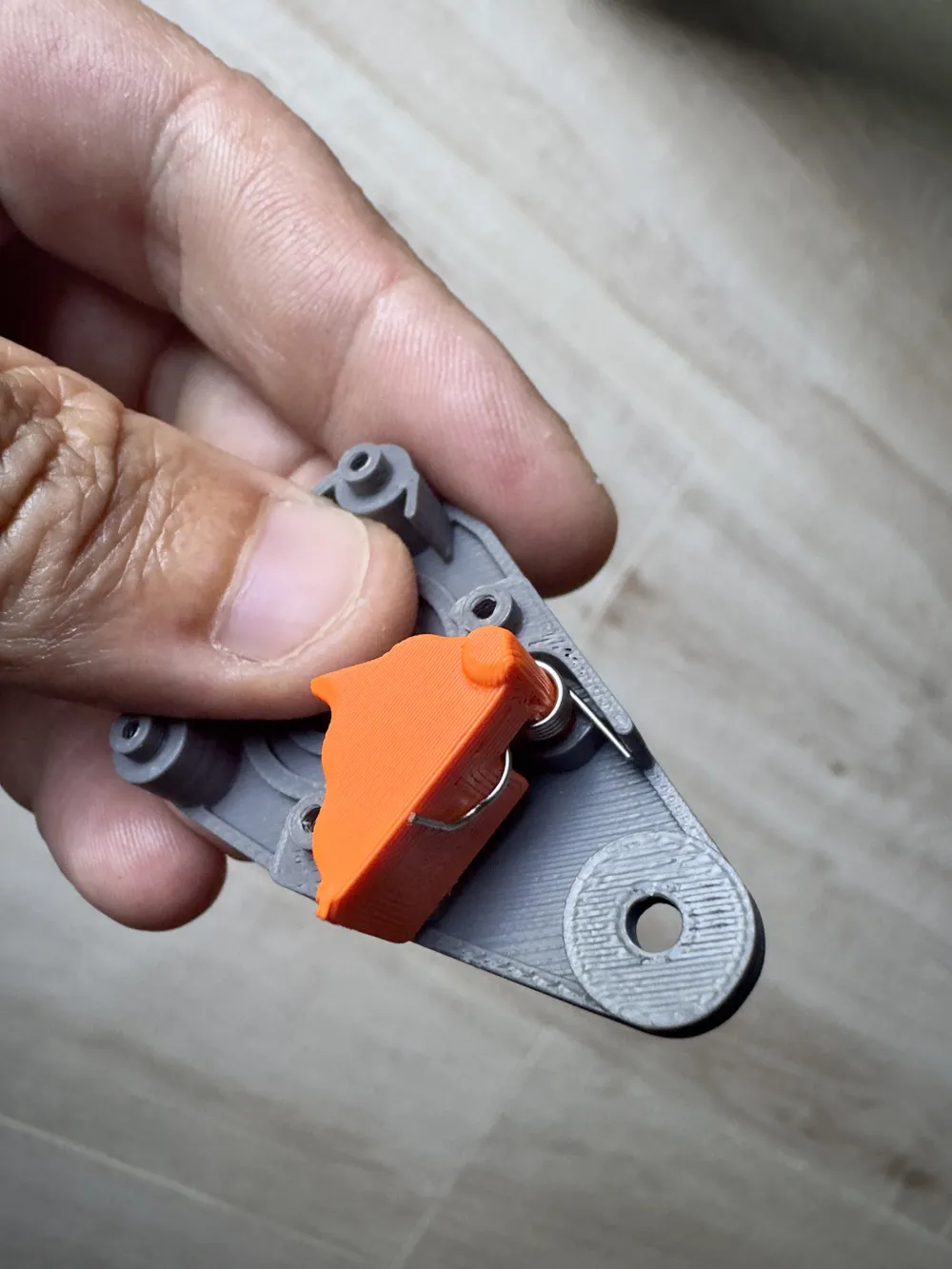
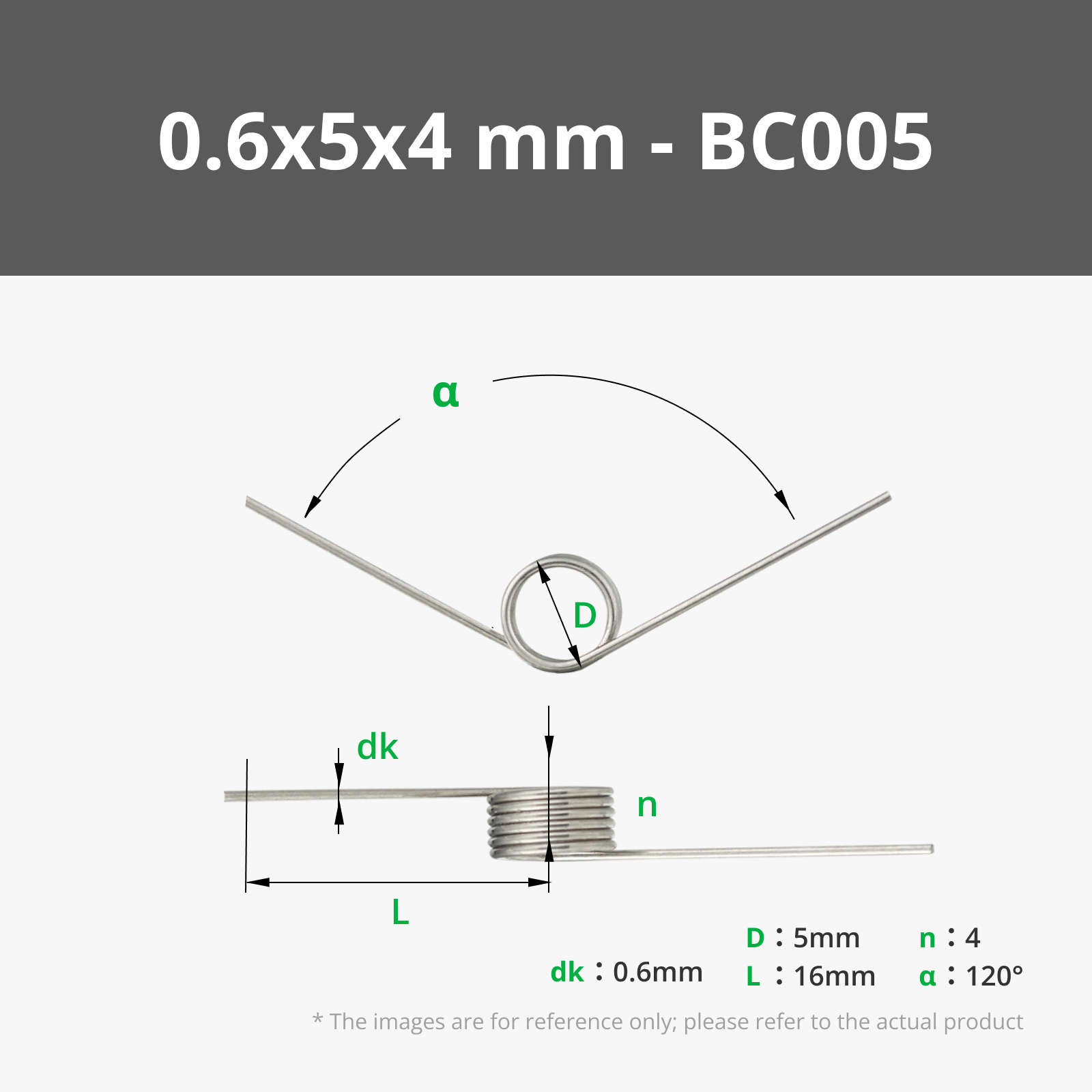
Preparing the torsion spring
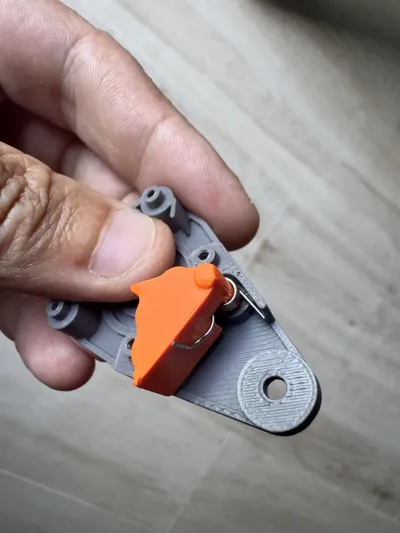
The spring needs a quick manual tweak (real photos included in the model gallery):
- Cut one leg to ~5 mm.
- Keep the other leg at ~10 mm and bend a 90° angle at the end, like this:
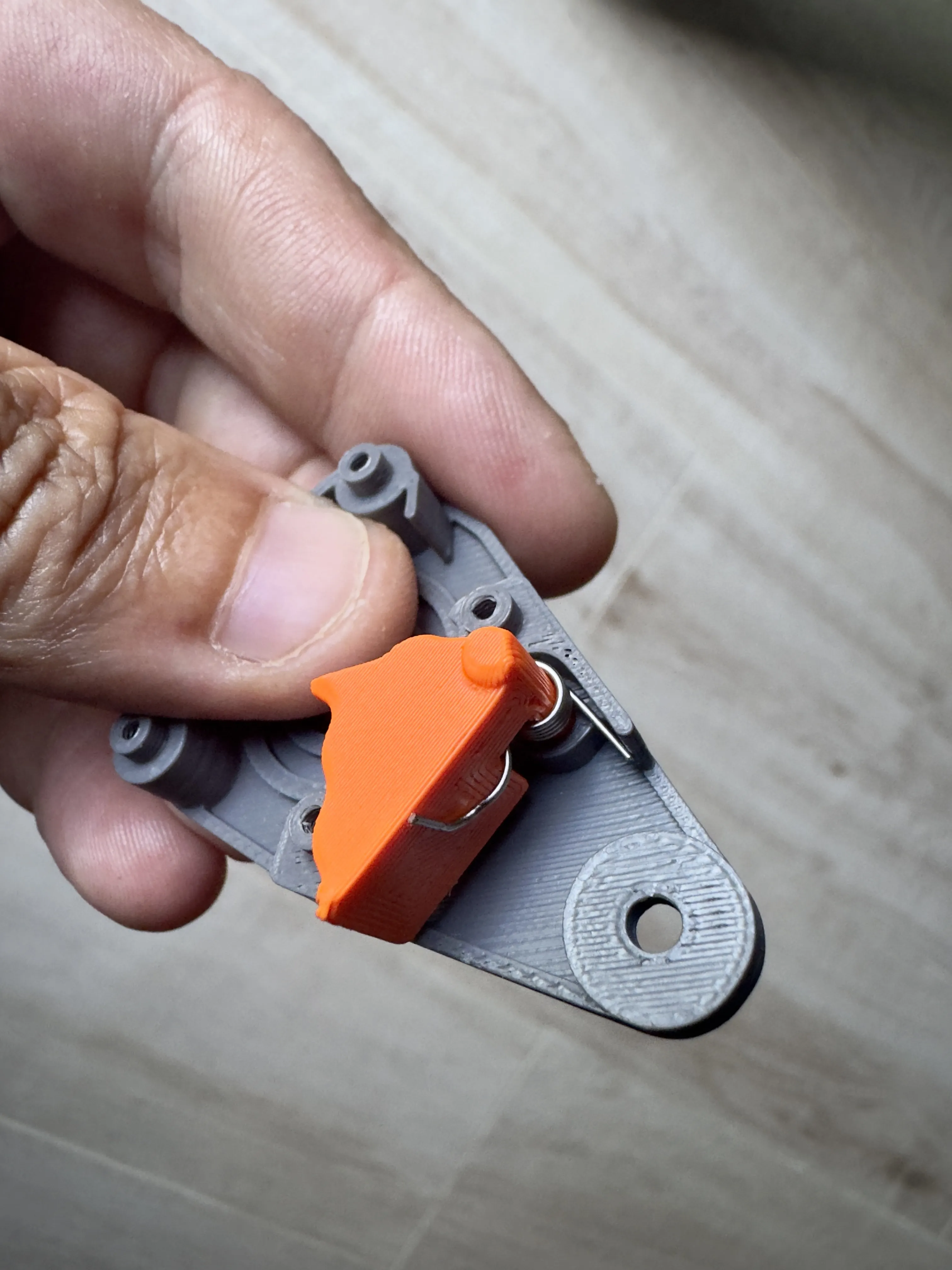
That's it, no special tools, just cutters and pliers.
Assembly
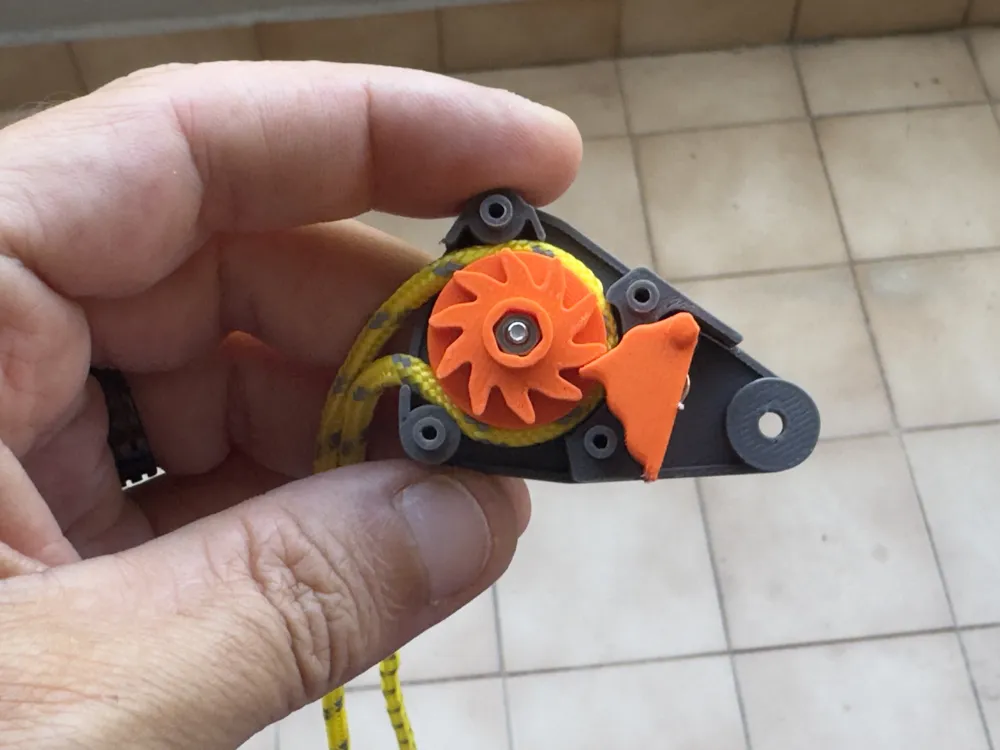
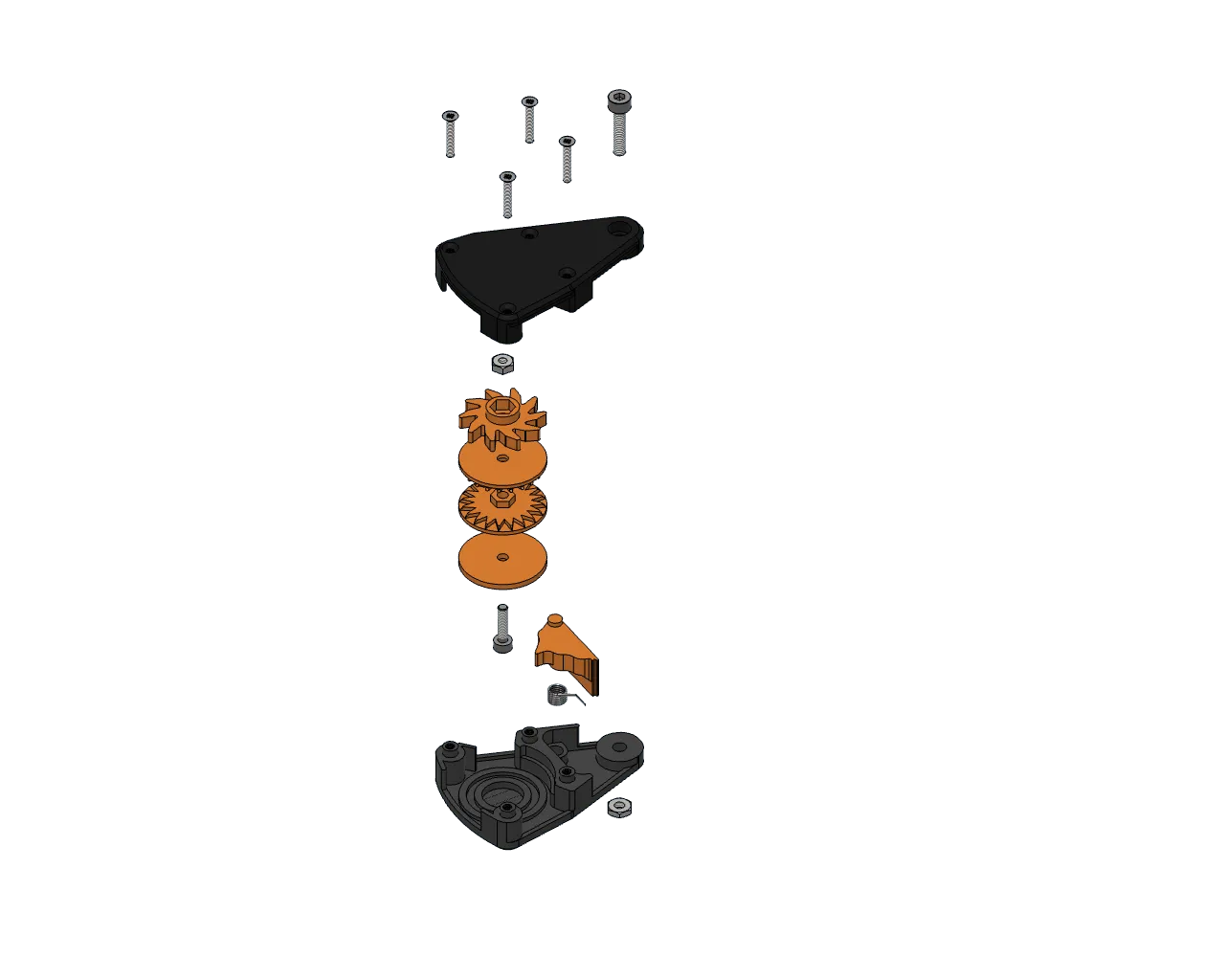
1. Build the wheel (4 parts). The wheel is split into four pieces so each prints cleanly:
- the bottom piece that seats into the base shell,
- the first knurled half of the wheel,
- the second knurled half, these two slide together on the central hex pin,
- the clicker gear on top.
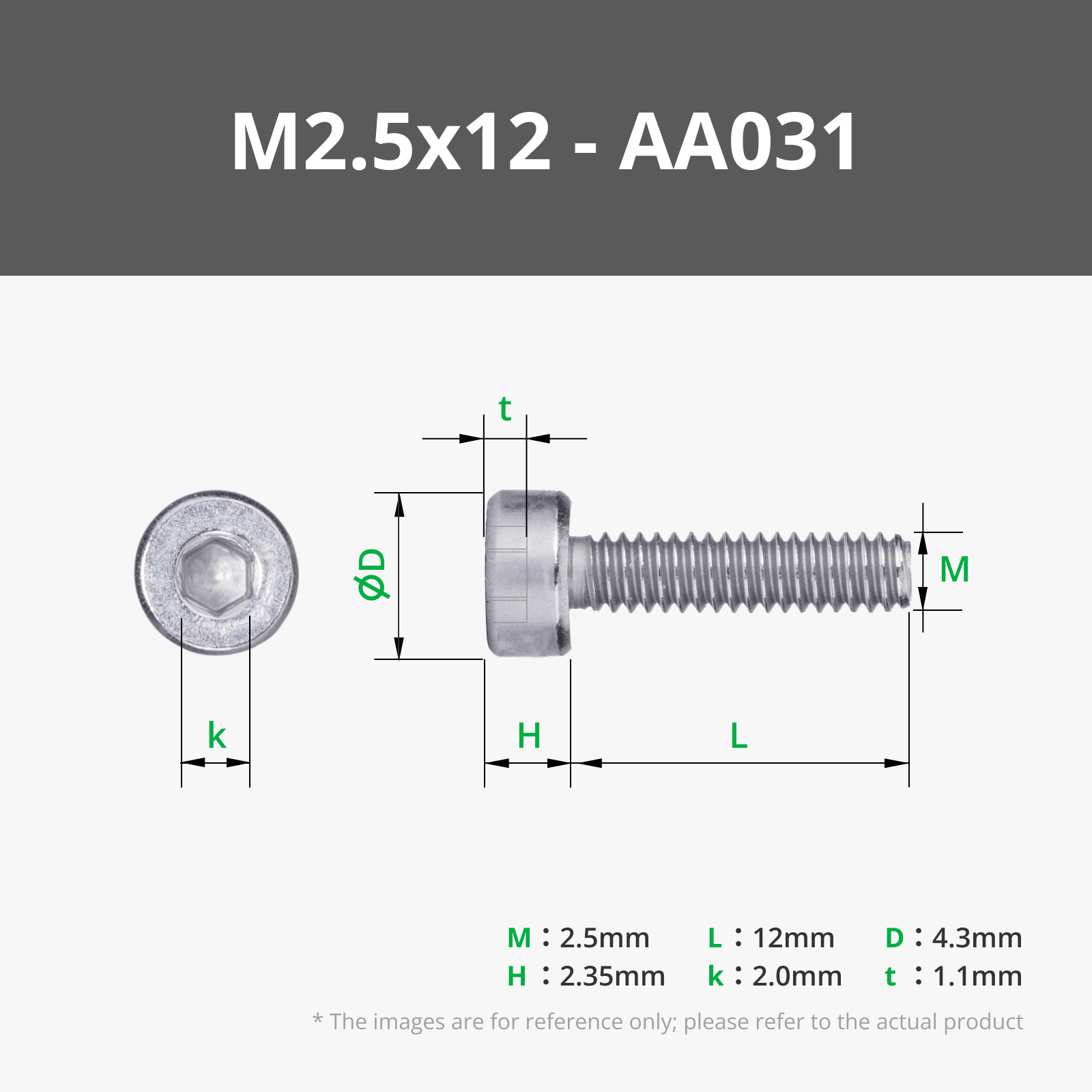
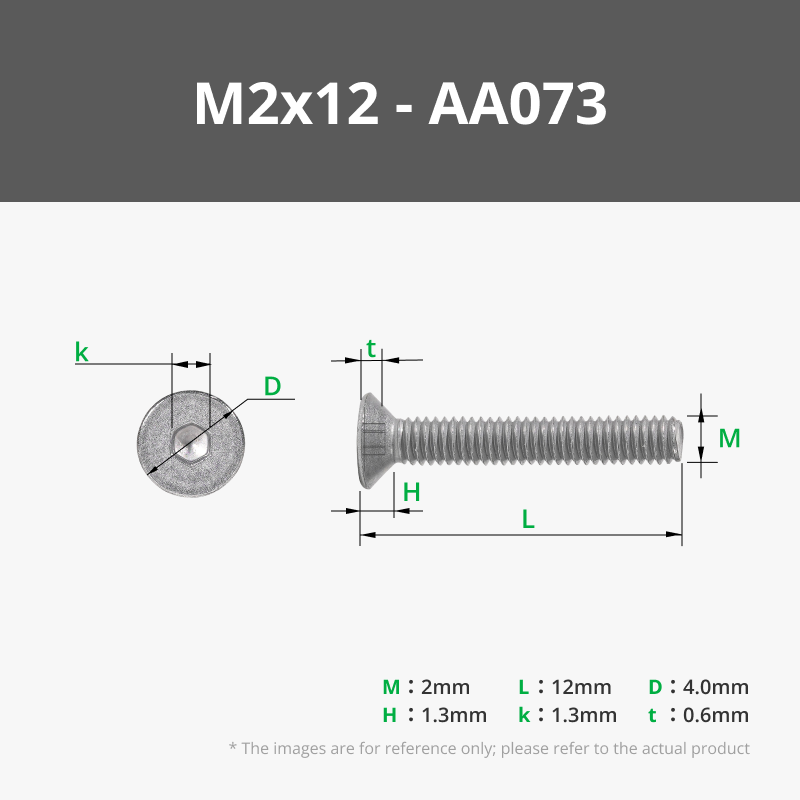
Stack all four onto the M2.5 SHCS and secure with the M2.5 hex nut.
2. Wrap the cord. Route the cord around the assembled wheel.
3. Seat it. Place the wheel assembly into the base shell.
4. Add the pawl + spring. Insert the pawl together with the prepared torsion spring, as shown in the gallery.
5. Close it up. Fit the cover, then drive the 4 × M2 closure screws.
6. Anchor point. Finally insert the M3 × 14 screw (with its M3 nut) — this is where the carabiner clips on.
Cord notes
Tested with 3 mm Nylon Paracord 425 and 4 mm cord, results were very similar between the two. Thicker cord may grip better but I didn't have any on hand to test. If you try thicker or different cord, please leave feedback in the comments, I'll collect real numbers and add a grip table.
Companion carabiner
My Classic Spring Carabiner is a separate print-in-place model designed to pair with this tensioner: clip it on, tension your line, done.
Disclaimer
This is a printed functional accessory for light tensioning only. It is not rated safety equipment and must never be used for climbing, fall protection, lifting people, or any application where failure could cause injury or serious damage. Real-world holding force depends on your filament, cord, print quality and assembly. Always test with your own setup and stay well within the recommended working load. Use at your own risk.
License

You may create derivative works based on this object, provided that all such derivative works are published exclusively on the MakerWorld platform and include proper attribution to the original creator. You may not share, upload, host, distribute, or publish this object—or any derivative work of this object—on any other digital platform, marketplace, or distribution channel. Commercial use of this object and any derivative works is strictly prohibited. This includes, but is not limited to, selling, renting, sublicensing, or using the object in any context in which you receive monetary compensation or other financial benefits.


Comment & Rating (0)