
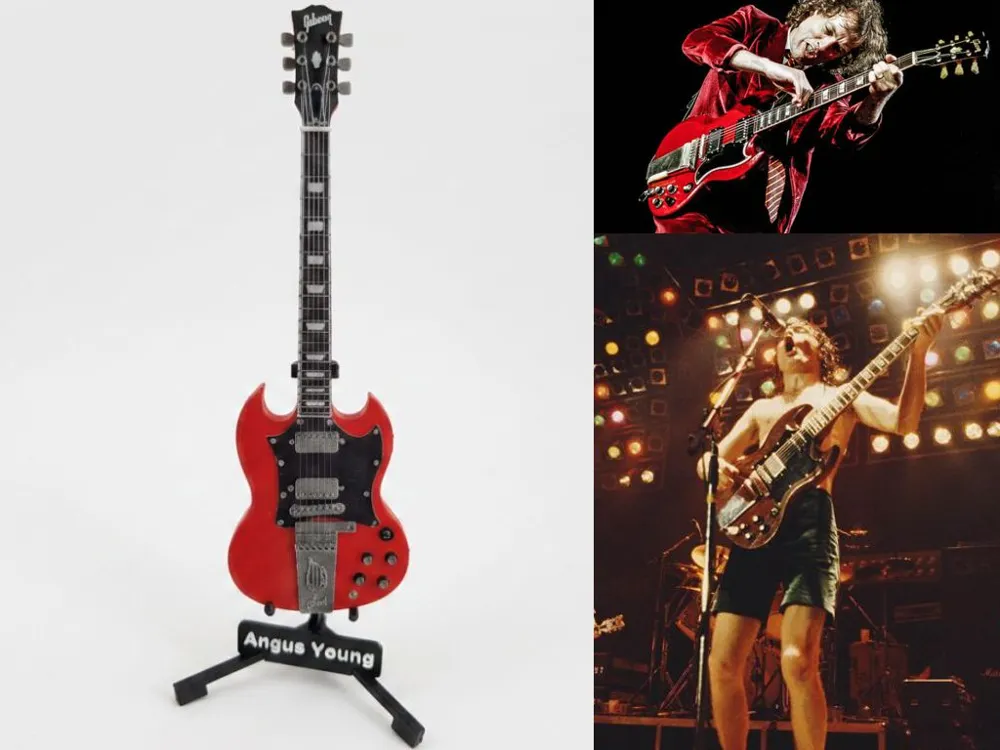
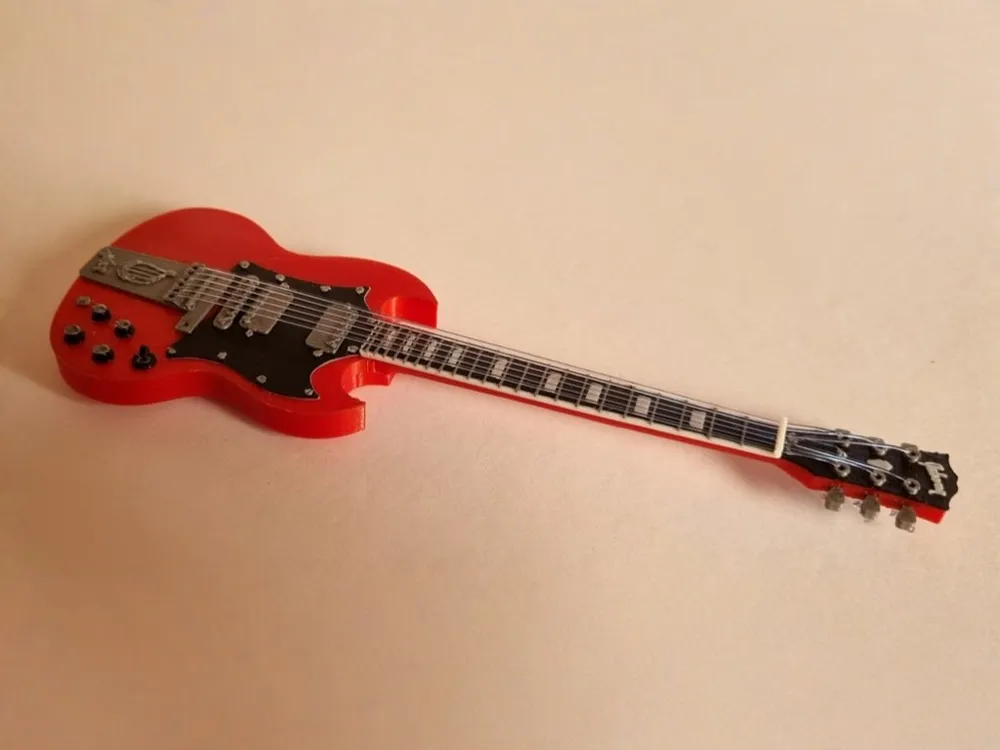
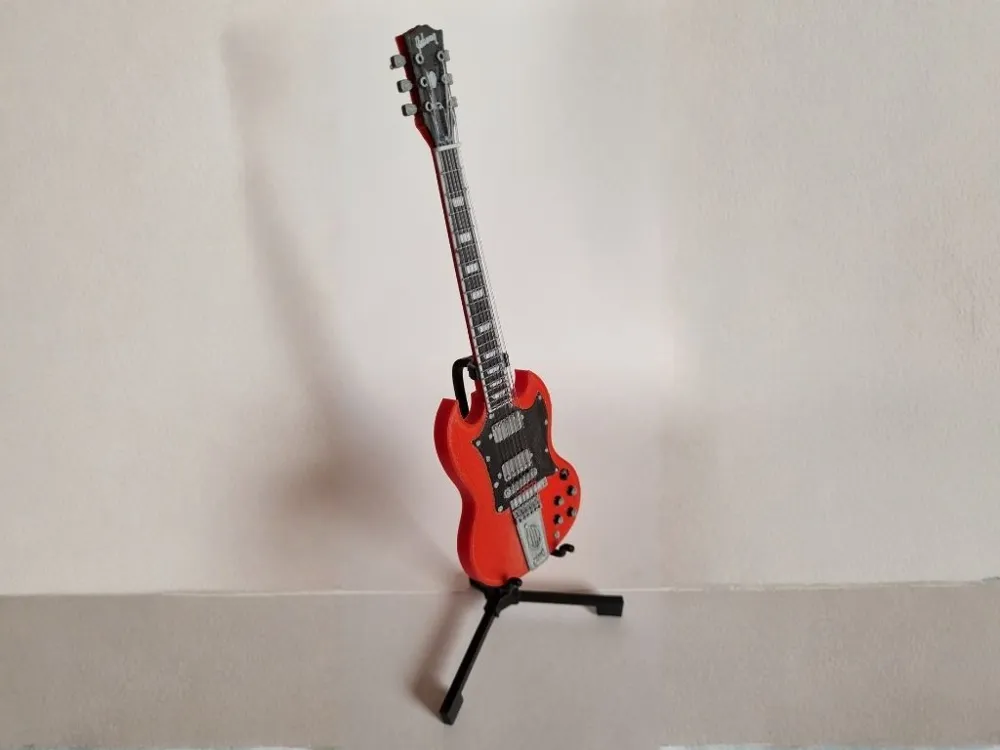
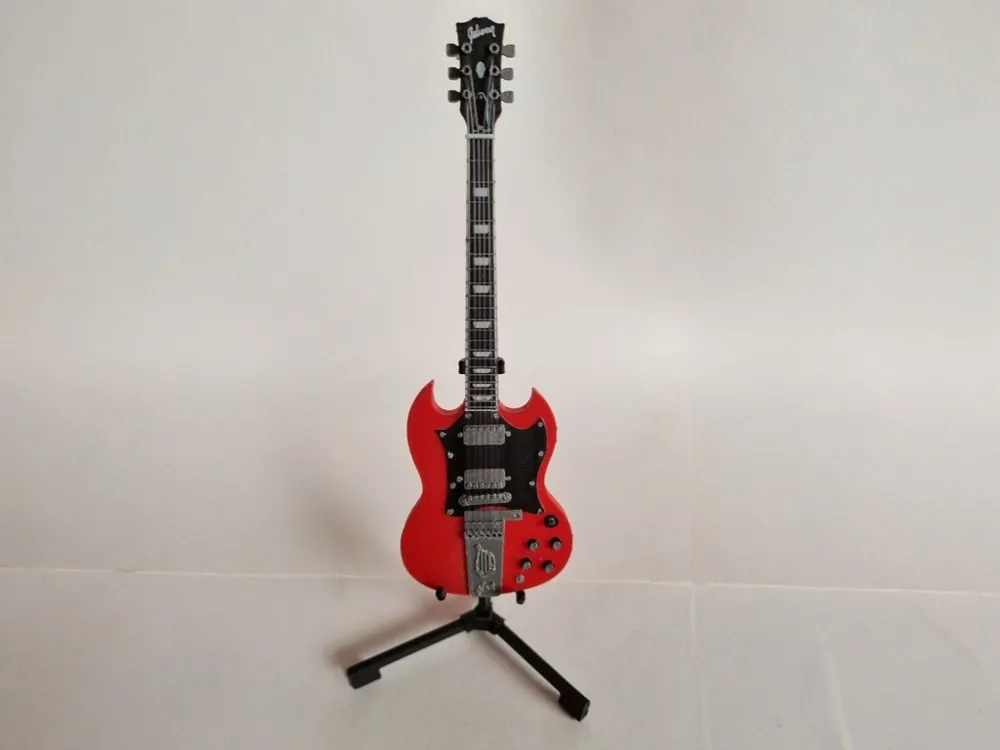
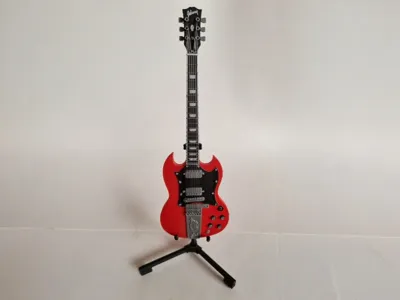
Guitar 17cm with Strings - Gibson SG Angus Young
Print Profile(2)
Description
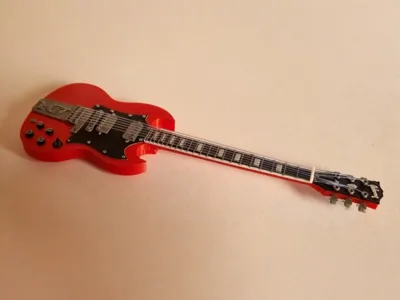
Gibson SG 1968/1970
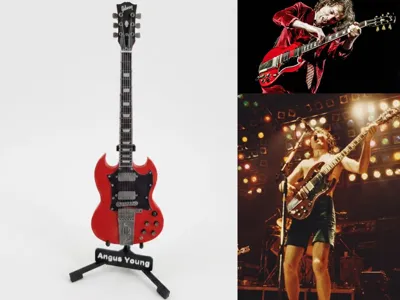
Angus Young (AC/DC)
This guitar is part of the “Iconic Rock Guitars” collection
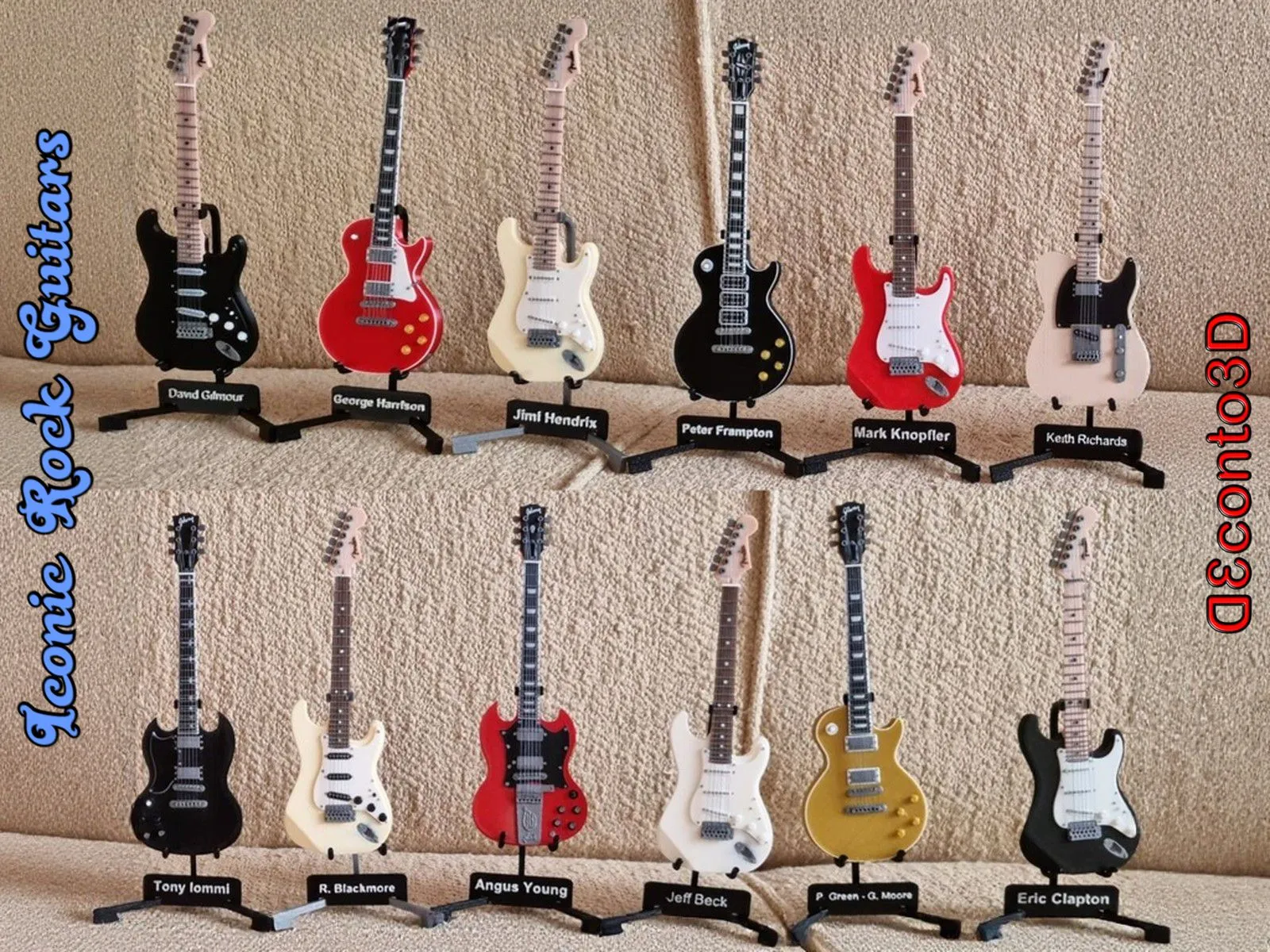
https://makerworld.com/collections/11905717
Printing – Fast and easy, no supports needed. The models in this collection were designed so that their details are visible at a 0.2 mm layer height. However, if print time is not an issue, you can achieve better results with smaller layer heights.
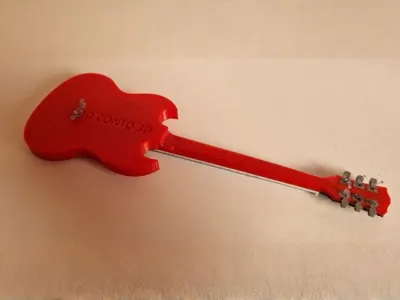
Assembly – To glue the neck to the body, you can use superglue. However, I recommend using a fusion glue, such as Revell or Tamiya, as there will be significant tension from the strings. I usually allow 12 hours for the glue to dry and cure.
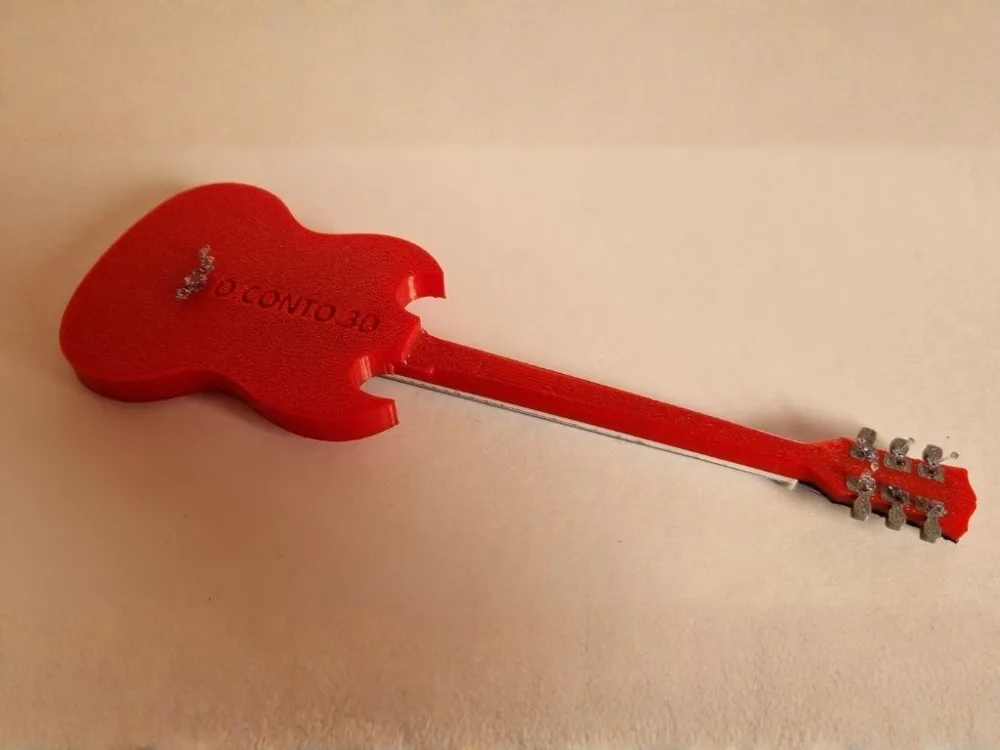
Stringing – This is the only slightly difficult part, but it's what truly sets this model apart from others. Be patient, and you will succeed. The strings are made with 0.5 mm fishing line, in the grayest color you can find.
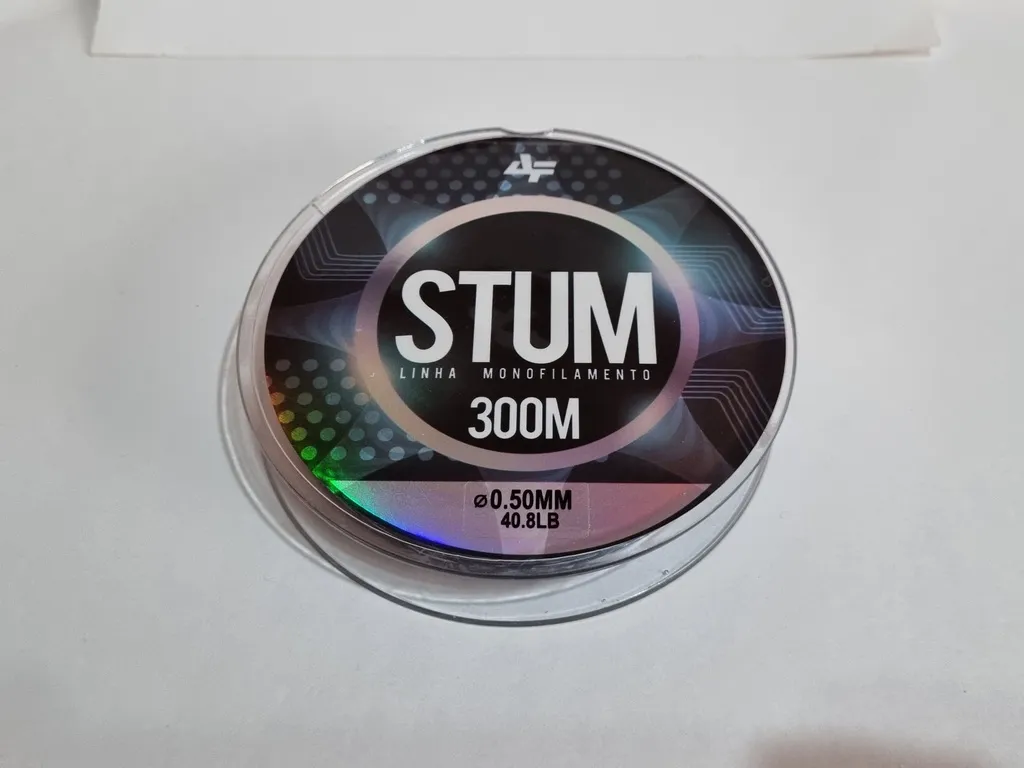
- use a pin to ensure the holes through which the strings will pass are clear, taking care with the nut, which is very fragile;
- cut a generous piece of line and thread it through the nut, headstock, and bridge;
- flip the guitar over and tie two simple, firm knots behind the headstock; cut off the excess and melt the remaining end with a lighter;
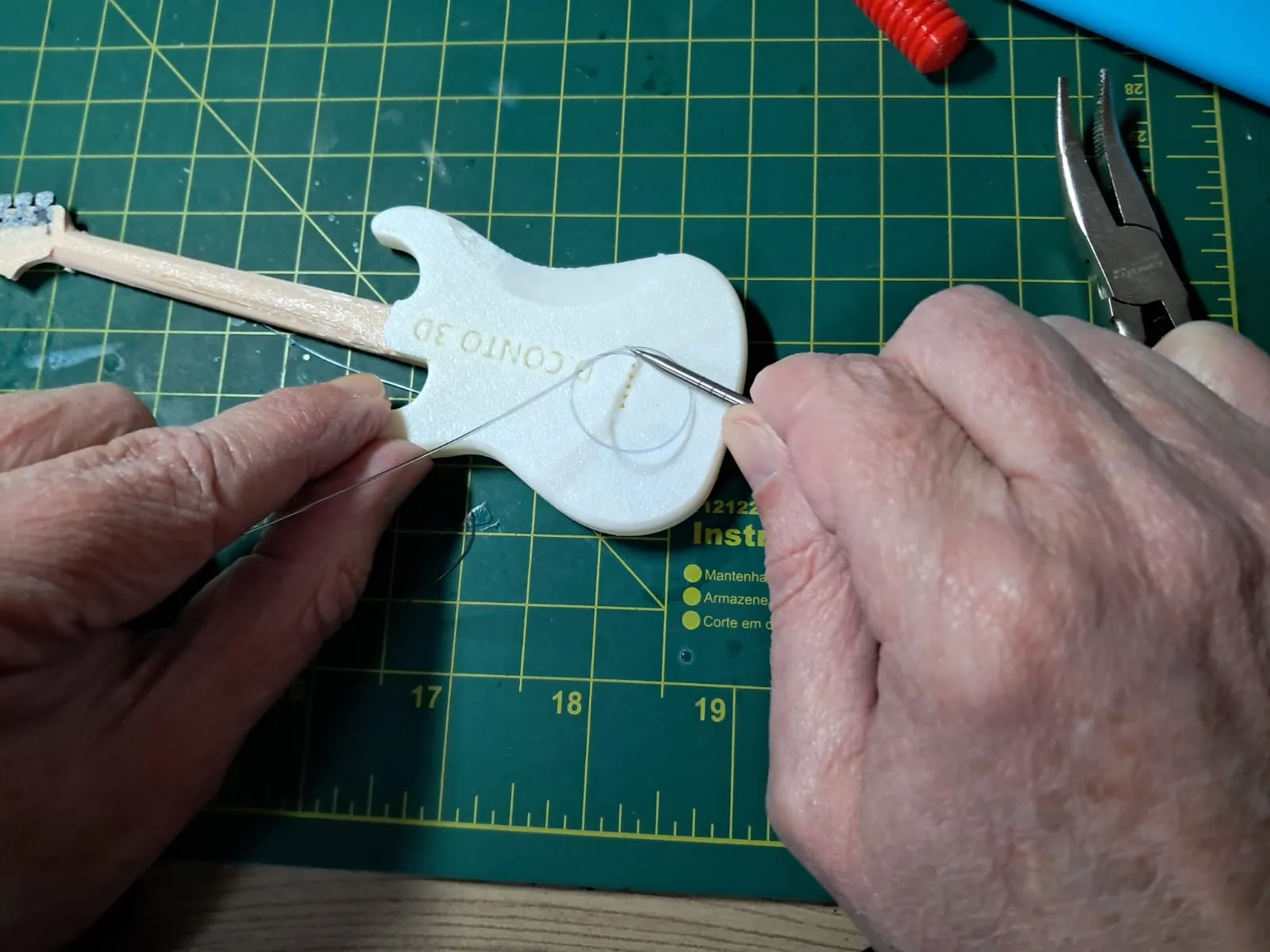
- now for the final knot, at the back of the bridge, where the string should be taut; make a simple loop, stretch the string, and secure it taut with a small pointed tool placed inside the loop (see photo); then gradually close the loop until it lightly grips the tool before removing it and tightening the knot; tie a second knot so that it sits below the first knot; cut off the excess and melt the remaining end; done (it took me 3 or 4 attempts to get it right).
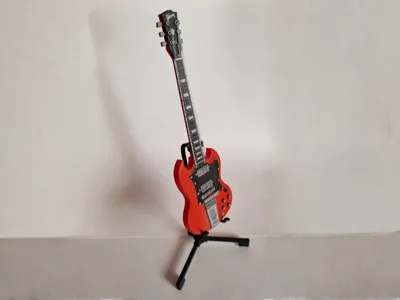
Stands – I used the stands by custom3dmodels, scaled to 115%.
link: https://makerworld.com/en/models/1242179-guitar-stand-guitar-miniatures-collection#profileId-1262924
Labels – I have provided a separate file for the plates with the guitarists' names.
History
(Marco Pala - whiplash.net)
Angus Young is synonymous with the Gibson SG. However, over the years, he has used many of them (including a JayDee and also his "signature" models). But his favorite is precisely the first SG he acquired, early in AC/DC's career. There's much debate online about the age of his SG #1, as Angus isn't sure of its exact manufacturing year. Some speculate it's a 1968 model, while others say it's from 1970 (before Gibson redesigned certain aspects of the SG in 1971). The guitar suffered greatly in its owner's hands; in the late 70s and early 80s, it even had adhesive tape holding the pickups in place (which were changed several times). It was his primary choice for recordings and tours until 1980, when AC/DC started earning a lot of money, and he gained access to many other SGs, leaving his favorite at home. His preference for this guitar is due to its thin neck, which many even attribute to a factory error. Angus liked it so much that he had several guitars made with similar specifications throughout his career (some with "lightning bolts" marking the fretboard, which became his trademark); indeed, his SG Signature is based on this guitar. Despite having his Gibson Signature models, Angus never used them as main guitars on tours (his favorite on recent tours has been a black 1967 SG), but his 1968 (or 1970) SG served as the basis for many of the other guitars used by the legendary AC/DC guitarist throughout his career.
License

You shall not share, sub-license, sell, rent, host, transfer, or distribute in any way the digital or 3D printed versions of this object, nor any other derivative work of this object in its digital or physical format (including - but not limited to - remixes of this object, and hosting on other digital platforms). The objects may not be used without permission in any way whatsoever in which you charge money, or collect fees.


Comment & Rating (0)