
rocket keychain
Print Profile(1)
Description
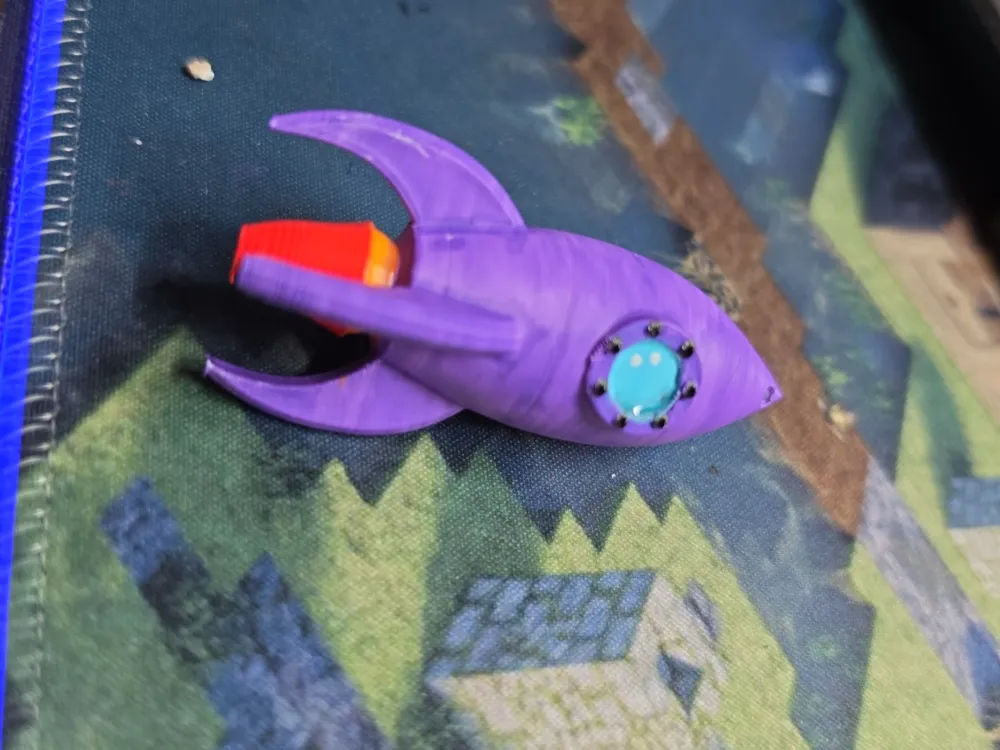
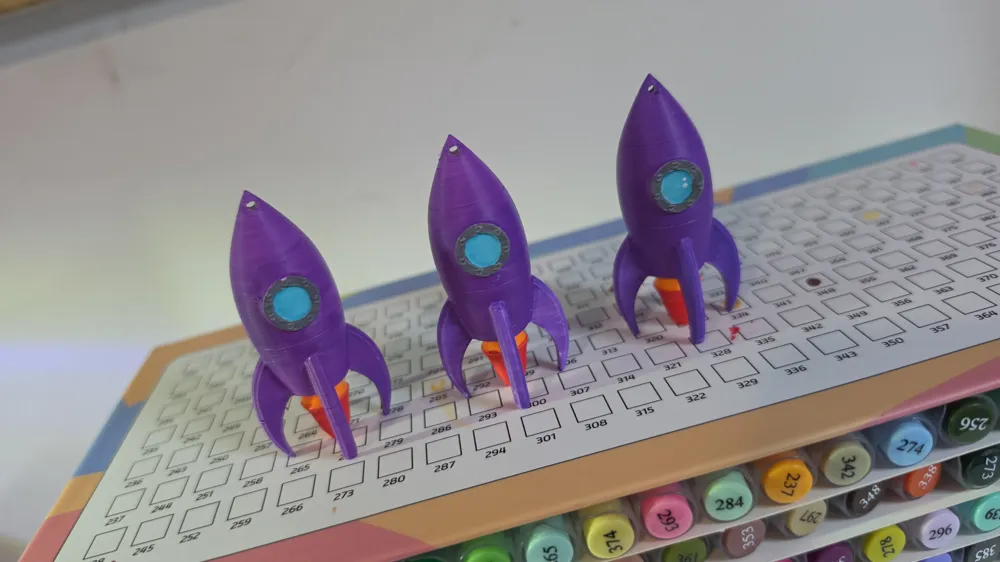
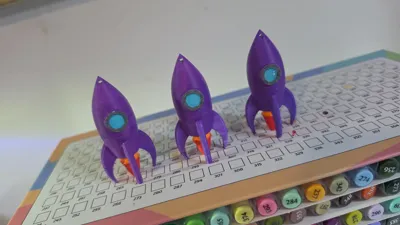
This object is an excellent demonstration of how 3D printing can be combined with traditional painting techniques to create personalized and visually striking gadgets. The image shows three examples of the same model, placed on a marker organizer (perhaps indicating that they were colored with precision tools, although acrylic is more likely for this level of coverage).
1. Design and Shape (The 3D Model)
- Style: The design is a tribute to the "retro-futurism" of the 50s and 60s, recalling classic rockets from sci-fi comic book covers or cartoons (like The Jetsons).
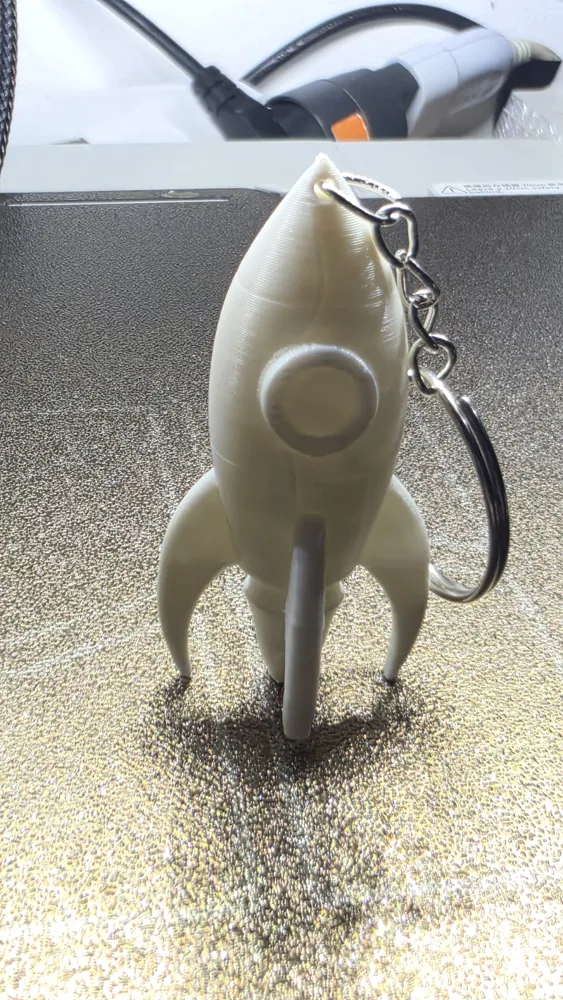
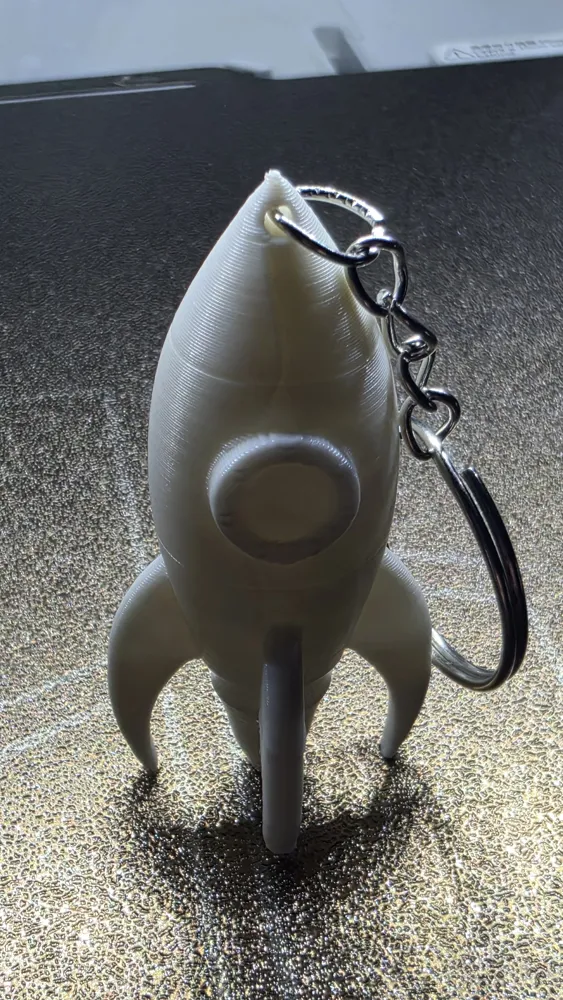
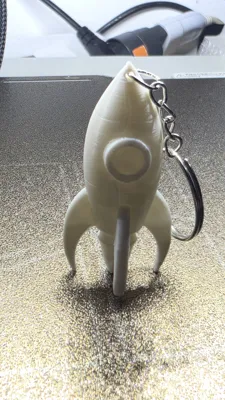
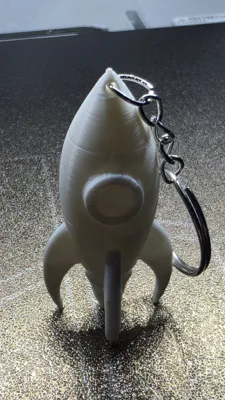
- Geometry: The rocket has an elongated, ovoid main body, ending in a rounded tip. At the base, three large aerodynamic fins, also with a curved, retro profile, extend outwards to provide support and aesthetic uniqueness.
- Functional Detail: At the very tip of each rocket, a small circular hole is clearly visible. This is the attachment point for the split key ring or a chain, designed to allow the rocket to hang vertically.
2. Material and Finish (3D Printing)
- Embossed Print: Examining the purple surface, one can notice the subtle horizontal lines of the print layers. This indicates an average layer height, probably between 0.12mm and 0.16mm, optimal for balancing print speed and detail without the need for post-processing (such as sanding) before painting.
- Base Color (Filament): The rocket's main body is printed directly in an intense purple/magenta colored filament, which provides a solid base for subsequent coloring.
3. Painted Details (Acrylic Coloring)
The true uniqueness of these keychains lies in the hand-colored details with acrylic paints, which transform a monochromatic print into a collectible item.
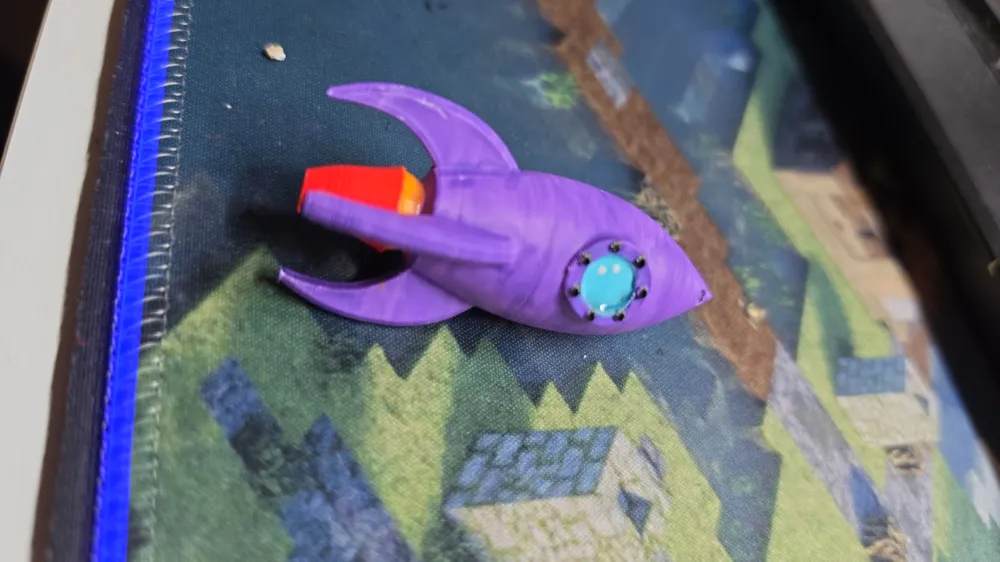
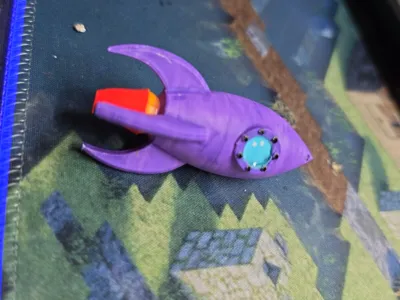
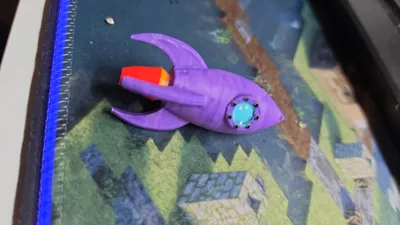
- The Porthole: At the center of the body, a circular porthole is painted with great care.
- The Frame: The outer frame of the porthole is painted with metallic gray or silver acrylic, simulating a steel flange with embossed bolt details (also highlighted by the paint).
- The Glass: The interior of the porthole is painted with a light sky blue acrylic. The clean boundary between gray and blue indicates careful application with a fine-tipped brush.
- The Thrusters (The Fire): Inside the fins, at the base of the rocket, the thrusters have been painted to simulate the launch flame.
- The Nozzles: The lower ends of the fins (or the hidden nozzles inside) are painted with a bright orange acrylic.
- The Flame ("Glow" Effect): On the outermost tip of the nozzle, there's a touch of yellow or light red, creating a gradient that simulates the flame's intensity.
Summary of the Process
These keychains represent a complete process:
- FDM printing in purple filament.
- Masking or precision hand painting with acrylics for the portholes and thrusters.
- Optional finish: A clear protective coating has likely been applied (since acrylic is opaque and could wear off in a pocket), although the texture in the photo appears to be that of dry acrylic.
The result is a vibrant, pop-art object, ready to be attached to a backpack or a set of keys.
License

You shall not share, sub-license, sell, rent, host, transfer, or distribute in any way the digital or 3D printed versions of this object, nor any other derivative work of this object in its digital or physical format (including - but not limited to - remixes of this object, and hosting on other digital platforms). The objects may not be used without permission in any way whatsoever in which you charge money, or collect fees.


Comment & Rating (0)