
Variable Speed Gear - Educational model
Print Profile(2)


Description
My Educational Mechanical Examples Series
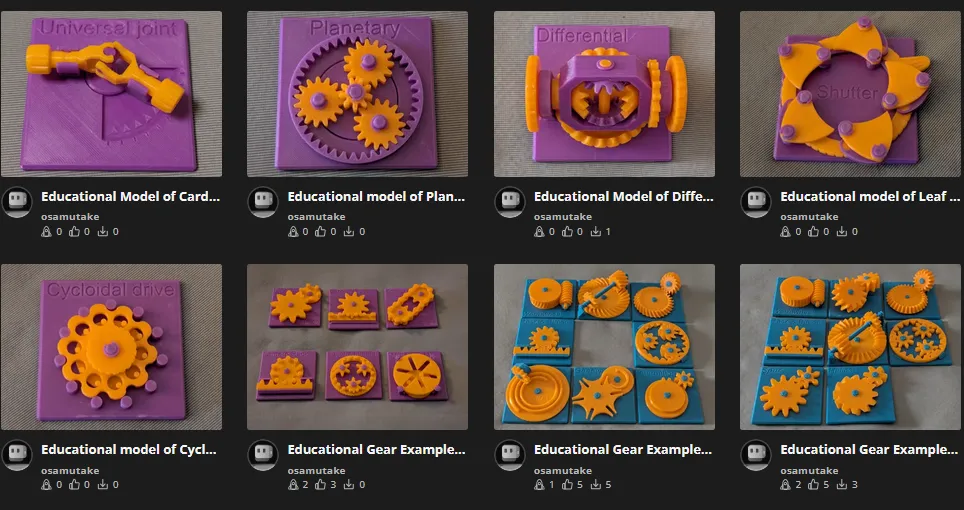
This model is one of my educational mechanical mechanism examples on 80mm x 80mm base plates.
You can find all models of the series in this collection => [Mechanical Mechanism Examples]
The present model
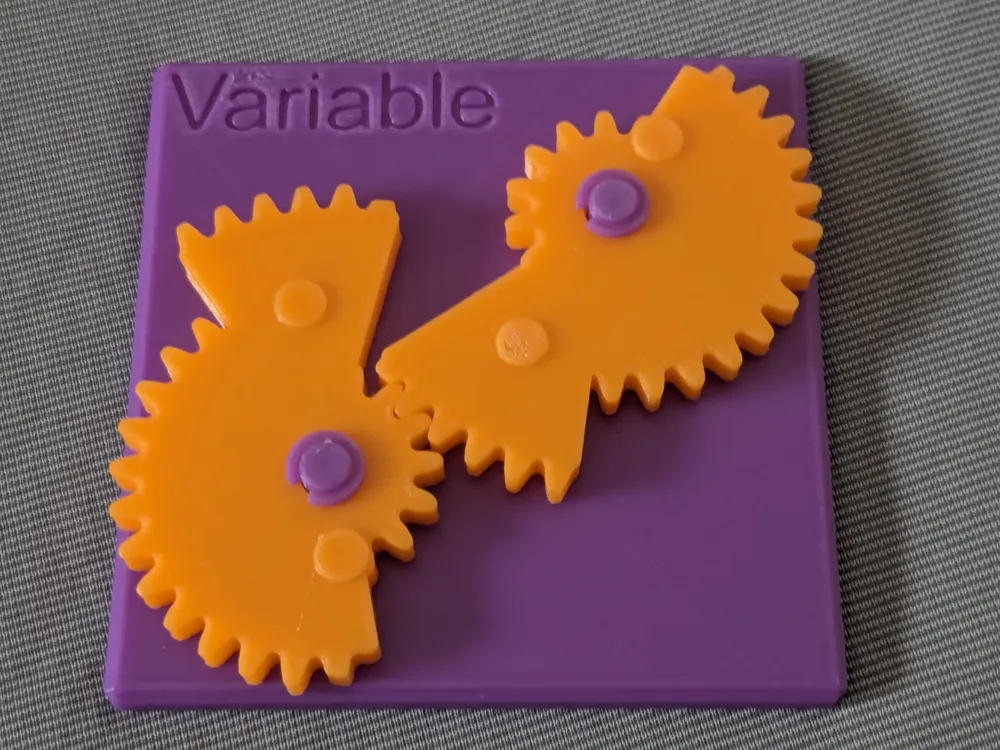
This is an educational model of the variable speed gear.
Brief Description
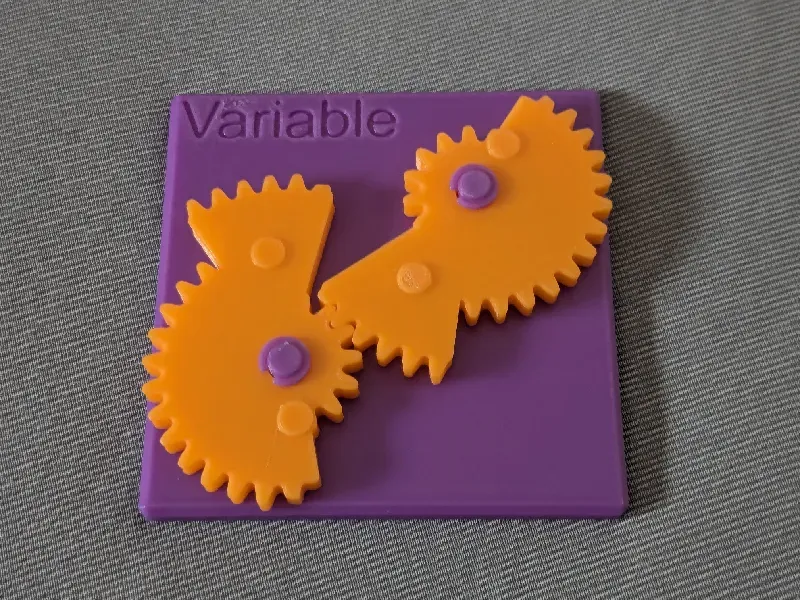
These gears consist of broken pieces of three spur gears with different diameters. As a result, the gear ratio changes three times per rotation.
To have proper meshing, the corresponding sections on both gears have equal reference-arc lengths i.e. the same number of teeth. Note that the smallest-radius section has five full teeth plus two half teeth (one at each end), so it still counts as six teeth — the same as the largest-radius section.
The outermost tooth on the larger section is trimmed slightly to avoid interference of tooth tips when the ratio changes.
Reference
Related Models
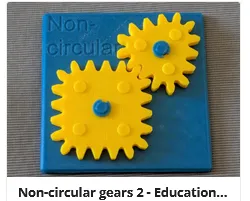
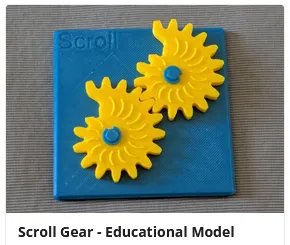


Case
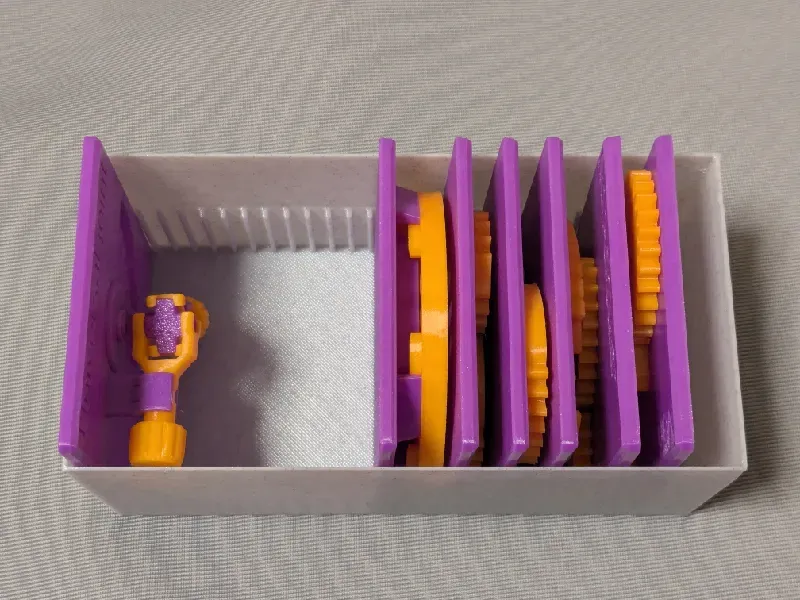
This model is just barely compatible with the case included in my first set.
It fits the case only if you rotate it 90 degrees.
Printing
- Use the models named ???-printable.stl for printing.
The models named ???-assembled.stl are provided just to show how they should be assembled.
- Use well-dried PETG to have better dimensional accuracy.
- Use 0.1 mm or 0.08 mm layer height to have smoother surfaces.
- Use slow printing speed for overhangs.
- Select “Random” seam position to have smoother rotation.
Randomly distributed seam should be easily worn out after some wearing.
Sanding and Filing
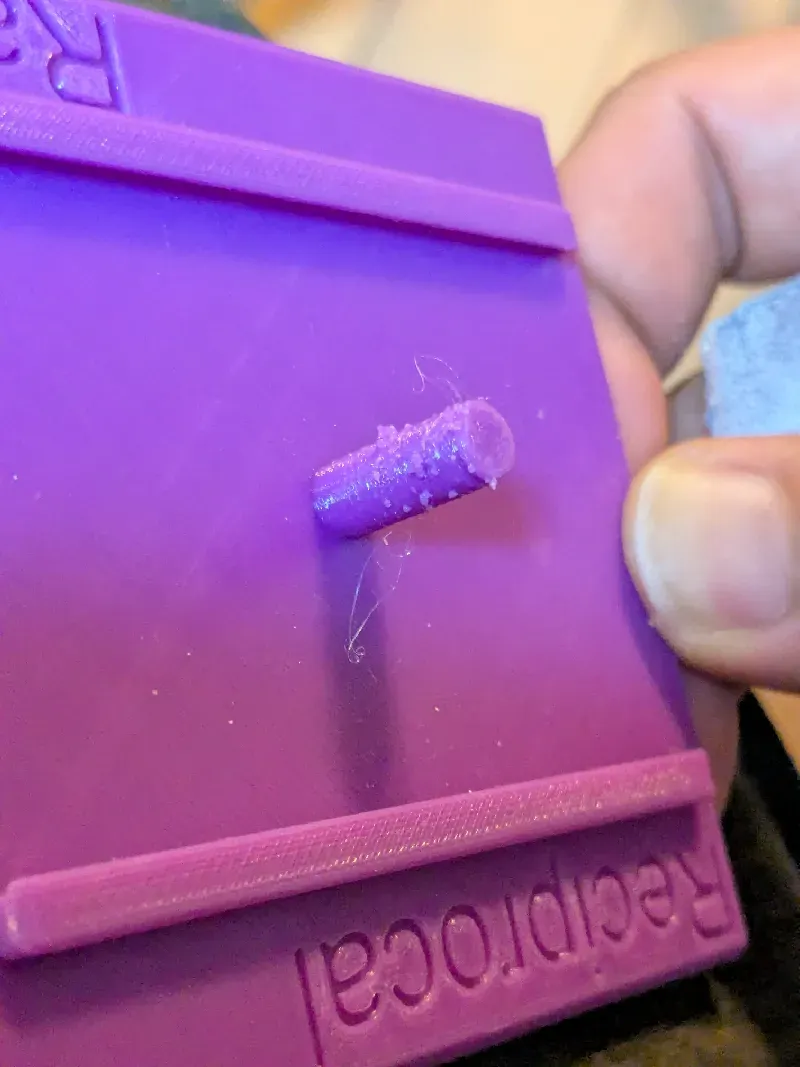
Sometimes, the gears suffer from the stringing effect and/or elephant foot effect, resulting in a too tight fit to the shafts (they are designed with a 0.15 mm radial clearance).
If you see rough surface on the shafts due to stringing, sand off the roughness with a small piece of sand paper.
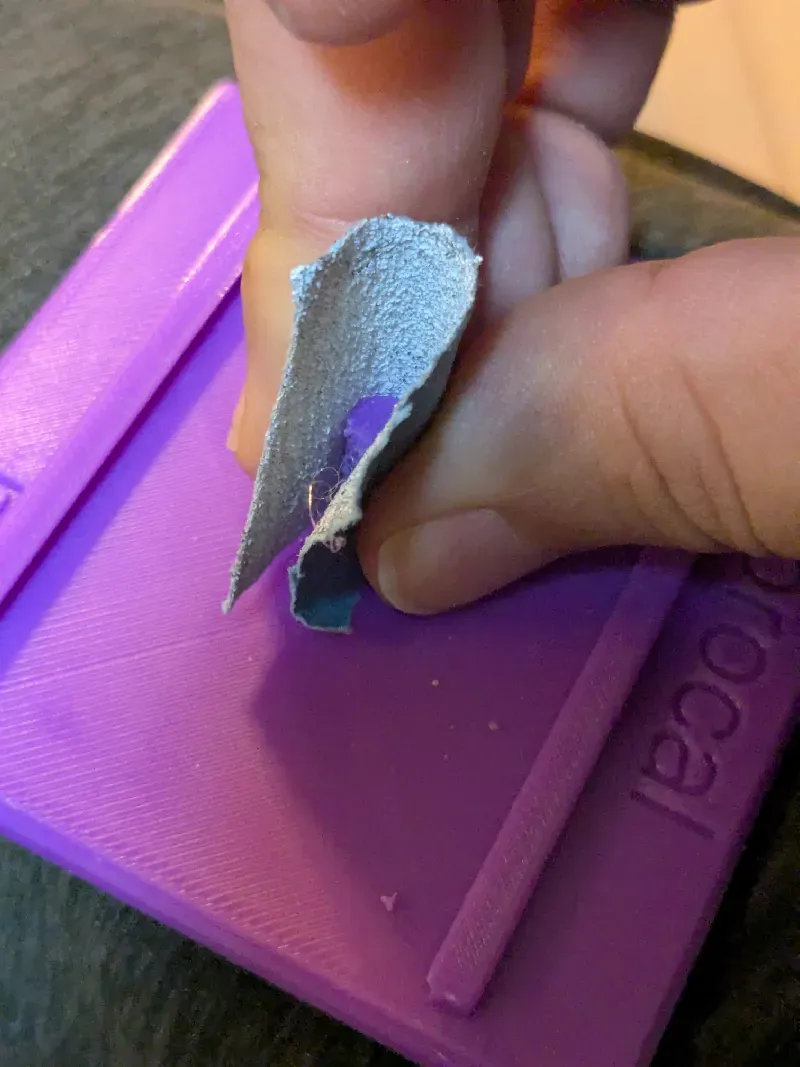
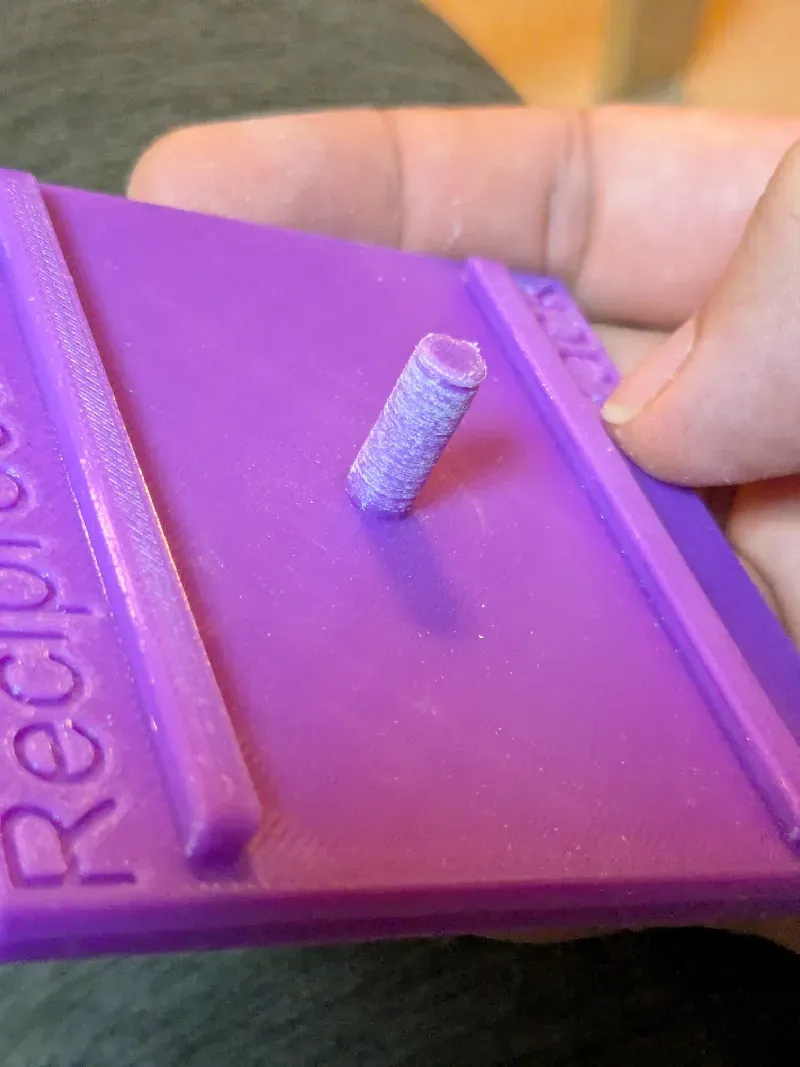
If you feel the gears do not rotate smoothly due to an elephant effect, widen the hole slightly by using a thin round bar file.
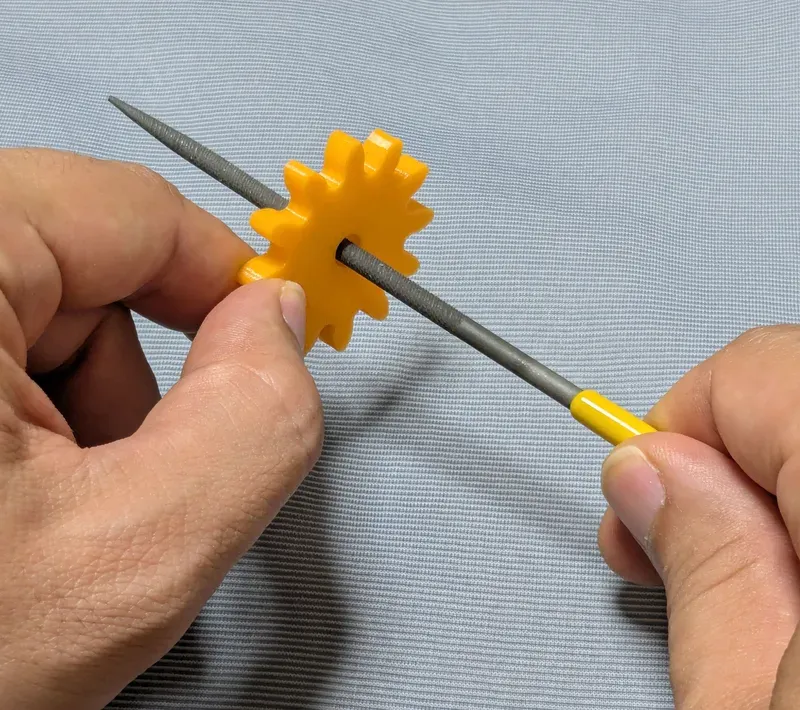
Without those issues, the parts should rotate very smoothly with minimal friction.
Assembly
No glue is needed, in theory.
Just snap assemble the parts.
Other educational models
You may also be interested in the models in my educational mechanical mechanism examples.
Find them in this collection:
https://makerworld.com/collections/15048577-my-educational-mechanism-models
Acknowledgement
I got into gears thanks to K.$uzuki's amazing articles and YouTube videos. Many of the mechanisms shown in this series came from the introductions on his website. He also makes excellent gear models himself. This series wouldn’t have existed without his inspiration.
I learned a lot about technical detail of designing gear tooth profiles from Haguruma-No-Hanashi website. I’m truly grateful for that.
License (2026-03-13 updated)
- The 3D model(s) are licensed under Creative Commons Attribution 4.0 International. (unchanged)
- However, the text and images on this page are copyright reserved. (added on 2026-03-13)
License



Comment & Rating (2)