
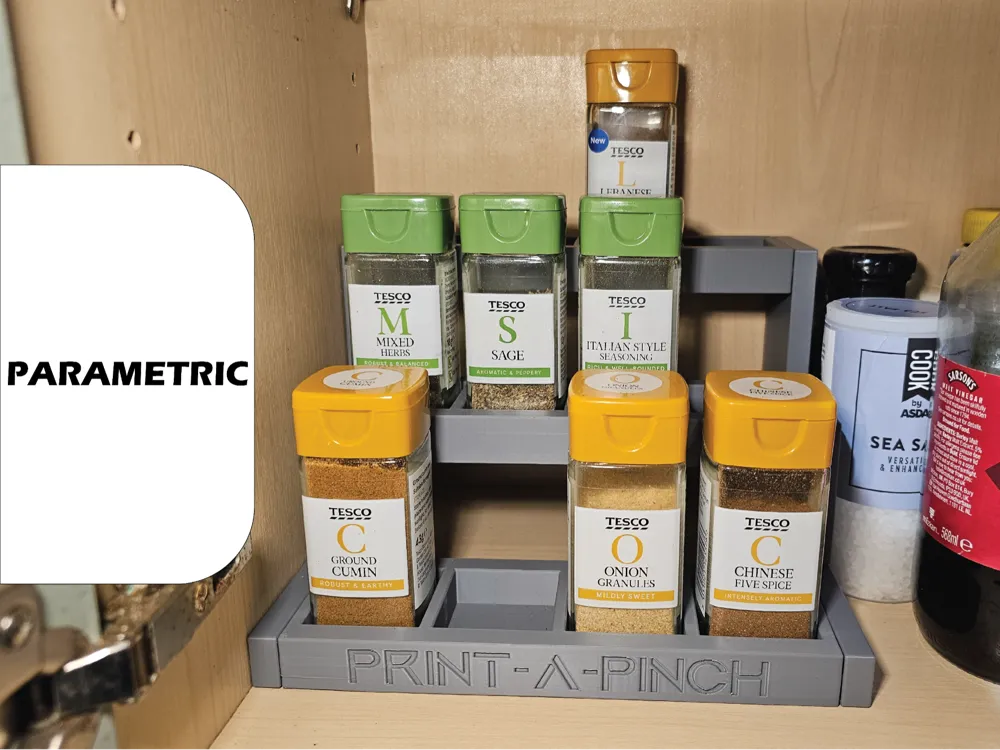
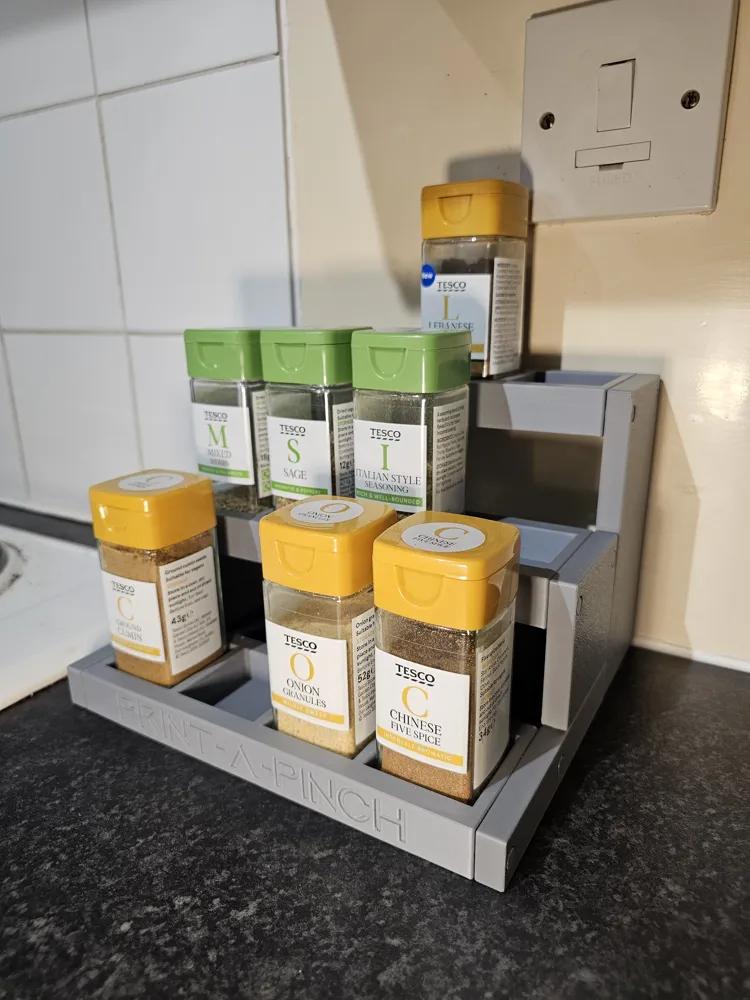
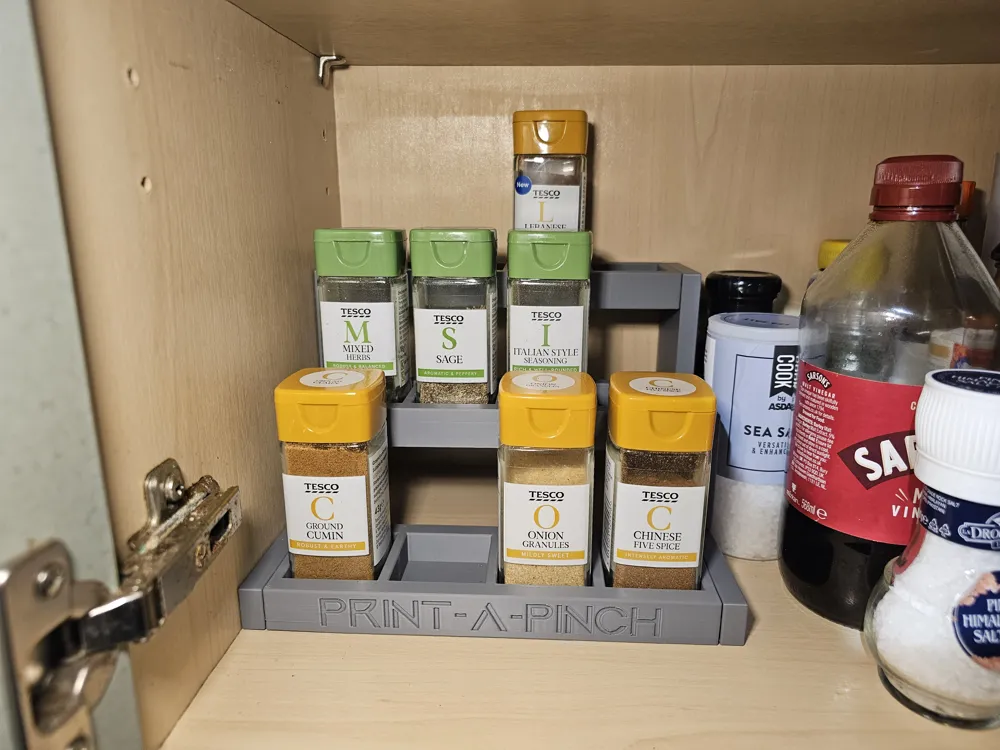
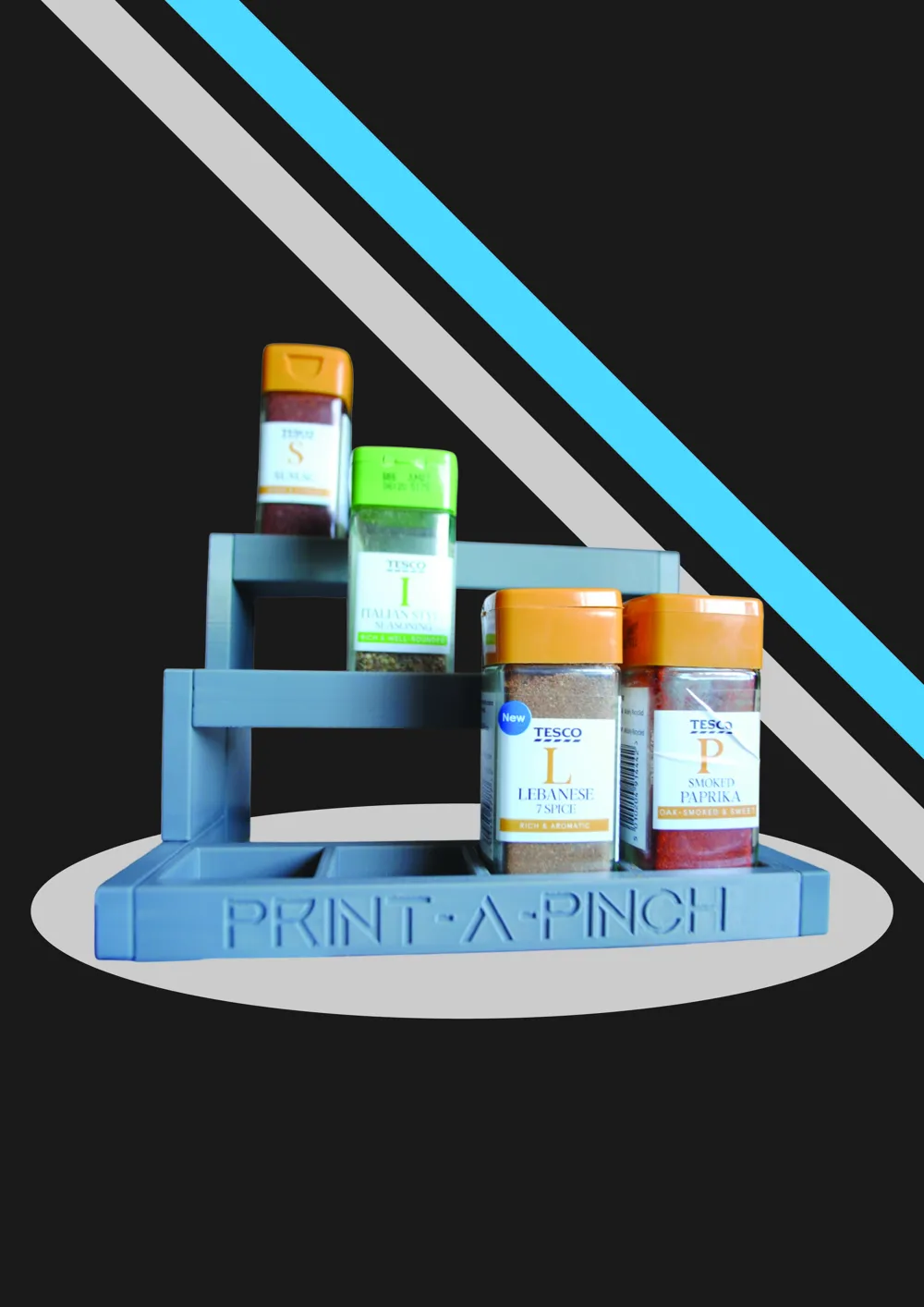
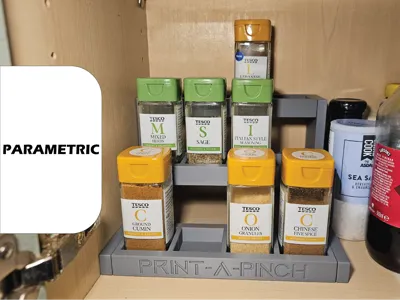
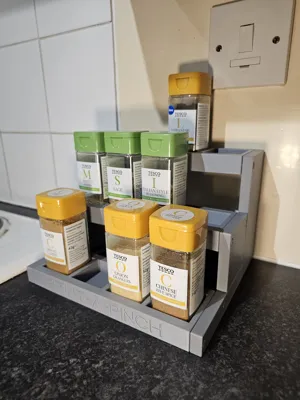
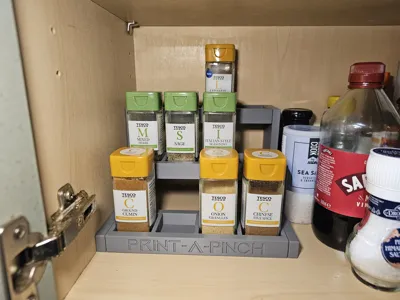
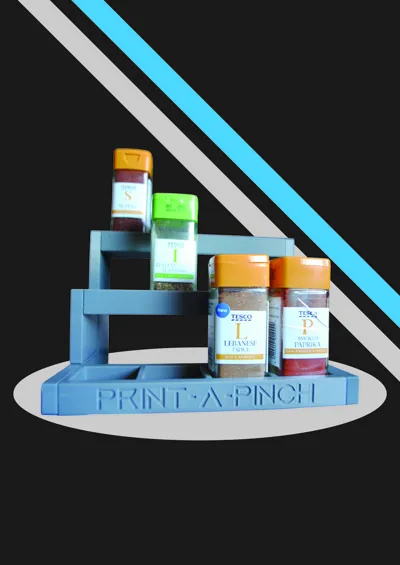
Parametric Spice Rack (Print-A-Pinch V1)
Print Profile(1)




Description
Important:
The individual parts of the model are separated (this is because Maker World currently doesn’t offer multi piece parametric editing) each piece of the model can be edited and downloaded separately. READ BELOW:
I have included multiple parameters so you can have as much control as possible over your personalisation. THE PARAMETERS FOR EACH COMPONENT OF PRINT-A-PINCH MUST BE THE SAME, ELSE THEY WILL NOT FIT TOGETHER!
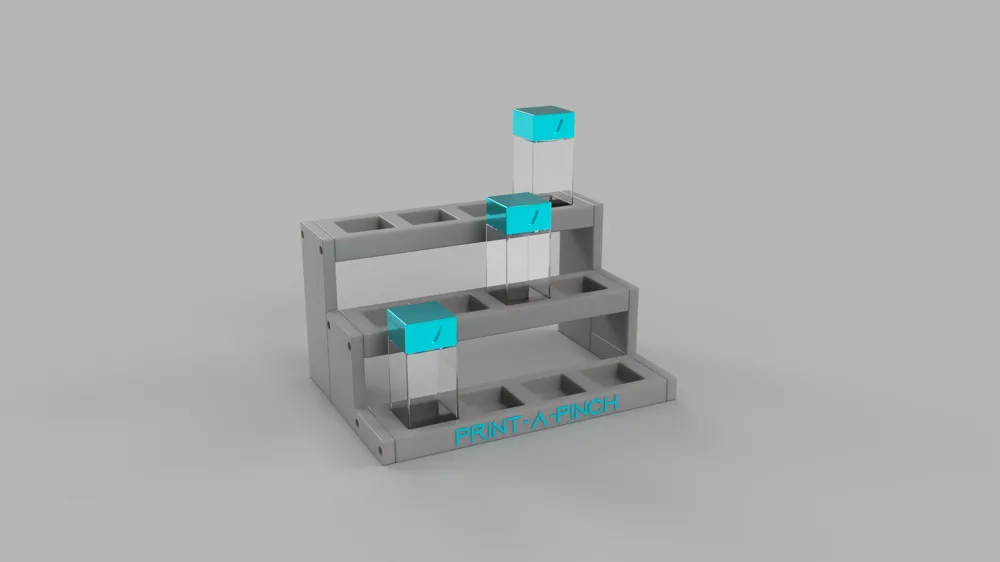
Start with the first-tier file, where you can change:
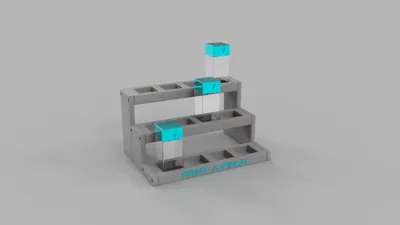
RackWidth and RackDepth = controls the width and depth of the spice jar slots.
SpiceGapWidth = Controls the spacing between each spice jar slot.
WHolders = Controls the number of spice jar slots along the width.
RackHeightTotal = Controls how far the outer walls of the spice jar slots rise up/down (always equal to Your Input – 5mm)
TrayRiserHeight = Controls the height of the Second-Tier
ThirdTierHeight = Controls the height of the Third-Tier
ASSEMBLY INSTRUCTIONS ARE INCLUDED IN THE DOCUMENTATION SECTION
PRINT-A-PINCH™ began as a bespoke storage solution designed for my mother and later evolved into a customisable, user-editable system. Created in Autodesk Fusion 360, the design uses a fully parametric framework, allowing users to adjust dimensions such as jar slot diameter, height, and spacing through simple parameter changes.
This adaptability enables anyone with access to 3D modelling software and a printer to edit and produce their own version. The modular components interlock through tolerance-based joints, allowing for scalable, tool-free assembly in linear or stacked configurations.
Optimised for additive manufacturing (FDM/SLS), the model requires minimal supports and uses materials such as PLA+, PETG, or nylon composites. The project demonstrates how parametric design and user-led fabrication can empower individuals to create tailored, locally manufactured products that evolve with their needs.
Documentation (1)
License



Comment & Rating (0)