
Grippy Rotary Bit Holder - Gridfinity
Print Profile(1)

Bill of Materials



- Silicone sheet x 1: 2mm thick
- EVA foam sheet x 1: 2mm thick
Description
Summary (TLDR):

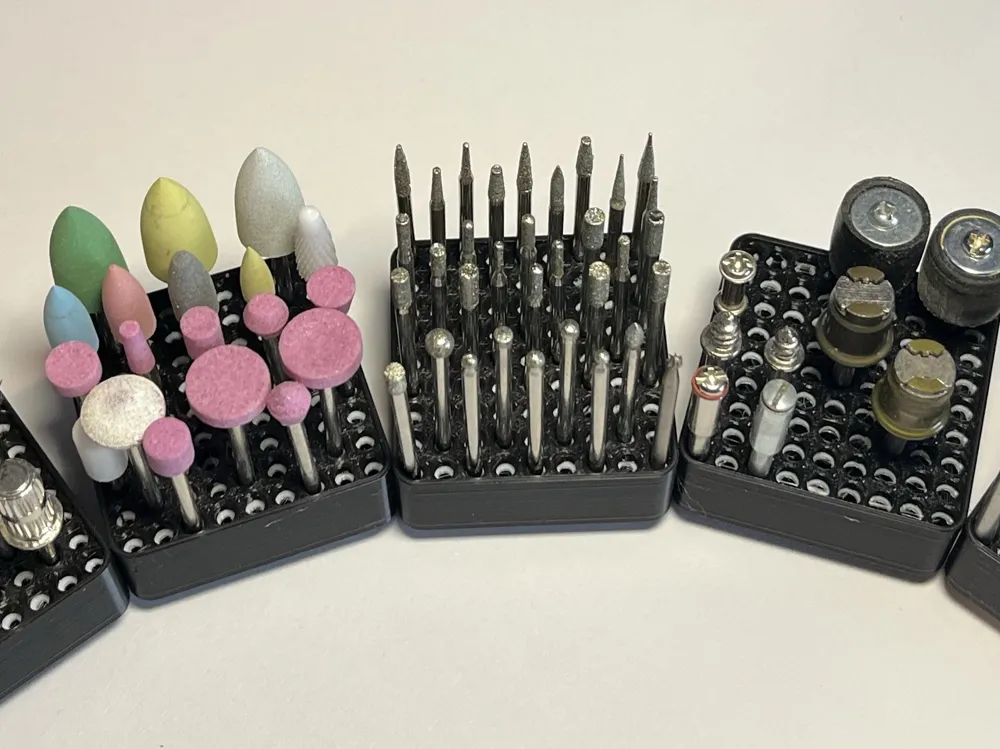
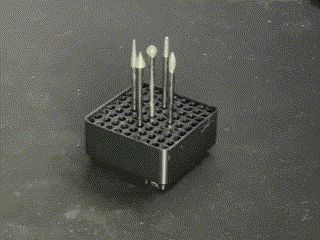
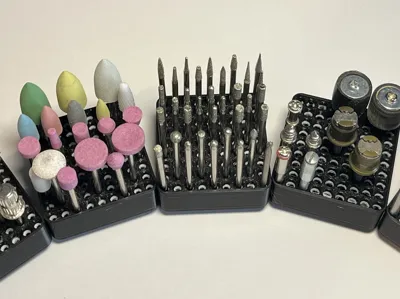
This is a simple rotary tool bit (think Dremel) holder with a shank retaining feature. You print for the size you need and then when inserting the shanks they stay put.
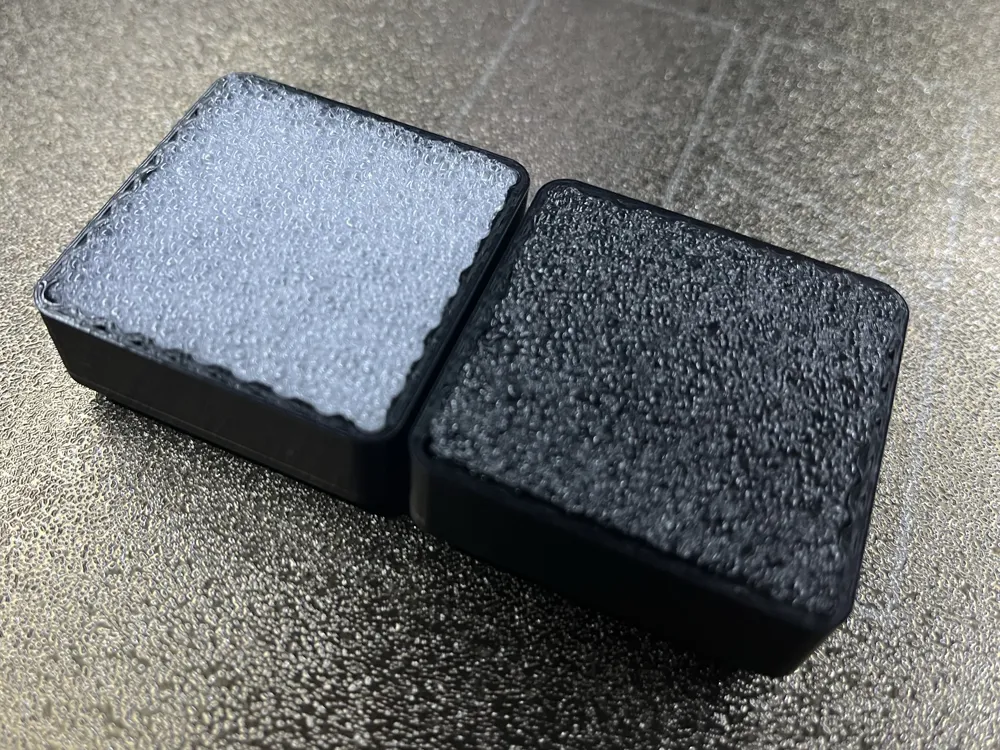
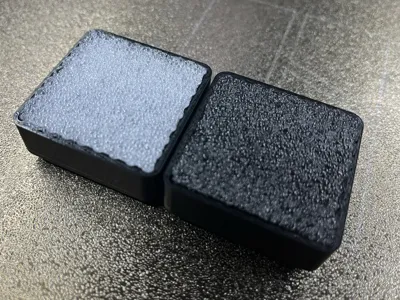
It uses either a pause in printing to insert a 2mm thick piece of material (silicone, felt, foam, etc.) or a 3D printed TPU insert with hole.
The profile includes the
- The bin with a void for pausing and inserting a retention material
- The 3D Printed TPU insert for standard and small Dremel style shanks (3.18 and 2.35mm respectively)
- An untested Multi-Material Print that doesn't require a pause, just an H2D or a TPU material safe for AMS work for both sizes
- A template for cutting alternative foam or silicone materials
Safely tested
- TPU insert: Works great
- Silicone insert: PLA prints well on top but requires a lot of effort to poke holes in the silicone
- Foam insert: Nozzle melts the foam a bit and makes a bit of a mess in the holes. Requires clean up using shanks
Untested
- Felt insert
- AMS TPU insert
How to use:
- Print or cut your insert materials
- Print the `Gridfinity Tool Holder - Void for Insert` plate with the pause
- At the pause place the insert in the empty space
- Resume printing
STL files included as well as Fusion 360 file for TPU insert should you need another size.
Gridfinity Rebuilt parameters detailed below if you need different hole sizes/arrangements
Boost Me (for free)
If you like and found this model to be useful, consider Boosting it.
Further Explanation:
I was tired of my rotary tool bits being loose in baggies, boxes, and bins. I wanted to organize them, and my requirements were
- Gridfinity compatibility
- Vertical or near vertical orientation of the bits
- Secure fit
I found several that met one or two of these requirements but not all of them. I tried making my own with the gridfinity bin generators but when I would dial the hole diameter in it seemed to either be too loose or it wouldn't allow for insertion. I thought to taper the holes, but I really didn't want to do that because it seemed like it would only grip the shank at the very tip.
While playing with my existing bins I had used some foam to help keep them in place and thought, ‘what if I embedded that inside the bin?’. Thus I set out to test if this would work.
I used the most excellent perplexing labs Gridfinity Rebuilt generator (built on the excellent gridfinity-rebuilt-openscad package by kennetek) to start off.
I generated an STL file with the following parameters:
- Rows: 1
- Columns: 1
- Height: 3
- Stacking Lip: False
- Bin Style: Cylinders
- Cylinder Rows: 9
- Cylinder Columns: 9
- Cylinder diameter: 3.5
- Cylinder dept: 30
Everything else was left with the default setting.
I imported the STL into Bambu Studio and used a negative part to cut a 39x39x2mm block out of the bin 2mm below the top.
I had ordered some different material sheets I thought may work
- 3M 2mm thick Adhesive Silicone
- 2mm thick EVA foam sheets
- Some random foam that came in some packages, i believe it is EVA foam as well
- TPU (I used Bambu Labs TPU 95A HF)
I then printed out some test runs of the bin sections which where 6mm high with a 2mm void in the middle. Each had pros and cons
| Pros | Cons | Notes | |
| Silicone Sheets | -PLA printed wonderfully on top of it | -Extremely difficult to puncture. Would require drilling holes in it to be safe to use -Cutting the material led to suboptimal fit in the void | The adhesive was nice but unneccessary |
| EVA Foam | -Easy insertion -Decent retention | -The nozzle melted the foam a bit when printing on top causing the holes to get a bit gunked up. Easy to push past but did require a bit of clean up. -Cutting the material led to suboptimal fit in the void | Not sure if the retention would hold up over multiple uses |
| TPU | -PLA had no problem printing on top of it -The insert fit in the void perfectly
| -Required additional up front design work -Requires planning to print your insert first before starting your bin | AMS TPU or H2D may resolve the planning issues and the need for a pause in printing |
In the end for my use case, TPU was the clear winner. I also want to try felt but haven't yet tested it.
I have not tested this at layer heights other than 0.12 or nozzle sizes other than 0.4. I would imagine the layer height should not have a drastic impact on the TPU insert or the bin. The larger the nozzle may cause the TPU insert to either be too tight or too loose a fit.
License

You shall not share, sub-license, sell, rent, host, transfer, or distribute in any way the digital or 3D printed versions of this object, nor any other derivative work of this object in its digital or physical format (including - but not limited to - remixes of this object, and hosting on other digital platforms). The objects may not be used without permission in any way whatsoever in which you charge money, or collect fees.


Comment & Rating (11)