
Math Game
Print Profile(1)
Description
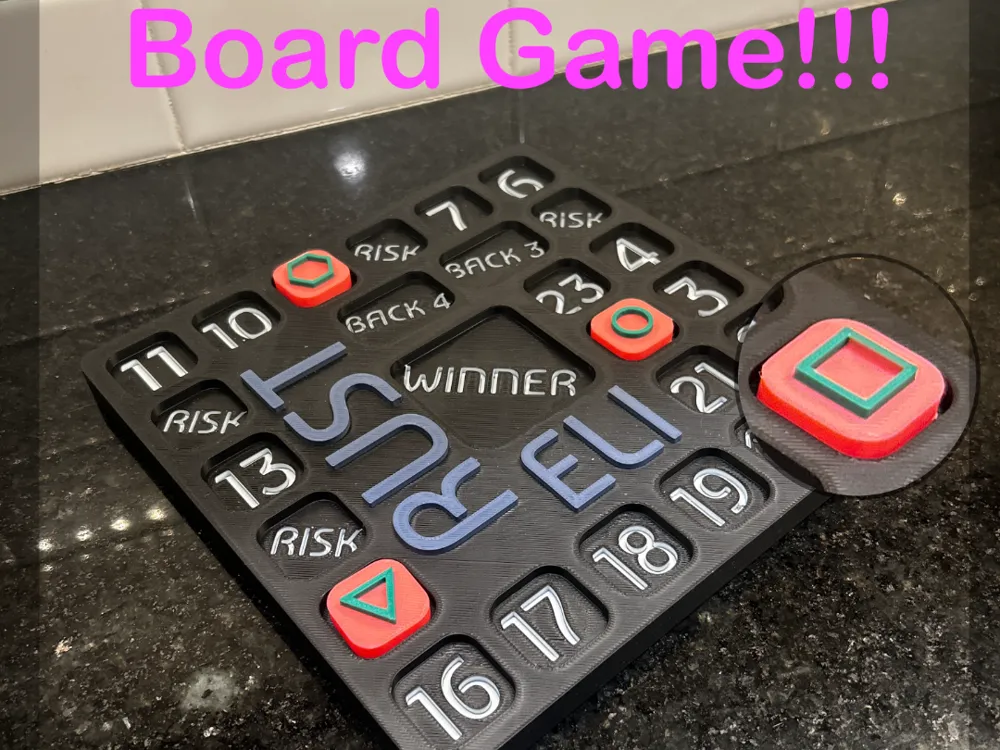
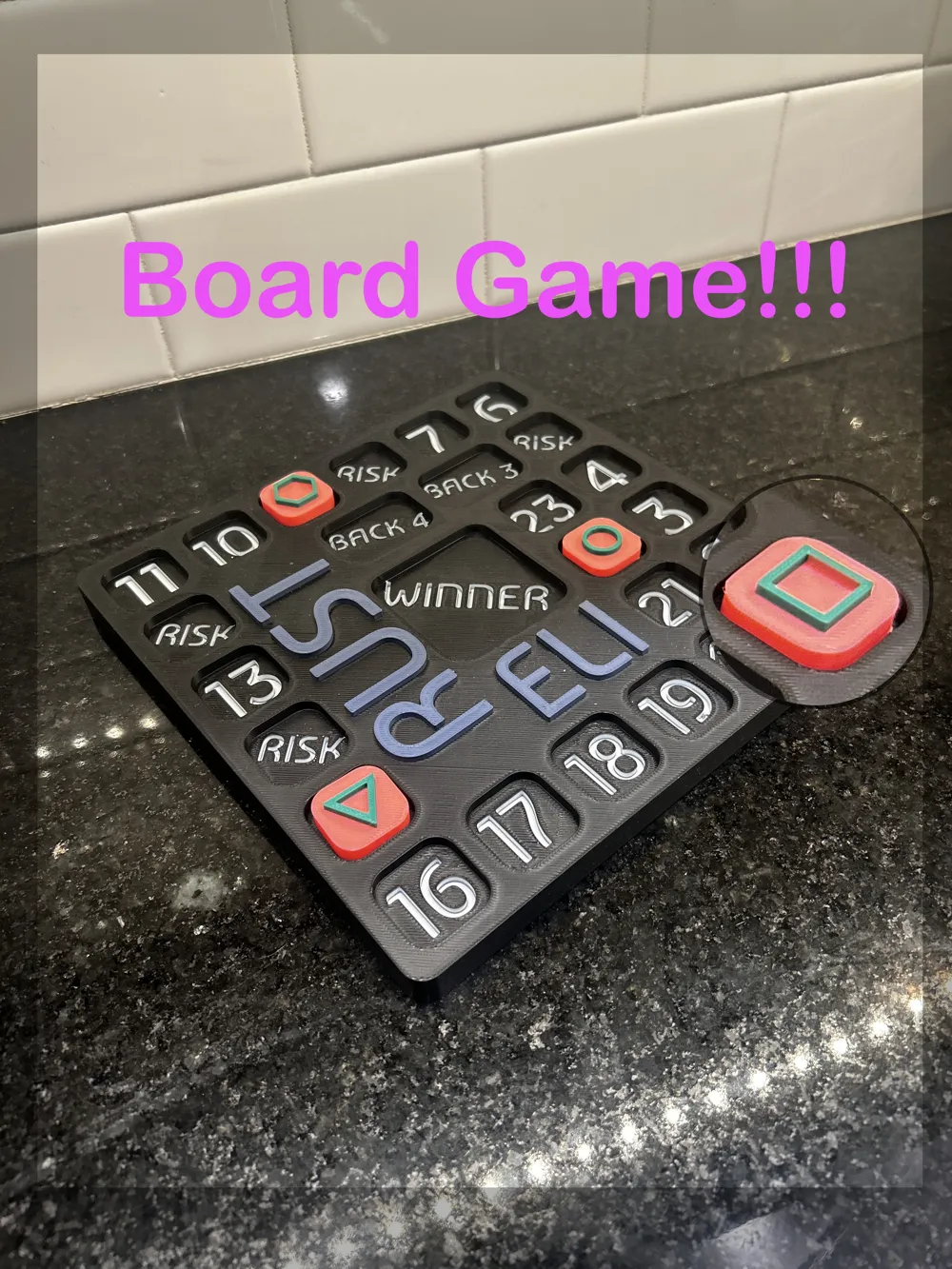
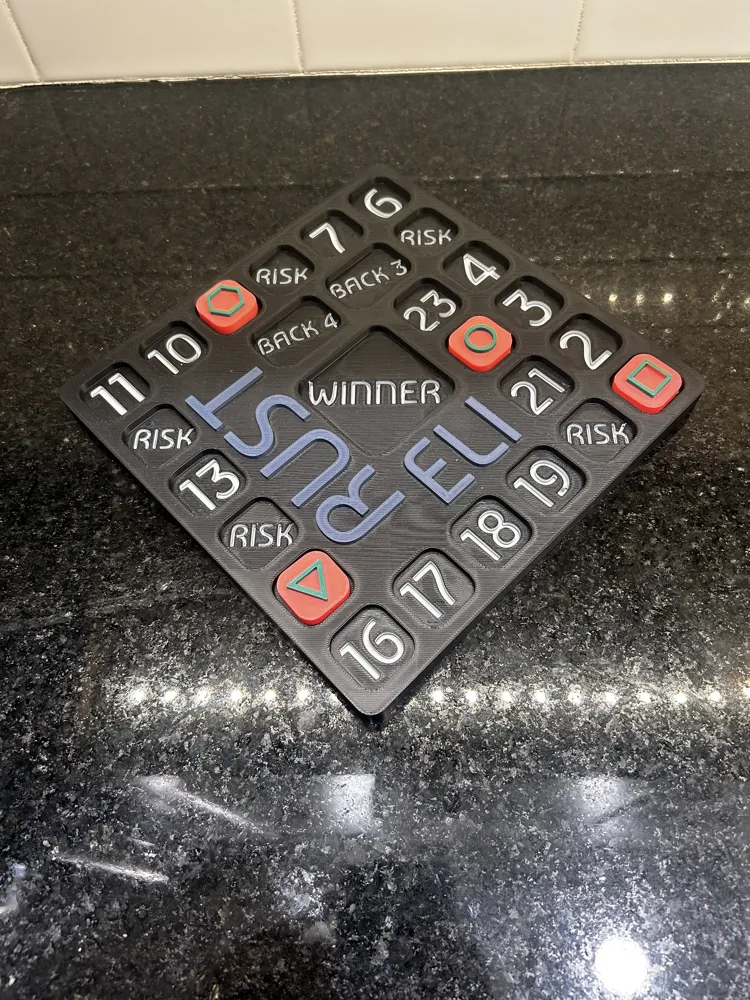
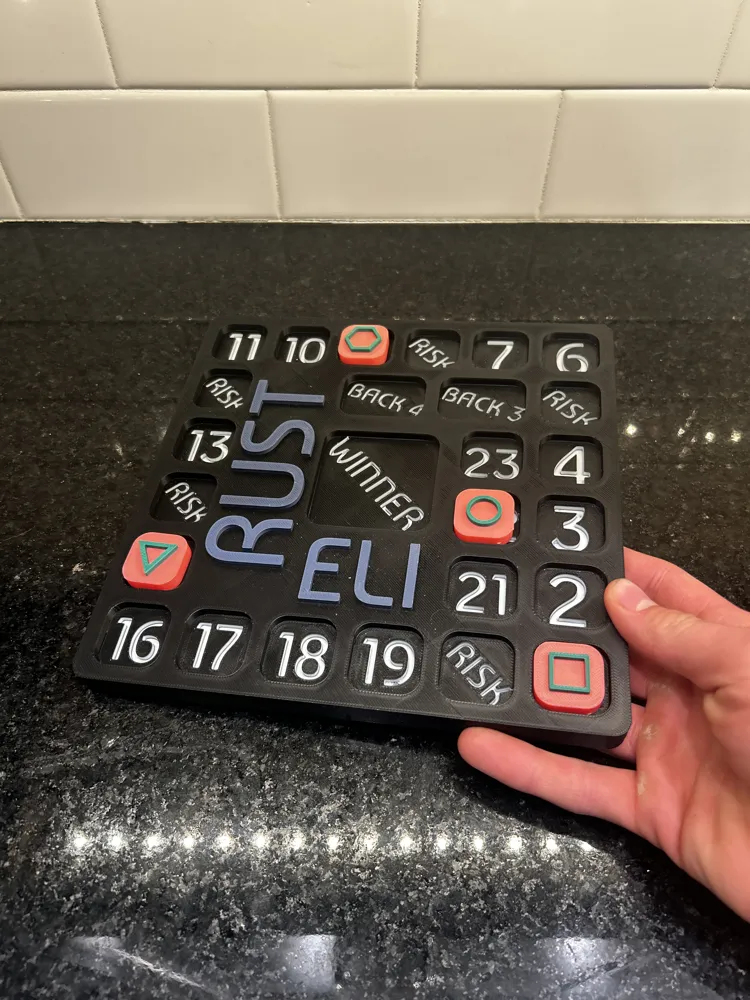
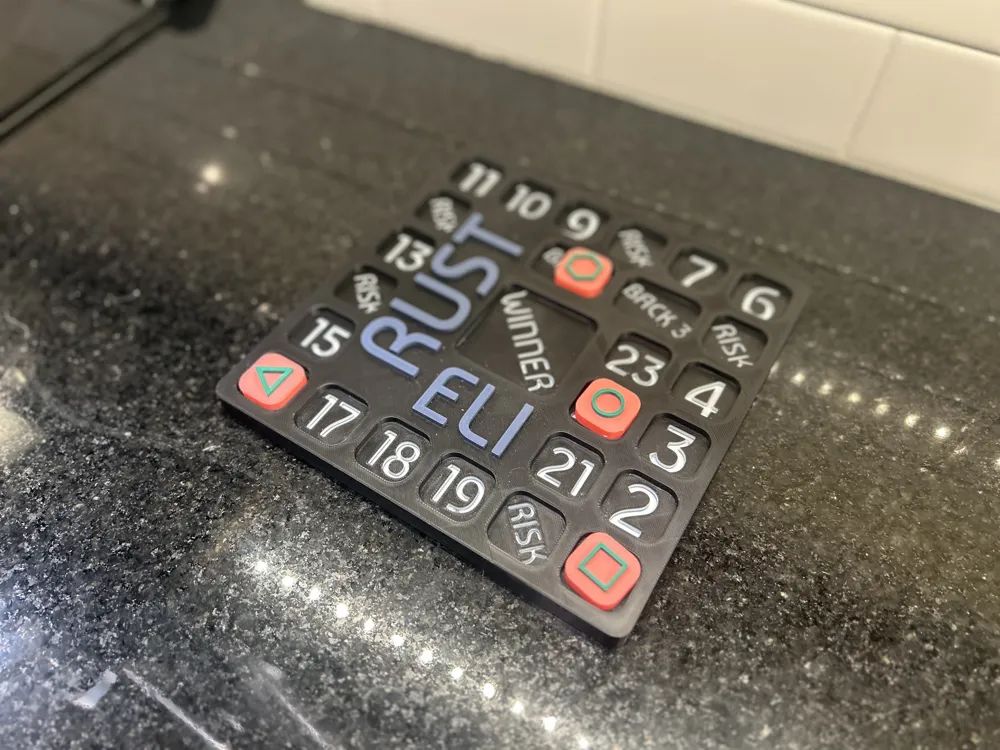
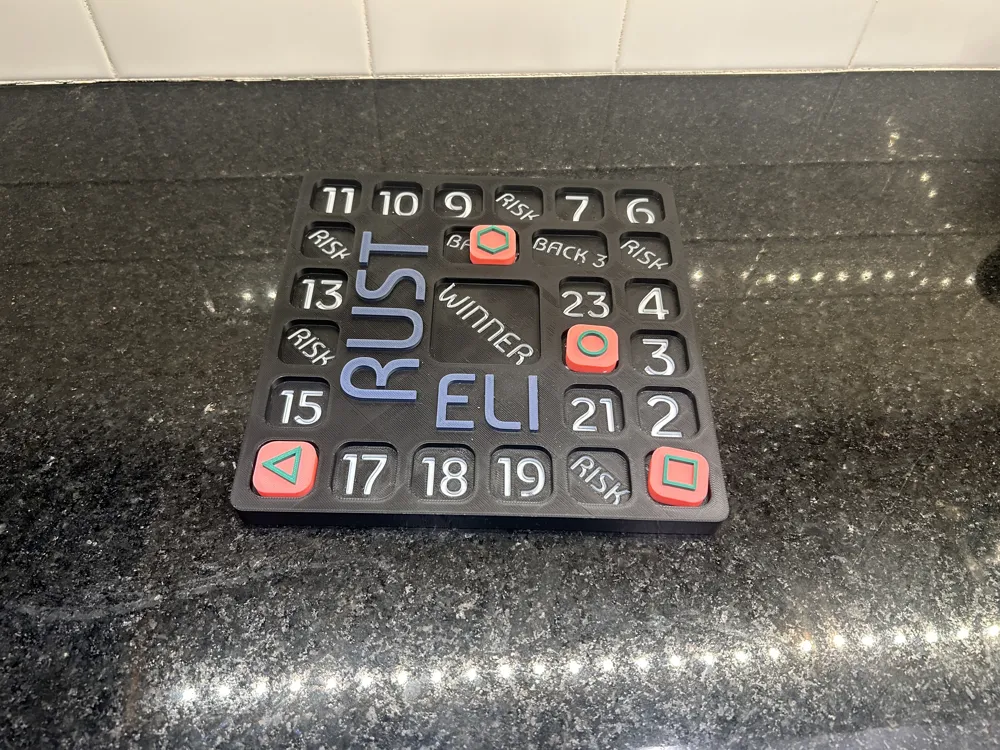
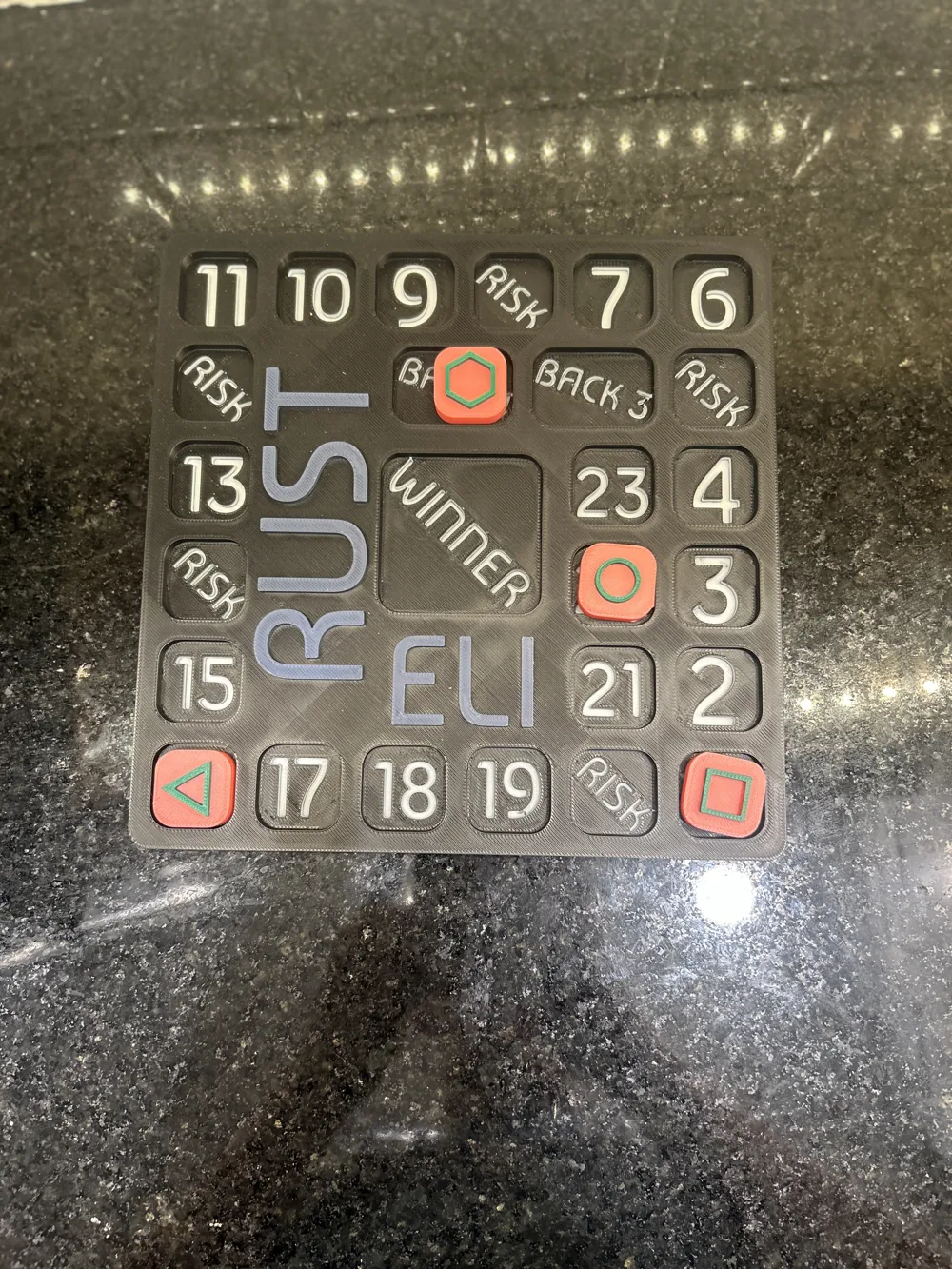
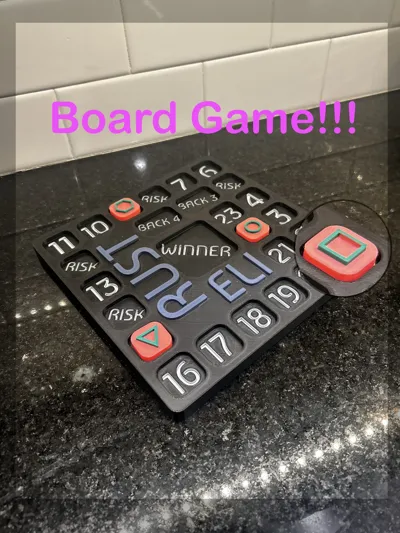
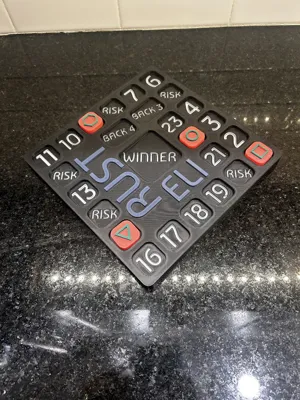
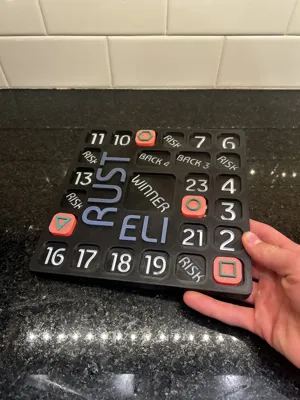
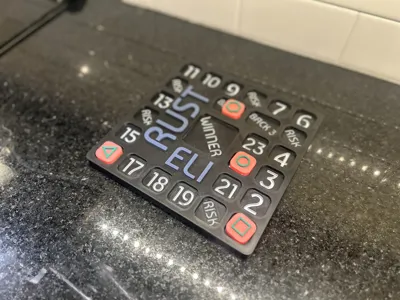
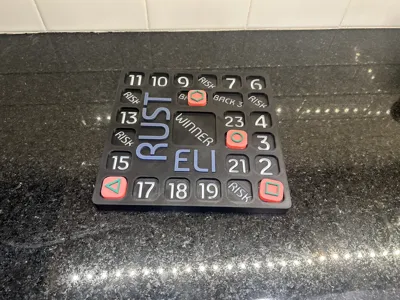
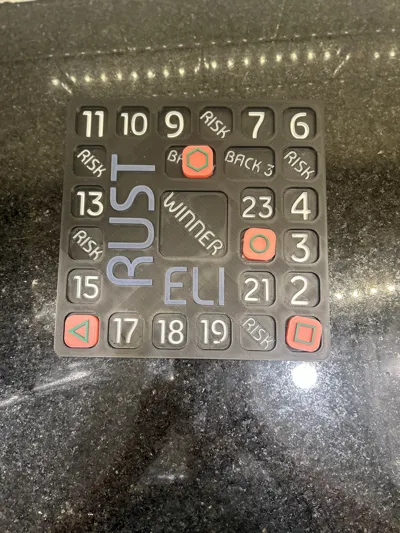
I made this board game for a statistics project at my school. It turned out to be really fun and its fully 3d printable. However, this game does require the use of a die, a coin, and a spinner. These are not included in this file but they are readily available but you likely have all those things.
These are the instructions:
- Objective - the objective of “Risk Run Arena” is to be the first play of 2 - 4 players to teach the end of the board.
- Setup - Each player must pick their desired token chip and line them up at the start of the board, after doing so, each player must roll the dice. The player with the highest role goes first.
- Gameplay - Each player rolls the dice one time, the player moves their player token from the start square the number of times displayed on the dice.
- If the player lands on a regular number square, their turn ends and the dice are passed onto the player to the left
- If the player lands on a “RISK” square…
- The player must flip the coin: If the coin lands on heads, they proceed to spin the number wheel and advance their player token the number of times displayed on the wheel. If the coin lands on tails, they proceed to spin the number wheel and move their player token backwards the number of times displayed on the wheel.
- If the player lands on a “BACK” square, they must move backwards the number of times represented on the square.
- How to win - The first player to reach the “WINNER” square in the center of the board wins!
Probability Analysis (if interested):
The probability of having a different outcomes in this game is calculated as such:
- Probability of advancing P(A) - the dice had six sides, each number on the dice represents a number greater than 0 (6/6). This means that the probability of advancing is 100%
- Probability of landing on a risk square P(R) - The board has a total of 25 squares excluding the start square. Of those 25 squares, 5 of them are risk squares. This means the probability of landing on a risk square can be approximated as 5/25 = ⅕ (20%) each turn, assuming all spaces are equally likely over time.
- Probability of returning a favorable outcome from the risk square - Once you land on the risk square you flip a coin. You have a ½ or 50% chance of landing on heads and moving forward. Once you spin the wheel which is 0 through 9, you have a 9/10 90% chance of advancing (we do not consider spinning a 0 on the wheel as favorable). Since the events of landing on a “RISK” square, flipping heads, and spinning greater than 0 are independent, the equation P(Favorable Outcome) = ⅕ * ½ * 9/10 can be used. This turns out to be a probability of 0.09 or 9% to land on “RISK”, flip a heads, and spin greater than 0.
- Probability of returning a negative outcome from the risk square - Due to the fact that a fair coin is being used, the probability of returning a negative outcome remains at 0.09 or 9% just as the favorable outcome. This is because the probability of landing on a “RISK” square remains 20%, the probability of flipping the fair coin does not change and remains at 50% and the probability of spinning greater than 0 does not change (0 is considered neutral and is not counted as positive nor negative)
- Probability of returning a neutral outcome from the risk square - In this instance, the probability or landing on a “RISK” square remains at 20% however since in this case it doesn't matter whether or not the die lands on heads or tails in this situation, the die probability can be equated to 1 or 100%. The final change in this instance is the spinner probability. The probability of spinning a neutral outcome or a 0 is 1/10 or 10%. Because these events are all independent, we can use the equation P(Neutral Outcome) = ⅕ * 1 * 1/10. This equation results in 0.02 or 2% meaning the P(Neutral Outcome) = 0.02
License

You shall not share, sub-license, sell, rent, host, transfer, or distribute in any way the digital or 3D printed versions of this object, nor any other derivative work of this object in its digital or physical format (including - but not limited to - remixes of this object, and hosting on other digital platforms). The objects may not be used without permission in any way whatsoever in which you charge money, or collect fees.


Comment & Rating (0)