
Bambu Ironing Test
Print Profile(1)
Bill of Materials

Description
Membership
If you want to use this project for commercial purposes, you can join the Commercial License Membership. With this license, you will have the right to produce and sell printed versions of the Shadow Hunter Slingshot, directly supporting my work and allowing me to continue creating new 3D printable projects
The Ultimate Solution for Perfect Top Surfaces
Are you tired of rough top surfaces or unsightly "plowing" lines? This is not just another calibration test-it is a high-end engineering tool designed for those who demand aesthetic and functional perfection in their 3D prints.
Advanced Engineering Design
Unlike standard calibration cards, this model integrates industrial design principles to help you see the results clearly:
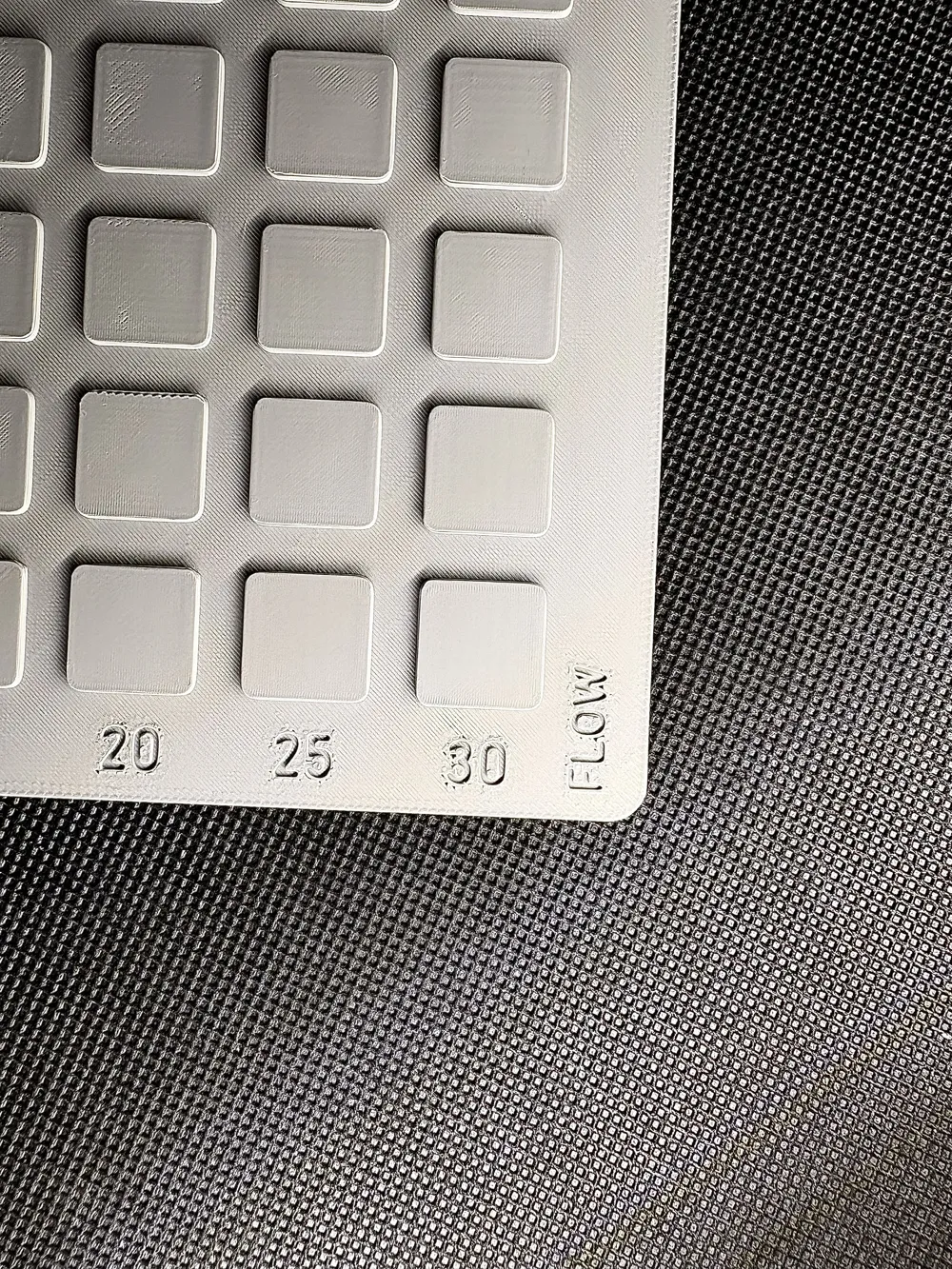
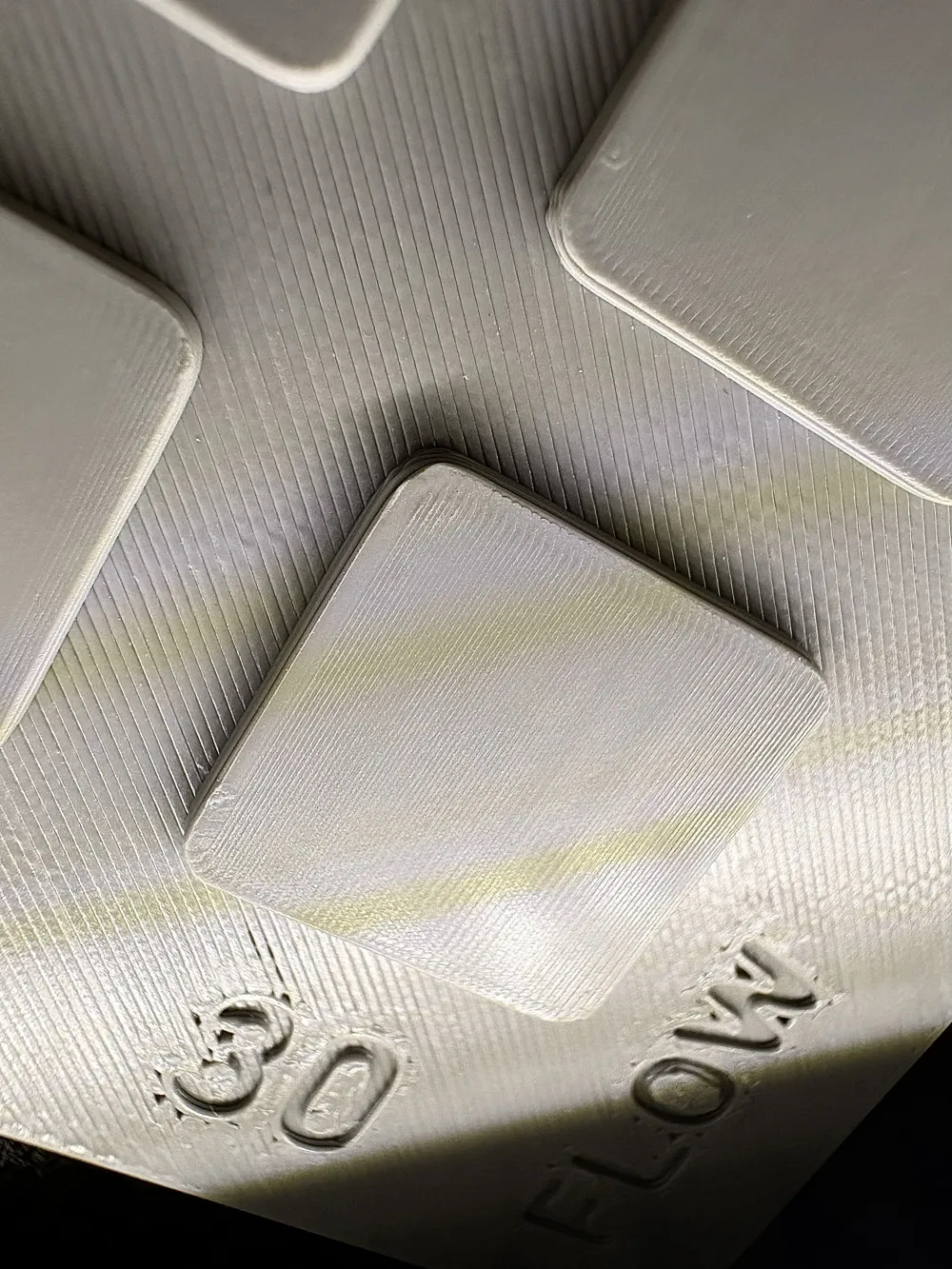
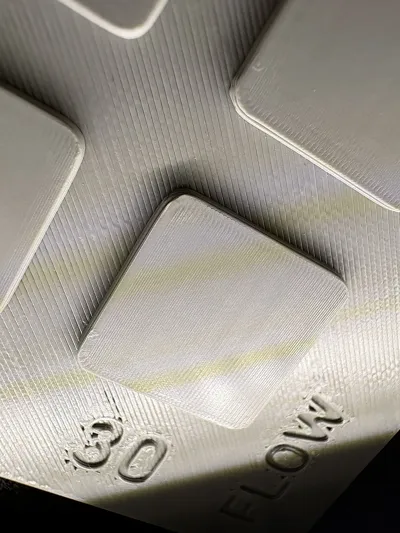
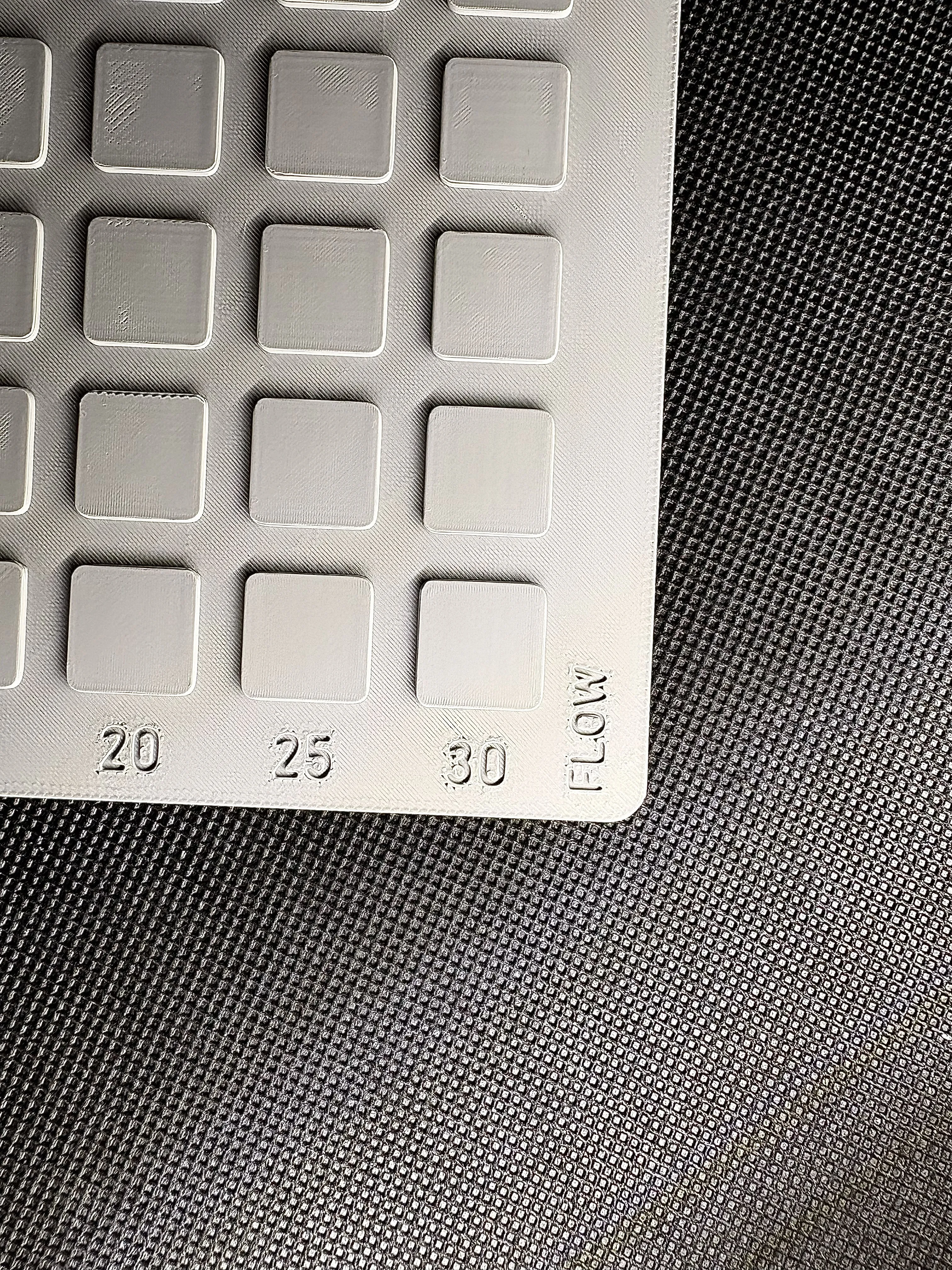
- G2 Curvature Continuity: Every fillet between the tiles and the base follows a G2 continuity path. This ensures fluid light reflections, eliminating the harsh "break lines" found in standard (G1) fillets.
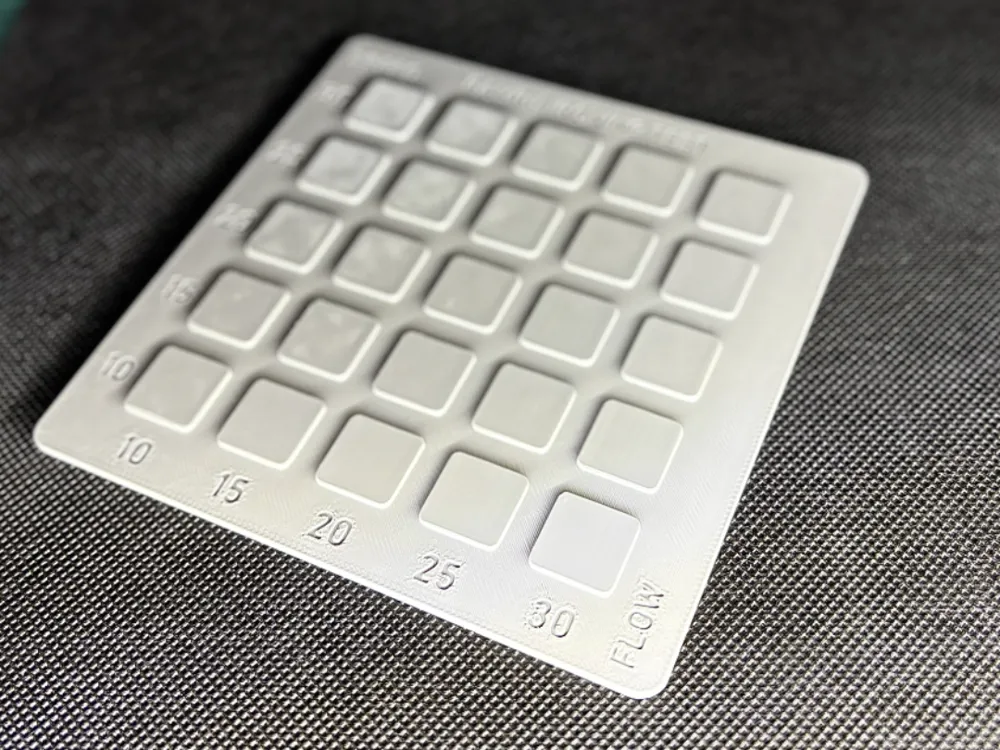
- 3° Draft Angle: Each tile features a precise draft angle to elevate the ironed surface, making it the focal point for light analysis and easier to inspect.
High-Readability Engravings: Values are engraved at a 0.4 mm depth to remain perfectly legible with any material, eliminating the need for multi-color printing.
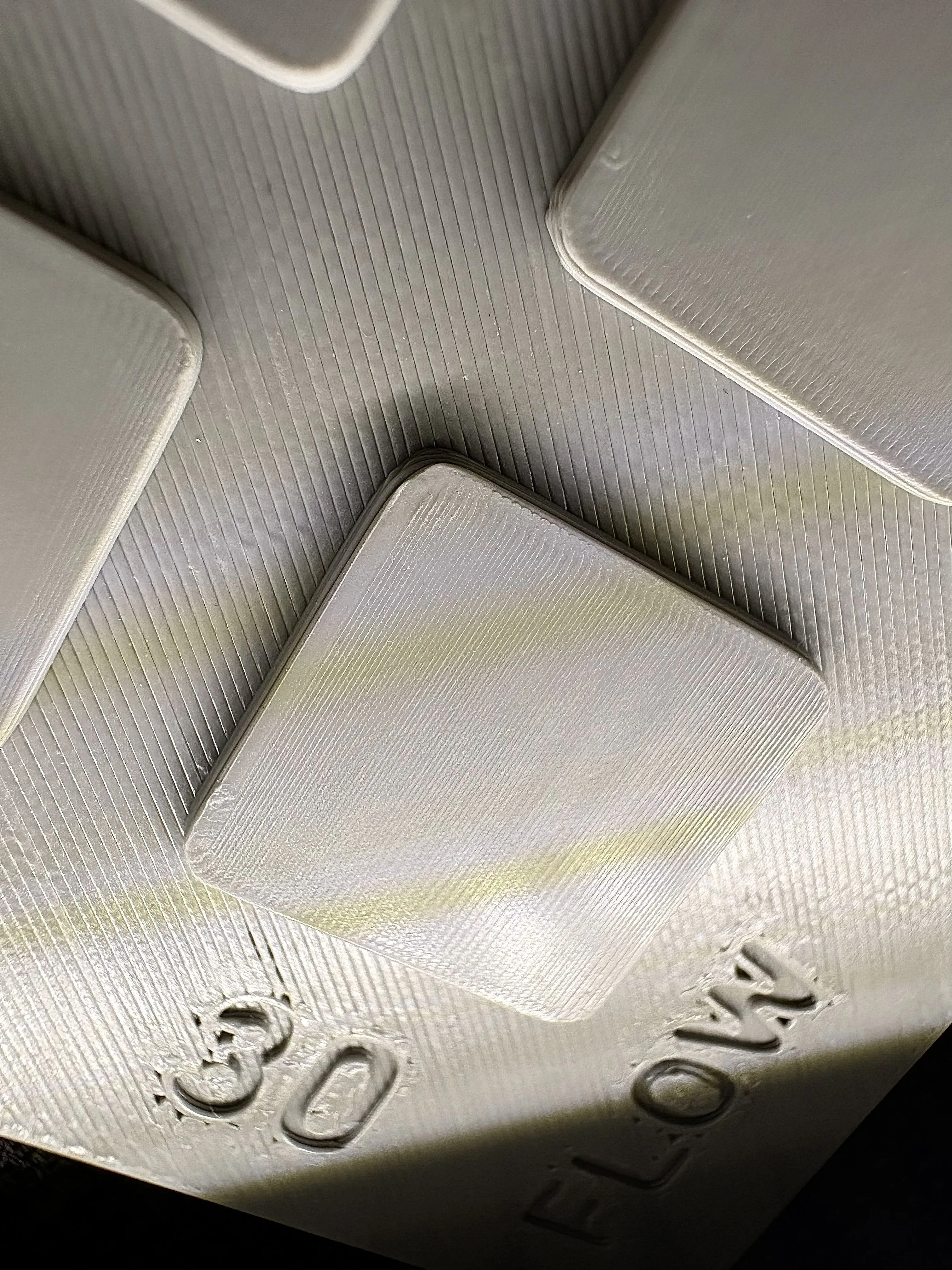
Close-up of G2 Continuity and 3° Draft Angle under raking light.
How the Test Works
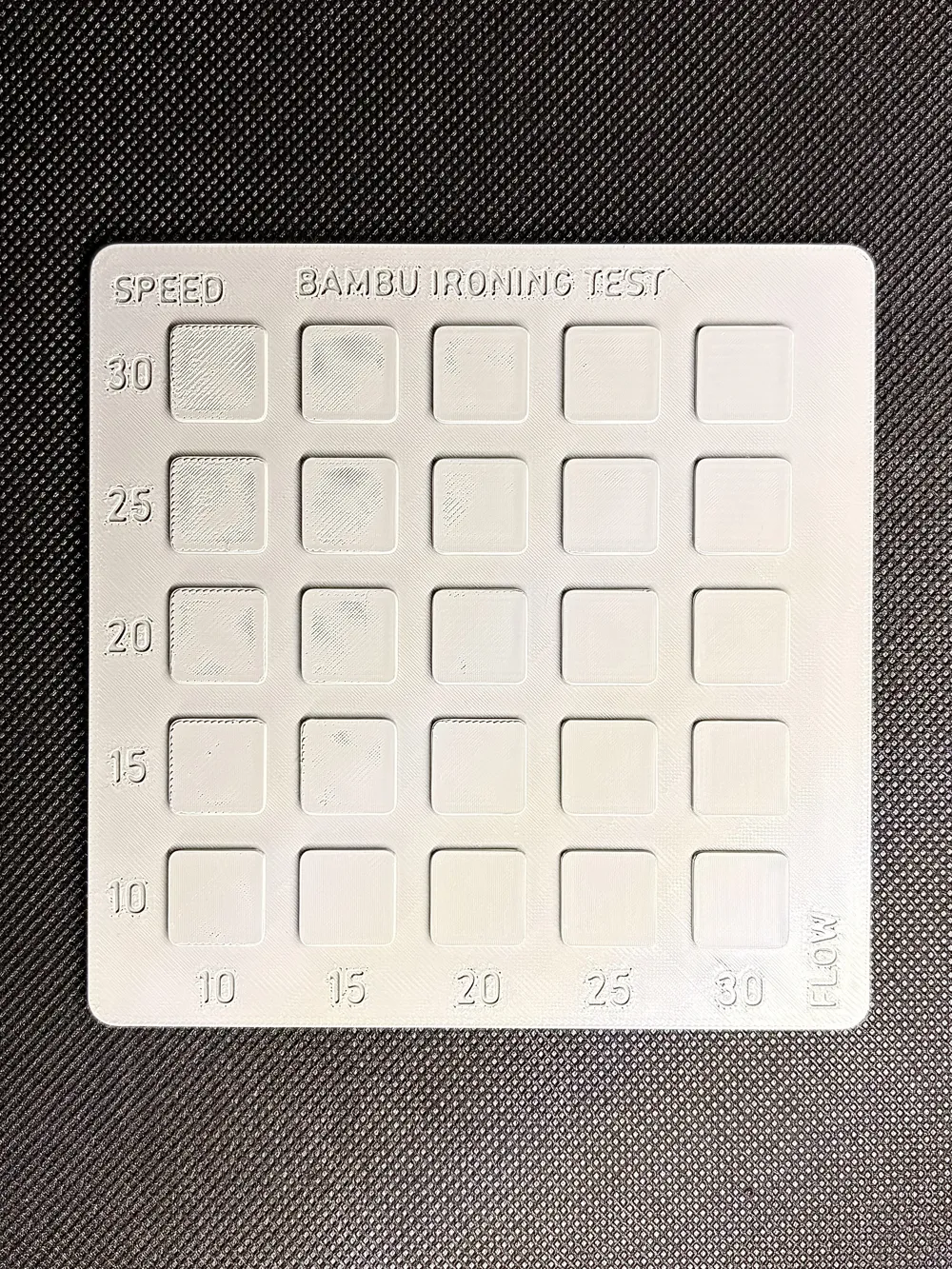
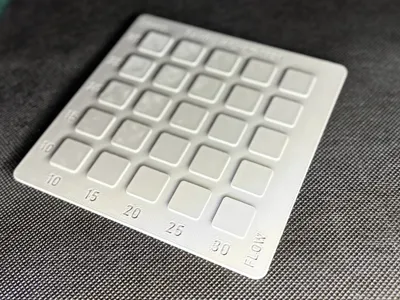
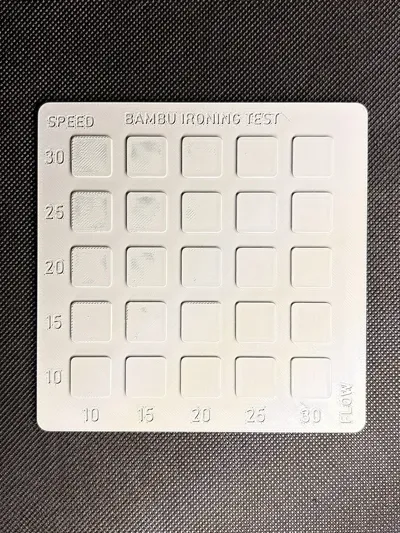
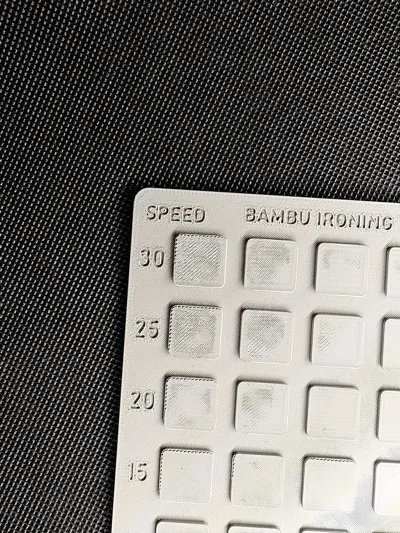
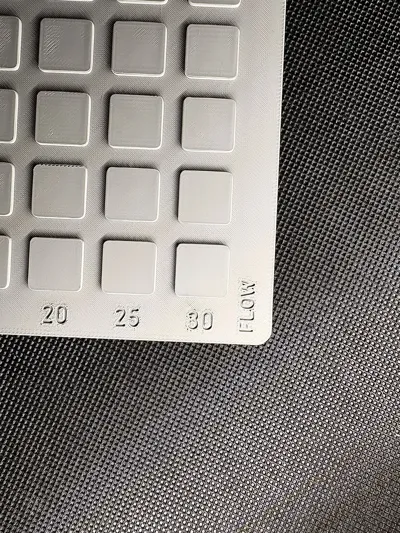
The model consists of a 5x5 grid crossing the two most critical ironing variables:
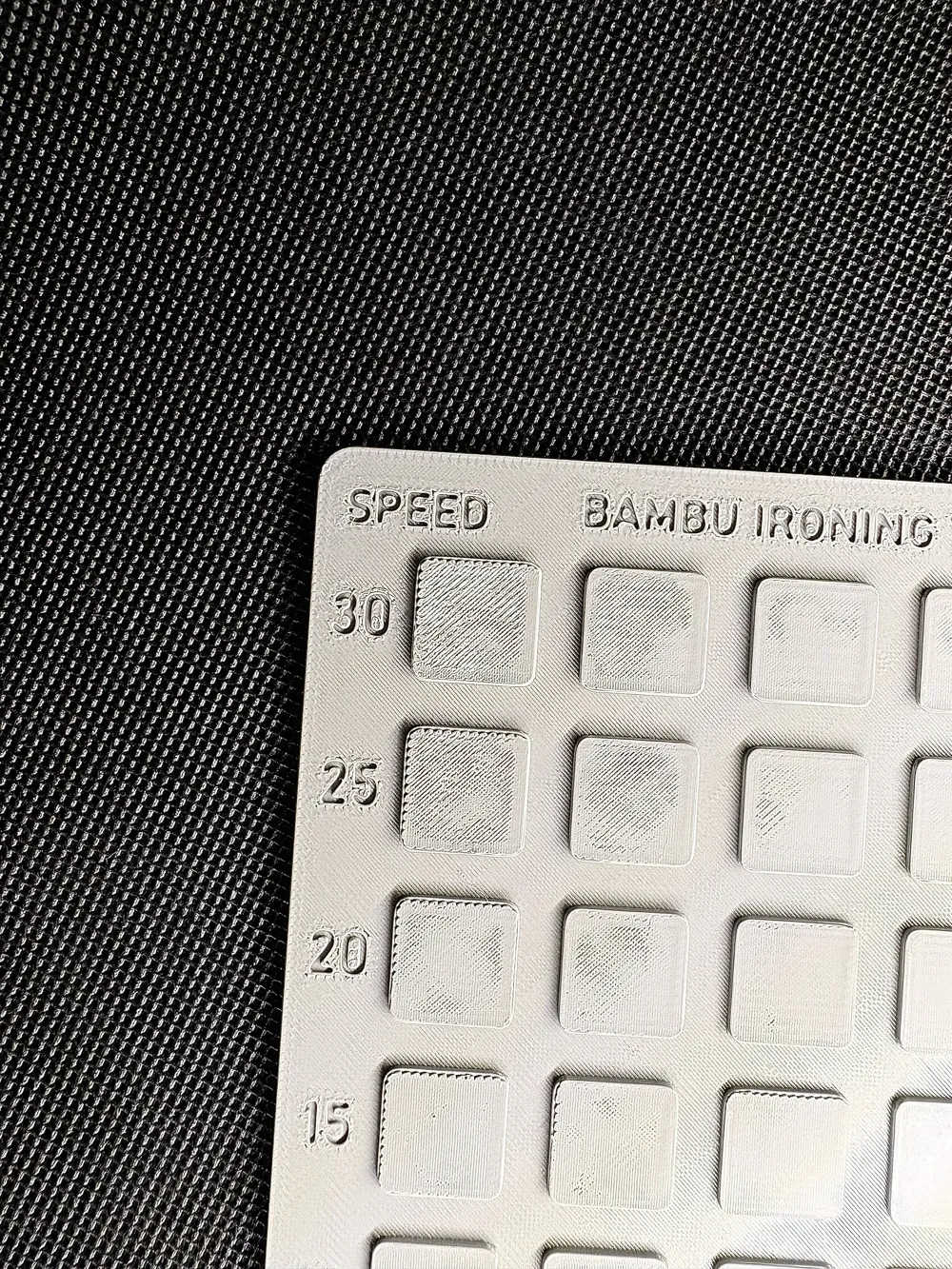
- Ironing Flow (10% - 30%): Find the exact extrusion volume to fill every gap.
Ironing Speed (10 - 30 mm/s): Determine the ideal speed for a flawless melt.
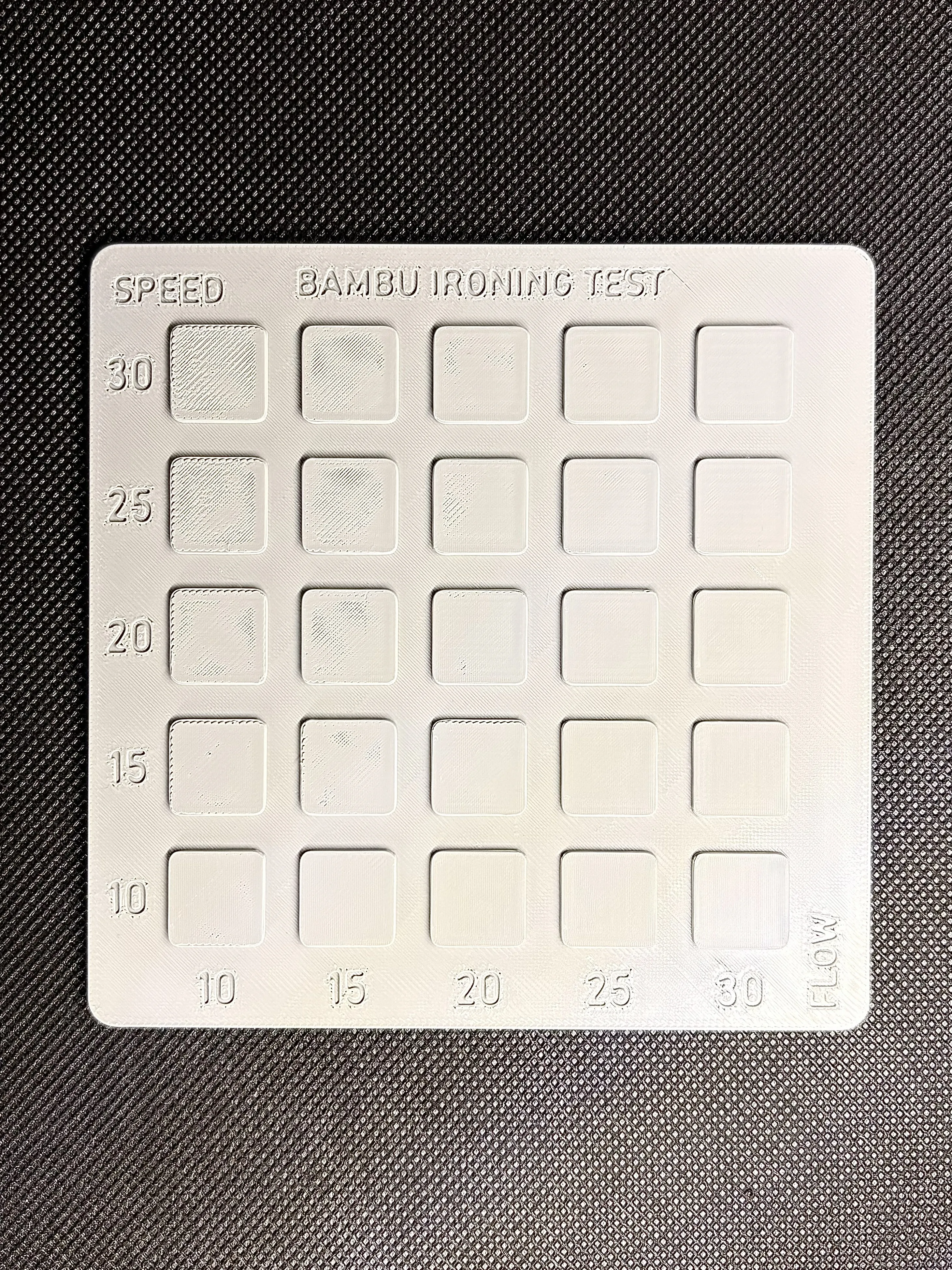
5x5 Grid Layout: Compare different Flow and Speed combinations at a glance.
Boost Me (for free)
Support Precision Engineering! 🚀 If this tool helped you achieve "glass-like" top surfaces, please consider giving this model a Boost! Your support allows me to keep developing free, professional-grade technical tools for the community. Don't forget to upload a photo of your results in the comments!
Optimization for 0.4mm & 0.2mm Nozzles
This test is optimized for both, but requires different approaches:
- 0.4mm Nozzle: The ideal starting point for most users.
- 0.2mm Nozzle: Perfect for miniatures or ultra-fine details.
- Pro Tip: For the 0.2 mm nozzle, do not rely on automatic slicer math. Manually force the Ironing Spacing to 0.08 mm and the Ironing Inset to 0.05 mm to avoid gaps between passes.
License

You shall not share, sub-license, sell, rent, host, transfer, or distribute in any way the digital or 3D printed versions of this object, nor any other derivative work of this object in its digital or physical format (including - but not limited to - remixes of this object, and hosting on other digital platforms). The objects may not be used without permission in any way whatsoever in which you charge money, or collect fees.


Comment & Rating (32)