
32-note pipe organ


Print Profile(3)


Description
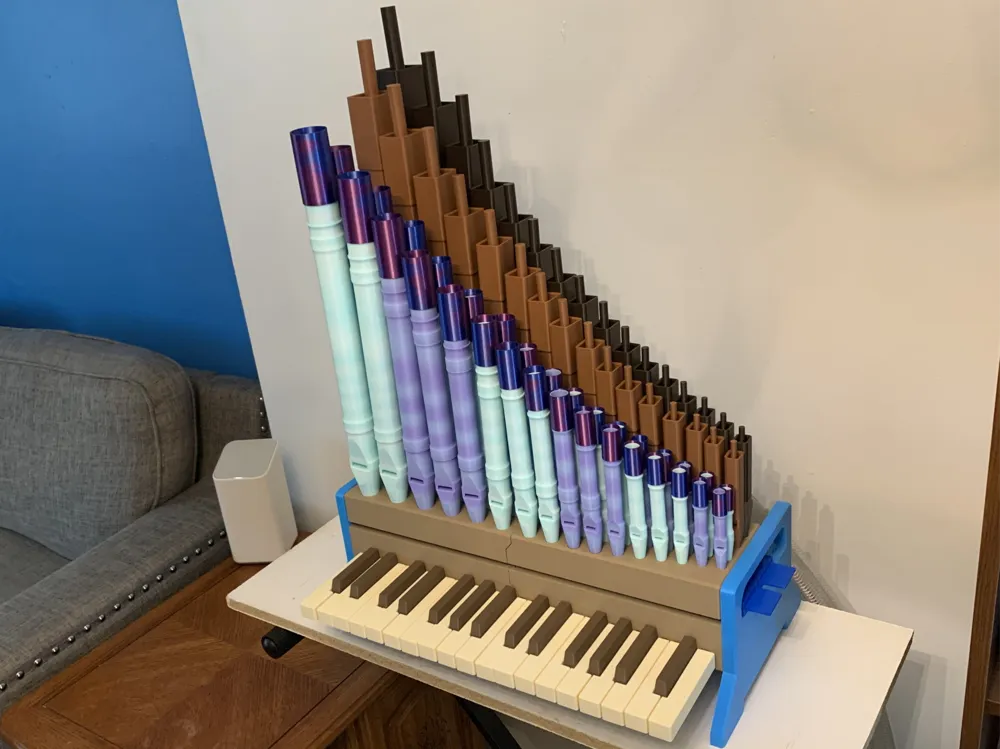
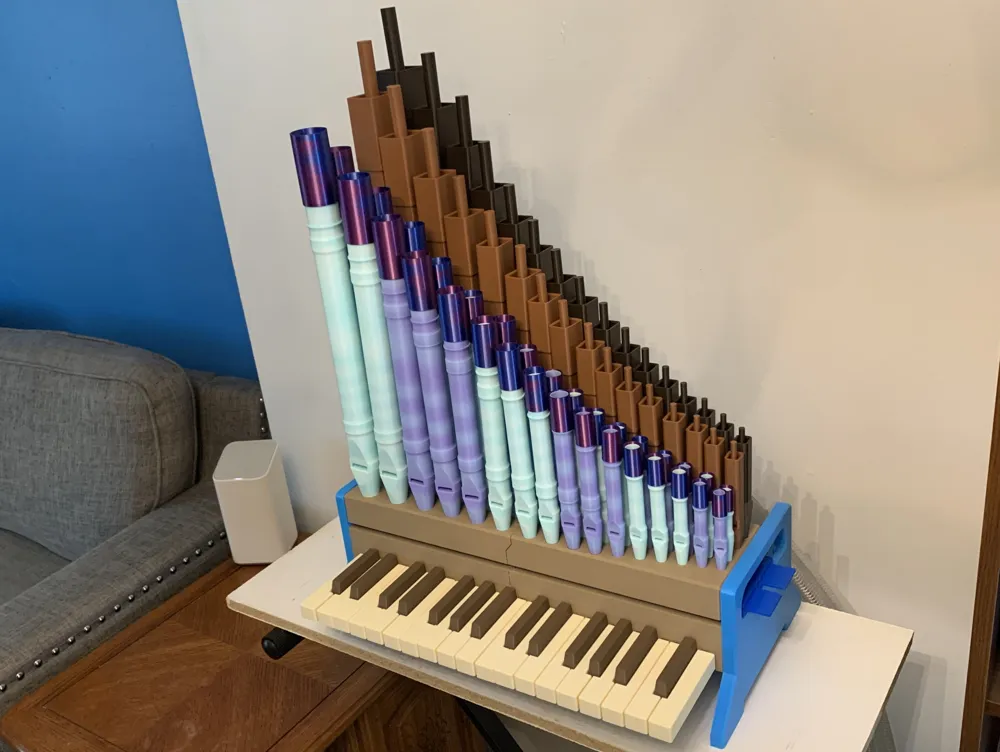
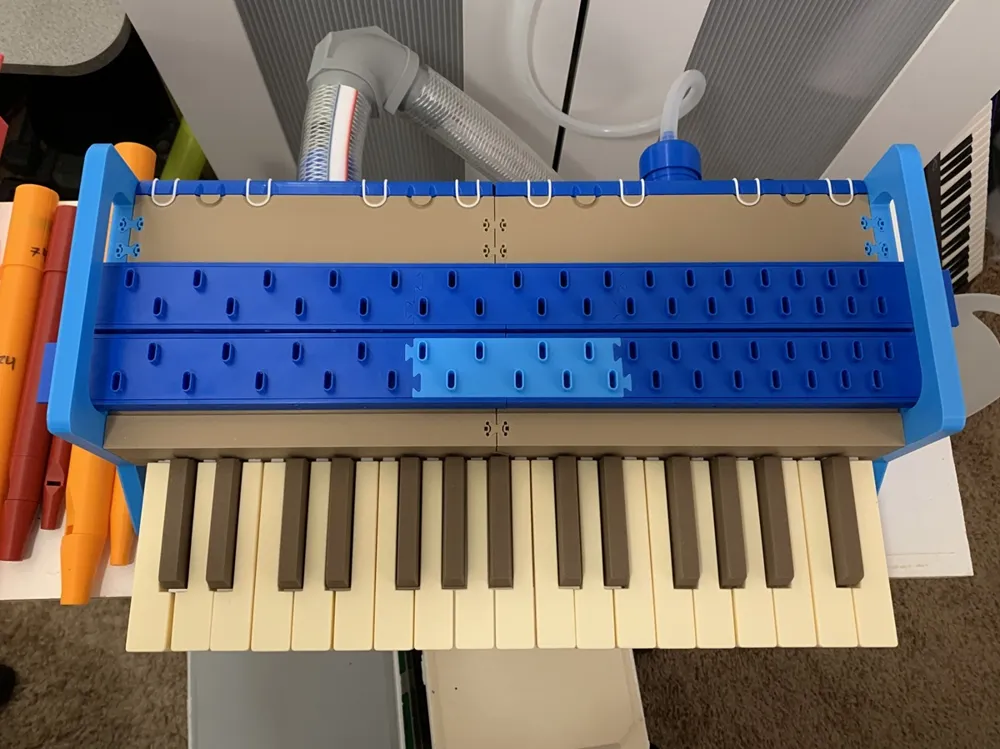
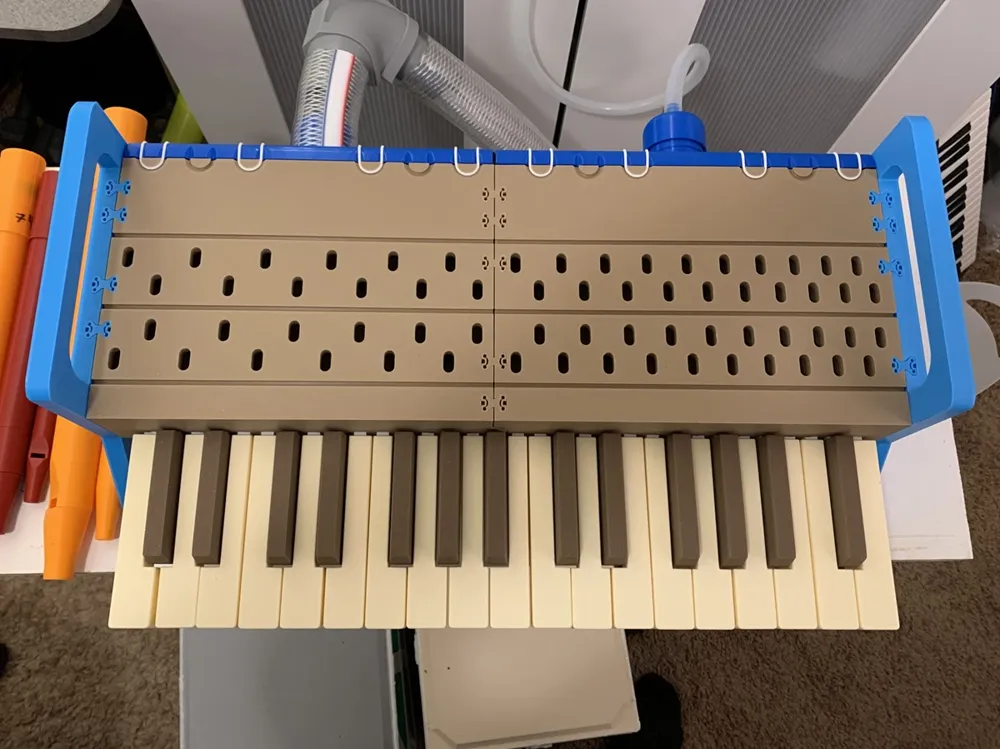
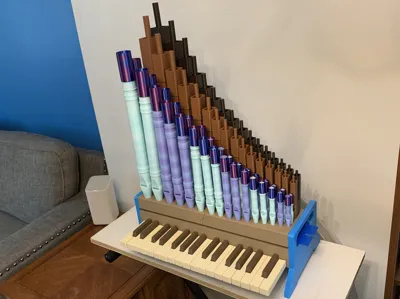
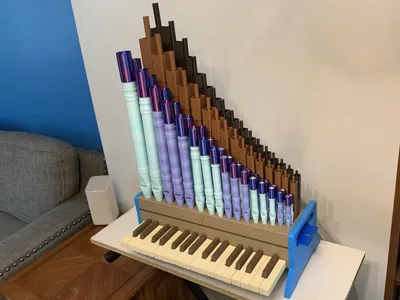
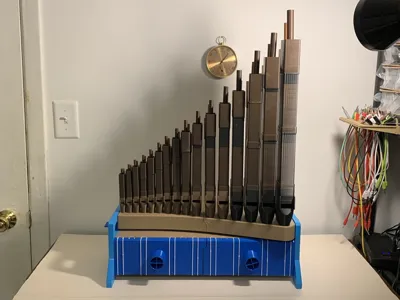
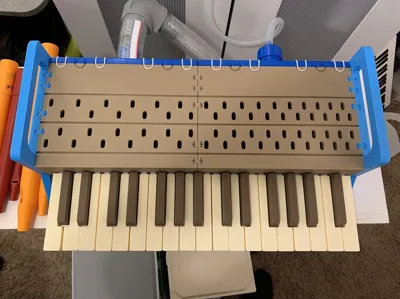
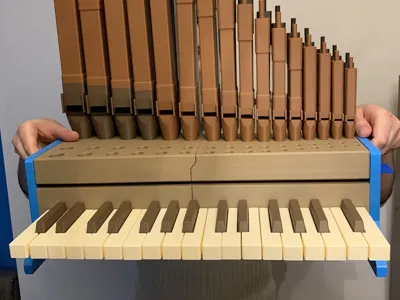
Here it is! The much-needed redesign of my original 32-note pipe organ.
Update June 23/26: I've added three .zip files to the project containing the STEP files for all the parts, for those who want to use other slicers.
Build instruction videos are partially released.
Part 1: The keyboard's static parts
Part 2: The Keyboard's moving parts
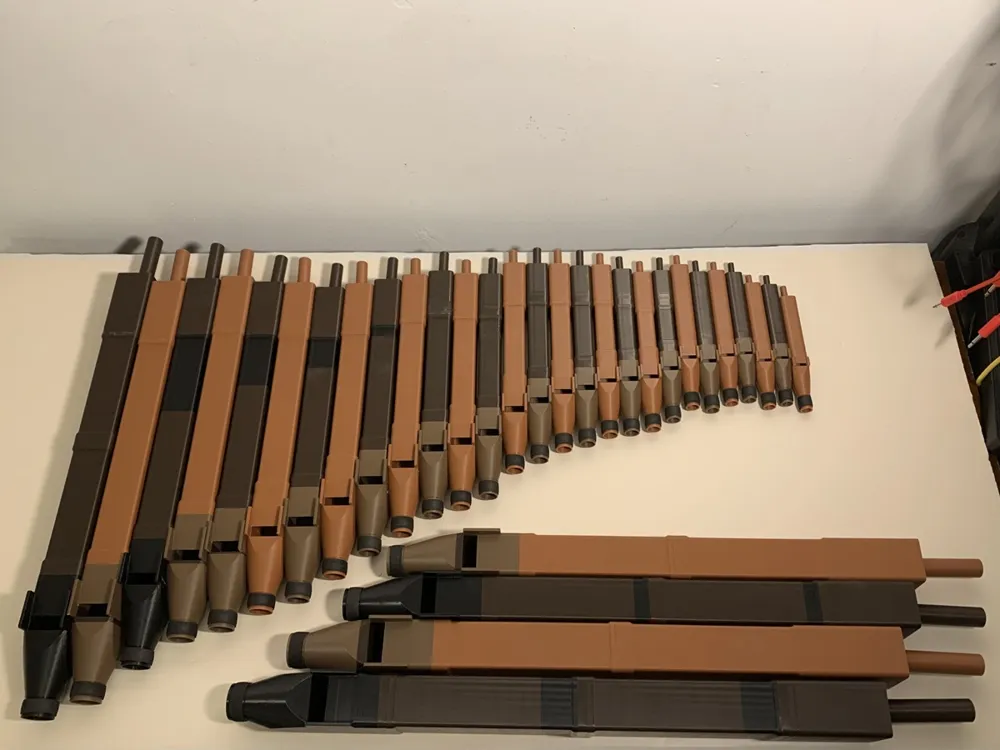
Part 4: Assembling the raw pipes
Part 5: Voicing: getting the pipes to sound right
Part 6: The Principal pipes (Apologies, I've been slacking on this for a while.)
For the air supply there are two options: One is my separately released foot pump system shown in the videos below. The other is a compatible electric blower box designed by Martin (thanks again!).
Sound demo: As of release time, this is what mine sounds like. My voicing isn't perfect, and the wind pressure isn't regulated.
Older sound demo:
This redesign is sort of compatible with the old design's pipes. They can be placed in the toeboard and played, but they'll easily fall out if disturbed.
Keyboard:
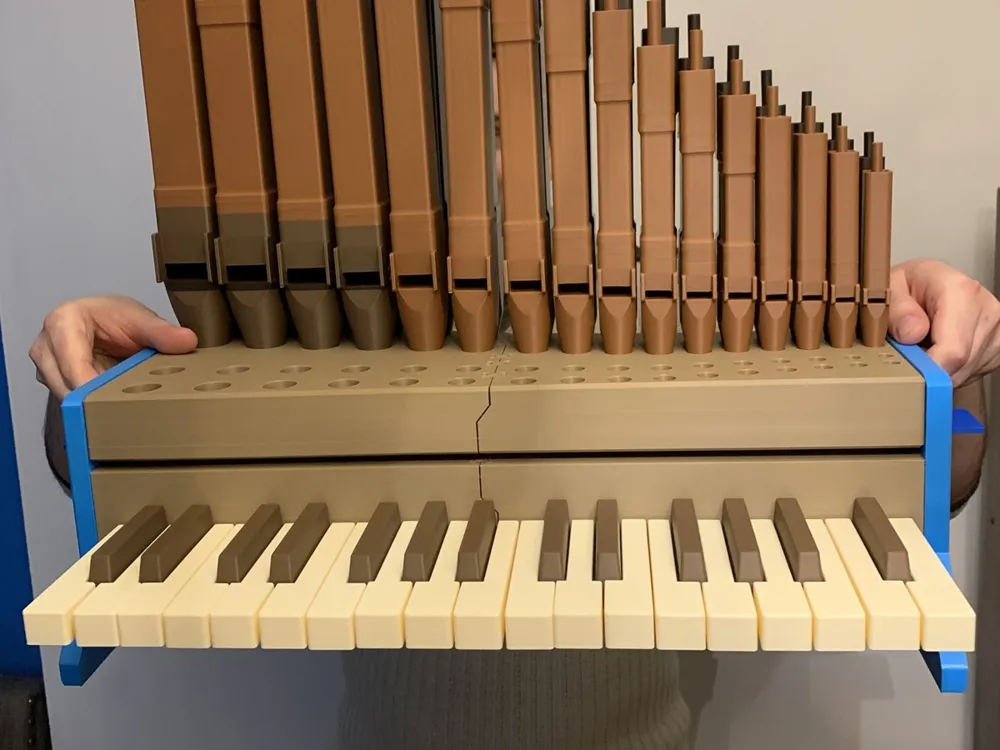
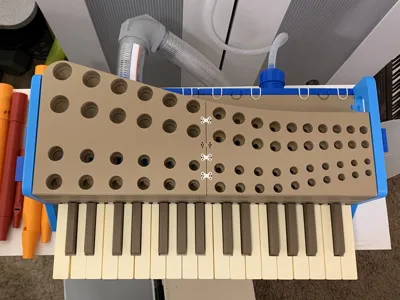
- 32 keys from G3 to D6.
- Standard size in X and Z.
- Slightly miniaturized in Y direction.
- A415/A392/A466 historical pitches can be used, but the keytops all need to be removed and reinstalled individually.
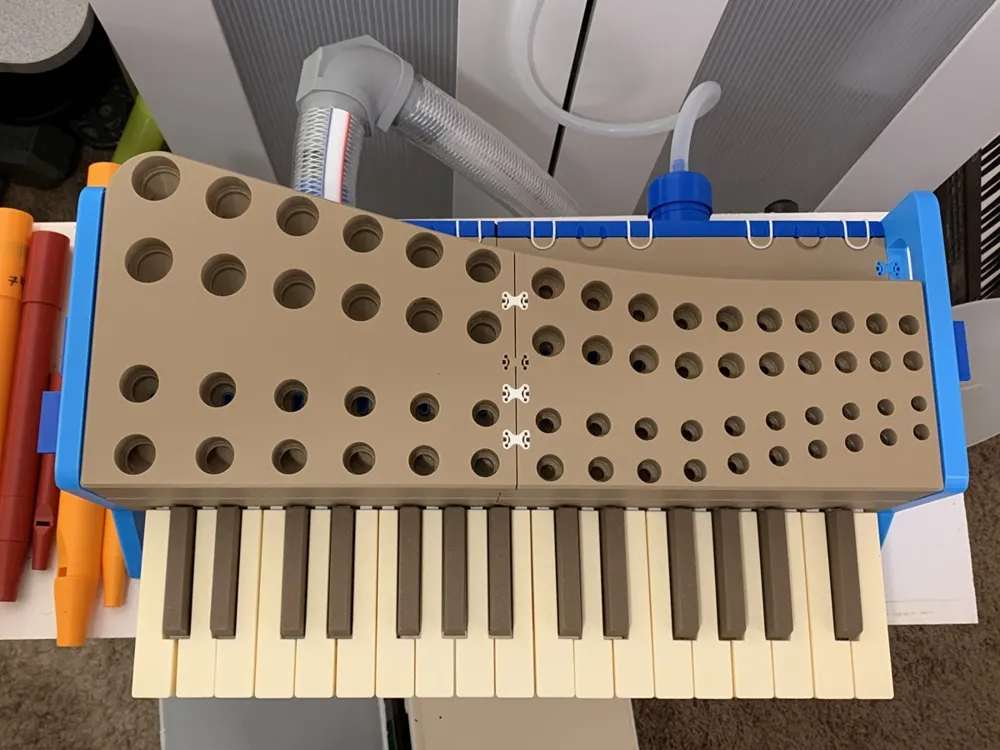
Stops:
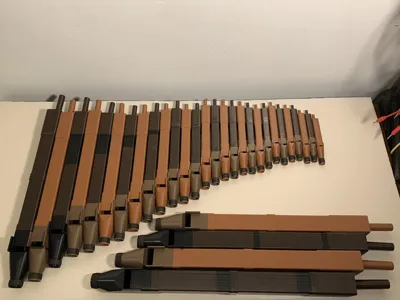
- 2 ⅔' Stopped flute
- 1 ⅓' String principal
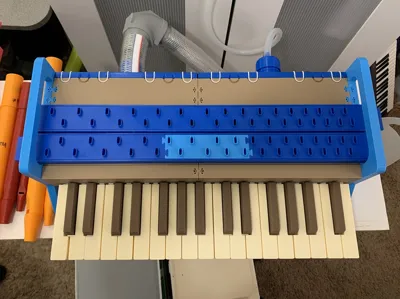
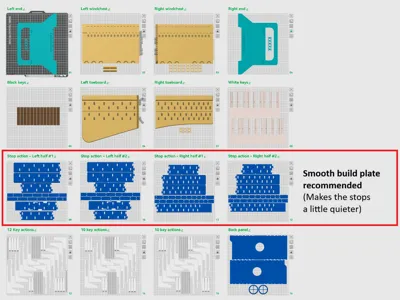
- Stop action moves left-to-right. Right is “pulled” and left is “pushed.”
Features:
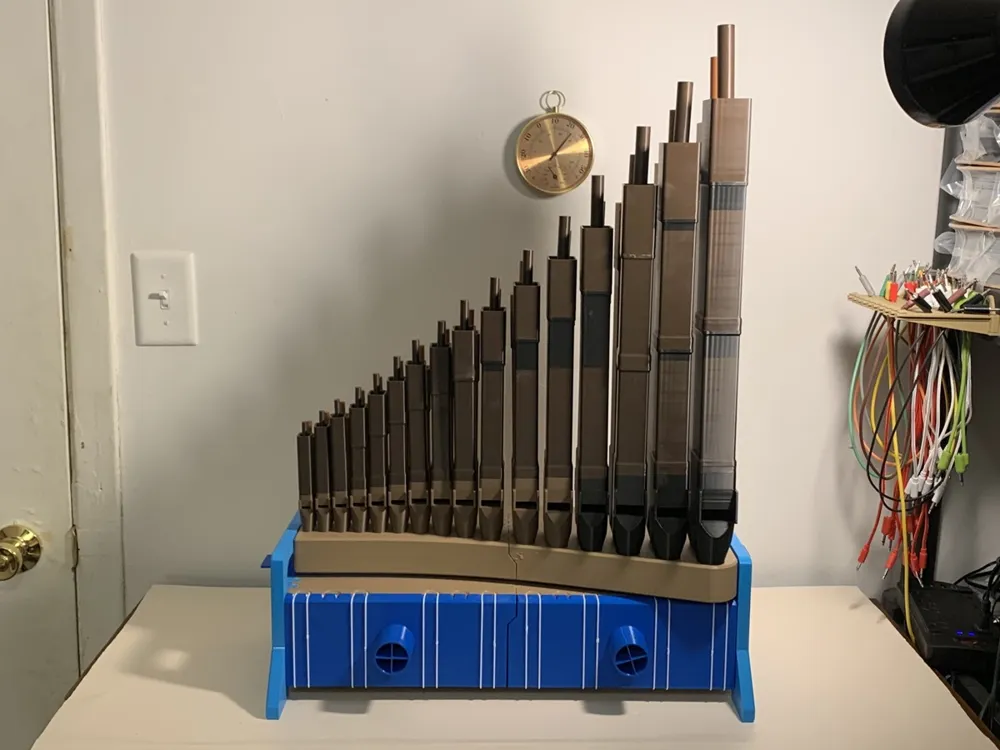
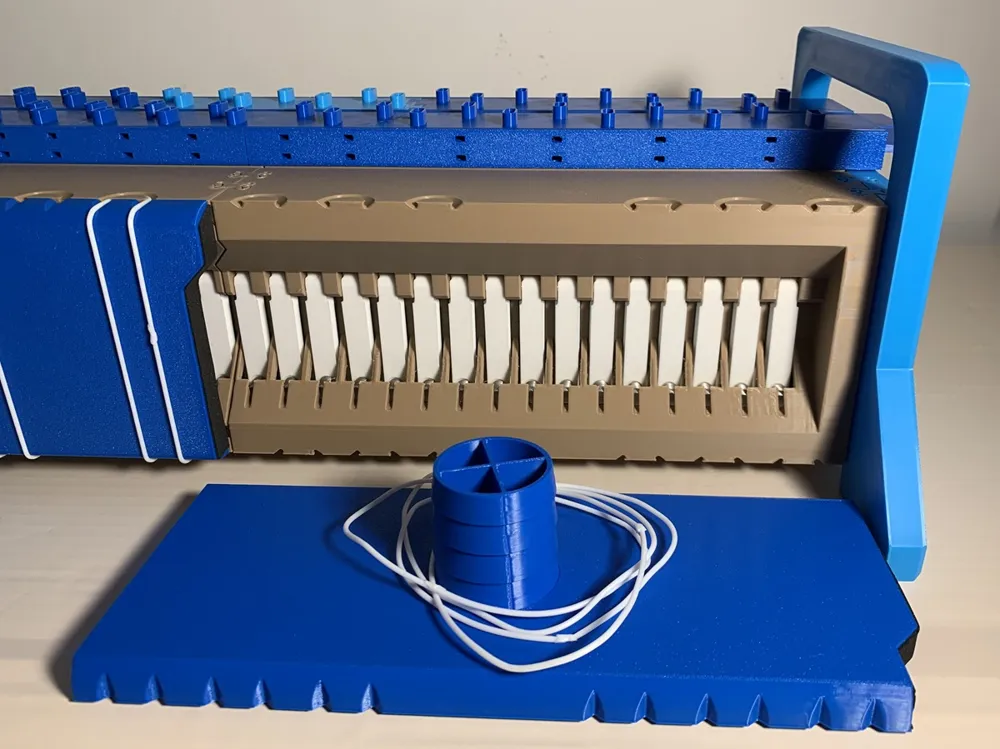
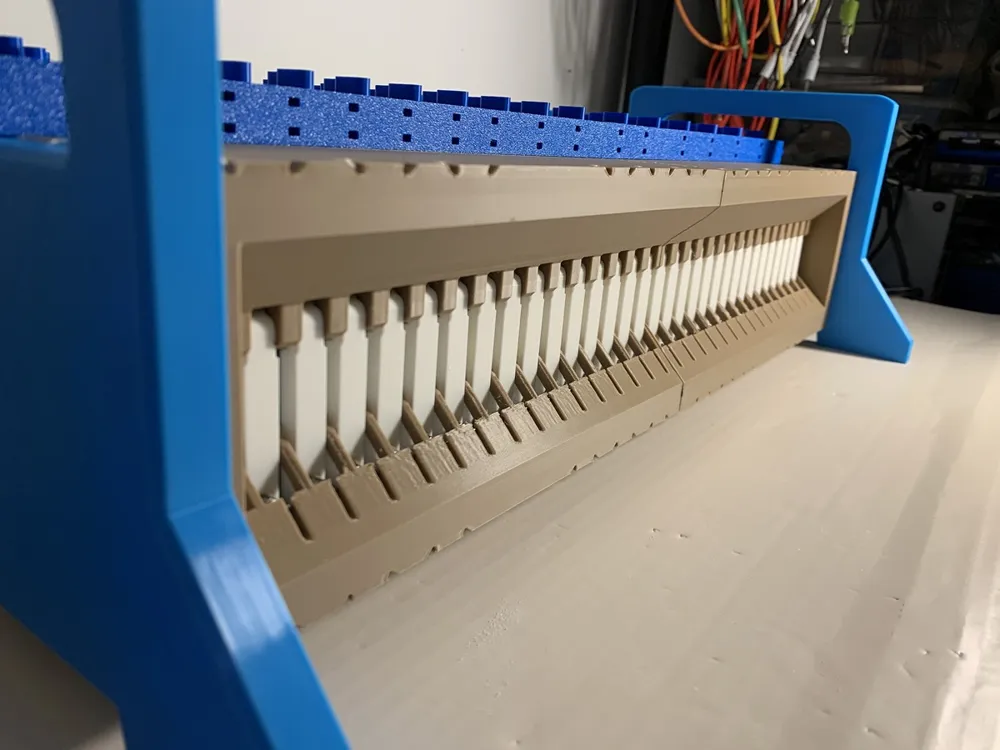
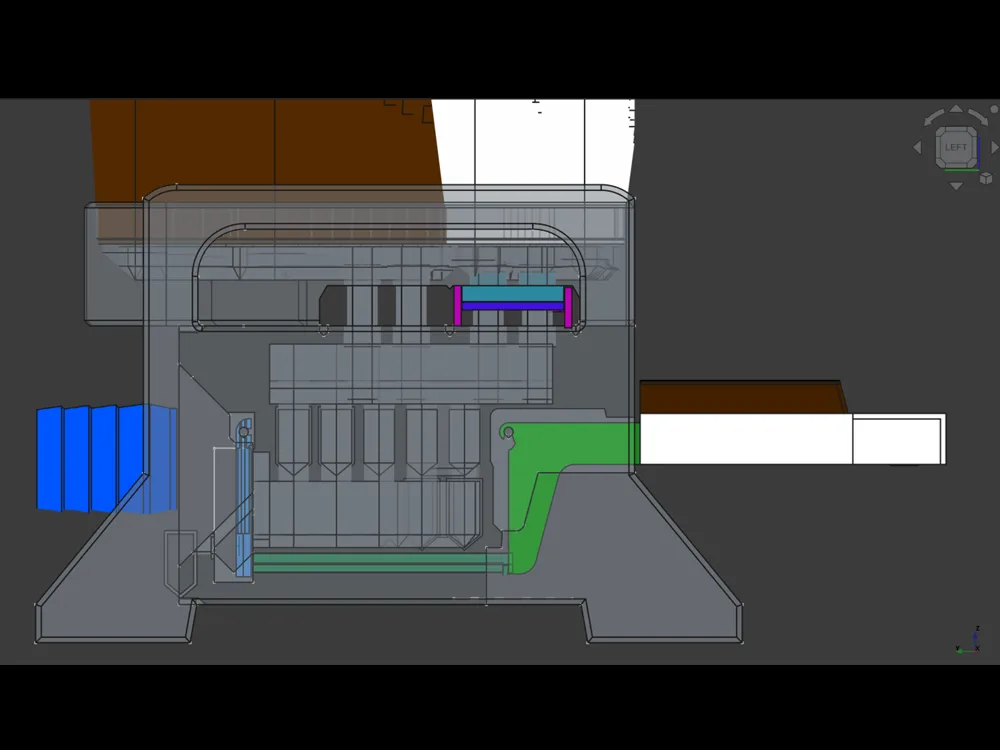
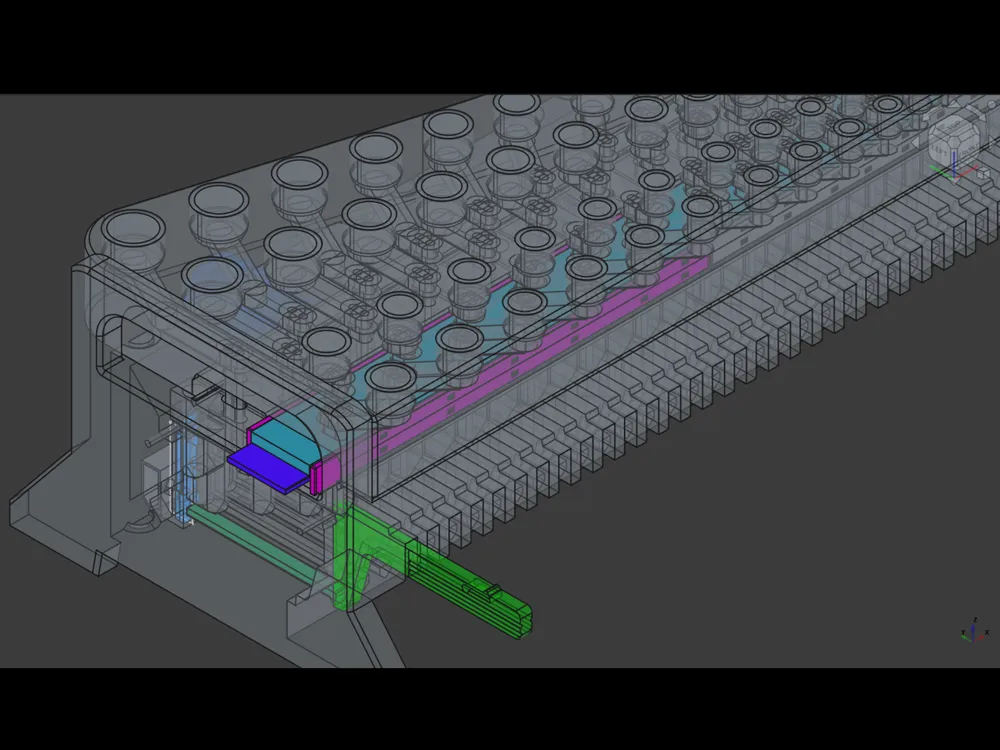
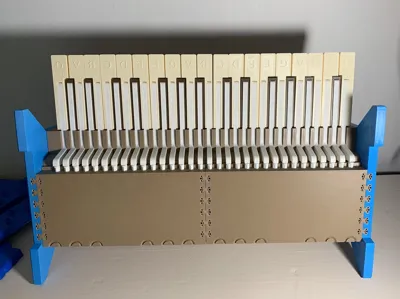
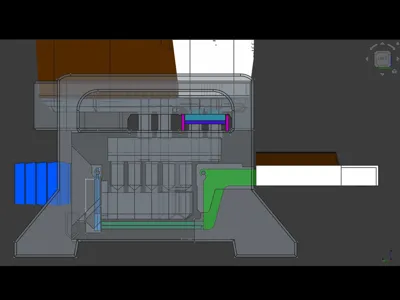
- Sticker action with pallet valves.
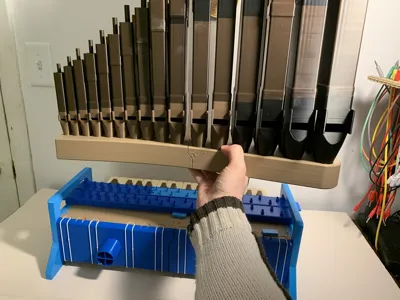
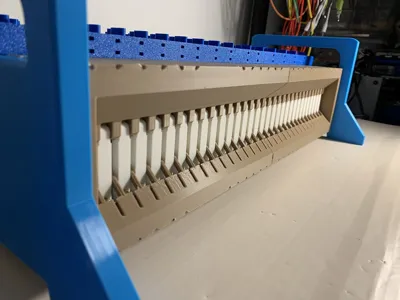
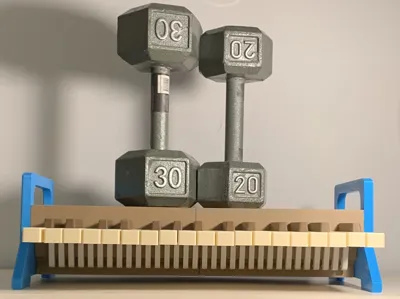
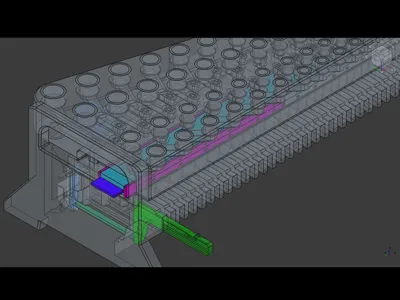
- Keyboard mechanism snaps together and disassembles with only needle-nose pliers.
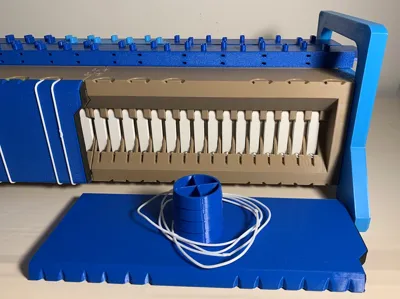
- Wind reservoir closes using elastics or string to compress a foam seal.
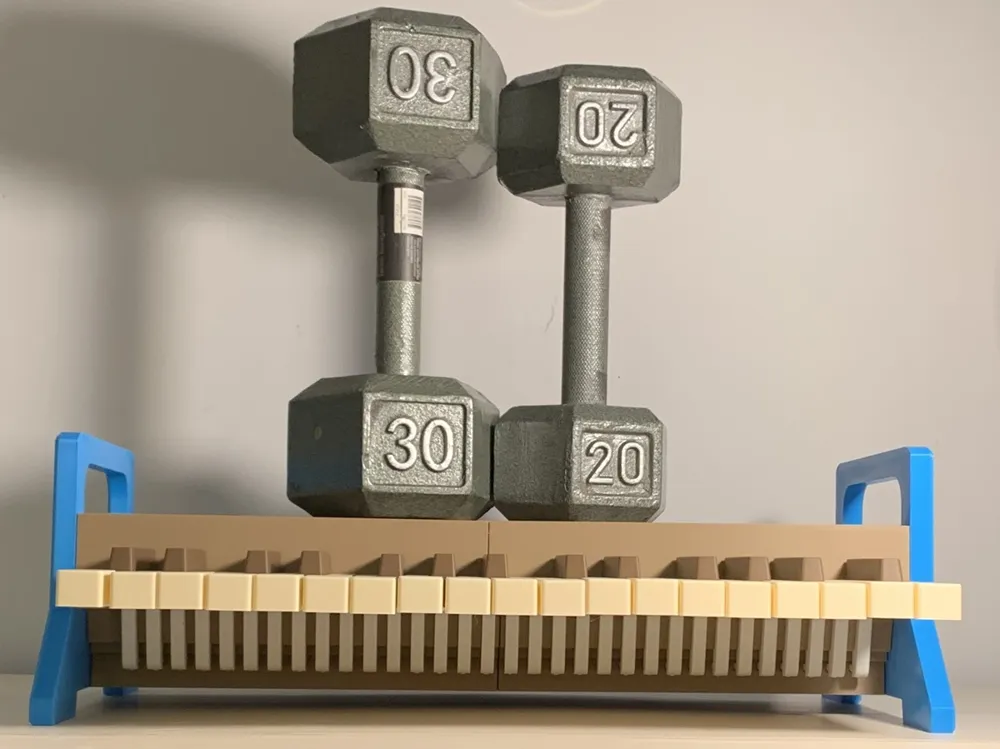
- Can be carried fully assembled.
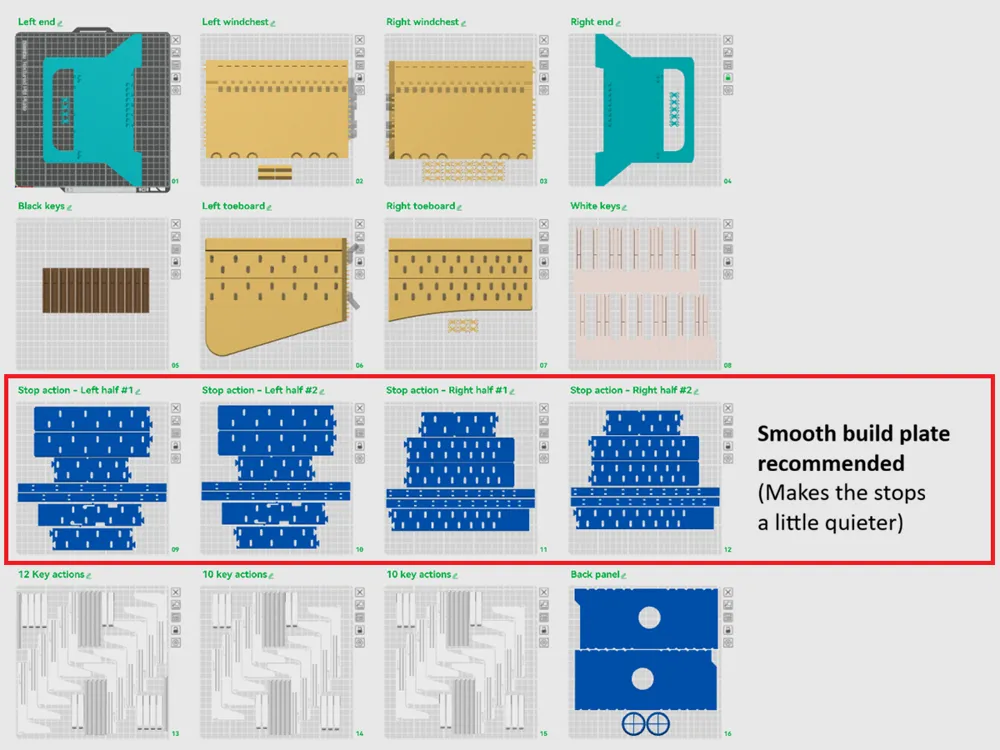
- 204 printed parts for the keyboard, plus 158 for the stopped flute pipes and 139 for the string principal pipes. Takes quite a while to build.
- Total air leakage is less than one pipe's worth.
Non-printed parts required:
- 32 pcs. 0.5×6×20mm compression springs (on Amazon - Not one of the sizes on Maker's Supply.)
- 1x10mm foam weather stripping tape (on Amazon - Listing has incorrect dimensions in inches, but metric dimensions correct.)
- 1x10mm felt tape (on Amazon - Cut 10mm wide strips. You can also use foam instead, but make it 2mm wide instead of 10mm.)
- Medium-viscosity superglue and baking soda (NaHCO3)
- 3mm aluminum jewelry wire
- Cork grease
- Compatible with: 1 ½" vinyl tubing (on Amazon)
I voiced my test unit at 65mm (2 5/8") wind pressure. In my 130ft² acoustically treated bedroom, a single pipe produces 80~85 dBA from the player's perspective, and chords can exceed 90 dBA, but it feels even louder because the sound is quite narrow-band. This is too loud: It will quickly cause ear fatigue, with a long-term risk of hearing damage. I recommend using lower pressure than I did, like maybe 35~50 mm (1½~2"), if building for personal or studio use in a small space.
License



Comment & Rating (104)