Search models, users, collections, and posts

NIM Game
IP Report
Print Profile(1)

0.2mm layer, 2 walls, 15% infill NO AMS
Designer
5.2 h
3 plates
Open in Bambu Studio
Boost
3
0
0
0
2
2
Released
Description
Content has been automatically translated.
NIM Game 3D Print Set
Description
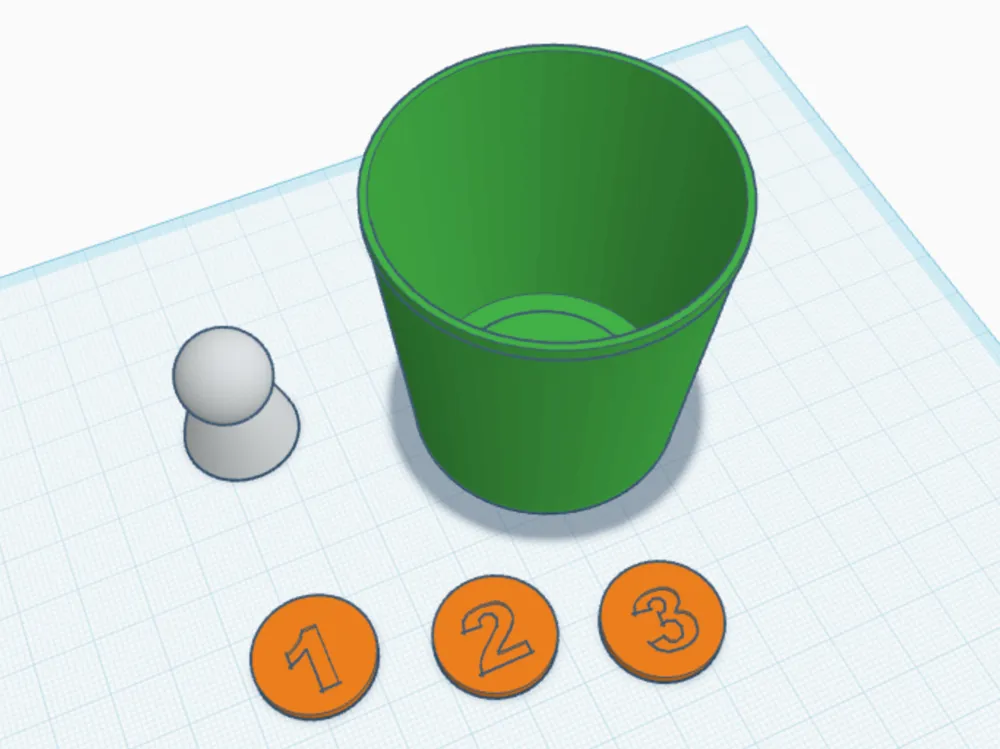
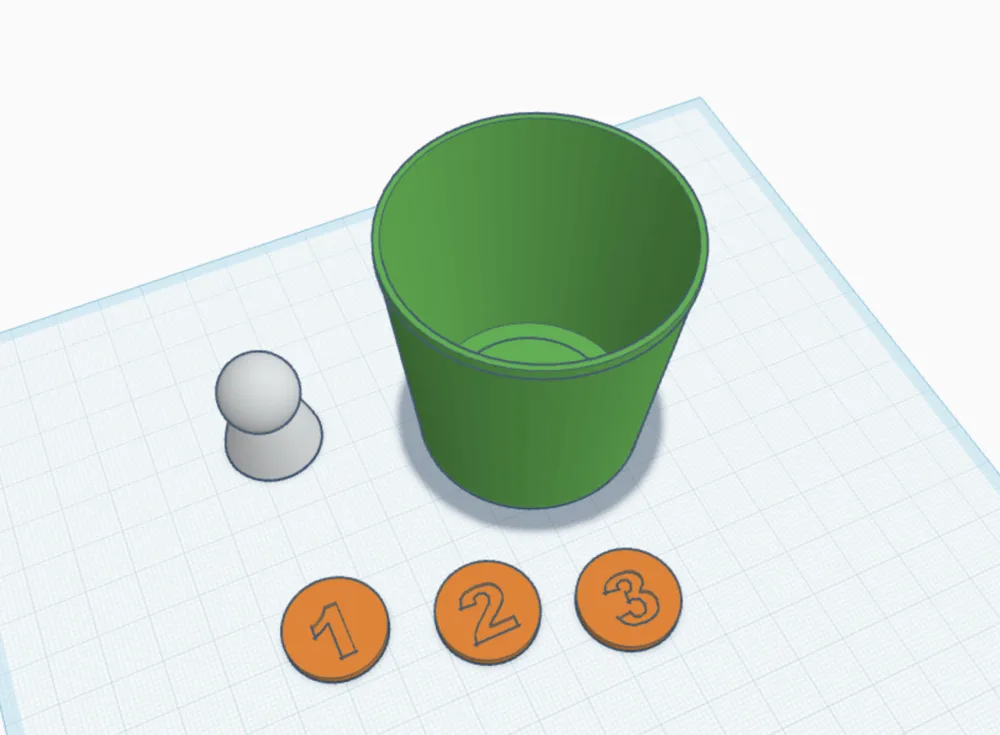
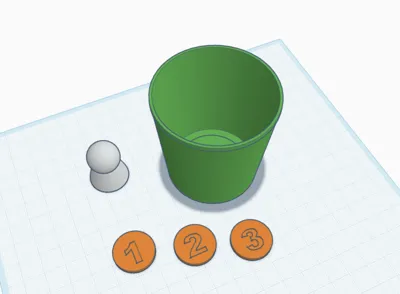
This 3D-printed NIM game serves as an educational tool to demonstrate reinforcement learning and strategic thinking. The set includes:
- 10 figures as objects representing the game pieces
- 9 cups behind which the chips are placed
- 27 chips, numbered 1 to 3, used to determine the game moves
All parts are designed for easy printing without support. The NIM game is ideal for use in classrooms or learning environments to promote concepts such as strategy, decision-making, and basic mathematical skills.
Download the files and use this tool to make learning fun!
Game Instructions for the NIM Game with Cups and Chips
Game Goal
The goal of the game is to not draw the last figure. The player who takes the last figure loses the game. Player 1 draws the chips, while Player 2 acts independently.
Game Rules
- Game Preparation:
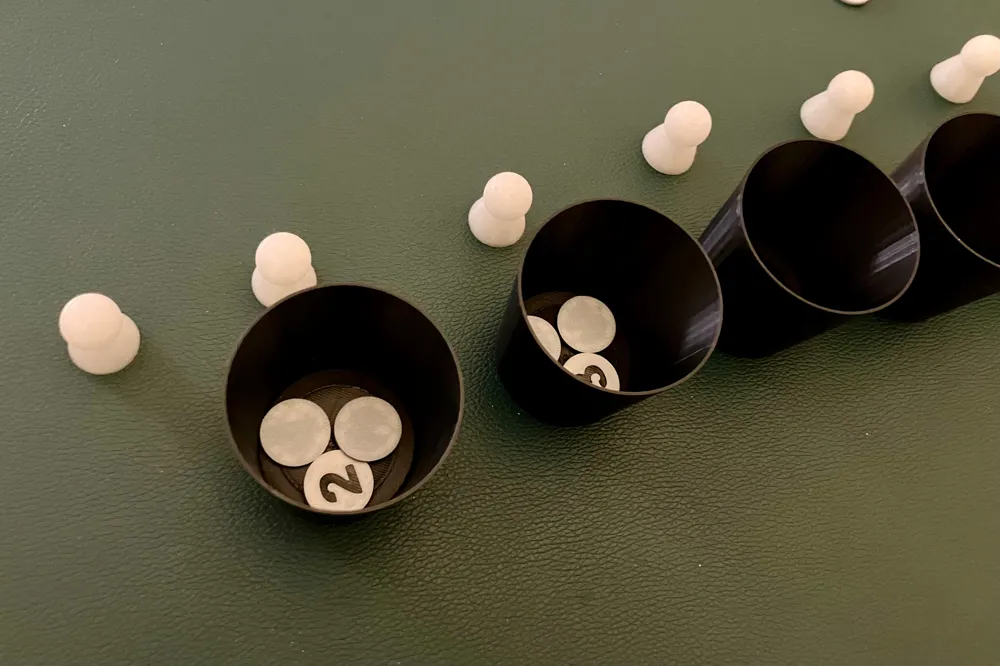
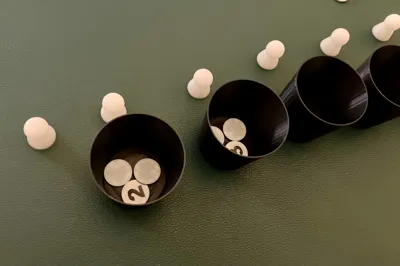
- Place the 10 figures in a row on the table.
- Place a cup behind each of the first 9 objects.
- Fill each cup with 3 numbered chips (1, 2, 3), the last cup has only 2 chips (1, 2).
- Gameplay:
- Player 1 randomly draws a chip from the cup behind the last remaining object (i.e., initially from the cup behind the 10th figure) and places the chip in front of the cup.
- The drawn chip determines the number of figures Player 1 must take (1 to 3 figures).
- The drawn chip is always returned to the cup, unless Player 1 loses the game. In this case, the chip that led to the defeat is not returned (the last drawn chip, unless it is the last chip from the cup, then the previous chip is responsible for the defeat...).
- Player 2 can decide how many figures they take (one to three figures).
- 'Training' of the Cups
- If Player 1 takes the last figure, the drawn chip that led to this defeat is permanently removed from the game, thus training the cups to promote certain moves that lead to a win for Player 1.
- Winning Conditions:
- The player who draws the last object loses the game.
Example Game Progress
- Player 1 randomly draws a chip with the number 2 from the cup behind the 10th figure. (Player 1 must take 2 figures, 8 figures remain)
- Player 2 takes 2 figures, 6 figures remain.
- Player 1 randomly draws a chip with the number 1 from the cup behind the 6th figure. (Player 1 must take 1 figure, 5 figures remain)
- Player 2 takes 1 figure, 4 figures remain.
- Player 1 randomly draws a chip with the number 2 from the cup behind the 4th figure. (Player 1 must take 2 figures, 2 figures remain)
- Player 2 takes 1 figure, 1 figure remains.
- Player 1 must take the last figure and has lost, the move that led to the defeat was drawn from the cup behind the 4th figure, this chip is removed from the game (if it were the last chip from the cup, the previous chip would be responsible for the defeat and would have to be removed from the game), all other chips are returned to their cups.
License

This user content is licensed under a
Creative Commons Attribution


Comment & Rating (0)