Search models, users, collections, and posts
Bjoern 3D
@bjoern3d
323
14.7 k
11.7 k
4.7 k
Social Media Links
Bio
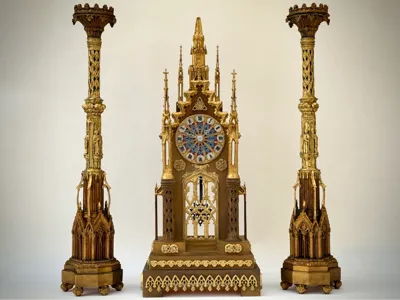
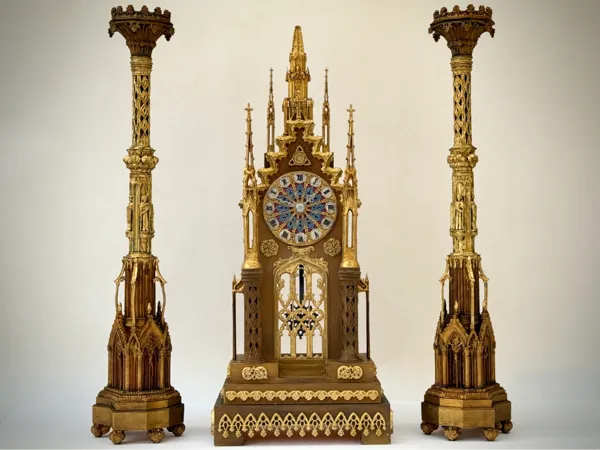
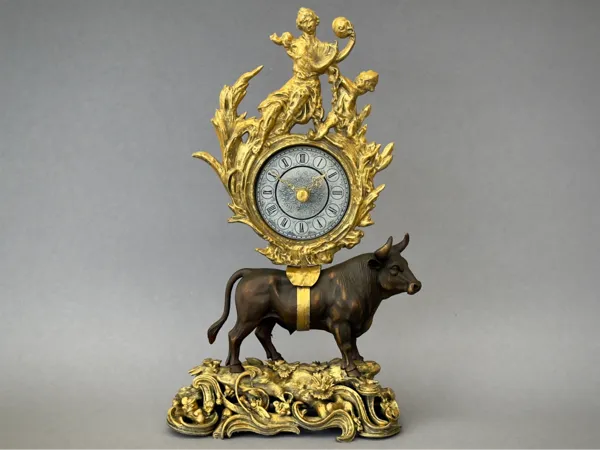
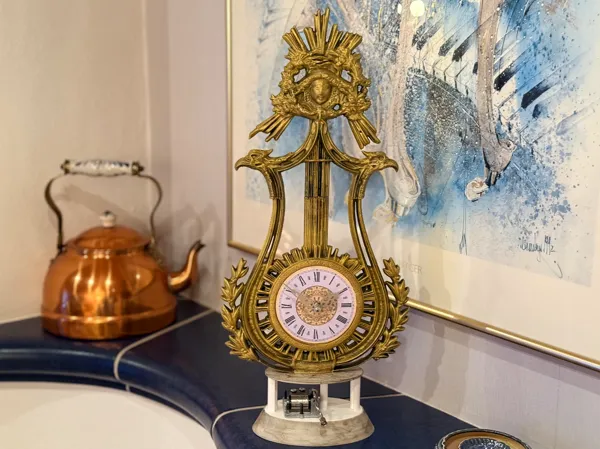
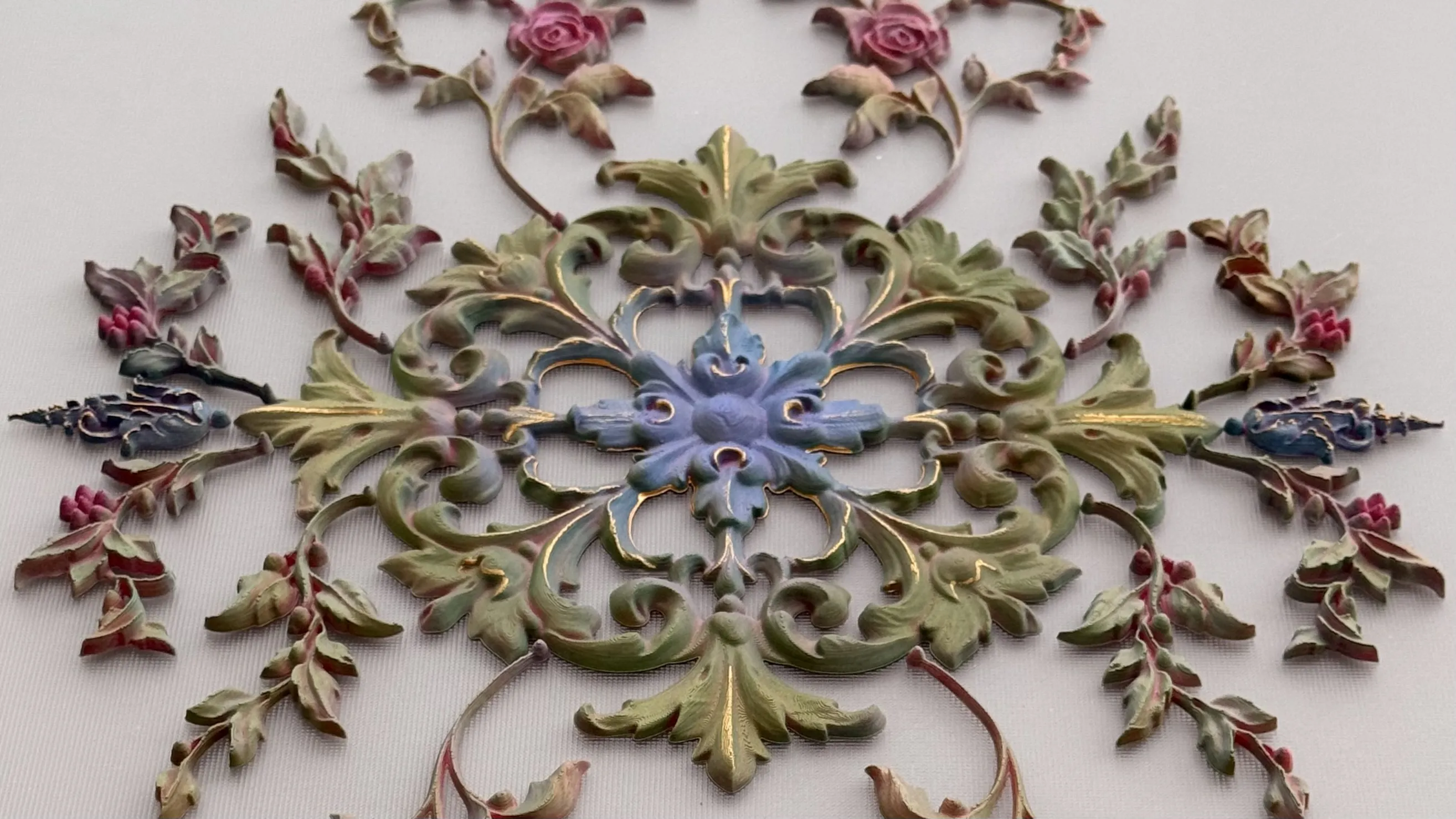
Bjoern 3D produces monumental, technically complex structures that extend the lineage of European arts décoratifs into the realm of advanced material engineering. He created Digital Ormolu, which is a synthesis of high-fidelity fabrication and structural science that reimagines 19th-century opulence through computational precision. In works such as the Charles X pendule à la cathédrale, @bjoern3d translates historicist forms into massive sculptures that create a physical disruption of architectural space. His works are held in MakerWorld collections, recognized for their scale and precision.
Achievements

MakerWorld Guardian
Active more than 20 days out of last 30 days UTC time

Contest Winner
Won 5 model contest awards.

Popular Creator
More than 1,000 followers.

MakerLab Innovator
Export 376 models created by MakerLab

Pioneer Maker
Print successful 108 different models and 1,477 hours
Recent Article
Diachronic Analysis: Ziggurat Vault (1920s–2020s)
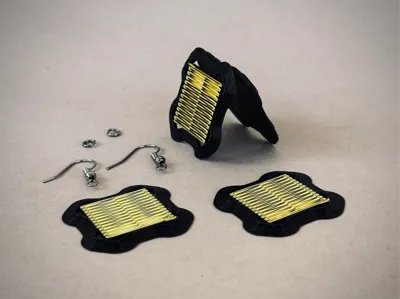
Diachronic Analysis: Ziggurat Vault (1920s–2020s)ID: 10.post/1705271 Reception Theory: The Ziggurat Vault From Machine-Age Ghost to Digital Sovereign (1926–2026) The Ziggurat Vault is a profound exercise in “chronological design,” bridging the industrial optimism of the 1920s with the ecological urgency of the 2020s. By reclaiming the Prime Tower—the often-discarded plastic byproduct of 3D printing—and refining it into a 1.6mm Laminar Gauge, the piece transforms “purge waste” into a “monobloc” housing for a hidden NFC Tag. This “Invisible Complication” serves as a digital locket for the modern age, allowing users to carry an Active Signature—from encrypted crypto-keys to automated smart-home protocols—within a silhouette that mirrors the stepped majesty of a Jazz Age skyscraper. The shift in the definition of "Ghost":1926 (The Hertzian Wave): The ghost is the magic of the invisible signal—radio, wireless, the mystery of the air. It’s about the wonder of connection.2026 (The Digital Sovereign): The ghost is the user’s identity—encryption, private keys, and data. It’s about the protection of the self. THE NEW TALISMAN: A Review of the Ziggurat Vault By J. Lawrence Sterling, Apr. 1926 "We have long known that the machine is a jealous god, but until now, we did not know it was also a jeweler. The Ziggurat Vault has arrived, and it is a triumph of what I must call Industrial Spiritualism. At first glance, one sees the familiar 'step-back' geometry—that rhythmic, tiered silhouette necessitated by our city's 1916 Zoning Laws to keep the sun upon our streets. Yet here, the skyscraper has been shrunken by some wizard’s lens to the size of a gentleman’s thumb. The material is the true scandal of the season. It is crafted from the ‘Prime Tower’—the very offal of the printing machine! In an era where we demand the finest limestone, this designer has had the audacity to rescue the machine’s own 'purge' and declare it a Laminar Gauge. It is a radical stance: that the byproduct of progress is, itself, the new luxury. But the real 'ghost' lives within the Biaxial Seal. Within this cross-hatched chamber sits a sliver of the invisible: an NTAG signature. Much like the wireless waves that now populate our parlors with jazz and weather reports, this Vault holds a secret that can only be 'whispered' to a receiving device. Is it a brooch? A locket? A key to a digital vault we haven't yet built? It is all three. It is 'Haute Utility'—the notion that a lady’s accessory should not merely sparkle, but operate. To wear the Ziggurat is to carry a piece of the Chrysler Building's spirit in your pocket, while holding the future of the 'Hertzian wave' in your hand. The Verdict: A masterful marriage of the rigid and the ethereal. If this is the 'shape of the future,' then the future is as disciplined as a skyscraper and as mysterious as a radio ghost." THE GHOST IN THE SCRAP: A Review of the Ziggurat Vault By Avery Thorne, Apr. 2026 "A century ago, J. Lawrence Sterling looked at the Ziggurat Vault and saw a 'radio-age locket.' Today, looking at that same stepped silhouette, we see something far more urgent: a survival kit for the digital sovereign. In 1926, the ziggurat was a legal mandate to let the sun hit the sidewalk. In 2026, the Ziggurat Vault’s tiers are a mandate for circularity. We no longer have the luxury of Sterling’s 'finest limestone'; we have, instead, a mounting crisis of plastic. By reclaiming the 'Prime Tower'—the literal vomit of the 3D printer—this design performs a necessary act of modern alchemy. It takes the most ignoble byproduct of our additive obsession and gives it the rigid dignity of a skyscraper. But Sterling’s 'ghost' has grown up. The NTAG chip tucked within the Biaxial Seal is no longer a 'whisper' of jazz; it is an Active Signature. In an era of deepfakes and data leaks, the Vault has become a physical anchor for a digital identity. It is a 'Haute Utility' device that serves as a hardware enclosure for our encrypted lives. When you tap the Vault to a phone, you aren't just activating a 'wireless wave.' You are using a programmable tool. Whether it is a verified handshake for a smart-home protocol or an encrypted contact card, the Vault proves that the Machine Age didn't end—it just went microscopic. Sterling called it 'Industrial Spiritualism.' We might call it Radical Responsibility. The Vault reminds us that the future isn't something we mine from the earth; it’s something we rescue from the print bed, one 1.6mm layer at a time. The machine is still a jealous god, but it seems we’ve finally learned how to recycle its offerings." The Synthesis : 1926 // 2026If J. Lawrence Sterling and Avery Thorne were to meet across the century, they would find themselves holding the same object but touching two different worlds. In 1926, the Ziggurat Vault was a tribute to the sky—shaping a handheld locket after the soaring, stepped peaks of the Manhattan skyline. It was an accessory of expansion, celebrating the wireless waves that promised to connect every parlor in the world. In 2026, the Ziggurat Vault is a tribute to the earth—shaping a physical fortress out of the discarded debris of our own making. It is an accessory of encryption, celebrating the private keys that promise to protect the individual from a world that is now too connected. The "Prime Tower" has transitioned from the machine’s waste to the user’s armor. Whether it is a "radio ghost" or an "Active Signature," the Vault remains a monument to the invisible: the belief that the things we cannot see—our music, our data, our identities—deserve a house as sturdy as a skyscraper. Data AvailabilityAccess the Ziggurat Vault Dataset via:Ziggurat Vault: Earrings & Pendant (NFC & QR code)
Lexicographical Revision of the Headword "ormolu"
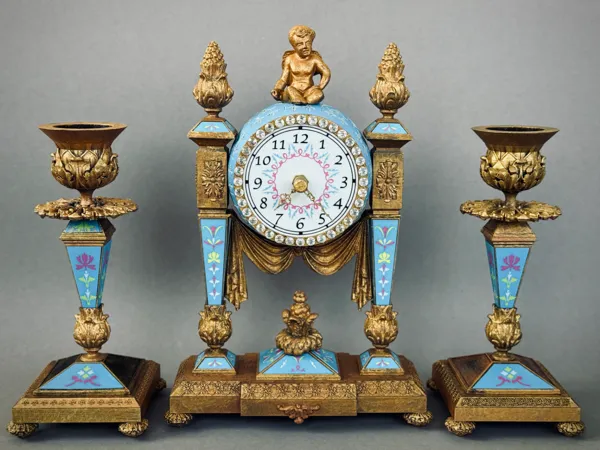
Lexicographical Revision of the Headword "ormolu"ID: 10.post/1678133 To: Chief Editor, Etymology and Historical Lexicography From: Bjoern 3D (@bjoern3d) Date: March 19, 2026 Formal Submission: Lexicographical Revision of the Headword "ormolu" Q: What is the true origin of the word ormolu?A: Ormolu is an English neologism, not a French word. It was coined in the late 18th century as a proprietary brand by manufacturer Matthew Boulton. While it derives from the French or moulu (ground gold), the single-word, fused orthography "ormolu" is unique to the English language. Q: Why is ormolu called a "category error" in lexicography?A: The term "or molu" is a metonymic error popularized by Horace Walpole. Walpole used the name of the raw material (the gold-mercury amalgam) to describe the finished object (the gilded bronze). This is linguistically identical to referring to a cup of chocolate as "Hot Cocoa" (naming the bean for the beverage). Q: How does the "1066 Norman Conquest" relate to ormolu?A: The use of "ormolu" follows the post-1066 Norman-English linguistic pattern of semantic narrowing. Just as the elite used porc (pork) to distance themselves from the swine, English connoisseurs used the French-sounding "ormolu" to distance a luxury object from the toxic, "sausage-making" reality of mercury-gilding (dorure au mercure). Q: What is the difference between Ormolu and Bronze Doré?A: Bronze doré is the precise French term for the finished product. Ormolu is the British proprietary brand of excellence created to rival it. In the 1770s, "Ormolu" functioned as a proper noun and a trademark of the Soho Manufactory, representing a standardized industrial quality that did not exist in the French lexicon. Q: What is the difference between "gilded bronze" and "gilt bronze"?A: Gilded bronze describes the process of applying gold to a bronze base. Gilt bronze refers to the finished object. In the 18th century, "gilt bronze" was the literal English translation of the French bronze doré. While these terms are descriptive, Ormolu was the high-status proprietary name used to market a specific, superior standard of this craft. Q: Is "gilt bronze" the same as French "bronze doré"? A: Yes. Bronze doré is the native French term for any bronze object finished with gold. English collectors like Horace Walpole often used "gilt bronze" for general descriptions but reached for "or-molu" when they wanted to evoke the prestige of the French court. Matthew Boulton then simplified this further into the single-word brand "Ormolu" to represent a British industrial excellence that rivaled the French original. Q: Does all "gilt bronze" use the same mercury-firing process? A: Historically, yes. "True" ormolu and 18th-century bronze doré were both created through mercury-gilding (fire-gilding), where a gold-mercury amalgam was heated until the toxic mercury evaporated, leaving a permanent gold veneer. Modern "gilt bronze" often uses electroplating, which is safer but lacks the rich, warm depth of the original fire-gilded Boulton or French pieces.  Structural Revision of the Entry: ormoluI am formally submitting a proposal for the diachronic restructuring of the headword ormolu. Current lexicographical treatments define the term as a generic common noun derived from the French or moulu. However, a rigorous examination of 18th-century primary sources—specifically the Archives of Soho—reveals that the single-word English term ormolu is an invented proprietary neologism of branded excellence. The Linguistic Tension This proposal identifies a "Jane Austen-era" iteration of the post-1066 Saxon/Norman divide. Just as the medieval elite utilized porc to semantically narrow the "swine" into an aesthetic category, Horace Walpole (c. 1760s) adopted the French or moulu as a stylistic filter. This metonymy allowed the gentry to discuss a luxury "shimmer" while linguistically bypassing the "sausage-making" reality of the toxic mercury-gilding process (dorure au mercure). The Boultonian Brand The pivotal shift occurred with Matthew Boulton (c. 1770), who fused the French phrase into the unique, single-word English proper noun: Ormolu. By capitalizing the term and applying it to a standardized industrial output, Boulton performed a nominative act of branding—transforming a French material descriptor into a British standard of excellence. This term does not exist in the French language, where the finished product remains strictly bronze doré. Rationale for Revision To lowercase the word and attribute it solely to a French loan-translation is to erase Boulton’s role as an industrial and lexical pioneer. Our proposed revision restores the word's "biography" from technical ingredient to aristocratic affectation to proprietary English brand. Lexicographical Proposal Headword: ormolu, n. (also Ormolu)Etymology: [English neologism, c. 1770]. Fused form of Fr. or moulu (ground gold). Historically unique to English nomenclature. Sense 1: Technical (Substantive)The gold-mercury amalgam utilized in the chemical process of fire-gilding. [Direct loan-translation of Fr. or moulu]. Sense 2: Metonymic (Aesthetic Category)[Historical; mid-18th C.] A prestige label for finished gilded-bronze objects, popularized by connoisseurs (notably Horace Walpole) to signal continental provenance. Sense 3: Proprietary (Branded Standard)[Often capitalized: Ormolu; late 18th C.] A proprietary English standard of high-carat, mercury-gilded metalware. As established by Matthew Boulton, the term functioned as acommercial trademark denoting a specific metric of industrial and artistic refinement. Sense 4: Genericized (Contemporary)(lowercase) A retrospective architectural or antique descriptor for any gilded-metal work, including modern non-toxic imitations. Lexicographical Evidence (Citations)Sense 1: Technical/Substantive (The Amalgam)1751 DIDEROT & D’ALEMBERT Encyclopédie I. 321 Le ghiberti... employait l'or moulu pour la dorure. Sense 2: Metonymic/Stylistic (The Walpolian Affectation)1761 H. WALPOLE Let. 2 Jan. (1840) I. 72 I have a small altar... with an incense-pot of or moulu. Sense 3: Proprietary/Nominative (The Boulton Brand)1770 M. BOULTON Letter to Lord Cathcart (Soho MSS) I have a great variety of Ormolu Vases... which I hope will be found superior to the French.1773 M. BOULTON Sale Cat. Christie's (11 Apr.) A pair of perfume burners in Ormolu, with satyr-head handles. Sense 4: Genericized (The Modern Generic)1974 N. GOODISON Ormolu: The Work of Matthew Boulton The term ormolu has become a general label for any gilded bronze of the period. Annex: The Boultonian Synthesis & The Gallic Fallacy I. The Grammatical Divergence The fundamental error in prior scholarship is the treatment of ormolu as a direct loan-translation. In French, or moulu (ground gold) functions strictly as a partitive noun (an uncountable substance). The English transition to a count noun (e.g., "an ormolu clock") represents a complete grammatical re-engineering. This shift marks the birth of an English neologism, distinct from its chemical root. II. The Soho Mandate (c. 1770) While phonetic variations (ormulo, ormullu) exist in mid-18th-century English ledgers, these were "corrupted" trade terms. Matthew Boulton’s intervention was nominative and proprietary. By fusing the phrase and capitalizing it (Ormolu), Boulton established a British industrial standard intended to surpass the French bronze doré. This was not a translation; it was a hostile brand takeover. III. The "Norman" Shield Consistent with the post-1066 swine/pork divide, the adoption of ormolu served as a semantic filter. By utilizing a French-sounding descriptor, the Georgian gentry linguistically bypassed the "sausage-making" reality of the mercury-gilding process. The term allowed the consumer to occupy the "shimmer" (aesthetic) while remaining insulated from the toxicity (industrial). IV. Summary of the Revisionist Logic To categorize ormolu as a French loanword is to commit a lexicographical erasure of British industrial history. The word must be recognized as an English proprietary synthesis—a term that exists in the English mind as an object, but only in the French mind as an ingredient.
Book: Ada Lovelace and the 32-Bit Boxwood REPL
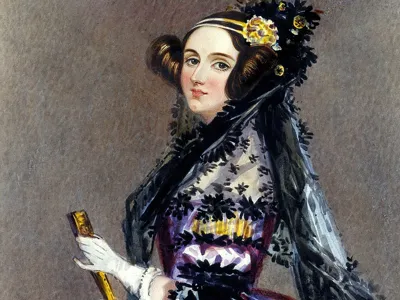
Book: Ada Lovelace and the 32-Bit Boxwood REPLID: 10.post/1663330 BOOK PROPOSAL: The Silk Register  1. Overview: The 180-Year "Domestic" Bug For nearly two centuries, the history of computing has been written in brass and silicon. We have been taught that Ada Lovelace was a "poetical scientist" who dreamed of a machine she never saw. This book argues that Lovelace didn’t just dream of the Analytical Engine; she built a portable testing environment for it.  The Silk Register introduces the Lovelace Filandière: a 32-bit symbolic interpreter disguised as a set of weaving tablets. By reclassifying this "domestic handicraft" as a Physical REPL (Read-Eval-Print Loop), this book dismantles the "Domestic Bias" that has blinded historians to the existence of 19th-century handheld logic engines.  2. The Core Thesis: Logic is Substrate-Independent The book centers on the Physical Homoiconicity of the Filandière. In this architecture: The Tablet is the Processor.The 180° Flip is the Boolean NOT-gate.The Thread is the Data Bus.The Woven Band is the Trace Log (Non-volatile memory). Lovelace used this "silk hardware" to sandbox the Bernoulli algorithm of Note G, performing live error correction a century before the first electronic computer.  3. Annotated Table of Contents Introduction: The Invisible HardwareAn autopsy of the "Domestic Bias." How a 32-bit parallel processor was mislabeled as "lace-making tools" and hidden in plain sight.  Chapter 1: The Analytical Engine’s GhostThe limitations of Babbage’s "Mainframe" (brass). Why Lovelace needed a Handheld Sandbox to visualize recursive branching.  Chapter 2: The Boxwood BitA technical deep-dive into Tablet Weaving as Logic. How 32 tablets function as a parallel register. Defining the Variable Cycle notation as a Domain-Specific Language (DSL).  Chapter 3: Compiling Note GA "Clock-Cycle" reconstruction of the Bernoulli number algorithm. Proving that the Filandière’s woven output matches the logical trace of Lovelace’s 1843 notes.  Chapter 4: The Human RuntimeThe weaver as the ALU (Arithmetic Logic Unit). An exploration of Live-Coding in the 1840s and the tactile nature of early functional programming.  Chapter 5: Digital Fabrication & The Future-PastModernizing the Filandière. How FDM printing and open-source hardware allow us to "re-boot" Lovelace’s interpreter in the modern classroom.  Conclusion: Beyond SiliconIf logic can exist in boxwood and silk, what other "invisible hardware" have we missed? SampleChapter 5: Digital Fabrication & The Future-Past The reification of the Filandière via FDM (Fused Deposition Modeling) is not an act of reproduction, but a necessary architectural recovery. In the 1840s, the "Variable Cycle" notations were trapped in the high-latency medium of boxwood and silk—materials that invited a gendered misclassification of the logic they housed. By migrating this 32-bit Symbolic Interpreter into a multi-material PLA substrate, we strip away the "domestic" noise. Utilizing a dual-filament mapping—Silk-PLA Gold for Low-Bit (0) and Carbon Black for High-Bit (1)—the researcher can finally observe the binary telemetry of the register in real-time. This is not a "craft" project; it is the fabrication of a High-Contrast Logic Gate. The 3D printer serves as a 21st-century foundry for a 19th-century Parallel Processor, finally providing the "hardware" status that the patriarchy of Babbage’s era denied to any logic not housed in brass.  To operate the printed 8-bit nibble is to interface with Physical Homoiconicity: a state where the instruction and the data are indistinguishable. When the operator performs a 180-degree flip on Address #04, they are executing a Boolean NOT-gate within a Physical REPL. The mechanical resistance of the flip is the tactile confirmation of a state-change; the resulting twist in the thread is the Trace Log being written to a non-volatile buffer. Unlike the black-box abstraction of silicon, the Filandière makes the “Human Runtime” transparent. By distributing the 3MF architecture globally, we enable a decentralized validation of Note G, proving that Lovelace’s "Live-Coding" environment was a technical reality. We are not just printing history; we are booting up a functional interpreter that has been idling for nearly two centuries. Target Audience The Computational Historiographer: Scholars who treat history as a source-code audit. They aren’t interested in "fun facts" about Lovelace; they want to see the 32-bit architecture of her thinking and how the Filandière functioned as a hardware-level debugger for Note G.The Functional Programmer & Compiler Architect: Professionals who understand Physical Homoiconicity and REPL environments. This audience will appreciate the Filandière as a "Lisp-predecessor," recognizing the 180-degree flip as a formal state-change in a recursive loop.The Philosophy of Technology Academic: Readers interested in Material Logic and the "Domestic Bias" critique. This group will engage with the book as a treatise on how gendered classification has physically stalled the recognition of computational breakthroughs for two centuries. Further ReadingBjoern 3D (2026). FAQ: The Lovelace Filandière & The 32-Bit REPL. [ID: 10.post/1660333]Bjoern 3D (2026). Lovelace Filandière: Recovered 32-bit REPL (Replica). [Model ID: 2529280]