
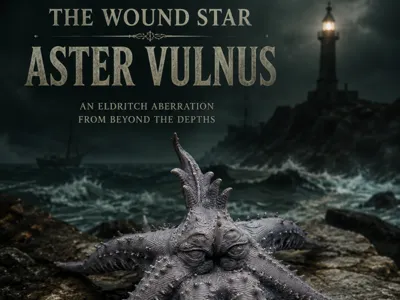
The Wound Star - Aster Vulnus
Print Profile(1)
Description
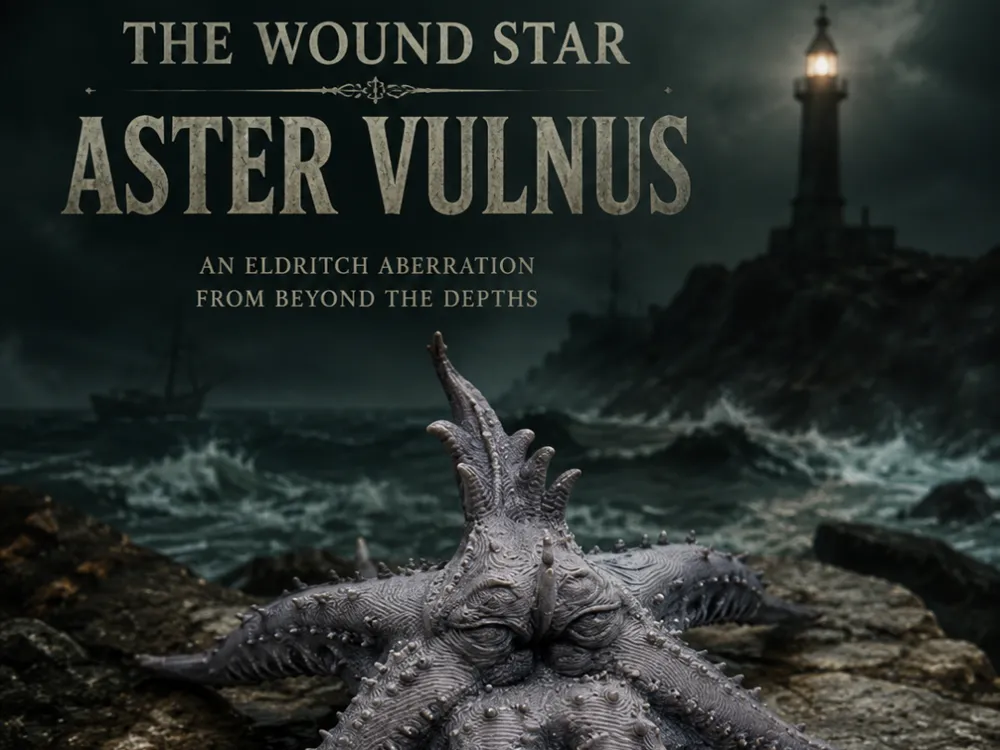
The Wound-Star
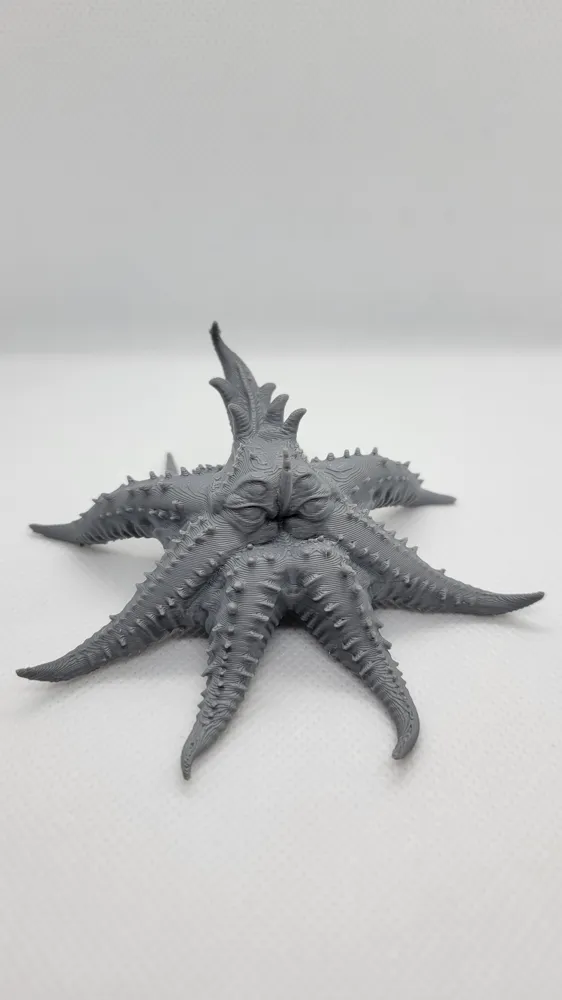
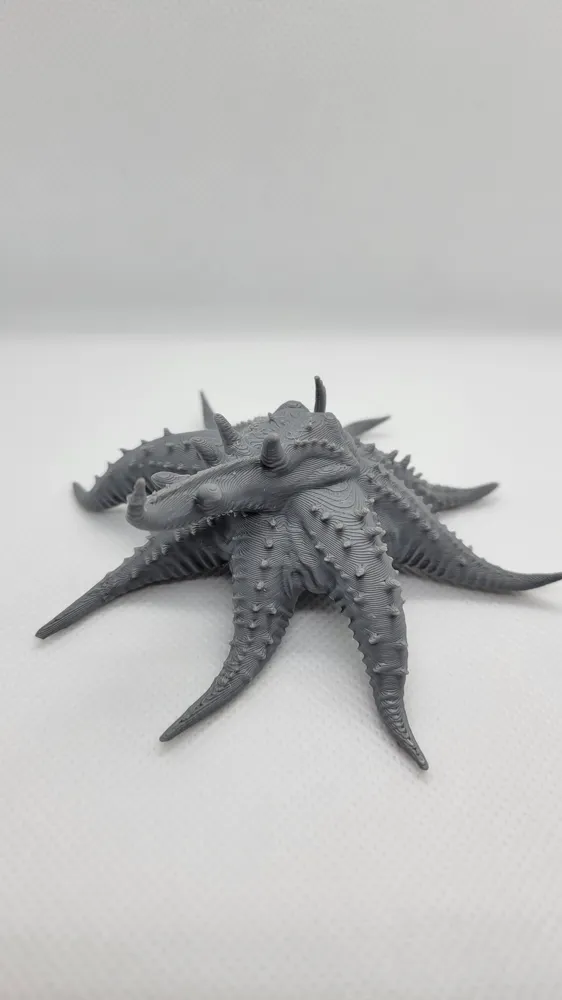
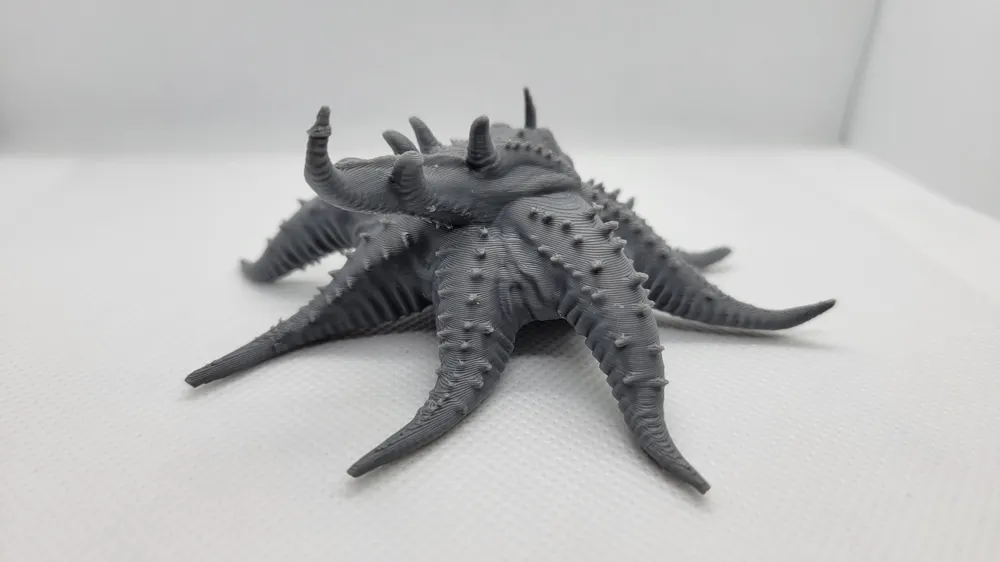
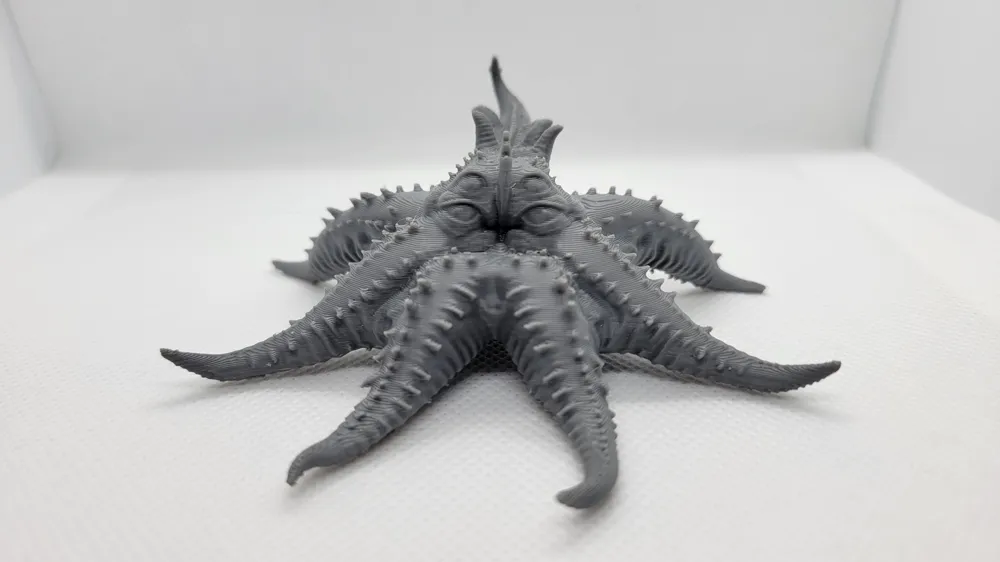
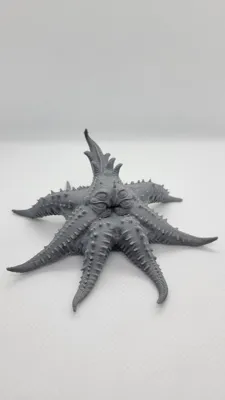
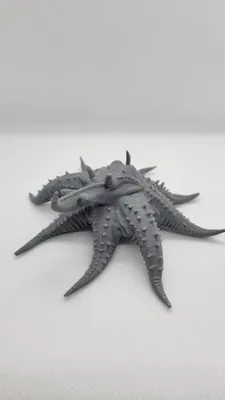
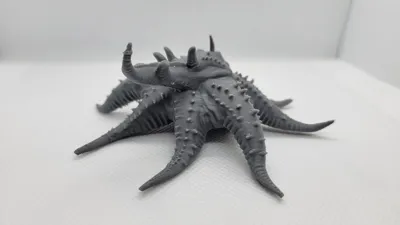
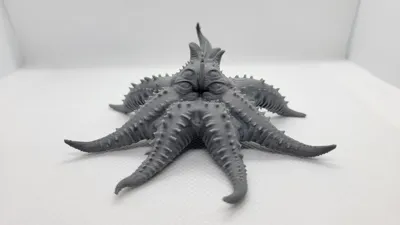
This model represents The Wound-Star, an original homebrew creature designed for cosmic-horror tabletop play.
It is not quite a starfish, not quite a wound, and not quite alive in the way anything on Earth should be. Its red, fleshy body crawls low across the ground, ringed with spines and watching through a crown of wet, mismatched eyes. It belongs in tide pools, ruined churches, shipwrecks, laboratories, seaside caves, and anywhere the world has been cut open just enough for something impossible to slip through.
Use it as a monster, an occult specimen, a strange fossil, a failed ritual result, a beachside horror, or the centerpiece of a one-shot investigation.
This is an original homebrew creature intended for horror tabletop games and weird-fiction settings. It is not official material and is not affiliated with any publisher or game system.
Display / Table Use Text
The Wound-Star works well as:
| Use | Table Role |
|---|---|
| Encounter monster | A small but disturbing physical threat |
| Investigation clue | Found as a fossil, corpse parasite, or occult specimen |
| Cult object | Worshipped as a “five-pointed saint” or living relic |
| Environmental horror | The source of strange wounds, opened doors, and compulsive curiosity |
| Boss fragment | A lesser piece of something much larger beneath the sea or earth |
It is best used in horror games where the threat begins quietly: missing pets, strange puncture wounds, red starfish washing ashore, fishermen refusing to go out, or victims found emptied without obvious violence.
Creature Lore
The Wound-Star
The first one was not born.
It was uncovered.
After a winter storm tore away part of the old coast road, locals found a bed of black stone beneath the beach. Pressed into it was a red shape no larger than a dinner plate, arranged in a perfect five-pointed star. It was dry, leathery, and still.
A schoolteacher called it a fossilized starfish.
A fisherman said starfish did not have eyes.
By morning, it was gone.
Three days later, a dog was found on the tideline, split open and empty except for seawater, sand, and five neat punctures around the heart. A week after that, old Mrs. Bell swore she had seen a red child crawling over the dunes on too many arms.
By the end of the month, people stopped walking the beach alone.
The thing is not truly a starfish. That is merely the shape the mind accepts because the alternative is worse. Its body is soft, rubbery, and warm. Its spined limbs drag it low across the ground. Its eyes blink independently from the center of its body, wet and intelligent.
It does not breathe air.
It does not breathe water.
It simply waits in either.
The earliest occult notes call it Aster Vulnus — “the Wound-Star.” One scholar believed it was not an animal at all, but a living scar formed wherever reality had once been pierced by something vast and hostile. It feeds not only on flesh, but on the body’s memory of being whole.
Victims are found collapsed, deflated, or strangely incomplete, as if their organs forgot where they belonged.
The worst accounts claim it can make more of itself.
Not by laying eggs.
By teaching wounds to open.
Keeper Notes
What the Wound-Star Wants
The Wound-Star does not want conquest. It wants entry.
It is drawn to thresholds: tide pools, wounds, surgical incisions, doorways, ship hatches, cracks in stone, mouths, eye sockets, keyholes, and old scars.
Given enough time, it turns a place into a nest of openings. Walls split. Skin blisters. Floorboards gape. Locked boxes are found open. People pick at scabs, pry loose boards, peel wallpaper, and cut into things just to see what is inside.
Its presence makes curiosity feel like hunger.
Signs of Its Presence
Use these before revealing the creature directly:
| Sign | Description |
|---|---|
| Five-point punctures | Wounds appear in star-shaped patterns around the heart, throat, or abdomen. |
| Opened things | Doors, drawers, windows, jars, caskets, and wounds are found open. |
| Red tide pools | Shallow water takes on a faint red cast, even when no blood is present. |
| Watching eyes | Witnesses report seeing eyes in shells, knots of wood, or wet stones. |
| Organ confusion | Victims complain that something inside them is “in the wrong place.” |
| Compulsive curiosity | People feel an irrational need to open sealed objects. |
| Salt and copper smell | The air smells like blood, seawater, and rusted metal. |
Adventure Hooks
1. The Pretty Red Star
A child brings home a strange red “starfish” in a bucket. By morning, the family dog is dead, the kitchen cabinets are open, and the child has five small punctures on one palm.
2. The Anatomist’s Specimen
A doctor or professor has preserved a strange marine organism in alcohol. The jar is found empty. Every surgical scar in the building has begun to ache.
3. The Church of the Fivefold Saint
A small seaside congregation secretly worships a red, many-eyed thing beneath the church floor. They believe it opens the body so the soul can escape cleanly.
4. The Ship That Would Not Seal
A fishing vessel returns to port with every hatch, locker, and porthole open. The crew insists they closed them. One sailor has begun cutting open his own old scars.
5. The Fossil Bed
A storm exposes ancient black stone under the beach. Embedded in it are hundreds of star-shaped impressions. One of them is empty.
Rumors
| d6 | Rumor |
|---|---|
| 1 | “It was stuck to the underside of the boat like a red hand.” |
| 2 | “It looked at me with my brother’s eyes.” |
| 3 | “The thing was dead until the blood touched it.” |
| 4 | “It only comes ashore when the tide forgets to go out.” |
| 5 | “You can kill it, but every piece remembers the whole.” |
| 6 | “It is not from the sea. The sea is trying to wash it away.” |
Optional Call of Cthulhu 7e-Style Homebrew Stats
The Wound-Star / Aster Vulnus
Lesser Mythos organism, physical horror, coastal parasite
| Characteristic | Value |
|---|---|
| STR | 45 |
| CON | 60 |
| SIZ | 25 |
| DEX | 55 |
| INT | 35 |
| POW | 60 |
| HP | 8 |
| MP | 12 |
| Move | 6 / 8 swimming or climbing |
Damage Bonus: -1
Build: -1
Armor: 2 points of rubbery hide and spines
Attacks
| Attack | Skill | Damage / Effect |
|---|---|---|
| Spine Lash | 45% | 1D4 damage |
| Latch | 50% | 1D4 damage, then opposed STR or the creature remains attached |
| Fivefold Puncture | 40% | 1D6 damage; if latched, victim must make CON roll or suffer weakness, nausea, or internal pain |
| Eye-Crown Glare | POW opposed | On failure, victim becomes fixated on opening something nearby: a door, wound, box, mouth, drawer, window, or sealed container |
Sanity Loss
| Situation | SAN Loss |
|---|---|
| Seeing the Wound-Star move | 0/1D4 |
| Seeing it attached to a living person | 1/1D6 |
| Discovering a victim emptied or “opened” by it | 1/1D4 |
| Realizing a wound on one’s own body is responding to it | 1/1D6 |
Keeper Adjustment
For a weaker party, reduce HP to 5 and remove the Eye-Crown Glare.
For a deadlier encounter, use two smaller Wound-Stars or allow severed limbs to continue moving for 1D3 rounds.
In-World Handout
Extract from the Weatherby Notes, 1896
The fishermen persist in calling it a starfish, which is useful only insofar as it prevents panic. It is not a fish, not an echinoderm, and possibly not an animal in any ordinary sense.
Its symmetry is deliberate.
Its eyes are deliberate.
Its wounds are deliberate.
I have named the specimen Aster Vulnus.
This is not because it resembles a wound.
It is because wounds resemble it.
License



Comment & Rating (0)